

For e-commerce businesses, continuous customer engagement is critical. And one such platform where you can connect with your customers is WhatsApp.
WhatsApp has emerged as a primary channel for customer engagement. It has over 487 million WhatsApp users in India. Recent studies show that WhatsApp messages have a 98% open rate compared to just 20% for emails, which means it is a great platform for communication as it delivers significantly higher visibility and engagement.
But the point is, can you handle thousands of messages from your customers manually by replying to them? The answer is obviously "No".
As customer interactions scale, managing thousands of messages manually becomes operationally inefficient and unsustainable. That is why every D2C e-commerce brand needs a WhatsApp automation software that can handle all the customer queries well.
By automating customer conversations, brands can eliminate manual dependency, improve response speed, and maintain consistency across interactions.
Here, we'll explore the best "WhatsApp Automation Software: Best Tools for E-commerce in India" and will see how they can scale e-commerce businesses more efficiently.
What Is WhatsApp Automation Software?
It is a platform that connects with WhatsApp Business API to streamline customer communication across marketing, support, and engagement workflows.
These tools let businesses handle thousands of customer chats by structuring conversations around predefined triggers and customer behaviour.
WhatsApp automation software does more than the WhatsApp Business App. It has the following capabilities:
- Automated message sequences based on the customer's actions.
- AI-powered chatbots for instant and consistent responses.
- Integration with e-commerce platforms and customer management systems.
- Sending messages that feel personal to the customers.
- It tracks performance about how well messages perform.
Why Do E-commerce Brands Need WhatsApp Automation Software?
Today, the world is about technology and advancements. And in such a competitive world, if an e-commerce brand is only relying on doing their business operations manually, it means they are already lagging behind their competitors.
Only relying on manual processes limits scalability and slows down customer engagement.
Here is why WhatsApp automation software is necessary for e-commerce brands:
Rising Customer Expectations
Indian consumers want responses and personalised experiences. A Microsoft study says 90% of users expect a quick resolution to their queries.
WhatsApp automation software helps brands meet these expectations. By automating responses based on customer intent and behaviour, brands can deliver real-time, contextual communication without increasing support workload.
Cost-Effective Customer Acquisition
Digital advertising costs in India are going up by 30-40% every year. That’s why Indian D2C brands need more efficient ways to engage and convert users.
WhatsApp automation is a cost-effective way to reach customers. It enables direct, high-engagement communication, improving conversion rates while reducing dependency on expensive paid channels.
Conversational Commerce Growth
The conversational commerce market is projected to reach USD 40.2 billion/₹3.34 lakh crore by 2036.
By enabling chat-driven interactions, WhatsApp automation software enables brands to capture this shift early in this growing market.
High Engagement Levels on WhatsApp
In India, people open WhatsApp 23-25 times a week. That's almost 3-4 times a day.
When a WhatsApp message is sent, 80% of people open it within 5 minutes. This is much better than email or SMS.
This high engagement means your messages get seen and read significantly, outperforming traditional channels like email and SMS.
By leveraging automated workflows, platforms like Pragma WhatsApp Business Suite enable brands to recover 15–25% of users with cart recovery messages, by completing the purchases.
Key Use Cases of WhatsApp Automation in E-commerce
WhatsApp automation can work with e-commerce brands throughout the purchase journey to streamline customer interactions.
Have a look at the following cases that explain how WhatsApp automation software drives measurable outcomes:
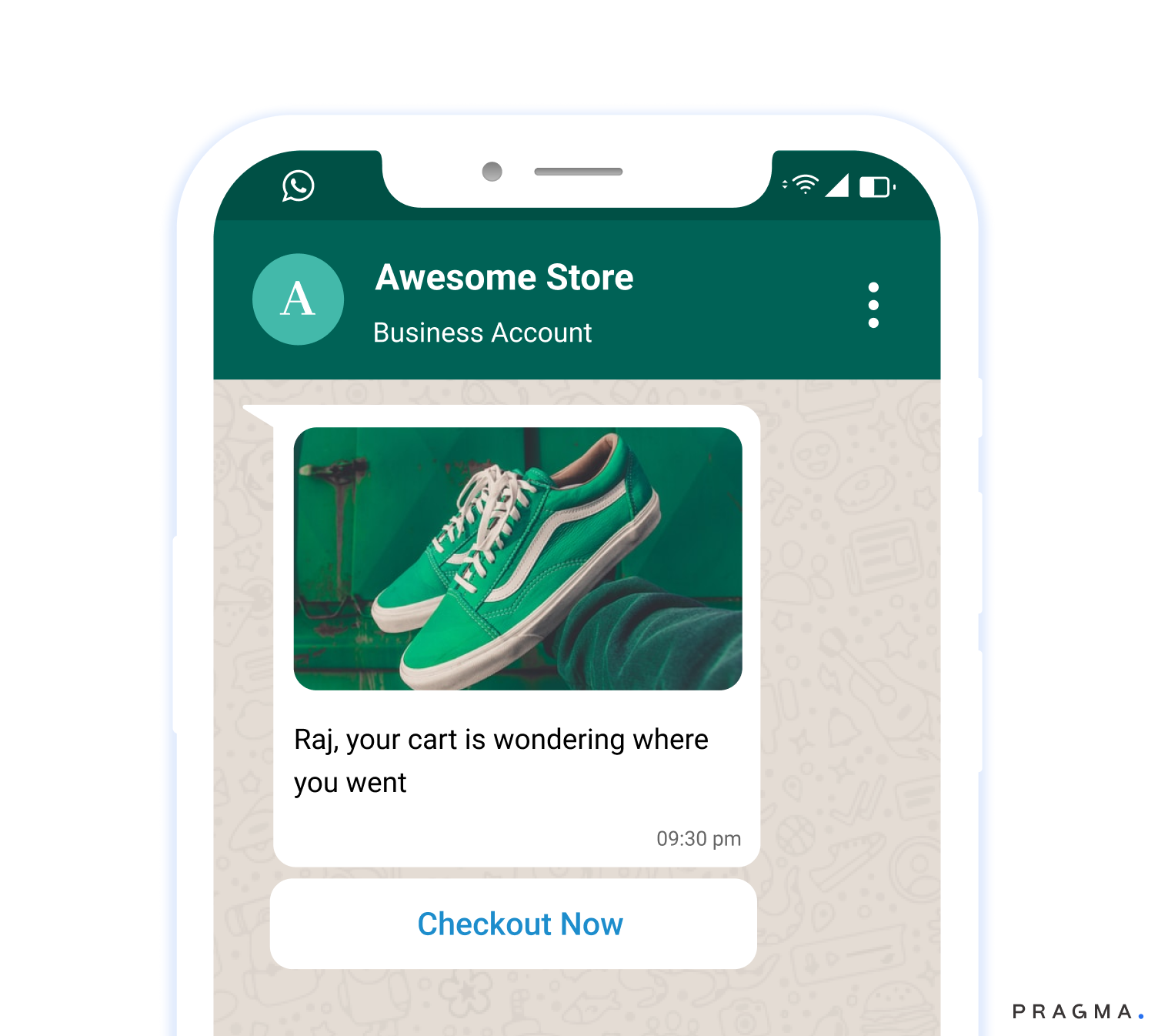
1. Abandoned Cart Recovery
The average cart abandonment rate in India is around 70-80%. This directly translates into significant revenue loss for Indian D2C e-commerce brands.
WhatsApp automation software enables brands to recover 15-25% of these abandoned carts or lost sales by timely triggering the customers and sending personalised reminders based on customer behaviour.
It makes use of customer behavioural data to determine the optimal timing to send messages, messaging formats, and incentives.
Pragma WhatsApp Business Suite leverages behavioural data and large-scale insights, enabling brands to improve conversions by 15% and reduce business losses with tailored notifications and offers, nudging consumers to complete their orders.
2. Order Confirmation and Updates
When your customers are updated with real-time updates about their orders, they feel less anxious.
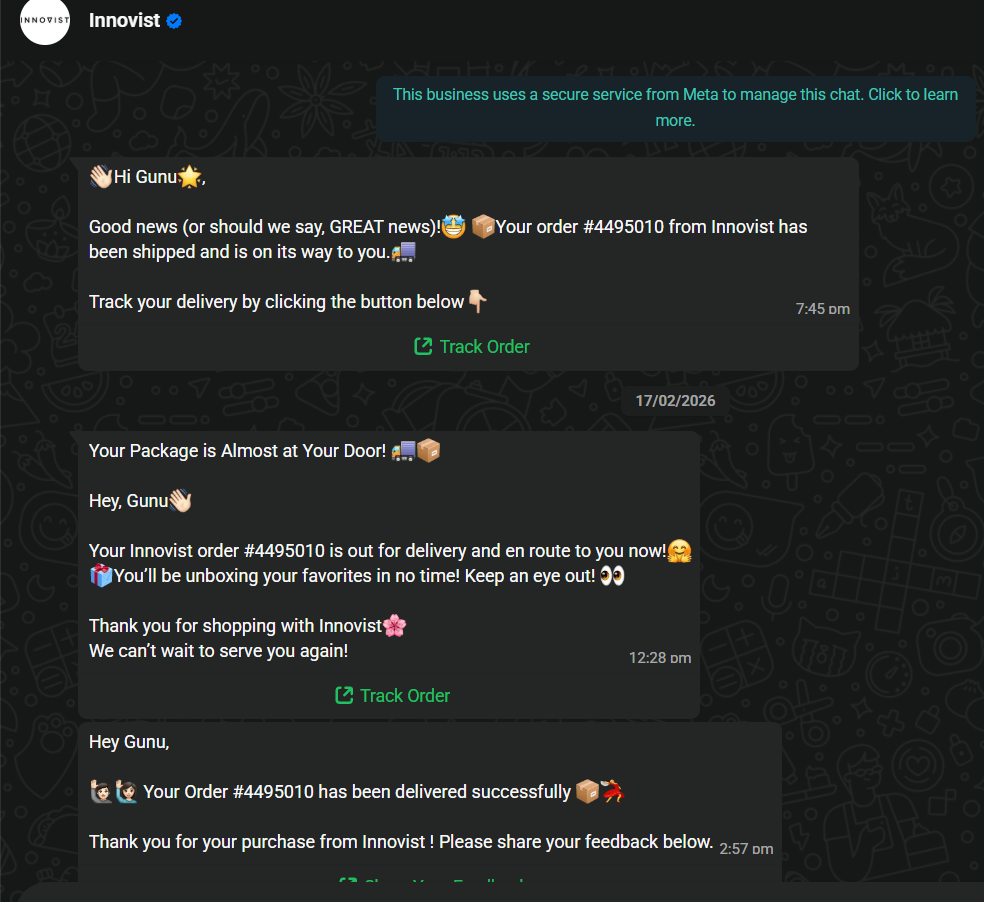
This means that automated order confirmations and updates directly help the brands, as they get fewer queries when the customer support is done through WhatsApp automation software.
This automation is significantly important in the Indian e-commerce market, where COD(cash-on-delivery) is still the most used payment method.
Advanced systems like Pragma RTO Suite can automate verification workflows, reducing order cancellations by 10 to 15% just by sending pre-configured notifications to your customers on WhatsApp, SMS & Email at the right time based on customer convenience data.
3. Customer Support Automation
Indian e-commerce brands receive thousands of queries daily. Most of them are asked by customers again and again.
These queries are mostly related to order status, return policies, and product-related questions.
By automating responses to frequently asked queries, brands reduce dependency on manual support.
Platforms like Pragma combine chatbot automation with seamless human handover, enabling brands to automate up to 70–80% of support queries.
4. Lead Generation and Qualification
WhatsApp business automation software enables brands to capture leads from different sources, filter them using interactive communication and then forward them to sales teams.
This is done by filtering users according to their intent and engagement. These workflows ensure that only high-quality leads are passed to sales teams.
5. Re-engagement Campaigns
Inactive customers are the untapped source of revenue for e-commerce companies.
WhatsApp automation re-engages these customers with personalised offers and product recommendations by activating a series of automated messages according to their previous interaction and the pattern of purchase.
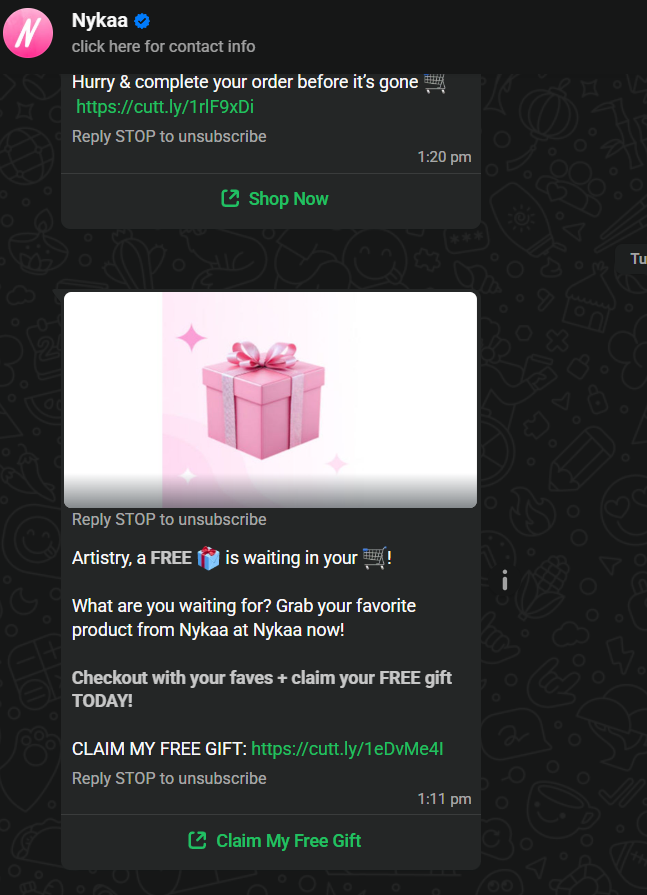
These re-engagements, done through WhatsApp automation software, enhance repeat purchases and improve a customer's lifetime value.
Best WhatsApp Automation Software for E-commerce Brands in India
We have gathered some of the best WhatsApp automation software that could help Indian e-commerce brands in better customer engagement and getting qualified sales and revenues:
1. Pragma WhatsApp Business Suite
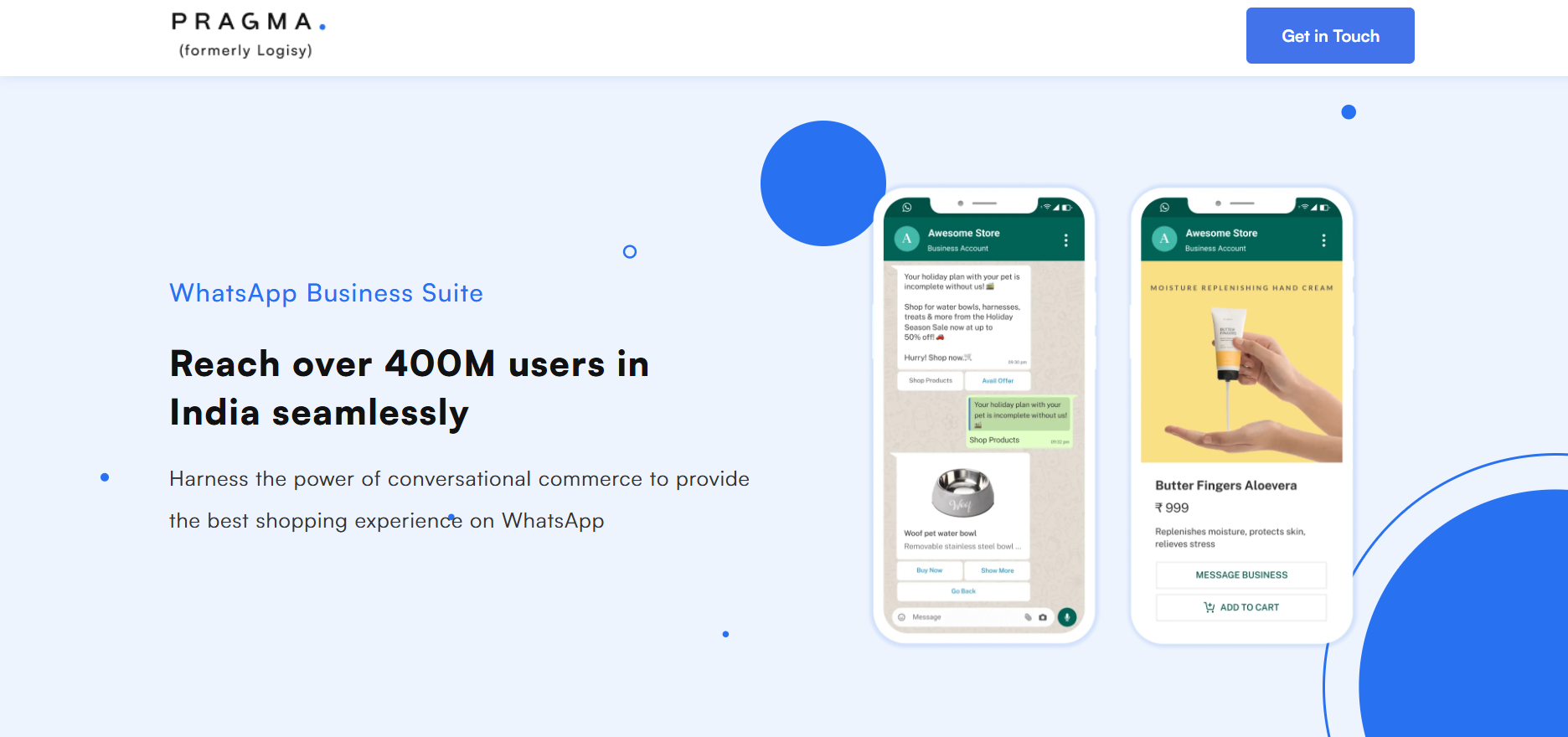
One of the platforms specifically designed for Indian D2C brands that integrates automation, CRM, and analytics, allowing a scalable approach to customer engagement.
Key Features:
CRM Integration: Unifies customer data in an omnichannel CRM, which facilitates context-based and consistent communication.
Bulk Messaging: Allows reaching out to 400M users in India seamlessly, without any effort.
Audience Segmentation: Can segment users by creating targeted audiences, based on demographic, location, buying patterns, or even at the SKU level.
Smart Automation: Address verification, order confirmations and product recommendations are done using AI-driven workflows.
COD to Prepaid Conversion: Automates conversion processes that convert cash-on-delivery orders to prepaid to enhance the predictability of the cash flow.
Supports Drip Campaigns: Send promos, enable quick replies and provide support in real-time with automated drip campaigns.
RTO Reduction: Leverages insights from 1700+ D2C brands to detect and avoid high-RTO segments in acquisition campaigns.
Unified Inbox: Gathers customer communications across many channels in one interface, for efficient management.
Smooth Human Handover: Moves complicated queries out of the automation to live agents without affecting the customer experience.
2. WATI
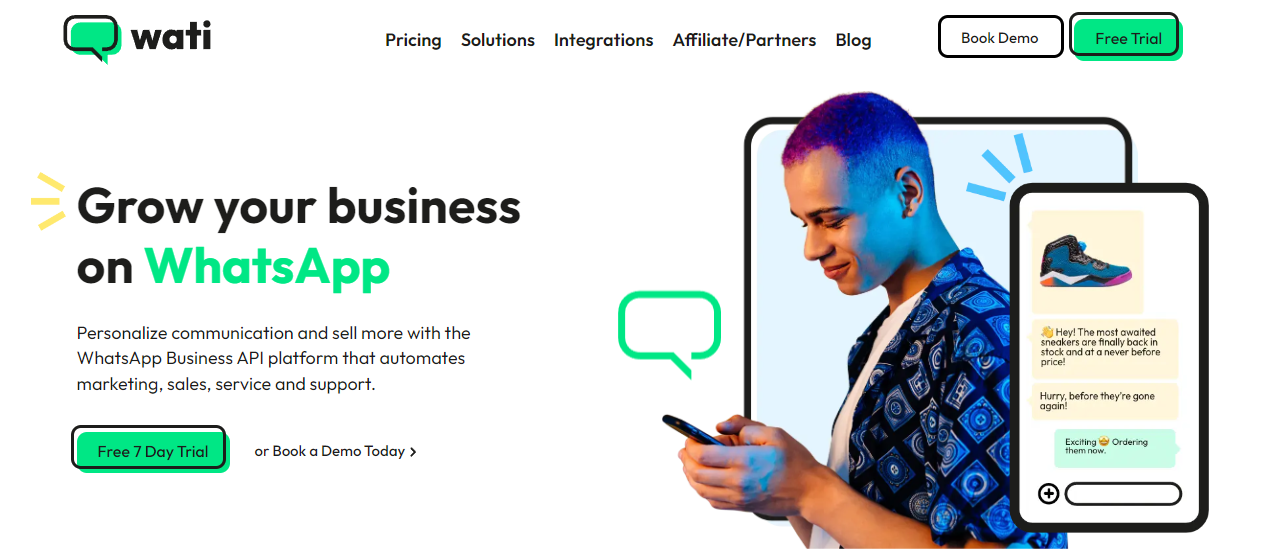
WATI is a known WhatsApp automation software. It focuses on simplifying inbox management, templates, and team workflows.
It offers user-friendly automation features that both large and small businesses can use:
- Drag-and-drop campaign builder
- Multi-agent team inbox
- CRM integrations
- Template management
3. Interakt
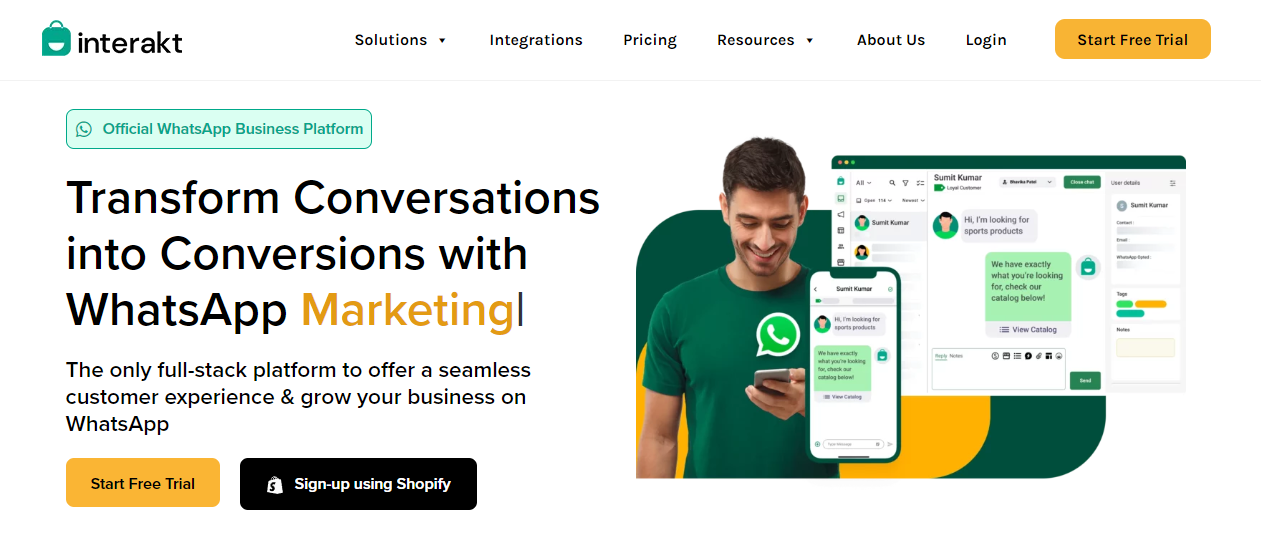
Interakt is a choice for companies that use WhatsApp every day for their business operations.
It helps with messaging and basic business tasks, especially dedicated to e-commerce, and supports features such as:
- Order notifications
- Cart abandonment recovery
- Product catalogue integration
- Collection of payments through WhatsApp.
4. AiSensy
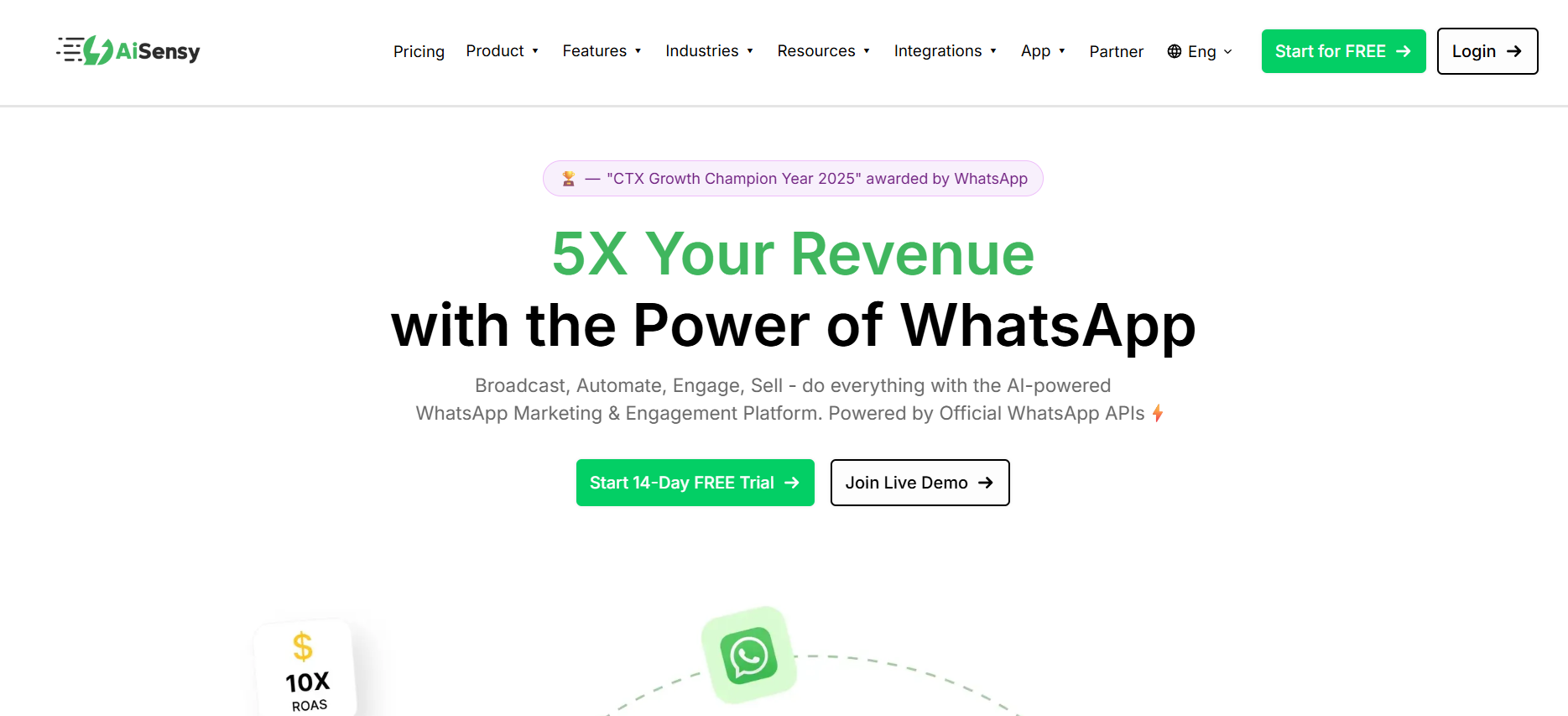
Aisensy is really good for people like marketers and operators who focus on things like campaigns, broadcasts and sending a lot of messages at the same time. It provides the following AI-powered features:
- Click-to-WhatsApp ads
- Multi-agent live chat
- Chatbot flow builder
- Real-time analytics
5. DelightChat
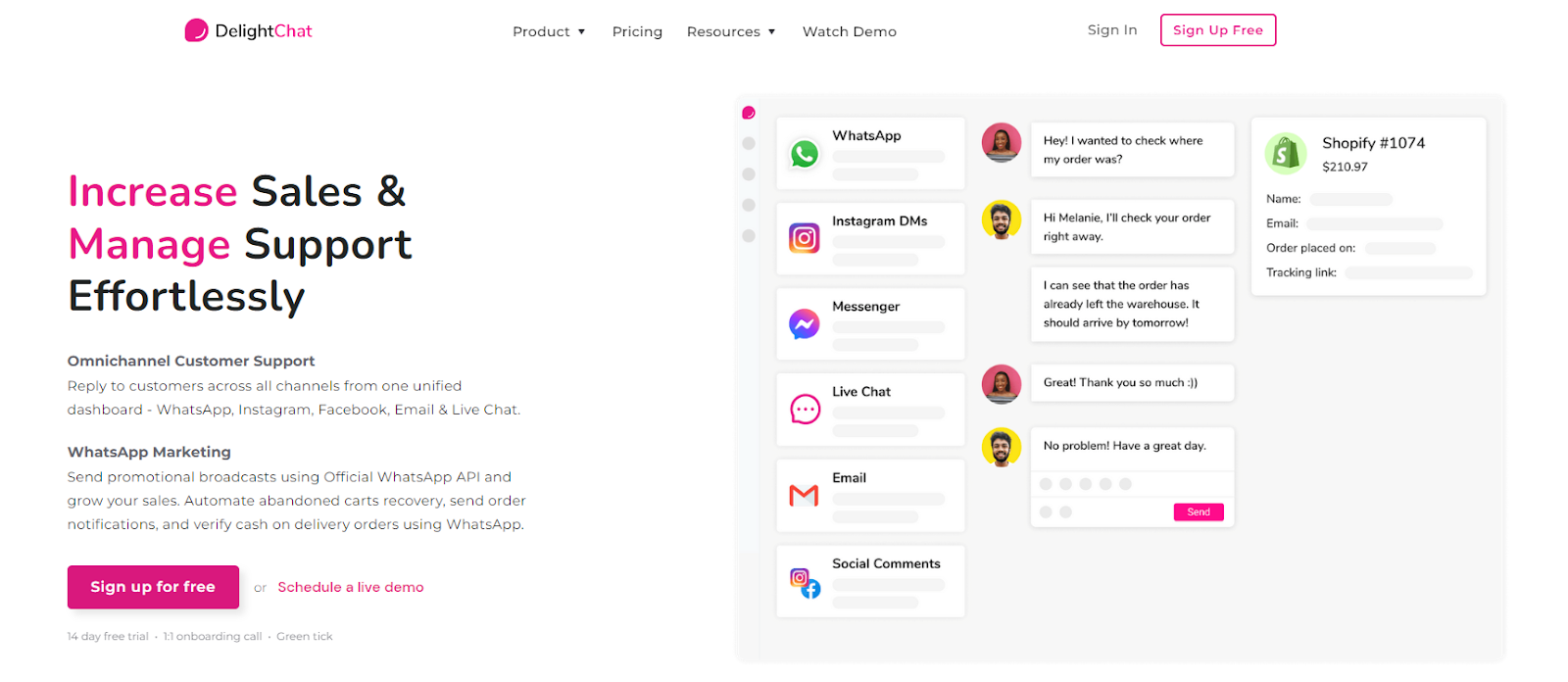
A tool that aids e-commerce brands with customer service and marketing. It uses channels, like WhatsApp and Instagram.
It knows how to support customers with:
- Multi-channel support
- Shopify integration
- Collaborative ticket management
- Quick response and templates
Key Features to Look for in WhatsApp Automation Software
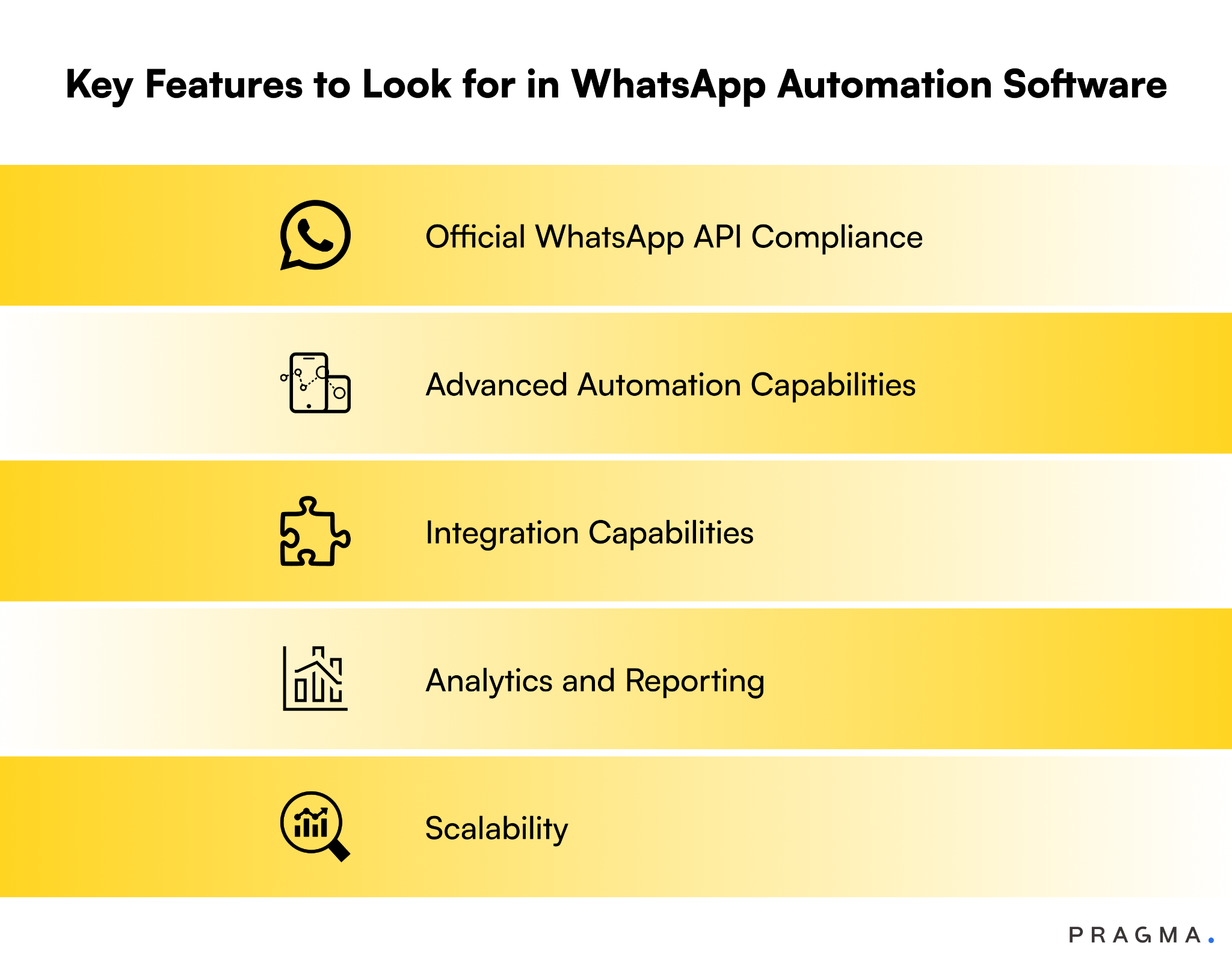
The main characteristics to consider when using WhatsApp Automation Software:
1. Official WhatsApp API Compliance
Ensure the software complies with the rules of WhatsApp to avoid account suspension risks.
This facilitates continuous and scaled customer communication.
2. Advanced Automation Capabilities
Good WhatsApp automation softwares organise the communication by:
- User-action-based event-driven messaging.
- Conditional logic to direct conversation flows.
- Personalisation with customer information and behaviour.
- Sequences of multi-step campaigns throughout the customer journey.
Through AI-powered triggers and behavioural signals, software such as Pragma WhatsApp BusinessSuite allows automation workflows to be highly customised in response to customer intent and enhance engagement results.
3. Integration Capabilities
Efficiency of operations is provided by seamless integration with the existing systems. The software should integrate seamlessly with:
- E-commerce solutions (Shopify, WooCommerce, Magento)
- CRM databases of customer information.
- Transaction workflow payment gateways.
- Performance tracking analytics.
This connectivity makes it possible to have cohesive data flow and more coordinated customer interactions.
4. Analytics and Reporting
Strong analytics will help to measure continuous optimisation and correct performance measurement. The best WhatsApp automation software should be able to analyse these key metrics:
- Message delivery rates
- Open and response rates.
- Conversion tracking
- Revenue attribution
Platforms that combine the insights of two or more brands and campaigns are more visibility-intensive. Pragma is one of the systems that use large volumes of D2C data to create actionable insights, which allows brands to optimise their messaging and increase ROI.
5. Scalability
The number of messages rises when businesses expand.
Scalable WhatsApp business automation software can manage increased message volumes and user interactions without affecting performance.
They will deliver consistent performance and responsiveness to all customer touchpoints.
WhatsApp Automation Software vs WhatsApp CRM
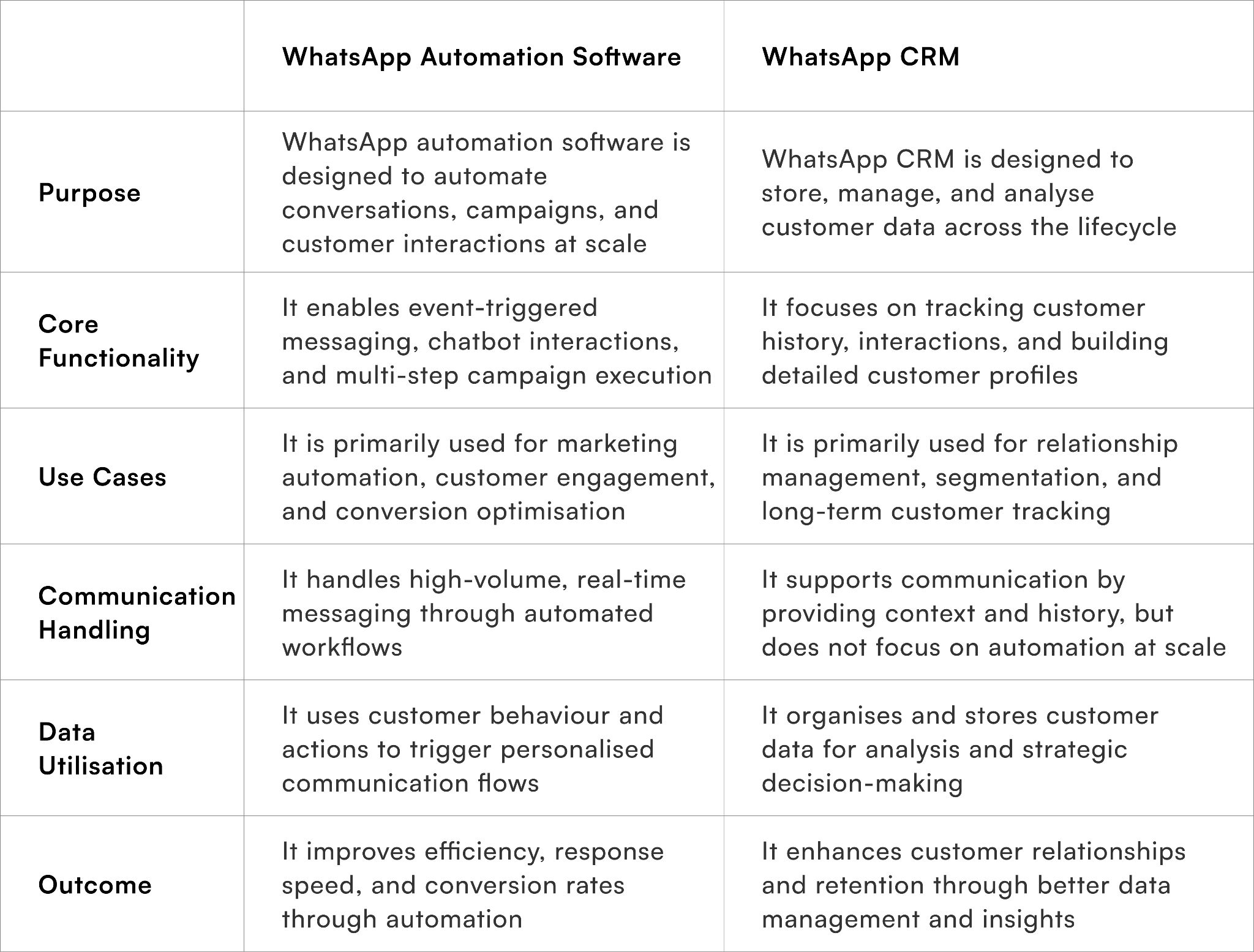
Although both WhatsApp automation software and WhatsApp CRM systems are based on the same communication platform, they have different purposes in the management of customer interactions.
Automation aims at growing the scale of conversations and actions, but CRM systems are aimed at structuring and using customer data as assets to nurture long-term relationships.
How to Choose the Best WhatsApp Automation Software?
Choosing the right WhatsApp automation software depends on how well it aligns with your business needs, existing systems, and growth plans.
To choose the best WhatsApp automation software, follow the given points:
1. Define Your Use Cases
Start by identifying what your business wants to achieve with automation.
This could include:
- Customer support automation
- Marketing campaigns
- Cart recovery
- Lead generation
- Order updates and notifications
By clearly defining use cases, you can select the best WhatsApp automation software that supports your core business workflows instead of adding unnecessary complexity.
2. Check Integration with Your Existing Tools
The WhatsApp business automation software should work smoothly with your current tech stack you are using in your business.
This includes:
- E-commerce platforms (like Shopify or WooCommerce)
- CRM systems
- Payment gateways
- Analytics tools
Seamless integration with existing tools ensures that customer data flows across systems, enabling more accurate and personalised communication.
3. Evaluate Automation Capabilities
Not all platforms offer the same level of automation. Look for features such as:
- Behaviour-based triggers
- Multi-step workflows
- Conditional logic
- Personalisation based on customer data
Platforms that use AI and behavioural insights, such as Pragma, enable more structured and effective communication, improving engagement and conversion rates.
4. Look at Analytics and Reporting
Strong analytics help you understand what is working and what needs improvement.
Key metrics that every business should check:
- Message delivery and open rates
- Response rates
- Conversion tracking
- Revenue impact
Platforms that provide actionable insights make it easier to optimise campaigns and improve overall performance.
5. Consider Scalability
As your business grows, your communication volume will increase.
The platform should be able to:
- Handle high message volumes
- Support multiple users or teams
- Maintain performance without delays
This ensures that your operations remain smooth even during peak traffic or sales periods.
6. Ensure Compliance and Reliability
The platform must adhere to the guidelines of WhatsApp and follow data protection standards.
This reduces risks such as:
- Message failures
- Account restrictions
- Data security issues
Reliable systems ensure consistent communication with customers.
7. Evaluate Support and Onboarding
Good support makes a big difference, especially during setup.
Look for:
- Quick response times
- Technical assistance
- Proper onboarding guidance
Strong support ensures that the business can use the platform effectively from the start.
By evaluating platforms based on these factors, Indian businesses can choose a solution that not only automates communication but also improves efficiency, customer experience, and long-term growth.
What are the Benefits of Using WhatsApp Business Automation Software?
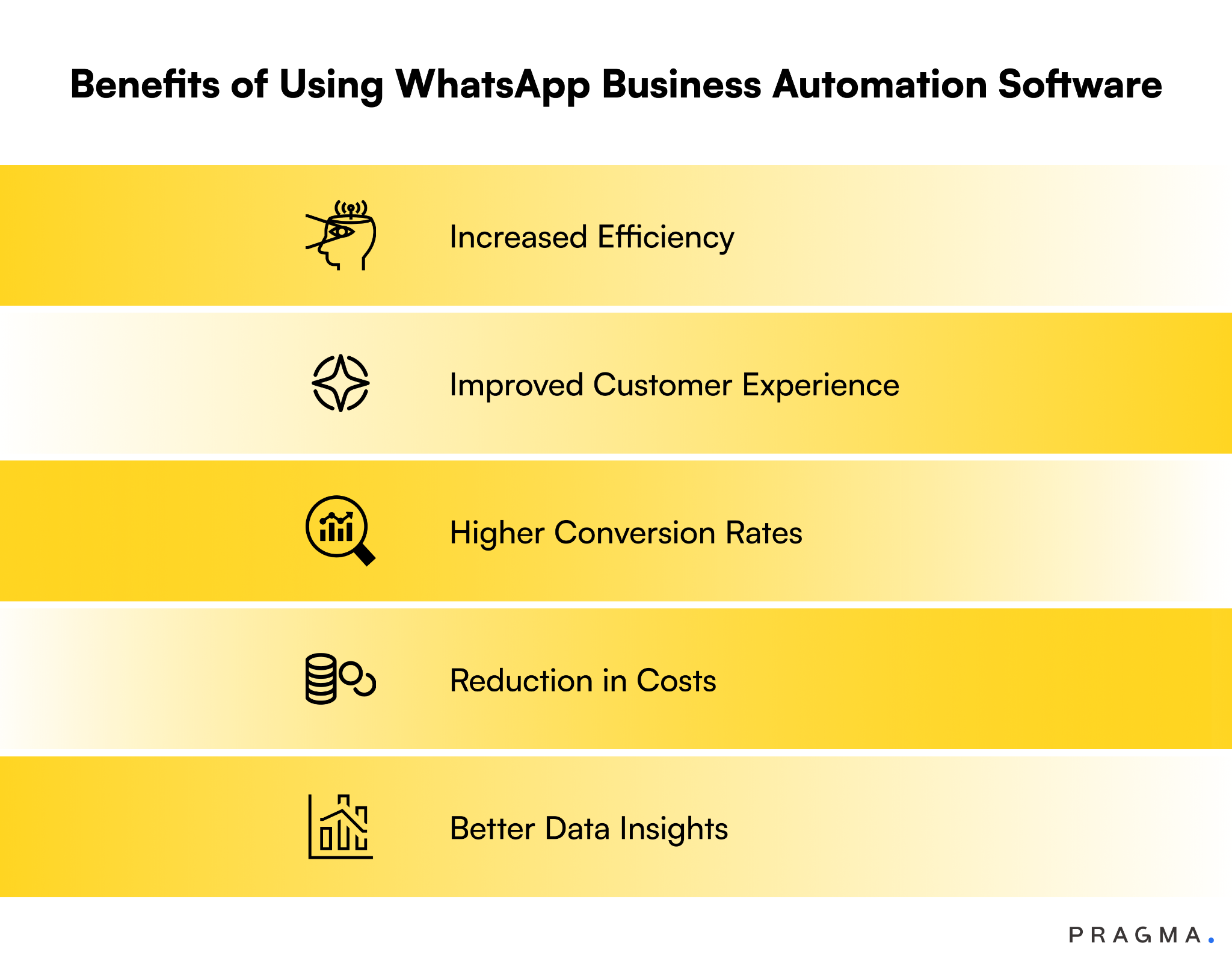
Using WhatsApp automation software provides the following benefits to Indian businesses:
Increased Efficiency
Automation of repetitive activities helps businesses to cut down on manual workload and enhance day-to-day activities.
This will enable businesses to concentrate on activities that have a high impact, enhancing productivity.
Research shows that automation has the potential to enhance efficiency in customer service activity by 20-25%.
Improved Customer Experience
Automation increases customer engagement and satisfaction by allowing brands to respond instantly and have a personalised interaction with their customers.
WhatsApp automation provides 24/7 support, thus making it very consistent; this is very critical to customers in various time zones.
Higher Conversion Rates
Automation enhances the chance of a purchase by initiating timely follow-ups and providing customised recommendations.
According to some studies, WhatsApp automation by brands has shown an increase in conversion rates of 15-30% in relation to the traditional communication channels.
Reduction in Costs
Automation helps to minimise operational expenses without compromising on the quality of service because it reduces the reliance on manual support processes.
Businesses using chatbot-driven workflows save significant time and resources at scale.
Better Data Insights
Automated systems can provide actionable insights through capturing and analysing customer interactions.
This enables businesses to streamline campaigns, enhance targeting, and make evidence-based decisions.
What are the Common Mistakes to Avoid When Using WhatsApp Automations?
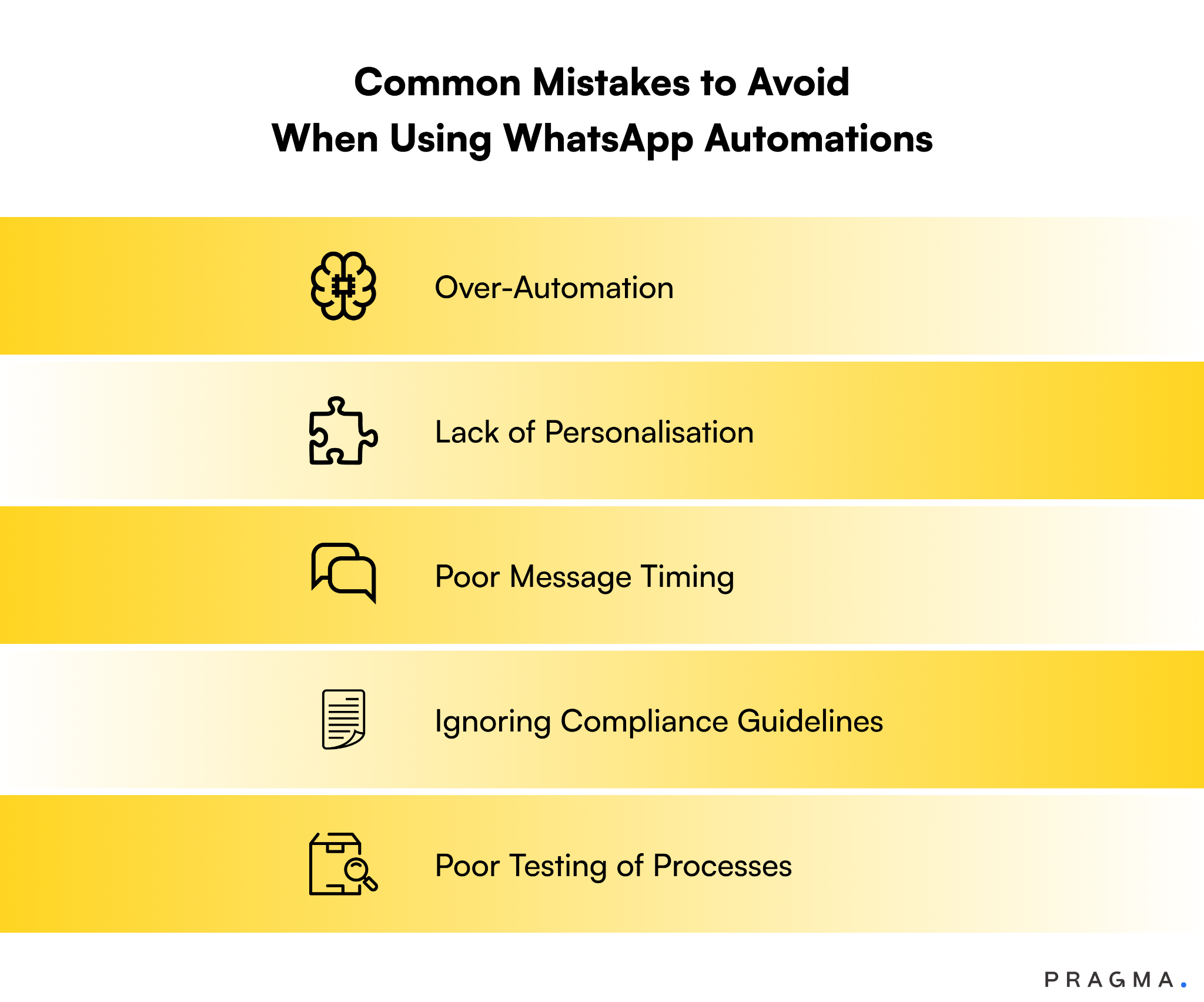
WhatsApp automation enhances efficiency and scalability, but it may degrade the effectiveness and may adversely affect customer experience if not used properly.
If brands eliminate the following errors, it will be possible to improve engagement and long-term outcomes.
Over-Automation
Communication can feel impersonal to customers if brands automate every communication.
Through excessive automation, brands are likely to lose the human touch, which is needed in complex queries and high-value customers.
An adequate solution is a combination of automation and human factors, which guarantees efficiency and quality of relationships.
Lack of Personalisation
Generic messages reduce engagement and response rates.
Lack of access to customer data means that the brand is not able to provide relevant and contextual communication.
Behavioural, preferences, and purchase history-based personalisation enhances the quality of interaction and conversion.
Poor Message Timing
The wrong timing may cause message fatigue or annoyance to the customer.
Sending messages without caring about how users will behave or what time they would prefer, brands run the risk of engagement decreasing.
With messaging based on triggers, communication is delivered at the most appropriate time.
Ignoring Compliance Guidelines
Failure to adhere to WhatsApp policies may result in account blocks or message failures.
Brands that do not adhere to the official guidelines may face communication disruptions.
Official API-based systems and approved templates should be used to guarantee reliability and scalability over time.
Poor Testing of Processes
The implementation of automation without adequate testing may lead to faults and a bad customer experience.
By not validating flows, it may happen that brands convey the wrong message or interrupt the user journey.
The testing will make sure that the workflows work as they are supposed to and provide a smooth experience.
By preventing such errors, brands will be able to effectively leverage the power of WhatsApp automation without sacrificing the quality of communication, consistency, and reliability of their communication strategy.
How WhatsApp Automation Impacts E-commerce Metrics?
WhatsApp automation directly influences key e-commerce metrics by improving how brands engage, convert, and retain customers.
Here is how WhatsApp automation impacts different e-commerce metrics:
1. Customer Acquisition Cost (CAC)
Customer acquisition cost refers to how much a brand spends to acquire one customer.
Brands using WhatsApp automation get conversions from the existing traffic they are targeting through automated drip campaigns, such as cart reminders or product recommendations.
Thus, WhatsApp automations reduce the need to spend heavily on ads. As a result, brands acquire more customers from the same traffic, leading to a 20–40% reduction in CAC.
2. Customer Lifetime Value (CLV)
Customer lifetime value measures how much revenue a customer generates over time.
When you send messages that are just for that customer, based on past purchases and behaviour, WhatsApp automation keeps the customers interested even after they make their first order.
This means you can send them messages to get more sales again, suggest products they might like, and give them deals.
Pragma WhatsApp Suite engages with the customers with automated drip campaigns, improving the customer interest and conversion rates, resulting in a 15–25% improvement in CLV.
3. Cart Abandonment Recovery
Cart abandonment is one of the issues in the Indian e-commerce market. The average cart abandonment rate is nearly 70.19%.
WhatsApp automation addresses this by sending timely reminders when a user leaves without completing a purchase.
These WhatsApp reminder messages consist of the following things:
- It includes product details that the customer had looked at before to tell its uses or specifications.
- It adds urgency with limited stock or time-based messaging.
- The messages include offers, incentives like discounts or free shipping, that attract customers to purchase the product.
- The messages are personalised based on customer behaviour or preferences.
Solutions like Pragma WhatsApp Business Suite automate cart recovery workflows, enabling timely and personalised follow-ups.
5. Return to Origin (RTO) Rates
RTO (Return to Origin) happens when an order fails to get delivered to the customer and is sent back, which is a major cost factor in Indian e-commerce.
WhatsApp automation reduces this by verifying orders before they are shipped. This is especially useful for Cash on Delivery orders.
Automated messages make sure the customer actually wants the order and that the address is correct.
It also reduces the number of orders that are returned to the seller, which helps brands avoid losing money on returns.
Tools like Pragma RTO Suite minimise RTO by sending pre-configured notifications to your customers on WhatsApp, SMS & Email at the right time based on customer convenience data, preventing 60% of orders from being RTOs.
What is the Future of WhatsApp Automation in E-commerce?
WhatsApp automation is going to get really good at helping e-commerce businesses talk to customers in a way that feels more personal.
- E-commerce brands will be able to use intelligence and customer data to send messages that are actually relevant to them.
- They will be able to predict customer needs and engage at the right time.
WhatsApp automation will also go beyond just text messages.
- It will be able to send pictures, videos, and voice messages, making communication more interactive.
As WhatsApp improves its integration with e-commerce platforms and customer management systems, it will become a key channel that will drive sales and improve customer satisfaction.
To Wrap It Up
So, to conclude here, we want to say that WhatsApp automation software has become essential for D2C e-commerce brands that are looking to scale their business while maintaining their customer experiences.
As WhatsApp is one of the most used platforms with a massive number of users, the brands that use it in their day-to-day operations will definitely gain significant advantages.
Businesses that leverage data-driven, automated communication will be better positioned to drive higher engagement, reduce costs, and achieve long-term growth.
And platforms like Pragma WhatsApp Business Suite bring these capabilities together by combining automation, customer data, and performance insights into a single system.

FAQs (Frequently Asked Questions On WhatsApp Automation Software: Best Tools for E-commerce in India)
1. What is WhatsApp automation software for eCommerce?
WhatsApp automation software for eCommerce is a platform that enables businesses to send automated messages, manage customer conversations, and run marketing campaigns on WhatsApp at scale using the WhatsApp Business API.
2. How does WhatsApp automation software work
WhatsApp automation software works by integrating with the WhatsApp Business API to trigger messages based on user actions, events, or schedules. It supports automated workflows like order updates, abandoned cart recovery, and customer support.
3. Why is WhatsApp automation important for eCommerce in India?
WhatsApp automation is important in India due to high user penetration, strong engagement rates, and the ability to deliver real-time, personalised communication that improves conversions and customer experience.
4. What are the best WhatsApp automation tools for eCommerce in India?
The best WhatsApp automation tools are platforms that offer automation workflows, user segmentation, campaign management, analytics, and deep integration with eCommerce systems and logistics partners.
5. What features should WhatsApp automation software include?
Key features include automated message flows, broadcast campaigns, user segmentation, real-time analytics, chatbot capabilities, integration with CRM and checkout systems, and compliance with WhatsApp policies.
6. How can WhatsApp automation improve eCommerce conversion rates?
WhatsApp automation improves conversion rates by sending timely, personalised messages, reducing decision friction, recovering abandoned carts, and guiding users directly to checkout.
7. Can WhatsApp automation reduce cart abandonment in eCommerce?
Yes, WhatsApp automation helps reduce cart abandonment by sending reminders, addressing customer objections, offering incentives, and providing quick access to checkout links.
8. How is WhatsApp automation different from WhatsApp marketing?
WhatsApp automation focuses on automated workflows and triggered communication, while WhatsApp marketing includes broader campaign strategies such as broadcasts, promotions, and customer engagement initiatives.
9. Is WhatsApp automation software compliant with WhatsApp policies in India?
Yes, WhatsApp automation software is compliant when it uses the official WhatsApp Business API, follows template message guidelines, ensures user opt-ins, and avoids spam or unsolicited messaging.
10. What tools integrate with WhatsApp automation software for eCommerce?
WhatsApp automation software integrates with CRM systems, checkout platforms, logistics and NDR management systems, analytics tools, and customer support platforms to create a unified customer journey.
Talk to our experts for a customised solution that can maximise your sales funnel
Book a demo


.png)