

Return, a word that sounds small, but for the e-commerce brands, it is something bigger than it sounds.
In every e-commerce business, there is a high number of return rates, which can be due to several reasons, maybe on the part of the customer or the mistakes made by the company itself.
In India, the average rate of return in the e-commerce industry is approximately 17.6%, which reaches to 40% in sectors like fashion and footwear.
This percentage sounds terrific to e-commerce brands, but the good news is that these returns can be handled well by the process called returns management.
Returns management is the step-by-step process of handling all the operations that come with a customer requesting to send back the product.
To learn more about "Returns Management in E-Commerce for Indian Brands", stay connected with us, and we will discuss all the important elements that every e-commerce brand should be aware of to manage their returns efficiently.
What is Return Management in E-Commerce?
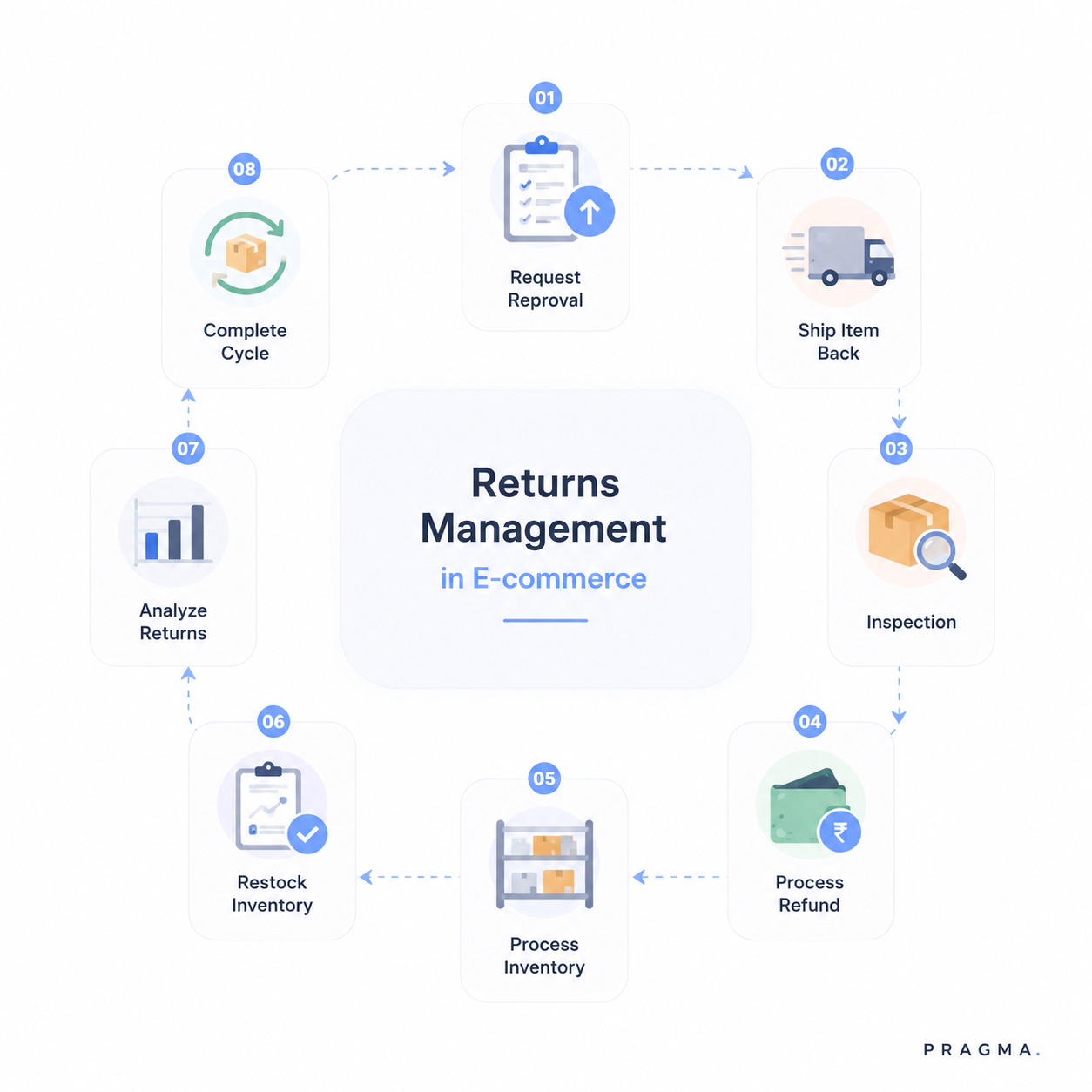
The process of managing returned goods is known as returns management. When a customer purchases a product over the internet and wishes to send it back, the process of return management starts.
Online shopping is based on faith, whereas customers can't touch and feel products when they shop online. Photos, descriptions, and reviews are what customers consider before making a decision. That is why the number of returns in the e-commerce industry is increasing.
According to the National Retail Federation, in 2022 alone, customers returned more than $816 billion/₹67.7 lakh crore worth of products.
The situation is even more straining in India. It has been found that by 2025, the brands might lose up to $20-30 billion/₹1.66 lakh crore to ₹2.49 lakh crore in revenue to returns. This does not only concern the money that flows out in the form of refunds. It also includes all the unrecorded expenses such as shipping, handling and opportunity sales.
Due to these expenses that a brand has to face, proper return management is crucial. And to get over this, many companies have started to adopt such systems, which can help them manage their return processes.
Modern systems, such as the Pragma Return Management System, help to automate most of the processes rather than employing manual labour that would take hours and lead to errors.
It gets in touch with your logistic partners, automatically updates inventory, and keeps customers informed in the process. The system offers integration of more than 50 logistic partners in India, and therefore, allows returns to be managed in any location.
Why Return Management Is Critical for E-commerce Brands?
Returns make a much greater impact on the e-commerce brands than is noticeable. The following points state why returns management in e-commerce is important for every brand:
Impact on Profit Margins
The situation in India, in particular in the case of returns, is worse. As a recent report indicated, India has been registering an average of 17.6% in the e-commerce industry, with fashion being the frontrunner.
The Wall Street Journal discovered that in a 50-dollar product, the retailers might end up paying nearly 60% of the purchase price in the form of returns. This includes shipment, customer service, processing, and even disposing of the product. Such a large portion of your profit margin is lost.
Also, there are some hidden costs, which most of the brands fail to consider.
- The customer service department wastes time answering repeated questions.
- They have to get a place in their warehouse that stores the returns.
- Their cash flow gets upset when they make refunds prior to the sale of the returned item.
But e-commerce brands in India can save themselves from these heavy expenses. To assist in minimising such costs, Pragma RMS (Return Management System), with the help of automated workflows, helps in reducing the number of people involved in the work and accelerating the whole process.
Customer Retention and Trust
How you handle returns directly affects whether customers will buy from you again or not. This may sound strange, but repeat customers who receive a good experience on returns tend to get attached more compared to those who never give back anything. The reason is that the returns are a test of your customer service.
The current-day customers are very demanding in terms of returns:
- Eighty-nine per cent of consumers have made returns online within the past three years.
- Eighty-three per cent of customers read the return policy.
- Two-fifths of the consumers demand free returns, whereas a quarter of retailers provide such.
- 92 per cent of shoppers will repurchase products from the brands that have an easy returns policy.
Looking at these stats, Pragma RMS comes with branded return pages that are similar to your website in looks and feel. This makes the experience professional. OTP-based verification is also used in the system to ensure that the customers feel safe about their returns.
Inventory and Cash Flow Impact
When products come back, your inventory numbers change. However, not everything that comes back is good to sell again. Some need cleaning or repair. Others may be spoiled or not in a saleable condition.
This will impact your stock levels and make it difficult to know what you really have to sell.
Cash flow becomes difficult as well. When you make a refund, the money goes out of the business. But the product that comes back, however, takes days and weeks before you can resell it in your warehouse.
This may cause severe cash flow issues, particularly to smaller businesses, during the busy times.
What are the Different Types of Returns in E-commerce?
We have categorised the types of returns into three segments
- Customer-Initiated Returns
- Return to Origin (RTO)
- Exchange-Based Returns
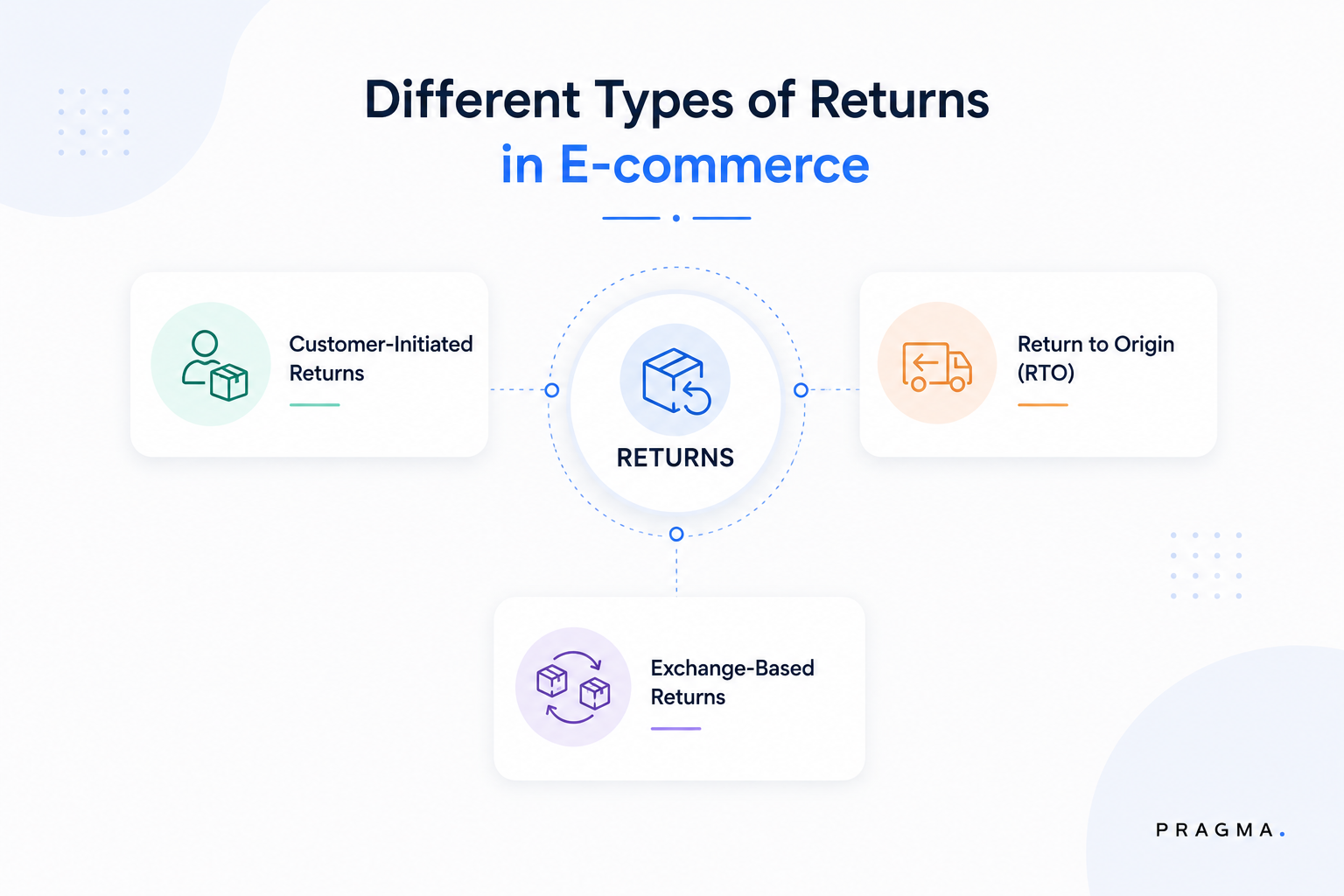
Have a look at each in detail!
Customer-Initiated Returns
The majority of the returns occur when clients decide to return the products. There can be several reasons behind customer returns, such as:
- Size/fit issues (40%),
- Quality problems (25%),
- Change of mind (20%)
- and wrong deliveries (10%).
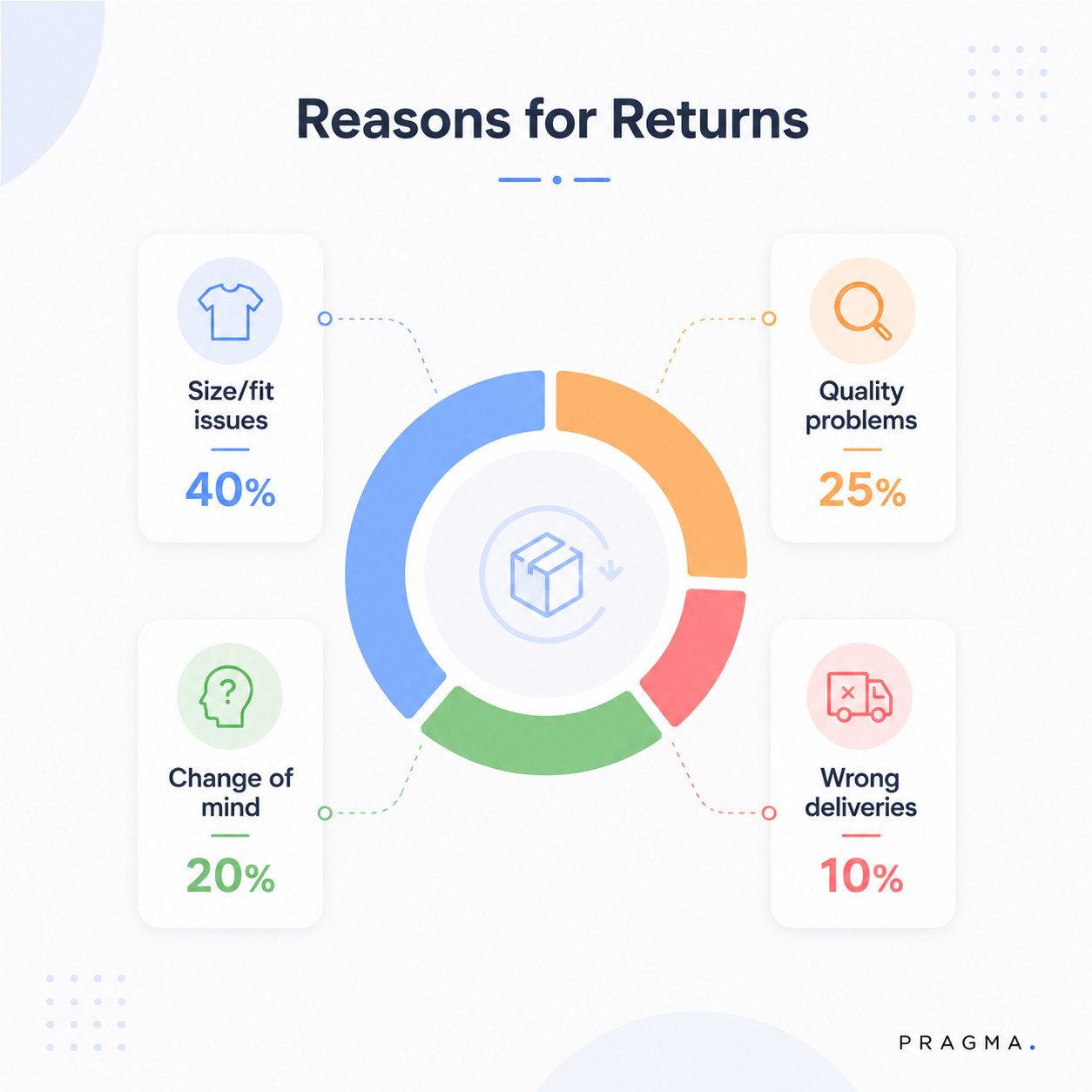
Pragma uses multi-level categories to capture detailed reasons for returns. This will allow you to determine trends (such as sizing problems) and correct the underlying cause by enhancing descriptions of products, size charts, or quality assessments.
Return to Origin (RTO)
RTO occurs when the orders are returned prior to delivery, primarily as a result of COD orders, unavailable customers, payment problems, or wrong addresses. COD orders have twice or even thrice the RTO rates and require additional logistics costs.
In India. The RTO rate is approximately 20-25% of the total orders, due to which bands incur a lot of expenses.
In order to save the e-commerce D2C brands in India, Pragma RTO Suite helps to minimise these problems by order check, customer verification and active delivery communications so that there is a greater success rate of delivery.
Exchange-Based Returns
Exchanges are made when customers want another size, colour, or product rather than a refund. This helps e-commerce brands in retaining revenues, as well as enhancing customer satisfaction. The exchange-based returns are better because:
- The brand does not lose the full amount.
- Customers get what they actually want, which makes them more satisfied.
- You can move slow-selling inventory by offering it as exchange options.
- The processing is often simpler and cheaper than handling refunds.
Returns Management Challenges in India
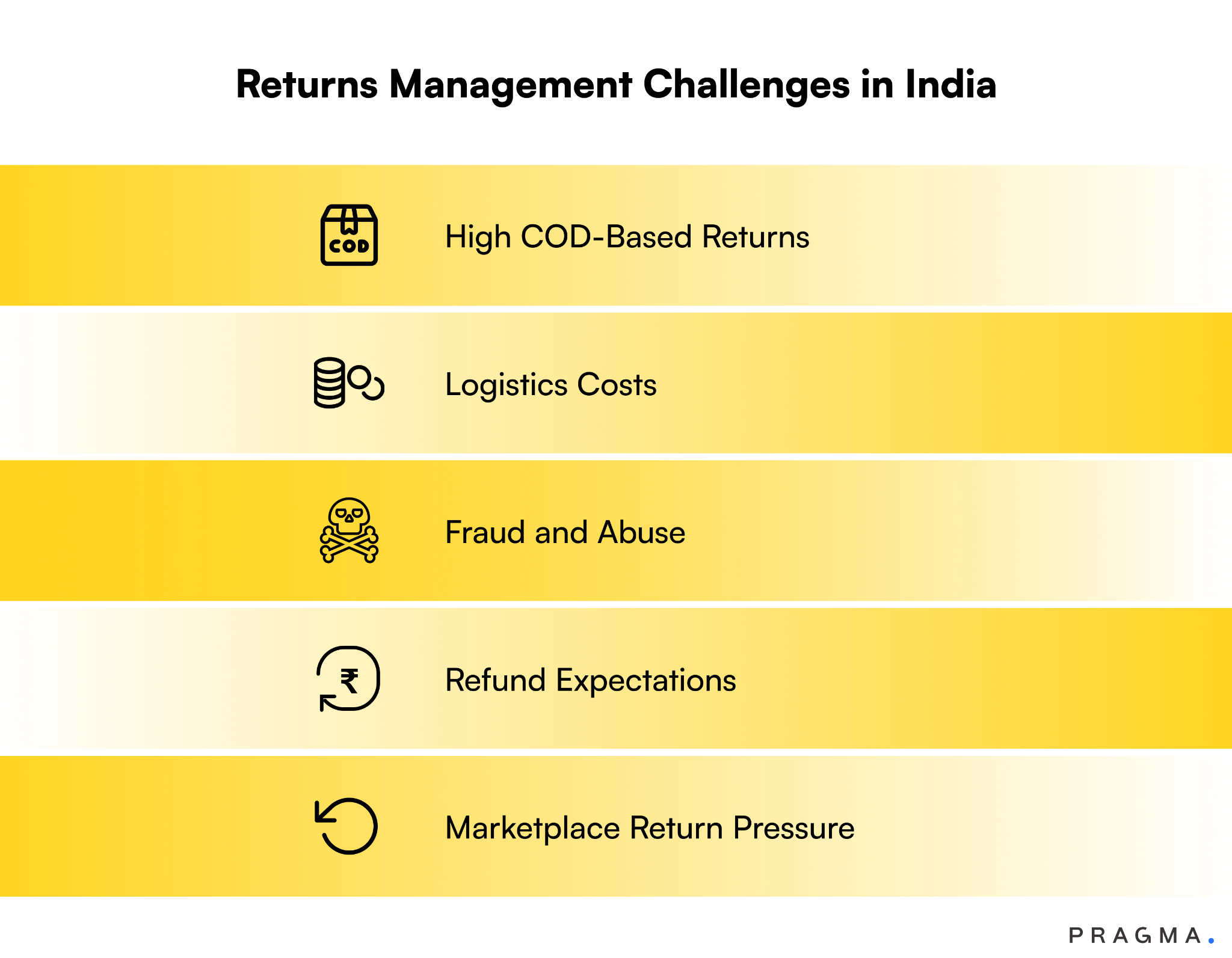
India faces a lot of return management challenges, which become a difficulty for the e-commerce brands. Here are the most common challenges:
High COD-Based Returns
Indian e-commerce is still dominated by cash on delivery (COD); approximately 60% of the orders in India are still placed as COD, which adds to the high volume of returns.
Most of the customers make multiple orders with the aim of keeping what they like, and some reject the delivery because of late changes or unavailability of cash.
It results in a rise in the rate of returns, extra costs in logistics, blocked inventory and no revenue collection.
But to save the Indian e-commerce brands from this situation, Pragma RTO Suite addresses this issue by means of smart risk evaluation. It uses data on 1000+ brands to determine the high-risk COD orders and mark them to verify them, thereby minimising unnecessary returns and retaining a seamless customer experience among fair buyers.
Also, it makes use of its smart C2P strategy(conversion-to-prepaid), which helps brands in increasing their paid orders by 25-35% easily.
Logistics Costs
The geographical size of India and inefficient infrastructure cause the process of reverse logistics to be costly and ineffective, principally in tier-2 and tier-3 cities.
Other delays and expenses include factors such as long routes, accessibility by couriers, and inconveniences caused by monsoons or peak seasons.
The shipping cost of returning the product can even be more than the value of the product in some instances.
Pragma ShipAxis solves this through integrating with 50+ logistics partners and smart routing to optimise return pickups. It helps brands to improve their coverage, cost reduction and improved turnaround time even in difficult areas.
Fraud and Abuse
The problem of return fraud is increasingly becoming serious in India, and such activities as wardrobing (using and returning), swap of products and fake returns can affect profitability.
It is almost impossible to detect such behaviour manually on a large scale, and false flagging can be disastrous to fair customer relationships.
Pragma RTO Suite helps to flag false buyers, high-risk orders or orders made by bots with its efficient behavioural analysis and has helped a major number of e-commerce brands in reducing their RTOs by 60-65%.
Refund Expectations
Due to the emergence of digital payments, customers have become more demanding in terms of speed of refund, live updates, and preference for flexible reimbursement.
However, operational processes like product inspection, bank processing times, and reconciliation often create delays.
And such delays in refunds create a negative impression on the brand and lead to customer dissatisfaction.
Marketplace Return Pressure
Large marketplaces have established high standards such as free returns, extended return periods and immediate refunds.
That's why customers are also demanding that all e-commerce brands have similar policies, and this is pressuring the independent businesses to keep up with the policies, which is often at the expense of profitability.
These challenges can look big, but with the use of the appropriate tools, automation and data-driven approaches can be overcome. Through intelligent risk assessment, streamlined logistics, fraud detection, and automated refund systems, the businesses are able to make a turnaround on returns as a strategic benefit.
Pragma D2C operating system has combined all of these features on a single platform, enabling brands to minimise return rates, manage expenses, prevent fraud, and provide a streamlined experience to their customers.
Step-by-Step E-commerce Returns Management Process
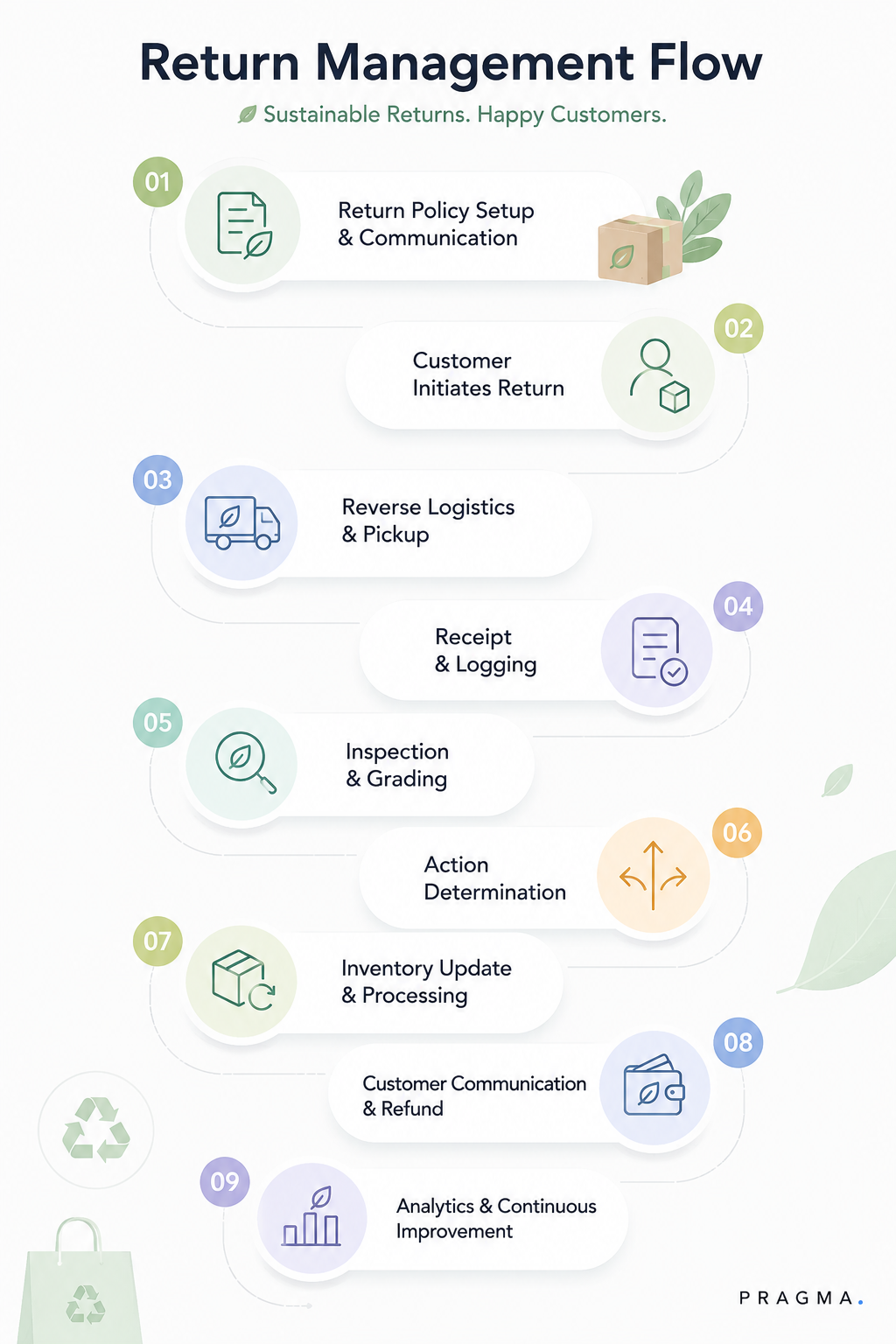
Let us have a look at how the process of returns management in e-commerce looks:
Return Request Initiation
The return management process begins when the customer places the return request with the brand.
Customers log into their account, find their order, and select the items they want to return.
For your return page to be looked at as your website, Pragma Return Management System provides a branded return portal that maintains your brand identity throughout the process.
Eligibility Check
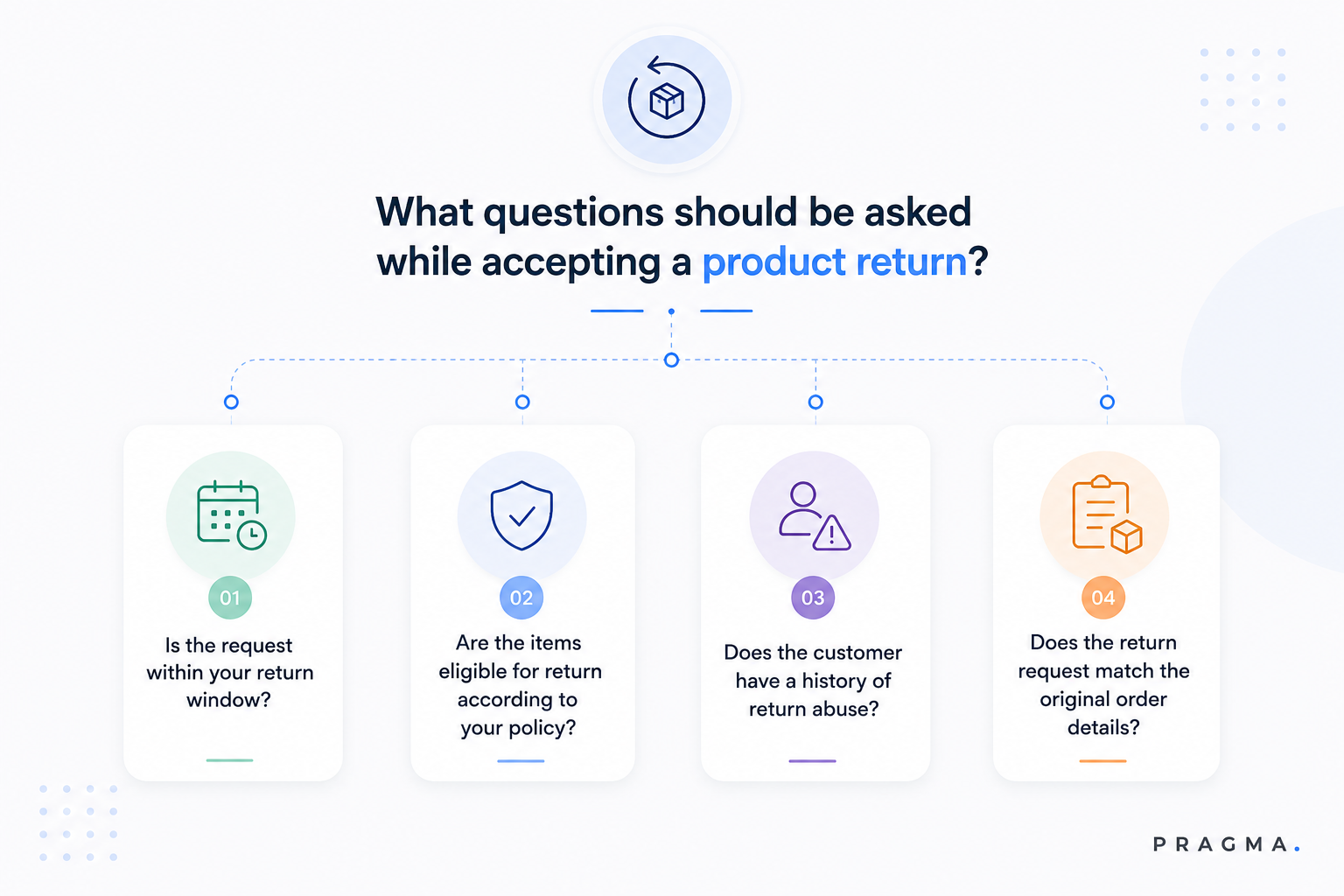
Now, the second step is to check whether the product is eligible or not. Here, some of the few questions have to be considered:
- Is the request within your return window?
- Are the items eligible for return according to your policy?
- Does the customer have a history of return abuse?
- Does the return request match the original order details?
Pickup Scheduling
Once the return request is approved by the brand, the next step is to schedule the pickup of the product.
For this, different options can be used, such as selecting the preferred time slot of the customers, drop off by the customer at the nearest centre, etc.
Product Inspection
Now, once the product reaches the warehouse or fulfilment centre, the next thing is to check the product quality, on the basis of which refunds will be made.
Here, the brands can look for the following things:
- Is the product in good condition?
- Are there any defects?
- Is the product in working condition or not?
- Whether it can be sold again or not?
- Does it require refurbishments or repairs?
Based on these questions, the business categorised the products and added them back to inventory, or disposed of the others that are not in good condition.
Refund or Replacement Processing
Once the product has passed the quality check, the brand initiates the refund to the source account, as credits or the option selected by the customer themselves.
Inventory Update and Restocking
The last step is to update the inventory at all platforms in real-time. For this, smart systems can be used that immediately adjust stock levels, assign storage locations based on item condition, mark items with appropriate condition tags, and synchronise updates across all connected platforms.
How Does Returns Affect E-commerce Profitability?
The percentage of returns is much higher in the e-commerce industry, which causes a negative impact on the e-commerce brands in terms of revenues and profitability. The following are the points that show how returns can hamper the profitability of a business:
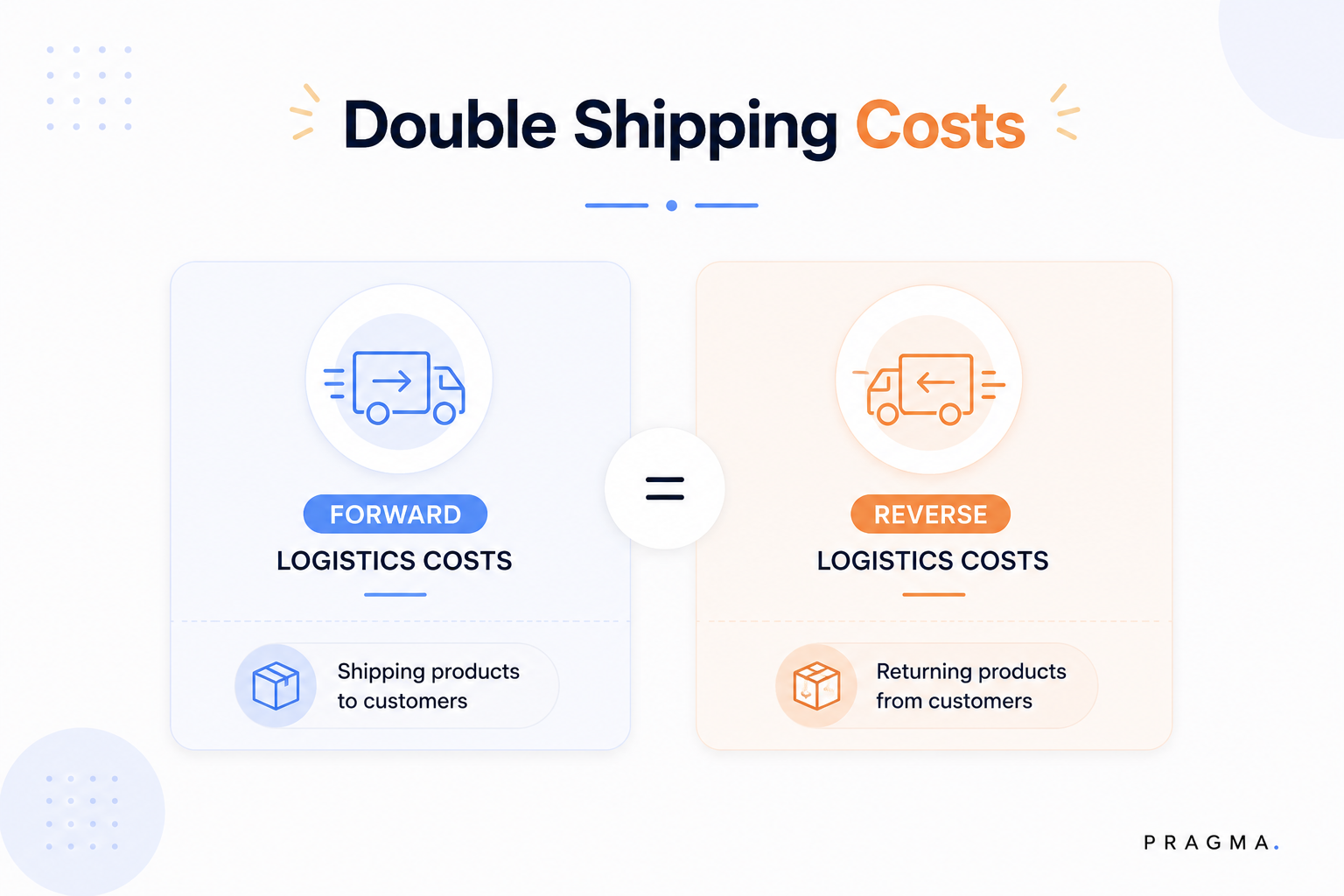
Double Shipping Costs
Delivering a product back to a customer means paying twice: initially to deliver an order, and then to get it back.
You usually incur both expenses in most instances, particularly when you are shipping on a free basis or COD basis. This lowers the profit margin, and in some cases, it will even cause a loss on that order.
Packaging Loss
Damaged, disturbed or missing packaging is common with returned items. This is a problem in reselling the product as a new one.
You might have to incur additional expenditures on repackaging, or you can offer the product at a lower price, which will influence your revenue directly.
Operational Handling Costs
The process of returns is not only about being provided with the product back. It contains several phases such as quality control, inventory management, refund requests and liaising with logistics partners.
All this work takes the use of manpower, time and systems, which drive up your total operational costs.
Lost Sale Opportunity
When the product is returned, it cannot be sold again until it has been checked and replenished. Such a delay may make you lose the opportunity to sell it to another consumer at full price.
In some cases, the product may become unsellable or need to be discounted, leading to further loss.
How to Reduce Returns in E-Commerce?
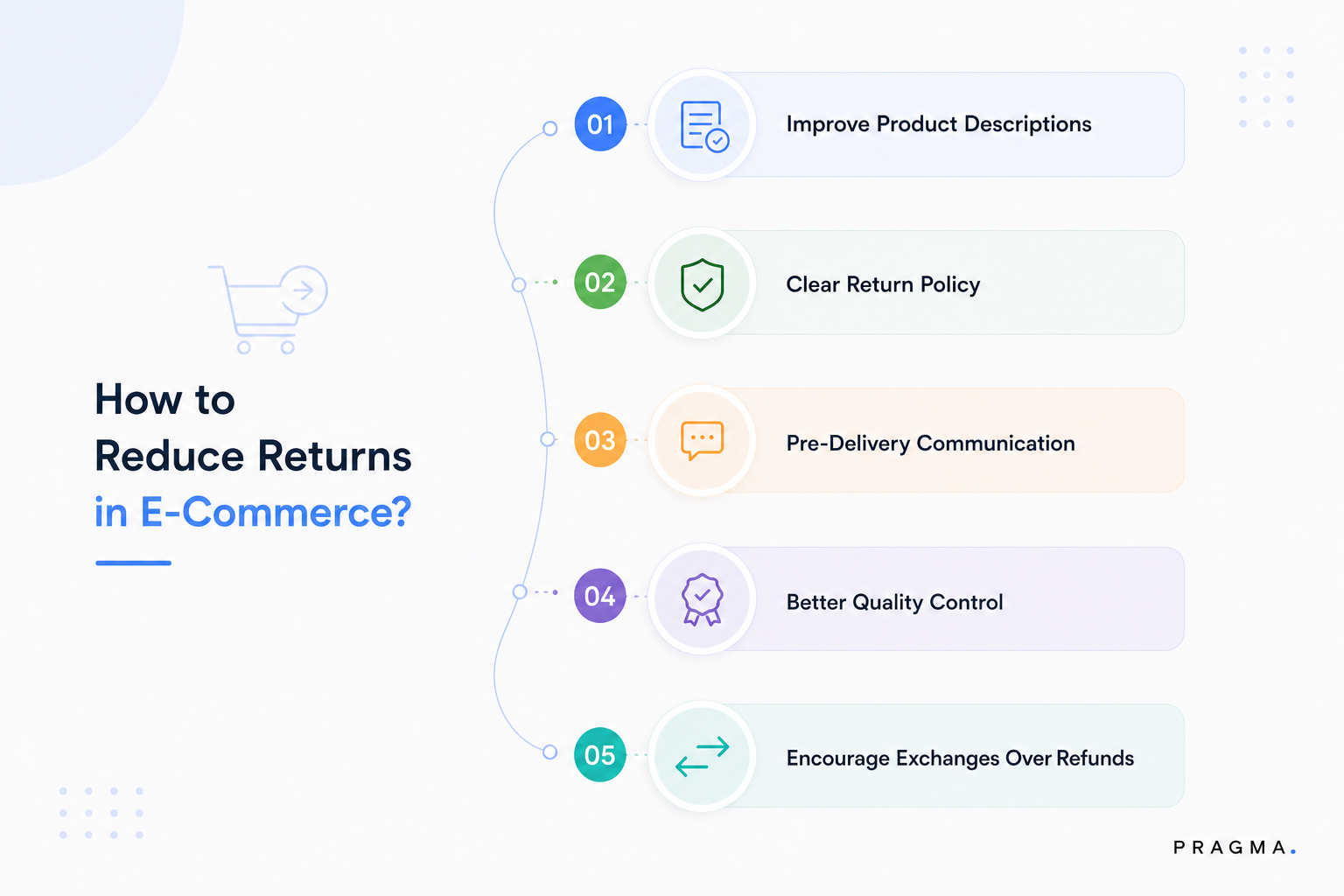
To reduce returns in your e-commerce business, you can opt for the following strategies:
Improve Product Descriptions
Always add good and detailed product information. Add high-quality images at various angles, proper size charts, and genuine descriptions of material, colour and features.
This will ensure that there will be minimal chances of returning the product because of misguided expectations when the customers clearly know what they are purchasing.
Clear Return Policy
Make your return policy simple, transparent and accessible to everyone. All the valuable information, such as the time of returning, conditions, and the option of refund or exchange, should be clearly mentioned in it.
A well-established policy will not confuse the customers and will assist them in making a more worthwhile decision regarding purchases, and this can minimise unwarranted returns.
Pre-Delivery Communication
Every brand should be in touch with the customers prior to order delivery. They should send confirmation messages of orders, shipping and delivery reminders.
In the case of COD orders, a fast confirmation message will assist in making sure the customer is not busy and that he or she is interested in making the order but not declining.
Better Quality Control
When you send any product to your customers, before that, ensure that there are no defects, damages, or incorrect items packed.
These quality checks will aid in preventing poor or wrong products, which lead to returns and enhance customer confidence.
Encourage Exchanges Over Refunds
Rather than simply providing refunds, e-commerce brands should provide easy exchange options to customers. For example, if the size or colour is not right, allow them to replace it quickly.
This will assist in retaining the sale and yet resolving the issue of the customer, which will minimise the total returns loss.
What is the Role of Technology in Returns Management in E-commerce?
As we know that technology is transforming things in various sectors, the following points depict how technology is helping in returns management in e-commerce:
Automated Returns Portal
The use of technology enables customers to request returns without any hassle in a self-service portal. Now customers don't have to call the customer support team to return the product.
By this, both the customer's time and the brand's efforts are saved as everything is done without any manual effort.
To make returns hassle-free, Pragma Return Management System provides an automated returns portal where customers can quickly raise return or exchange requests.
Real-Time Tracking
Through technology, businesses and customers can monitor the real-time return pickups, shipments, and refund status. This enhances increased transparency and minimises confusion or frequent enquiries.
Pragma provides live updates on the tracking of the returns, thus customers would be aware of what is going on with their return and enhance their customer experience.
Data Analysis
Technology assists companies in knowing the reason behind the returns.
With the help of data such as the reasons for returns, product errors, or customer action, the brands may take measures to mitigate the number of returns in the future.
Integration With OMS and Logistics
A good return management system connects with your Order Management System (OMS) and logistics partners. This guarantees easy coordination of orders, returns, pickups and refunds without delays.
Pragma's integration capabilities include pre-built connectors for major Indian platforms and flexible APIs for custom integrations with your specific technology stack.
Returns Management vs Reverse Logistics
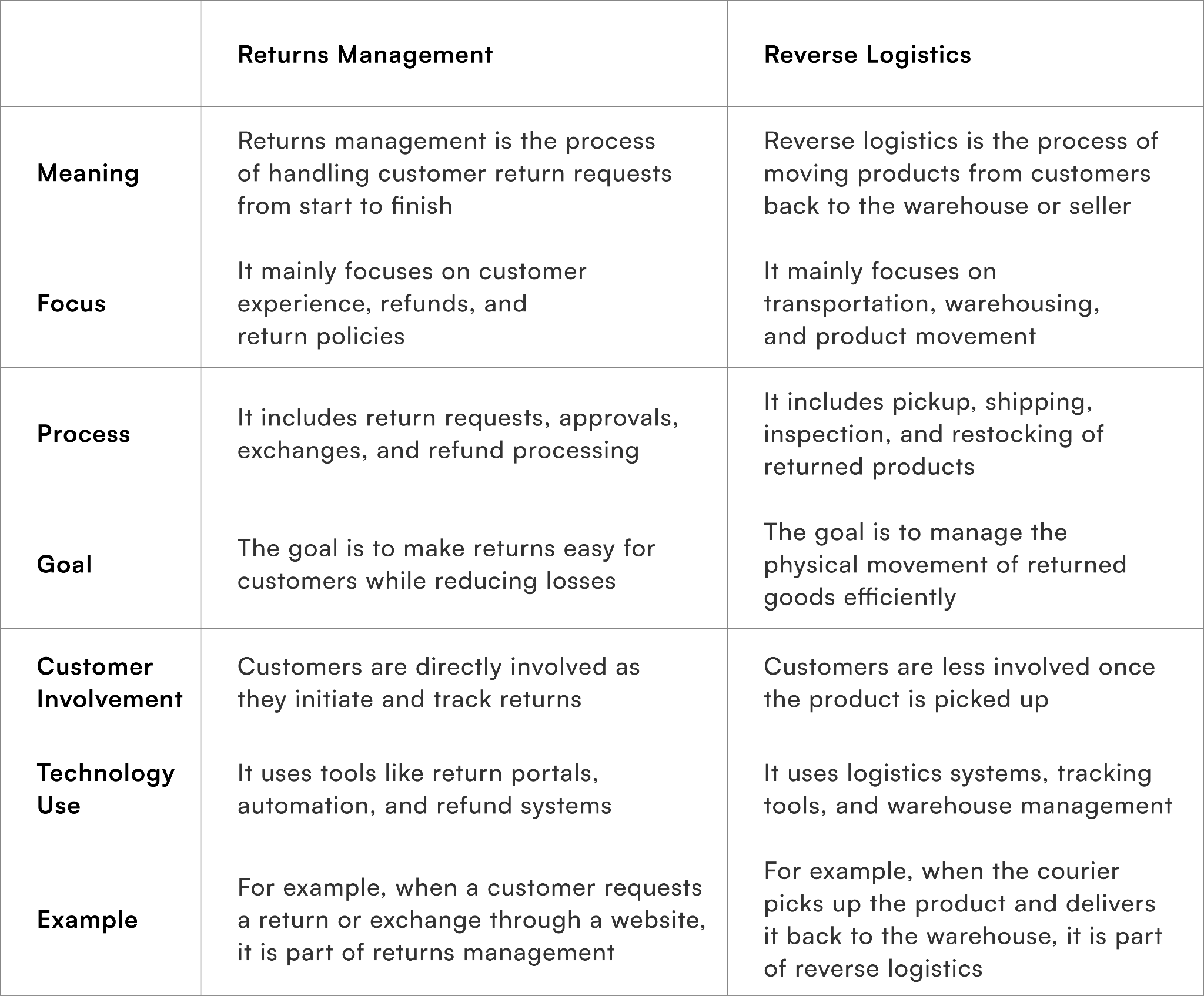
Key Metrics E-commerce Brands Should Track
- Return Rate
This shows the returns of the orders made by the customers. The high rate of return implies that there is a possibility of having problems with the quality of the product, its size, or expectations.
- RTO Rate (Return to Origin)
This is an index of the number of orders that are returned by the customers before delivery. It is typical that a high RTO rate is prevalent in COD orders and adds to the losses.
- Return Processing Time
This is the time which is consumed to execute the process of returning after the customer requests. The speed of processing enhances customer satisfaction.
- Refund Turnaround Time
This shows the speed at which customers receive their refunds for the returned product. When businesses provide fast refunds, it enables the establishment of trust and enhances the shopping experience.
- Return Cost per Order
This is the overall refund amount of the cost of dealing with a return, shipping, packaging and operations. When a business monitors this, it can assist them in managing their costs and enhancing their profitability.
Returns Management Best Practices for Indian E-commerce
If, as an e-commerce brand, you want to make your return management smooth, you can opt for the following practices:
- There should be clear and simple return policies that are easy to understand because a number of Indian customers would like to get direct information before making an order.
- To minimise the high RTO rates in India, COD orders ought to be verified by calling, SMS, or WhatsApp before shipment.
- Before dispatching, large quality checks must be performed, particularly in catering to such categories as fashion or electronics, where returns are common.
- The description of products, sizes, and pictures must be accurate to meet customer expectations and reduce the number of returns due to discrepancies.
- The data on the returns is to be analysed on a regular basis to spot the trends, such as frequent returns of particular locations, products, or customers.
- Exchanges should be promoted over refunding of customers who change their mind over the size or colour issue in order to save income.
- A good logistics company that has a good coverage of tier- 2 and tier-3 cities should be employed in order to facilitate unproblematic pickups and deliveries.
- They should provide real-time updates in the form of SMS or WhatsApp because Indian customers tend to communicate more often.
What is the Future of Returns Management in E-commerce in India?
The returns management in India will be more automated and quicker in future. The businesses will apply AI to forecast returns, mitigate risks associated with COD, and prevent fraud prior to its occurrence.
The shopping will be enhanced due to improved product information and size suggestions in an attempt to minimise unwarranted returns.
There will also be increased strength of logistics in terms of tier 2 and tier 3 cities, and return pickups will be more efficient and cost-effective.
This will also be more geared towards waste minimisation, towards the refurbishment and reuse of the products returned.
Platforms such as Pragma Return Management System will assist brands in automating returns with the help of data insights and smart logistics, making the whole process more efficient and cost-effective.
Final Thoughts
So, let's conclude here, as we clearly know that returns are an integral part of every e-commerce business, which can not be avoided.
They can happen for a lot of reasons, which may be in control or not in the hands of the business, but with the application of proper strategies and tools, e-commerce brands can manage them well.
And to support e-commerce brands in this journey, Pragma is here, with its best-in-class return management system, which provides every necessary feature required to maintain your business well.

FAQs (Frequently Asked Questions On Returns Management in E-Commerce for Indian Brands)
1. What is returns management in e-commerce?
Returns management is the process of handling product returns after purchase, including return requests, approvals, pick-up, inspection, refund or exchange, and inventory updates.
2. Why is returns management important for Indian e-commerce brands?
Returns management is important because poor return experiences increase support costs, slow cash flow, reduce repeat purchases, and damage customer trust. For Indian brands, returns also add logistics complexity and margin pressure.
3. What are the main steps in the e-commerce returns process?
The process usually includes return initiation, eligibility verification, pick-up or drop-off, quality inspection, refund or exchange processing, restocking, and customer communication.
4. What are the biggest returns management challenges for Indian brands?
Common challenges include high return volumes, delayed refunds, manual return handling, reverse logistics costs, return fraud, damaged inventory, and limited visibility into return reasons.
5. How do returns affect profitability in e-commerce?
Returns increase reverse logistics costs, create extra warehouse workload, tie up inventory, delay resale, and reduce contribution margins.
6. How can e-commerce brands reduce return rates?
Brands can reduce return rates by improving product descriptions, size guides, product images, delivery accuracy, checkout clarity, and post-purchase communication.
7. How does technology improve returns management?
Technology improves returns management by automating return requests, courier co-ordination, refund triggers, return tracking, inventory reconciliation, and return reason analysis.
8. What features should a returns management system include?
Important features include self-serve return requests, policy-based approvals, reverse logistics integration, refund automation, exchange workflows, inventory syncing, and analytics dashboards.
9. How should Indian brands handle returned inventory?
Returned products should be inspected quickly and classified as restockable, refurbishable, resellable at discount, or non-sellable. Inventory should then be updated in real time.
10. What KPIs should brands track for returns management?
Key metrics include return rate, refund turnaround time, reverse logistics cost per return, exchange rate, return reason trends, and repeat purchase rate after returns.
Talk to our experts for a customised solution that can maximise your sales funnel
Book a demo


.png)