

You may have seen many brands that got an order placed by the customer at 2 PM in the day, and on the next day, they delivered the order to the customer by evening.
And, you might be thinking, how do they do it?
This is not any magic; this is the criteria called order fulfilment optimisation, through which these brands have achieved these much faster deliveries.
But although this criterion exists, everybody did not know how to follow it. According to a recent study by the National Retail Federation, 67% of online shoppers have abandoned their carts due to poor delivery options.
So, are you one of those who lost their sales because of poor management and deliveries?
Then, don't you worry! In this blog, we will help you understand "Order Fulfilment Optimisation: Process for E-commerce Brands". This will help your brand achieve faster deliveries and better customer satisfaction.
What Is Order Fulfilment Optimisation?
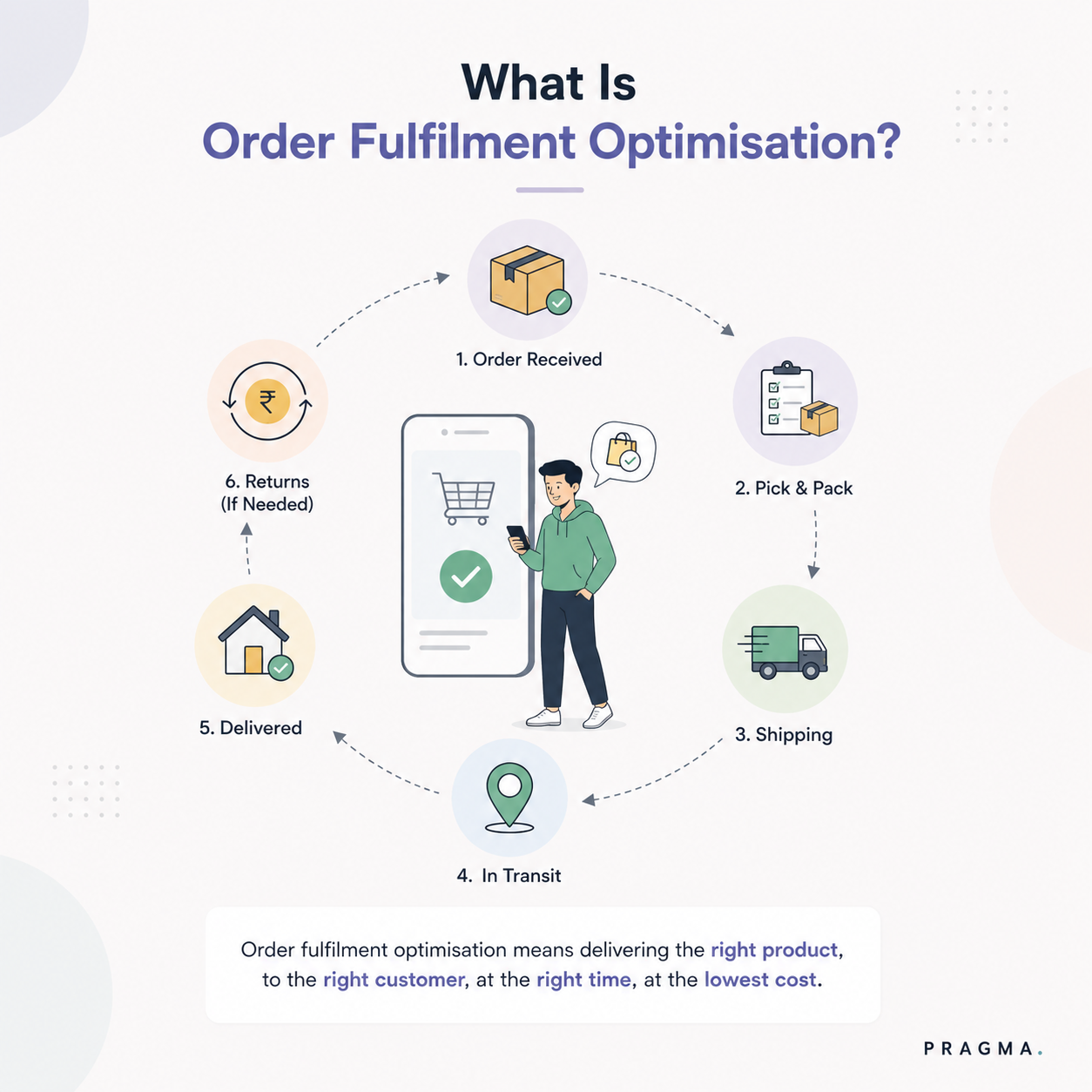
As the name implies, order fulfilment optimisation means to optimise the whole process of the order that is placed by the customer till that is delivered to him.
It means that the order fulfilment optimisation is a process that helps to find the best methods for achieving efficient use of inventory and reducing costs.
In simple words, we can say that it is a way to deliver the right products to the customer by handling all things efficiently, increasing customer satisfaction, avoiding stockouts and markdowns, with the help of at least the cost spent on everything.
The order fulfilment optimisation process involves the following things:
- Streamlining warehouse operations
- Reducing shipping costs and delivery times
- Minimising errors and returns
- Improving customer satisfaction
- Maximising profitability
Why Optimising Order Fulfilment Matters for E-commerce?
As we simply know that the most important thing to an e-commerce brand is its customers. And to make their customers happy and satisfied, they must fulfil every customer's order with the greatest care.
To achieve this, it is very important that the brand properly takes care of everything while handling the order. They must not run out of stock, they should have to keep a check on costs, and they should have to manage all operations like warehousing, picking, packaging, delivering, etc.
And, all these things are to be completed in a timely manner and within proper costs. This can only be achieved when the organisation has the right process for handling the tasks. And this can be fueled through proper order fulfilment optimisation.
Look at some of the top reasons that show why order fulfilment matters for every e-commerce business:
High Customer Expectations
According to recent industry data, 80% of consumers consider the delivery experience a top factor in awarding repeat business to a brand. Not only this, every customer wants fast deliveries, real-time tracking updates, easy returns and accurate order deliveries. That is why it is essential that every order is properly processed and fulfilled by the business. Failure in this will cost them to break customer trust and retention.
Cost Impact
Poor fulfilment can be expensive. Studies show that inefficient order fulfilment can increase operational costs by up to 25%. On the flip side, optimised fulfilment can reduce costs by 15-30%.
Also, the cost of getting new customers is about 5x-10x more than retaining the existing customers. Therefore, the order fulfilment optimisation is very necessary for each D2C e-commerce brand.
To Stand Out in Competition
Brands with superior fulfilment processes see:
- Higher customer retention rates
- Better reviews and ratings
- Increased word-of-mouth marketing
- Increased Revenues
- Higher profit margins
So, if you want your brand to stand out from the others, you must have to follow a proper order fulfilment optimisation process.
To Grow The Business
When you follow the right order fulfilment process, it means you are doing things right. Efficient optimisation helps the business to scale operations smoothly, enter new markets, handle seasonal spikes, improve cash flow, etc. And all these things in the last help businesses to increase their revenues, ultimately giving them the right growth.
Order Fulfilment Optimisation Process: Step-by-Step
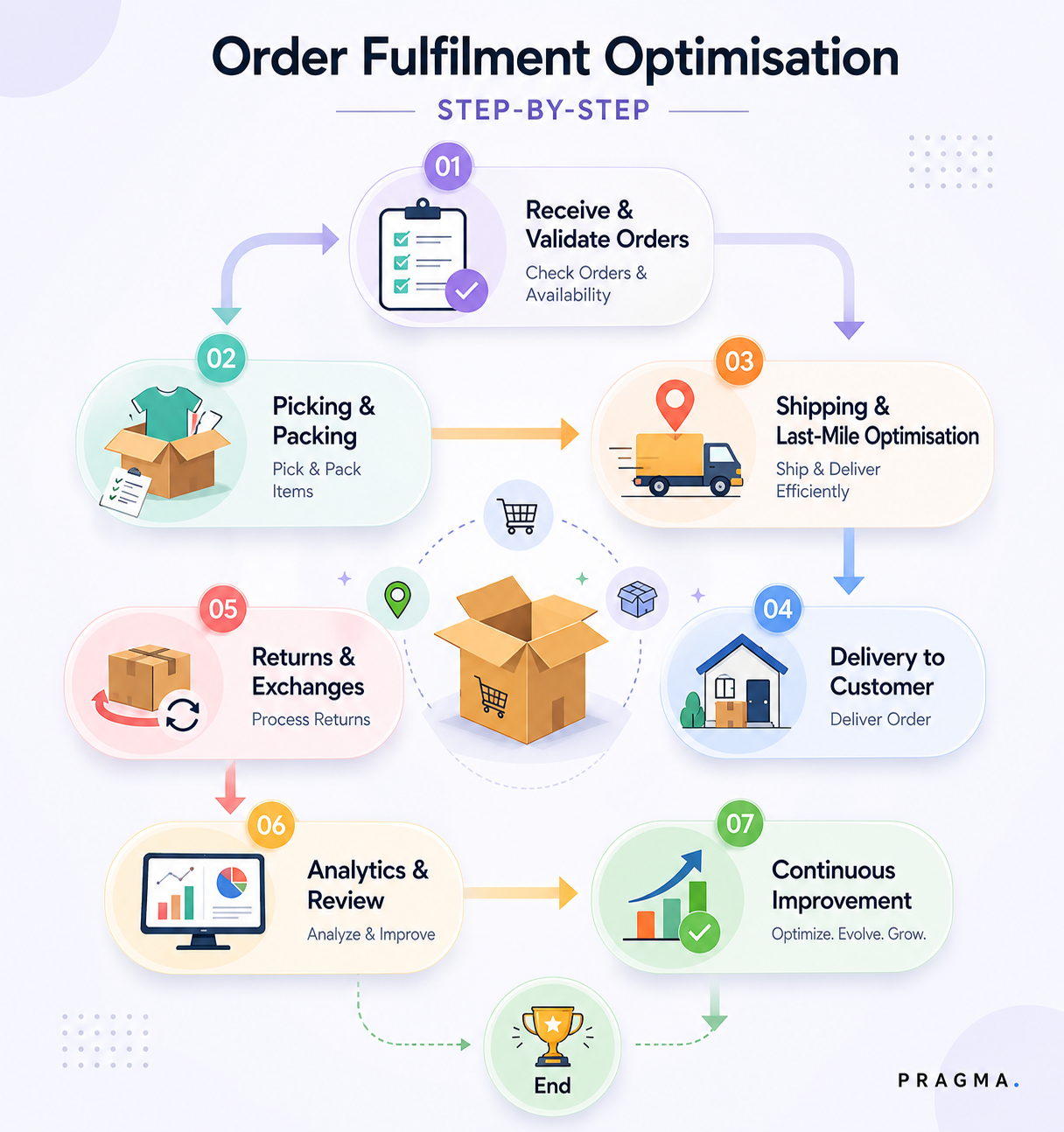
Let us have a detailed discussion about the order fulfilment optimisation process!
Receiving and Validating Orders
The first step of the order fulfilment optimisation process starts with getting orders. Whenever a person places an order, the order fulfilment optimisation starts. The business has to do the following things to receive and validate orders:
Verifying the Orders
The first thing that every business should do is to verify the order received. Every brand should:
- Confirm customer details and payment
- Check product availability
- Validate the customer's shipping address
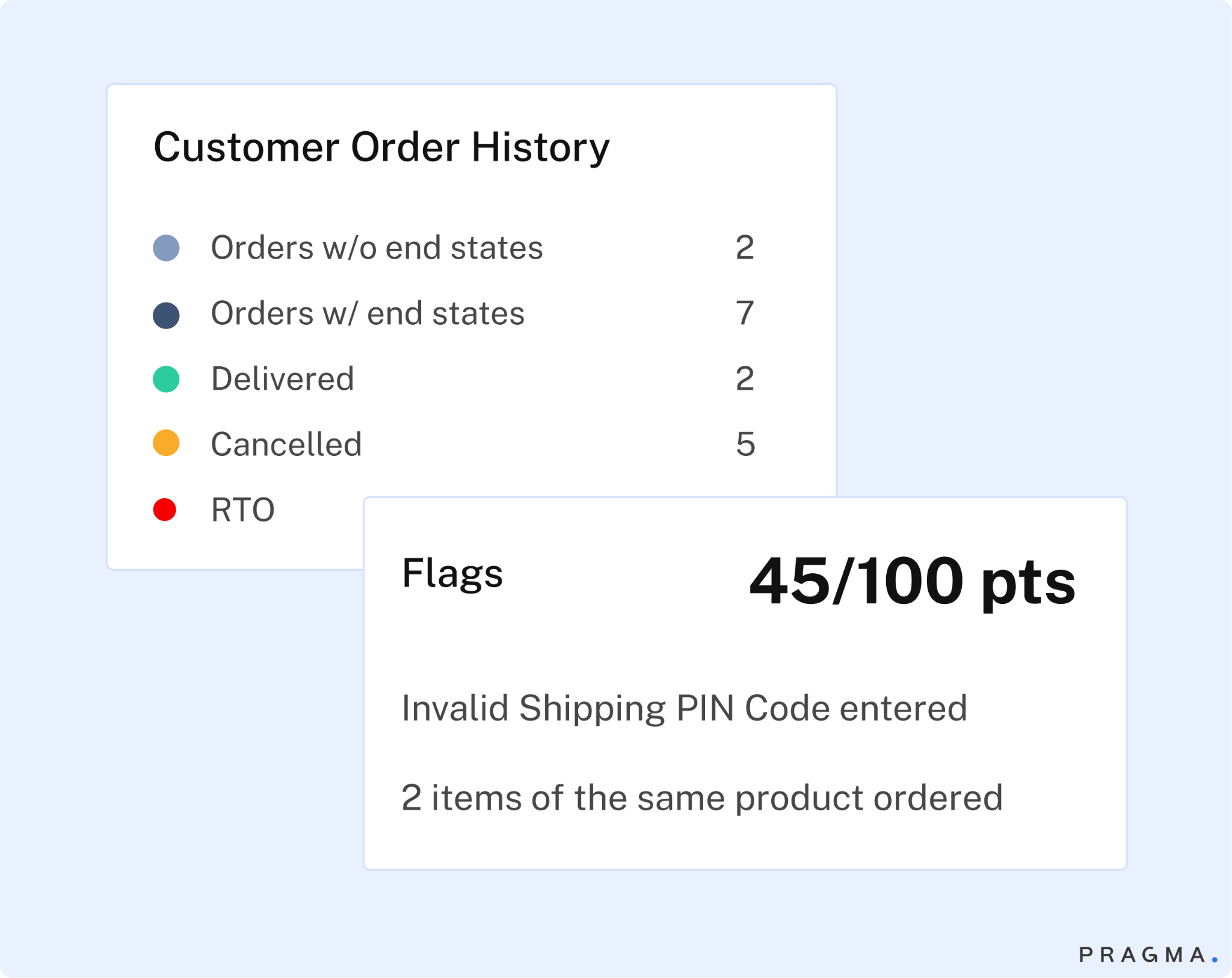
Pragma RTO Suite helps to screen customers' information such as address, pincode, phone number, etc., and automatically corrects if needed. This helps brands save from risky orders that can lead to RTOs in the future.
Checking the Inventory
The next thing is to check the inventory. Every business should look for systems that help in:
- Real-time stock level verification
- Automatic backorder handling
- Multi-location inventory visibility
Processing the Order
Now, this is the time to process the order. This stage includes generating picking lists, assigning orders to fulfilment centres, creating shipping labels, and sending customers an update about the order confirmation.
Picking and Packing Efficiently
Then comes the second step, which is about picking the right items and packing them to send them for deliveries. This is one of the crucial stages in every order fulfilment, as it is prone to errors and mistakes.
Once the order is approved, warehouse staff or automated systems quickly locate the items. Products are picked in the most time-saving way and packed securely using the right packaging.
In this stage, brands can make use of warehouse management systems, which help to locate the right product at the right time. This helps the warehousing team save their time and efforts, as they don't have to manually search for every item.
Also, these systems help to streamline each operation involved in picking, packaging and shipping of products.
Shipping and Last-Mile Optimisation
Now, when the items are picked and packed correctly, now is time to ship the products and ensure timely deliveries. This is one of the most costly and complex things in the order fulfilment optimisation process.
Here, the brands should be very attentive to do everything right, as it will decide whether your customer is going to be happy or not.
The business in this stage has to select the best carrier partners based on cost, speed and location, assign smart routing by selecting the right warehouses to save time, and provide efficient last-mile delivery solutions to complete the order.
Handling Returns and Exchanges
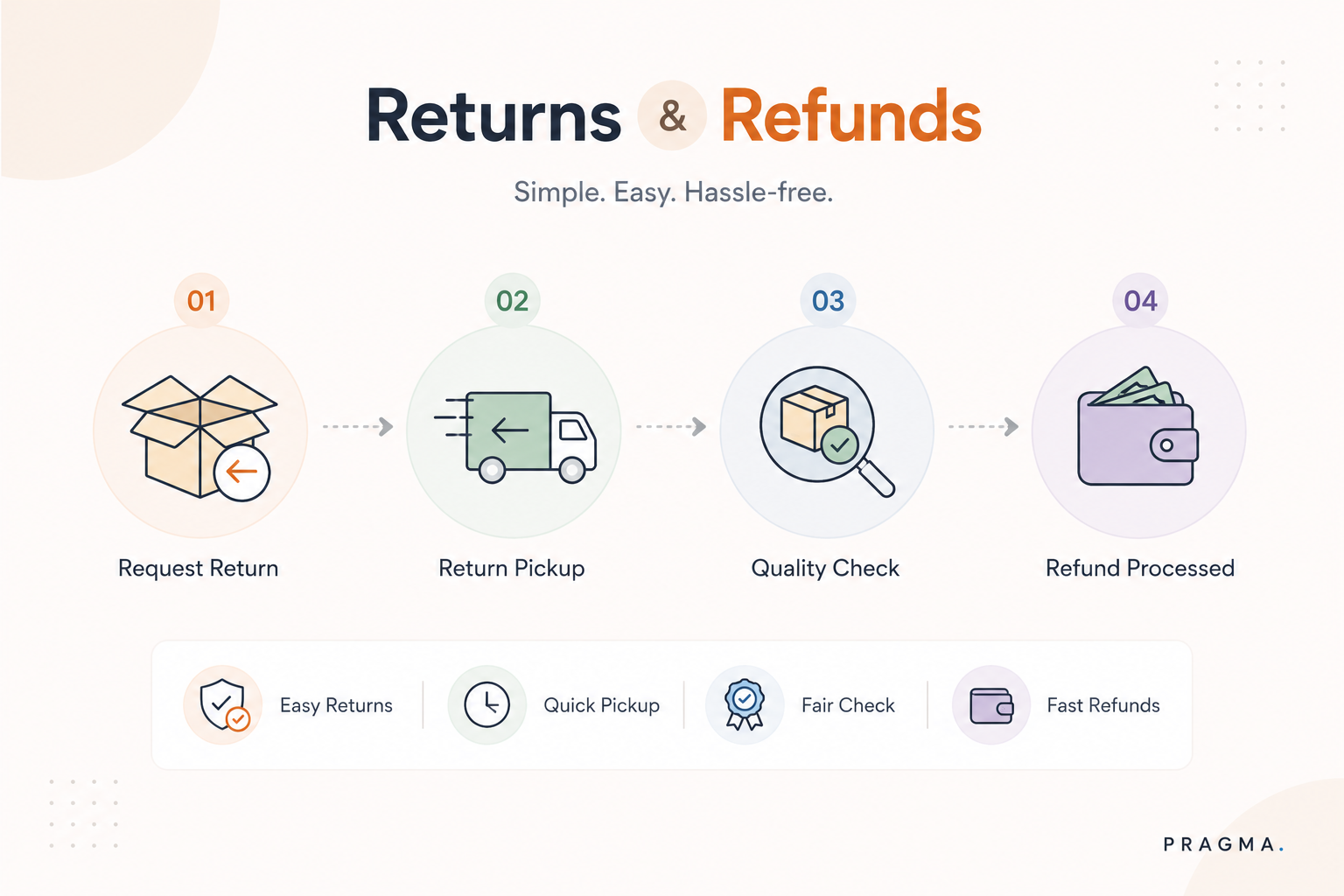
Now, when you have delivered the order perfectly, there might be chances that the customer wants to return the product, either due to size or fit issues, or a change of mind, etc.
Returns are unavoidable. If you run an e-commerce business, these will definitely happen. But the thing is, how do you manage them?
You should create a return process that is simple and hassle-free. For the return process to be streamlined, you should:
- Provide easy-to-use return portals
- Generate prepaid return labels
- Offer multiple return options
- Process refunds quickly
And to get your return operations streamlined, Pragma Return Management System can help. It is one of the systems that supports both refunds and exchanges.
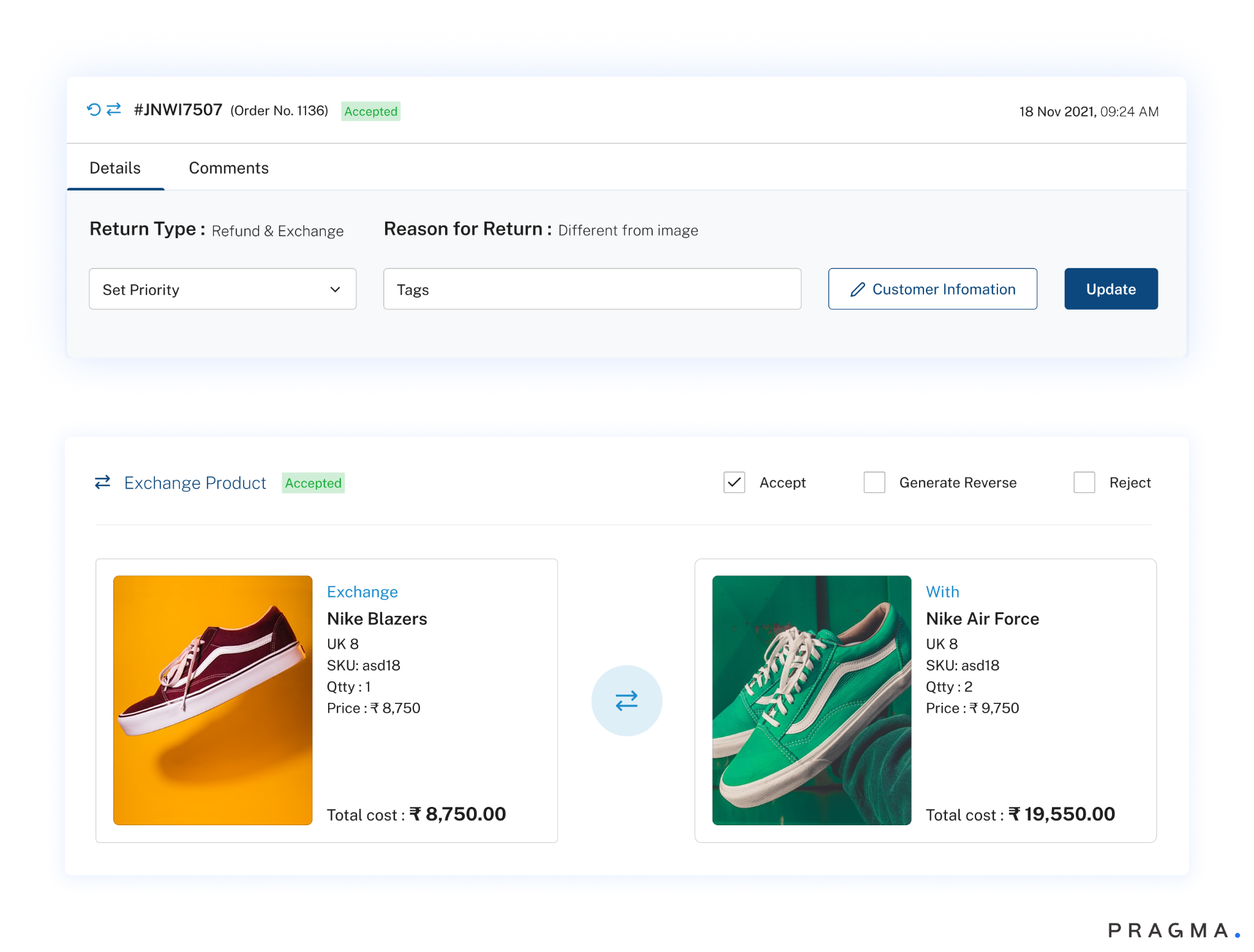
It provides branded return pages, automatic AWB creation, ready integrations with courier companies, and enables or disables return options based on SKUs.
Continuous Improvement Through Analytics
Constant tracking of order data provides insight into what works and what does not. Companies look at delivery delays, reasons for returns, order mistakes, and costs.
Gradually, these understandings lead to improvements in speed, precision, customer experience, and overall profitability.
Key Technologies That Power Fulfilment Optimisation
There are some technological systems that can help e-commerce businesses in improving their order fulfilment optimisation process. Let's have a look at some of them!
Warehouse Management Systems (WMS)
Warehouse Management System is a technologically advanced software that helps to handle all the daily operations that take place in a warehouse.
In simple words, it is a system that manages everything from the moment the goods enter your warehouse till their deliveries.
It tells your team:
- Where to store incoming products?
- Which items to pick for each order?
- The fastest route to collect items
- How to pack orders efficiently?
- When to reorder stock?
If you are going to choose a warehouse management system, look for the following things:
- It should provide real-time inventory tracking
- It should help in automated picking optimisation
- It should be integrated with e-commerce platforms
- It should have mobile device support
- It should properly provide reporting and analytics
Order Management Systems (OMS)
An Order Management System (OMS) is software that helps businesses manage orders from start to finish. It means that it handles every operation from when the customer places the order, till to delivery, returns and refunds.
An OMS helps businesses:
- Process orders faster
- Reduce errors and failed deliveries
- Improve customer experience
- Handle returns smoothly
- Save time and operational costs
- Manage inventories across different channels
Pragma 1Connect helps to connect all relevant channels in a single place. It provides access to WhatsApp, Facebook Messenger, Instagram, Email and VoIP. This helps to flag risky orders, impulsive buyers and orders made by bots.
AI & Predictive Analytics
AI, with the help of data from the past and present, predicts demand, delivery delays, and return risks. It aids companies in getting the right products in stock, selecting the fastest courier, stopping unsuccessful deliveries, and enhancing delivery times.
Integration with 3PL and Logistics APIs
Integrating systems with third-party logistics (3PL) suppliers via APIs enables the automated synchronisation of orders, booking of shipments, updating of tracking information, and processing of returns.
This results in quicker operations, constant visibility, and more efficient last-mile delivery. Pragma's advanced integration capabilities allow e-commerce brands to connect their order management systems with multiple 3PL providers and logistics APIs easily.
Real-World Order Fulfilment Optimisation Example
Let's look at some practical examples of how businesses have optimised their fulfilment:
Example of a Fashion Retailer
A clothing brand reduced its average fulfilment time from 5 days to 2 days by:
- Implementing zone picking in their warehouse
- Using predictive analytics to pre-position popular items
- Partnering with regional fulfilment centres
- Automating their returns process
And what results do they get?
They get a 40% increase in customer satisfaction and a 25% reduction in fulfilment costs.
KPIs and Metrics to Track Optimisation Success
- Order Processing Time: It is the time taken to prepare and ship an order after it is placed.
- Order Accuracy Rate: It is the percentage of orders sent without mistakes.
- On-Time Delivery Rate: This rate shows orders that are delivered within the promised time.
- Return-to-Origin (RTO) Rate: RTO refers to the number of orders that fail delivery and come back to the origin.
- Fulfilment Cost per Order: Total cost to pack, ship, and deliver one order.
- Inventory Turnover Rate: This rate shows how fast products are sold and restocked.
- Pick & Pack Efficiency: This shows the number of orders packed correctly in a given time.
- First Attempt Delivery Rate: This rate shows how many orders were delivered successfully on the first try.
How Indian E-commerce Brands Can Optimise Fulfilment in 2026?
As we know, the Indian e-commerce market is growing at a rapid rate. But this speed also increases the pressure on brands to handle and fulfil their operations well.
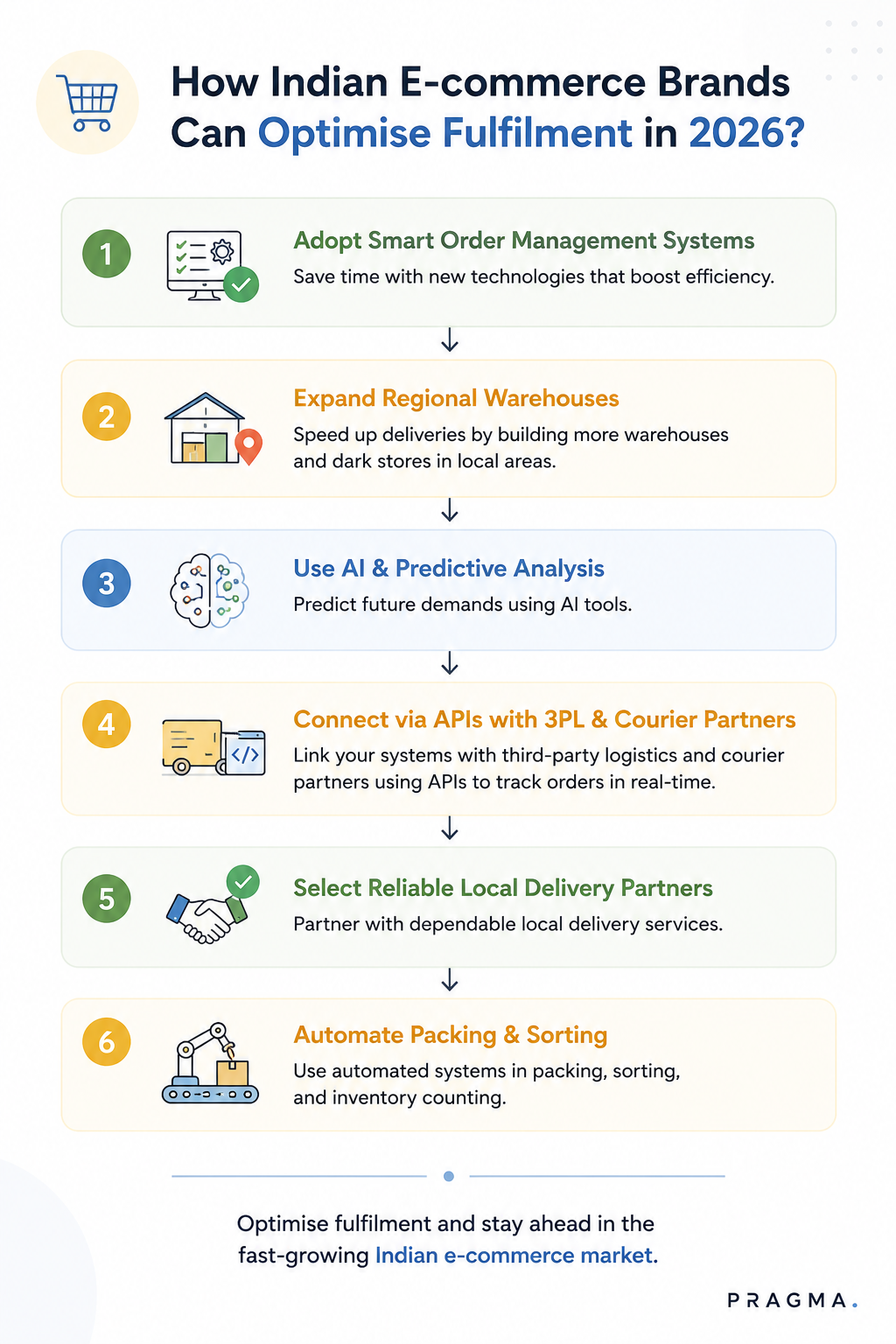
We have come up with strategies that can help Indian e-commerce brands to optimise their order fulfilment in the year 2026. Let us have a look!
- As it is time to adopt new technologies, Indian brands can also adopt such smart order management systems that can help them manage their daily operations in less time with more efficiency.
- To fulfil the deliveries faster, brands can expand their warehouses or dark stores in regional areas.
- E-commerce brands can make use of AI tools and predictive analysis for determining the demands in future.
- They can connect systems with third-party logistics (3PL) and courier partners using APIs so orders can be tracked in real time.
- Brands should choose those local delivery partners that perform well in a particular area. ShipAxis by Pragma helps to select a reliable courier partner.
- They should make use of automated systems in the various fields, like packing, sorting, and inventory counting.
To Wrap It Up
So, to conclude here, we want to say that order fulfilment optimisation is one of the necessary things that an e-commerce brand has to work on. By following the right approach and adopting practical strategies, they can fulfil their orders with the greatest efficiency in a cost-controlled manner.
And to help Indian e-commerce brands in order fulfilment optimisation, Pragma is here to support! With the great tools and technology, we help brands work best and ensure success.

FAQs (Frequently Asked Questions On Order Fulfilment Optimisation: Process for E-commerce Brands)
1. What is order fulfilment optimisation in e-commerce?
Order fulfilment optimisation refers to improving the speed, accuracy, and cost-efficiency of processing orders—from inventory allocation and picking to packing, shipping, and delivery.
2. Why is order fulfilment optimisation important for e-commerce brands?
Optimised fulfilment reduces delivery delays, lowers shipping costs, minimises errors, improves customer satisfaction, and helps brands scale without increasing operational overhead.
3. What are the main steps in the order fulfilment process?
The core steps include order receipt, inventory allocation, picking, packing, shipping label generation, courier handover, delivery tracking, and handling returns or exceptions.
4. What are common fulfilment problems faced by e-commerce brands?
Frequently reported issues include slow despatch, wrong item shipments, inventory mismatches, courier delays, high RTO, poor last-mile visibility, and manual dependency on spreadsheets.
5. How does inventory accuracy affect fulfilment performance?
Inaccurate inventory leads to overselling, order cancellations, delayed despatch, and customer dissatisfaction. Real-time inventory sync is critical for smooth fulfilment.
6. How can technology help optimise order fulfilment?
Technology automates order routing, inventory updates, pick-pack workflows, courier allocation, tracking, and exception handling—reducing manual errors and processing time.
7. Does multi-warehouse fulfilment improve delivery speed?
Yes. Shipping orders from the nearest warehouse reduces transit time, lowers shipping costs, and improves first-attempt delivery success, especially in large geographies like India.
8. How does fulfilment optimisation reduce Return to Origin (RTO)?
Faster despatch, accurate addresses, better courier selection, and proactive delivery communication reduce failed deliveries and customer refusals.
9. What KPIs should brands track to measure fulfilment optimisation?
Common metrics include order processing time, despatch SLA, first-attempt delivery rate, RTO percentage, fulfilment accuracy, and cost per order.
10. When should an e-commerce brand focus on fulfilment optimisation?
Brands should prioritise fulfilment optimisation when order volumes grow, delivery complaints increase, cancellations rise, or operational teams spend excessive time on manual fulfilment tasks.
Talk to our experts for a customised solution that can maximise your sales funnel
Book a demo

.png)