

Returns are the unavoidable part of any e-commerce business. If you are running an e-commerce business, you must deal with returns.
Sometimes, businesses see themselves exhausted and get buried under the burden of returns. But, this is not always the scenario.
How a business handles returns will tell whether they are successful or not, and one such thing in handling customer returns is the return processing time.
Statistics show that 85% of shoppers expect refunds within one week, and the average return processing time currently stands at 9.5 days.
And this gap in the expectations of the customers doesn’t just impact operations of the business; it has an impact on their trust, repeat purchases, and overall profitability of the business.
To learn more, we will discuss "Return Processing Time in E-commerce: Complete Guide" and will know how you can optimise it for your business.
What Is Return Processing Time?
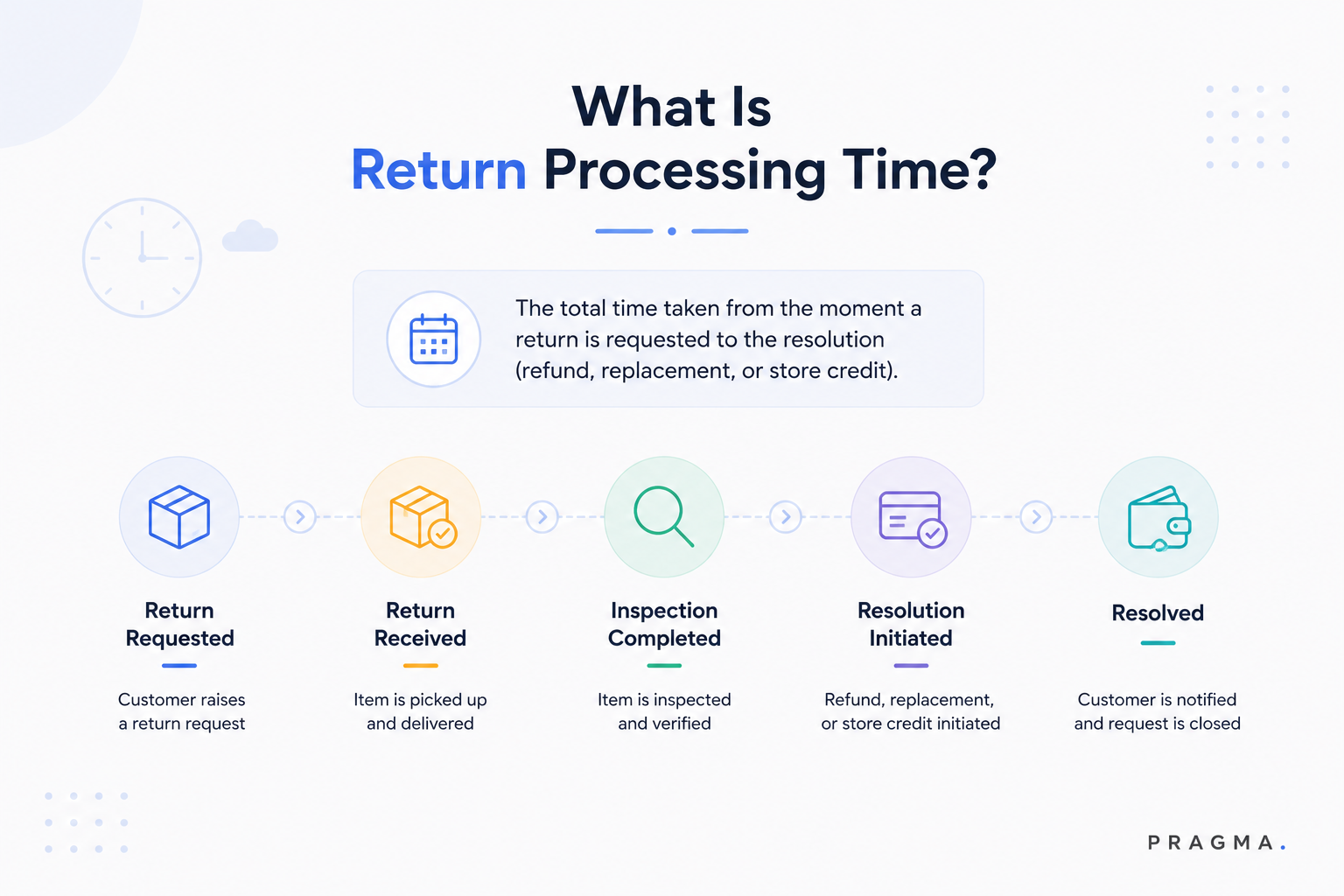
Return processing time involves the entire time taken after a customer has made a request to return an item, and when they receive a payment or another product.
This is a complete timeline which lasts 1-5 days of efficient operations, but the traditional systems can last between 21 and 60 days.
This process includes some of the very important steps:
- Initial request for return and approval of the requests.
- Pick up of products and delivery to the warehouse.
- Quality inspection and evaluation.
- Updating inventory and making a decision on restocking.
- Refunding or replacement delivery.
The refund processing time in e-commerce is important to understand since 76% of consumers want an instant refund or an exchange, which is competitive when it comes to speed.
Why Return Processing Time Matters in E-commerce?
Here is why return processing time is crucial to every e-commerce business:
Customer Satisfaction
When a customer returns something and gets their money back quickly, they feel good about that brand and are more likely to shop again with the brand.
Statistics show that customers who experience efficient return processing show:
- 55% higher repeat purchase rates within 90 days
- 81% likelihood to recommend the brand to friends and family
- 40% higher customer lifetime value compared to those with poor return experiences
- 3x lower churn rates in subscription-based models
Refund Experience
The refund experience has become a critical touchpoint in the customer journey. 72% of customers cite rapid refunds as an ideal policy feature, outranking even free return shipping.
When a brand provides rapid refunds to the customers, even the negative impression of the brand can be turned into a positive one.
Operational Efficiency
Efficient processing of returns has a direct effect on the operational costs in various dimensions. There are high automation tools such as Pragma that can save processing cost by 30%, enhance accuracy and consistency.
Here are some benefits that efficient returns and refund processing time provide to the business:
- Labour efficiency: Automated systems can handle 3-5x more completed returns in one hour compared to manual systems.
- Minimisation of errors: 90% of the errors are reduced using automated workflow processes.
- Space Optimisation: Special return zones enhance the warehouse performance by 25-40% of space.
- Carrier Optimisation: Bulk processing saves 15-20% in the cost per shipment.
- Less Customer Service Workload: Effective processing decreases the number of inquiries by 60%.
- Inventory Optimisation: The faster the process of restocking, the better the inventory turnover becomes: 20-30% quicker.
Inventory Recovery
When stores get returned items back quickly, they can put them back on sale faster.
Quick return processing is also convenient in recovering the inventory faster, which is very important in maintaining the stock and limiting the loss of revenue.
When items are processed within the optimal 24-36 hour window, businesses can:
- Maximise the resale value of the products
- Fewer markdowns
- Enhance the availability of stock
- Expanding second-hand markets of returned products
Companies that handle returns within 48 hours save an average of 85% on the original item's worth, whereas companies that handle them after a week can only recover 60% of the item's value.
What is the Typical Return Processing Time in E-commerce?
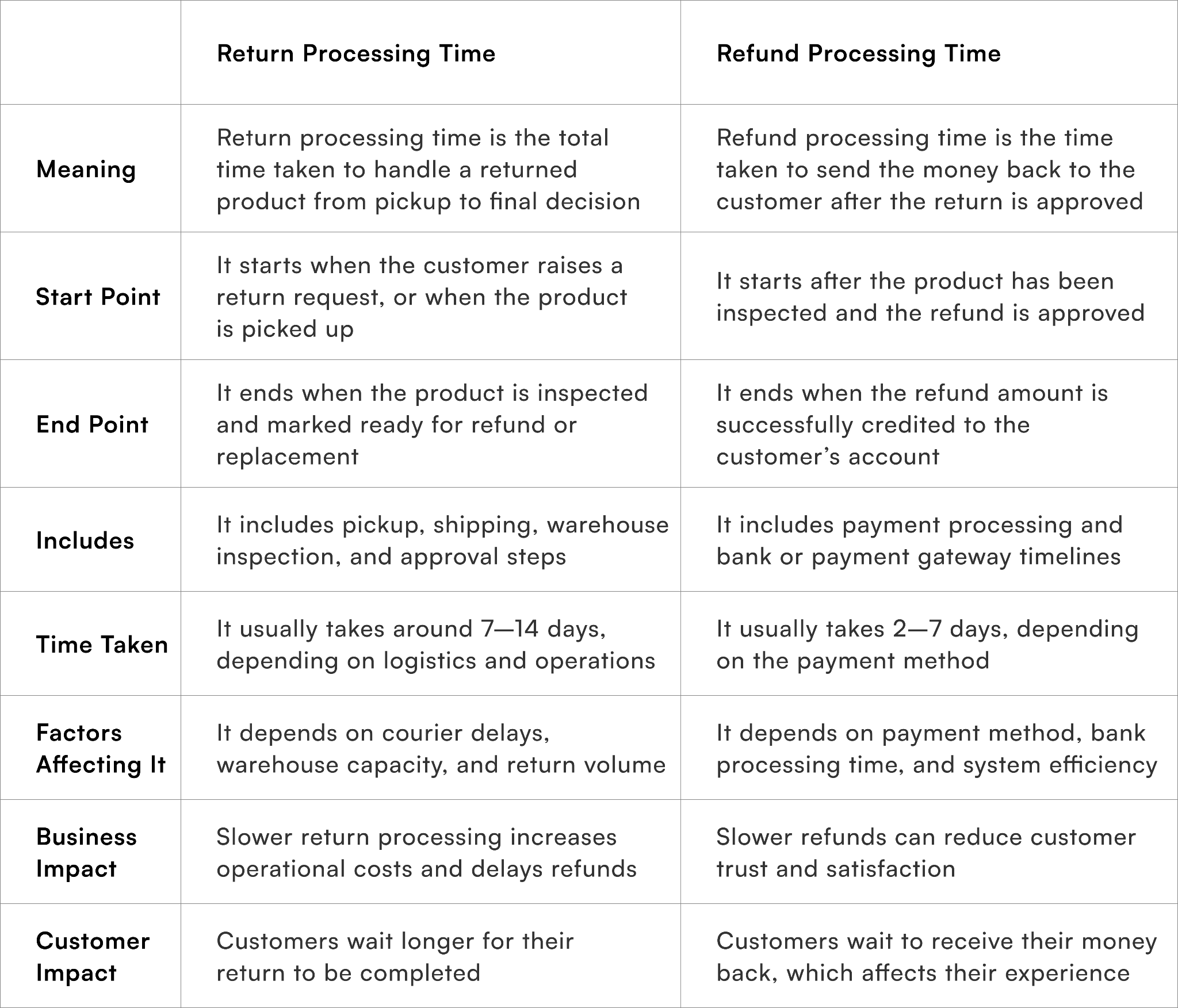
The average return processing time in e-commerce is simply 7 to 14 days to complete in most online stores. At this time, the product is picked up, returned to the warehouse, the condition of the product is checked, and the refund or replacement is issued.
This timeline, however, can be changed on the basis of a few things. For example, when the product takes more time to get to the warehouse or requires a thorough quality inspection, it can be time-consuming.
There are also such companies in the industry that provide quicker refunds (such as instant or same-day refunds) in order to enhance customer satisfaction.
In that way, 7-14 days is an average range, whereas the real time of processing the returns may be shorter or longer according to the brand, location, and the process of returns.
Return Processing Workflow in E-commerce
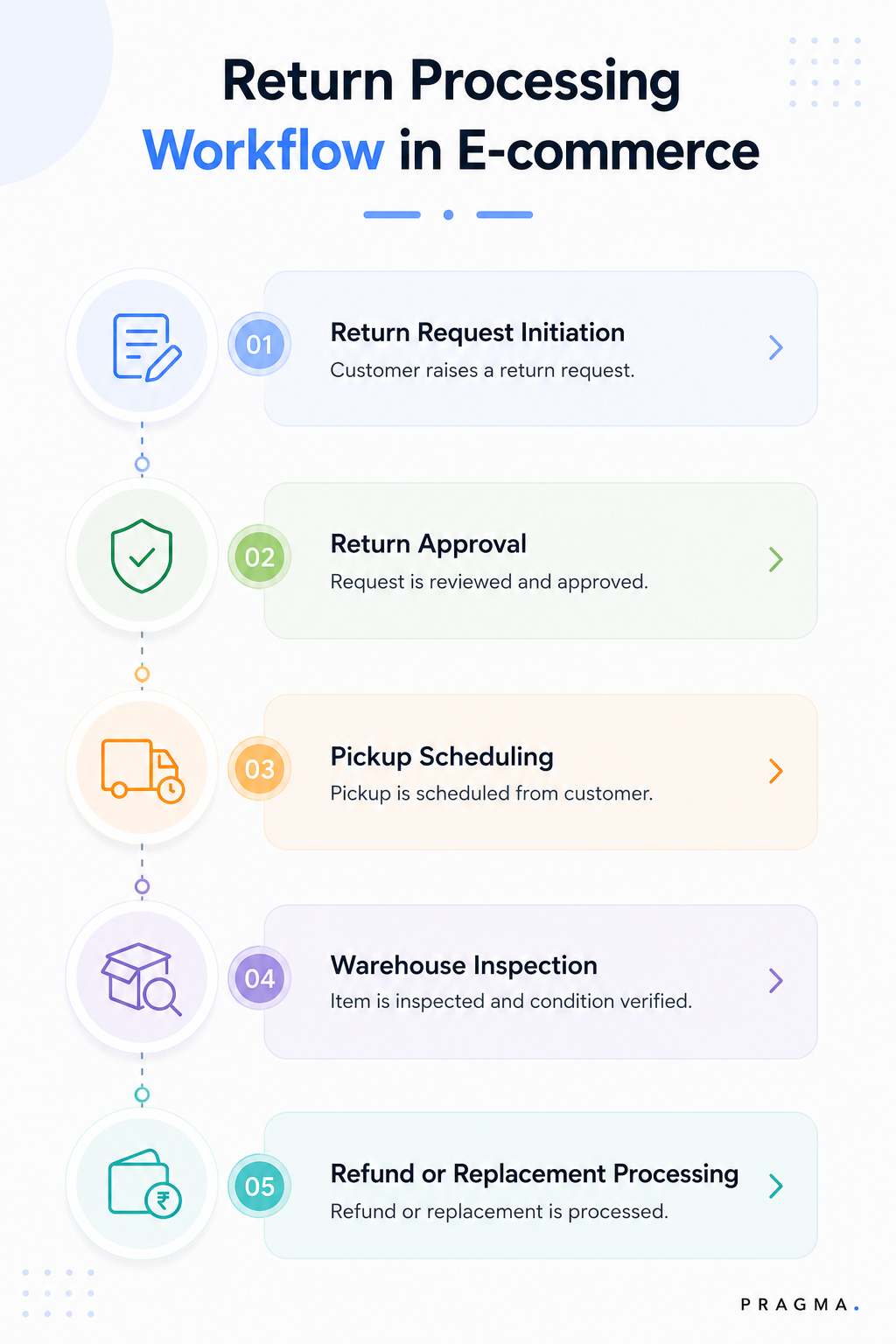
Processing the returns is not a simple task. There is a proper workflow that is followed while processing the returns. Have a look at the workflow of processing returns in the e-commerce industry:
Return Request Initiation
The return process starts with a customer's decision to send a product back and makes an order via the website or application.
There can be reasons such as inappropriate size, broken piece, or the product is not as intended.
The ease and simplicity in the process of returning requests are essential since it is the initial impression of how convenient returns are to the customer.
For this purpose, Pragma's Return Management System provides e-commerce business, the branded checkout pages that look similar to their website, and provides ease to the customer to place their returns.
Return Approval
Once the request is made by the customer, the company will verify whether the returned product adheres to its policy requirements, including return window, product conditions, or product category requirements.
The customer's request gets approved if all the requirements are met. This step can sometimes take time if done manually.
Still, with solutions like Pragma Return Management System, approvals can be automated using set rules, as it provides the feature to disable/able the return window based on SKUs, product categories or seasonal sales.
Pickup Scheduling
After the approval of the return, the company organises a pickup to take the product to the location of the customer.
The customer is informed about the pick-up date and time. If there are any delays here, the whole return process can be delayed.
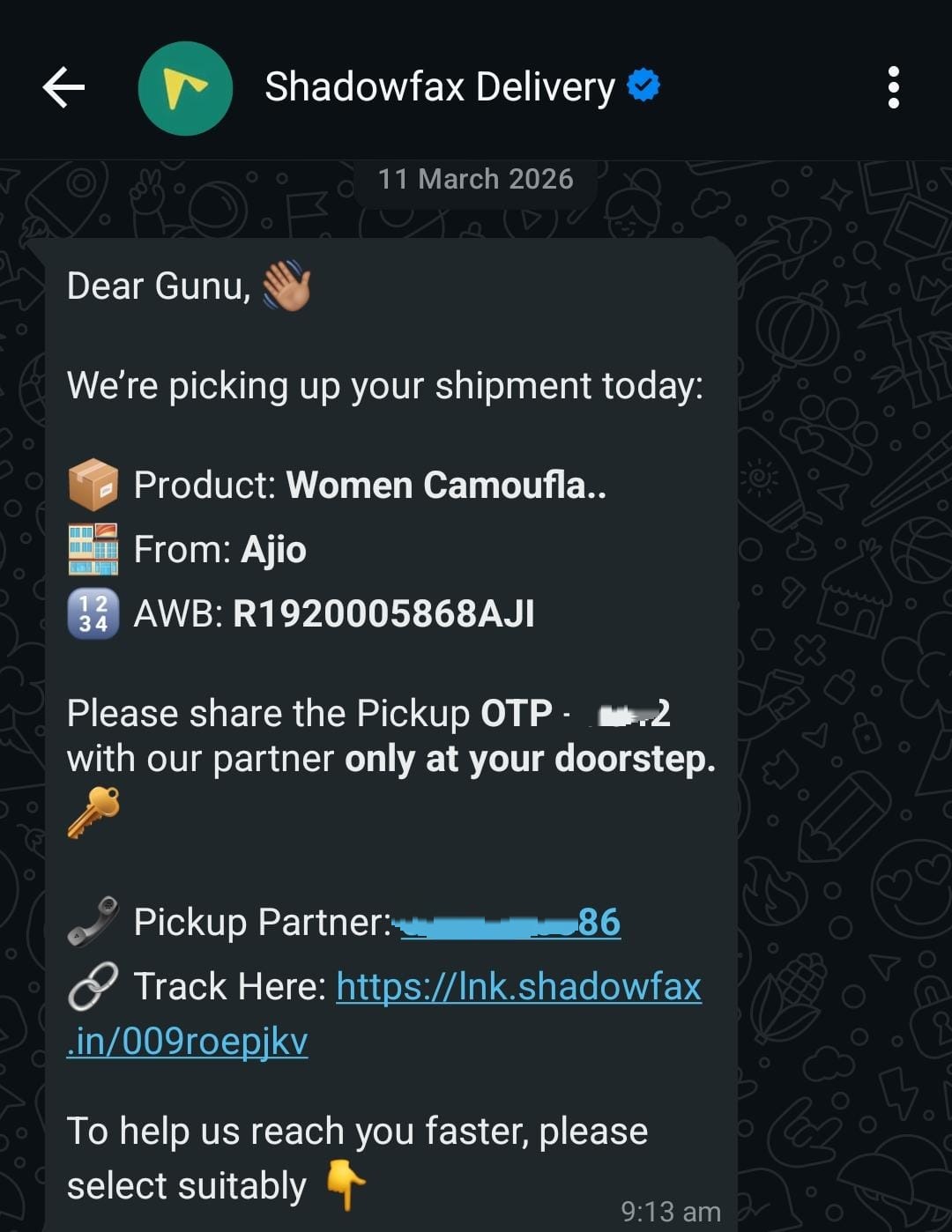
To save brands from this situation, Pragma provides seamless integration with the courier partners to handle the reverse shipments well.
Warehouse Inspection
Once the product is collected, it is delivered to the warehouse, where it goes through inspection.
The team will ensure the product is in good condition, as well as appropriate reason will be provided why it was returned. This will be done to prevent fraud or wrong refunds.
Pragma will facilitate this process by arranging the data and making the inspection faster and more purposeful.
Refund or Replacement Processing
After inspection, the last thing is to either refund or provide a replacement product to the customer.
The company provides refunds either to the mode of payment or as points to the customers, which can be redeemed when they shop again.
Speed is highly considered here since quicker refunds translate to the satisfaction of the customers.
This step is made faster with the help of the Pragma and automated workflows, which will allow businesses to handle refunds and replacements promptly.
What are the Factors That Affect the Return Processing Time?
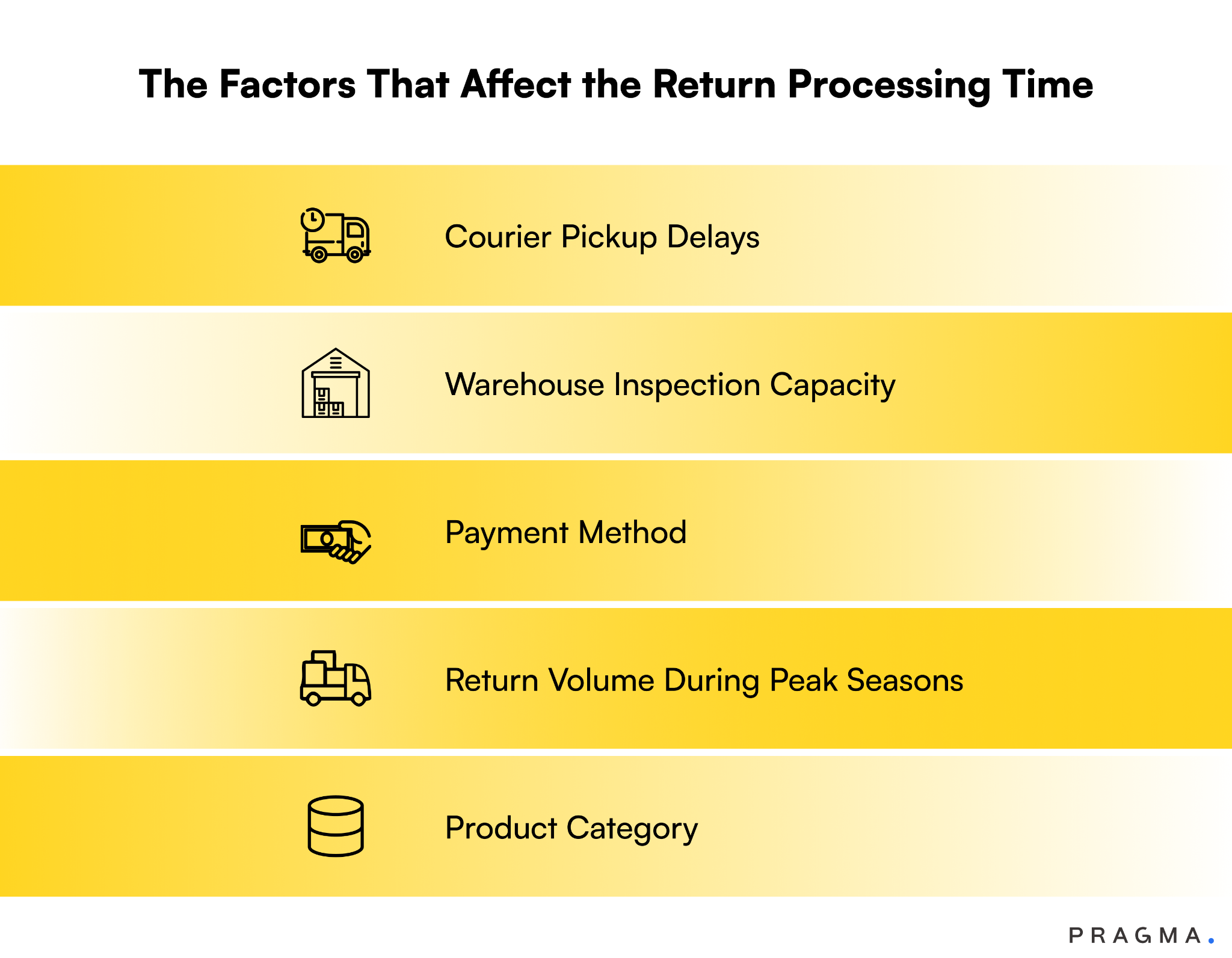
In the normal e-commerce business, it is not always possible that the return processing time remains the same. Some factors can affect the time, which are as follows:
Courier Pickup Delays
The pace at which the product is collected by the customer is also one of the largest influences on the return processing time.
There can be a delay in picking up the product from the customer due to various reasons, such as the lack of couriers, remote areas, or unsuccessful attempts due to the customer not being available.
These reasons directly slow the whole process of making a return and issuing refunds.
But to avoid such delays, the Pragma Return Management System helps in optimising courier allocation and enhancing the pickup success rates.
Warehouse Inspection Capacity
Once the returns are received at the warehouse, they should be inspected and refunds or replacements made.
But, if the business has a limited manual resource that will inspect the product, the returns will get piled up, increasing the return processing time.
Payment Method
The refund processing time is also dependent on the mode of payment used by the customer.
Orders with pre-payments are easier to process, and Cash on Delivery (COD) orders take more steps, such as taking bank information.
This introduces time delays and operational work. But by using Pragma's Return Management System, e-commerce brands get the opportunity to automate the components of the refund process and decrease the number of manual follow-ups.
Return Volume During Peak Seasons
At the time of sales or holiday periods, the number of returns increases, which puts pressure on the team. This results more frequently in a slower turnaround time.
Pragma assists businesses in managing the high volumes of returns more efficiently by automating work and reducing the number of manual inputs when the business is at its peak.
Product Category
The inspection process of different products varies. For example, electrical products might require proper testing before issuing refunds.
Due to this, there can be an increase in the return processing time.
Return Processing Time vs Refund Processing Time
What are the Challenges in Return Processing for E-commerce Brands?
There are several large issues that online stores experience in dealing with returns:
High Return Volumes
Customers make significantly more returns for online purchases than for items they purchase at physical shops.
Online purchases have a higher percentage of returns at about 17.6%, as compared to 9 per cent of the purchases made in the stores.
Manual Inspection Processes
When people have to check returned items by hand, it's slow, and mistakes happen. A person might check 20-30 items per hour, but a computer system can check over 100 items at the same time.
Reverse Logistics Costs
One of the most common challenges in return processing is the reverse logistics costs. When the brands get returns, they have to pay for the cost to get their product back, too.
These prices may range between 20%- 65% of the original prices of the product. That's why most e-commerce brands fail because of a higher volume of returns.
Fraudulent Returns
Some dishonest people try to cheat the system by returning items they didn't actually buy, or returning used items claiming they're new.
This cost stores $101 billion in 2023! But today, 85% of the stores have smart computer systems that are designed to be able to detect these cheaters.
How E-commerce Brands Can Reduce Return Processing Time?
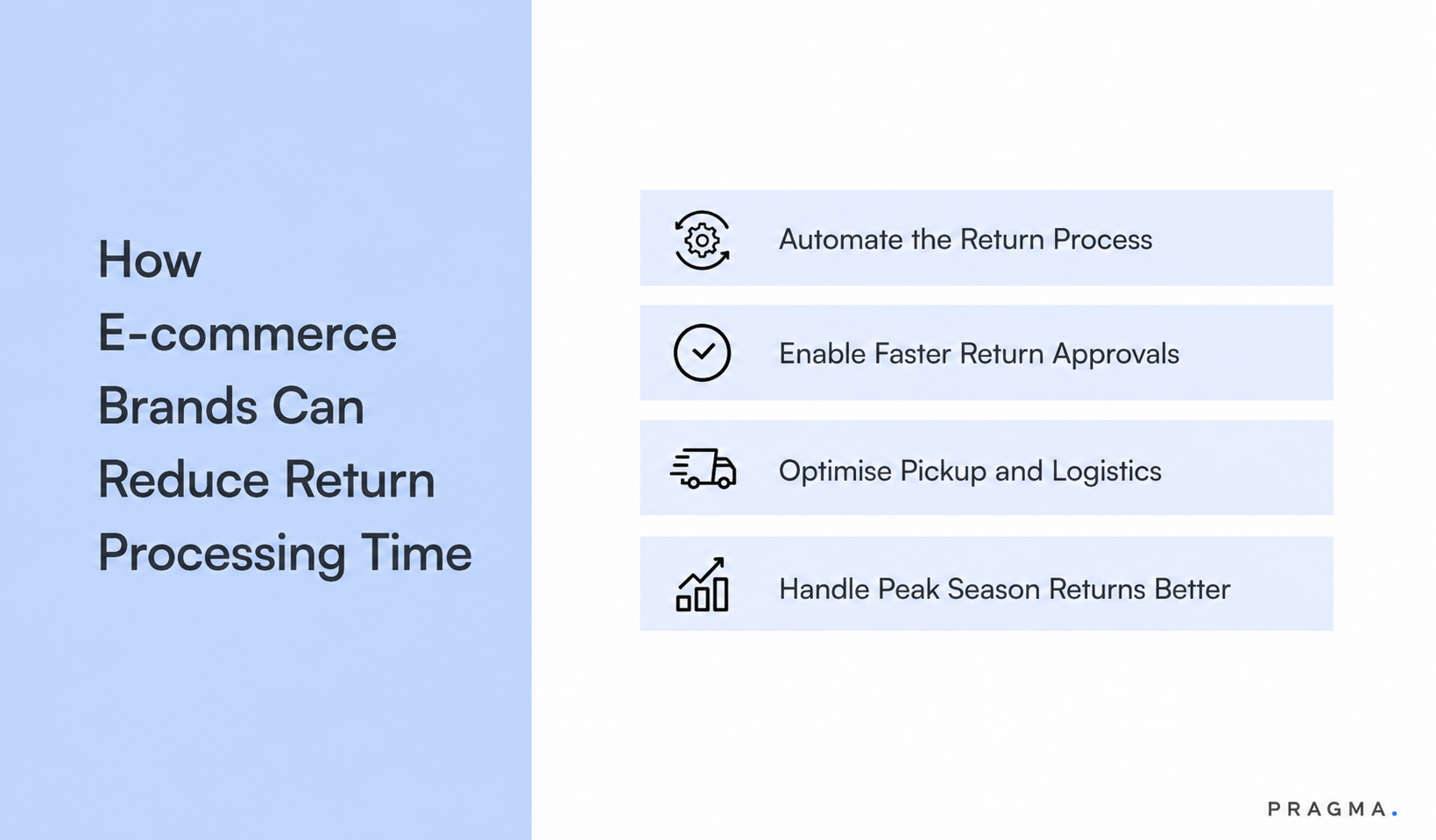
To enhance customer satisfaction as well as manage operational costs, it is critical to reduce the time consumed during return processing. Here is how e-commerce brands can opt for reducing their return processing time:
Automate the Return Process
Research shows that modern return management systems can reduce processing time by 50% compared to manual workflows while improving accuracy and customer satisfaction.
By automating the process of requests for returns, approvals, and updates of the status, the businesses can reduce the processing time significantly.
Tools such as Pragma Return Management System can be used to automate these processes, which will help e-commerce businesses to eliminate human errors and accelerate the whole process.
Enable Faster Return Approvals
Most delays happen in the business when they are dependent on manual processing only.
But, if a brand wants to reduce its return processing time, it should make use of systems that can automate the simple tasks like checking eligibility, etc.
For this, Pragma Return Management System can be used, which provides a comprehensive return window, where every product's return eligibility can be checked on the basis of SKUs, product categories or seasonal sales, and can be disabled or enabled.
Optimise Pickup and Logistics
E-commerce brands can minimise their delays by collaborating with trusted logistics services and enhancing the pickup success rate.
With Pragma, the businesses can optimise the pickup schedules and enhance coordination with the courier partners in order to move the products faster.
Handle Peak Season Returns Better
In seasons such as sales or festive seasons, the volume of returns is very high.
To handle such a rush, businesses should have scalable systems that can handle it in real-time.
Pragma facilitates high volumes of returns by automating the processes and relieving the pressure on operations during peak hours.
Return Processing Time Metrics E-commerce Brands Should Track
Here are some important metrics that every e-commerce business should track when looking into aspects of return processing time:
- Average Processing Time: It is the total time taken from the beginning to the end of processing returns.
- Return Initiation Rate: It is the percentage of orders that are returned within the policy windows.
- Inspection Turnaround Time: This is the time, typically the hours/days, between the receipt of the inspection and the quality evaluation through the inspection.
- Speed of Processing Refunds: It is the time that is taken between the approval of the return and the time when the customer gets the refund credited.
- Return-to-Restock Rate: It is the percentage of returns which can be resold.
- Cost Per Return: This is the total cost of processing per returned item.
Best Practices to Improve Return Processing Efficiency
Every e-commerce business should focus on improving things to help you in improving your return processing efficiency. We have gathered some of the best practices that you could follow:
Design Effective Return Policies
Every business should make a return policy that is easy to read and understand, so that every customer clearly knows the terms of refund.
Research shows that 84% of consumers look at the return policies prior to making a purchase, hence being clear will save confusion and speed up the process.
Invest in Staff Training
Research shows that trained employees are able to handle returns within 40% of the time compared to untrained employees.
So, businesses should focus on training their staff on new procedures, technology and quality standards.
Must Integrate Technology into Business
Businesses should combine their inventory management, customer service and accounting systems with the return management systems.
With this integration, they can remove unnecessary depending on manual work and can minimise errors.
Use Data-Driven Decision Making
In order to enhance the business, every e-commerce company should compare the patterns of returns, the reasons behind them, and why they are occurring.
In case, as an example, some products have high return rates because of size problems, to solve that business can enhance the product specifications or sizing manuals.
That is how, by analysing data, they can reduce their rate of returns easily.
Partner with Specialised Providers
Third-party logistics providers that provide returns processing should also be considered.
Such partners usually have streamlined facilities and processes capable of managing the returns better than the operations.
Final Thoughts
To conclude here, all we want to state is that returns are a part of every e-commerce business, but how you manage them is the main thing.
As a great percentage of customers look for a return policy while making any purchase, it becomes crucial for e-commerce businesses to look into that with more focus.
To provide customers with positive experiences, they should make their return processing time minimum, and this can be achieved with the help of specific strategies and tools.
And to help e-commerce brands in this journey, we are here with proper tools that will help you to decrease your return rates first and to manage them efficiently.

FAQs (Frequently Asked Questions On Return Processing Time in E-commerce: Complete Guide)
1. What is return processing time in e-commerce?
Return processing time is the total time taken from when a customer initiates a return to when the refund, exchange, or store credit is completed.
2. Why is return processing time important for e-commerce brands?
Faster return processing improves customer satisfaction, reduces support queries, speeds up inventory recovery, and protects repeat purchase intent.
3. What are the main stages that affect return processing time?
The timeline usually includes return request approval, pickup scheduling, reverse transit, warehouse inspection, refund or exchange approval, and final payment settlement.
4. What is considered a good return processing time in e-commerce?
While timelines vary by category and courier network, most brands aim to complete return processing and refunds within 5 to 10 business days.
5. Why do returns take so long to process?
Delays usually happen due to slow reverse pickup, courier delays, manual warehouse checks, delayed quality inspection, refund approval bottlenecks, or payment gateway settlement cycles.
6. How does slow return processing affect customer experience?
Slow return processing increases frustration, generates more support tickets, reduces trust, and can lower the chances of repeat purchases.
7. Can automation reduce return processing time?
Yes. Automation helps by approving eligible return requests instantly, scheduling pickups faster, updating tracking automatically, triggering refunds sooner, and reducing manual follow-ups.
8. How can e-commerce brands improve return processing time?
Brands can improve return processing time by using self-serve return portals, automating approvals, improving reverse logistics coordination, speeding up warehouse QC, and integrating refund workflows.
9. Does return processing time affect profitability?
Yes. Delayed return processing keeps inventory blocked for longer, slows resale, increases support costs, and affects customer retention, all of which impact margins.
10. What metrics should brands track for return processing efficiency?
Key metrics include average return processing time, pickup turnaround time, warehouse inspection time, refund turnaround time, exchange completion time, and return-related support tickets.
Talk to our experts for a customised solution that can maximise your sales funnel
Book a demo.png)


.png)