

RTO, Return-to-Origin, is the biggest challenge that most of the brands face in the e-commerce industry, touching approximately 40% in the fashion industry.
But the problem of the RTO is not just a part of the direct e-commerce industry; it is a significant problem in the dropshipping industry, too.
So, what is dropshipping?
Drop shipping is an e-commerce business model where someone sells products without keeping them in stock.
It means that the one who chooses this business model creates a website or online presence, where the customers place the order.
But, instead of supplying the order themselves, they forward that order to a supplier (manufacturer or wholesaler). And the supplier sends the products directly to the customer, but charges you for the shipping. And the primary owner gets the profit margin, that is, the selling price minus the supplier cost.
The model of business is just different, but the problem of RTO is still the same. And, businesses have to also figure out how they can overcome or save from this situation.
Today, we will delve into "What Is RTO in Dropshipping? Meaning, Causes & Impact".
What Is RTO in Dropshipping?
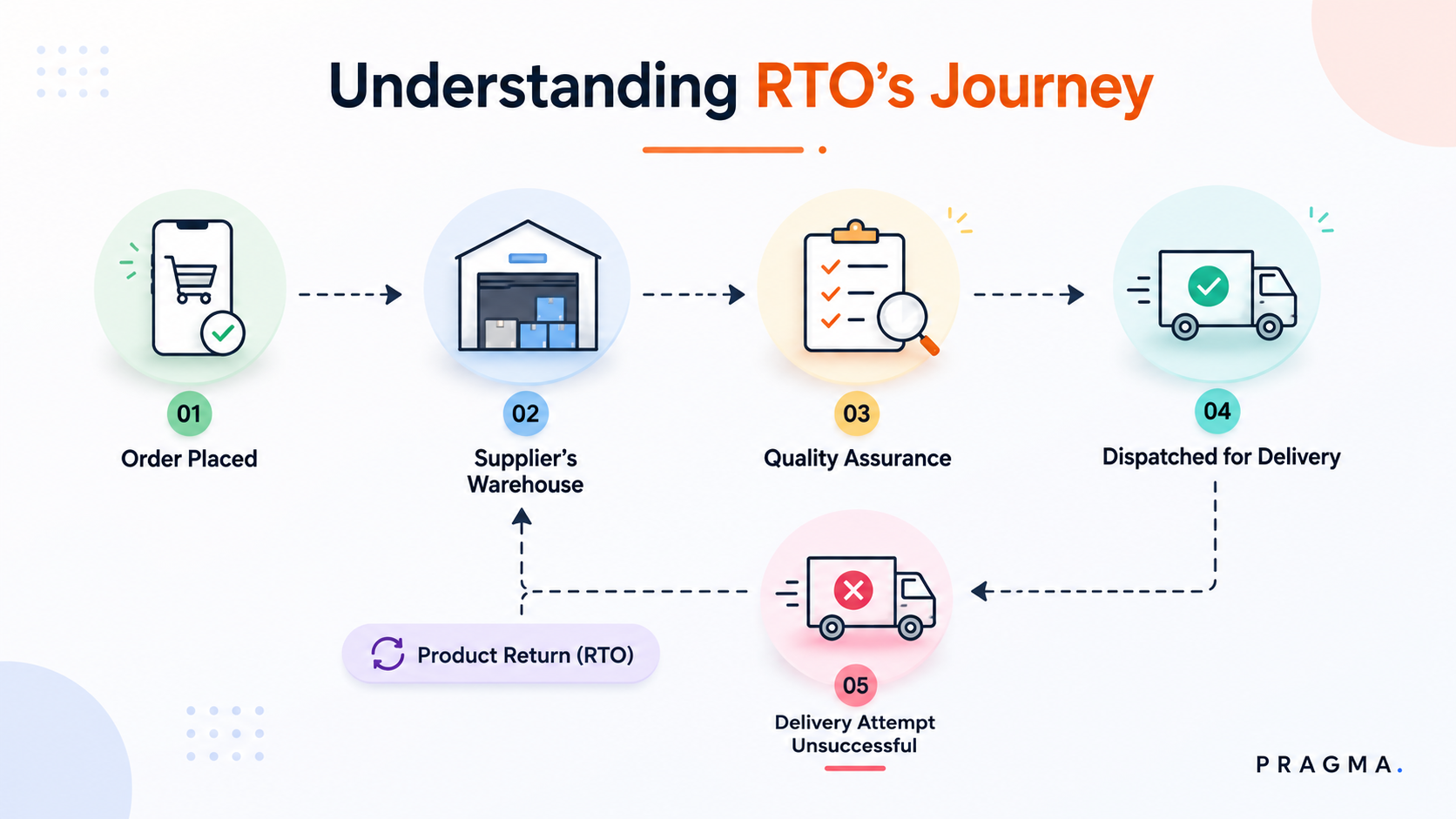
If we are talking about what RTO is in dropshipping, then the answer to this is the same, which means what RTO is.
RTO refers to Return-to-Origin, which means when an order is placed by the customer, shipped to him, but instead of getting it delivered to him, it gets returned to the seller, or where it came from. And in the dropshipping industry, the undelivered order is sent back to the supplier's warehouse.
The Unicommerce India Ecommerce Index Report 2023 states that the rate of return orders has been rising, becoming 10.4% in FY23 (compared to 9.8% in FY22), and is especially high in the areas of dropshipping due to the nature of their operations.
How RTO Works in a Dropshipping Model?
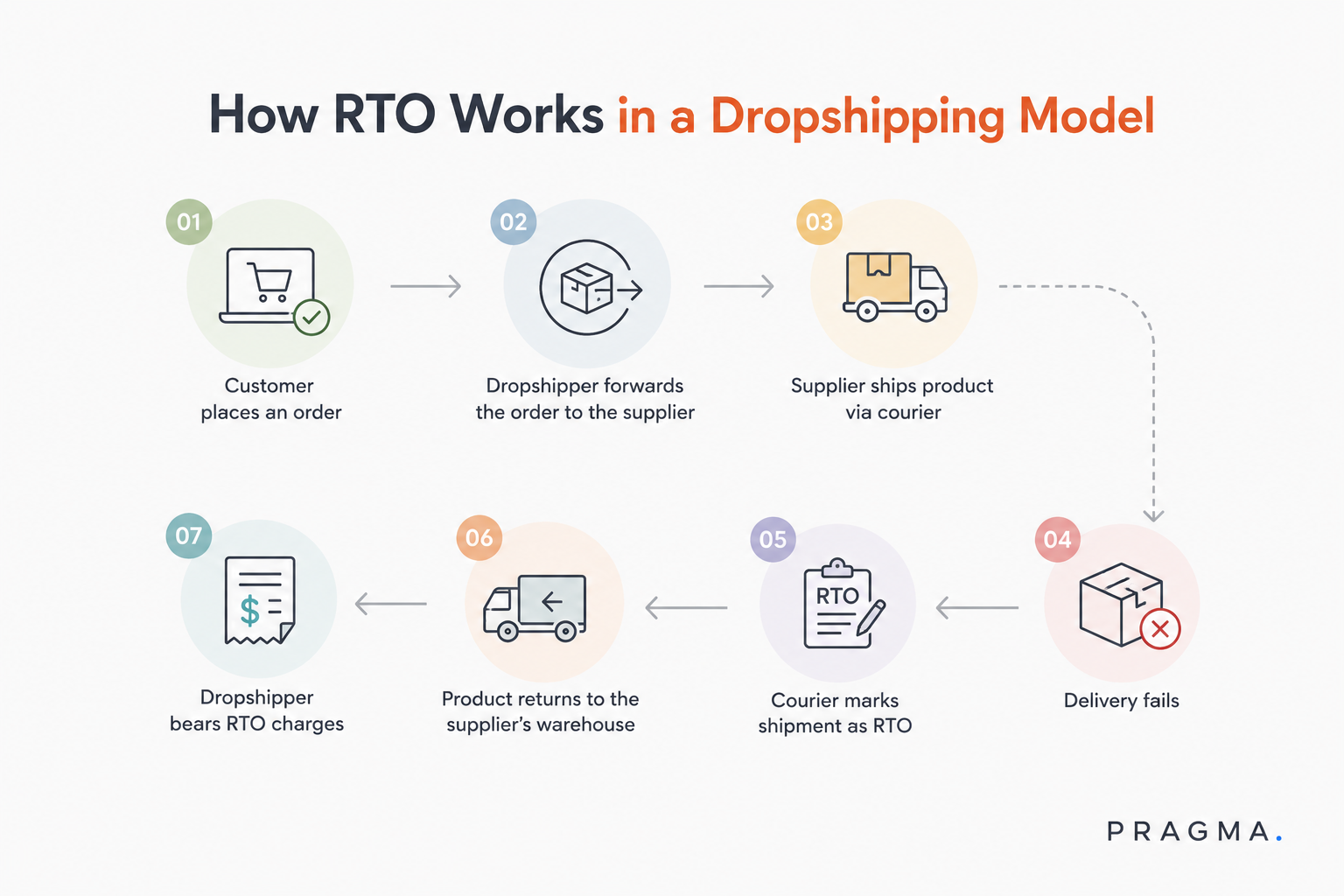
Let us now understand how the RTO works in the dropshipping model. It will help you to identify intervention points to reduce losses.
Customer Places an Order
The first primary thing starts with the order placement from the customer. Initially, the customer looks for the product on the seller's website and then places the order.
In India, 65% of first-time online buyers opt to use COD, which increases the risk of RTO, as the level of commitment is low.
The Dropshipper Forwards the Order to The Supplier
When the seller gets an order from the customer, he then sends the same order to the supplier. All the details of the customer and the order are transferred to the supplier to start processing it from their side.
Supplier Ships Product Via Courier
Now, when the supplier gets the order, they start processing it. They get the items packed and dispatch them through their preferred logistics partner.
Here, the selection of the delivery partner is to be very specific because a wrong choice can turn the order into RTO.
Delivery Fails
Now this is the stage where the courier partner goes to deliver the order, but due to some reasons, he is not successful in delivering it.
What are The Common Reasons for RTO in Dropshipping?
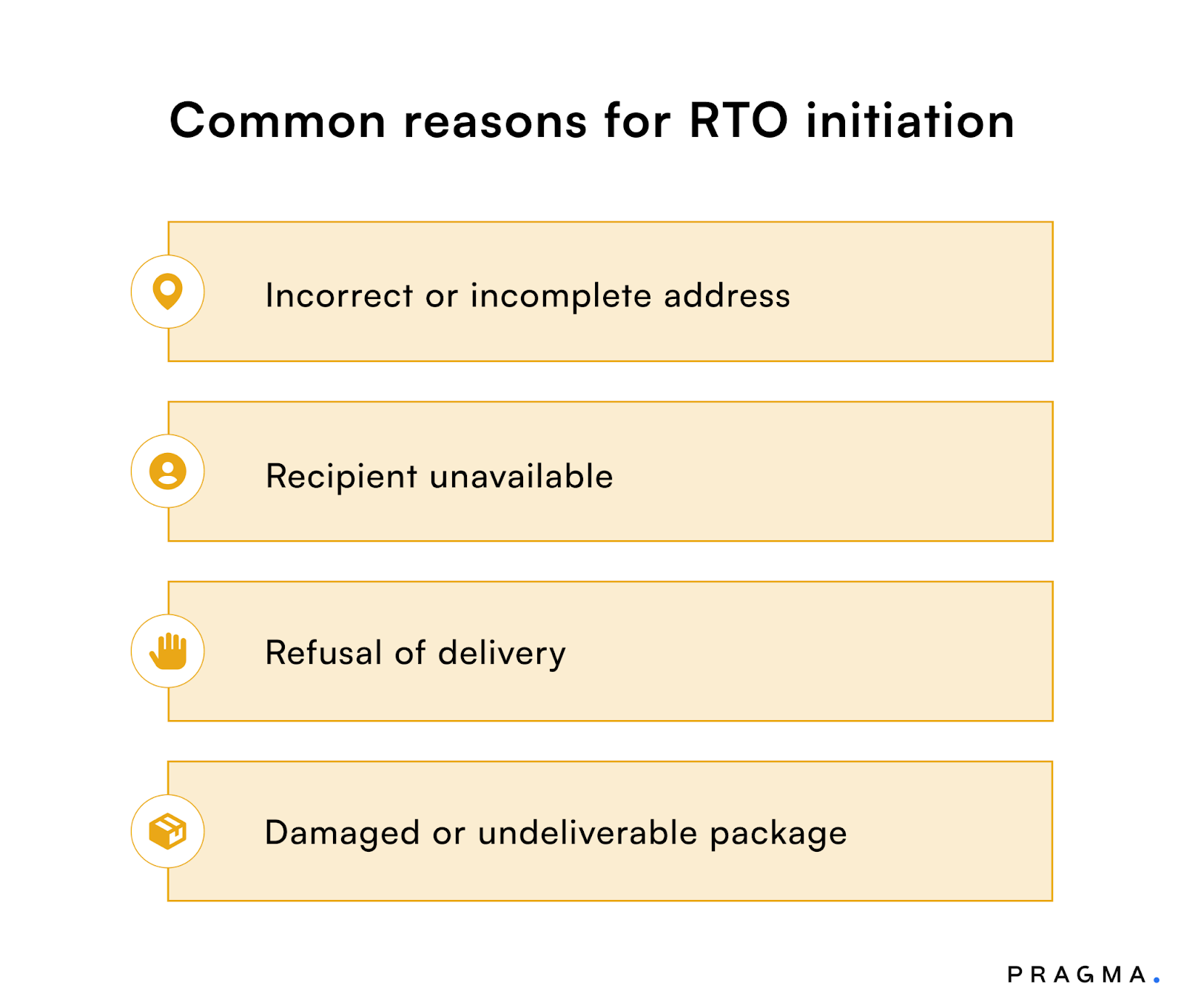
RTOs in the dropshipping industry have massive numbers, and these are the common reasons behind it:
- The customer may be unavailable at the time the delivery partner reaches the delivery address.
- Maybe it is possible that the address entered by the customer is wrong.
- The customer refused to take the order.
- It is possible that the delivery of the package becomes late, and now the customer does not want that product anymore.
Courier Marks Shipment as RTO
The delivery partner makes two or three attempts to deliver the order. But, even after it, he is unable to deliver the package to the customer; they mark that order as RTO, and start the return process.
Product Returns to the Supplier's Warehouse
When the order is marked as RTO by the courier company and sent back to the supplier's warehouse, it will reach them within 7-15 working days, depending on location and courier efficiency.
Dropshipper Bears RTO Charges
Now comes the most hated part, the RTO charges. The question is, who will bear them?
The person who is selling the product, called a dropshipper, will have to pay all the charges related to the RTO. They will pay both the forward and reverse logistics, without generating any revenue.
This is how RTO happens in the dropshipping e-commerce business model.
Why is RTO a Big Problem in Indian Dropshipping?
RTO is a major problem in the Indian dropshipping market because of the following reasons:
High Cash on Delivery (COD) Usage
The e-commerce ecosystem of India is highly dependent on COD payments, with COD orders reporting 15-20% RTO rates compared to 5% on prepaid orders.
Such a type of payment produces a lack of commitment in customers who can easily decline to get delivery without bearing the financial cost. Because the customer thinks that they have to pay nothing, so there is no loss for them, that's why they easily refuse to take the order.
And due to this much dependence on the cash on delivery orders, the RTO becomes a big problem in the drop shipping industry. But with Pragma, it is easy to handle this situation.
Pragma, with its C2P (COD-to-Prepaid) conversion strategy, helps to convert most of the COD orders into prepaid ones and reduces the RTO rates by 60%.
Fake or Impulse Orders
In India, there are such people who make fake orders or impulsive ones in a hurry. Most of the people just place the order because they are just thinking of placing some orders, without the genuine intention of buying the product, or they just want to try some new stuff.
This behaviour of the Indian customers leads to rising RTOs, making it an alarming situation for the dropshipping industry. But this problem of fake orders can be solved with Pragma RTO Suite, which helps to identify fake orders, impulse buyers, and orders made by bots, by studying past customer behaviour and analysis.
Incorrect Address & Contact Details
The Indian system of addresses is complicated, and it is a major cause of failure in delivery. According to the Department of Posts, Government of India, 25-30 per cent of failure to deliver is caused by missing or wrongful addresses.
Most of the address-related issues are because of:
- Not standardised forms of address.
- Lack of landmarks or house numbers.
- Incorrect PIN codes
- False addresses to escape payment.
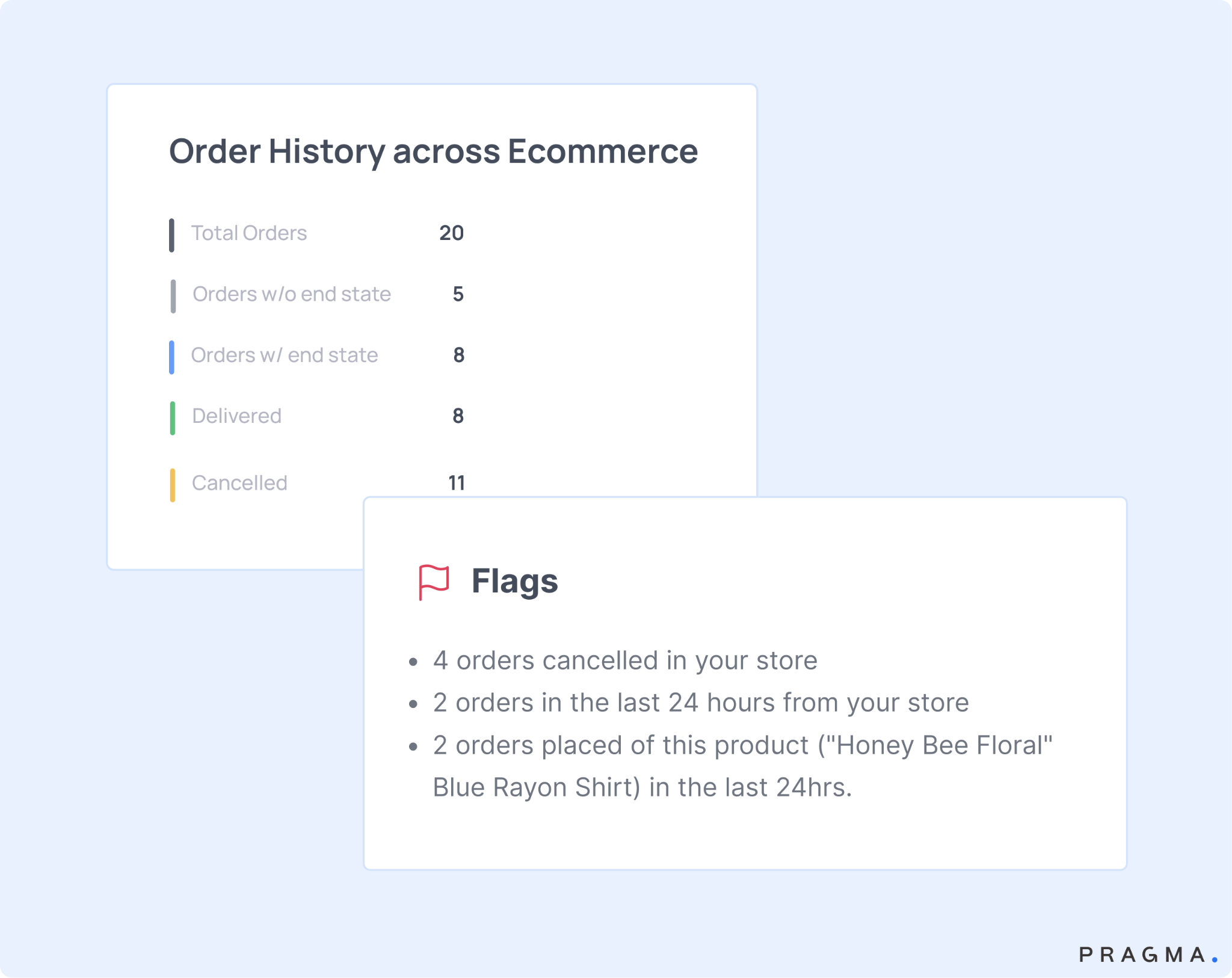
Pragma RTO Suite helps in identifying fake addresses and high-risk orders. When an order gets placed, it screens the address, pincode, phone number, etc, and also auto-corrects it if needed.
Poor Delivery Coordination
Lack of communication between customers and delivery partners would result in failed attempts at delivery. Also, customers are not always accessible at certain points of delivery, which requires couriers to resend packages. According to a survey, 60% of delivery failures occur due to customer unavailability during delivery attempts.
What is The Impact of RTO on Dropshipping Businesses?
The impact of RTO on the dropshipping business is immense. It not only impacts it financially but also causes a heavy impact on the operations of the business.
The Financial Impact of RTOs
When an RTO occurs, and the package returns to the supplier being undelivered to the customer, the dropshipper has already paid the forward logistics to send it to the customer, and when it has to be returned to the supplier's warehouse, the cost to ship it back to the supplier has to be paid as reverse logistics.
And due to spending the money on costs only and no revenue being generated, the RTOs also hamper the cash flow and the working capital in the business.
The Operational Impact of RTOs
When a business gets an order, it starts processing it and taking every possible action required to fulfil the order. In the dropshipping industry, it includes the efforts by the supplier, such as finding products, packaging, shipping, handling operations, etc.
And when the RTOs occur, not only do these efforts get wasted, but they also have to deal with the return processing of the orders, too.
It adds pressure to the customer service, as they spend more time addressing the delivery problems, customer complaints, and coordination of refunds.
The issue of inventory management is also complicated since the product returned is often caught in transit or returned to the suppliers, and thus, tracking of the stock and its availability becomes unreliable.
Repeated RTOs may put a strain on relationships with suppliers and logistics partners, in cases where there were disagreements in terms of costs, damaged products, or even in cases of missed deliveries.
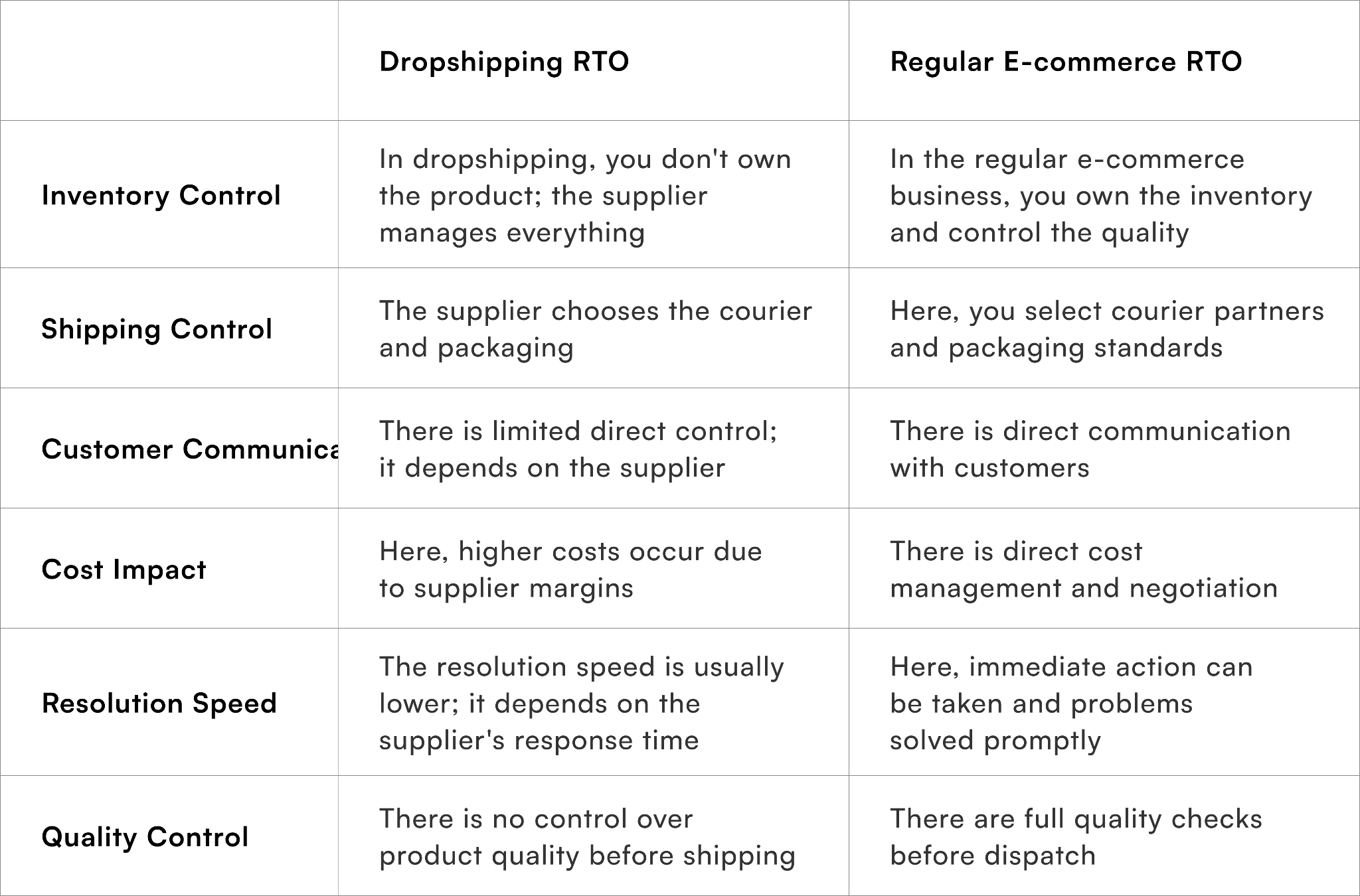
What is The Difference Between RTO in Dropshipping and RTO in Regular E-commerce?
How to Calculate RTO Rate in Dropshipping?
If you want to calculate the RTO rate in your dropshipping business, you can use the following formula:
RTO Rate = (RTO Orders ÷ Total Shipped Orders) × 100
Let us understand this with the help of an example, with the help of the monthly data of the "X" business:
- Total Orders Received: 1,000
- Orders Cancelled Before Shipping: 100
- Orders Actually Shipped: 900
- Orders Successfully Delivered: 630
- Orders Currently in Transit: 120
- Orders Returned as RTO: 150
Now, put these numerics into the formula:
RTO Rate= [150÷(630 + 150)] × 100 = 19.2%
So, this is how you can count your RTO rate in the dropshipping industry.
How to Reduce RTO in Dropshipping?
Here are the best practices through which RTOs can be reduced to a greater extent:
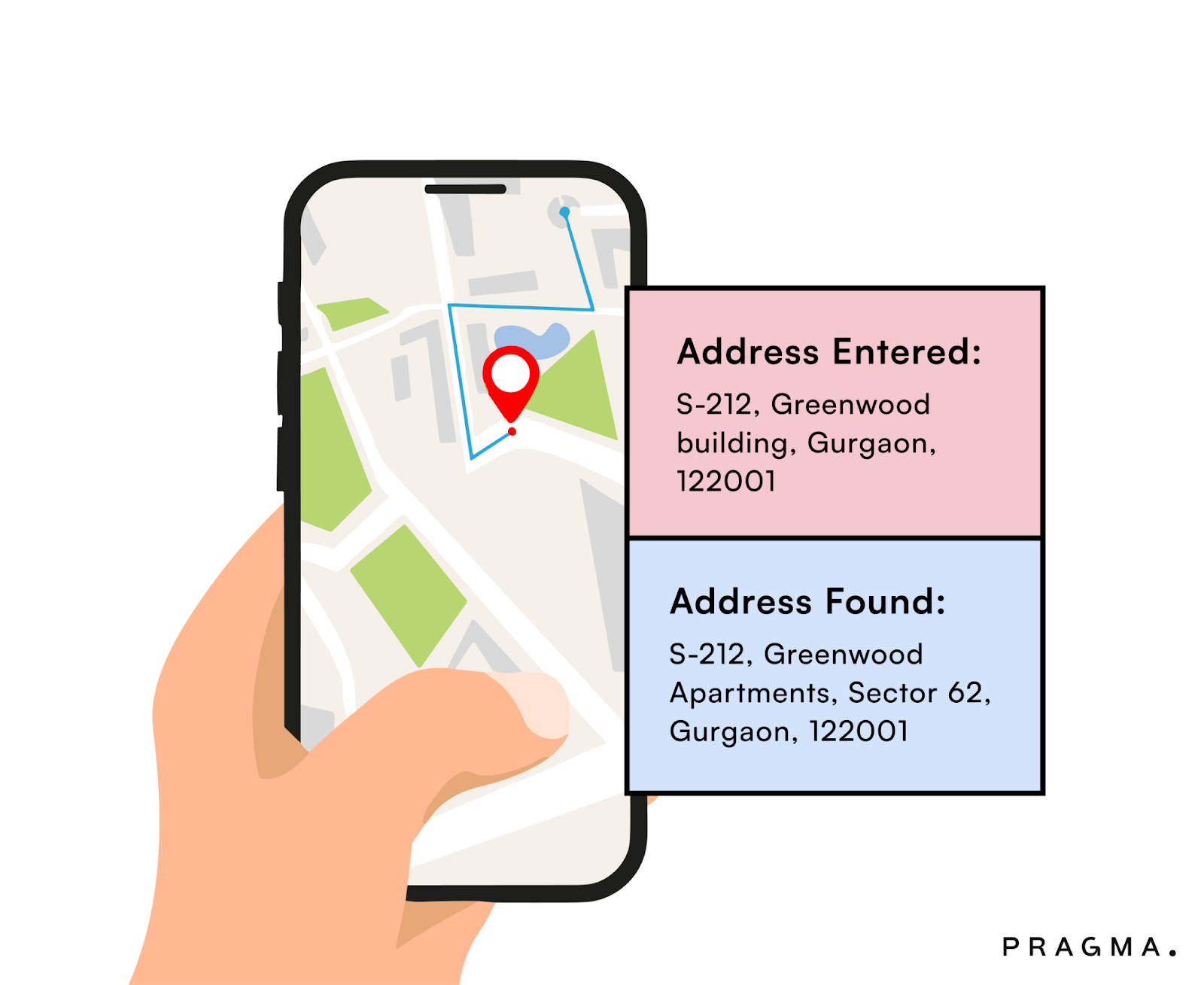
1. Address Verification
When orders are received by the business, they should make sure that the information is correct. They can use automated tools to validate customer addresses and PIN codes.
It will assist them in following up on whether the address has been missed or the incorrect postcode has been typed, since these systems can detect suspicious addresses when the order is being placed.
And Pragma RTO Suite helps in achieving this. It can identify the wrong addresses entered or can even auto-correct them.
2. COD Verification
As we are aware, the majority of the orders are returned due to the COD. To avoid it, the brands should ensure COD orders. Send WhatsApp/IVR calls/SMS to verify cash-on-delivery orders and dispatch.
With the help of Pragma RTO Suite, businesses can confirm the orders by sending them pre-configured notifications via WhatsApp, SMS, os email.
Or they ought to provide incentives in advance payment to the customers. The practice will transform the CODs into verified sales and minimise the risk of RTO.
Pragma's C2P strategy helps to convert about 35-40% of COD orders to prepaid ones.
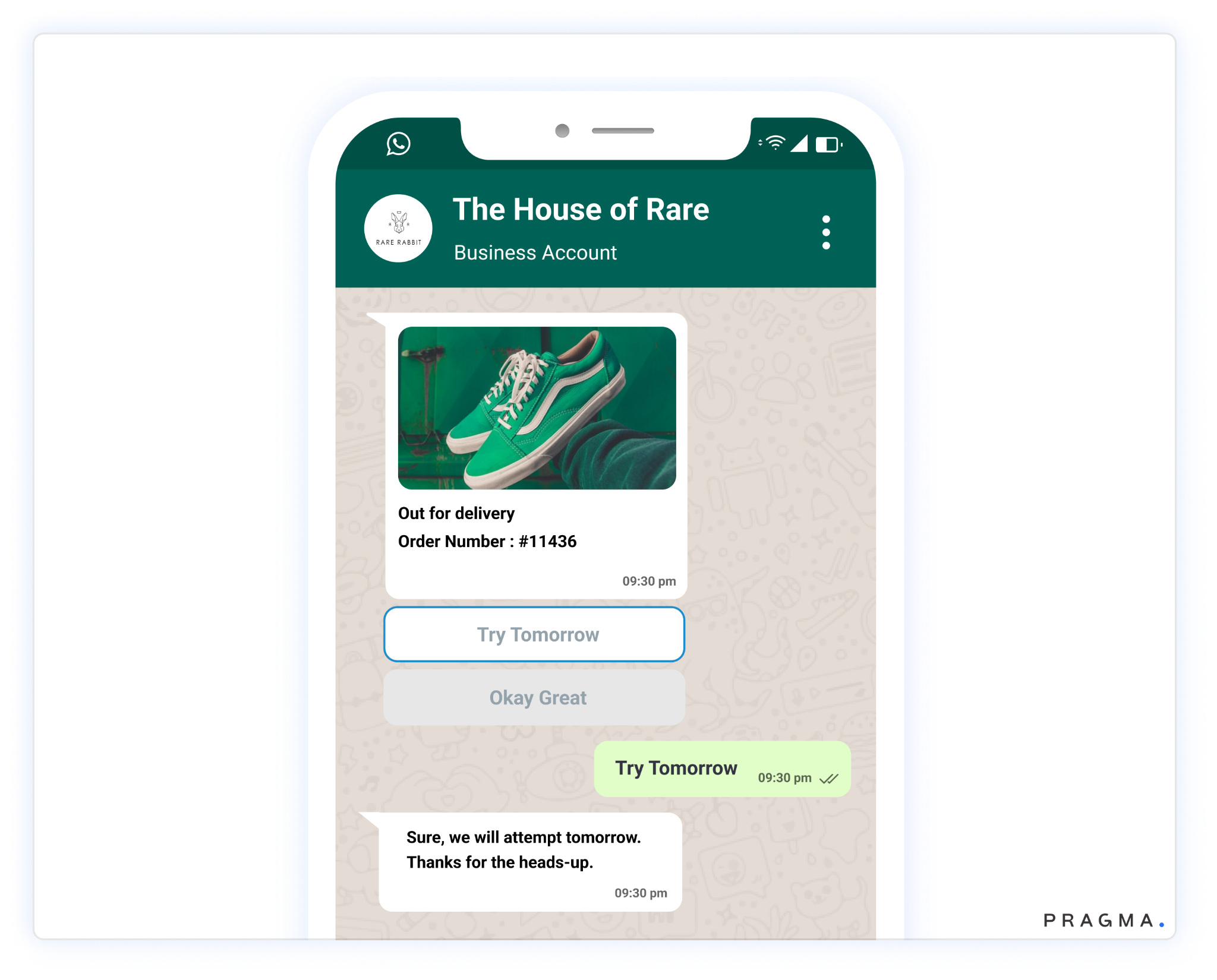
3. Customer Communication
The unavailability of a customer is one of the reasons why the RTO was necessitated. As a way of addressing this problem, the brands ought to use messages or emails to alert the customer on the status of his or her order.
This will remind them that the order will arrive on that particular day or time, and therefore, they can be there to collect it. Moreover, give customers an opportunity to reschedule the delivery, and give the number of a delivery partner so that everything is organised properly during the delivery.
4. Pincode Analysis
The pincode analysis approach should be deployed by the brands. To detect risky orders, they can conduct research on the history of orders in the past. The COD order may be halted within some specific parts.
5. Delivery Optimisation
The delivery partners should contact the customer at least 2-3 times before the issuance of an order, which can be taken into account as RTO. This is to be added as terms and is to be taken as an SLA breacher should they not abide by this.
6. Smart Courier Allocation
Form a partnership with logistics companies that provide higher delivery rates in particular areas. This will help to reduce the delivery failures, ultimately resulting in a reduction in RTOs.
What Technology Can Help in Reducing RTO Challenges?
Technology is becoming important in minimising the RTO issues through automated address verification to prevent delivery errors, real-time tracking systems that are used to track deliveries and customer notification systems that enhance delivery success.
Analytics and AIs assist in recognising RTO patterns and causes, whereas CRM and order management systems facilitate communication with customers and organising their work with logistics partners, resulting in the reduction of failed deliveries and enhanced operational control.
To Wrap It Up
So, to conclude here, we want to say that RTOs can not be eliminated entirely, but with proper strategy and practices, they can be reduced.
Along with the help of automated tools, they can be managed and reduced to a greater extent. And with Pragma, it is possible to reduce RTO rates by 60%, with the right techniques and strategies.

FAQs (Frequently Asked Questions On What Is RTO in Dropshipping? Meaning, Causes & Impact)
1. What does RTO mean in dropshipping?
RTO (Return to Origin) in dropshipping refers to an order that is shipped to the customer but not delivered successfully and is returned to the seller or supplier instead.
2. Why is RTO common in dropshipping businesses?
RTO is common due to limited control over delivery partners, longer delivery timelines, address inaccuracies, COD refusals, and lack of direct customer communication.
3. What are the main causes of RTO in dropshipping?
Common causes include incorrect or incomplete addresses, customer unavailability, refusal to accept COD orders, delivery delays, poor last-mile coordination, and fake or low-intent orders.
4. How does COD increase RTO in dropshipping?
COD orders are more likely to be refused at delivery, especially when customers place impulsive orders or are not properly confirmed before despatch, leading to higher RTO rates.
5. How does RTO impact dropshipping profitability?
RTO increases shipping and handling costs, blocks cash flow, ties up inventory with suppliers, and can wipe out margins since dropshipping profits are usually thin.
6. Is RTO higher in dropshipping compared to regular D2C models?
Yes. Dropshipping typically sees higher RTO because sellers have less control over fulfilment speed, packaging quality, courier selection, and customer experience.
7. How can dropshippers reduce RTO effectively?
Effective methods include address validation before shipping, COD confirmation via WhatsApp or calls, encouraging prepaid orders, faster despatch, and choosing reliable logistics partners.
8. Can RTO be completely eliminated in dropshipping?
No. RTO cannot be fully eliminated, but it can be significantly reduced with better order screening, customer communication, and fulfilment coordination.
9. What is a good RTO rate for dropshipping businesses?
While benchmarks vary, a healthy RTO rate in dropshipping is typically below 15–18%. Rates above this usually indicate address, payment, or delivery issues.
10. How should dropshippers handle RTO orders?
Best practice includes tracking RTO reasons, coordinating with suppliers on return handling, recovering inventory where possible, and refining future order acceptance rules.
Talk to our experts for a customised solution that can maximise your sales funnel
Book a demo

.webp)
.png)