

Most e-commerce brands focus heavily on acquiring customers but lose them right after the purchase.
Because they overlook the most critical phase: post-purchase behaviour.
Studies show that acquiring a new customer costs 5–7 times as much as retaining an existing one. Meanwhile, repeat customers spend up to 67% more than first-time buyers.
That is why every e-commerce brand needs to work strategically in this phase.
The post-purchase experience includes everything from the moment the customer places an order through delivery and follow-up communications.
Each of these touchpoints shapes how customers feel about your brand. So, let us discuss in detail about "Post-Purchase Behaviour: What It Is and Why It Matters for E-commerce?"
What Is Post-Purchase Behaviour?
Post-purchase behaviour refers to the actions, emotions and thoughts customers have after making a purchase.
This includes assessing customers' purchase satisfaction, product use, interactions with the brand, and future purchasing intentions.
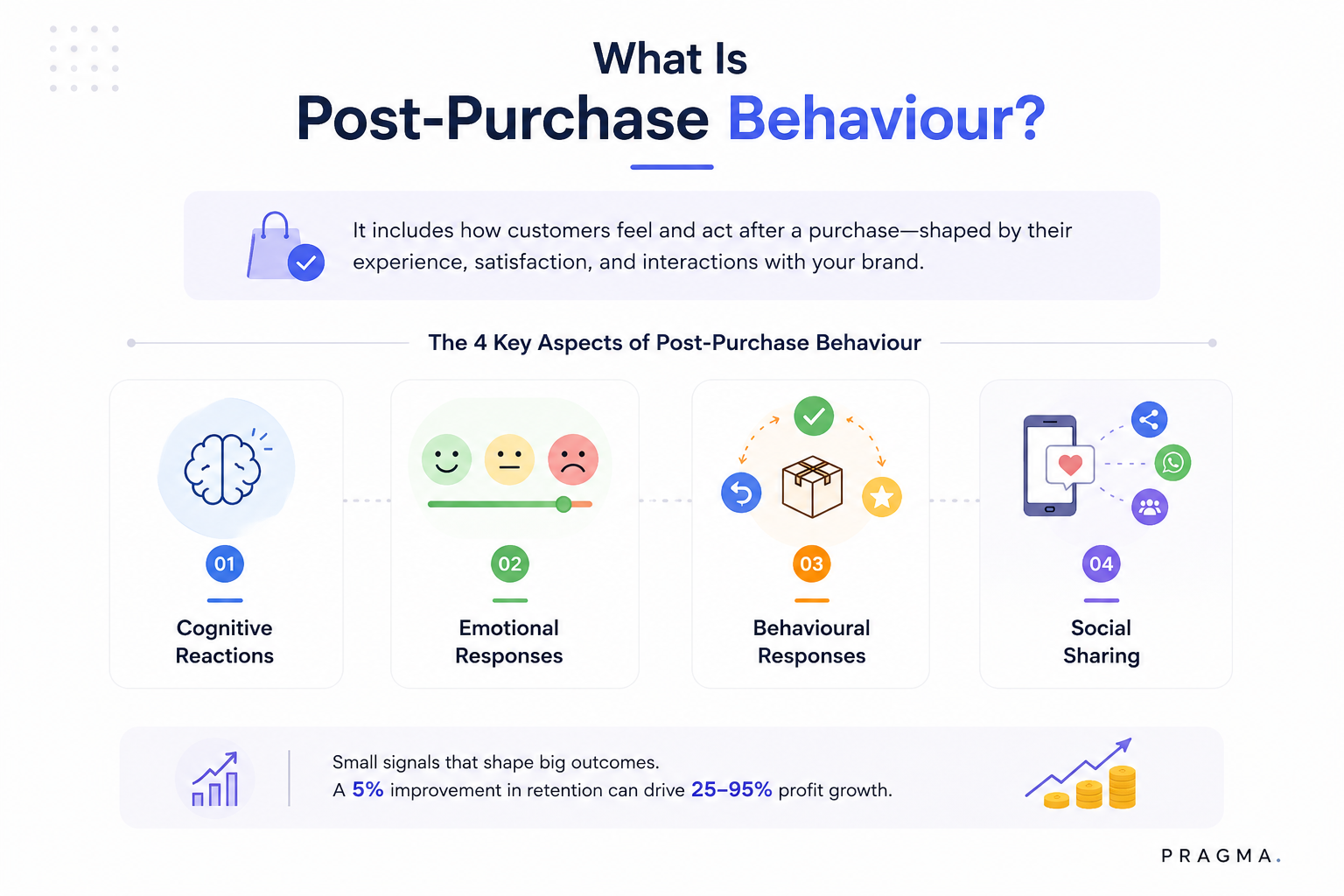
There are four key aspects of the post-purchase behaviour:
- Cognitive reactions: How customers evaluate their purchase decisions and assess the value they receive.
- Emotional responses: This involves the customer's satisfaction, regret, excitement, or fear regarding the purchase.
- Behavioural responses: What type of response they made after product usage, reviews, returns, repeat purchases, or brand advocacy.
- Social sharing: How customers share their experiences with friends, family or social networks.
Individually, these may seem like small signals.
Together, they define retention, returns, and long-term revenue. Even a 5% improvement in retention can drive 25–95% profit growth.
Why Post-Purchase Behaviour Matters in E-commerce?
Here is why post purchase behaviour is important for every e-commerce D2C brand:
Retaining and Re-Selling
D2C brands can find no better growth opportunity than customer retention.
The probability of selling to an existing customer is significantly higher than to a new one.
Key statistics that matter:
- Research shows customers who have great delivery experiences on their first purchases make 2.8x more second purchases.
- Three consecutive positive customer experiences result in 89% retention over 24 months.
- Companies with best-in-class post-purchase experiences have 40-60% higher CLV.
Brand Loyalty and Advocacy
Satisfied customers become the best brand ambassadors for growth. According to research, 91% of customers are more likely to make repeat purchases when offered a personalised experience, and satisfied customers deliver 2.6 times more revenue than even somewhat satisfied customers.
Strong post-purchase experiences create:
- Higher repeat purchase rates
- Organic word-of-mouth growth
- Stronger brand trust
Brands leveraging Pragma WhatsApp Business Suite experience an average 11x return on ad spend for WhatsApp promotion campaigns, and 25-35% higher Net Promoter Scores.
Impact on Returns and RTO
Return-to-Origin (RTO) rates play an important role in D2C business profitability, with industry data indicating that in India, RTO rates for e-commerce range from 15-25%, resulting in high shipping costs and lost profits for brands.
For D2C brands operating on thin margins, even a small increase in returns or RTO can significantly impact profitability.
The cost of returns is as follows:
- The typical RTO cost ranges from ₹150 to ₹ 300 per return (shipping, handling, and replacement costs).
- Popular return categories (apparel, electronics) have RTO rates of 30-40%.
- Every return decreases customer lifetime value by 15-20%.
But with proper RTO management systems, these RTOs can be decreased to a greater extent.
Revenue and Customer Lifetime Value
Post-purchase satisfaction drives customer lifetime value (CLV).
Even small improvements can significantly increase profitability, because of:
- More repeat purchases by customers
- Increased average order value (AOV)
- Stronger long-term revenue contribution
The results: retention, lower returns, and increased lifetime value, are all a function of the post-purchase experience.
Yet brands find it hard to measure and respond to these indicators. Disconnected systems, lack of visibility and real-time actions can miss the chance.
This is where platforms like Pragma D2C Operating System come in, helping brands unify post-purchase data, automate engagement, and proactively improve customer experience across touchpoints.
What are the Stages of Post-Purchase Behaviour?
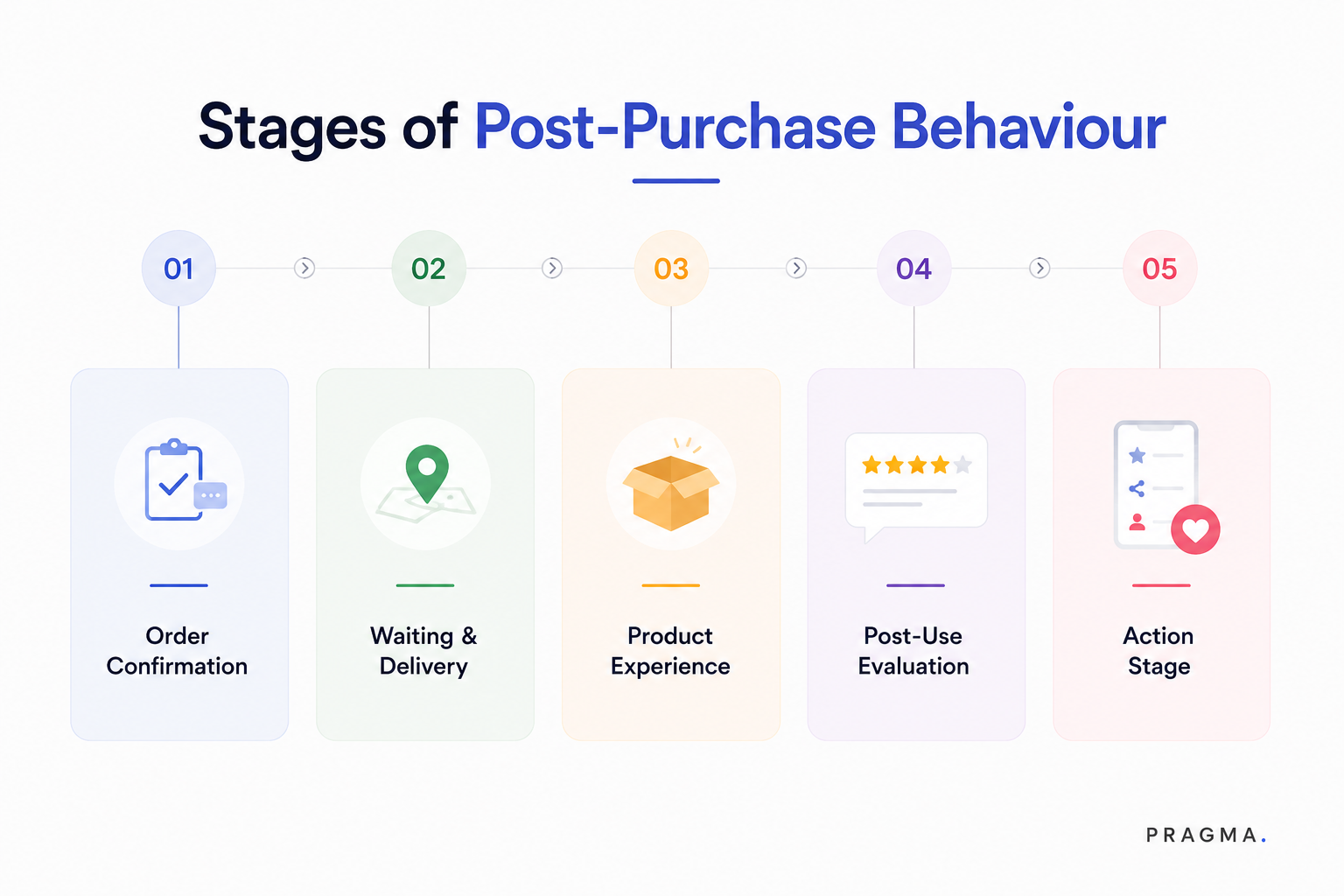
Post purchase behaviour can be divided into multiple stages, each of which tells how customers feel and what their next actions will be:
Order Confirmation Stage
The moments immediately after purchase are critical. This is when customers seek reassurance that they made the right decision.
Research shows that 73% of purchase anxiety occurs within the first hour after checkout.
What matters here:
- Immediate confirmation with purchase details and tracking numbers
- Provide clear delivery timelines to the customers
- Tell the customer in advance of any delays or problems
- Add value to the products by giving product information and tips
To reduce anxiety at this stage, brands need real-time, multi-channel confirmations. Platforms like Pragma WhatsApp Business Suite enable order confirmations within seconds of an order. Its intelligent messaging system tailors confirmation messages to individual customers, product and order characteristics.
This holistic approach has enabled brands to reach 95% customer satisfaction rates at the confirmation stage and cut the number of support tickets by 35%.
Waiting and Delivery Stage
This is the most likely time for customers to feel anxious about their order and cancel. 67% of customers switch among brands because of a bad delivery service experience, making this the most critical phase for retention.
Risk factors during this waiting period can be the following:
- Lack of communication with the customer leads to anxiety
- Lack of prior communication for delayed deliveries
- Tracking system failures, preventing status visibility that irritates customers.
- Last-mile delivery problems resulting in failed deliveries
To manage this phase effectively, brands need real-time tracking visibility and proactive communication systems that keep customers informed at every step.
Platforms like Pragma help brands automate these delivery updates across channels, reducing customer anxiety and support queries.
Product Experience Stage
First impressions and experience with the product impact future buying decisions.
Studies indicate that 73% of consumers form a conscious opinion of packaging quality within 30 seconds of opening a product, and high-quality packaging has positive effects on product perceptions.
What do customers see?
- Brand presentation and packaging quality
- Product condition upon arrival
- Ease of use and installation
When brands collect data like this, they can identify experience gaps and implement improvements, resulting in 22-31% retention improvements despite minimal additional costs.
Brands that actively capture post-delivery feedback and product experience data can systematically identify gaps and improve retention at scale.
Post-Use Evaluation Stage
Long-term use of the product builds customer perceptions about the value and trust of the product and brand.
This is the stage that turns customers into loyal buyers or first-time buyers, and can last from 7-30 days depending on product type.
Some of the factors that lead to long-term evaluation:
- Product durability and reliability
- Cost-benefit analysis versus other products
- Brand support quality during the usage period
- Overall satisfaction with the purchase decision
Consistent engagement during this phase can significantly influence long-term loyalty.
Companies which employ these engagement strategies note a 40% increase in customer satisfaction during the evaluation stage and 55% improvement in repurchase behaviour.
Action Stage
The last stage is where customers make decisions about their future involvement with the brand.
This can involve customer reviews, repeat purchases, or referrals. This happens 30-90 days after purchase, and affects long-term business performance.
Key actions taken by the customers during this time:
- They write and submit a review (positive or negative)
- Social media engagement and sharing
- Repeat purchase decisions
- Sharing and word-of-mouth marketing
- Loyalty program participation
These actions directly impact brand growth, reputation, and long-term revenue.
Types of Post-Purchase Behaviour
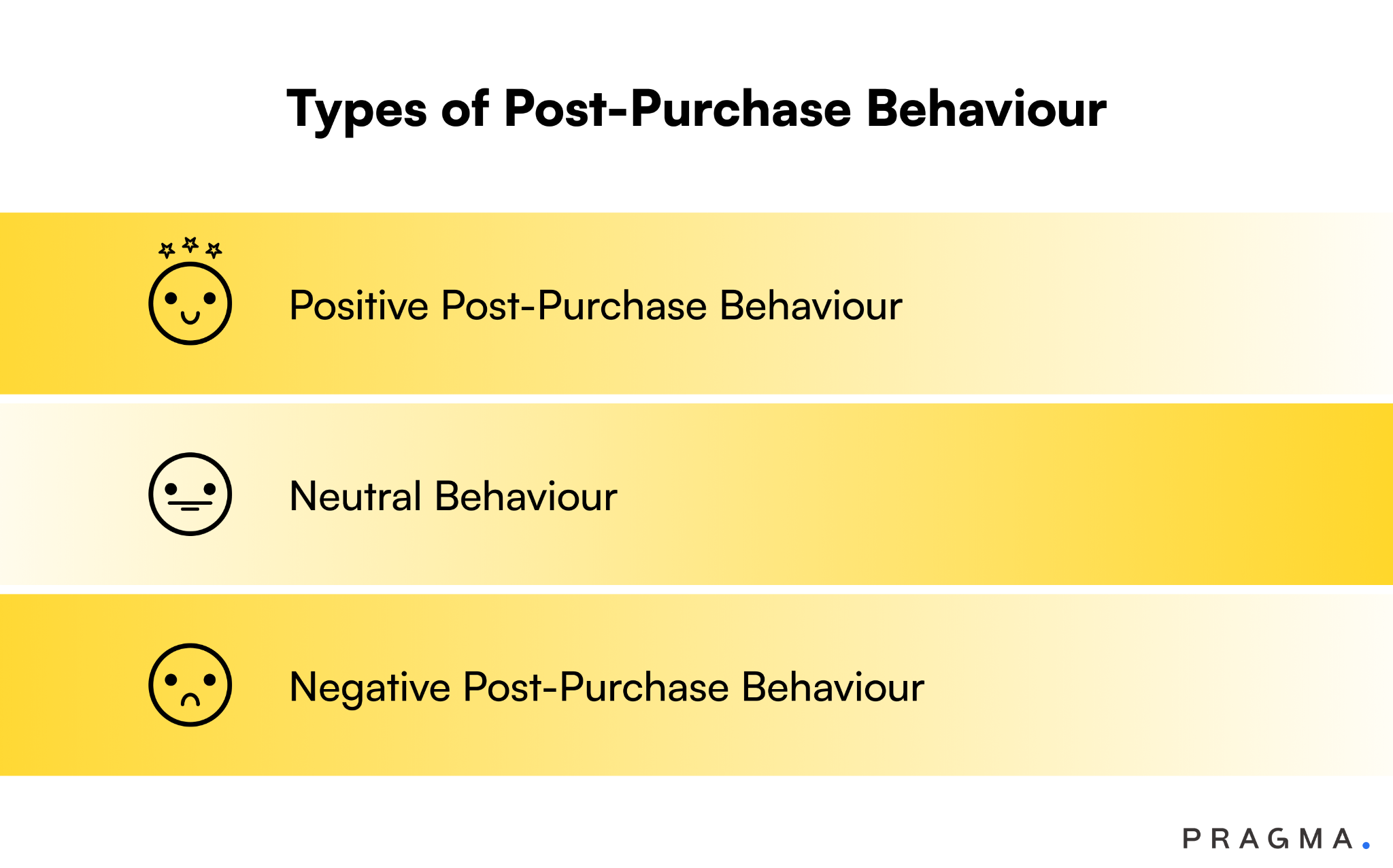
Post purchase behaviour typically falls into three broad categories, based on how customers respond to their experience.
Positive Post-Purchase Behaviour
Positive behaviour indicates a strong customer experience and high satisfaction levels.
These customers are more likely to:
- Make repeat purchases
- Leave positive reviews and ratings
- Recommend the brand to others
- Engage with the brand across channels
This segment plays an important role in driving organic growth. Consistently positive experiences, especially around delivery and communication, can significantly improve the profitability of the business.
Neutral Behaviour
Neutral behaviour is when customers do not feel more good or bad about the purchase.
In this case, they typically:
- Do not actively promote or criticise the brand.
- Show limited engagement with communication.
- Make purchase decisions based on the cost of the product or its convenience.
Negative Post-Purchase Behaviour
Negative behaviour can have devastating effects on brand image and revenue.
Here, common customers' characteristics include:
- Returns and cancellations
- Negative reviews or complaints
- Reduced engagement
- Churn or switching to competitors
Even a single poor experience, such as delayed delivery or lack of communication, can significantly impact retention.
Research shows that a large portion of customers experience post-purchase doubt, making early intervention critical.
These experiences don't just impact customers; they directly affect core business metrics.
What Causes Negative Post-Purchase Behaviour?
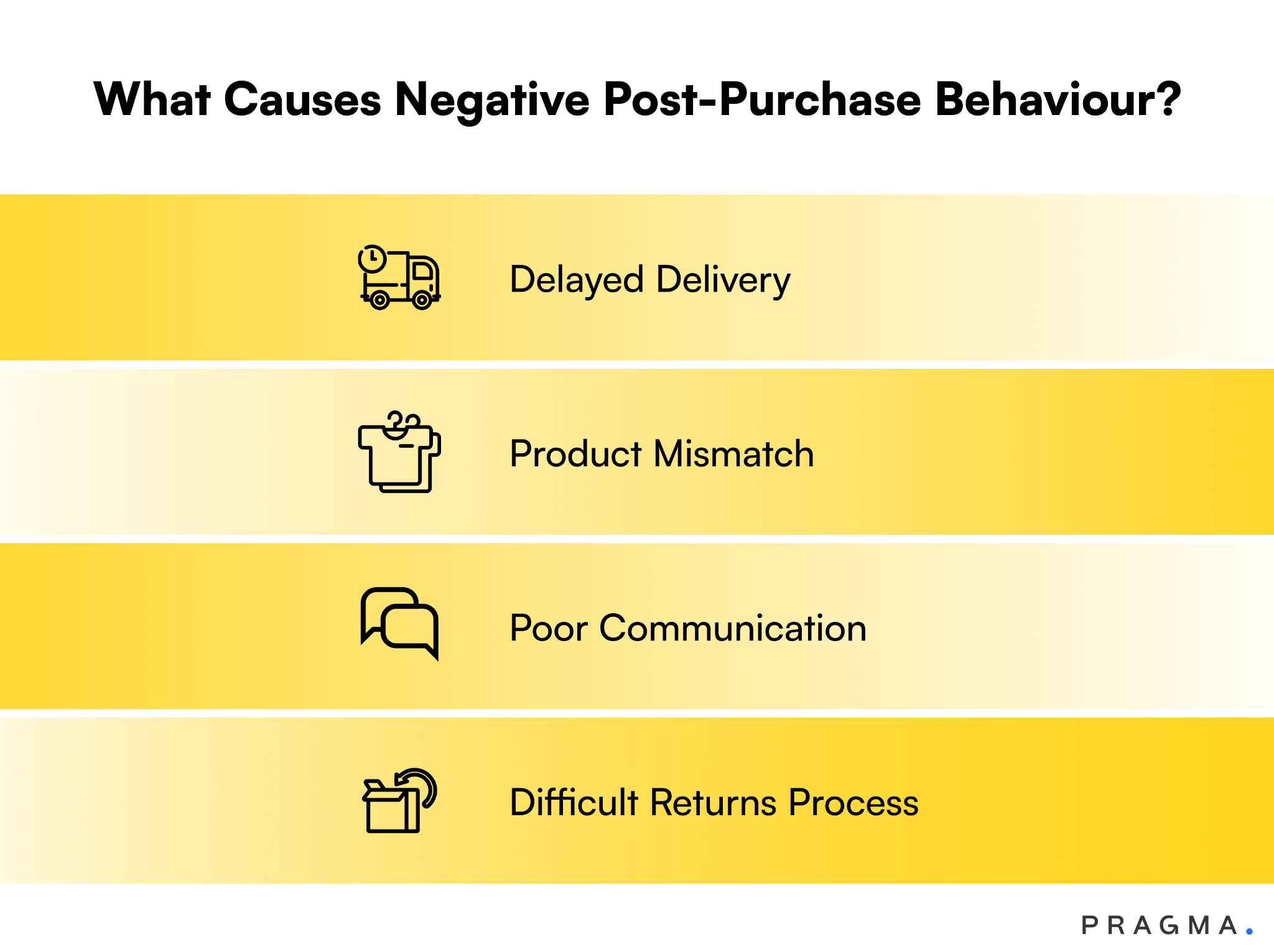
Negative post purchase behaviour directly impacts retention, margins, and repeat revenue. The most common causes include:
Delayed Delivery
Late delivery is the major source of post-purchase dissatisfaction with Indian e-commerce.
A study on delivery experience indicates that for every day the order is delayed, the chance of a repeat purchase goes down by 8-12% in urban markets.
Other contributing factors that lead to dissatisfaction are:
- Unrealistic delivery promises
- Poor logistics coordination
- Inadequate inventory management
- Failure to notify of the delay
To reduce delays, brands need better order allocation and delivery prediction systems to choose optimal routes and provide reliable delivery predictions, minimising dissatisfaction with delays.
Product Mismatch
Mismatched product descriptions and offerings result in instant dissatisfaction for customers. Common issues include:
- False size and color data
- Poor product photography
- Misleading feature descriptions
- Quality differences from expectations
Reducing product mismatch requires better product data consistency, accurate content, and feedback loops from returns areas, where integrated systems can help brands continuously optimise listings.
Poor Communication
Post-purchase communication breakdowns increase customer stress. A study shows that customers who receive updates are 42% more likely to retain compared to those who view tracking pages.
Where e-commerce brands fail include:
- Lack of order status updates
- Delayed response to customer queries
- Lack of consistency in information
- Lack of delivery notifications
Pragma's WhatsApp Business Suite overcomes this issue by offering notifications at five points in the journey: order placed, dispatched, in transit, out for delivery and delivered.
Difficult Returns Process
If customers face difficulty while returning products, it quickly dissatisfies them.
Common return process issues that customers face nowadays are:
- Unclear return policies
- Complicated return initiation
- Long refund processing times
- Poor return tracking capabilities
Pragma Return Management System simplifies the returns process with automated workflows, transparent tracking and quicker refund processing, leading to 15-25% increased customer satisfaction.
How Post-Purchase Behaviour Impacts E-commerce Metrics?
In D2C, after-sales behaviour is tied to revenue, not just customer experience.
Post-purchase impacts the return rate, repeat purchase rate, shipping costs, and customer satisfaction. Here are four key metrics affected by this:
Return Rate
D2C returns can be related to the mismatch between expectations and reality. This is influenced both at the time of purchase and post-purchase.
- In industries such as fashion and beauty, the return rate can be between 20-40%; much of this can be attributed to "avoidable returns" (wrong size, misleading pictures, unmet expectations).
- Lack of post-purchase communication (such as usage instructions and shipping notifications) can lead to higher return intentions even if the product is not defective.
- Companies that actively communicate order confirmation, usage guidelines and estimated delivery time frames have reported up to 15-25% decrease in return requests.
For the Direct-to-Consumer (D2C) brands that operate on low margins, a 1% drop in return rate boosts contribution margin and lowers reverse logistics expenses.
Customer Lifetime Value (CLTV)
CLTV is not created at first sale; it's created after the first sale.
It has been found that repeat customers contribute significantly more revenue over time.
The likelihood of selling to a new customer is 60-70% vs 5-20% for a new customer.
After-sales behaviour signals (product quality, delivery, communication) are the factors that help convert a customer into a repeat buyer.
For D2C brands:
- Timely and reliable delivery and superior product quality boost the chance of repeat purchase by 30-60 days.
- Customised post-purchase experiences (replenishment, cross-selling) can boost repeat purchase rates 20-30%, which will directly drive CLTV without impacting CAC.
Net Promoter Score (NPS)
NPS is a post-purchase indicator; it is a response to your post-purchase experience.
- Fulfilment, product quality and support account for 70%+ of the variance in e-commerce NPS, not marketing or website design.
- Delays and lack of communication about delivery are more likely to turn customers into detractors, despite a quality product.
For D2C brands:
- Shipment tracking and delayed shipping communication boost NPS by 10-15 points.
- Review generation (after delivery + after product use) leads to more genuine reviews, reflecting on conversion for new customers.
Improved NPS not only translates to customer satisfaction but also drives organic growth via referrals and social recommendations.
RTO Rate
RTO is a significant expense for Indian D2C brands with high COD volumes.
According to industry estimates, 20-30% of COD orders may lead to RTO because of factors such as refusing the order, fraud and delivery issues.
And each RTO order can cost 2x-3x the original shipping cost, affecting the brand's profitability and cash flow.
Post purchase behaviour plays a critical role here:
- Without order confirmation or tracking, customers are more likely to reject orders.
- Companies that have adopted order confirmation (OTP/confirmation messages) and delivery updates have seen a 20-40% reduction in RTO.
For D2C brands growing via performance marketing, minimising RTOs is a quick win to improve unit economics without additional revenue.
How E-commerce Brands Can Improve Post-Purchase Behaviour?
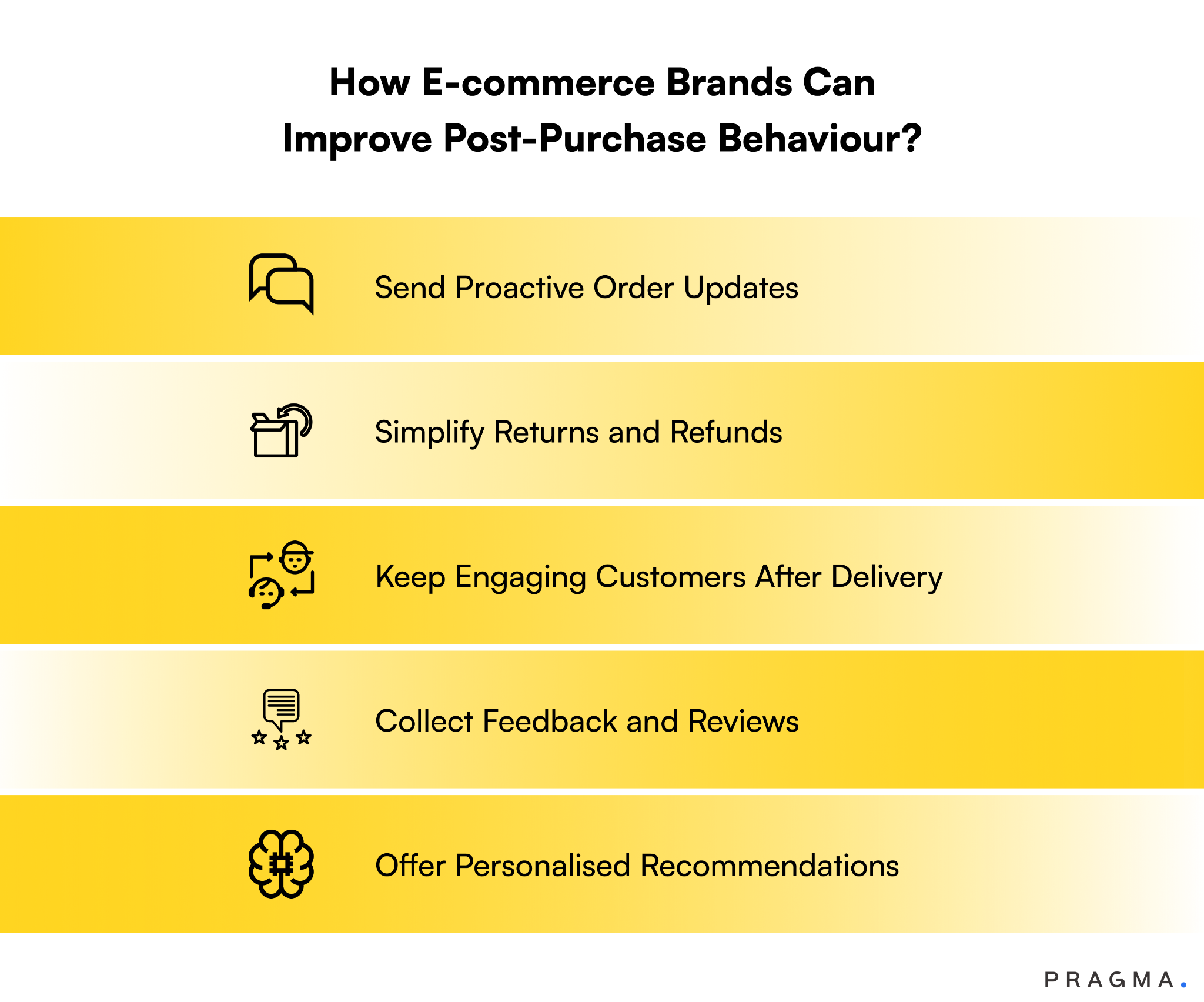
Here are key strategies to improve post-purchase behaviour:
Send Proactive Order Updates
Keeping customers informed and updated through the delivery process minimises their anxiety and helps create trust.
Brands using automated messages at five stages of the customer journey result in 28-35% improvement in retention with a cost of only ₹3-5 per order.
What should brands do:
- Give instant order confirmation with information
- Up-to-date shipping and tracking details
- Send early notifications of delays with new estimates
- Ask about post-delivery confirmation and reviews
With Pragma WhatsApp Business Suite, automated messages can be sent to customers to keep them up-to-date.
Simplify Returns and Refunds
Ease of returns shows confidence in your brand and commitment to customers.
Easy returns can turn a negative experience into a positive one and lead to customer loyalty.
Here are some return optimisation elements that should be followed:
- Clear, easily understandable return policies
- Easy ways to initiate returns
- Prompt refunds (3-5 business days)
- Return status tracking capabilities
- Hassle-free pickup scheduling
Keep Engaging Customers After Delivery
Post-delivery engagement is where brands convert one-time buyers into repeat customers.
Some brands report an 11X return on ad spend by communicating after a sale with Pragma.
These engagement strategies can be adopted:
- Thank you notes with tips and tricks.
- Information on product maintenance
- Complementary product recommendations
- Special offers for existing customers
- Building a community on social media
Automated engagement based on customer behaviour, such as reorder reminders, cross-sell recommendations, and usage tips, can significantly increase repeat purchase rates.
Collect Feedback and Reviews
Structured gathering of feedback helps in improving products and services, and engaging customers. Research shows that customers who leave reviews are 3.3 times more likely to make repeat purchases.
Here are some common feedback collection methods:
- Automated review request emails
- In-app rating prompts
- WhatsApp-based feedback surveys
- Social media involvement tracking
- Analysis of customer service calls
Offer Personalised Recommendations
Personalisation makes customers happier after a purchase and prompts them to buy more.
A survey states that 91% of consumers favour brands that personalise.
Personalisation can be done based on:
- Purchase history-based recommendations
- Browsing behaviour analysis
- Holiday and special event recommendations
- Cross-category product discovery
- Loyalty program benefits
Role of Communication Channels in Post-Purchase Experience
Post-purchase communication affects D2C metrics such as retention, return to order (RTO) and customer satisfaction.
Regular communication reduces anxiety, promotes trust and avoids problems like order cancellation, "Where is my order?" inquiries and package returns.
Research indicates that proactive updates make customers 30-40% less likely to contact customer support, and much more likely to complete their orders.
The three key channels are:
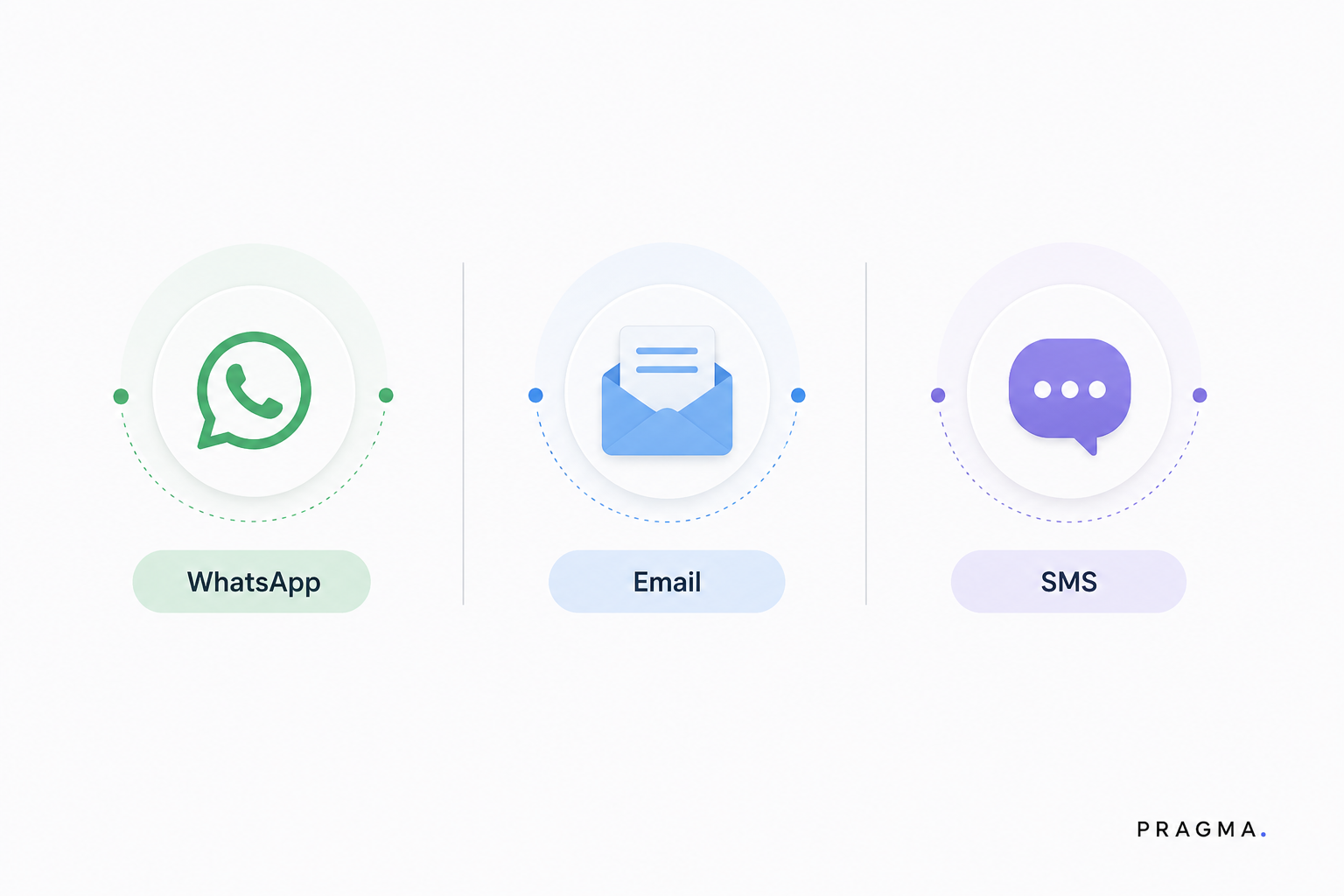
WhatsApp is the most beneficial channel for D2C e-commerce, as it has an open rate of 95-98%. It's used extensively for order confirmation, delivery status, order delay and COD confirmation.
For D2C brands, particularly those with a large number of COD orders, WhatsApp is a key to success in lowering RTO.
Companies using WhatsApp to notify customers about order updates have seen a 20-40% drop in RTO rate and a higher conversion rate.
Email is ideal for structured information. It's generally used for order summaries and receipts, shipping confirmations, return policies, and product information.
For D2C brands, email facilitates post-purchase engagement, for example, product education and upsell.
Well-timed post-purchase emails can drive higher repeat purchases by reinforcing product value and re-engaging customers.
SMS
SMS is an important backup channel for important notifications, with delivery rates of 98-99%. It's often used for OTPs, order confirmation and delivery tracking.
For D2C brands in Tier 2 and Tier 3 markets, SMS is a reliable communication channel even in low connectivity situations, improving communication reliability and reducing message bounce rates.
When combined, these channels allow D2C brands to provide a smooth and transparent post-purchase experience, which leads to reduced RTO and customer support costs and increased brand loyalty.
Post-Purchase Behaviour vs Pre-Purchase Behaviour
Before a customer places an order, their behaviour is driven by discovery, evaluation, and trust-building.
After the purchase, the focus shifts to experience, satisfaction, and a long-term relationship with the brand.
For D2C ecommerce brands, both stages impact different sets of metrics and require different strategies.
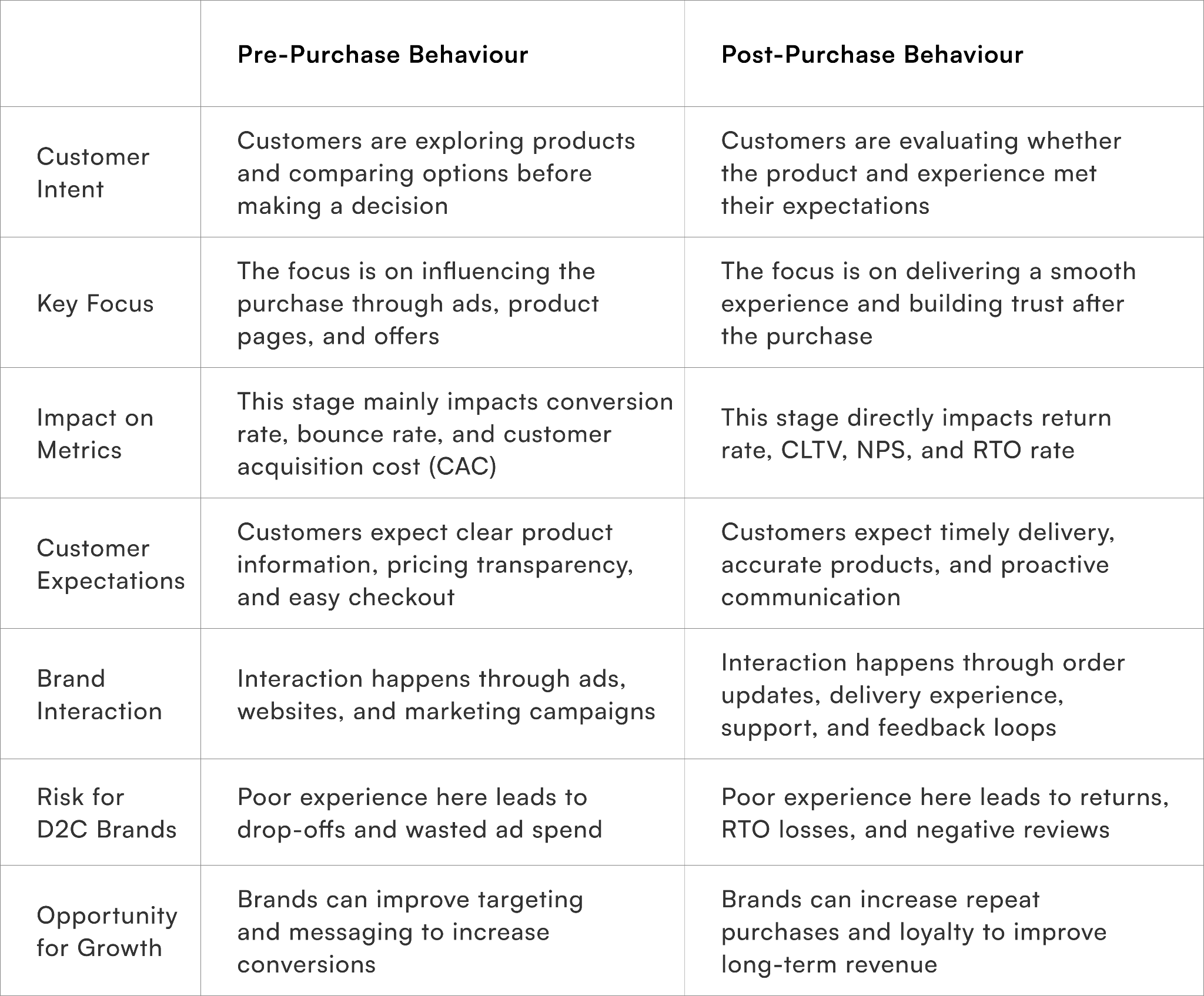
What are the Key Metrics to Measure Post-Purchase Behaviour?
D2C e-commerce brands should monitor metrics that directly affect retention, costs, and customer satisfaction to optimise the post-purchase experience.
These metrics should be strictly monitored:
Repeat Purchase Rate
Repeat purchase rate indicates the number of repeat customers who return to purchase once they have bought.
This is a fundamental growth indicator for D2C brands because repeat customers increase their expenditure by up to 67% over time.
This metric is directly related to post-purchase factors such as delivery experience, communication, and product satisfaction.
Repeat purchases can be boosted by 20-30% even with minor changes in post-purchase interaction.
Return Rate
The return rate measures the percentage of orders returned by customers.
In segments such as fashion and beauty, the return rate may reach up to 20-40%, and this has a great influence on margins.
Lack of proper post-purchase communication, lack of expectation and hard return processes are some of the factors that tend to multiply returns.
By actively communicating about the delivery status, usage of products, and the possibility of effortless returns, brands can cut the number of returns by 15-25%.
Customer Satisfaction Score (CSAT)
CSAT is a measure of customer satisfaction with their post-purchase experience.
It is usually gathered as feedback after delivery or use of the product.
In the case of D2C brands, CSAT is a good predictor of future behaviour; the more satisfaction, the better the retention, more reviews, and referrals.
Improvements in CSAT of 10-15 points tend to be experienced by brands that optimise delivery communication and support.
Refund Processing Time
It is the amount of time it takes for customers to get their refunds upon initiating a return.
Slow refunds are a significant dissatisfaction factor and may hurt the trust and repeat buying.
In the case of D2C brands, quicker refunds (usually within 3-5 working days) can greatly enhance consumer trust and decrease adverse comments, particularly in high-turnover segments.
Tracking these metrics helps D2C brands to transform post-purchase experience into a quantifiable growth driver, which can impact retention, profitability, and customer value in the long term.
Despite knowing this, many brands still get post-purchase wrong.
What are the Common Mistakes E-commerce Brands Make?
According to our research, some of the mistakes made after purchase are:
- Poor Communication: Not giving proactive information on order status and delivery status.
- Complex Return Processes: Building friction in the initiation and processing of returns.
- Low Packaging Quality: Packaging in a generic way that does not lead to good unboxing experiences.
- Reactive Customer Service: Delaying customer support in contacting the customer rather than taking the initiative to solve possible problems.
- Absence of Personalisation: Sending general messages rather than customised messages to customers depending on their buying behaviour.
- Unpredictable Experience: Delivering a mixed quality of service to customers at various touchpoints.
- Lack of Feedback Collection: Lacking the chance to gather information to improve.
They are not operational gaps, but system gaps. D2C brands which are based on fragmented tools typically struggle to provide consistent post-purchase experiences on a large scale.
But, brands can eliminate these inefficiencies by adopting a single post-purchase infrastructure, which automates communication, simplifies returns and provides real-time visibility of the journey.
Solutions such as Pragma enable the centralisation of these workflows and enable brands to provide predictable, personalised, and high-quality post-purchase experiences, directly benefiting retention and reducing costs.
Final Thoughts
Post-purchase experience is a fundamental factor to stand out among the other competitors in the industry.
As the costs to get new customers are increasing day by day, retaining them is essential today.
Brands which provide their customers with great post-purchase experiences will achieve sustainable growth through improved retention, reduced returns, and increased customer lifetime value.
And with Pragma, it is possible to transform post-purchase interactions from operational costs into revenue-generating opportunities.

FAQs (Frequently Asked Questions On Post-Purchase Behaviour: What It Is and Why It Matters for E-commerce?)
1. What is post-purchase behaviour in eCommerce?
Post-purchase behaviour in eCommerce refers to how customers interact with a brand after completing a purchase, including order tracking, feedback, repeat purchases, returns, and overall engagement.
2. Why is post-purchase behaviour important for eCommerce businesses?
Post-purchase behaviour is important because it directly impacts customer retention, lifetime value (LTV), brand loyalty, and repeat purchase rates, making it a key driver of long-term growth.
3. What are the key stages of post-purchase behaviour in eCommerce?
The key stages include order confirmation, fulfilment and shipping updates, delivery experience, product usage, feedback or reviews, returns or exchanges, and re-engagement for repeat purchases.
4. How does post-purchase experience affect customer retention?
A positive post-purchase experience builds trust and satisfaction, increasing the likelihood of repeat purchases, while a poor experience can lead to churn and negative brand perception.
5. What are common post-purchase challenges in eCommerce in India?
Common challenges include delayed deliveries, lack of proactive communication, poor returns experience, high RTO rates, and limited visibility into order status.
6. How can eCommerce brands improve post-purchase behaviour?
Brands can improve post-purchase behaviour by providing timely updates, enabling easy returns, personalising communication, resolving issues quickly, and engaging customers with relevant follow-ups.
7. How does WhatsApp communication improve post-purchase experience?
WhatsApp improves post-purchase experience by delivering real-time order updates, proactive notifications, support interactions, and personalised messages in a familiar and high-engagement channel.
8. Can post-purchase engagement increase repeat purchases?
Yes, effective post-purchase engagement increases repeat purchases by keeping customers informed, building trust, and creating opportunities for cross-sell, upsell, and reactivation.
9. What tools help manage post-purchase behaviour in eCommerce?
Tools include CRM systems, WhatsApp automation platforms, journey orchestration tools, returns management systems, and analytics platforms that track and optimise customer interactions after purchase.
10. How does post-purchase behaviour impact overall eCommerce profitability?
Post-purchase behaviour impacts profitability by influencing retention, reducing acquisition dependency, improving customer lifetime value, and minimising losses from returns and failed deliveries
Talk to our experts for a customised solution that can maximise your sales funnel
Book a demo

.png)