

Negotiating carrier rates is a critical yet complex task for D2C operations, often involving multiple variables such as delivery volumes, zones, historical performance, and SLA commitments. Copilot-assisted carrier negotiation briefs: inputs, outputs and limits explores how AI copilots can streamline this process and provide actionable insights for operations teams.
Copilot assisted carrier negotiation leverages historical data, current logistics trends, and operational priorities to produce concise negotiation briefs. Instead of manually compiling performance reports and rate comparisons, teams receive structured guidance that highlights key leverage points, risks, and optimisation opportunities.
By integrating with CRM systems, order histories, and past carrier performance, AI copilots ensure that negotiation inputs are accurate, relevant, and contextual. For operations teams, this reduces preparation time, strengthens bargaining positions, and improves outcomes, turning carrier negotiations from a reactive, spreadsheet-heavy exercise into a proactive, data-driven strategy.
Why is carrier negotiation complex for D2C brands?
Multiple variables make rate negotiations challenging and time-sensitive
Carrier rate negotiation in ecommerce involves balancing cost, delivery speed, and service quality across numerous delivery partners. Teams must analyse historical delivery performance, volume trends, and SLA compliance to make informed decisions. Manual preparation of this data is time-consuming and prone to oversight, which can weaken negotiation positions.
AI copilot for operations teams simplifies this process by consolidating relevant metrics, highlighting patterns, and generating actionable insights. This allows operations managers to focus on strategy rather than data compilation.
What factors typically influence carrier negotiations?
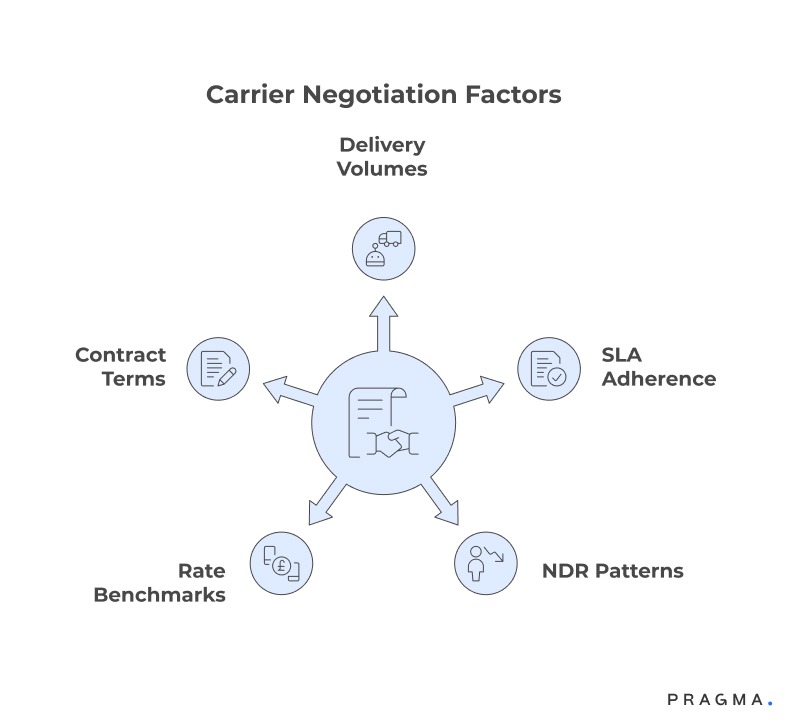
- Delivery volumes by region and product type
- Historical SLA adherence and failed deliveries
- NDR patterns and customer complaints
- Competitive rate benchmarks and contract terms
These variables must be considered holistically to optimise cost and service levels.
How does automation improve negotiation readiness?
AI copilots can automatically retrieve past order data, historical carrier performance, and SLA metrics, producing concise, data-driven briefs. By integrating with AI copilot to retrieve past order and AI copilot in CRM, briefs are enriched with real-time insights that reduce manual effort and enable quicker, more informed decisions.
How do copilot-assisted briefs structure negotiation inputs?
Consistent, actionable formats help teams prepare efficiently
A well-structured copilot-assisted brief includes key metrics, insights, and recommendations. This ensures teams can quickly identify leverage points, anticipate objections, and prioritise discussion areas with carriers.
Typical sections in a negotiation brief:
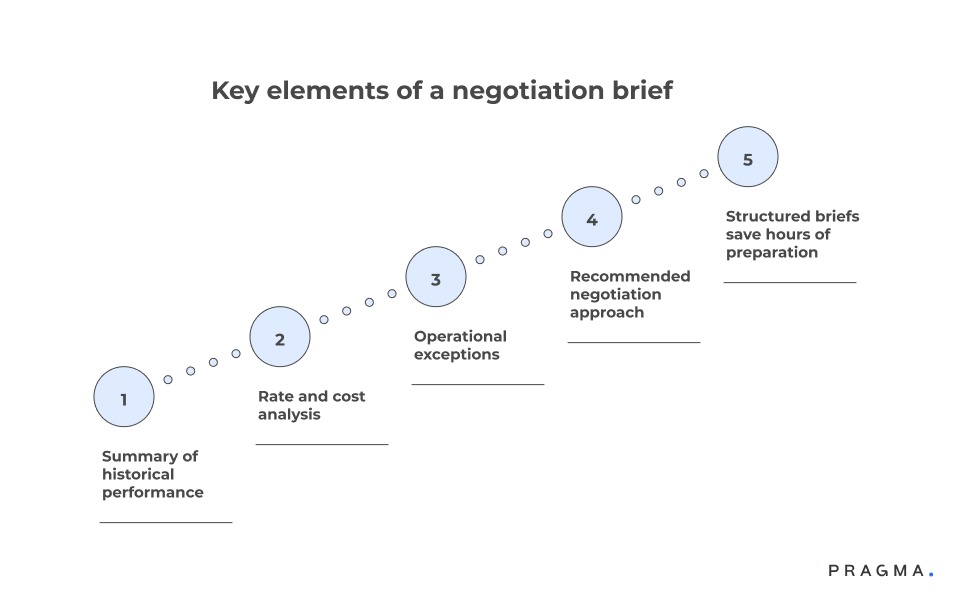
- Summary of historical performance: SLA adherence, NDR incidents, and delivery reliability
- Rate and cost analysis: Current and historical carrier rates, volume-based discounts, and penalties
- Operational exceptions: Zones or time periods with recurring delays or failures
- Recommended negotiation approach: Suggested concessions, focus areas, and strategic asks
Structured briefs save hours of preparation while improving clarity and decision-making.
When should copilot-assisted briefs be used?
Timely insights ensure negotiations are strategic and informed
These briefs are valuable both during scheduled contract renewals and ad hoc renegotiations triggered by operational changes. Using AI-generated briefs ensures that every negotiation is based on accurate, up-to-date data rather than memory or manual reports.
Key use cases for briefs:
- Quarterly rate negotiations: Compare historical performance and identify cost-saving opportunities
- Performance-triggered renegotiations: Address carriers with repeated SLA breaches or high NDR rates
- Volume spike planning: Prepare for seasonal demand fluctuations or new product launches
- Cross-partner strategy: Align negotiations across multiple carriers for optimal coverage and pricing
By acting on timely insights, teams can proactively manage costs and service quality.
How do copilot prompts guide negotiation strategy?
Prompts highlight critical decision points and potential trade-offs
AI copilots do more than present data; they guide teams on interpreting insights and planning negotiation tactics. Prompts suggest questions to ask, metrics to emphasise, and areas where flexibility may be needed.
Examples of prompts for negotiation preparation:

- Identify carriers with consistent SLA breaches or high NDR rates
- Highlight zones or delivery types where costs can be optimised
- Recommend concessions based on historical performance and volumes
- Suggest risk mitigation strategies for high-priority deliveries
Guided prompts ensure that teams are prepared to make data-backed decisions during discussions.
Why are context-rich briefs more effective?
Incorporating operational data improves decision accuracy
Negotiation effectiveness depends on understanding both historical performance and current operational realities. Copilot-assisted briefs combine CRM data, past order histories, and agent insights into a single, actionable view.
Benefits of contextualised briefs:
- Avoid negotiating based on outdated or incomplete information
- Focus on high-impact areas for cost reduction or SLA improvement
- Quickly identify exceptions or anomalies affecting carrier performance
- Align internal stakeholders around a shared understanding of priorities
By embedding context directly from AI copilot helps agents, teams reduce preparation time while improving confidence in negotiation decisions.
How do copilot-assisted briefs reduce negotiation risks?
Data-driven insights minimise errors and missed opportunities
Manual preparation of negotiation inputs increases the risk of overlooking patterns or critical exceptions. AI copilots highlight both positive and negative trends, ensuring teams address all relevant factors.
Key risk reduction benefits:
- Avoid overpaying for services due to missed volume discounts
- Prevent SLA breaches by identifying underperforming carriers early
- Reduce internal misalignment with clear, structured briefs
- Support long-term strategy with historical trend analysis
Copilot-assisted negotiation briefs turn a complex, error-prone process into a systematic, repeatable workflow, empowering operations teams to secure better outcomes with confidence.
How do copilot-assisted briefs improve carrier negotiations?
Structured insights and recommendations accelerate decision-making
By consolidating historical performance, SLA compliance, NDR patterns, and cost data, AI copilots create a single source of truth for negotiation preparation. Teams can focus on strategy instead of data gathering, improving both efficiency and outcomes.
Key components of effective briefs:
- Performance summary: SLA adherence, NDR clusters, and delivery reliability
- Rate analysis: Current and historical costs, discounts, and penalties
- Operational exceptions: Zones, time windows, or product categories with recurring issues
- Negotiation guidance: Suggested asks, concessions, and focus areas
With these elements, operations teams have a clear, actionable framework for discussions.
When should AI copilots be involved in carrier negotiations?
Timing and context determine negotiation effectiveness
AI copilots are most impactful when used before scheduled contract renewals, ad hoc renegotiations due to operational issues, or during seasonal spikes in delivery volume. By providing structured briefs, teams can quickly prioritise discussion points and make informed trade-offs.
Recommended timing for brief deployment:
- Quarterly or annual contract renewals
- Carrier performance-triggered renegotiations
- Pre-launch planning for seasonal or high-volume periods
- Multi-carrier alignment sessions for strategic optimisation
This ensures data-driven decisions at critical negotiation junctures.
Why does structured guidance reduce negotiation errors?
Standardised prompts prevent oversight and misalignment
Manual preparation of negotiation inputs often leads to missed patterns, overlooked exceptions, and inconsistent approaches across agents. Copilot-assisted briefs reduce these risks by:
- Highlighting anomalies in carrier performance
- Consolidating cost and SLA data in a single view
- Providing suggested questions and negotiation tactics
- Aligning internal stakeholders around consistent insights
When integrated with [AI copilot in CRM] and AI copilot helps agents, briefs deliver actionable guidance, reduce errors, and strengthen negotiation outcomes.
How do copilots support continuous improvement in negotiations?
Insights from each negotiation inform future strategy
AI copilots track negotiation outcomes, deviations from recommended approaches, and carrier responses. This feedback loop allows teams to refine prompts, update briefing content, and improve performance over time.
Continuous improvement benefits:
- Track carrier performance trends across multiple negotiation cycles
- Refine prompts to highlight emerging risks or opportunities
- Optimise negotiation tactics based on past successes and failures
- Build a knowledge base for faster, more confident future negotiations
By making carrier negotiation data-driven and repeatable, copilot assisted carrier negotiation transforms a complex operational task into a structured, strategic process.
How to implement copilot-assisted carrier negotiation briefs in 30 days
Step-by-step plan for data-driven, actionable negotiation preparation
Week 1: Audit historical carrier performance
Compile data on SLA adherence, NDR clusters, delivery volumes, and past negotiation outcomes. Identify carriers and zones with the highest impact.
Expected result: Clear dataset to feed into AI copilots for brief generation.
Week 2: Define briefing structure and key metrics
Map the essential sections of negotiation briefs: performance summary, rate analysis, operational exceptions, and recommended negotiation tactics.
Expected result: Standardised template for copilot-assisted briefs.
Week 3: Generate and review AI-assisted briefs
Use AI copilots to draft negotiation briefs. Validate accuracy, highlight actionable insights, and adjust prompts for context relevance.
Expected result: Concise, actionable briefs ready for use by operations teams.
Week 4: Integrate into negotiation workflows
Embed briefs into preparation routines for carrier discussions. Train teams to leverage prompts and track outcomes for continuous improvement.
Expected result: Faster, data-driven negotiations with consistent insights.
Metrics to measure success
Indicators that show improved negotiation efficiency and effectiveness
- Average preparation time for carrier negotiations
- Reduction in SLA breaches or NDR incidents post-negotiation
- Cost savings achieved through informed rate discussions
- Alignment and adoption across operations teams
- Accuracy and completeness of negotiation briefs
Tracking these metrics confirms the tangible impact of AI-assisted briefs on operational efficiency and negotiation outcomes.
To Wrap It Up
Carrier negotiations are complex, multi-variable processes that demand accurate, timely insights. Copilot assisted carrier negotiation transforms preparation into a structured, data-driven workflow, helping operations teams make informed decisions and optimise outcomes.
This week, audit your past carrier performance, SLA compliance, and NDR data to feed into AI copilots for generating negotiation briefs.
Over time, continuous updates and contextual prompts improve negotiation efficiency, reduce errors, and strengthen carrier relationships.
For D2C brands seeking strategic negotiation support, Pragma’s AI copilot platform provides data-driven briefs, actionable insights, and real-time guidance to optimise carrier rates and SLA performance.

FAQs (Frequently Asked Questions On Copilot-assisted carrier negotiation briefs: inputs, outputs and limits)
1. What is copilot assisted carrier negotiation?
Copilot assisted carrier negotiation uses AI to support teams with data-driven insights during rate discussions.It helps prepare structured briefs while keeping decision-making with human operators.
2. How does AI copilot for operations teams improve negotiations?
An AI copilot for operations teams analyses historical data, pricing trends, and carrier performance.This enables more informed and strategic negotiation decisions.
3. What inputs are required for copilot assisted carrier negotiation?
Inputs include shipment volumes, historical rates, SLA performance, lane data, and seasonal demand.These inputs help generate accurate and relevant negotiation briefs.
4. What outputs does a copilot generate for carrier negotiations?
Outputs include recommended rate benchmarks, performance summaries, and negotiation talking points.These insights streamline carrier rate negotiation in ecommerce.
5. How AI copilot helps in carrier negotiations?
It identifies cost-saving opportunities, highlights inefficiencies, and suggests optimal pricing ranges.This strengthens the negotiation position of operations teams.
6. Can copilot assisted carrier negotiation reduce logistics costs?
Yes, it enables better pricing decisions and optimises carrier selection strategies.This leads to measurable cost reductions over time.
7. What role does data play in carrier rate negotiation in ecommerce?
Data provides visibility into past performance, pricing trends, and delivery outcomes.It forms the foundation for effective negotiation strategies.
8. Are there limits to using AI copilots in negotiations?
Yes, AI copilots cannot replace human judgement, relationship management, or contextual decision-making.They are best used as support tools rather than decision-makers.
9. How often should negotiation briefs be updated?
Briefs should be refreshed regularly using the latest operational and market data.This ensures relevance and accuracy in discussions.
10. Can AI copilots adapt to different carriers and regions?
Yes, they can analyse region-specific performance and carrier behaviour.This allows tailored negotiation strategies for different lanes.
11. Is automation necessary for scaling carrier negotiations?
Automation helps generate briefs quickly and consistently across multiple carriers.It improves efficiency for large-scale logistics operations.
Talk to our experts for a customised solution that can maximise your sales funnel
Book a demo.webp)
.png)