

Manual workflows can slow operational efficiency for scaling D2C brands. Indian e-commerce will reach $350 billion/₹33.5 lakh crore by 2030, and customer expectations keep rising. Automation transforms how you handle orders from purchase to delivery.
Order management automation uses technology to process your complete order lifecycle without manual work. McKinsey research shows companies see 80% faster processing and 99.5% accuracy rates by implementing automation in order management.
For D2C brands processing hundreds of daily orders, this creates major competitive advantages. In this comprehensive guide, we will explore "Order Management Automation: How to Automate Your E-commerce Operations?"
What Is Order Management Automation?
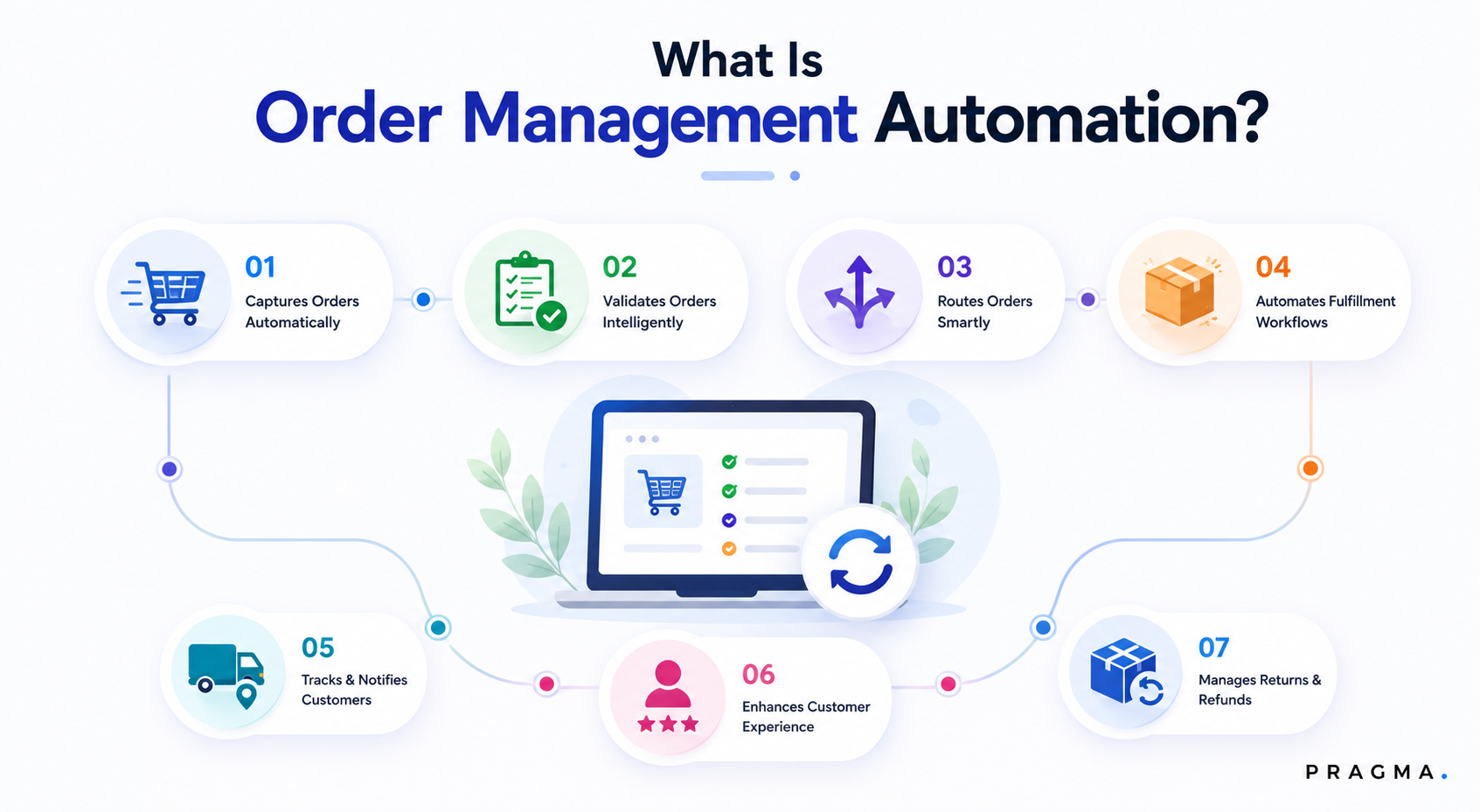
Order management automation handles your entire order process automatically. The system connects order capture, validation, fulfilment, shipping, and customer communications into one seamless flow.
The technology reduces manual intervention that creates delays and errors. Your orders move from purchase to delivery with minimal manual oversight for standard transactions.
Automated systems handle order validation, inventory checks, payment processing, fulfilment coordination, shipping arrangements, and customer communications. This end-to-end automation removes human errors that slow growth.
Why Do E-commerce Brands Need Order Management Automation?
Have a look at why order management process automation is necessary for e-commerce brands:
Manual Processes Slow Down Growth
Manual order processing creates linear scaling problems. Studies show manual systems need proportional staff increases for every 30-40% order volume growth.
Let's take an example of a D2C brand processing 500 orders daily manually, which has:
- Higher operational handling time
- 3-5% error rates requiring costly corrections
- Limited ability to handle volume spikes
- High labour costs that scale linearly with growth
Pragma's automation platform lets brands process 10x more orders with the same team size. This breaks the linear scaling constraint that limits growth.
High Risk of Errors
Manual data entry introduces costly mistakes throughout your order process. Industry research shows manual processing has 3-5% error rates. Each mistake costs ₹850-1,200 to resolve, including:
- Customer service time
- Reshipping costs
- Potential refunds and compensation
- Brand reputation damage
Common manual errors include:
- Incorrect shipping addresses
- Wrong product selections
- Pricing mistakes
- Inventory miscounts
- Payment processing failures
Customer Expectations Are Rising
Modern customers demand instant gratification and transparency. Research reveals 73% of customers expect companies to understand their needs proactively, and 84% want real-time order updates.
Today, customers expect the following:
- Instant order confirmations
- Real-time tracking information
- Proactive delivery notifications
- Quick issue resolution
- Seamless returns processing
Manual processes fail to deliver the speed and consistency required to meet these expectations.
How Order Management Automation Works?
Order management automation creates an intelligent workflow that connects all order-related systems and processes.
Here is how automation in order management actually works:
Order Capture
Automated systems receive orders from multiple channels simultaneously. Websites, marketplaces like Amazon and Flipkart, social media platforms, and WhatsApp commerce all feed into one system.
Platforms like Pragma Omnichannel CRM help brands consolidate orders from multiple sales channels into a unified dashboard.
The system automatically formats order data consistently regardless of the source channel. This eliminates manual data entry and standardisation tasks.
Order Validation
After the order is received, intelligent validation engines automatically verify:
- Customer information completeness and accuracy
- Payment authorisation and fraud risk assessment
- Product availability across all inventory locations
- Shipping address validity and deliverability
- Order value and discount code legitimacy
Invalid orders get flagged for manual review while valid orders proceed automatically. This reduces processing delays by 70-80%.
Pragma RTO Suite flags risky orders originating from temporary residences, such as hostels, resorts, paying guests or high-risk pincodes, enabling brands to save from risky orders that can lead to loss.
Order Routing
Once the order is verified, smart allocation algorithms determine optimal strategies based on:
- Real-time inventory levels across warehouses
- Shipping costs and delivery timeframes
- Customer location and delivery preferences
- Warehouse capacity and processing capabilities
- Special handling requirements
This optimisation reduces shipping costs by 15-25% while improving delivery speeds and customer satisfaction.
Order Processing
Having automation in order management, the software generates all necessary documentation:
- Pick lists for warehouse teams
- Packing slips with customer information
- Shipping labels with carrier details
- Invoice generation and tax calculations
- Inventory updates across all systems
Integration with warehouse management systems ensures accurate fulfilment with 99.8% accuracy rates.
Tracking & Notifications
Customers receive automated updates throughout the delivery journey via their preferred communication channels. Pragma D2C operating system supports:
- Email confirmations and updates
- SMS notifications for key milestones
- WhatsApp messages with rich media
- Push notifications through mobile apps
- Branded tracking pages with real-time updates
The system achieves 95%+ delivery rates across all notification channels.
Returns & Refund Automation
Automated returns processing handles the complete returns lifecycle:
- Eligibility verification against return policies
- Return shipping label generation
- Quality inspection coordination
- Refund processing and customer notification
- Inventory updates and restocking
This reduces return processing time from 7-10 days to 2-3 days while maintaining policy compliance. With Pragma Return Management System, returns are handled efficiently with branded return pages made as per the brand's guidelines.
Order Management Process Automation Flow
Modern order management automation connects checkout, shipping, delivery tracking, and returns into one workflow.
This helps you process orders faster, reduce manual work, and improve customer experience.
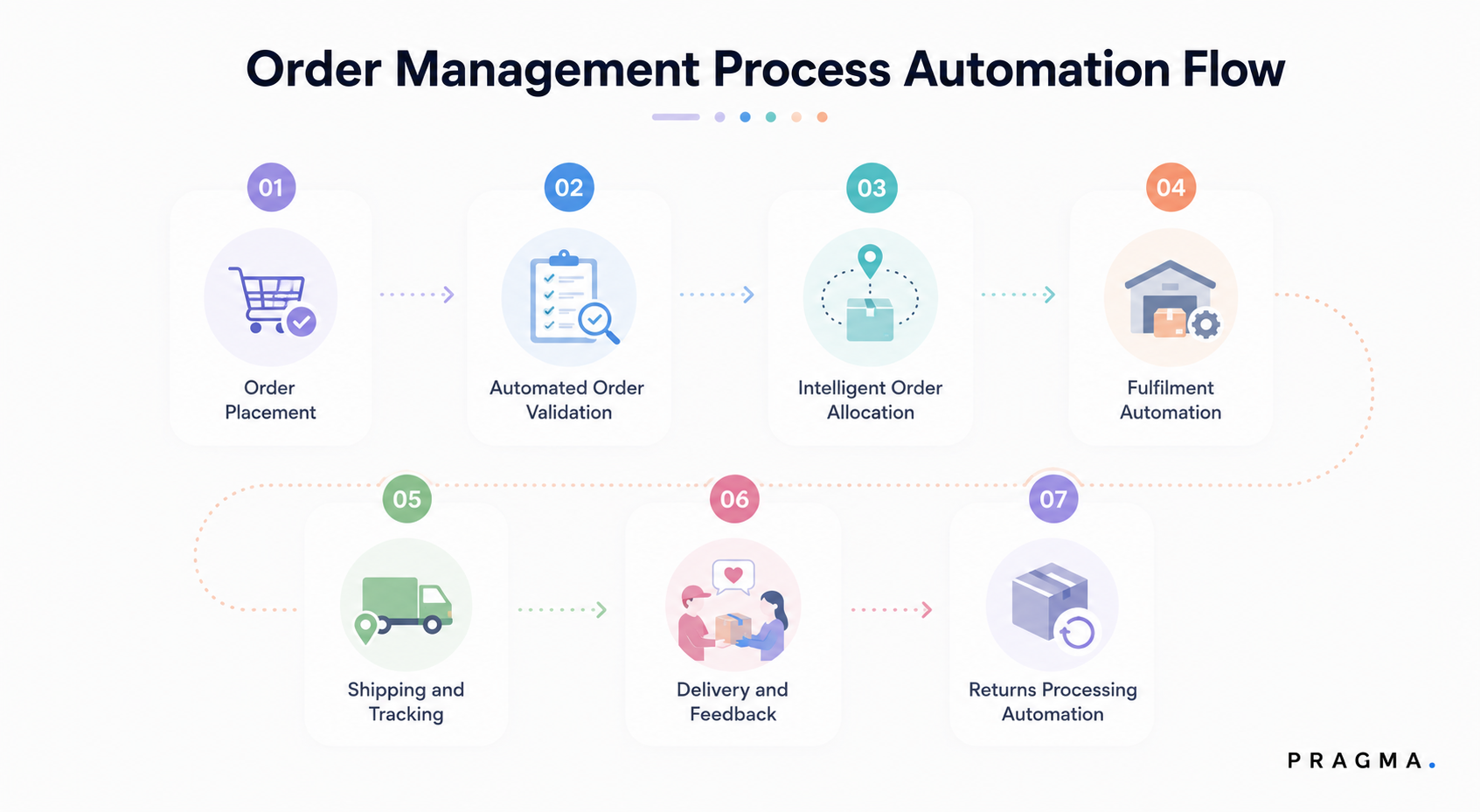
Step 1: Order Placement
The process starts with the order placement. 1Checkout by Pragma gives customers a faster purchase experience through a single-page checkout flow.
Customers get multiple payment options:
- UPI
- Credit and debit cards
- Digital wallets
- Buy Now Pay Later services
- Cash on Delivery
The system validates customer information in real time. This reduces incomplete orders and checkout errors.
Step 2: Automated Order Validation
After order placement, the RTO Management Suite verifies:
- Customer details
- Payment status
- Inventory availability
- Shipping information
This helps brands to:
- Reduce failed orders
- Identify risky transactions
- Improve order accuracy
- Reduce manual verification work
Step 3: Intelligent Order Allocation
The system automatically assigns orders to the best location based on:
- inventory availability
- delivery timelines
- shipping costs
- warehouse workload
Step 4: Fulfilment Automation
Once allocated, the system generates:
- shipping labels
- invoices
- packing slips
- warehouse pick lists
Inventory levels update automatically across systems. This reduces manual processing and improves fulfilment accuracy.
Step 5: Shipping and Tracking
After dispatch, NDR monitoring by Pragma and the RTO Management Suite tracks delivery performance and identifies shipment issues early.
The system helps you:
- track failed delivery attempts
- improve customer communication
- reduce RTO rates
- Resolve delivery issues faster
This becomes important for brands handling high COD order volumes.
Step 6: Delivery and Feedback
Pragma's Journey Management System manages post-purchase communication and customer engagement.
Customers receive:
- real-time tracking updates
- delivery notifications
- order status alerts
- feedback requests
This improves customer visibility and post-purchase experience.
Step 7: Returns Processing Automation
The final stage handles returns and refunds through automated workflows.
Customers get self-service return options. The system manages:
- return approvals
- refund processing
- inventory updates
- customer communication
Pragma's Return Management System helps you process returns faster while maintaining operational efficiency.
Key Benefits of Order Management Automation
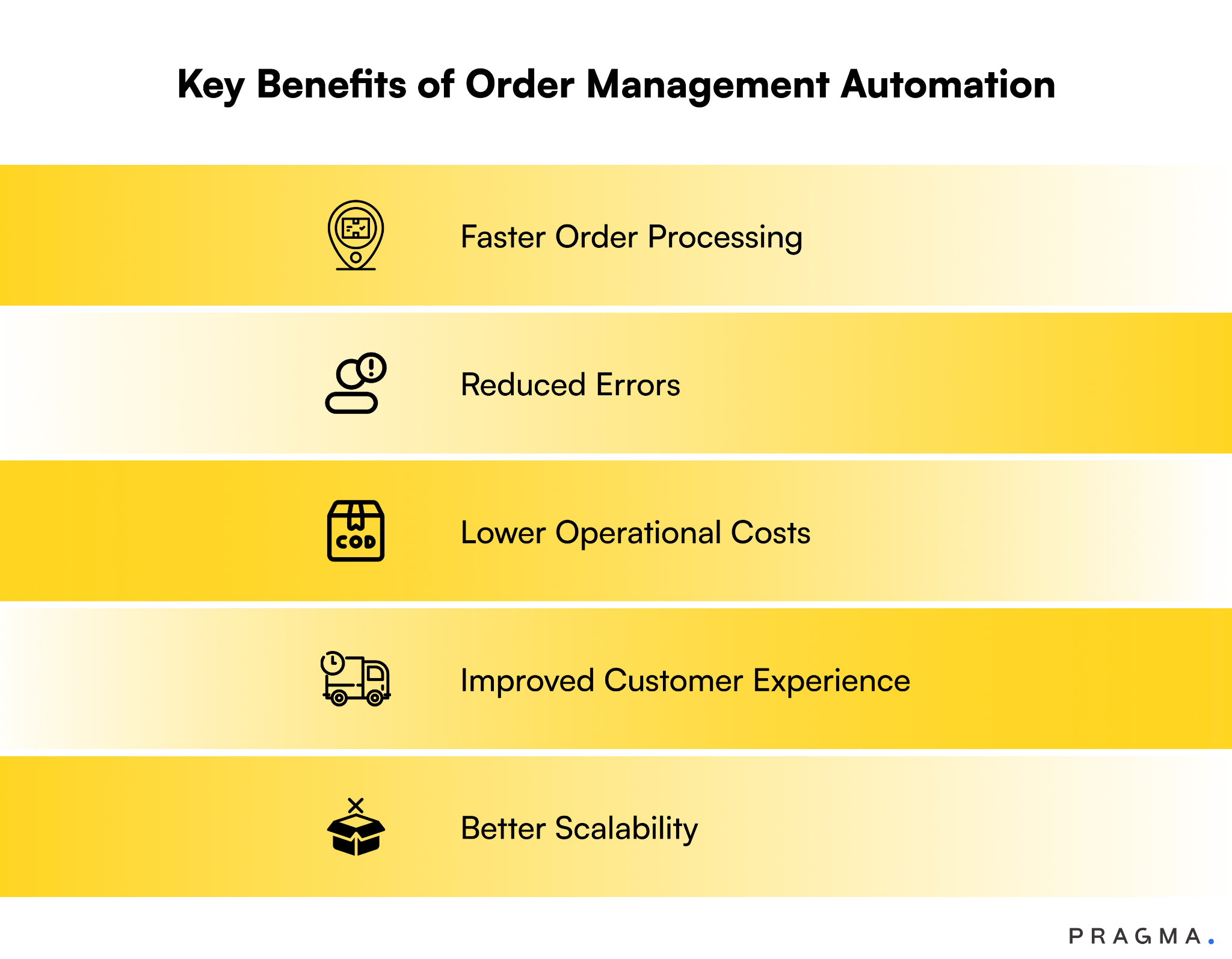
Let's have a look at the major benefits provided by order management process automation:
Faster Order Processing
Automation reduces delays across the order lifecycle. Orders move from checkout to completion without manual coordination between teams.
The system automatically handles:
- order validation
- inventory checks
- shipping label generation
- customer notifications
This helps you process higher-order volumes in less time.
Reduced Errors
Manual order processing increases the risk of:
- incorrect addresses
- inventory mismatches
- payment issues
- fulfillment mistakes
Automation reduces human intervention across critical workflows. This improves order accuracy and reduces costly corrections.
Lower Operational Costs
Manual operations require larger teams as order volumes grow. Automation reduces repetitive tasks and improves operational efficiency.
This helps brands to:
- reduce manual workload
- lower processing costs
- improve resource allocation
- handle peak sales periods efficiently
Improved Customer Experience
Customers expect fast deliveries and regular updates after placing orders.
Automation helps brands provide:
- instant order confirmations
- real-time tracking updates
- faster issue resolution
- smoother returns processing
This improves customer satisfaction and post-purchase experience.
Better Scalability
As your order volume increases, manual workflows create operational bottlenecks.
Order management automation helps you scale operations without increasing manual effort at the same pace.
This allows the business team to manage:
- higher order volumes
- multiple sales channels
- larger inventories
- growing customer demands
Use Cases of Automation in Order Management
Here is where order management automation can be used in a business:
Automated Order Confirmation
When orders are automated, instant updates are sent to customers after they place an order.
The system automatically shares order details, payment status, estimated delivery timelines, and invoice information through email, SMS, or WhatsApp.
This reduces customer uncertainty after checkout and lowers support queries related to order confirmation.
For brands handling large order volumes, automated confirmations also remove the need for manual communication workflows.
Address Validation Automation
Incorrect or incomplete addresses often lead to failed deliveries, delayed shipments, and higher RTO rates.
Address validation tools, such as Pragma RTO Suite, check shipping information during checkout and flag invalid entries before the order moves to fulfilment.
The system verifies:
- pincode accuracy
- city and state matching
- incomplete address fields
- unsupported delivery locations
COD Verification Workflows
Cash on Delivery orders carry a higher risk of fake orders, unserviceable deliveries, and RTO losses. Automated COD verification workflows help brands confirm customer intent before dispatch.
The system uses:
- OTP verification
- automated confirmation calls
- WhatsApp confirmations
- risk-based order checks
This helps operations teams identify suspicious orders early and reduce unnecessary shipping costs. COD verification becomes especially important for brands shipping across Tier-2 and Tier-3 markets where COD order volumes remain high.
Real-Time Order Tracking
Customers want to see updates about their order. Real-time tracking automation keeps customers informed throughout the delivery journey without manual support intervention.
The system automatically sends updates for:
- order confirmation
- shipment dispatch
- out-for-delivery status
- successful delivery confirmation
- delivery delays
This improves customer trust and reduces WISMO (Where Is My Order) and support tickets. Operations teams also spend less time handling tracking-related queries.
Returns & Refund Automation
Manual returns processing slows operations and creates delays in customer resolution. Returns automation simplifies the entire returns workflow through automated approvals, refund initiation, inventory updates, and customer communication.
Customers get self-service return options along with faster refund updates. Operations teams manage higher return volumes without increasing manual workload.
Automation also helps brands track return reasons and identify recurring fulfilment or product quality issues.
Customer Notifications via WhatsApp
WhatsApp automation helps brands manage post-purchase communication at scale. Customers receive order-related updates on a platform they actively use daily.
Pragma WhatsApp Business Suite helps brands manage automated order updates, delivery notifications, COD verification, abandoned cart reminders, and post-purchase engagement through WhatsApp.
Brands use WhatsApp notifications for:
- order confirmations
- shipping updates
- COD verification
- delivery alerts
- return and refund updates
Compared to email communication, WhatsApp notifications often achieve higher visibility and faster customer responses. This improves engagement across the post-purchase journey while reducing missed communication.
What Challenges E-commerce Brands Could Face Without Order Management Automation?
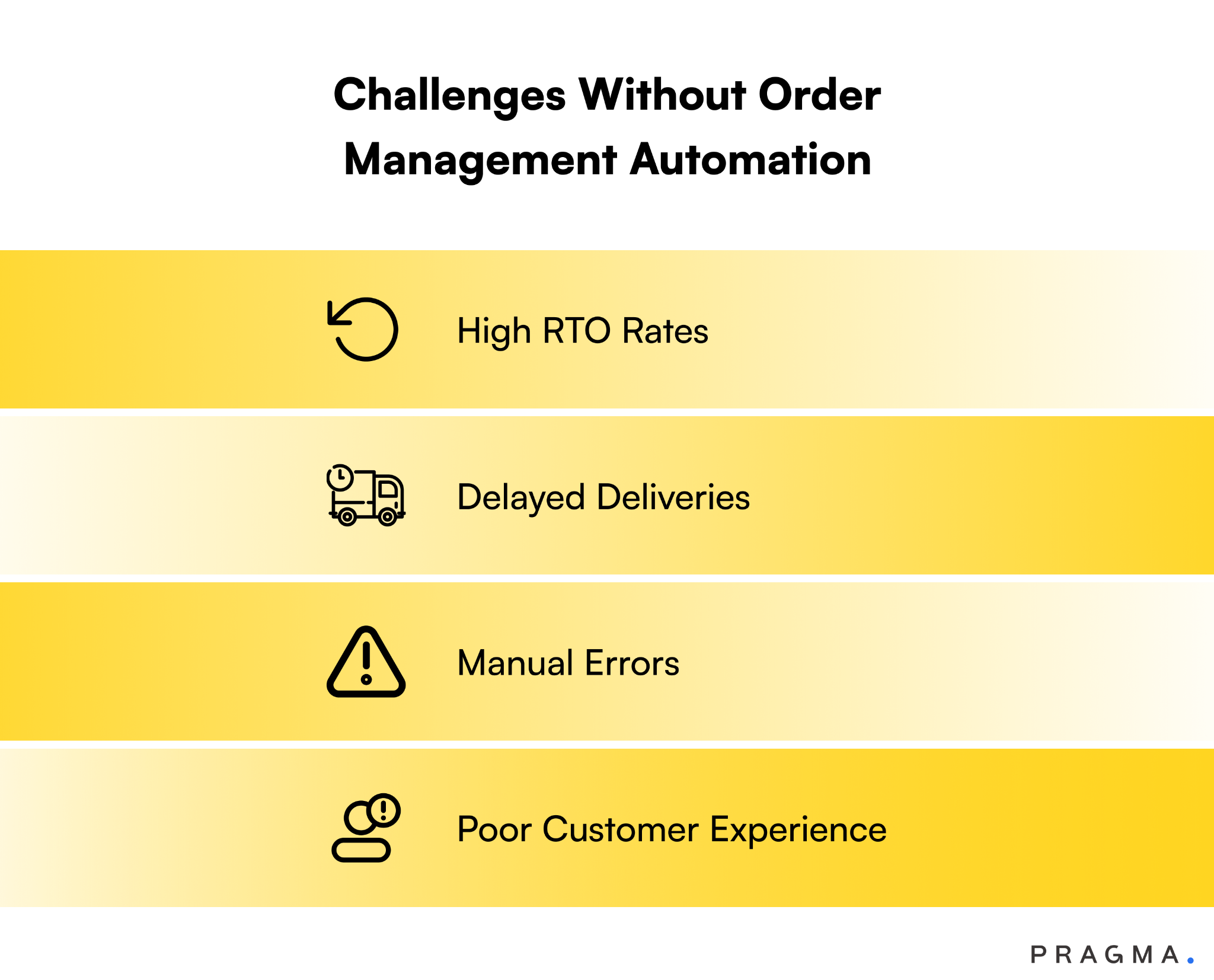
If an e-commerce brand did not make use of order management automation tools, it may face the following challenges:
High RTO Rates
Manual order processing increases the chances of failed deliveries and Return to Origin (RTO) losses.
Incorrect addresses, fake COD orders, delayed verification, and poor customer communication often lead to unsuccessful deliveries. The average RTO rate in India is about 15-20%, which can be increased if brands don't have any automations.
Without automation, operations teams struggle to identify risky orders before dispatch. This increases shipping losses, operational costs, and inventory blockage.
But with proper automation tools, this rate can be significantly dropped to 8-12% as per industry reports.
Delayed Deliveries
Manual workflows slow down order processing at every stage. Teams spend extra time handling order verification, inventory checks, shipping coordination, and customer updates.
As order volumes increase, these delays become harder to manage.
80% of customers in India want same-day shipping. Late dispatch and delayed deliveries directly impact customer satisfaction and repeat purchases.
Manual Errors
Manual data entry increases the risk of operational mistakes across the order lifecycle. Common issues include:
- incorrect shipping addresses
- inventory mismatches
- duplicate orders
- wrong product fulfillment
- payment processing errors
These errors create additional operational work and increase customer complaints. Teams spend more time fixing issues instead of managing growth.
Poor Customer Experience
Customers expect fast deliveries, real-time updates, and smooth post-purchase communication.
Manual operations make it difficult to maintain a consistent customer experience at scale. Customers often face:
- delayed order updates
- poor tracking visibility
- slow issue resolution
- refund delays
- inconsistent communication
67% of customers abandon the brand after having a poor experience, which impacts retention and repeat order rates over time.
How to Implement Order Management Automation?
To implement automation in order management, follow the given steps:
- Assess Your Current Workflow: Identify manual tasks, processing delays, and frequent operational errors across your order management process. Focus on areas where your team spends the most time.
- Choose the Right Automation Platform: Select a platform that supports multichannel order management, inventory synchronisation, shipping integrations, customer communication and returns automation.
- Integrate Your Systems: Connect your e-commerce store, marketplaces, warehouse systems, payment gateways, and shipping partners into one workflow. This reduces manual coordination and improves order visibility.
- Automate Key Workflows First: Start with high-impact processes such as order confirmations, inventory updates, shipping labels, COD verification and order tracking.
- Monitor and Improve Performance: Track metrics like order processing time, RTO rates, fulfilment accuracy, delivery success rates, and use this data to improve operational efficiency as your order volume grows.
Key Features to Look for in Order Management Automation Software
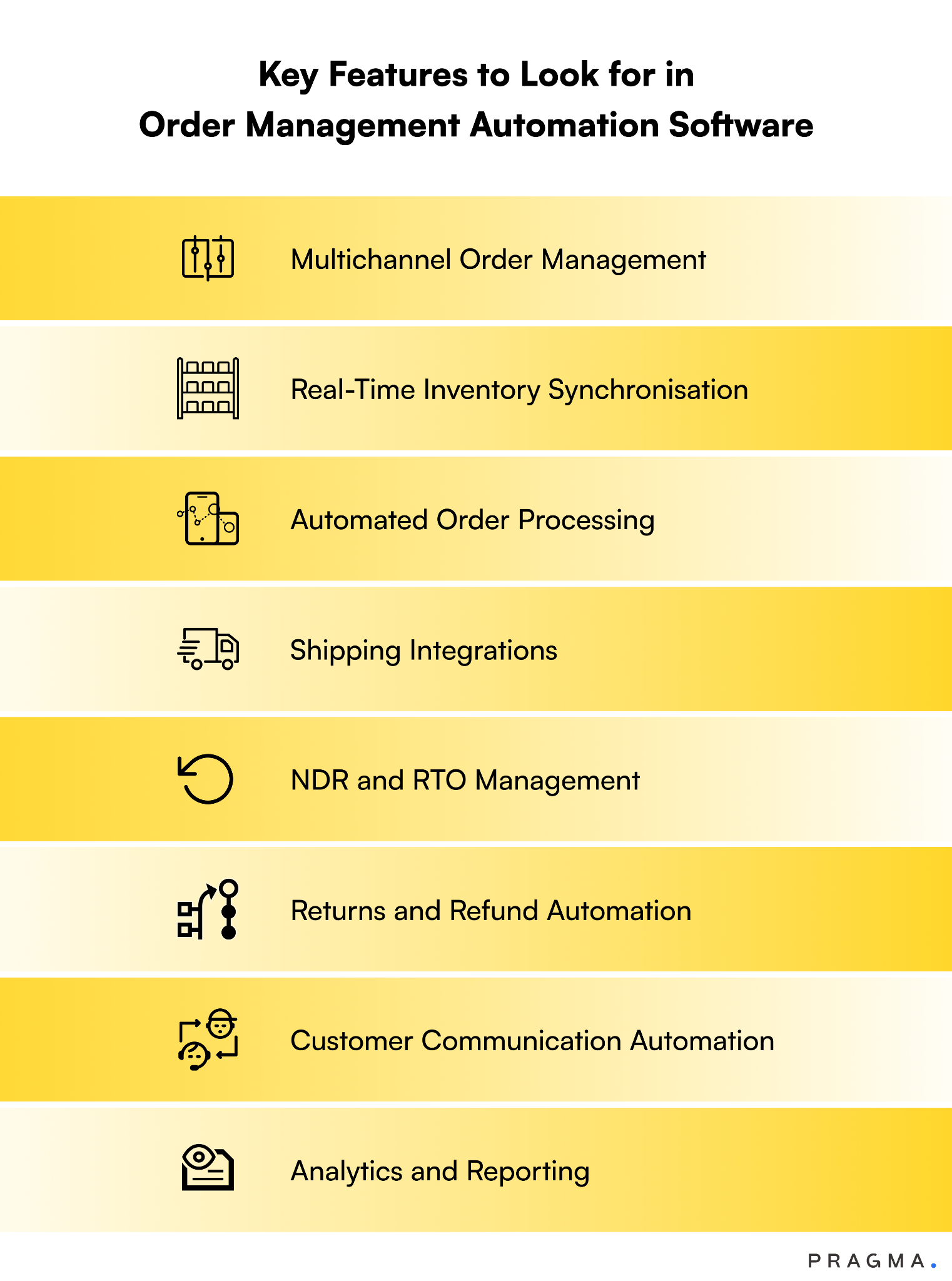
Look for the following points when choosing an order automation platform:
- Multichannel Order Management
Choose software that helps you manage orders from all sales channels in one dashboard. This helps your team process orders faster and reduces manual coordination.
- Real-Time Inventory Synchronisation
Look for a platform that updates inventory automatically across warehouses and sales channels. This reduces stock mismatches and prevents overselling.
- Automated Order Processing
Choose software that automates order validation, fulfilment, shipping workflows, and inventory updates. This reduces manual work and improves order accuracy.
- Shipping Integrations
Select a platform that integrates with multiple courier partners. This helps you process shipments faster and manage deliveries more efficiently.
- NDR and RTO Management
Look for software that helps you track failed deliveries and reduce RTO losses.
- Returns and Refund Automation
Choose a system that automates return approvals, refund processing, and inventory updates. This helps your team process returns faster.
- Customer Communication Automation
Select software that automates order confirmations, tracking updates, and delivery notifications through WhatsApp, SMS, and email.
- Analytics and Reporting
Choose a platform that helps you track fulfilment performance, delivery rates, RTO trends, and operational efficiency in real time.
Future of Order Management Automation
The future of order management automation will focus on AI-driven fulfilment, predictive inventory planning, faster delivery operations, and automated customer communication.
E-commerce brands are adopting systems that reduce manual work across post-purchase workflows.
Modern order management systems are increasingly using AI and real-time data to improve operational efficiency and customer experience.
Conclusion
Order management automation helps e-commerce brands reduce manual work, improve operations, and lower RTO losses.
Manual workflows slow down processing, increase operational errors, and make scaling difficult as order volumes grow.
But automation improves order accuracy, delivery visibility, customer communication, and returns management across the entire order lifecycle.
In this journey, Pragma is here to help D2C ecommerce brands automate checkout, fulfilment, NDR management, customer communication, and returns workflows.

FAQs (Frequently Asked Questions On Order Management Automation: How to Automate Your E-commerce Operations?)
1. What is order management automation in eCommerce?
Order management automation in eCommerce refers to using software and workflows to automate order processing, inventory updates, fulfilment coordination, customer communication, and operational tasks across the order lifecycle.
2. Why is order management automation important for eCommerce businesses?
Order management automation is important because it reduces manual effort, minimises operational errors, improves fulfilment speed, and helps eCommerce brands scale operations efficiently.
3. How does order management automation work?
Order management automation works by connecting systems like checkout, inventory, logistics, CRM, and communication platforms to trigger automated workflows based on order events and customer actions.
4. What processes can be automated in eCommerce order management?
Processes that can be automated include order confirmation, inventory syncing, payment verification, shipping updates, NDR handling, returns processing, customer notifications, and refund workflows.
5. How does order management automation improve operational efficiency?
Automation improves operational efficiency by reducing repetitive tasks, speeding up order processing, improving accuracy, and enabling teams to manage higher order volumes with fewer manual interventions.
6. Can order management automation reduce RTO and delivery failures?
Yes, order management automation helps reduce RTO and delivery failures through address validation, automated customer communication, order verification workflows, and faster NDR resolution.
7. What tools are used for order management automation in eCommerce?
Tools include order management systems (OMS), CRM platforms, logistics and shipping software, returns management systems, WhatsApp automation tools, and analytics platforms.
8. How does automation improve customer experience in eCommerce?
Automation improves customer experience by providing faster order updates, proactive communication, accurate delivery tracking, quicker issue resolution, and smoother post-purchase interactions.
9. What are the challenges of manual order management in eCommerce?
Manual order management often leads to delayed processing, human errors, fragmented operations, poor customer communication, inventory mismatches, and difficulty scaling during high-volume periods.
10. Why do D2C brands in India need automated order management systems?
D2C brands in India need automated order management systems to handle growing order volumes, complex logistics operations, COD-related workflows, and customer expectations for faster fulfilment and communication
Talk to our experts for a customised solution that can maximise your sales funnel
Book a demo.png)
.png)

.png)