

Do you know that there are over 750 million internet users and the Indian e-commerce market is expected to reach $350 billion by 2030?
By reading these numbers, a point must have hit your mind that for an e-commerce business, this is a massive opportunity. Are we right?
Yes, what you are thinking is true; this is a great opportunity for all e-commerce businesses. But there is a pain point that everyone did not know before entering the market.
In reality, the average e-commerce conversion rate in India is just 1.5-2%.
So, does it mean that a brand will fail? The answer is "NO". Every e-commerce brand can change these conversion rates with the right strategies and tools.
To help D2C e-commerce brands achieve success, today we will discuss "How to Increase E‑commerce Conversion Rate: Proven Tips for India".
Why Conversion Rate Optimisation Matters for E‑commerce?
Before discussing how to increase e-commerce conversion rate, let us know why it is crucial for e-commerce brands.
Conversion rate optimisation is something that can help you to get sales without spending extra money on ads. It helps you make use of the traffic you already have on your website.
Here's why conversion rate is important:
Cost- Effective: Getting new customers through ads costs a lot. But when you improve your conversion rate with the right techniques, it means you get sales from the same advertising budget.
Better Return on Investment: Some research shows that businesses that focus on conversion rate optimisation see a return of ₹1000 for every ₹100 spent on it.
Competitive Advantage: While your competitors focus on driving traffic to their websites, you will be maximising the value of every visitor. This gives you an edge in the market.
How to Increase E‑commerce Conversion Rate: 27 Tips to Increase Conversion Rates
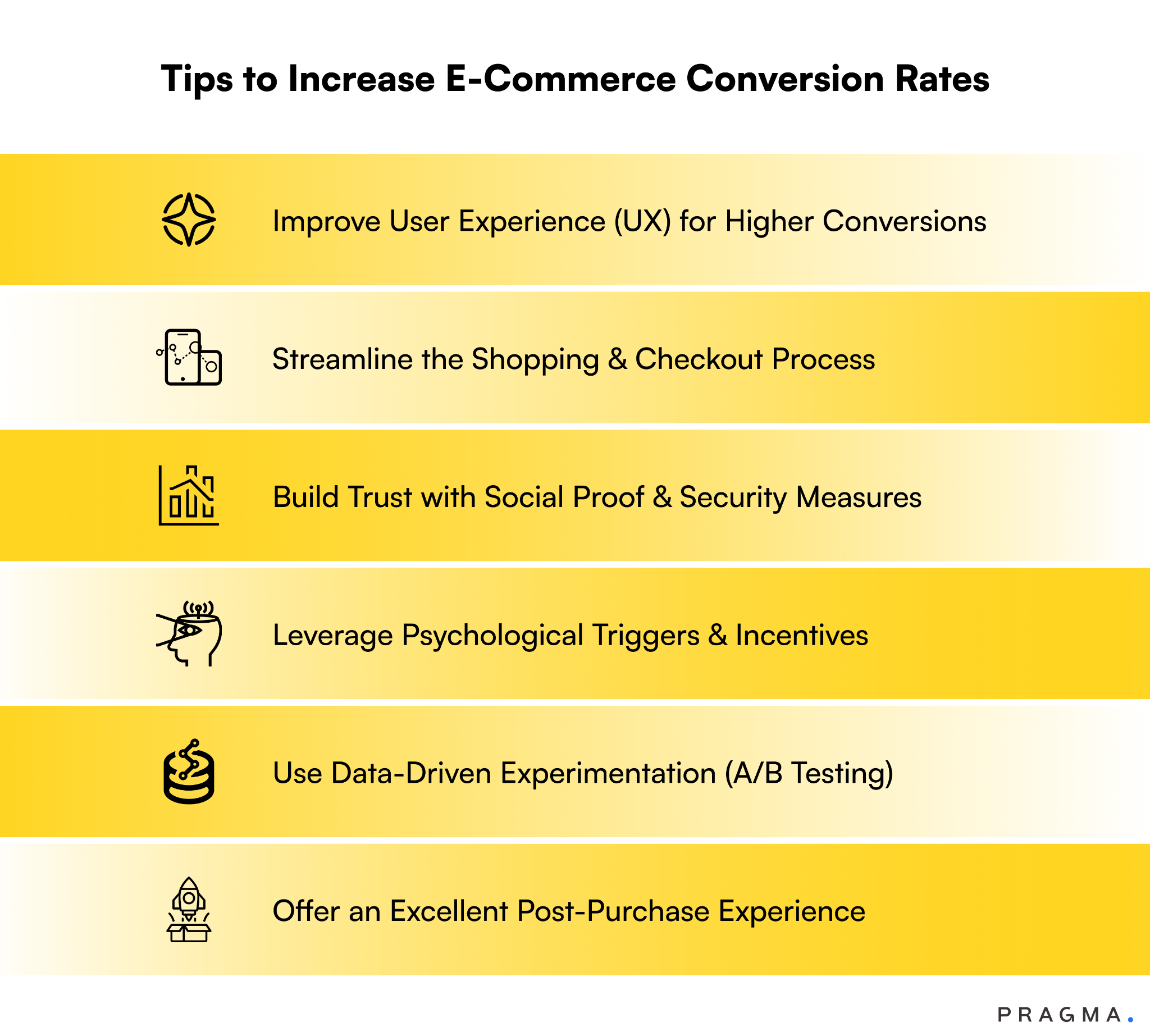
Let us now move to the most interesting part that you were looking for. We have gathered some proven tips on how to increase e-commerce conversion rates.
Improve User Experience (UX) for Higher Conversions
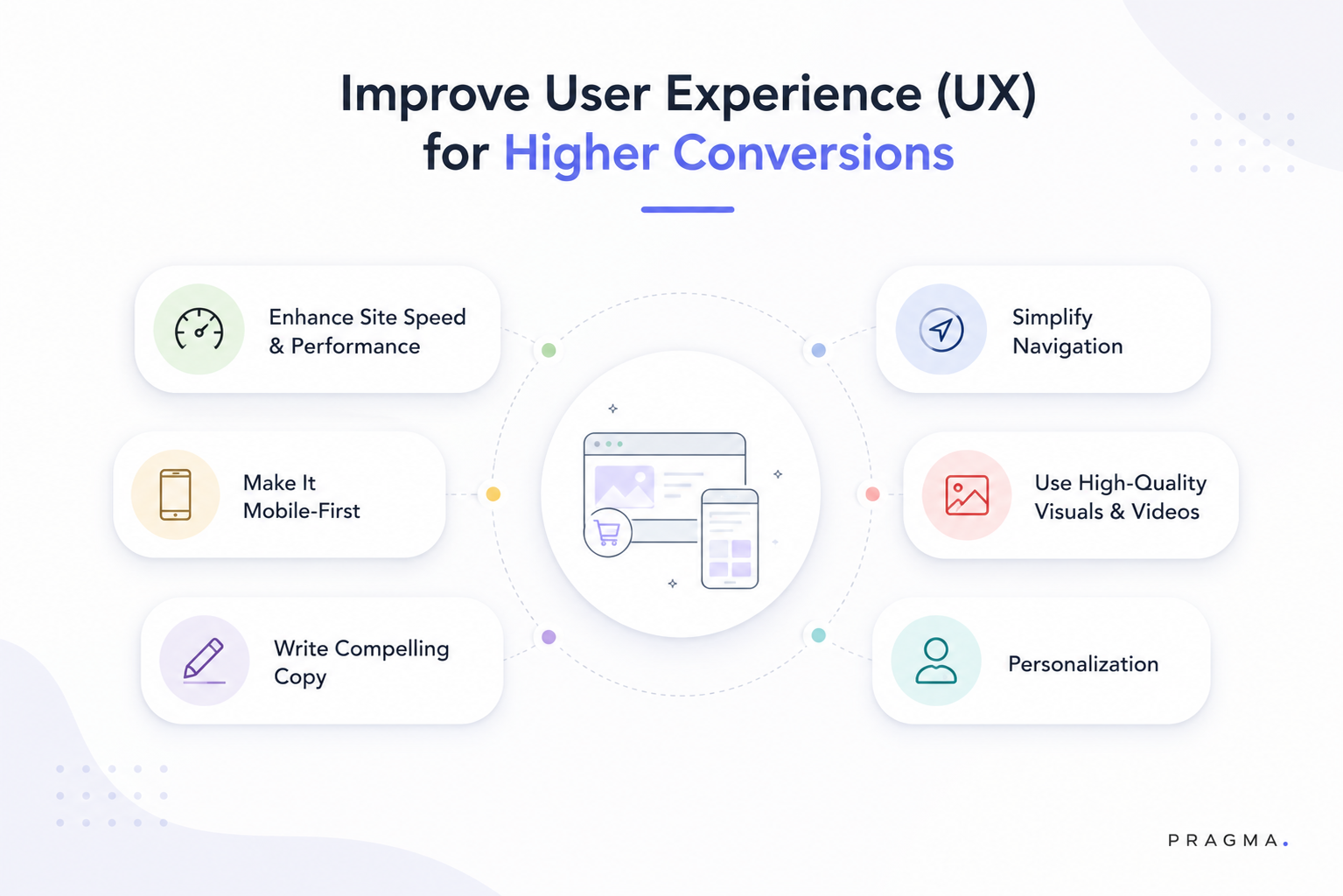
User experience is the foundation of good conversion rates. When customers find your website easy to use and navigate, they're more likely to complete their purchase.
Enhance Site Speed & Performance
The speed of your website has an effect on whether people go through with a purchase or not.
Google said that if your website takes a little longer to load, from one second to three seconds, it is more likely that people will leave your website and the probability of bounce increases by 32%.
This is really important for people in India who have internet connections.
To make your website load faster:
- You should make your pictures smaller so they do not take up much space.
- Use a Content Delivery Network
- Use less JavaScript and CSS, and pick a good company to host your website.
A lot of companies find that using tools helps their website load faster. For example, Pragma 1Checkout is really fast and loads in under three seconds, even if you have an internet connection, like 2G. This means you will not lose customers just because your website is slow.
Simplify Navigation
Your website navigation should be easy to use, like a store where people can find what they are looking for. The Baymard Institute did some research. Found out that bad navigation is one of the main reasons people leave their carts behind.
- You should use category names that make sense to your customers.
- Put a search bar on your homepage where people can easily see it and make sure it works properly.
- Add breadcrumbs so people know where they are on your website.
- Keep your menu simple with not too many options, like 5-7 main categories, because too many choices can confuse people.
Make It Mobile-First
77% of people in India use their phones to access the internet, so your website needs to work on phones. This is very important if you want to be successful in the market.
Your website should look good on all phones, with buttons that are easy to tap and navigation that is easy to use with your thumb. Your website should also load quickly on phones. Many people in India shop on their phones when they are commuting or taking a break, so the experience needs to be smooth and fast.
Use High-Quality Visuals & Videos
People are more likely to buy something if they can see pictures and videos of it. Some studies show that products with pictures get 94% more views than products with bad pictures. This makes sense because when people shop online, they cannot touch or try the products before buying.
- You should use pictures of each product from different angles and let people zoom in to see the details.
- You should also add videos that show the products being used and make sure the pictures load quickly on phones.
Good pictures and videos help people feel confident about what they're buying.
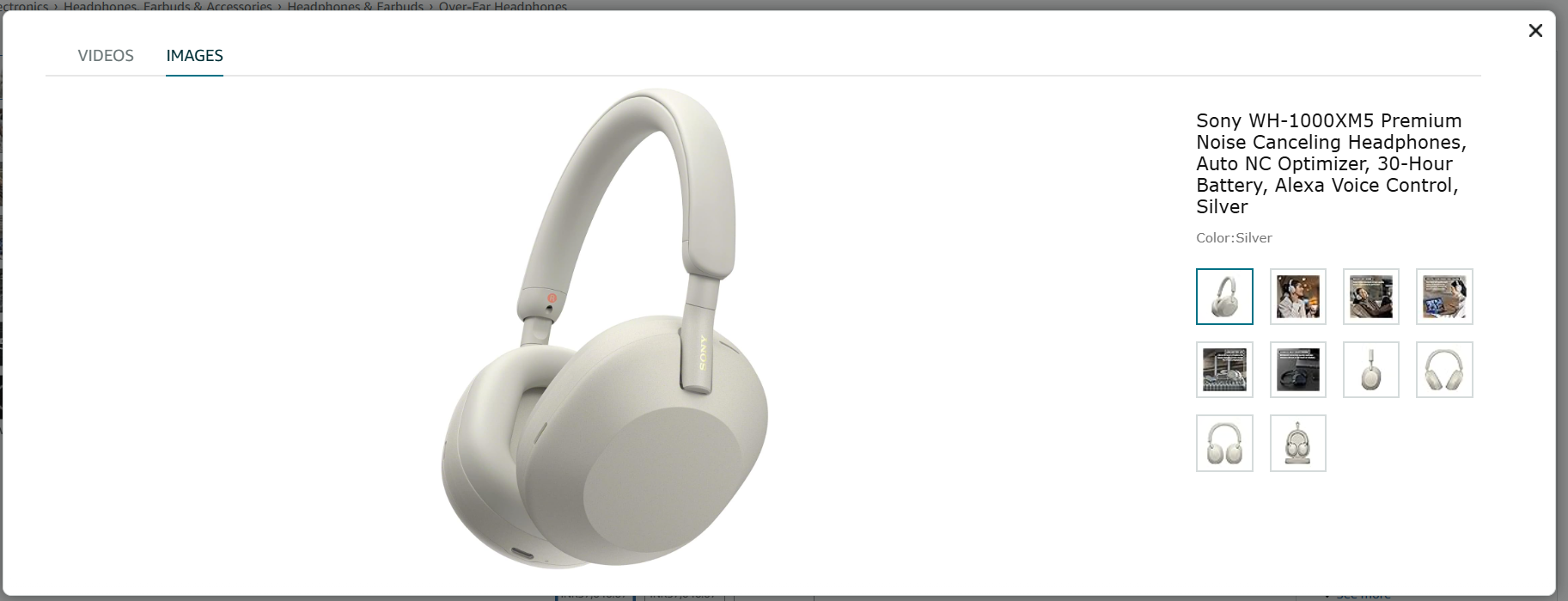
Write Compelling Benefit-Oriented Copy
Product copy should focus on what the product does for the customer, not just what it is made of. Features describe the product, but benefits explain why it matters.
For example, instead of saying “made from 100% cotton”, framing it as “soft, breathable cotton that keeps you comfortable all day” makes the value clearer and more relatable. This helps customers visualise how the product fits into their life.
Strong product copy is built on a few simple principles:
- Lead with benefits so customers immediately understand the outcome
- Keep language simple and conversational, as if you’re explaining it to someone directly
- Use bullet points for specifications to make details easy to scan
- Include sizing and key product information to reduce uncertainty
- Address common concerns upfront to remove hesitation before it becomes a barrier
The goal is clarity and confidence. When customers can quickly understand how a product helps them and find answers to their questions without effort, they are far more likely to complete the purchase.
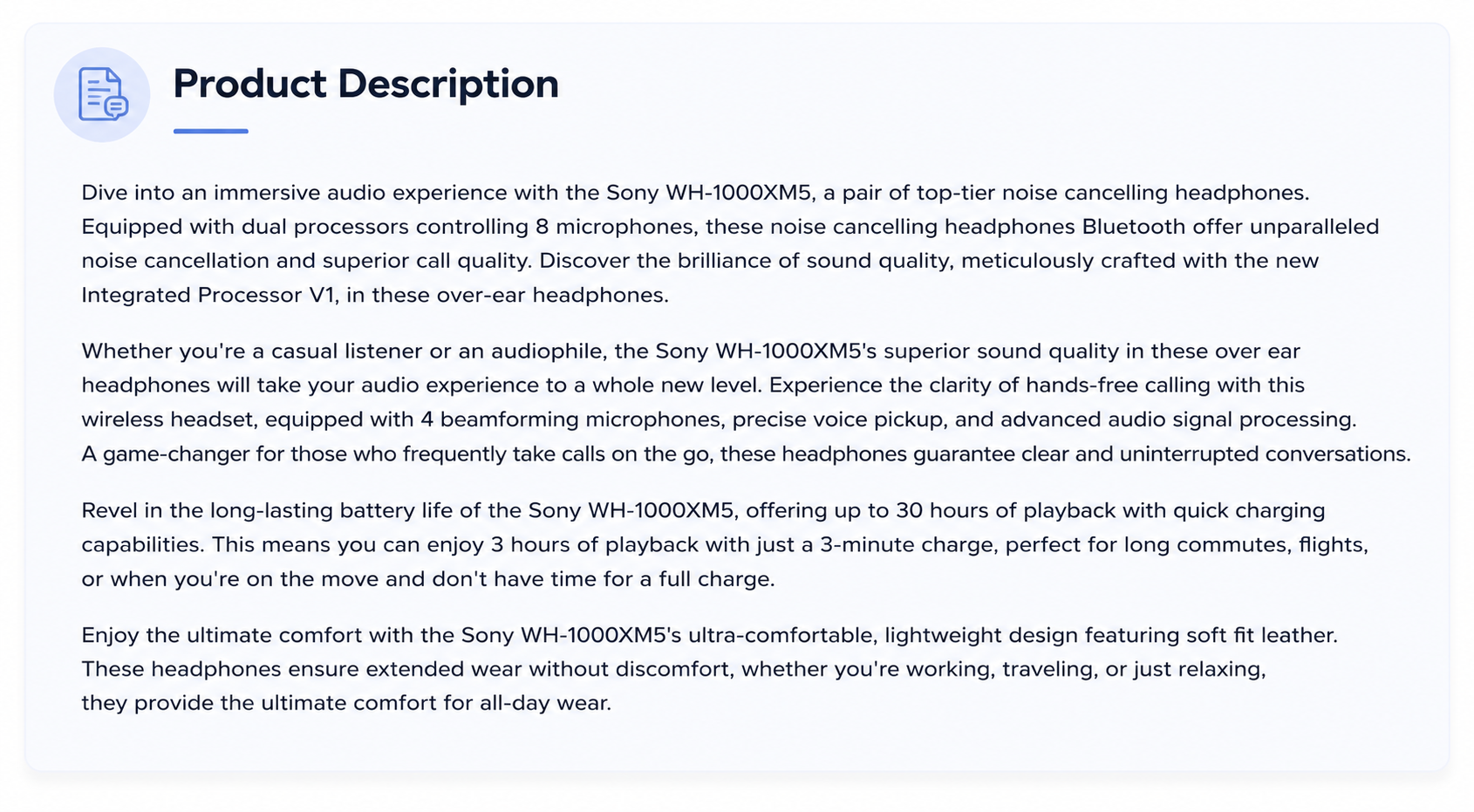
Personalisation
Personalised experiences can increase conversion rates by 10-15%.
When customers see products that are relevant to their interests, they are far more likely to convert. Personalisation aligns the browsing experience with individual intent, often driving a noticeable lift in conversion rates.
The idea is simple: don’t show the same catalogue to everyone. Show what matters to that specific user.
Effective personalisation typically includes:
- Recently viewed products to bring users back to items they already considered
- Behaviour-based recommendations based on browsing and purchase history
- Location-based offers that reflect availability, demand, or regional preferences
- Dynamic homepages that adapt for returning visitors
These elements work because they reduce discovery effort. Instead of searching again, customers are guided directly to products they are already inclined towards.
When implemented well, personalisation makes the experience feel intuitive and relevant. It shortens the path to purchase, improves engagement, and consistently drives higher conversion without increasing acquisition effort.
Streamline the Shopping & Checkout Process
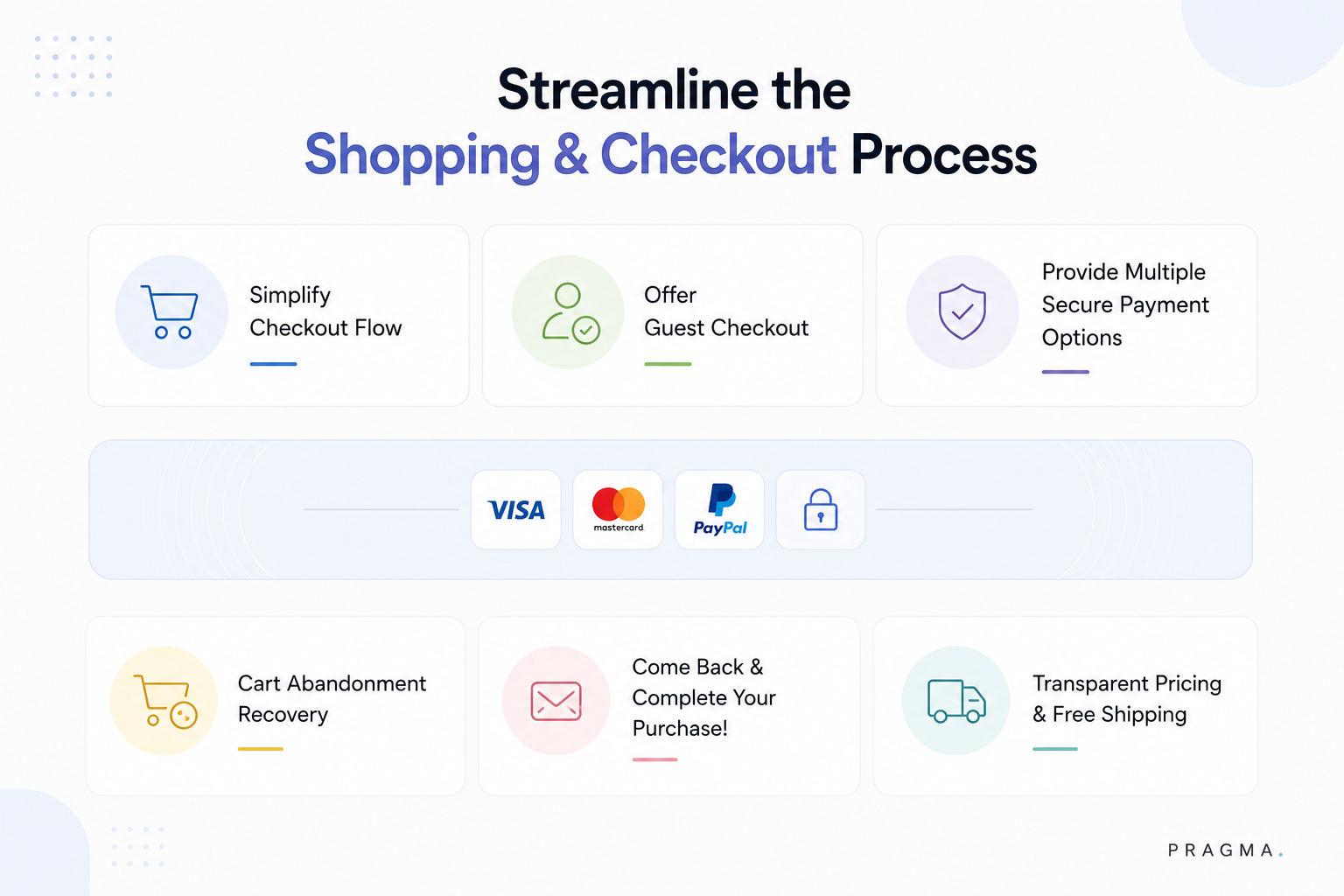
Research by Baymard Institute shows that 70% of shopping carts are abandoned due to long checkouts.
Simplify Checkout Flow
The checkout process should be as simple and frictionless as possible. The fewer steps and form fields involved, the higher the likelihood that customers will complete their purchase.
A well-optimised checkout typically includes:
- 2–3 steps maximum to minimise effort and drop-offs
- Progress indicators so customers know exactly how much is left
- Auto-fill capabilities to reduce manual input
- Easy guest checkout without forcing account creation
The key is to design from the customer’s perspective. By the time they reach checkout, the decision to buy is already made. Any additional friction at this stage introduces doubt and increases the chances of abandonment.
This is where 1Checkout by Pragma plays a big role - It enables ultra-fast checkouts (just under 3 seconds), by auto-populating address and payment details.
Offer Guest Checkout To New Users
18% of users abandon carts because they're required to create an account. This is especially true for first-time buyers who're not sure if they trust your brand yet.
But with guest checkout, you can give your customer a better first-time buyer experience.
To increase your conversion rates, 1Checkout by Pragma provides customers with a guest checkout option, where your customers do not have to do mandatory account creation and can purchase easily without any hassle.
Provide Multiple Secure Payment Options
Indian customers prefer having payment options. According to a report, UPI accounts for 60% of transactions in India.
Some essential payment options for India include:
- UPI (PhonePe, Google Pay, Paytm)
- Credit and debit cards
- Net Banking
- Digital wallets
- Cash on Delivery (COD)
- Buy Now Pay Later options
Pragma 1Checkout supports all major Indian payment methods with the highest success rates. This reduces payment failures that lead to lost sales.
Cart Abandonment Recovery
Since 70% of carts are abandoned, having a recovery strategy is crucial for improving conversion rates.
- Send abandoned cart emails within 1 hour while the purchase intent is still fresh.
- Use WhatsApp messages for cart recovery since Indians check WhatsApp more frequently than email.
- Offer discounts to complete the purchase.
- Show items left in the cart with urgency messaging.
With Pragma WhatsApp Business Suite, brands can connect with their customers through automated campaigns.
- It is based on intelligent timing algorithms that send messages when customers are most likely to respond
- Personalised content based on browsing history and purchase patterns
- Automated follow-up sequences that adapt based on customer engagement
Transparent Pricing & Free Shipping
59% of users abandon carts due to extra costs. This destroys trust. Makes customers feel tricked. To avoid this, you should:
- Show all costs upfront.
- Offer shipping above a minimum order value.
- Display shipping costs in the process.
- Be clear about taxes and fees.
Build Trust with Social Proof & Security Measures
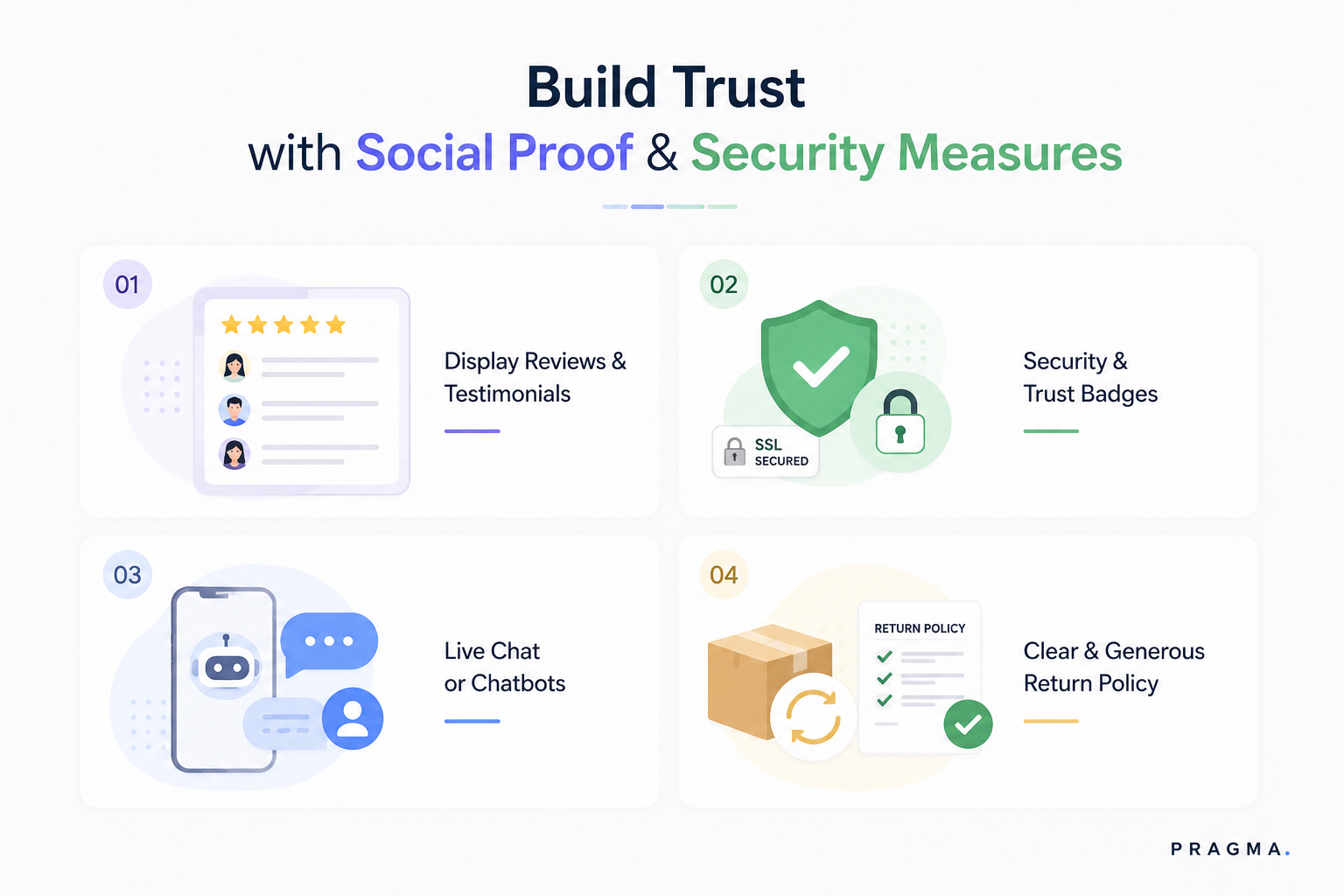
People need to trust your brand when they buy them online, especially if they have never bought from you before. It takes a while to build trust. There are things you can do to make people feel better about buying from you…
Display Reviews & Testimonials
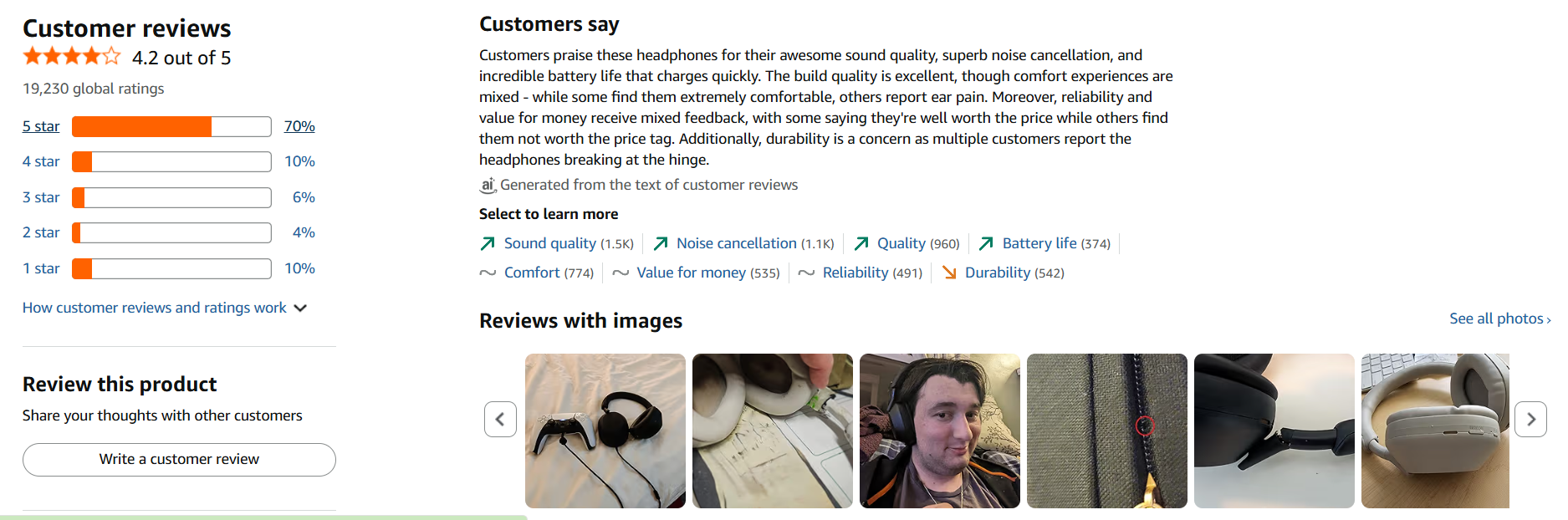
95% of customers read reviews of what other people say about a product before they buy it. If you show what people say about your products, it can really help people want to buy from you.
- Showcase how many stars your products get on your PDP (product display page) where people buy them.
- Brands should also show what people have said about your products recently - most recent ones aid in purchases, as compared to seeing an old review
- If a customer sends a picture with their review, highlighting that is beneficial.
- If a customer leaves a negative review about your product, you should respond to them ASAP, and get it sorted.
And once solved, the review should be taken live, along with the issue sorted reply/response - stating to the new buyers that your brand doesn’t leave bad experiences or unsatisfied customers be..
Security & Trust Badges
When customers reach the payment stage, trust becomes critical. Even small doubts about security can lead to hesitation or abandonment, especially for first-time buyers.
Displaying security and trust badges near the payment section helps reassure customers that their information is safe. These visual cues act as instant credibility signals at the most sensitive point in the journey.
Effective implementations include:
- Secure payment badges to indicate encrypted transactions
- Trusted payment partner logos to reinforce reliability
- SSL/security indicators placed close to the payment fields
The impact is subtle but important. When customers feel confident that their data is protected, they are far more likely to complete the transaction.
In practice, trust badges do not just improve perception. They directly support higher checkout completion by reducing last-mile hesitation.
Live Chat or Chatbots
77% of customers will not buy from you if they cannot get help when they need it. If you have a chat, you can help people right away. This can really help people want to buy from you. It can make them happier with their purchase.
Some companies in India have had a lot of success with using WhatsApp to talk to their customers. This is because people in India already use WhatsApp a lot, so it feels natural to use it to talk to companies.
That is why Pragma offers integrated WhatsApp support, allowing customers to get help through their preferred communication channel.
Clear & Generous Return Policy
A clear and customer-friendly return policy reduces hesitation at the point of purchase. When customers know they can return a product easily, the perceived risk drops, making them more comfortable completing the order.
To make this effective, brands should focus on clarity and fairness:
- Simple return process that is easy to initiate when the reason is valid
- Reasonable return windows that account for usage, discovery of issues, and product type
- Clear product-specific guidelines so customers know what is eligible
- Transparent return shipping rules, including when it is free or chargeable
The goal is to remove uncertainty. When expectations are clearly set before purchase, customers feel more confident and are less likely to hesitate.
In practice, a well-defined return policy does not just handle post-purchase issues. It actively improves conversion by making the buying decision feel safer.
Leverage Psychological Triggers & Incentives
People buy things basically because of how they feel, then they use logic to explain why they made that decision. So it is important to appeal to both feelings and logic.
Urgency & Scarcity
Creating urgency and scarcity is a powerful way to nudge customers towards faster decisions, but only when it is used with credibility. When customers believe an offer is genuinely time-bound or limited, it reduces hesitation and accelerates conversion.
The principle is simple. People are more likely to act when they feel they might miss out. However, if this is overused or misleading, it quickly erodes trust and can harm long-term brand perception.
Effective urgency and scarcity flows are built on transparency and timing:
- Limited-time offers that clearly communicate a real deadline
- Countdown timers that reinforce when a deal expires
- Low stock indicators that reflect actual inventory levels
- Flash sales with defined start and end windows
- Exclusive deals for specific segments like email or WhatsApp subscribers
These tactics work best when they are tied to real constraints, not artificial pressure. For example, showing “Only 3 left” should reflect actual stock, not a static message. Similarly, countdown timers should not reset for every user.
When executed honestly, urgency reduces decision delays and improves conversion rates without feeling aggressive. It gives customers a clear reason to act now rather than postponing the purchase.
In the broader D2C journey, urgency and scarcity are not just sales triggers. They act as decision accelerators, helping convert high-intent users while maintaining trust and credibility.
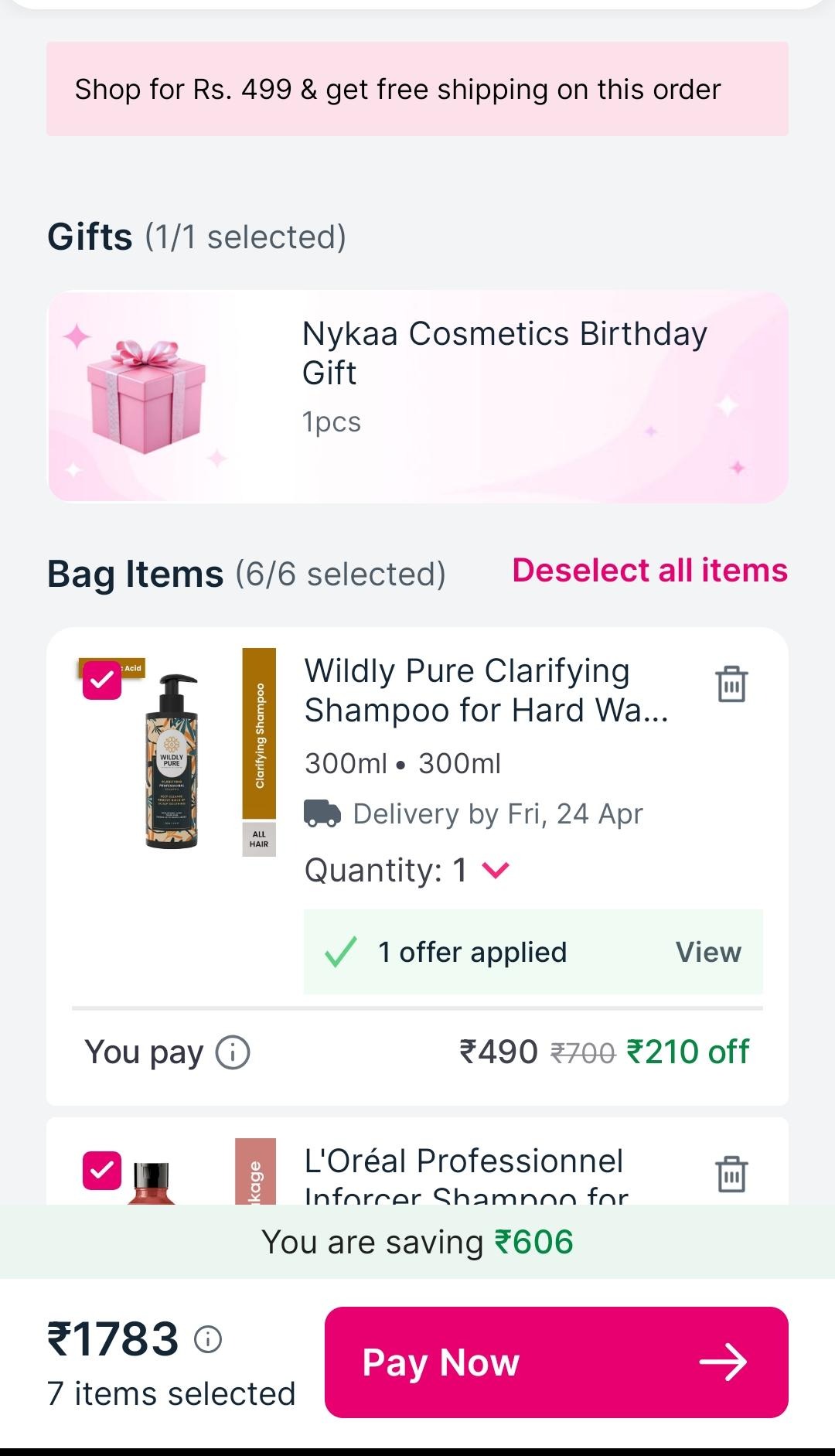
Freebies & Discounts
Discounts and freebies can drive immediate conversion, but their real impact comes from how strategically they are structured. When used correctly, they don’t just push a sale, they shape buying behaviour, increase cart value, and improve overall efficiency.
The focus should be on guiding the customer towards a higher-value purchase rather than simply reducing price. Well-designed offers create a clear incentive to spend more while still feeling rewarding.
Common high-performing structures include:
- First-time buyer discounts that reduce friction for new customers and improve acquisition conversion
- Free shipping thresholds that nudge customers to increase cart value to unlock the benefit
- Bundle deals and combo offers that package complementary products at a perceived value advantage
- Seasonal and festival promotions that align with high-intent buying periods and cultural moments
The effectiveness of these offers depends on balance. Over-discounting can erode margins and train customers to wait for deals, while underwhelming offers fail to move behaviour.
Strong brands treat discounts as a lever, not a default. When aligned with intent, timing, and cart context, these strategies increase AOV, improve conversion rates, and maintain long-term brand value without becoming overly dependent on price cuts.
Loyalty & Referral Programs
Loyalty programmes are designed to turn repeat purchases into a habit. Instead of relying only on discounts, they give customers a reason to keep coming back by rewarding continued engagement.
The focus is not just on incentives, but on creating a sense of progression and belonging. When customers see ongoing value, their lifetime contribution to the brand increases naturally.
Common structures include:
- Points-based systems where customers earn and redeem rewards across purchases
- Referral bonuses that benefit both the referrer and the new customer
- VIP tiers that unlock better perks as customers spend more
- Birthday and anniversary rewards that add a personalised touch
When structured well, loyalty programmes move customers from one-time buyers to repeat purchasers, while strengthening long-term retention without relying heavily on constant discounts.
Use Data-Driven Experimentation (A/B Testing)
A/B testing is to make decisions based on facts rather than just guessing what might work. This way, you can make changes to your website, socials, marketing campaigns and more based on what actually helps you sell your products; instead of just “hoping” they work.
A/B testing is when you show versions of your website to different people and see which one works better.
For example, one brand in India found that if they changed their "Buy" button from blue to orange (their brand colours), 21% more people clicked on it. This shows that even small changes can make a difference, which is why testing is so important. Another brand found that if they added "Free Shipping" to their button text, 15% more people completed purchases.
This way, you can really understand what works for your audience instead of just guessing. What works for one brand might not work for another brand, so you need to test things out.
Personalised Communication & Remarketing
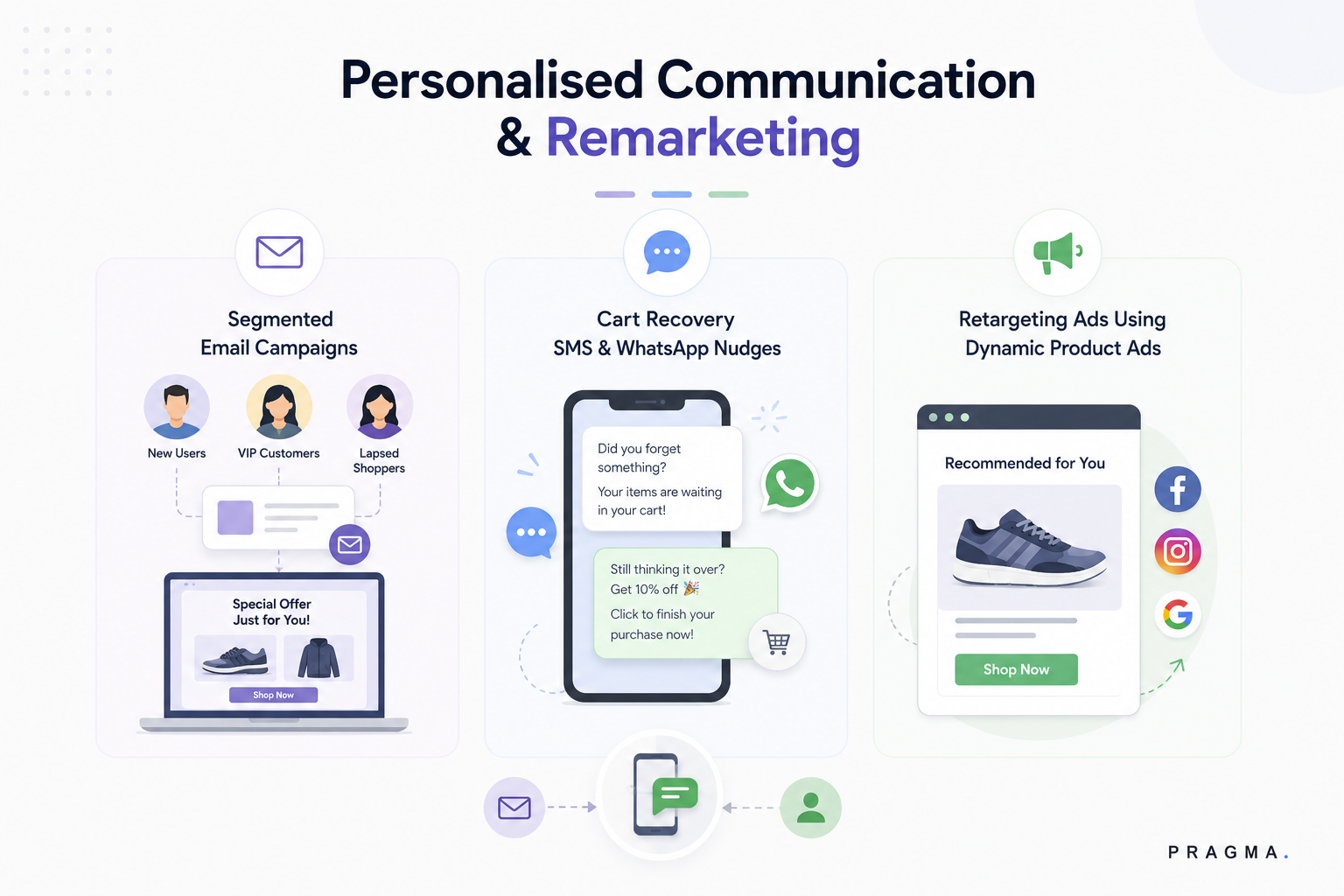
When you stay in touch with people who might buy from you, they are more likely to buy something.
Segmented Email Campaigns
Segmented email campaigns are built on sending the right message to the right customer, rather than broadcasting the same communication to everyone. By using data such as browsing behaviour, past purchases, and engagement history, brands can create emails that feel relevant and timely.
Instead of generic campaigns, segmentation allows you to align communication with intent. This significantly improves open rates, click-through rates, and overall conversion.
Common segmentation-driven flows include:
- Abandoned cart emails targeting users who didn’t complete their purchase
- Post-purchase emails with relevant follow-ups or product recommendations
- Browse-based campaigns triggered by products or categories viewed
- Seasonal or promotional emails tailored to specific customer cohorts
The effectiveness comes from precision. When customers receive content that matches what they are already interested in, the interaction feels useful rather than promotional.
In practice, segmented campaigns reduce noise, improve engagement, and drive higher conversions by ensuring every email has clear context and purpose.
Cart Recovery SMS & WhatsApp Nudges
A significant portion of users drop off after adding items to their cart. Recovering these high-intent customers requires timely, direct communication, which is where SMS and WhatsApp play a critical role.
Unlike email, these channels are immediate, highly visible, and far more likely to be opened. In markets like India, WhatsApp in particular feels personal and conversational, making it a strong medium for re-engagement.
Effective cart recovery flows typically include:
- Quick reminder messages sent shortly after cart abandonment
- Rich WhatsApp nudges with product images, prices, and clear CTAs
- Follow-up messages spaced intelligently to avoid spamming
- Incentivised nudges such as limited-time offers or small discounts
The strength of these channels lies in both visibility and format. WhatsApp allows brands to go beyond plain text, enabling richer communication that feels closer to a one-on-one interaction.
When executed well, these nudges bring users back while their intent is still active, significantly improving recovery rates compared to traditional email-only flows.
Retargeting Ads Using Dynamic Product Ads
Not every visitor converts on their first session, but that does not mean the intent is lost. Retargeting allows you to re-engage these users by showing them the exact products they viewed or interacted with on your website.
Dynamic product ads take this a step further by automatically personalising creatives based on user behaviour. Instead of generic campaigns, each user sees products that are already relevant to them, making the ad feel familiar and timely.
Typical use cases include:
- Viewed product retargeting that brings users back to specific items they explored
- Cart abandonment retargeting reinforcing products left behind
- Category-based retargeting for users who browsed but did not select a product
- Cross-sell retargeting suggesting complementary items based on past purchases
The effectiveness comes from relevance. Since the user has already shown interest, the barrier to conversion is lower. Retargeting simply brings the product back into consideration at the right moment.
When executed properly, dynamic ads improve return on ad spend, reduce wasted impressions, and convert high-intent users who might otherwise have dropped off.
Offer an Excellent Post-Purchase Experience
The experience of buying from you does not end when someone pays & makes a purchase. If you make sure they are happy after they buy, they are more likely to buy from you and make a referral to their friends/family. This helps you get a new segment of organically generated customers over time.
Confirmation Emails, Tracking Updates
Once an order is placed, communication becomes just as important as the purchase itself. Customers expect clarity on what happens next, and proactive updates remove uncertainty from the experience.
At a minimum, this flow should cover the full post-order journey:
- Order confirmation emails that immediately reassure the customer their order has been received
- Shipping updates that notify when the order is dispatched
- Delivery timelines and tracking links that provide real-time visibility
- Post-delivery check-ins to confirm satisfaction or collect feedback
These touchpoints are not just operational. They directly influence trust, support load, and repeat purchase behaviour.
When customers are kept informed at every stage, they are far less likely to raise WISMO (“Where is my order?”) queries. This reduces pressure on support teams while improving overall brand perception. At the same time, consistent communication signals reliability, which is critical for D2C brands, especially in prepaid and high-value orders.
The key is to make these updates timely, clear, and easy to act on. Every message should answer the customer’s next question before they have to ask it.
In effect, strong confirmation and tracking flows do more than update order status. They build confidence, reduce friction post-purchase, and create a smoother path towards repeat orders.
Post-Purchase Upsell Flows
Right after a customer completes a purchase, intent is still high and decision fatigue is low. This makes it one of the most effective moments to introduce relevant add-ons that naturally complement what they’ve just bought.
For instance, if someone purchases a phone, suggesting a case or screen protector is not an extra push, it’s a logical continuation of the same decision. The goal isn’t to sell more for the sake of it, but to help the customer complete their purchase with items they are likely to need anyway.
When executed well, post-purchase upsells increase average order value without disrupting the buying experience. They feel helpful, not intrusive. This comes down to a few key principles:
- Relevance first: Every recommendation should directly connect to the original product
- Timing matters: Show upsells immediately after purchase or within a short follow-up window
- Low friction: Enable one-click additions without requiring the customer to re-enter details
- Context-aware suggestions: Avoid generic products and focus on what genuinely fits the purchase
Common placements for these flows include thank-you pages, one-click upsell screens, and quick follow-ups via channels like WhatsApp.
At a broader level, strong post-purchase upsell flows don’t behave like aggressive sales tactics. They function as natural extensions of the original purchase, helping customers get more value while quietly increasing revenue per order.
Feedback Requests and Loyalty Program Enrollment
After a purchase is completed and delivered, the relationship shouldn’t go quiet. This is the point where you can turn a one-time buyer into a repeat customer by actively involving them in the brand experience.
Start by asking for feedback in a way that feels simple and timely. Customers who have had a positive experience are usually willing to share their opinion, especially if the process is frictionless. These inputs do more than validate your product, they become social proof that helps future buyers trust your brand.
Alongside feedback, this is also the ideal moment to introduce a loyalty or rewards programme. Instead of pushing another purchase, you’re giving customers a reason to come back on their own terms.
Effective flows typically include:
- Post-delivery feedback requests that are quick to complete and well-timed
- Review nudges that encourage ratings, testimonials, or user-generated content
- Loyalty programme invites that clearly explain rewards, points, or benefits
- Incentives for repeat actions such as discounts, early access, or exclusive perks
The key is to keep both feedback and rewards aligned with the customer’s experience. Overcomplicating the process or delaying the ask reduces participation significantly.
When executed well, these flows create a compounding effect. Reviews build trust for new customers, while loyalty programmes increase retention and lifetime value. Instead of ending the journey at delivery, you extend it into a loop that continuously drives engagement and repeat revenue.
Case Study of an Indian E-commerce Store
Let's see how an Indian fashion brand selling directly to customers increased its conversion rate.
The conversion rate went up from 1.2% to 2.8% in six months.
Here are the changes they made:
- They reduced the checkout steps from five to two
- They added UPI and wallet payment options
- They used WhatsApp to try to recover abandoned carts
- They added customer reviews to the product pages
- They made their website work better on phones
Here are the results:
- The conversion rate increased by 133%
- The cart abandonment rate went down by 45%
- The average order value went up by 25%
- Mobile conversions improved by 60%
The brand leveraged Pragma's commerce infrastructure across key customer touchpoints, from checkout optimisation to post-purchase engagement.
Checkout experiences were powered through 1Checkout, while customer communication and automation were managed through Pragma's WhatsApp Business Suite.
Tools & Platforms to Help You Convert More
Using the tools can really help with your conversion rates, but only if they actually help your customers with their problems. Here are some tools which can help you manage your business operations well:
WhatsApp Marketing Tool
In eCommerce, speed of communication often determines whether a customer converts or drops off. The faster you respond, the higher the chances of resolving doubts, guiding decisions, and bringing users back into the purchase flow.
WhatsApp has emerged as one of the most effective channels for this, especially in India, where it feels immediate, personal, and highly accessible. Unlike traditional channels, it allows real-time, two-way conversations that reduce friction across the journey.
With Pragma WhatsApp Suite, brands can:
- Respond instantly to customer queries and remove purchase hesitation
- Send order updates and keep customers informed post-purchase
- Recover abandoned carts through timely nudges
- Re-engage users with personalised messages and offers
When communication is fast and contextual, it builds trust. And in D2C, trust directly translates into higher conversions, better retention, and stronger customer relationships.
Return Management System
Returns are often seen as a cost centre, but when handled well, they can become a strong retention lever. A smooth and transparent return experience reassures customers that their purchase is low-risk, which directly impacts both conversion and repeat behaviour.
What matters is not just allowing returns, but how the process is designed. Customers expect clarity, speed, and minimal effort when initiating and completing a return.
With Pragma Return Management System (RMS), brands can:
- streamline return requests and approvals
- provide real-time visibility to customers
- reduce operational overhead and errors
- improve post-purchase experience without increasing support load
When returns are predictable and hassle-free, they stop being a point of friction. Instead, they build trust, reduce hesitation at checkout, and encourage customers to come back, knowing the brand stands behind the purchase.
Checkout Optimisation Tool
A large share of drop-offs in eCommerce happens at the final step, the checkout. When the process feels slow, complex, or requires too much effort, even high-intent users abandon their purchase.
Checkout optimisation is about removing this friction and making completion as seamless as possible. The fewer the steps and decisions required, the higher the likelihood of conversion.
With 1Checkout by Pragma, brands can streamline this critical stage by:
- Reducing checkout steps to minimise effort and confusion
- Enabling faster payments with optimised flows and saved preferences
- Improving mobile experience, where most drop-offs typically occur
- Supporting one-click actions that speed up decision-making
In practice, checkout is not just a technical layer. It is the last mile of revenue. When optimised correctly, it turns intent into completed orders consistently.
Email Marketing & Automation Tools
Email remains one of the most reliable channels for nurturing leads and re-engaging users who didn’t convert on their first visit. The real impact comes from moving beyond one-off campaigns to structured, automated journeys that respond to user behaviour.
Tools like Mailchimp and HubSpot enable brands to build these flows at scale. Instead of sending the same message to everyone, automation ensures each user receives communication that aligns with their actions and intent.
Typical high-performing email flows include:
- Welcome sequences for new users to build familiarity and trust
- Abandoned cart emails to recover high-intent drop-offs
- Post-purchase journeys with cross-sells and engagement nudges
- Reactivation campaigns for dormant users
With Pragma’s automation layer (JMS & CRM), these flows become more tightly integrated with real-time behaviour across channels. This allows brands to:
- trigger emails based on live user actions
- personalise content using purchase and browsing data
- sync email journeys with WhatsApp and other touchpoints
- optimise timing and frequency to maximise engagement
When executed well, email automation does not feel like marketing. It feels like timely, relevant communication that guides users back into the funnel, improving conversion rates and long-term retention.
To Wrap It Up
So, we hope that now you have gotten your answer to the question of how to increase e-commerce conversion rates. By implementing these proven strategies, Indian D2C brands can significantly improve their conversion rates and grow their business more efficiently.
And to support you in this journey, Pragma is here for you! Pragma has helped over 500 Indian D2C brands increase their conversions by an average of 35%.

FAQs (Frequently Asked Questions On How to Increase E‑commerce Conversion Rate: Proven Tips for India)
1. What is Ecommerce conversion rate?
Ecommerce conversion rate is the percentage of website visitors who complete a desired action, such as making a purchase. It is calculated by dividing total orders by total visitors and is a key metric for measuring online store performance.
2. What is a good eCommerce conversion rate in India?
A good eCommerce conversion rate in India typically ranges between 1.5% and 3%, depending on category, traffic quality, and pricing. High-performing D2C brands can achieve higher rates with optimised checkout and retention strategies.
3. How to increase eCommerce conversion rate in India?
To increase eCommerce conversion rate in India, brands should optimise checkout flows, improve page speed, offer multiple payment options like UPI and COD, build trust signals, and use lifecycle marketing such as WhatsApp and email automation.
4. What are the best ways to improve eCommerce conversion rates?
The best ways include simplifying checkout, reducing form fields, enabling guest checkout, improving product pages, offering fast delivery, and using personalised retargeting campaigns to bring users back.
5. How does checkout optimisation improve conversion rates?
Checkout optimisation improves conversion rates by reducing friction at the final step. Faster load times, fewer steps, better payment success rates, and features like address validation and prepaid nudges directly increase completed orders.
6. Does cash on delivery (COD) affect eCommerce conversion rates in India?
Yes, COD can increase top-of-funnel conversions but often introduces friction at checkout and leads to higher drop-offs or post-order cancellations. Balancing COD with prepaid incentives improves overall conversion quality.
7. How does page speed impact eCommerce conversion rate?
Page speed has a direct impact on conversion rates. Slow-loading pages increase bounce rates and reduce user trust, while faster websites improve engagement, session duration, and purchase completion.
8. Can WhatsApp marketing improve eCommerce conversion rates?
Yes, WhatsApp marketing improves conversion rates by enabling real-time, personalised communication. It helps recover abandoned carts, nudge hesitant users, and guide customers directly to checkout with minimal friction.
9. What tools help increase eCommerce conversion rates?
Tools include high-performance checkout systems, WhatsApp automation platforms, customer data and analytics tools, personalisation engines, and A/B testing solutions that optimise the user journey end to end.
10. How to reduce cart abandonment to improve conversion rates?
Reducing cart abandonment involves simplifying checkout, removing hidden costs, offering multiple payment options, sending timely reminders via WhatsApp or email, and addressing trust gaps with clear policies and delivery timelines.
Talk to our experts for a customised solution that can maximise your sales funnel
Book a demo

.png)