

E-commerce delivery operations depend on speed, accuracy, and visibility.
According to PwC, 41% of consumers are willing to pay extra for same-day delivery. Delayed shipments and failed tracking updates directly affect customer retention and repeat purchases.
As e-commerce businesses scale, delivery operations become more complex. Teams manage multiple courier partners, warehouse systems, OMS platforms, delivery APIs, and tracking workflows at the same time.
This creates pressure on them!
But a ‘delivery intelligence software’ can help e-commerce brands! It can monitor, analyse, and improve delivery-related performance across the entire fulfilment process.
Let us understand"Delivery Intelligence Software/Platform: What It Is & Why Ecommerce Teams Need It?"
What Is a Delivery Intelligence Software?
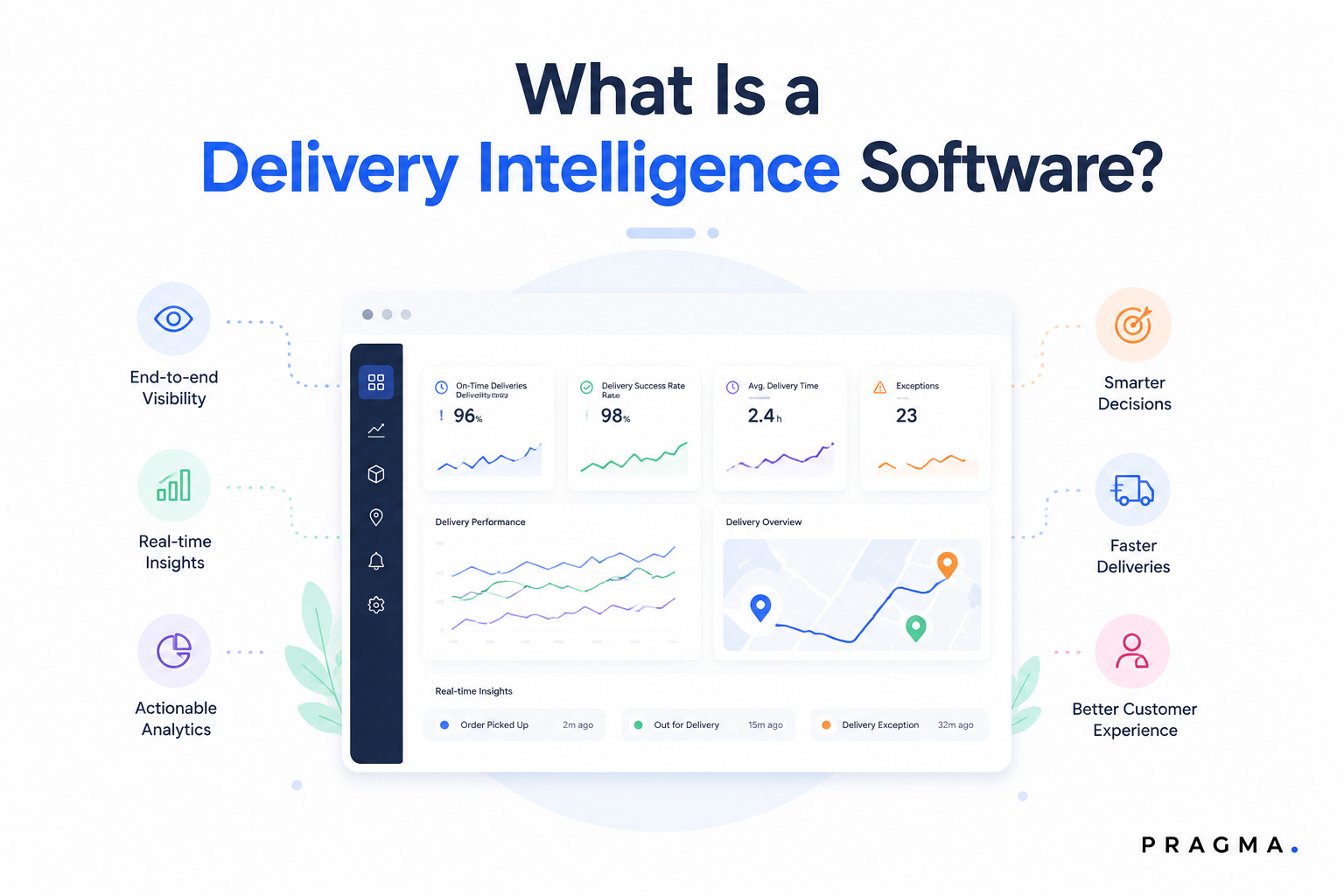
A delivery intelligence software or platform tracks and analyses software delivery performance across logistics and fulfilment systems.
The platform collects data from:
- Order management systems
- Warehouse management systems
- Courier integrations
- Delivery tracking APIs
- Incident monitoring tools
Then, the system converts operational and engineering data into measurable insights.
For e-commerce businesses, software delivery performance directly impacts shipping speed, customer satisfaction, and revenue retention.
Platforms like Pragma ShipAxis combine software delivery visibility with logistics intelligence. This helps e-commerce businesses monitor fulfilment workflows, courier performance, shipment movement, warehouse coordination, and operational bottlenecks from a centralised platform.
Why Do E-commerce Businesses Need Delivery Intelligence Software?
Here is why a delivery intelligence software is a must-have for e-commerce businesses:
Frequent Product Updates
E-commerce businesses continuously update delivery-related product experiences.
Teams update:
- Delivery timelines
- Shipping options
- Same-day delivery features
- Courier integrations
- Tracking experiences
- Check out delivery promises
Without delivery intelligence, teams struggle to track impact across logistics operations.
A delivery intelligence platform helps teams identify:
- Delayed deployments
- Failed delivery integrations
- Workflow bottlenecks
For brands using Pragma ShipAxis, delivery workflow updates also include courier allocation logic, automated shipping rules, and fulfilment routing configurations across multiple logistics partners.
Downtime Directly Impacts Revenue
Delivery downtime affects revenue immediately. If shipping systems stop working:
- Orders remain unprocessed
- Dispatch gets delayed
- Tracking updates fail
- Customer complaints increase
Even a 10-minute delivery system outage during peak sales periods can delay thousands of shipment updates and warehouse processing tasks. According to Gartner, the average cost of IT downtime reaches ₹4.70 lakh/$5,600/ per minute for businesses.
For e-commerce brands, even short delivery disruptions have an impact on the following:
- Order fulfilment speed
- Repeat purchases
- Customer trust
- SLA compliance
Delivery intelligence platforms reduce downtime by helping teams detect failures faster and improve recovery time.
Complex Tech Stack
Modern e-commerce delivery operations rely on multiple connected systems.
Typical delivery infrastructure includes:
- OMS platforms
- WMS platforms
- Courier aggregators
- Delivery APIs
- Inventory systems
- Tracking platforms
- Returns management tools
Managing these systems becomes difficult without centralised visibility.
A delivery intelligence platform helps teams monitor dependencies, deployment risks, and workflow performance from one place.
Platforms like Pragma WMS centralise warehouse and order operations. A delivery intelligence platform adds visibility into delivery software performance across connected logistics systems.
Need for Faster Releases
Delivery operations move fast during:
- Festive sales
- Flash sales
- Marketplace campaigns
- Same-day delivery launches
- Regional expansion
Software delivery intelligence helps businesses:
- Reduce deployment delays
- Improve release coordination
- Detect issues earlier
- Maintain delivery system stability
This supports consistent fulfilment performance during high-volume periods.
How Does Delivery Intelligence Software Work?
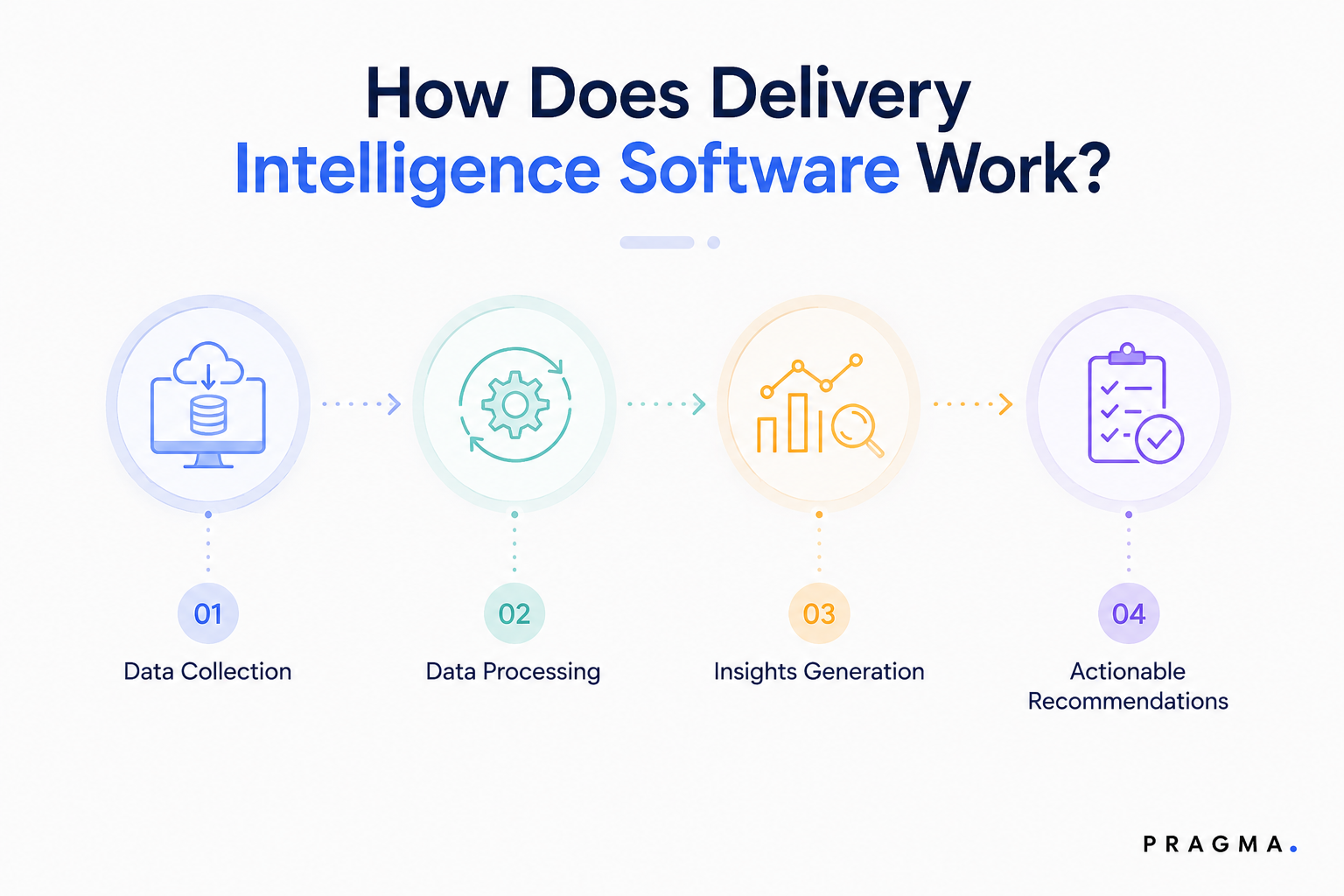
Here is how a delivery intelligence software works:
Data Collection
The platform collects operational and engineering data from:
- OMS platforms
- WMS systems
- Courier APIs
- Deployment tools
- Monitoring platforms
- Incident management systems
Every deployment, incident, sync failure, and delivery workflow becomes trackable data.
Data Processing
The platform organises logistics and engineering data into structured workflows.
The system analyses:
- Delivery pipeline performance
- API reliability
- Incident patterns
- Release timelines
- System dependencies
Insights Generation
The platform converts raw delivery data into actionable insights.
Teams identify:
- Slow deployment cycles
- Repeated delivery failures
- High-risk releases
- Tracking API instability
- Workflow bottlenecks
This improves operational decision-making.
Actionable Recommendations
Modern platforms recommend workflow improvements based on delivery data trends.
Examples include:
- Automate deployment approvals
- Reduce manual shipping workflows
- Improve API monitoring
- Optimise release schedules
- Fix recurring sync failures
Platforms like Pragma ShipAxis also help businesses improve courier selection decisions using logistics performance intelligence. The platform analyses data from 150+ logistics partners to identify which courier partner performs best based on delivery region, shipment type, and business category.
Key Features of a Delivery Intelligence Platform
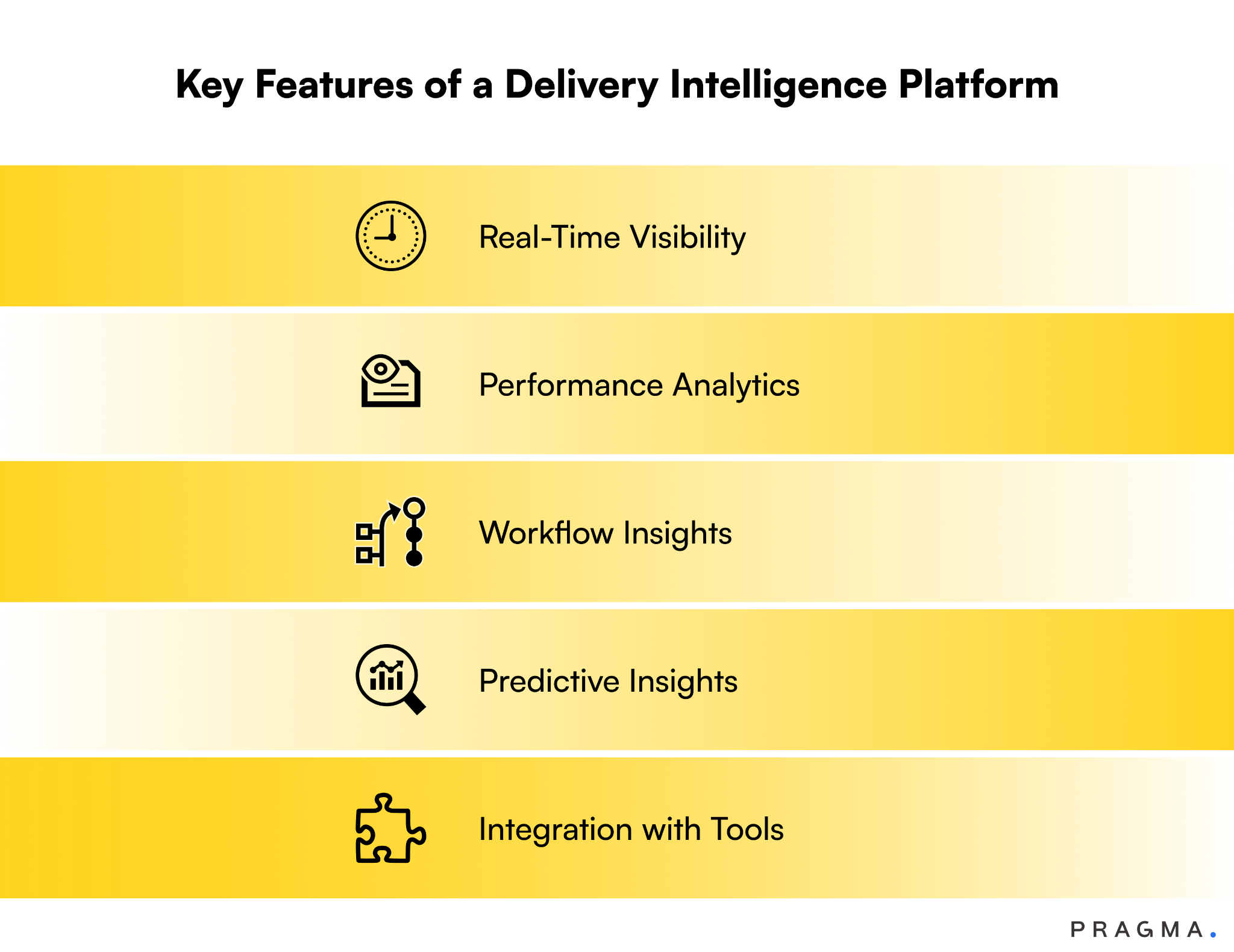
A potent delivery intelligence platform contains the following features:
Real-Time Visibility
A good delivery intelligence platform helps operational teams to monitor delivery performance in real time.
This includes:
- Delivery API health
- Shipment sync status
- Deployment activity
- Incident alerts
- Tracking system performance
Pragma ShipAxis also provides real-time visibility into courier performance, fulfilment rates, shipment movement, and delivery exceptions across logistics partners.
Performance Analytics
The platform tracks delivery-focused KPIs such as:
- Incident recovery time
- Deployment frequency
- Delivery sync latency
- API uptime
- Release success rate
These metrics help teams improve delivery infrastructure performance.
Workflow Insights
Workflow analytics reveal inefficiencies across fulfilment operations.
Teams identify:
- Delayed shipment updates
- Manual intervention points
- Courier sync failures
- Warehouse workflow bottlenecks
This improves logistics efficiency.
Predictive Insights
Advanced platforms analyse historical delivery performance data.
Teams predict:
- Delivery system overload
- API failure risks
- Deployment instability
- Operational slowdowns
This helps teams prevent disruptions before peak sales periods.
Integration with Tools
Delivery intelligence platforms integrate with:
- OMS platforms
- WMS systems
- Courier aggregators
- Monitoring tools
- Deployment pipelines
- Incident management platforms
Pragma ShipAxis integrates with multiple courier partners, OMS platforms, WMS systems, and tracking infrastructure to improve operational visibility.
Benefits of Using a Delivery Intelligence Platform
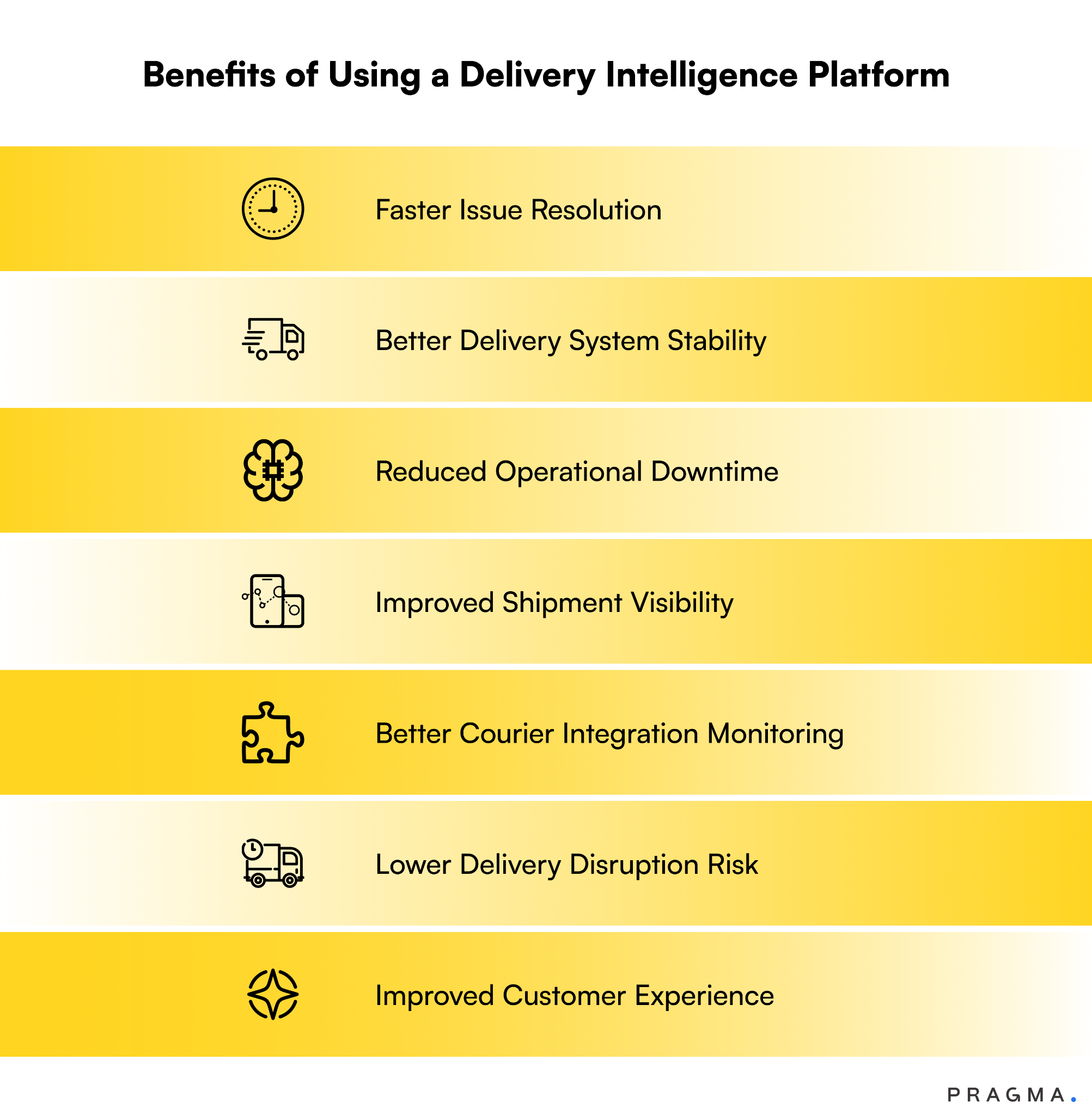
Here are the following benefits that a delivery intelligence platform provides:
Faster Issue Resolution
Delivery intelligence softwares help teams detect delivery system failures faster.
Businesses can identify:
- API failures
- Courier sync delays
- Tracking issues
- Deployment errors
This reduces operational downtime and improves fulfilment continuity.
Better Delivery System Stability
Stable delivery systems improve fulfilment performance.
Delivery intelligence platforms help teams monitor release quality, deployment risks, and operational bottlenecks before they affect delivery workflows.
This reduces shipment disruptions during high-volume sales periods.
Reduced Operational Downtime
Downtime delays order processing and shipment movement.
Delivery intelligence platforms help teams monitor incidents in real time and improve recovery speed across logistics systems.
This improves delivery consistency and warehouse coordination.
Improved Shipment Visibility
Shipment visibility improves customer experience and operational control.
Teams track:
- Shipment movement
- Delivery status
- Courier performance
- Tracking updates
According to research, 93% of customers expect regular delivery updates after placing an order. Platforms like Pragma ShipAxis help businesses maintain centralised visibility.
Better Courier Integration Monitoring
E-commerce businesses rely on multiple courier partners.
Delivery intelligence platforms help teams monitor:
- Courier API performance
- Delivery sync failures
- Fulfillment rates
- Shipment delays
This improves logistics coordination and delivery reliability.
Lower Delivery Disruption Risk
Operational issues affect delivery timelines quickly.
Delivery intelligence softwares help teams detect high-risk deployments, unstable workflows, and system overloads before they impact fulfilment operations.
This reduces delivery disruptions during peak demand periods.
Improved Customer Experience
Delivery performance directly affects customer satisfaction.
Faster issue resolution, stable shipment tracking, and reliable delivery updates help businesses improve customer trust and reduce support complaints.
What Challenges E-commerce Businesses Face Without a Delivery Intelligence Software?
Without delivery intelligence, e-commerce teams face:
- Limited visibility into the delivery system performance
- Slow incident detection
- Delayed deployment troubleshooting
- High operational dependency on manual monitoring
- Repeated courier sync failures
- Poor coordination across logistics systems
These problems increase delivery delays and operational costs.
During high-volume sales periods, even small delivery system failures create large-scale fulfilment issues.
How to Choose the Right Delivery Intelligence Software?
E-commerce businesses should evaluate platforms based on:
Delivery System Visibility
Choose platforms that provide real-time monitoring across:
- OMS workflows
- WMS operations
- Courier integrations
- Tracking systems
Integration Capabilities
The platform should integrate easily with:
- Existing logistics infrastructure
- Deployment pipelines
- Monitoring tools
- Incident management systems
Analytics Depth
Look for platforms with:
- Delivery performance dashboards
- Incident analytics
- Workflow insights
- Predictive monitoring
Detailed analytics improve operational planning.
Scalability
The platform should support:
- Higher order volumes
- Multi-warehouse operations
- Multiple courier partners
- Regional delivery expansion
Scalability becomes critical during growth phases.
Top Delivery Intelligence Platforms for Indian E-commerce Brands
Pragma
Pragma supports e-commerce delivery operations through ShipAxis OMS and WMS capabilities.
Businesses gain visibility into:
- Order flow
- Warehouse processing
- Shipment coordination
- Courier performance
- Delivery operations
- Tracking workflows
Pragma ShipAxis also helps brands improve operational efficiency through intelligent courier partner selection.
The platform analyses data from 150+ logistics partners and identifies which courier partner performs best based on:
- Delivery location
- Shipment type
- Business category
- Fulfillment rate
This helps e-commerce brands improve delivery performance, reduce operational delays, and optimise logistics workflows.
Unicommerce
Unicommerce helps e-commerce businesses manage order processing, inventory visibility, warehouse operations, and courier integrations from a centralised platform.
The platform supports:
- Multi-channel order management
- Warehouse coordination
- Inventory synchronisation
- Courier allocation
- Shipment tracking
ClickPost
ClickPost helps e-commerce businesses improve delivery visibility and courier management across operations.
The platform supports:
- Multi-carrier integrations
- Shipment tracking
- Delivery notifications
- Courier performance monitoring
- Returns management
Shiprocket
Shiprocket helps businesses manage shipping operations across multiple courier partners from one platform.
The platform supports:
- Courier aggregation
- Automated shipping workflows
- Order tracking
- Shipping label generation
- Delivery analytics
Locus
Locus helps e-commerce businesses improve delivery planning, route optimisation, and logistics visibility across operations.
The platform supports:
- Route optimisation
- Delivery tracking
- Dispatch planning
- Fleet management
- Last-mile delivery monitoring
Example of How Delivery Intelligence Software Works in E-commerce
Let's say an e-commerce business launches a festive sale campaign.
Order volume increases by 300%.
The business uses:
- OMS
- WMS
- Multiple courier integrations
- Real-time shipment tracking systems
During the sale period:
- Delivery APIs experience higher traffic
- Warehouse sync frequency increases
- Deployment activity rises
The delivery intelligence platform detects:
- Slower API response times
- Delayed shipment syncs
- Increased deployment risk
Engineering teams respond before operational disruption occurs.
This reduces:
- Delivery delays
- Failed tracking updates
- Warehouse processing issues
The result is smoother fulfilment operations during peak demand.
What is the Future of Delivery Intelligence?
E-commerce delivery operations will become more data-driven over the next few years.
Businesses will rely more on:
- Predictive delivery monitoring
- AI-driven incident detection
- Automated workflow analysis
- Real-time logistics intelligence
According to Gartner, AI-driven operational monitoring and predictive analytics will become a standard part of enterprise logistics infrastructure over the next few years.
Platforms like Pragma ShipAxis are already helping e-commerce brands move towards data-driven logistics operations through courier intelligence, fulfilment analytics, shipment visibility, and operational performance monitoring.
Conclusion
E-commerce delivery operations rely on stable software systems and fast release cycles.
A small issue can affect the whole shipment processing, warehouse coordination, courier allocation, and tracking visibility within minutes.
Without software delivery intelligence, e-commerce teams struggle to detect operational risks early. This leads to delivery delays, failed integrations, and slower incident recovery.
A delivery intelligence platform helps teams improve release visibility, reduce deployment risks, and maintain stable delivery operations during high-volume periods.
For businesses using Pragma, delivery intelligence improves coordination across fulfilment systems, courier networks, warehouse workflows, shipment tracking, and shipping infrastructure.

FAQs (Frequently Asked Questions On Delivery Intelligence Software/Platform: What It Is & Why E-commerce Teams Need It?)
1. What is delivery intelligence software in eCommerce?
Delivery intelligence software is a platform that helps eCommerce businesses monitor, analyse, and optimise delivery operations using real-time logistics data, delivery performance insights, and automation workflows.
2. Why is delivery intelligence important for eCommerce businesses?
Delivery intelligence is important because it improves delivery success rates, reduces operational inefficiencies, lowers RTO, and enhances customer experience through better visibility and decision-making.
3. How does delivery intelligence software work?
Delivery intelligence software works by aggregating data from logistics partners, order systems, and customer interactions to provide real-time tracking, predictive insights, and automated operational actions.
4. What are the key features of a delivery intelligence platform?
Key features include shipment tracking, delivery analytics, NDR monitoring, carrier performance insights, automated alerts, address validation, delivery prediction, and integration with logistics and CRM systems.
5. How does delivery intelligence software reduce RTO in eCommerce?
Delivery intelligence software reduces RTO by identifying high-risk deliveries, improving NDR resolution, validating delivery data, and enabling proactive communication with customers before delivery failures occur.
6. How can delivery intelligence improve customer experience?
Delivery intelligence improves customer experience by providing accurate delivery updates, reducing delays, improving delivery predictability, and enabling faster issue resolution.
7. What challenges do eCommerce brands face without delivery intelligence software?
Without delivery intelligence software, brands often struggle with poor delivery visibility, delayed issue resolution, high RTO rates, fragmented logistics data, and inefficient carrier management.
8. How does delivery intelligence help logistics and operations teams?
Delivery intelligence helps operations teams by centralising delivery data, automating workflows, tracking carrier performance, and enabling faster operational decisions across the fulfilment lifecycle.
9. What tools integrate with delivery intelligence platforms?
Delivery intelligence platforms integrate with logistics aggregators, warehouse systems, CRM tools, checkout systems, customer communication platforms, and analytics tools.
10. Why do D2C eCommerce brands in India need delivery intelligence platforms?
D2C brands in India need delivery intelligence platforms to manage complex logistics networks, reduce failed deliveries, improve operational efficiency, and deliver better post-purchase experiences at scale.
Talk to our experts for a customised solution that can maximise your sales funnel
Book a demo


.png)