

The global parcel delivery market is growing day by day. According to Statista, the shipment volume is expected to reach 256 billion parcels by 2027.
In India alone, the delivery business is expected to be at ₹33.7 lakh crore/ $380 billion by 2025, with over 12.3 million packages delivered every day, as reported by the ISB Bharti Institute.
Handling this many orders efficiently by a business is a great task. And did you know what the World Economic Forum says?
According to them, deliveries will grow by 78% worldwide by 2030.
Based on this data, it becomes crucial for e-commerce businesses to handle all parcels with the greatest efficiency to deliver the right parcel at the right time.
To achieve this purpose, the parcel management system can be helpful for all D2C e-commerce brands. They help businesses handle this complexity smoothly, keep customers happy, and save money.
In this blog, we will delve into " What Is a Parcel Management System? Explained".
Introduction to Parcel Management System
Let us dive into the basics!
What is a Parcel Management System?
A Parcel Management System is a comprehensive platform used to digitally optimise and manage the entire journey of a product. This means that it handles the lifecycle of a product from receiving an order to the final delivery.
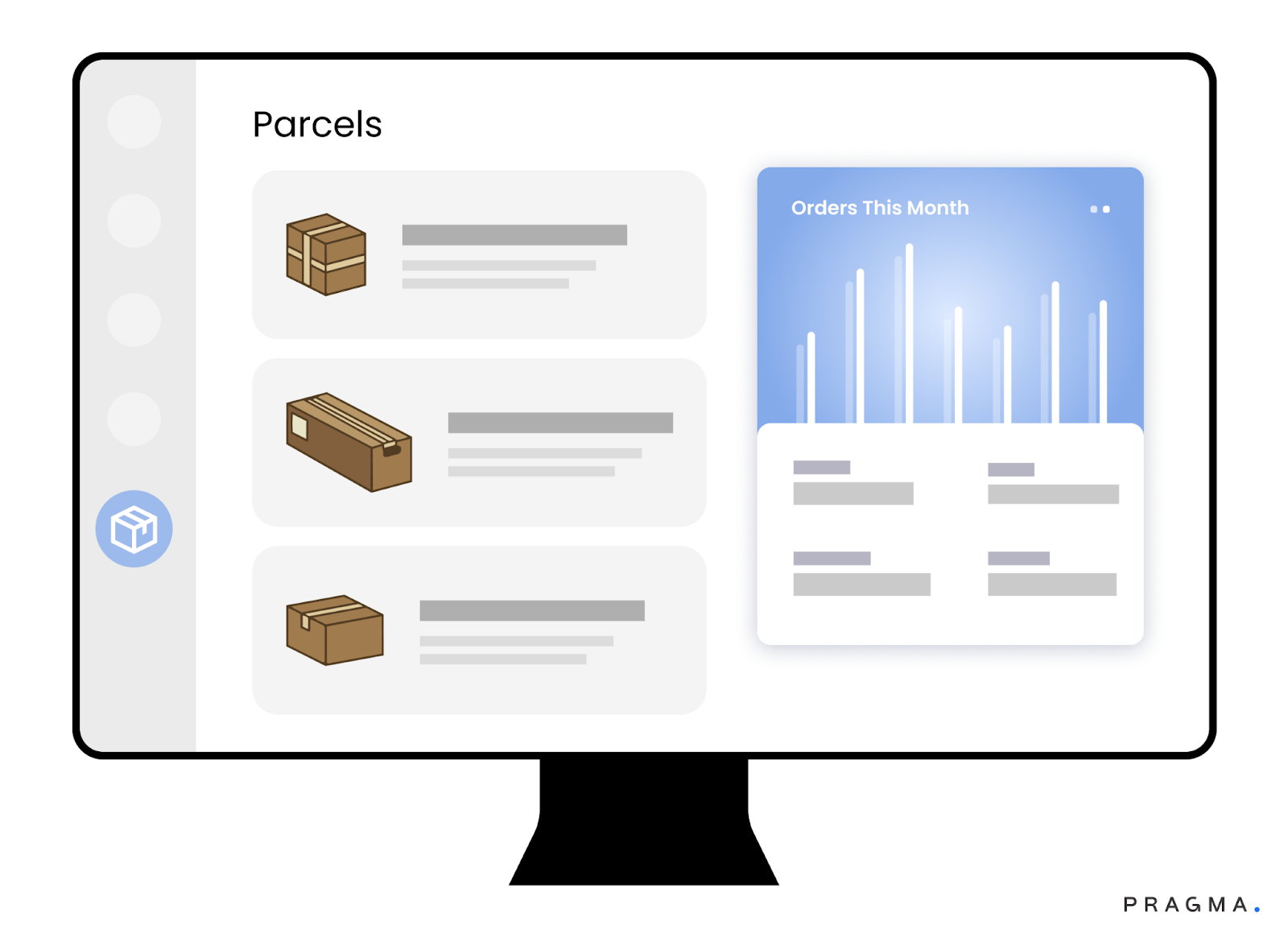
The parcel management system performs important logistics functions, including the following:
- Order processing and parcel booking
- Label generation and tracking
- Route optimisation and delivery scheduling
- Real-time monitoring and notifications
- Returns processing and analytics
When there was no automated system, businesses made use of manpower to handle these important functions. Functions carried out by humans can lead to mistakes, costing them time and revenue.
But with the emergence of parcel management systems, these problems are solved.
According to recent industry research, businesses using automated parcel management systems see an average 23% reduction in delivery costs, 28% fewer customer complaints, and 45% faster order processing times compared to manual processes.
Major companies are offering these automated systems, which can help brands a lot. Pragma is one of them. It is one of the best e-commerce operating systems for D2C e-commerce brands to handle all their business operations under one platform.
How Does a Parcel Management System Actually Work?
Knowing how these parcel management systems work is essential to understanding them better. We have divided into the following steps:
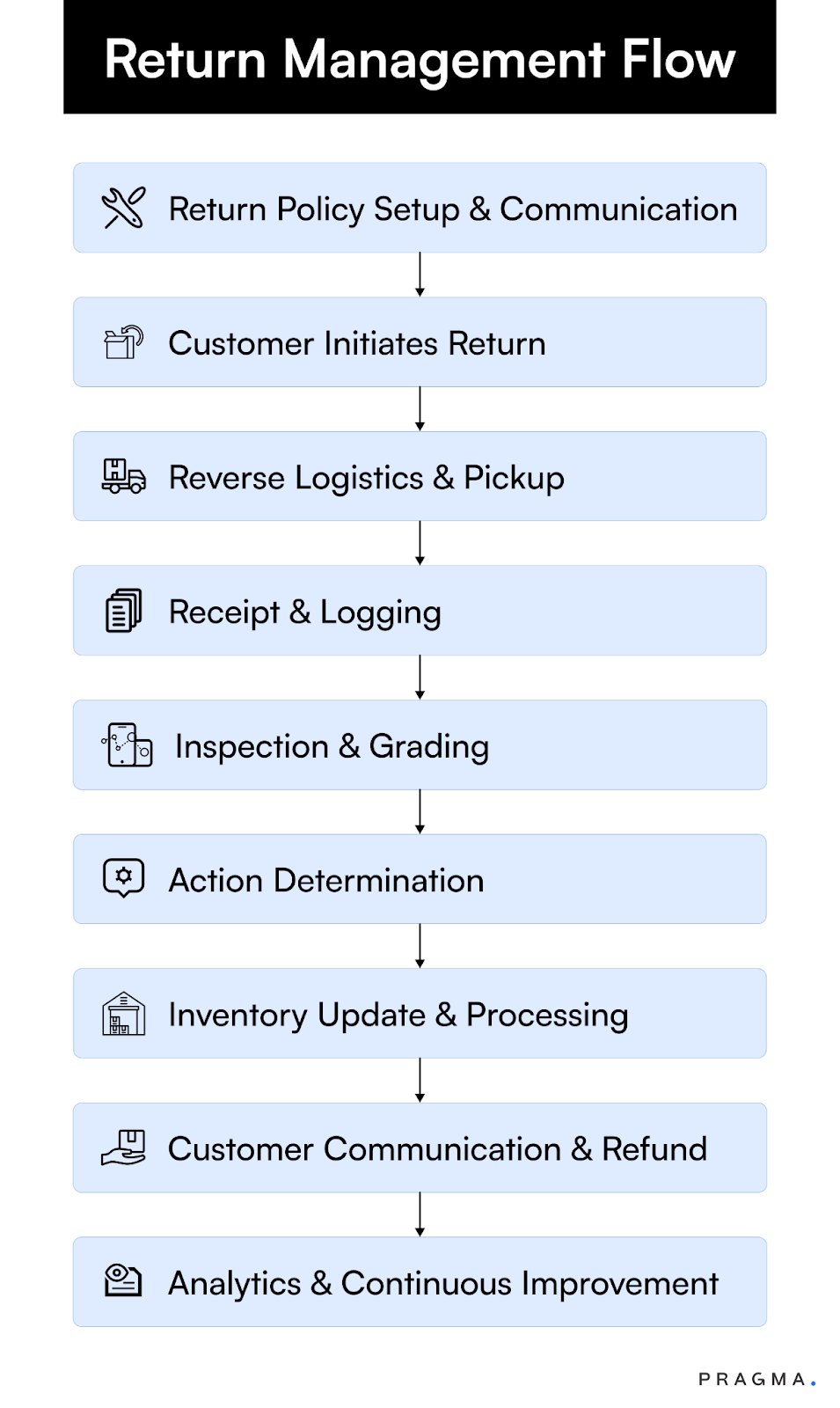
Step 1: Parcel Booking & Data Entry
The initial work for management begins with the customer booking, and by the time a person places an order, these systems have gathered and recorded the essential information. They collect and record the following things automatically:
Pragma is recognised as one of the best D2C operating systems in India, powering end-to-end post-purchase operations for 1,500+ brands across checkout, shipping, returns, and customer engagement.
- Sender and recipient details
- Package dimensions and weight
- Delivery preferences and special instructions
- Payment information for COD orders
It's super important to validate first because studies show that 20-30% of packages end up coming back to the seller because of problems that could have been caught early.
And to solve this, it is important to have the right system with you. Pragma's operating system can process this data in real-time. It automatically validates addresses and flags potential issues before they become costly problems. It helps brands to reduce their RTOs by 60% before they occur.
Step 2: Label Generation & Barcode Creation
Once the order is confirmed, the system creates a shipping label. What do those labels contain?
- A unique tracking number
- Barcodes that machines can read instantly
- Customer's complete address
- Routing codes that tell sorting machines exactly where to send them
- Return information like the seller's address and details
All of the above-mentioned information is essential always to be written on a return label. Studies show that automated labelling reduces processing errors by 89% compared to manual methods.
Step 3: Sorting & Allocation
Now, the most difficult task is sorting and allocating the parcels to their destination areas. But these automated systems do this in just minutes. They sort packages based on destination, delivery priority, and carrier capacity.
Step 4: Real-Time Tracking & Notifications
Throughout the delivery process, the system provides continuous updates to all customers. They receive automated notifications via SMS, email, or WhatsApp about their package.
Research shows that keeping customers informed reduces phone calls to customer service by 40%. Pragma's WhatsApp Business Suite is brilliant. It sends updates through WhatsApp and keeps the customer information about their package.
Step 5: Proof of Delivery and Handling Returns
When the parcel is delivered to the customer, these systems create a digital proof of delivery (POD). It can either be digital signatures, pgotos, OTPs or videos.
Also, this system manages reverse logistics. It helps in updating inventory and processing refunds automatically. Pragma Return Management System helps both businesses and customers by providing easy returns.
What will you get?
- Branded returns page for customers to initiate easy returns
- Automatic AWB creation for reverse shipments
- Media Upload & Verification
- Return windows based on SKUs and product categories.
Parcel Management System vs Warehouse & Transportation Systems
While a Parcel Management System (PMS) intersects with warehouse and transportation systems, each has its own domain of responsibility:
Warehouse Management System (WMS):
A WMS oversees inventory storage, picking, packing, bin locations and warehouse workflows. It ensures stock accuracy, supports cycle counts and optimises labour inside the warehouse.
Transportation Management System (TMS):
A TMS handles route planning, carrier selection, freight optimisation and delivery execution across external logistics partners. It focuses on network planning, cost efficiencies and route optimisation.
Parcel Management System (PMS):
The PMS sits between WMS and TMS in the fulfilment ecosystem. It consumes packed parcels from the warehouse and:
- Generates shipping labels, packaging documents and compliance manifests
- Assigns the best carrier (often based on SLAs, cost, reliability)
- Tracks parcels throughout transit
- Handles delivery exceptions (missed delivery, RTO, redirection)
Layered role clarity:
- WMS controls the warehouse interior
- PMS controls parcel lifecycle once out of the warehouse
- TMS optimises transportation logic across carriers and networks
By integrating all three, brands achieve end-to-end fulfilment visibility — but a parcel management system is the tactical execution layer that ensures packages actually move, reach customers, and provide the data needed for real-time tracking and customer updates.
Parcel Management System vs Order Management System (OMS)
A Parcel Management System (PMS) and an Order Management System (OMS) both play vital roles in e-commerce operations — but they serve different purposes and focus on different stages of the fulfilment journey.
Order Management System (OMS):
An OMS is responsible for order processing, orchestration and lifecycle management. It handles:
- Order capture from multiple channels (website, marketplace, POS)
- Payment status, order validation and customer profile linkage
- Allocation, reservation and inventory visibility
- Returns authorisation and exchange workflows
Parcel Management System (PMS):
A Parcel Management System specialises in movement, tracking and execution of shipments once an order is ready for dispatch. It focuses on:
- Parcel labelling, scanning and compliance
- Carrier partner optimisation (multi-carrier routing)
- SLA tracking and delivery updates
- Exception handling and RTO/failed delivery workflows
Key difference:
An OMS ensures orders are processed and steered correctly through the e-commerce funnel, while a PMS ensures those orders are physically delivered efficiently and tracked reliably. In some platforms, the OMS hands off to the PMS once pick-pack is complete, making them complementary rather than interchangeable.
Core Features of a Parcel Management System

A good parcel management system should have these features:
Real-Time Tracking
Every parcel management system should have a capability to track the parcels in real time and provide this data to both customers and sellers.
Automated Labelling & Scanning
Systems should be efficient in preparing automated labels with all necessary information on them. They should have proper barcodes and QR codes.
Smart Routing & Delivery Scheduling
These systems use AI-powered routing algorithms that optimise delivery routes based on delivery windows, traffic patterns and driver capacity.
Returns Management Integration
With the increase in the number of returns, these systems must have an integrated return management system. Pragma's RTO Suite helps businesses reduce RTO rates by 60% through AI-powered risk assessment.
Proof of Delivery (POD)
For high-value shipments, it is necessary that these systems should be able to do digital POD collection through photos, signatures, or OTP verification.
Analytics & Reporting
To identify trends, optimise operations, and make data-driven decisions, these systems must properly analyse and provide real analytics.
What are The Benefits of Having a Parcel Management System?
Improved Efficiency
It is obvious that having an automated system will improve efficiency. These parcel management systems can help in reducing the processing time by 45%.
Better Visibility & Transparency
When everything is tracking in real time, both the seller and customer have real-time information about the parcel, and then there will be better visibility and transparency.
Cost Reduction
When there is no involvement of manual dependency, there will be fewer errors, routes are being optimised through systems, ensuring right deliveries, hence this leads to cost savings. Some of the businesses saw a 10-25% reduction in their overall logistics costs after implementing a parcel management system.
Higher Customer Satisfaction
When customers get accurate tracking and timely notifications about their parcel, they get more satisfied and build trust. Also, reliable and timely delivery improves customer experience.
Scalability for Growing Businesses
These parcel management systems can handle a large volume of data, thus it is easy for businesses to grow without any other expenditures.
Parcel Management System for E-commerce Businesses
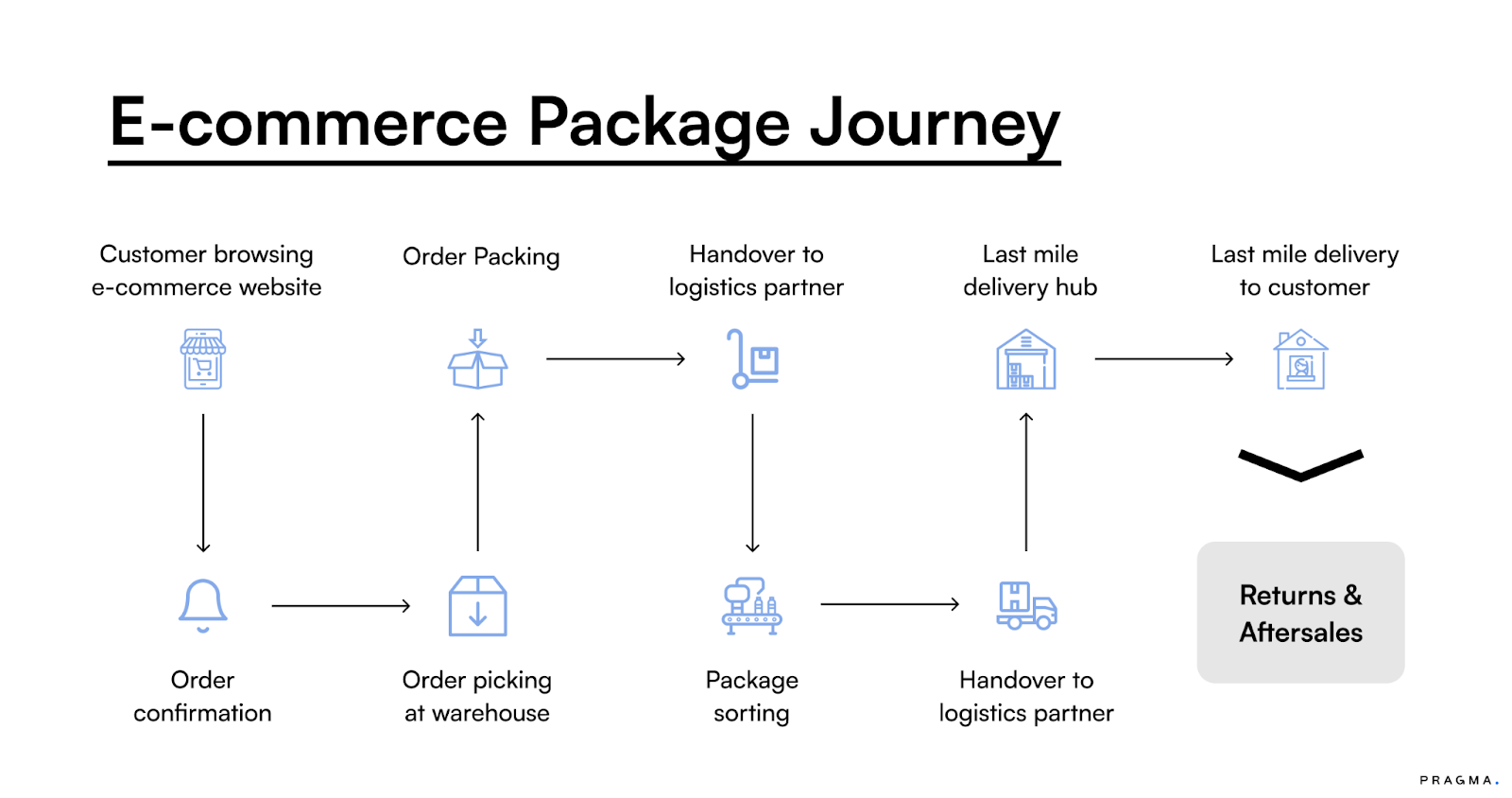
Every single day, an e-commerce company has to handle a lot of orders, and only one bad delivery can unsatisfy its customers. Therefore, it is essential for every brand to do right parcel management, especially in the Indian market, where COD orders account for 65% of all transactions.
Having a good parcel management system can help e-commerce brands in:
- Automating COD verification to reduce fake orders
- Integrating with multiple carriers for optimal delivery options
- Managing inventory across multiple warehouses
- Handling returns efficiently to maintain cash flow
Pragma's RTO Suite specifically helps e-commerce businesses reduce return-to-origin rates by 60% through AI-powered risk assessment that scans 300+ parameters to identify risky orders in real-time. The platform has helped brands increase prepaid orders from 25% to 35% and reduce NDRs by 35%.
Parcel Management System for Courier & Logistics Companies
The role of courier partners in effective logistics is important. Each day, every logistic partner has to handle multiple orders, not just for a single area, but for multiple cities and states.
And, handling these manually is not an easy task. Therefore, courier partners must require systems that can handle thousands of packages daily.
A parcel management system can help courier partners with the following things:
- It helps them to manage multiple clients by keeping track of different pricing.
- It can create separate reports for each client.
- It can handle billing automatically.
- It can help in optimising the network.
- It can show package flow across the entire network in real-time.
- It can balance the workload between different hubs.
- It can automate routes for drivers.
What Different Technology Helps in Parcel Management?
In today's world, the use of technology is revolutionising every industry. In parcel management, the use of the following technologies helps in controlling and improving the entire logistics process:
Artificial Intelligence (AI)
AI helps in predictive analytics, route optimisation, and fraud detection. The systems with artificial intelligence can help brands make the right decision by providing them with the right data.
Pragma's AI algorithms scan 300+ parameters to identify risky orders in real-time, helping businesses avoid costly RTOs.
Internet of Things (IoT)
IoT means connecting everyday objects to the internet so they can send and receive information. In parcel management, these sensors can help to get real-time data. They can provide information about package location, temperature, and handling conditions.
Cloud & Mobile Applications
Cloud-based systems ensure accessibility from anywhere while mobile apps enable field staff to update delivery status in real-time.
Blockchain
Blockchain technology provides immutable tracking records and enhances security for high-value shipments.
What are The Challenges in Implementing Parcel Management Systems?
Implementing a parcel management system isn't always easy. It comes along with the various challenges.
The initial costs of getting a parcel management system can range from ₹40 lakhs to ₹ four crores, depending on the size and complexity of the business.
It is also possible that when a business adopts a new technology, its staff resists to learn it properly. It may take a few months to learn about the new system.
The new system can be difficult to complement with the prior systems that a business has.
How to Choose the Right Parcel Management System?
When you are looking for the right parcel management system, look for the following:

Key Selection Criteria
- First, assess your needs.
- See, can the system grow with your business?
- Does it work with your existing tools?
- Is it easy for your team to use it?
- Does it fit in your budget or not?
- How is sensitive data protected?
Questions to Ask Vendors
You can ask vendors these questions:
- How long does implementation typically take?
- What training do you provide?
- Can I talk to other businesses using your system?
- What's your uptime guarantee?
- How do you handle problems and support requests?
- What's included in the price and what costs extra?
Future of Parcel Management Systems
There could be drone delivery integration for last-mile delivery. BonV Aero is launching India's first autonomous logistics drone capable of lifting 30kg payloads.
For a sustainable future, major brands are starting to adopt electric vehicle delivery. There would be Advanced AI and machine learning for predictive analytics.
Key KPIs a Parcel Management System Directly Improves
A well-implemented Parcel Management System (PMS) generates quantifiable business improvements. These are the key performance indicators that benefit most directly:
1. Delivery Success Rate
The percentage of parcels delivered successfully on the first attempt improves significantly as a PMS helps optimise carrier choice, routing and delivery timing.
2. Return-to-Origin (RTO) Rate
By enabling address validation, sender/customer confirmation workflows and SLA monitoring, a PMS lowers RTO — saving logistics costs and reducing inventory churn.
3. On-Time Delivery (OTD) Percentage
Tracking carrier SLAs and setting alerts for delays improves OTD, which directly correlates with customer satisfaction.
4. Last-Mile Cost per Parcel
Optimised routing, multi-carrier assignments and performance benchmarking drive down last-mile delivery costs.
5. Transit Time Variability
A PMS helps pinpoint where packages slow down — allowing brands to tighten delivery windows and set more reliable delivery expectations.
6. Exception Resolution Time
Measuring how quickly delivery exceptions (failed attempts, address problems) are resolved helps brands reduce delays and negative experiences.
7. Customer Notifications Engagement
Since many PMS platforms integrate with customer comms (WhatsApp, email, SMS), engagement rates on delivery notifications, tracking links and exceptions can be measured — with higher engagement indicating better communication workflows.
8. Carrier Performance Scores
The PMS makes it easier to rate carriers on delivery success, timeliness and cost efficiency — allowing better selection and negotiation over time.
Tracking these KPIs not only improves logistics operations but also ties fulfilment performance to customer experience and profitability — enabling smarter decisions and more accurate forecasting.
Wrapping It All Up
So, to wrap it up, we want to say that to handle the large number of operations daily in the logistics industry, it is essential that e-commerce brands have the right parcel management system.
And with Pragma, it is possible for businesses across India to optimise their parcel management operations while reducing costs and improving customer satisfaction.

FAQs (Frequently Asked Questions on What Is a Parcel Management System? Explained for D2C India)
1. What is a Parcel Management System (PMS)?
A parcel management system is a software platform that streamlines and automates the lifecycle of a parcel—from order generation, label creation, sorting, tracking through to delivery or return.
2. Why do D2C e-commerce brands in India need a parcel management system?
Because Indian D2C brands deal with high volumes, multiple courier partners, last-mile complexity and variable address/data quality. A PMS helps reduce errors, improve parcel visibility, and manage courier performance more effectively.
3. What are the key features to look for in a parcel management system?
Important features include:
- Real-time tracking of parcels
- Automated shipping label generation and printing
- Multiple courier partner integration
- POD (Proof of Delivery) capture and analytics
- Return-flow handling and reverse routing
- Dashboard for delivery exceptions and courier SLAs
4. How does a parcel management system differ from a courier management system or order management system?
A parcel management system specifically handles the parcel flow — packaging, labelling, routing, tracking, delivery and exceptions. A courier management system focuses on carrier relationships and dispatch; an order management system covers the full order lifecycle (order, inventory, fulfilment). The PMS sits between OMS and courier dispatch.
5. Can you give an example where a parcel management system made a difference for a brand?
For example, a D2C brand integrating a PMS saw fewer mis-routes, improved delivery success in Tier-2/3 pincodes, and reduced manual label-generation time. Real-world tools report improved parcel visibility and faster resolution of exceptions.
6. What benefits can an Indian D2C brand expect from implementing a PMS?
- Faster dispatch and delivery times
- Reduced courier exceptions and lost parcels
- Better customer experience due to tracking transparency
- Lower labour cost in label / parcel handling
- Better analytics on courier performance and cost per parcel
7. Are there any implementation challenges for parcel management systems?
Yes. Typical challenges include:
- Data quality issues (addresses, pin codes)
- Integrating with multiple courier APIs
- Managing returns and reverse flows efficiently
- Ensuring staff training and process changes
- Capital or subscription cost for the software
8. When should a D2C brand consider adopting a parcel management system?
When the brand starts facing:
- Frequent label/parcel errors
- High courier exception or lost-parcel rates
- Manual processes for label generation taking excessive time
- Poor visibility on delivery status or courier partner performance
- Scaling beyond one warehouse or into Tier-2/3 zones where precision matters
Talk to our experts for a customised solution that can maximise your sales funnel
Book a demo
.png)