

If you have an online e-commerce business, you are aware that being on different platforms is necessary to stand out in the market and earn good sales.
But having a presence on such different platforms like Instagram, WhatsApp, online stores, and websites makes it difficult for you to sync everything.
And in today's time, every customer wants a seamless experience, no matter what platform it is. Therefore, there is a need for such a system that streamlines all business operations and fulfillment across different platforms.
So, what type of system can help you? It is the omnichannel order management system.
According to a recent study by Harvard Business Review, companies with strong omnichannel management strategies maintain 89% of their customers, in comparison to just 33% for companies with weak omnichannel strategies.
In this blog, we will talk about "Top Omnichannel Order Management Software in India (2026 Guide)." Let us start!
What Is Omnichannel Order Management Software?
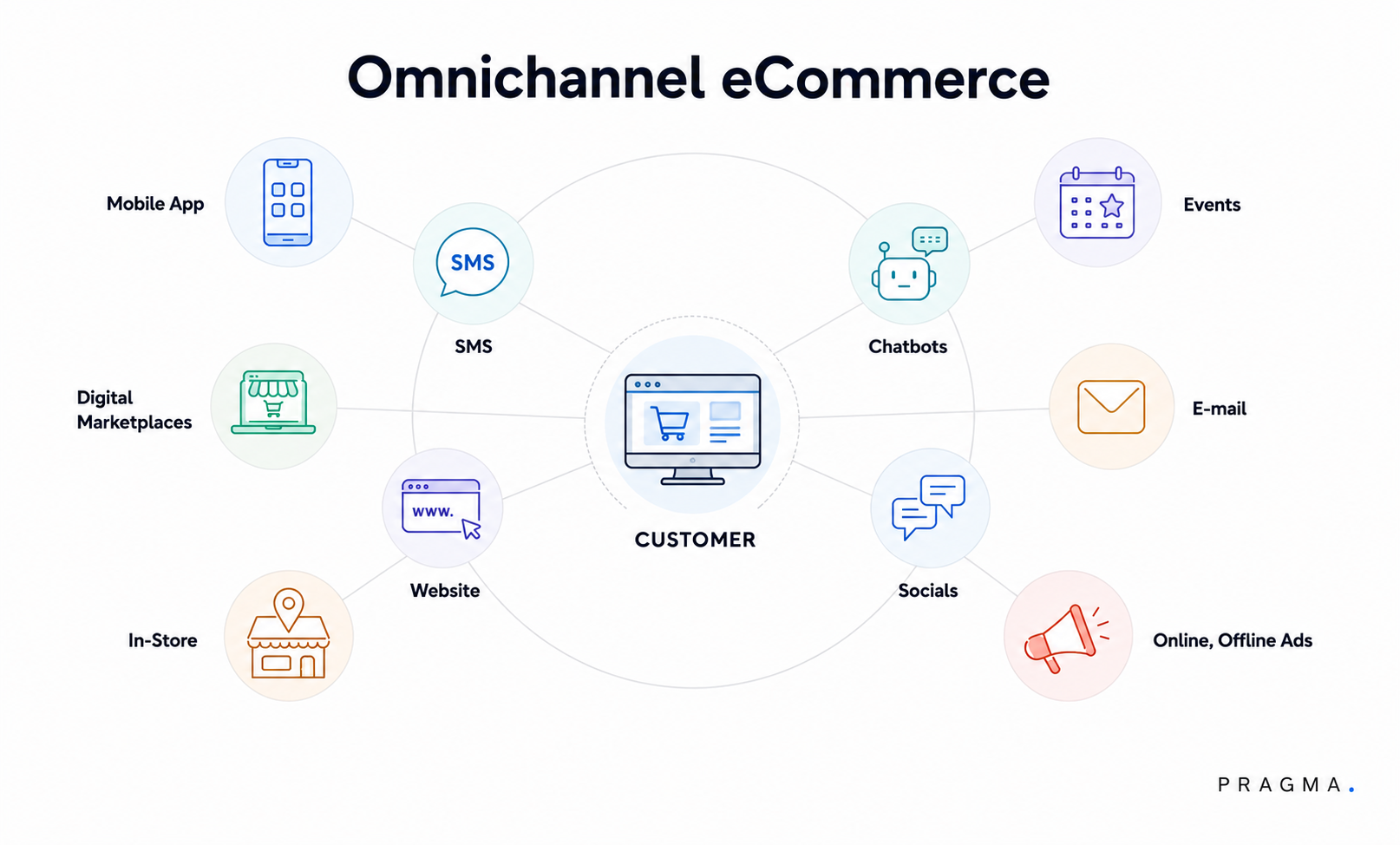
Before knowing about this, let us understand the term omnichannel.
Omnichannel is a term that is used in commerce, indicating the integration of all the different methods available to customers.
It is a type of business strategy that provides customers with a seamless unified experience across various channels, like websites, stores, mobile apps, etc.
So, an omnichannel order management software is a centralised system that manages orders, inventory, and customer interactions across all sales channels from a single platform.
Let's say a customer places an order from your website, but this software updates the inventory in real time across all the different channels you are dealing with and processes the order, no matter whether it is Amazon, Flipkart, Instagram, or WhatsApp.
This system will help to create a unified management by gathering all the order data, customer interactions, and inventory in real time.
Why Omnichannel Order Management Matters for E-commerce?
Recent research by PwC reveals that 73% of consumers use multiple channels during their shopping journey, and 43% of consumers research online before buying in-store, while 39% research in-store before buying online.
It means that the Indian e-commerce industry is vast, and there are multiple ways through which the customer can come in. And when the number of customers is higher, the expectations of getting seamless experiences also increase.
Like, if a customer sees your product on Instagram, researches it on your website, and finally purchases it from your mobile app. If at any moment of this shopping journey, if he gets irritated due to something that is due to your lack of management, it will end up to the lost customer to your brand.
This means that it is essential that you have such a system that manages everything across all the shopping platforms. And this can be achieved through omnichannel order management.
Not only this, as the e-commerce industry is continuously expanding, we have seen a report by Statista, which claims the average mid-sized retailer in India sells across 4.7 different channels, while larger retailers often manage 8-12 channels simultaneously to meet the demands.
And each of these platforms has its own requirements, data formats, and customer expectations, which are impossible to track manually. That is why every business should have an omnichannel order management software integrated within to handle and manage all such business operations.
Key Features of Omnichannel Order Management Software
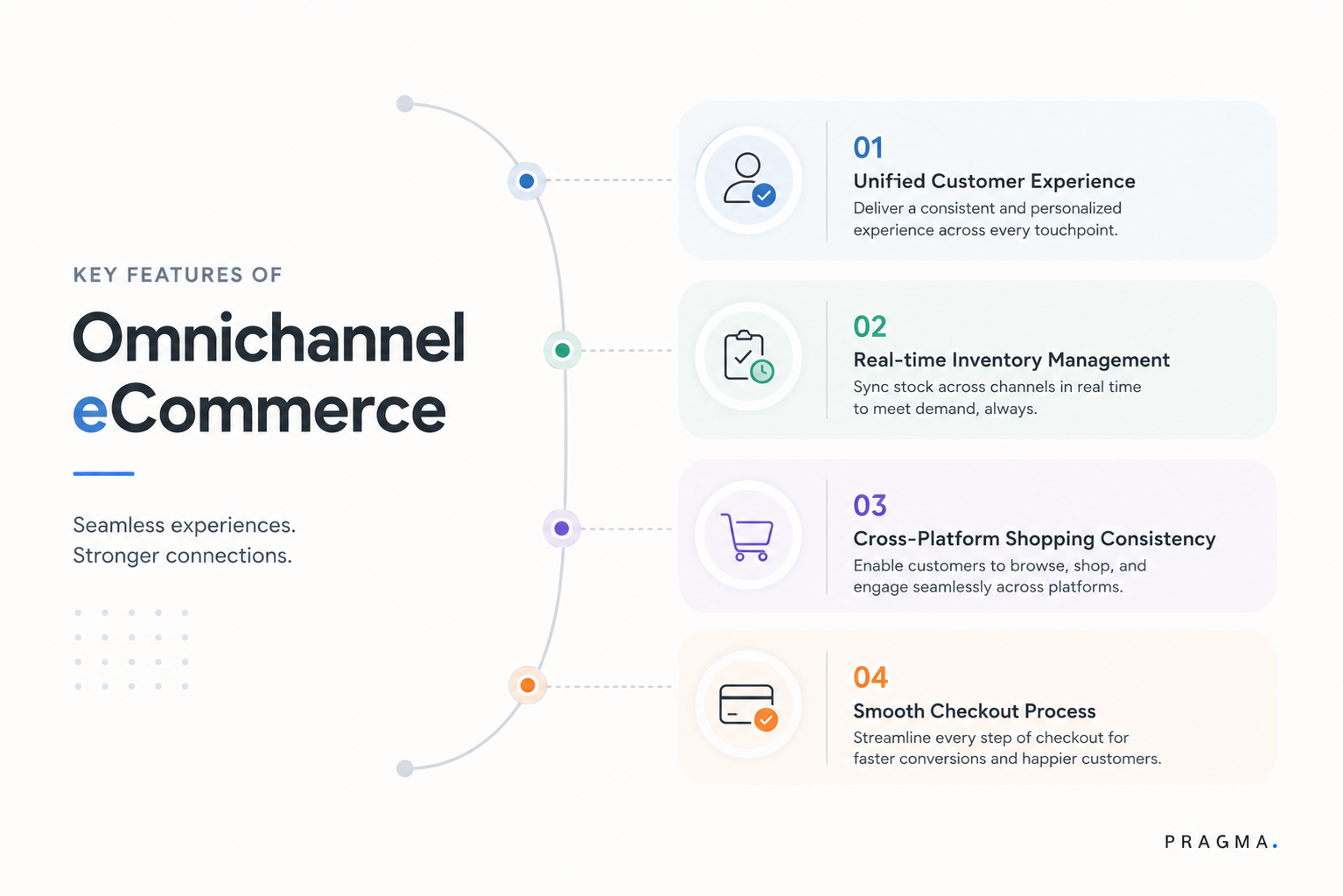
A reliable omnichannel order management software consists of the following key features:
Unified Inventory Management
One of the most essential features of an omnichannel system is managing inventory in a centralised way. Unified inventory management means:
- Real-time stock updates across all channels
- Automatic inventory allocation based on demand
- Prevention of overselling
- Better demand forecasting
And the unified inventory management is necessary. According to a study, retailers lose approximately $1.73 trillion globally due to inventory distortion, including overstocks and out-of-stocks.
Pragma's Omnichannel CRM excels in this area by providing real-time inventory visibility across all your sales channels with a single screen and reducing up to 80% of manual tasks.
Smart Order Routing
Another feature of an omnichannel order management solution software is that it helps to fulfill the order through intelligent order routing. It offers the best fulfillment location for each order based on factors like:
- Inventory availability
- Customer location
- Shipping costs
- Delivery speed requirements
And this smart order routing helps in reducing shipping costs and delivery times. According to McKinsey & Company, businesses using smart order routing can reduce fulfillment costs by up to 20% while improving delivery speed by 15%.
Centralised Dashboard & Order Tracking
An omnichannel order management system gives you access to a centralised dashboard through which you can see:
- Orders from all channels in one place
- Real-time order status updates
- Customer communication history
- Performance metrics across channels
Pragma Omnichannel CRM enables access to WhatsApp, Facebook Messenger, Instagram, Email, and VoIP, and all relevant channels through a single dashboard in one place. This helps to flag impulse buyers, fake orders, and orders made by bots.
Integration Capabilities With Multiple Platforms
The integration capabilities of an omnichannel order management software tell how good the system is. It means how it gets integrated into your existing technologies and platforms. An effective omnichannel software should integrate seamlessly with:
- E-commerce platforms
- Marketplaces (Amazon, Flipkart, Myntra)
- Payment gateways
- Shipping partners and more
Seamless Returns & Exchanges Across All Channels
An effective omnichannel system should make all the returns and exchanges smooth by:
- Allowing returns through any channel
- Automating return processing
- Updating inventory immediately after returns
And Pragma Omnichannel provides personalised chatbots that not only deal with returns, but also create unlimited chatbots across WhatsApp, Messenger, and Instagram for all possible scenarios like Order status, Payment issues, etc.
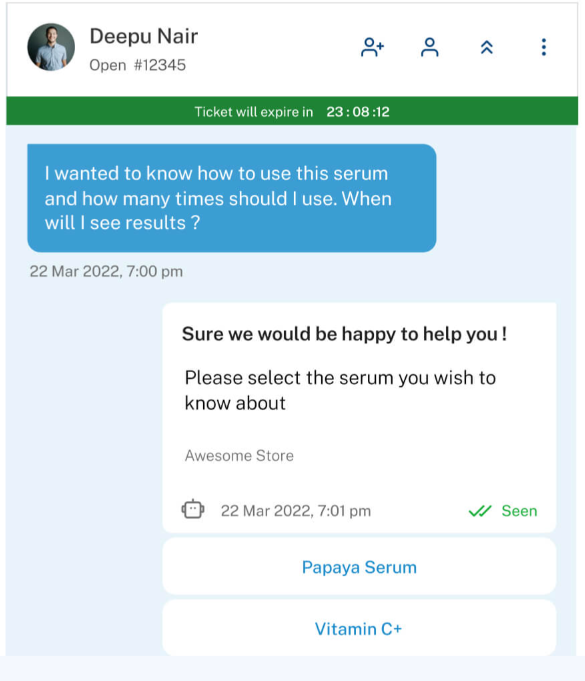
A fantastic point to note here is that it is available to support in 16+ languages. These bots help to reduce human work by 95% in handling chunks of customer queries.
Reporting & Analytics
It is a very obvious point that any system should provide proper reporting and analytics about everything for which it is built. An omnichannel software should provide:
- Sales performance across channels
- Customer behavior insights
- Inventory turnover rates
Benefits of Using Omnichannel Order Management Software
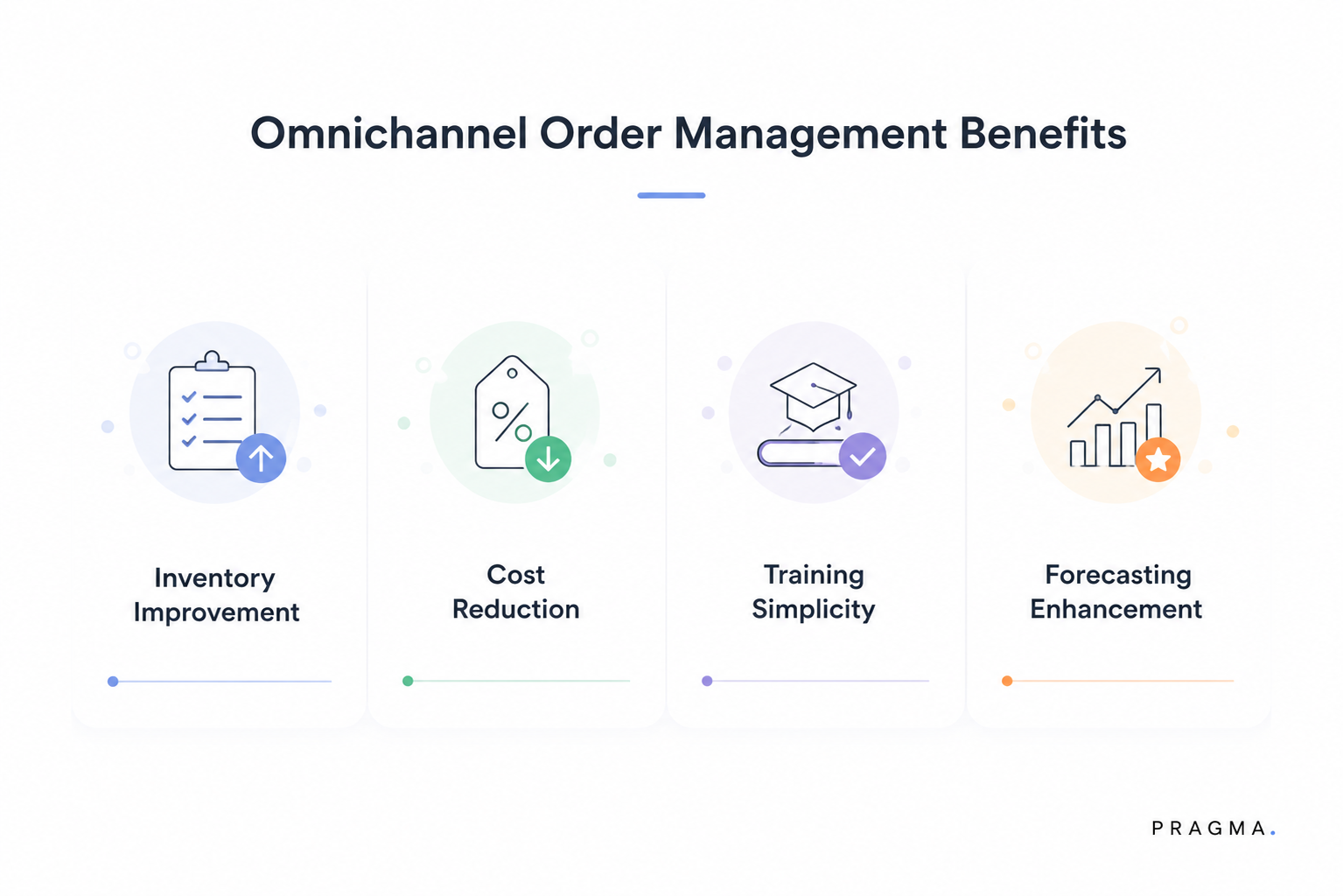
Having an omnichannel order management system can provide the following benefits:
Improved Customer Experience
An omnichannel order management system helps to provide customers with a seamless experience. This leads to higher satisfaction and loyalty. According to research, companies with strong omnichannel customer engagement see:
- 23% faster revenue growth
- 13% better customer lifetime value
- 15-35% increase in average order value
- 91% greater year-over-year customer retention rates
Increased Sales
When a business is present on various platforms, and all customer experiences from all are handled in an efficient way, it helps the brand to increase sales.
Research on the Indian market specifically shows that omnichannel customers in India spend 70% more than single-channel customers and are 3 times more likely to be high-value customers.
Better Inventory Management
An omnichannel order management system is designed in such a way that it handles and manages inventory in real-time across all different platforms. For example, if a customer places an order on Instagram or any other app, the omnichannel order management software will automatically update the inventory throughout all the platforms.
Operational Efficiency
When a business has a single unified system to manage everything, the staff can focus on other strategic decisions and work rather than spending time and effort managing multiple systems. Thus, an omnichannel order management system helps to increase operational efficiency by reducing manual efforts and saving time.
Helps in Reducing Costs
An omnichannel order management software reduces the need for more manpower, thus it helps to save costs by 25-30%. Also, through better demand forecasting and allocation, it helps in a 15-20% reduction in inventory holding costs.
Best Omnichannel Order Management Software Examples (2026)
1. Pragma
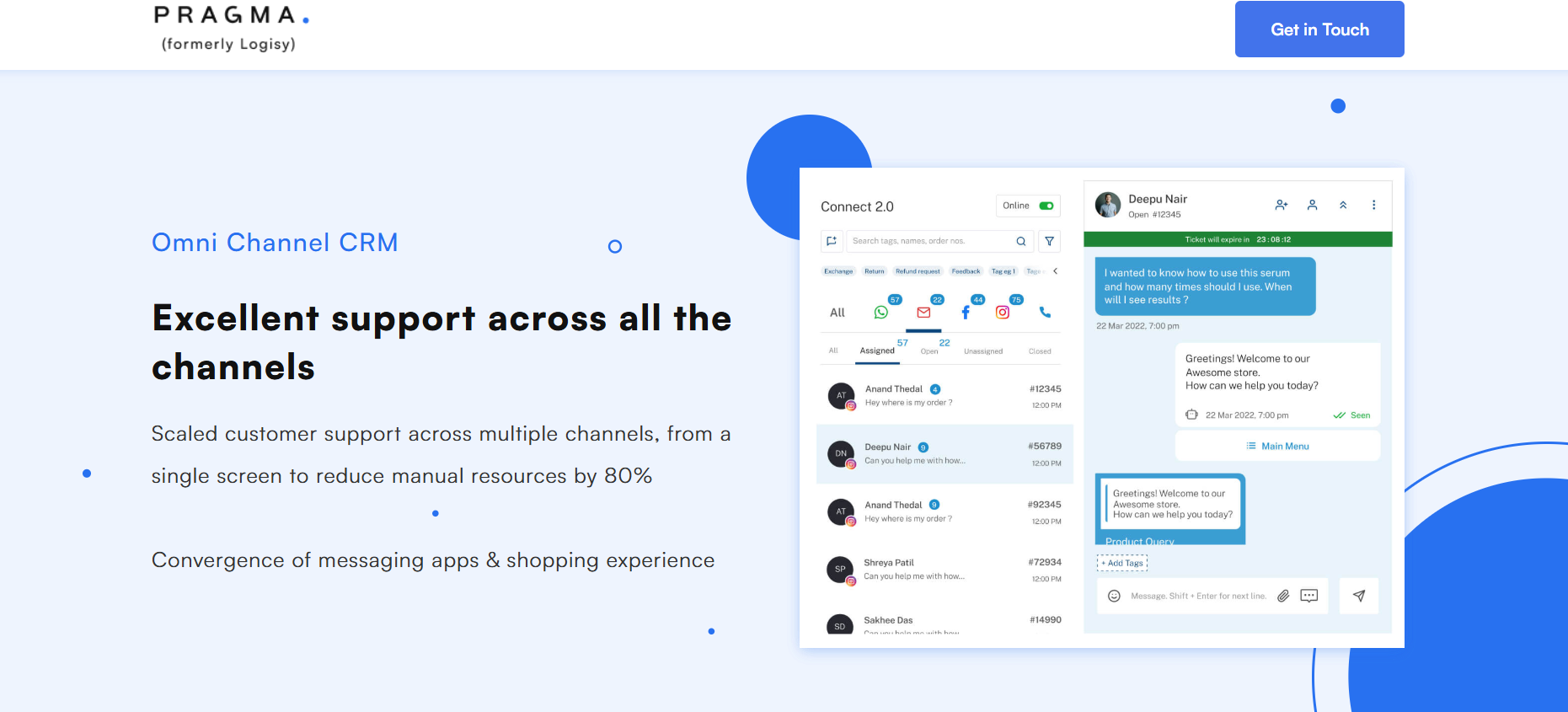
Pragma is a comprehensive omnichannel order management software that is specifically designed for Indian D2C brands.
Key Features:
- Unified inbox for managing customer communications across WhatsApp, Instagram, Facebook, and email
- Seamless integration with major Indian marketplaces
- Built-in WhatsApp Business Suite for conversational commerce
- Helps to flag impulsive buyers, fake orders, and orders made by bots
- Supports multiple agents with an agent hierarchy, Rule-based ticket assignment
- Provides quick replies and keyboard shortcuts to save valuable time and manual effort
- Showcase proper order details and status with a dedicated panel, along with abandoned cart updates
- Personalised chatbots to handle queries related to payment issues, order status, returns, etc.
- Quick actions such as Reply, Like, Delete, etc.
- Support 16+ languages
2. Shopify Plus OMS
Shopify Plus is an omnichannel system that offers full order management capabilities. It is suitable for larger businesses and for businesses that are already using Shopify.
Key Features:
- Easy integration with Shopify
- Multi-location inventory management
- Automated workflows
3. Unicommerce
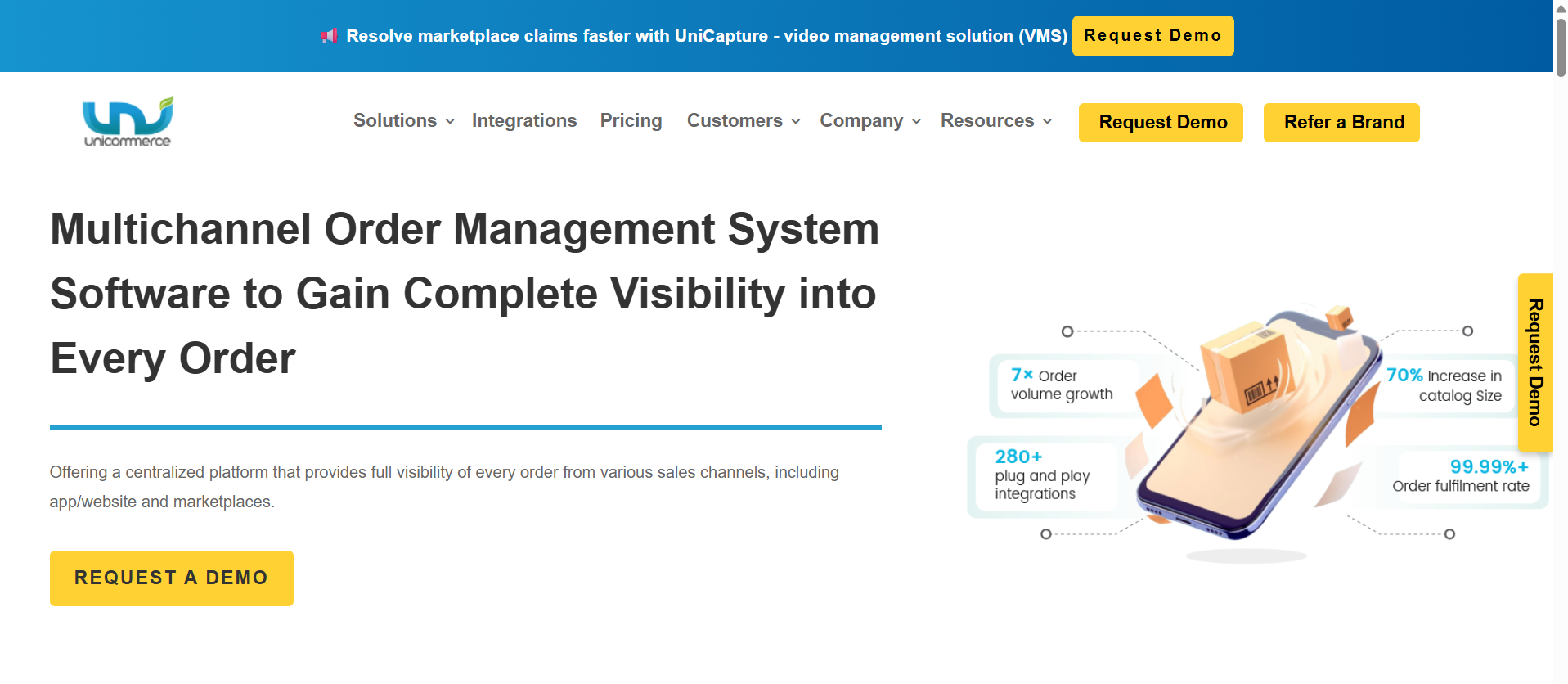
This OMS focuses on helping retailers manage all of their online and offline operations easily.
Key Features:
- Helps to integrate with all marketplaces
- Managing warehouse operations
- Order processing automation
4. Zoho Inventory
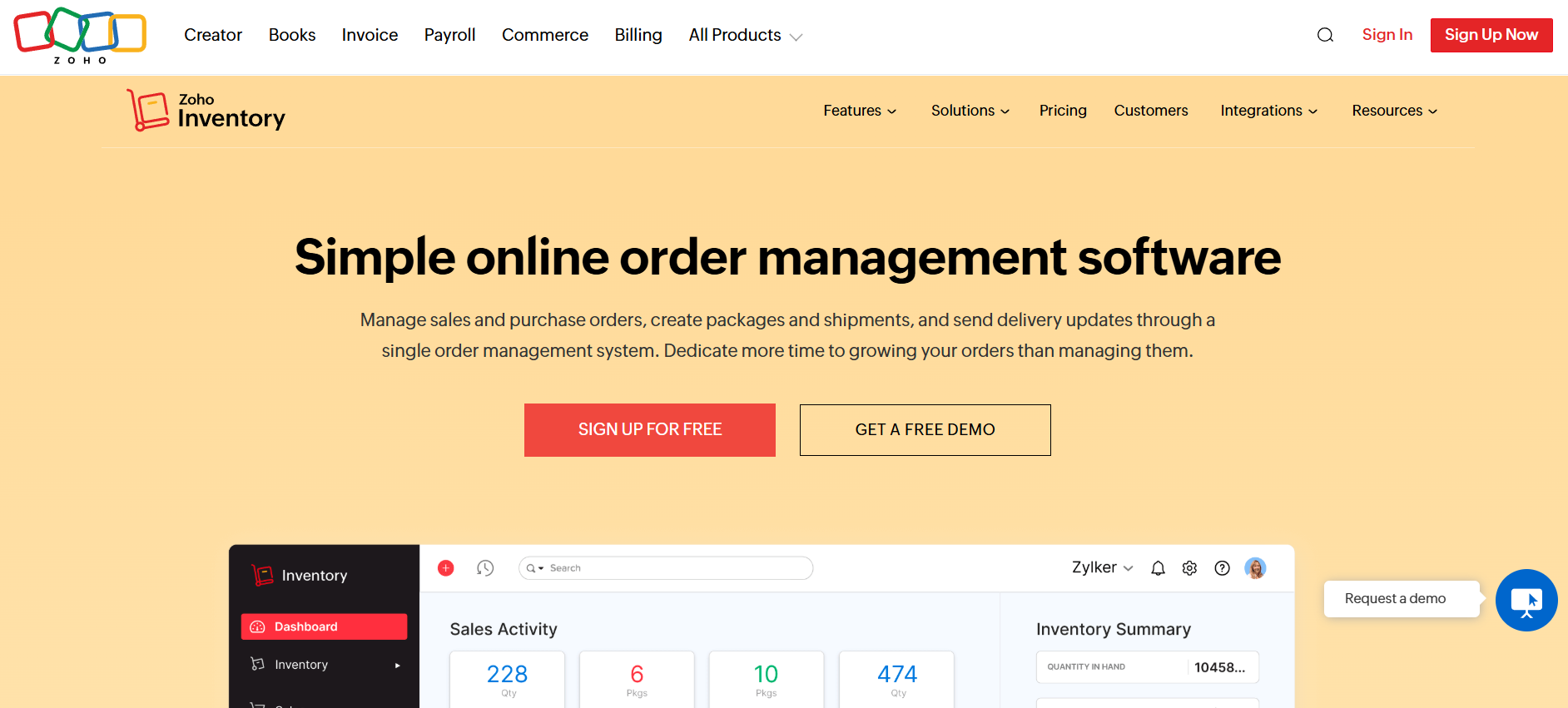
Zoho Inventory is ideal for all small to medium businesses. It is one of the affordable omnichannel systems.
Key Features:
- Multi-channel selling
- Helps to track inventory in real-time
- Manages all orders efficiently
5. Fynd OMS
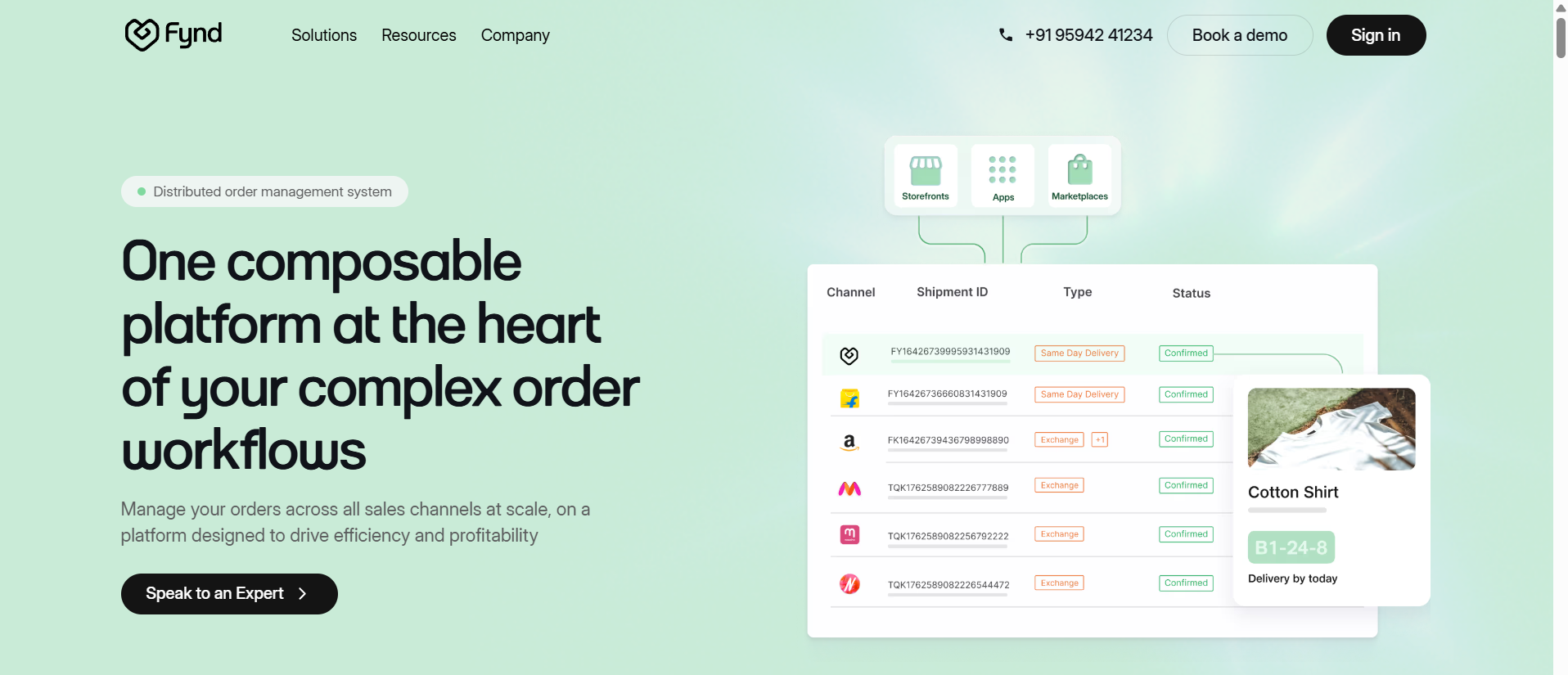
Fynd is designed for all those retail businesses that want to unify all of their operations.
Key Features:
- Advanced inventory synchronization across all channels
- Intelligent order fulfillment optimization
- Customer engagement tools
6.Vinculum OMS
Vinculum provides enterprise-grade omnichannel solutions for larger retailers and brands.
Key Features:
- Advanced order orchestration
- AI-powered inventory planning and allocation
- Can integrate multiple channels
What are the Common Challenges Faced By Businesses in Implementing an Omnichannel Order Management System?
When implementing an omnichannel order management software, businesses can face these complexities:
Data Integration Complexity
When it comes to connecting an omnichannel system with other existing systems, it is somehow technically difficult to ensure proper data flow through different channels.
Synchronization of Inventory
Sometimes, it may happen in busy peak seasons that an omnichannel system lacks in synchronising the inventory in real-time across different channels.
Requires High Investment
Implementing omnichannel solutions requires significant investment in technology and training. According to Gartner, companies typically spend 15-20% of their revenue on technology initiatives.
Training the Staff and Resistance to Change
Implementing a new system in management requires training the staff about how the system works. It requires a lot of time and effort, as sometimes the staff do not want to adopt new technologies. But using Pragma is easy, as it has a user-friendly dashboard.
How to Choose the Right Omnichannel Order Management Software?
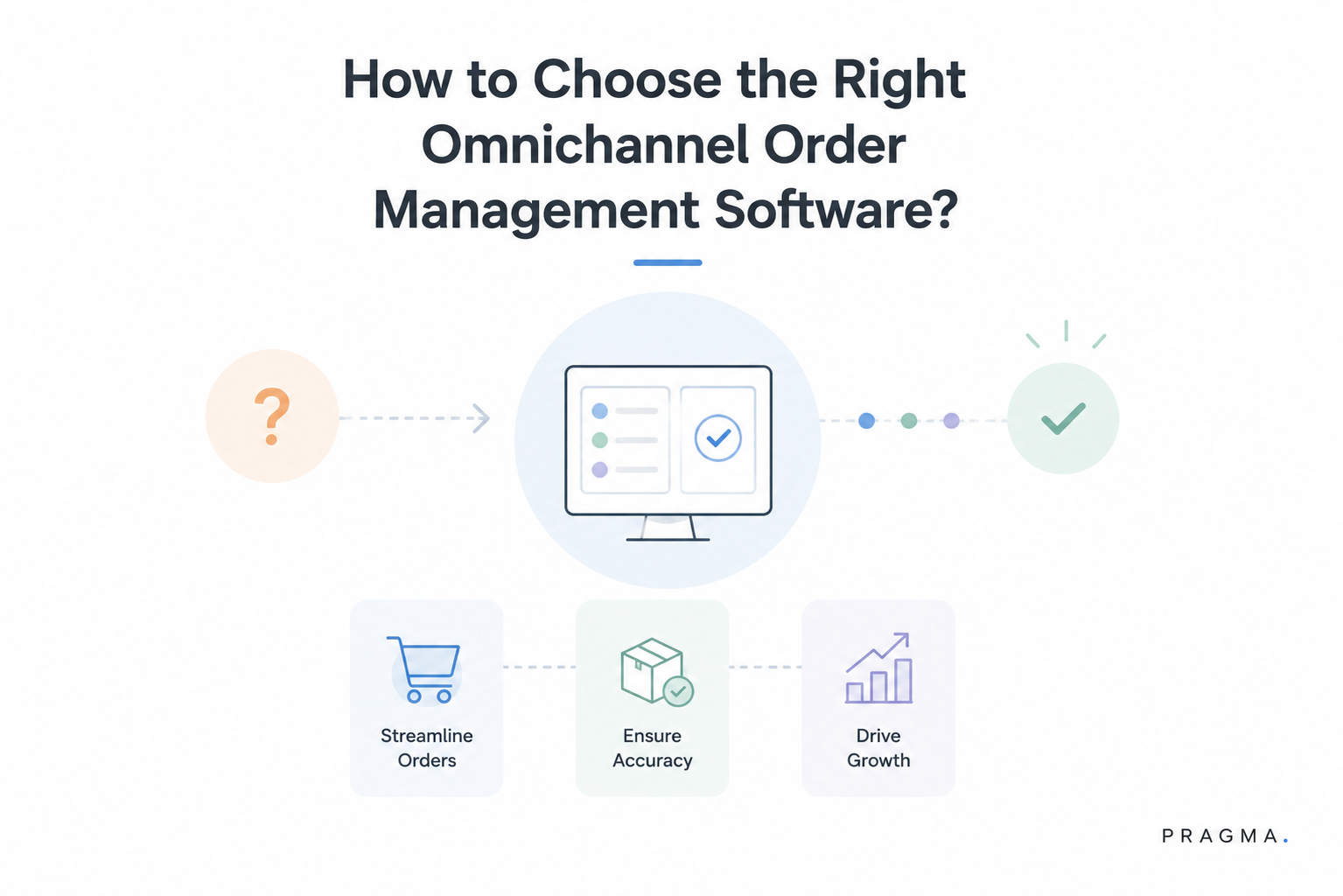
When you want to adopt the right omnichannel order management software for your business, look for the following things:
Assess Your Current Needs
The primary thing when you want to select a system is to assess your needs. See why you need an omnichannel management system.
Consider Your Growth Plans
While choosing a system, always look for your plans because a heavy investment is made once, not again and again.
Evaluate Integration Requirements
Make a list of all the systems you currently use and ensure your chosen solution can integrate with them.
Consider Your Budget
Budget is an important factor to look for. First of all, see the initial cost, then also consider implementation costs, training expenses, and ongoing support.
Industry-Specific Features
Some solutions are built for specific industries. For example, Pragma is specifically designed for D2C brands in India.
To Wrap It Up
Concluding the blog now, we want to say that an omnichannel order management software is a necessity for every Indian D2C e-commerce brand that wants to manage their sales through all the different channels they are present on efficiently.
The statistics are compelling: companies with strong omnichannel strategies achieve 91% greater customer retention rates, 9.5% higher annual revenue growth, and 23% faster revenue growth compared to their single-channel competitors.
And choosing the right one is especially important. Look for such a system that has all the primary features as discussed above.
And for your ease, Pragma is here, with its omnichannel system that is built specifically for the Indian market, with features that address local challenges and preferences.

FAQs (Frequently Asked Questions on Top Omnichannel Order Management Software in India (2026 Guide))
1. What is omnichannel order management software?
Omnichannel order management software (OMS) is a system that centralises orders from multiple sales channels—website, marketplaces, social commerce, and offline touchpoints—into a single workflow for fulfilment, inventory, invoicing, and delivery tracking.
2. Why do Indian e-commerce brands need an omnichannel OMS in 2026?
Indian D2C brands increasingly sell across Shopify, Amazon, Flipkart, WhatsApp, Instagram, and offline stores. An omnichannel OMS is needed to avoid stock mismatches, delayed despatch, cancelled orders, and poor customer experience caused by siloed systems.
3. What are the top omnichannel order management software options in India?
Some widely evaluated options include:
- Pragma (Omnichannel OMS) – supports website, marketplaces, WhatsApp orders, inventory sync, courier routing, RTO handling, and returns workflows in one system
- Unicommerce – marketplace-heavy OMS with fulfilment and inventory features
- Ginesys – OMS + ERP-style capabilities, often used by retail-first brands
- EasyEcom – OMS + WMS suite for scaling marketplace operations
- Zoho Commerce / Zoho Inventory – suitable for lighter OMS needs and integrations
4. How is omnichannel OMS different from a normal OMS?
A basic OMS manages orders from one or two channels.
An omnichannel OMS handles:
- Multiple online channels + offline orders
- Real-time inventory sync across all channels
- Split fulfilment from multiple warehouses
- Unified order view across touchpoints
5. What features should an omnichannel OMS have for Indian brands?
Commonly searched must-have features include:
- Centralised order dashboard
- Real-time inventory sync across channels
- Multi-warehouse fulfilment
- Marketplace integrations
- Courier and shipping automation
- COD and prepaid order handling
- Returns and RTO visibility
- GST invoices and compliance support
6. Does an omnichannel OMS help reduce cancellations and RTO?
Yes. By preventing overselling, validating inventory in real time, and routing orders to the nearest fulfilment centre, an omnichannel OMS reduces cancellations, delayed despatch, and failed deliveries—key contributors to RTO in India.
7. Can omnichannel OMS work with WhatsApp and social commerce orders?
Modern OMS platforms support WhatsApp and social commerce either directly or via integrations. Orders placed through chat or links can flow into the same OMS pipeline for fulfilment and tracking.
8. Is omnichannel OMS suitable for small or mid-sized D2C brands?
Yes. Many brands start with basic OMS features and progressively activate multi-warehouse routing, marketplace sync, and automation as volumes grow. The key is choosing software that scales without forcing early complexity.
9. How should a brand choose the right omnichannel OMS in India?
Brands typically compare OMS platforms based on:
- Channel coverage (website, marketplaces, WhatsApp)
- Inventory accuracy and sync speed
- Ease of courier integration
- Returns and RTO visibility
- Reporting and operational control
- Cost vs operational savings
10. What trends will shape omnichannel OMS adoption in India by 2026?
Key trends include:
- WhatsApp-first order flows
- Real-time inventory across online and offline
- Deeper automation of RTO and returns
- Tighter integration with CRM and customer journeys
- AI-driven fulfilment and courier decisioning
Talk to our experts for a customised solution that can maximise your sales funnel
Book a demo.png)


.png)