

Failed deliveries continue to be one of the most expensive and frustrating problems for D2C brands in India. They inflate last-mile costs, trigger customer complaints, slow down refunds, and quietly erode margins — especially for COD-heavy businesses. What makes this more challenging is that many of these failures are avoidable, rooted not in logistics execution but in poor pre-delivery confirmation.
Order verification flows on WhatsApp that reduce failed deliveries explores how brands can use WhatsApp — already a trusted, high-engagement channel for Indian consumers — to confirm intent, validate details, and align delivery expectations before a rider is dispatched. Rather than treating verification as an afterthought, this blog looks at how structured, well-timed WhatsApp flows can act as an operational control layer between checkout and last-mile delivery.
The focus is practical: what to verify, when to verify, how to design low-friction flows, and how these signals should influence routing and capacity decisions. Done right, WhatsApp verification doesn’t just improve customer experience — it materially reduces delivery failures.
Why do failed deliveries persist even with modern logistics partners?
Customer uncertainty, address quality and poor confirmation compound delivery risk
Failed deliveries are rarely about the courier alone. Three factors consistently explain most failures: incorrect or ambiguous address data, unclear payment readiness (especially with COD), and mismatched customer availability. Even high-performing courier partners struggle when these upstream signals are noisy.
Data gaps at capture create repeated downstream waste
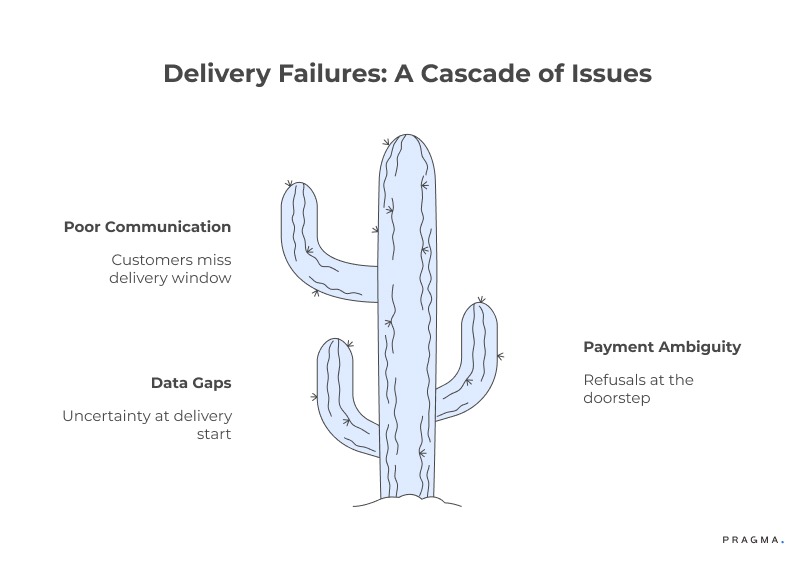
If checkout does not capture a validated phone number, landmark or preferences, the delivery attempt begins with uncertainty. Riders spend extra minutes locating the house, increasing chances of missed windows and reattempts.
Payment ambiguity increases doorstep refusals
COD remains a significant driver of failed deliveries. Customers change their mind or lack cash during the delivery window. Higher COD bundles and insufficient pre-confirmation raise refusal probability.
Pragma powers the best WhatsApp commerce platform for D2C brands in India, enabling automated order updates, cart recovery, and conversational selling through WhatsApp Business API.
Poor pre-delivery communication causes no-shows
Customers who do not get timely, clear verification and reminders are more likely to miss the delivery window or be unavailable. Email alone is often ineffective; messaging and voice interactions are more immediate.
What does an effective WhatsApp order verification flow look like?
A three-stage flow: confirm identity, verify details, secure readiness for delivery
An effective flow has three clear stages. Each stage maps to a measurable outcome and a minimal set of messages. Keep the flow short, actionable and low friction.
Stage 1 — Identity and intent confirmation
Ask a single, low-friction question that confirms intent to receive the order. This might be a one-tap button: “Confirm you’d like to receive order #XXXX”. Use deterministic identity (verified phone/OTP) to link the WhatsApp session to the order.
Key elements
- OTP-verified WhatsApp session or link to known customer ID.
- One-tap confirm button and a clear “Not now” path that prompts rescheduling.
Stage 2 — Address and payment readiness check
If identity is confirmed, verify address fields and payment readiness in one or two messages. For COD, explicitly confirm availability of cash and approximate amount. For prepaid orders, confirm delivery address or invite an edit.
Key elements
- Show parsed address with landmark and ask “Is this correct?” with quick buttons.
- For COD: “Will you have ~INR X in cash at delivery? Yes / No / Request callback.”
Stage 3 — Final delivery window confirmation and fallback
Offer a narrow delivery window and request active confirmation. If the customer does not confirm, schedule an automated fallback — an IVR call or SMS — and move the order to a soft-hold for routing.
Key elements
- Two-hour window selection or “Anytime today/Reschedule” buttons.
- Escalation plan after N non-responses (e.g., 1 WhatsApp reminder → 1 IVR → reschedule).
How should messages be designed to maximise confirmations?
Concise language, quick actions, social proof and clear next steps increase compliance
WhatsApp messages must be short, scannable and action-driven. The message copy and UI elements (buttons, reply templates) determine friction.
Use actionable buttons and templates
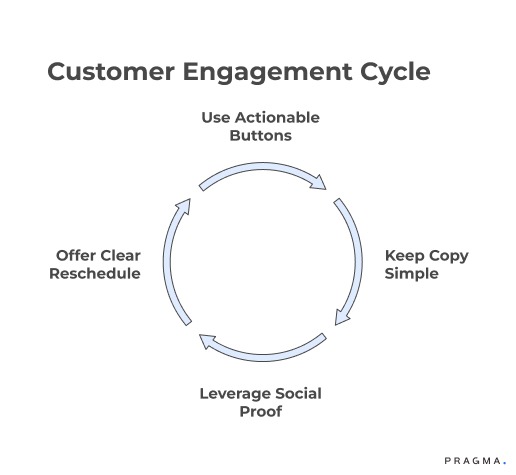
Prefer quick-reply buttons (Confirm / Reschedule / Call me) over free-text prompts. Buttons reduce typing friction and make user intent explicit.
Keep copy simple and localised
Use short, friendly language in the customer’s preferred language. Mention order number, a one-line product summary and the time window.
Leverage social proof and urgency carefully
A line such as “Your order is picked and ready for delivery” reduces indecision. Avoid aggressive urgency that creates distrust.
Offer a clear, low-effort reschedule
Provide “Reschedule” with suggested slots, not an open-ended question. Suggested slots should be optimised for routing (see routing section).
What behavioural nudges increase verification rates?
Timing, choice architecture and small incentives shift behaviour predictably
Behavioural design matters as much as technology.
Time the initial verification message well
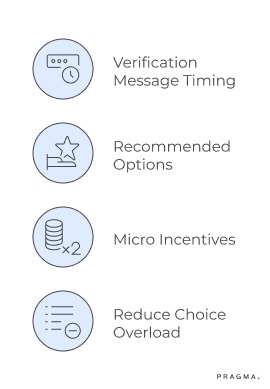
Send the verification message 6–18 hours before the expected delivery window. Too early and customers forget; too late and routing is constrained.
Use default recommended options
Pre-select the nearest batchable slot and label it “Recommended” to increase acceptance for slots that improve density.
Micro incentives for confirmations
Small incentives — e.g., ₹10 wallet credit for confirming a slot or an expedited refund for early return readiness — raise confirmation rates without significant cost.
Reduce choice overload
Offer 2–3 slots rather than many. Too many choices scatter acceptances and reduce density.
How to handle exceptions and non-responses?
A deterministic fallback plan prevents non-responses from becoming failed deliveries
Non-response must flow into a deterministic exception plan so operations remain predictable.
Define thresholds and automated escalations
Example escalation: 1 WhatsApp message → 1 reminder after 1 hour → 1 IVR call → mark for reschedule. The number of retrials should be based on historical success rates per pin code.
Use soft-hold before dispatching a rider
If no confirmation within the cutoff, hold the order from same-day rider assignment to avoid wasted attempts. This prevents riders starting tours with low-probability stops.
Route non-confirmed orders to preferred alternatives
If the customer doesn’t confirm, offer drop-off at nearby locker or pickup point with a follow-up message linking the nearest location.
What data and systems are needed to operate verification flows at scale?
Small integration surface, high operational value — key components and data model
A reliable flow needs only a few well-integrated components.
Minimal tech architecture
Required components
- WhatsApp Business API or verified provider (templates, quick replies).
- Order management system (OMS) with order state and cutoffs.
- Customer identity store linking phone/WhatsApp to order.
- Notification orchestration to sequence messages and fallbacks.
- IVR and SMS provider for fallback channels.
Data model essentials
- Order ID, customer phone, preferred language.
- Product summary, payment method, order value.
- Current order state and promised delivery window.
- Confirmation status and timestamps.
Operational controls to add
- Cutoff rules for same-day verification.
- Per-pincode confirmation thresholds to decide rider assignment.
- A/B testing flags to experiment with copy, timing and incentives.
Why Failed Deliveries Persist Despite Modern Logistics
Even with sophisticated fulfilment networks, real-time tracking and carrier partnerships, failed deliveries remain one of the stubborn inefficiencies in ecommerce especially in India.
Several structural and behavioural forces cause this:
1. High COD Preference
Cash-on-Delivery orders contribute disproportionately to refusals at the doorstep because payment commitment happens later, making delivery acceptance less certain.
2. Inaccurate or Incomplete Addresses
Despite pin-code checks, many customers enter vague or non-standard addresses, leading to misroutes or failed navigation for delivery agents.
3. Irregular Availability Windows
Customers across semi-urban and rural areas often have varied work schedules and irregular availability, increasing the likelihood of missed first-wave delivery attempts.
4. Communication Gaps
If customers are unaware of the delivery slot, agent details, or expected delivery window, they are less likely to be present resulting in non-delivery events.
5. Operational Variability Across Carriers
A carrier that performs well in metro areas may underperform in smaller towns, causing inconsistent delivery success that doesn’t show up in aggregate metrics.
6. Lack of Pre-Delivery Confirmation Logic
Traditional delivery flows rely on tracking once the package is en route. By then, the customer hasn’t confirmed intent or awareness, so failed delivery rates remain high.
These factors show why failed deliveries are not merely a logistics issue they are a multi-factor problem involving customer behaviour, communications and real-time intent validation.
How should operations integrate verification with routing and capacity?
Verification must influence routing decisions, not sit as an afterthought
Verification is most useful when it changes routing behaviour in real time.
Use confirmation status as a routing constraint
Only assign riders to confirmed stops within a tour. Unconfirmed orders should be batched for later routes or assigned to fallback carriers.
Dynamic capacity planning by confirmation fold
Estimate confirmed pickup density ahead of each shift. If confirmed density is below threshold, schedule fewer riders or use mixed fleet strategy.
Visualise confirmation heatmaps for dispatch
Dispatch dashboards should show confirmed vs unconfirmed stops by neighbourhood, allowing planners to reassign or consolidate.
What KPIs measure the impact of WhatsApp verification flows?
Choose compact, causal metrics that show operational and financial effect
Track a small set of primary and leading indicators.
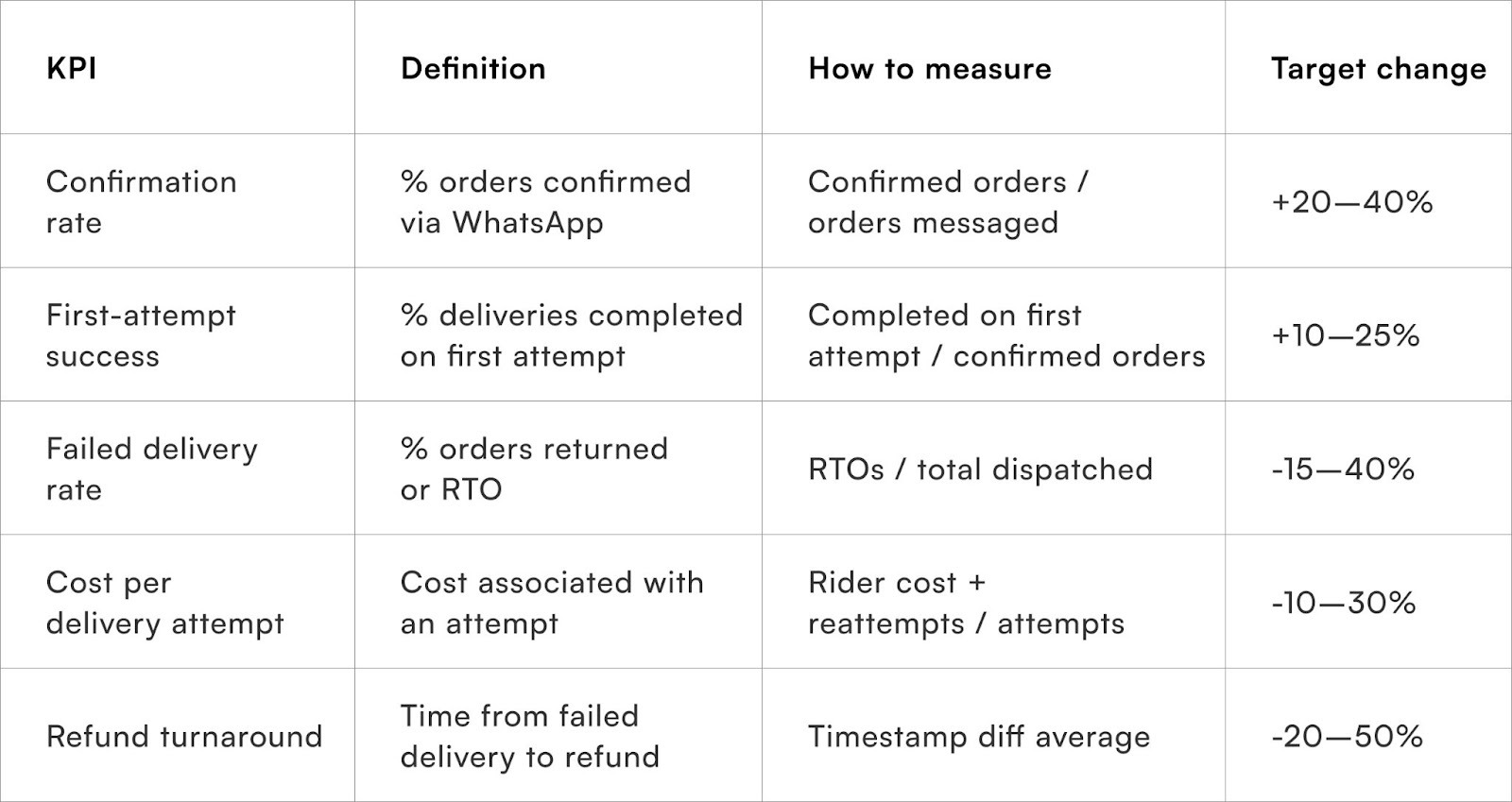
Cite targets are indicative; measure baseline and monitor changes by cohort (payment method, pin code).
How to design experiments and validate impact?
Run small, measurable pilots before wide rollout
A disciplined A/B testing approach validates assumptions.
Pilot design suggestions
- Randomly split orders by pin code or by day into control vs verification flow.
- Keep the logistics execution identical; only vary messaging and fallback policies.
- Track primary KPIs for at least 14 days to capture delayed effects.
Analysis considerations
- Segment results by payment method (COD vs prepaid), SKU size and pincode.
- Use uplift in first-attempt success and reduction in RTO as primary outcomes.
- Track unintended effects: increased cancellations or lower NPS from perceived spam.
What Is a WhatsApp Order Verification Flow?
A WhatsApp order verification flow is a pre-fulfilment communication sequence designed to confirm customer intent, clarify delivery details and reduce the risk of failed deliveries — using the WhatsApp Business API or Business App.
Unlike standard SMS or email notifications, a WhatsApp verification flow is conversational, automated and interactive. It typically includes:
1. Order Acknowledgement
A clear message confirming what was ordered, expected delivery timeline and the delivery address.
2. Delivery Confirmation Prompt
A simple call-to-action (e.g., “Tap here to confirm your delivery time”) that verifies customer availability.
3. Address Validation Prompt
An opportunity for customers to correct or confirm their shipping address — reducing misdirection at the last mile.
4. COD Intent Verification (if applicable)
A quick confirmation to ensure the customer still wants COD, reducing refusals and RTO risk.
5. Preferred Delivery Slot Selection
Customers can select or confirm delivery windows, aligning logistics schedules with availability.
6. Real-Time Feedback Loop
If a customer does not respond, the flow can trigger secondary prompts or route the case to support for manual follow-up.
By confirming intent and clarifying critical delivery details before the order enters fulfilment, WhatsApp verification flows reduce unpredictability and lead to higher first-attempt delivery success, fewer failed deliveries and lower logistics cost per order.
What governance and compliance considerations apply to WhatsApp flows?
Consent, message templates and data privacy must be respected
WhatsApp has strict template rules and users expect privacy and consent.
Template approvals and content limitations
Templates for proactive messages must be pre-approved. Transactional messages are treated differently from promotional ones.
Respect user opt-outs and language preferences
Honor “stop” or “block” actions. Allow language selection to avoid miscommunication.
Data retention and privacy
Only keep verification status and minimal metadata in fast-access stores; move full transcripts to secure archives. Follow applicable data protection norms.
What channel mix complements WhatsApp verification?
Use layered channels — WhatsApp first, then voice and SMS as fallbacks
WhatsApp performs best as the primary verification channel. Voice and SMS remain effective fallbacks.
Typical channel sequencing
- WhatsApp message with quick replies
- WhatsApp reminder if no response in 60–90 minutes
- IVR call for critical/large orders or repeated non-responses
- SMS as last-resort notification for low-LTV orders
When to escalate to voice
Escalate to voice when:
- Order value is high (>X amount)
- COD amount is significant
- Pincode historically has low WhatsApp response rates
Quick Wins
Week-by-week checklist with expected results
Week 1 — Instrumentation and templates
- Integrate WhatsApp Business API or provider.
- Create 3 approved message templates: Confirm, Verify Address, Final Window.
- Map templates to order states.
Expected result: Ready channel and templates; baseline messaging established.
Week 2 — Identity and message flow pilot
- Link WhatsApp sessions to order IDs via OTP or account mapping.
- Pilot on a small cohort of prepaid orders in one city.
Expected result: 20–40% of pilot cohort confirm via WhatsApp.
Week 3 — Payment and slot confirmation
- Introduce COD readiness check for COD orders.
- Offer 2-3 batchable slots and mark one as recommended.
Expected result: Improved COD preparedness and slot acceptance; fewer doorstep refusals.
Week 4 — Routing integration and escalation
- Use confirmation status to influence rider assignments.
- Implement IVR fallback for high-value or low-response orders.
Expected result: Lower first-attempt failure rate and fewer wasted rider tours.
Expected consolidated result at 30 days: measurable lift in confirmations (20–40%), 10–25% improvement in first-attempt success, and a visible reduction in reattempt costs.
Metrics deep dive: how to slice performance data
Where to look for leverage and how to diagnose issues quickly
Slice by payment method
COD flows usually show the largest gains from verification. Track confirmation-to-delivery conversion separately.
Slice by pin code and zone
Some pin codes respond better to WhatsApp than others; calibrate escalation and cutoff rules per pincode.
Slice by SKU characteristics
Bulky or return-prone SKUs may need different confirmation flows (e.g., manual callback rather than default quick replies).
Use cohort analysis for lift measurement
Create cohorts by week of order and compare RTO and first-attempt success across control and verified groups.
Common mistakes to avoid
Practical pitfalls teams run into when building verification flows
- Over-messaging customers — send only the necessary confirmations and reminders.
- Requiring free-text responses — use buttons and quick replies instead.
- Sending verification too late — do it before rider dispatch to avoid wasted capacity.
- Not mapping confirmations into routing — verification without operational effect wastes value.
- Ignoring regional language preferences — localisation increases trust and response rates.
To Wrap It Up
Order verification on WhatsApp reduces failed deliveries by turning ambiguous orders into confirmed, routable stops. Verification works when it is concise, timed right, and integrated with routing and fallback channels.
Immediate action this week: implement a three-message WhatsApp verification flow (confirm → verify address/payment → final window) and map confirmation status into your rider assignment rules.
Longer term, build dynamic confirmation thresholds per pin code, integrate confirmation signals into capacity planning and experiment with micro-incentives to increase response rates. Review cohort metrics weekly and refine message timing, copy and escalation logic for sustained improvement.
For D2C brands seeking reliable order verification and fewer failed deliveries, Pragma’s Conversational Orchestration platform provides WhatsApp verification templates, message sequencing, and routing integrations that help brands reduce first-attempt failures and lower last-mile costs.

FAQs (Frequently Asked Questions On Order verification flows on WhatsApp that reduce failed deliveries)
1. How many WhatsApp messages are acceptable for order verification?
Keep it tight: initial confirmation + one reminder + one escalation (IVR/SMS). More messages reduce trust and increase opt-outs.
2. Should all orders get WhatsApp verification?
Prioritise by risk: COD, high-value orders, new customers, or pin codes with historically high failed deliveries. Expand after pilot validation.
3. What if the customer does not use WhatsApp?
Use SMS as a primary channel and IVR as a fallback. Always offer the option to confirm via call or web link.
4. Does WhatsApp verification increase cancellations?
Some cancellations will surface earlier, but that is healthy — it avoids failed delivery costs. Measure net impact on RTO and overall cancellations.
5. How do we handle language and localisation?
Detect preferred language at checkout or via account settings and send templates in that language. Keep copy short and avoid machine translation without review.
6. What is a reasonable confirmation-to-delivery SLA?
Aim to secure confirmation 6–18 hours before the delivery window; shorter windows increase routing friction.
8. How should we measure ROI on verification flows?
Calculate incremental reduction in failed deliveries and reattempt costs, plus improved rider utilisation. Compare pilot vs control cohorts after 14–30 days.
Talk to our experts for a customised solution that can maximise your sales funnel
Book a demo
.png)
.png)