

Running an online business seems fascinating. But the real e-commerce owner knows the truth.
When businesses sell online, there are more chances of items getting returned. This can be due to various reasons, either an imperfect size or a change of mind of customers.
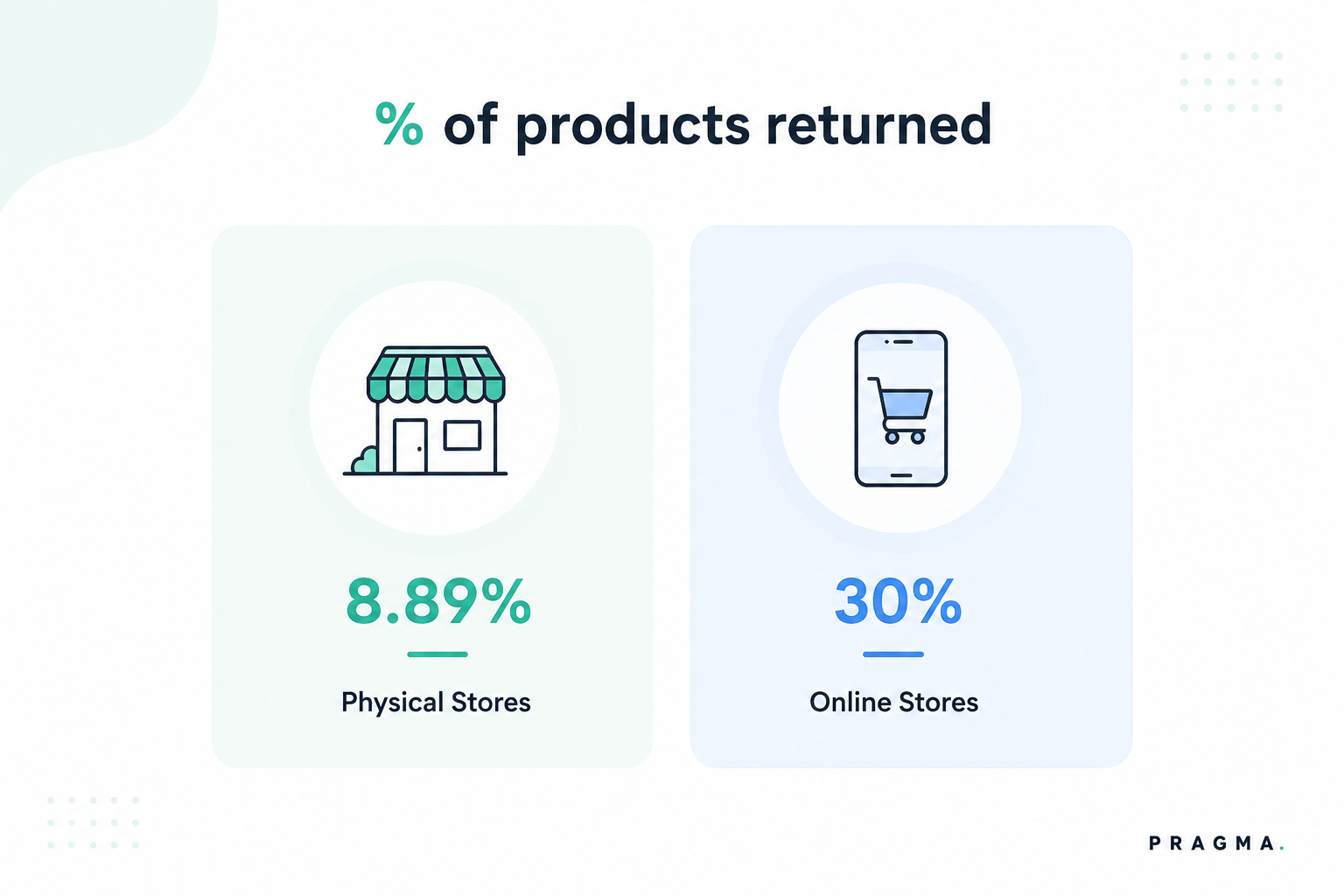
Today, 30% of all online purchases are returned, whereas it is only 8.9% in physical stores.
So, shall businesses stop dealing in e-commerce?
The answer is No!
The real thing is how you manage the returns is the key factor in deciding your destiny. According to a study, 92% of customers will buy again from a retailer if the returns process is easy, and brands with optimised returns processes see 18% higher customer satisfaction and over 5% reduction in operational costs.
In this blog, we will delve into "E-commerce Returns Management: Process, Challenges & Best Practices". See how you can transform the most irritating thing in the e-commerce business into the greatest opportunity to grow.
What Are E-commerce Returns?
E-commerce returns are the products that are once sold to the customers, but for any reason, the customers send them back to the seller.
The e-commerce returns can arise from different reasons as follows:
- Wrong items were shipped to the customers
- The wrong size was shipped for the same product
- Size and fit issues
- Bad quality product
- The customer did not like the product
- The customer changes his mind.
- Order placed impulsively
- The product looks different from the photos
- Better price found somewhere else
And much more.
The above points show why a customer returns the product; some of them are customer-initiated, but some of them are due to the seller's mistake.
Therefore, we can say that not all returns are the same. We can differentiate returns into different segments.
Types of E-commerce Returns
- Customer-Initiated Returns
- Defective or Damaged Returns
- Size / Fit Returns
- Delivery-Related Returns
- Fraudulent Returns
Difference between Returns, RTO, RTV
Let us first talk about customer returns!
These are the traditional returns whereby the customers get the products but send them back. Perhaps the shirt does not fit, the colour is not as they wanted it to be, or they just changed their mind. These comprise most of the reverse logistics.
Whereas if we talk about RTOs, they are the type of returns where the product never reaches the customer. It means the product, without being delivered to the customer, is sent back to the origin from where it came. In India, RTO rates can reach 15-20% of total shipments due to factors like incorrect addresses, customer unavailability, or payment issues.
And, if we talk about the third-RTV (Return to Vendor). They are the type of returns where the product is sent back to the suppliers or manufacturers, typically for defects, overstock, or seasonal clearance. These are not related to the customers; they are between the supplier and the business.
What Is E-commerce Returns Management?
E-commerce returns management is a process that business handles the returns that are made by customers. In other words, we can say that what a business performs and deals with in handling returns is covered in e-commerce return management.
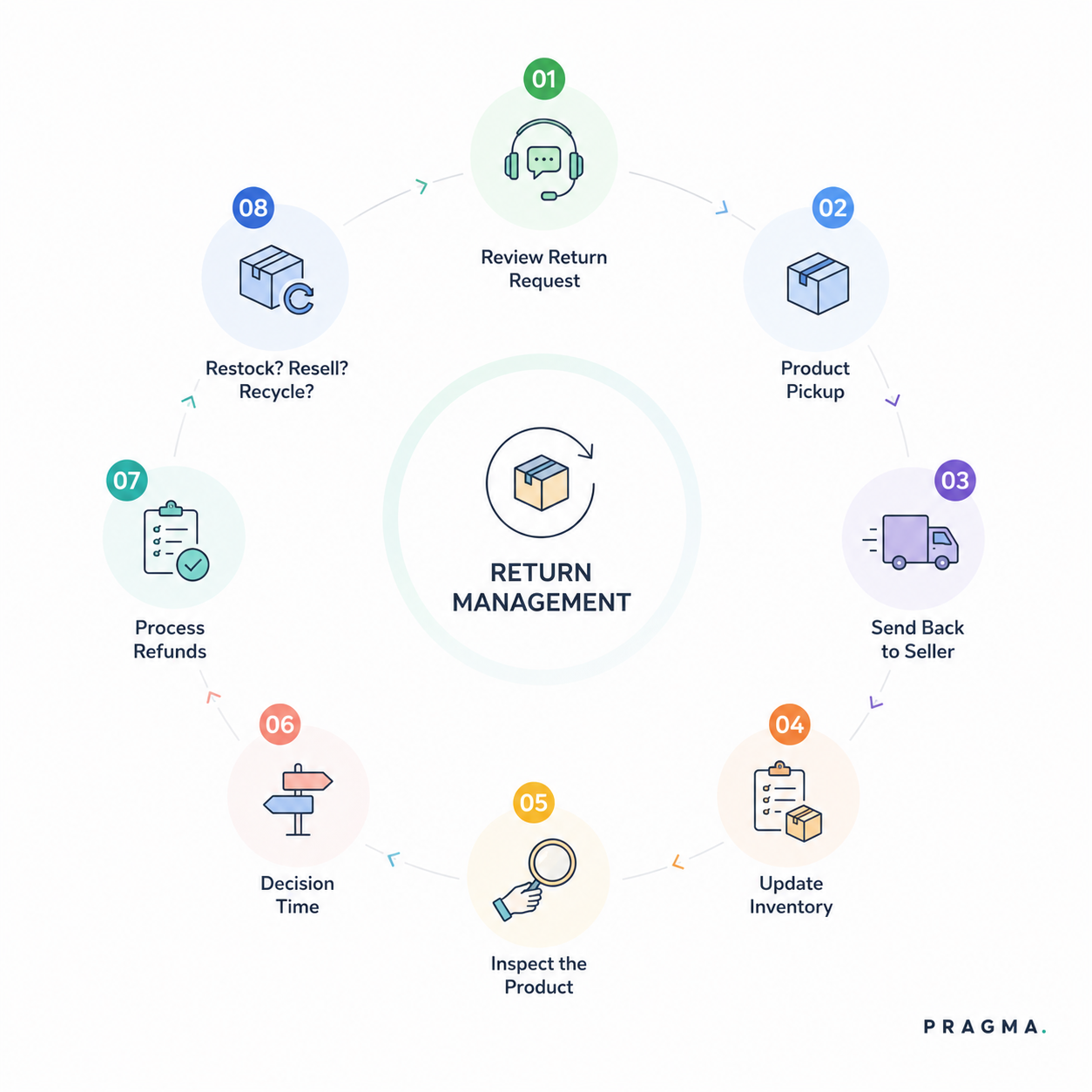
Return management in e-commerce is not just about handling returns; it is about creating such a process and experience that keeps the customers happy and satisfied, along with fewer challenges, costs and losses to the business.
It covers the following aspects:
- Reviewing the return request made by the customer
- Picking up the product
- Sending back to the seller
- Checking up on the product
- Deciding what to do with the product
- Updating inventory
- Making refunds
All of the above things are covered in the e-commerce returns management. Now, one question that arises here is whether returns affect the profitability of the business. Yes, it can, have a look at it!
Role in Profitability, CX & Operations
Three vital areas of business are directly affected by returns management:
- Profitability: The retailers incur up to 100 dollars per returned item, including shipping costs, labour costs and loss of resale value.
- Customer Experience: Easy returns are a trust-building process. It has been found that 96 per cent of shoppers will repeat buying again when returns are not cumbersome.
- Operation: The process of efficient returns management helps avoid inventory mismatch, minimise congestion in the warehouse, and streamline operations.
Return Management in E-commerce: How the Process Works?
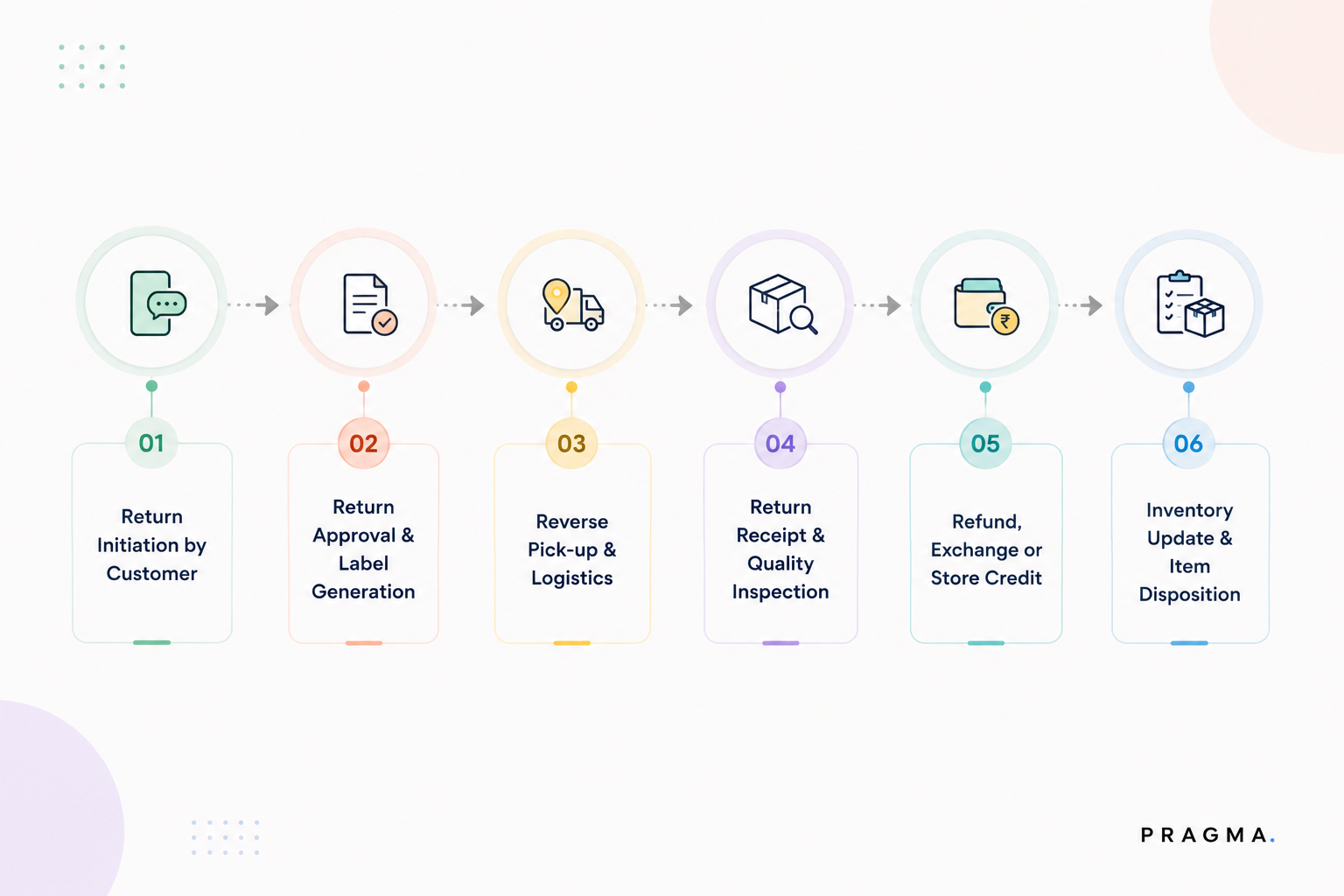
See, how does the returns management process work:
Return Initiation by Customer
The return management process begins when the customer decides to return the product and initiates the return request. To make returns easy, every business should provide customers with such a platform, from which they could easily make a return request without getting into trouble.
And for this, they should have a good return management system that helps them to do so. A user-friendly returns portal should allow customers to:
- Select items to return.
- Choose return reasons
- Upload photos if required.
- Select preferred resolution (refund, exchange, store credit)
Pragma's Return Management System helps businesses create branded return pages for customers to initiate returns. They are built as per the brand's guidelines and custom domain names.
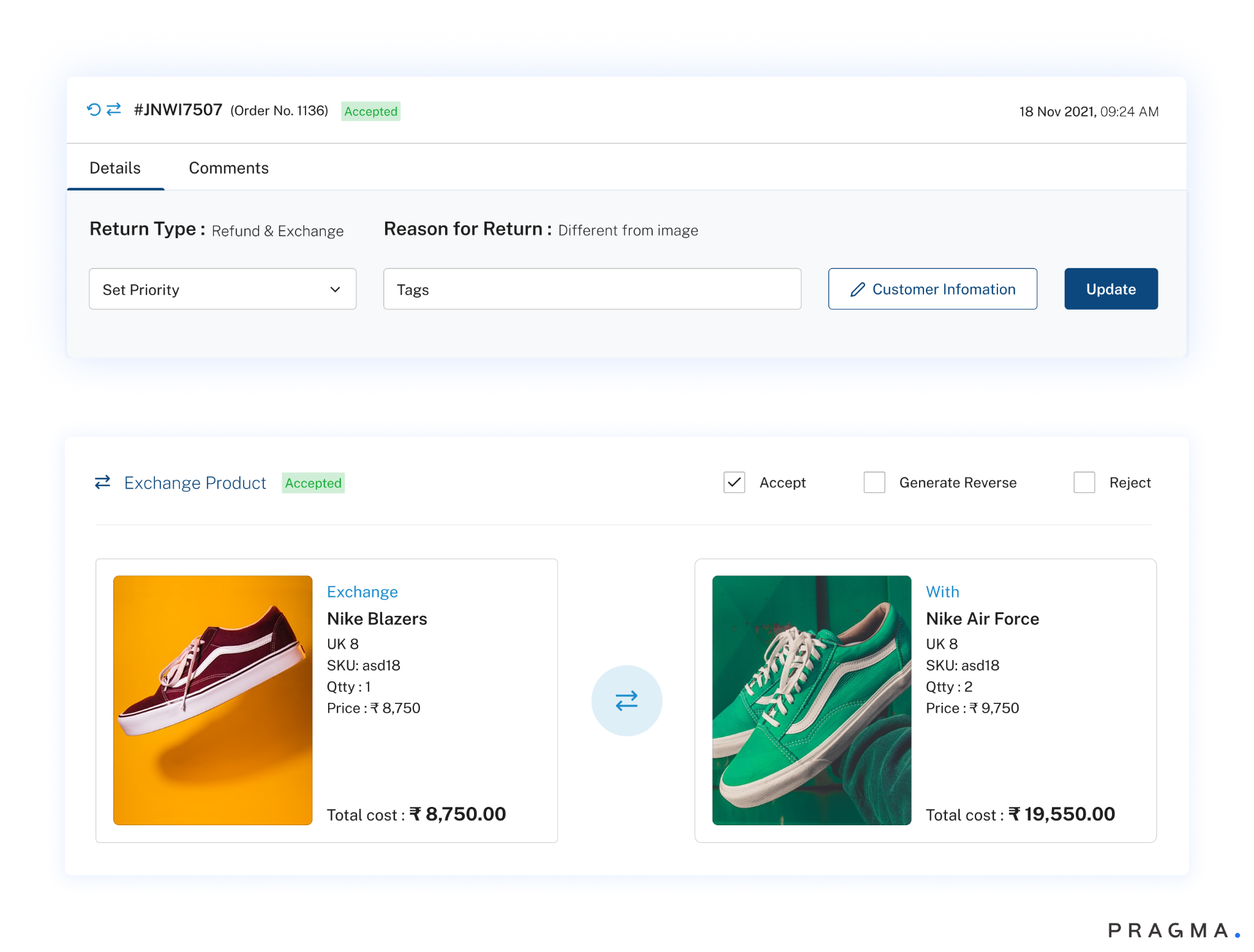
Return Approval & Label Generation
Once a return request is submitted, the business validates it and checks whether the request is eligible for a return. For this, they should have such a system that validates the request to the return policy. This includes checking:
- Return window eligibility
- Product condition requirements
- Customer return history
- Fraud risk indicators
The Pragma Return Management System helps in the automatic AWB creation for reverse shipments, once the request is approved. But before approving, it checks the return eligibility properly. It interferes with, if the item is not eligible for return, by disabling the return eligibility based on SKUs.
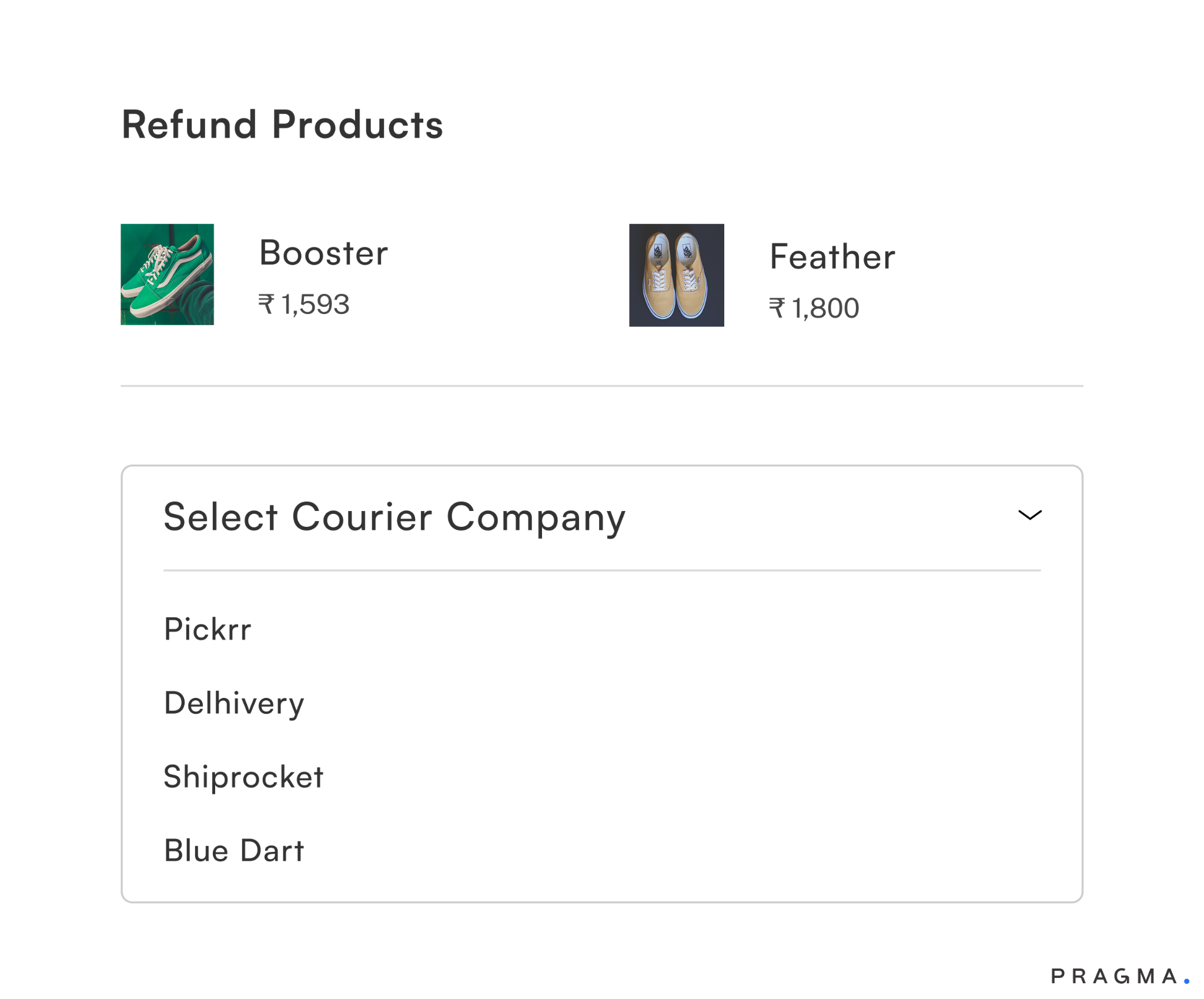
Reverse Pick-up & Logistics
Once the return is approved, return labels are created, and the process to take back the products begins. Here, customers get different options to return the product. Most brands offer home pick-up services, whereas some want to get the drop off at the given locations.
This is one of the crucial decisions that brands have to be careful with. 76% of customers expect free returns, but each return can cost them $6-$15/₹540 to ₹1,350 in shipping alone.
The trick lies in the process of knowing your customer base and making the most out of it. City shoppers may want the drop-off shop, whereas suburban shoppers will appreciate the home pick-up services.
It is here that such wide-ranging solutions as the returns management system by Pragma can help in numerous ways to streamline the pick-up routes and carrier relationship to achieve cost per-return reduction without impacting customer convenience.
Return Receipt & Quality Inspection
When returned items arrive at the business's facility, quick processing is essential. Brands should immediately start the inspection process to see what condition the product is in.
The following can be the cases here:
- Like new: If the products are in good, new-like condition, they can be restocked immediately.
- Minor wear: If the products have some minor damage, they may need refurbishment.
- Damaged: And if the product is totally damaged, that is of no value now; it requires disposal or liquidation.
Refund, Exchange or Store Credit
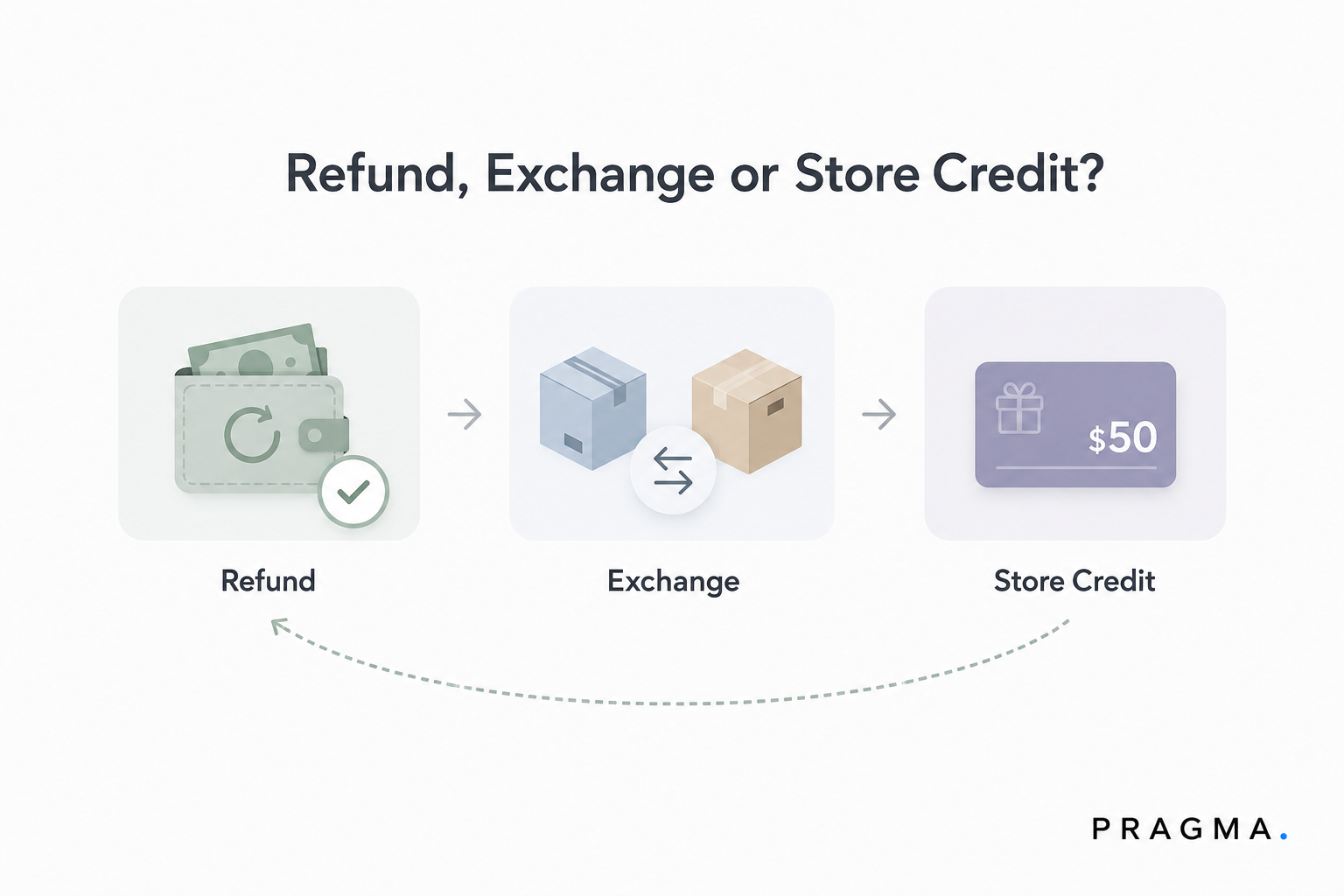
The manner in which you solve the returns matters a lot both to the satisfaction of the customers and your bottom line. These three possible choices have varying implications:
Refunds: Most of the customers expect refunds, which will be a total loss of revenue. Nevertheless, immediate refurbishment instils confidence and promotes buying. Refund processing within the same day boosts the repeat purchasing chances by 35 per cent.
Exchanges: It can be a win-win situation, particularly when customers are upgrading to items with a higher value. They hold on to the income in your business and therefore fix the problem of the customer.
Store credit: It is more likely to be the most profitable for the retailers, and money does not leave your ecosystem. Most brands provide a bonus credit (such as 110% the initial price) to make the choice attractive.
Inventory Update & Item Disposition
The final step involves updating your inventory systems and deciding what to do with the returned item:
- It can be restocked for resale.
- It can be sent to outlet channels.
- It can be donated to charity.
- It can be recycled or disposed of responsibly.
Why E-commerce Returns Management Is Important?
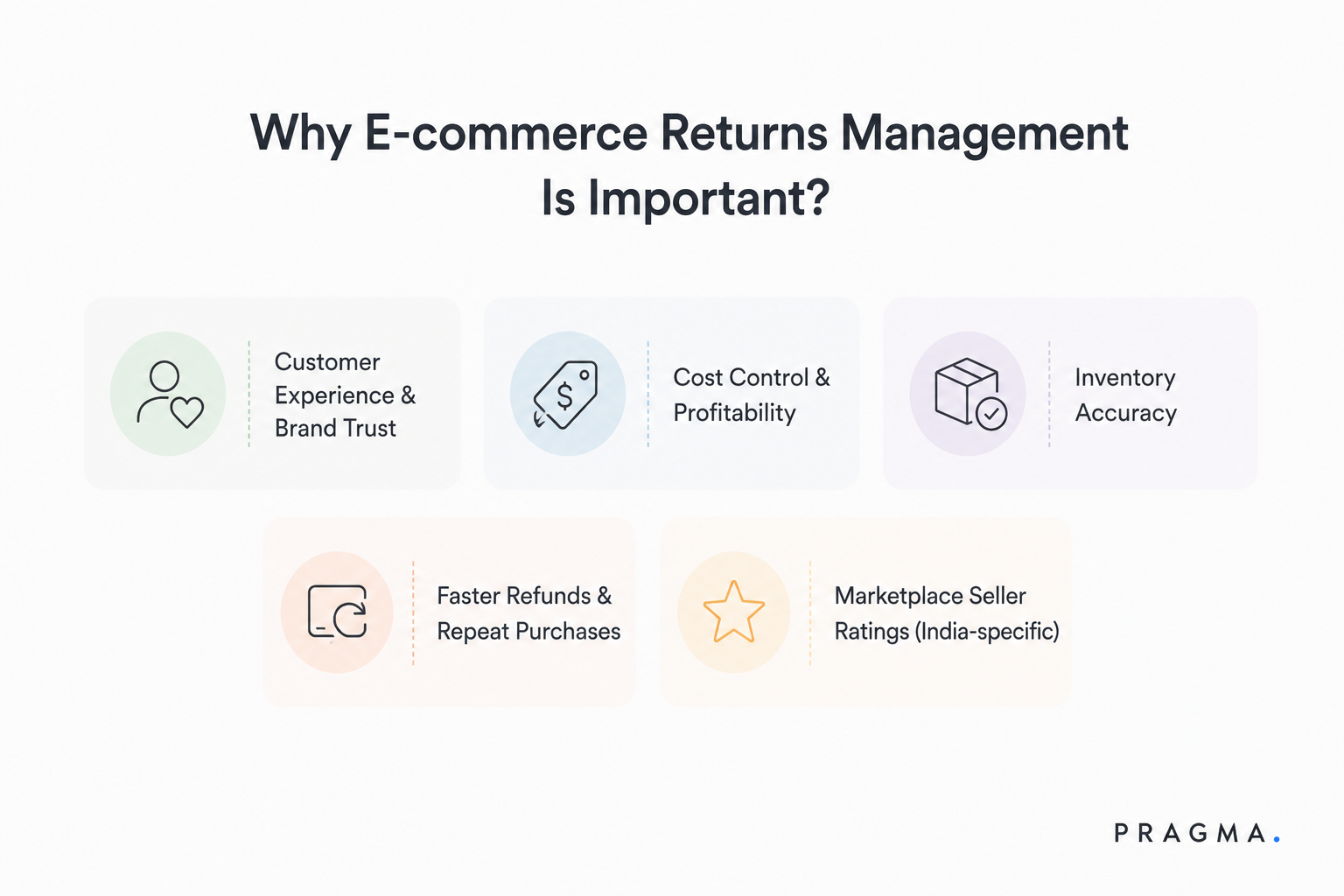
Here is why e-commerce return management is important:
Customer Experience & Brand Trust
Managing returns well is very important. Handling the returns in a proper way helps to build trust in the minds of the customers. If a customer gets a good experience while returning the products, they believe in the company and trust it to reorder with them.
Cost Control & Profitability
Returns could cost a lot for the businesses if not handled well. But if the organisation follows return management in e-commerce returns, it can save a lot.
According to a study, companies with optimised returns processes achieve 15% higher profit margins compared to those with poor returns handling.
Inventory Accuracy
When a business handles its returns well, with proper management, it means that it is also able to manage its inventory well. The returns directly affect the level of inventory. In the absence of real-time updates, you run the risk of:
- Selling something that it does not have.
- Understocking based on unreflected returns.
- The problem with cash flow is due to frozen inventories.
Faster Refunds & Repeat Purchases
Every customer nowadays wants faster refunds. They don't want to wait any longer to get their money back. And the return management helps businesses to provide faster refunds to their customers, as everything is done with proper planning and accuracy.
Marketplace Seller Ratings (India-specific)
In the competitive environment of e-commerce in India, the rating of marketplaces plays an important role in the decision-making process of customers. Ninety-five per cent of Indian shoppers read reviews before making a purchase, and returns-related problems are a significant contributor to negative feedback.
Seller performance metrics, such as platforms like Amazon and Flipkart, consider returns handling as a part of their performance, which has a direct effect on your visibility and sales chances.
What are the Key Challenges in E-commerce Returns Management?
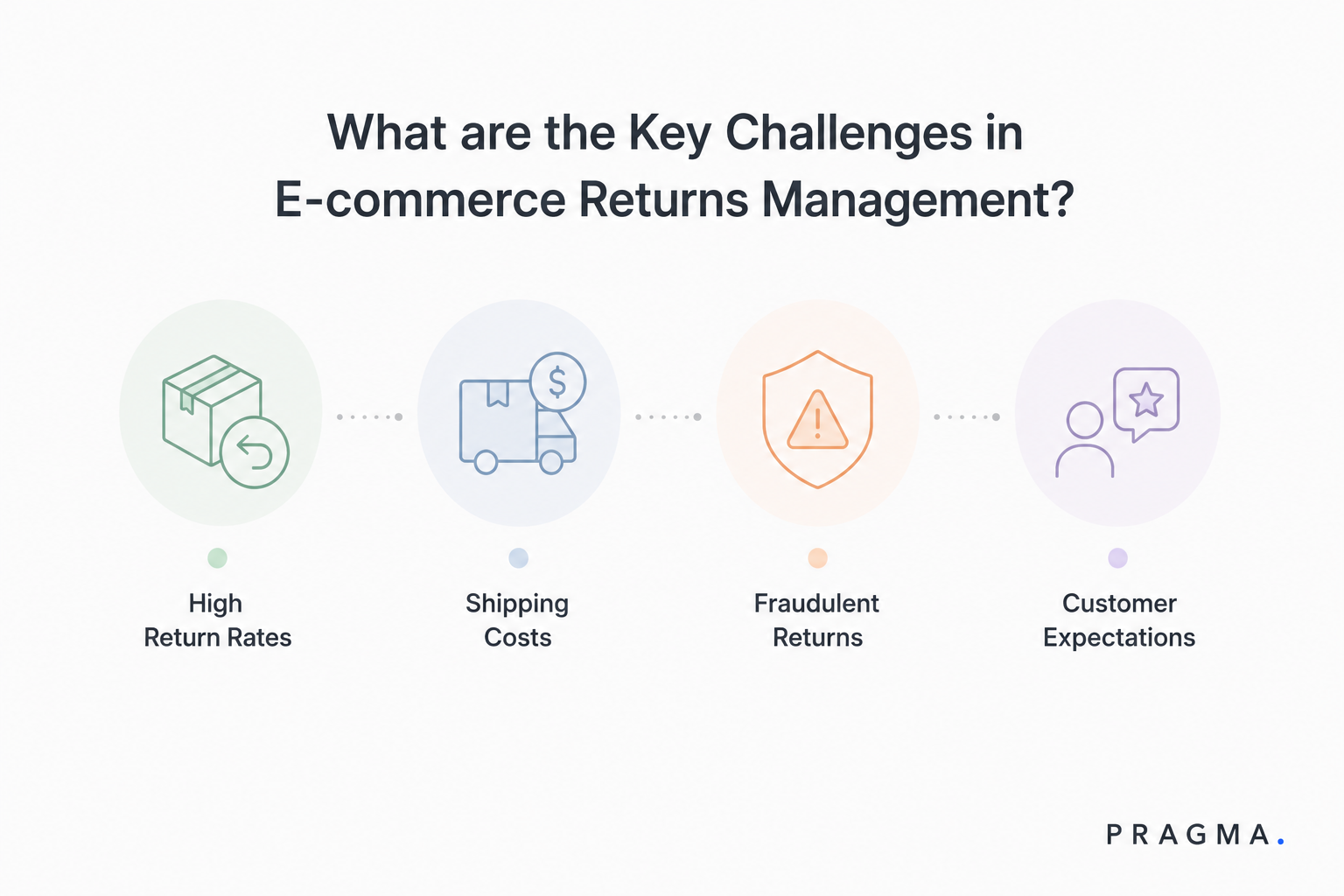
Even return management is meant for doing things right, but this process also comes with some challenges. Here are the key challenges that arise in e-commerce return management:
High Return Rates
The Indian e-commerce market is prone to high return rates; the return rate in the fashion industry goes up to 40%. And handling this high rate of returns becomes difficult to manage properly.
This much returns also come with more loss of revenues, shipping expenses and lost opportunities for sale, if the return management process fails.
Shipping Costs
76% of customers in India expect free returns. This means that the business has to bear the shipping costs. Here, both the forward and reverse logistics are borne by them.
It means that if the business does not have proper e-commerce return management, they will have to go through a lot of costs, which can end up eating their profits in the long term.
Fraudulent Returns
The Indian market is more prone to fraudulent returns. There are many customers in the market who return without any valid reason, just for the sake of getting a refund after using the product. This is because of free and easy return policies.
To solve this, businesses should make a clear and strict return policy, where everything should be clear and properly stated. They should use digital systems or software that supports proper media verification of the item, which can track the usage, too.
Customer Expectations
With the competition in the global e-commerce world, customer expectations regarding returns are very critical in terms of loyalty and returning business.
As an illustration, buyers might get irritated when they are forced to wait a long time before their refund is realised and processed.
Customers can be addressed by ensuring that the return management process is automated and giving updates in a timely manner, so that they may be sure that their needs are being met in a timely manner.
Best Practices for E-commerce Returns Management
- Develop Policies that are Easy to Find and Read: Have easy-to-find and read policies. It should include proper timeframes, conditions, and fees upfront.
- Provide a number of return options: Provide customers with options - home pick up, drop off centre, and in-store returns in the case of omnichannel brands.
- Automate When You Can: Automate processes such as approval systems, label creation and updates on inventories.
- Train Your Team: Have the customer care and warehouse members know your rules and be capable of dealing with exceptions in a professional manner.
- Use Data Analytics: Track reasons for returns, patterns and costs to find areas of improvement.
This is the time when the solution, such as the returns management system of Pragma, would be priceless, as it would offer automation and analytics to execute these best practices.
How to Reduce Returns in E-commerce?
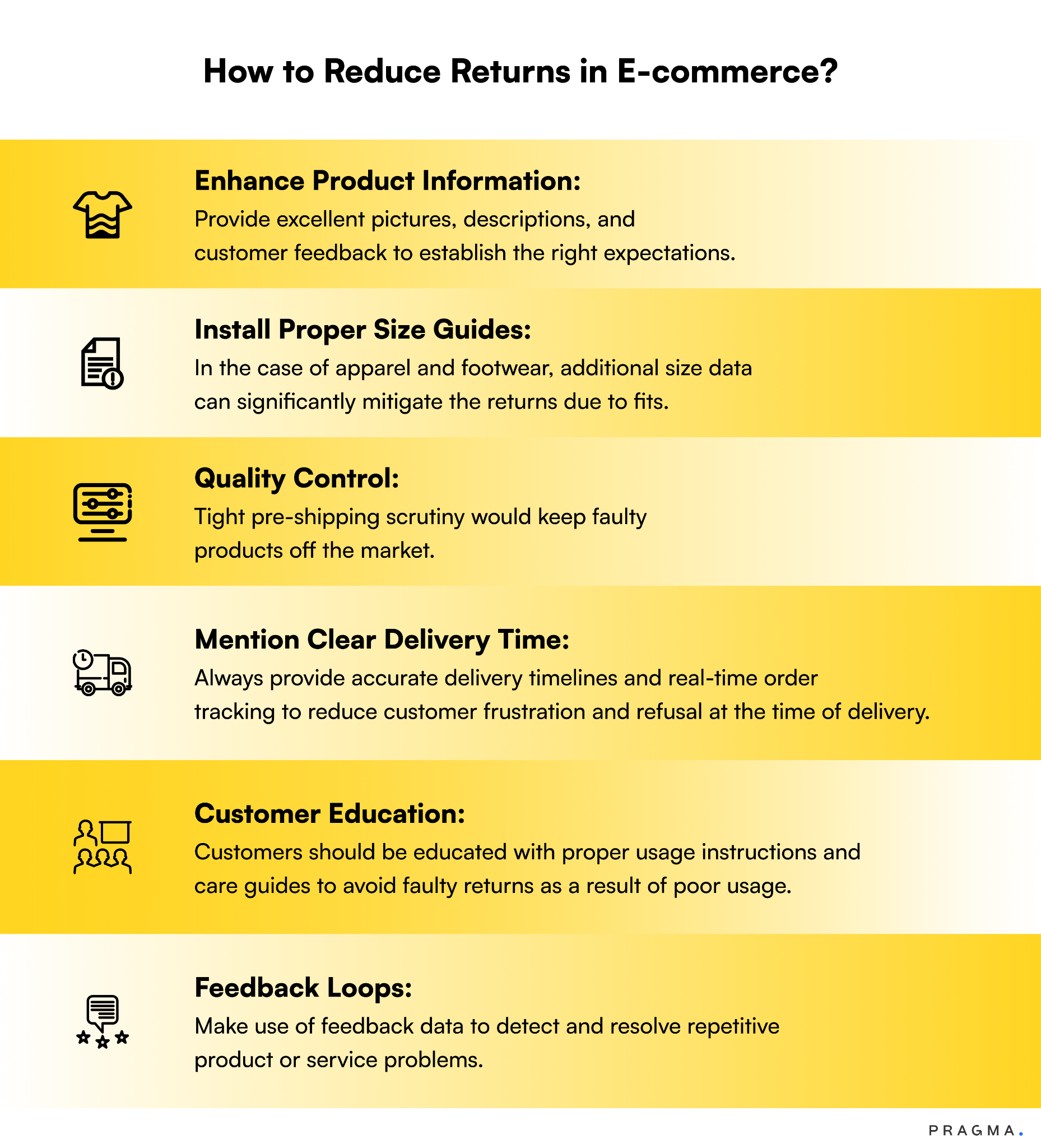
It is always better to prevent than to cure. The following is the way to minimise returns before they occur:
- Enhance Product Information: Provide excellent pictures, descriptions, and customer feedback to establish the right expectations.
- Install Proper Size Guides: In the case of apparel and footwear, additional size data can significantly mitigate the returns due to fits.
- Quality Control: Tight pre-shipping scrutiny would keep faulty products off the market.
- Mention Clear Delivery Time: Always provide accurate delivery timelines and real-time order tracking to reduce customer frustration and refusal at the time of delivery.
- Customer Education: Customers should be educated with proper usage instructions and care guides to avoid faulty returns as a result of poor usage.
- Feedback Loops: Make use of feedback data to detect and resolve repetitive product or service problems.
What is The Role of Technology in E-commerce Returns Management?
As we know, technology is changing the world rapidly. Similarly, in the e-commerce industry, it is transforming the way returns are handled and changing the scenarios.
Artificial Intelligence
Artificial intelligence is currently making inroads into all spheres and transforming things. Modern AI systems can:
- Forecast the possibility of a certain return with 85 per cent precision, depending on the customer behaviour, product attributes, and the past patterns.
- AI can filter out any fraudulent returns with a success rate of 90 per cent, as well as provide uninterrupted experiences to the legitimate customers.
- Maximise recovery of value on items returned through optimisation of disposition decisions.
- Individualised return policies in accordance with customer history and value.
Automation
This is easy through automation in any industry. It assists in minimising the errors of the manuals as well as accelerating the activities. Automation can be used in return management as follows:
- Automated labelling at 95% levels.
- Overstocking is avoided due to the real-time update of inventory.
- The automated customer notification system ensures that customers have updated information without having to do it manually.
- Smart sorting of returned goods to the right disposition techniques.
What are the Key Metrics to track E-commerce Returns Management?
Here are the key metrics that can help businesses know how their return management in e-commerce is going:
- Return Rate: It is the percentage of returns. The target industry standards are about 20-30% but with more efficient management, businesses can achieve up to 15% easily.
- Turnaround Time: Days to resolve receipt of turnaround. Industry average processing takes 5-7 days, but leading retailers complete 90% of returns within 3 days.
- Return Reasons: The classifications of customer returns on the basis of various reasons can help you know which point is handling you back more.
- Restocking Rate: It is the fraction of returns that can be resold. Leading retailers can recover 80%+ of original value compared to the 60-70% industry average.
- Customer Satisfaction: It is the score on the post-return survey. The best retailers keep this gap under 10 points.
- Cost per Return: It is the cost that is incurred on a return processed. Although the industry average expense per return is between $6-$15/₹540 to ₹1,350, with optimised activities and process enhancement, it is possible to cut the expense to below $12/₹1,080.
- Repeat Purchase Rate: It is the percentage of buyers who purchase again after returning products. Customers with positive return experiences have 65-75% repeat purchase rates, while negative experiences drop this to 15-25%.
E-commerce Returns Management Examples
Let us see how the Indian e-commerce brand, Myntra, transforms its experiences through e-commerce returns management:
Myntra has been the most trusted e-commerce brand due to hassle-free returns. Their 30-day return policy, free home pickup on 19,000 and above pin codes, has been the benchmark of fashion e-commerce in India.
Their premium customer program, which is named Try and Buy, allows their customers to test the items at home and then pay later, which virtually removes returns to the customers who take part in this program. The new strategy has led to a 40 per cent decrease in the turnaround-related complaints and a 25 per centt increase in the customer satisfaction ratings.
The Future of Returns Management
In future, we can see the following advancements in the returns management industry:
- Predictive Analytics: AI will be able to predict items that are most likely to be returned before they can even be shipped.
- Green Practices: Sustainable practices can be followed, which place emphasis on the concept of refurbishment, recycling, and the concept of a circular economy to minimise waste.
- Instant Exchanges: The real-time inventory visibility will allow direct exchanges instantly without receiving the returns before processing.
- Virtual Try-Ons: AR/VR will minimise the returns due to fit in fashion and furniture.
To Wrap It Up
To conclude here, all we want to say is that returns are a part of every e-commerce business. No business can remove it at all. They will have to handle them and incur costs on them.
But the main thing is that all they need is to manage them properly. With effective return management practices, they can handle returns efficiently.
And, with the rise in the use of return management software, this can be easier than manual work. And, Pragma is always here with Indian D2C e-commerce brands in their success journey!

FAQs (Frequently Asked Questions On E-commerce Returns Management: Process, Challenges & Best Practices)
1. What is returns management in e-commerce?
Returns management is the end-to-end process of handling product returns, exchanges, refunds, inspections, restocking, or disposal after a customer initiates a return.
2. Why is returns management important for e-commerce brands?
Because poor returns experiences reduce repeat purchases, increase support costs, and erode trust. Efficient returns management improves customer satisfaction while controlling logistics and refund costs.
3. What are the main steps in the e-commerce returns process?
The standard process includes return initiation, eligibility checks, pick-up or drop-off, quality inspection, refund or exchange processing, inventory updates, and customer communication.
4. What are the biggest challenges in managing e-commerce returns?
Common challenges include high return volumes, delayed refunds, manual RMA handling, stock damage, poor visibility into return status, and high operational costs—especially in COD-heavy markets.
5. How do returns impact profitability in e-commerce?
Returns increase logistics costs, tie up inventory, slow cash flow, and add warehouse workload. High return rates directly reduce contribution margins if not tightly controlled.
6. What are best practices for effective returns management?
Best practices include clear return policies, self-serve return portals, automated pick-ups, fast refunds, accurate return reason tracking, and real-time inventory reconciliation.
7. How can technology improve returns management?
Technology automates RMA approval, courier coordination, quality checks, refund triggers, and customer updates—reducing manual effort and improving turnaround times.
8. How should brands handle returned inventory?
Returned items should undergo immediate quality checks and be categorised as restockable, refurbishable, or non-sellable, with inventory updated in real time to avoid overselling.
9. How can e-commerce brands reduce return rates?
Brands reduce returns by improving product information, size guides, images, checkout clarity, delivery reliability, and post-purchase communication.
10. What KPIs should brands track for returns management?
Key metrics include return rate, refund turnaround time, cost per return, RTO percentage, self-serve return adoption, and repeat purchase rate after returns
Talk to our experts for a customised solution that can maximise your sales funnel
Book a demo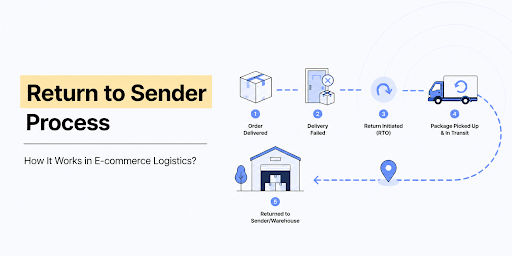

.png)