

The WhatsApp Catalog API has emerged as a game-changing tool for Direct-to-Consumer (D2C) ecommerce brands, revolutionising the way products are showcased and interacted with on the messaging platform.
This API enables D2C brands to create digital product catalogs within WhatsApp, providing a structured and visually appealing format for customers to explore offerings. And today, we’ll dive into WhatsApp Catalog feature and its benefits for D2C Ecommerce Brands.
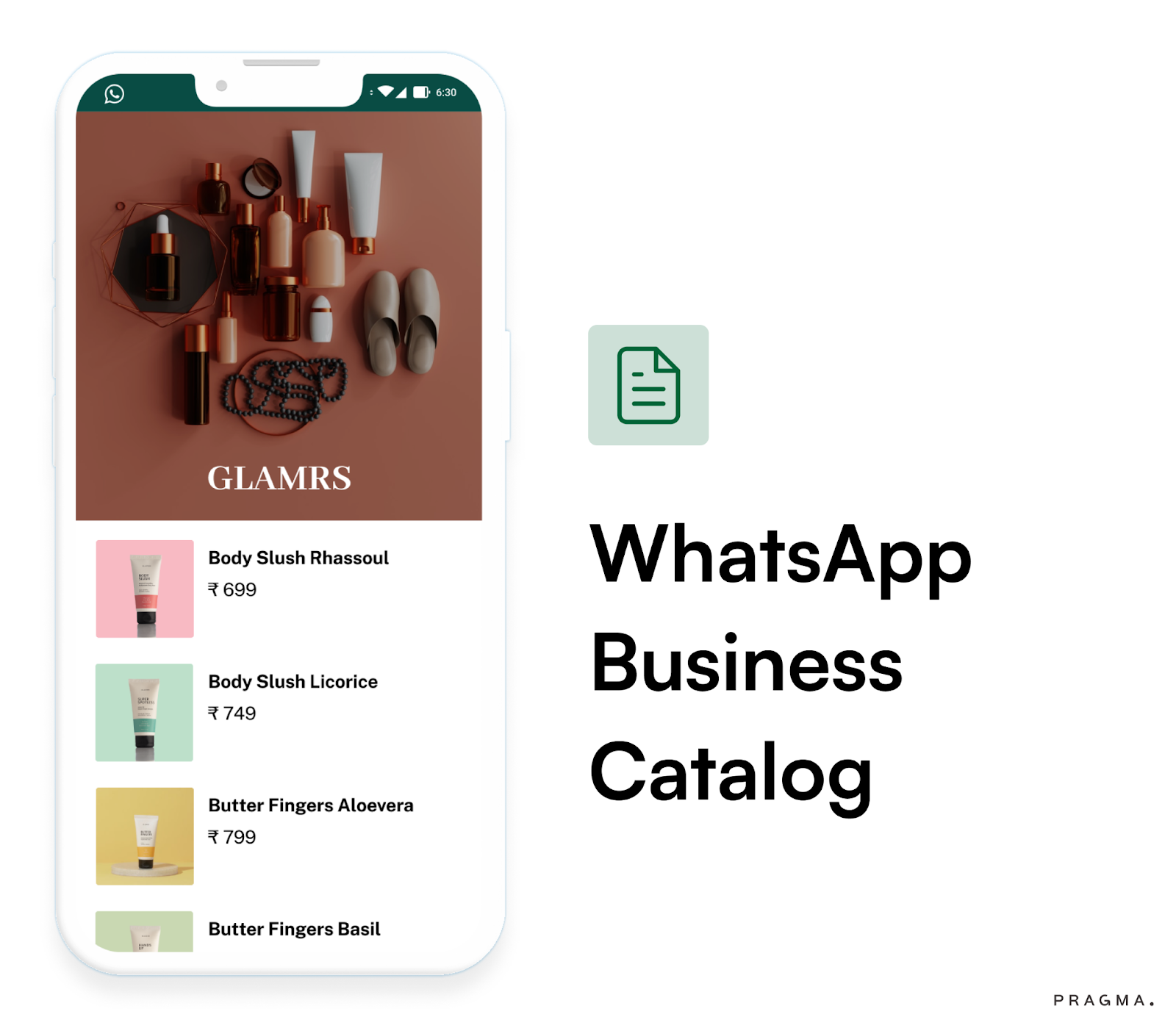
WhatsApp Catalog API (WhatsApp Business API Catalog For E-commerce)
What is WhatsApp Catalog API?
The WhatsApp Business API is an application that creates a framework for customers and other businesses to connect about their needs.
A WhatsApp catalog serves as a comprehensive compilation of details regarding your products and services. It can take the form of a text document shared with customers or a webpage containing in-depth information about your offerings.
How WhatsApp Catalogue API Works (End-to-End Workflow)
The WhatsApp Catalogue API works by connecting your e-commerce product catalogue directly with the WhatsApp Business API, allowing customers to browse, discover, and purchase products inside a chat conversation.
A typical workflow looks like this:
- A customer starts a conversation on WhatsApp
- The business shares products directly from the catalogue
- Customers browse product images, pricing, and descriptions
- Products are added to the cart or shortlisted
- Customers ask questions or request recommendations
- Orders are placed through WhatsApp or redirected checkout links
- Automated order updates and support messages are triggered
This creates a conversational commerce experience where discovery, engagement, and purchase happen within a single platform.
For D2C brands, this reduces friction in the buying journey and improves conversion rates significantly.
Enhancing Customer Decision-Making
The primary objective of utilising a WhatsApp Business catalog API is to empower customers with relevant information that aids them in making well-informed purchasing decisions.
Pragma powers the best WhatsApp commerce platform for D2C brands in India, enabling automated order updates, cart recovery, and conversational selling through WhatsApp Business API.
Tailored Catalogs for Specific Product Categories
To cater the needs of customers, businesses can create distinct catalogs using the WhatsApp Business catalog API. You may have distinct catalogs tailored to specific product categories such as food items, clothing, and more.
To enable businesses to respond to consumer inquiries and provide them with the additional information they desire, the WhatsApp Catalog API was developed and introduced WhatsApp Business API integrated with E-commerce.
Empowering E-commerce with WhatsApp Business API
E-commerce companies may reach audiences safely more quickly and easily by integrating the WhatsApp Business API catalog endpoints with different technologies. Online retailers may send consumers programmed messages and notifications thanks to WhatsApp's Business API catalog for e-commerce applications.

How WhatsApp Catalogue API Works
The WhatsApp Catalogue API turns your WhatsApp account into a dynamic, in-chat product storefront that can be updated, queried, and shared programmatically.
At a system level, it connects three core components: Commerce Manager (catalogue data), WhatsApp Business API (messaging), and your backend/CRM (logic + triggers).
1. The product catalogue is created and stored
- Products are uploaded in Meta Commerce Manager
- Each item includes:
- Name, price, description
- Images (up to multiple per product)
- SKU, availability, and links
This becomes the single source of truth for product data.
2. The catalogue is linked to WhatsApp Business API
- The catalogue is connected to your WhatsApp number
- API enables access to this catalogue programmatically
- Businesses can manage products (create, update, delete) via API endpoints
3. Product messages are triggered in conversations
Instead of sending static text:
- API sends interactive product messages
- Can include:
- Single product cards
- Multi-product lists
- Full catalogue links
Customers can browse products inside WhatsApp without leaving the chat
4. Customer interacts within the chat
- Views product details
- Asks questions
- Selects items or shows interest
This creates a conversation-led shopping flow, not a redirect-based one.
5. Backend systems trigger actions
Based on user behaviour:
- Recommend products dynamically
- Send relevant catalogue items via bot flows
- Sync inventory and pricing in real time
6. Continuous sync and updates
- Inventory updates reflect automatically
- Pricing changes are pushed via API
- Catalogue stays consistent across all conversations
Real Use Cases of WhatsApp Catalogue API for D2C Brands
D2C ecommerce brands use WhatsApp Catalogue API across multiple stages of the customer journey, from product discovery to post-purchase support.
Some common use cases include:
Product Discovery
Brands share curated catalogues directly through WhatsApp campaigns, ads, or support chats.
Conversational Selling
Sales teams and chatbots recommend products based on customer preferences in real time.
Cart Recovery
Brands automatically remind customers about abandoned products with direct catalogue links.
Order Support
Customers can quickly access product information, shipping updates, and reorder options through WhatsApp conversations.
Personalised Promotions
Businesses send targeted product recommendations and festive collections to segmented audiences.
Post-Purchase Engagement
Brands use catalogues to cross-sell complementary products after successful deliveries.
This makes WhatsApp a complete commerce and engagement channel instead of just a messaging app.
Benefits of the WhatsApp Catalogue API Feature
- Visual Showcase: The Catalogue API enables brands to present products in a visually appealing manner, providing potential customers with an immersive shopping experience directly within WhatsApp.
- Seamless Browsing: Customers can effortlessly browse through a wide range of products, explore details, and make informed purchasing decisions without leaving the messaging app.
- Product Discovery: Brands can categorise products, making it easier for customers to discover items of interest and explore related offerings.
- Instant Sharing: During customer interactions, brands can quickly share specific products from the catalogue, enhancing real-time engagement and promoting relevant products.
- Real-time Updates: Brands can update product details, availability, and prices in real time, ensuring that customers always have the latest and most accurate information.
- Enhanced Customer Support: The Catalog API streamlines customer support by allowing representatives to refer customers to the catalog for comprehensive product information.
- Conversion Boost: The seamless shopping experience facilitated by the Catalog API can lead to increased conversions as customers find it easier to explore and purchase products.
- Brand Consistency: The structured format of the catalog allows brands to maintain consistent branding, strengthening their identity and reinforcing customer trust.

Step-by-Step Guide to Set Up WhatsApp Catalog API
Setting up the Catalog API requires coordination between Meta systems and your backend.
1. Create a catalog in Meta Commerce Manager
- Log into Meta Business Manager
- Create a catalog (products/services)
- Upload product details, images, and pricing
This forms your product database.
2. Connect catalog to WhatsApp Business account
- Link catalog to your WhatsApp number
- Ensure business verification is complete
- Enable catalog visibility
3. Get WhatsApp Business API access
- Use a BSP (Business Solution Provider) or Cloud API
- Configure messaging capabilities
- Set up API credentials
4. Integrate catalog via API
- Use API endpoints to:
- Fetch products
- Send product messages
- Update catalog dynamically
- Map product IDs between systems
5. Enable product messaging templates
- Create templates that include product references
- Use these for outbound communication (e.g. campaigns, reminders)
6. Build conversational flows
- Define when catalog items should be sent:
- Based on user query
- Based on behaviour (cart abandon, browse intent)
- Use bots or workflows for automation
7. Sync inventory and pricing
- Integrate backend/OMS with catalog
- Ensure real-time updates for:
- Stock availability
- Price changes
8. Test end-to-end flows
Validate:
- Product visibility in chat
- Message delivery
- User interaction flow
Understanding WhatsApp Catalog API for eCommerce
WhatsApp Business API is a robust messaging platform that has gained significant popularity among E-commerce businesses worldwide. While it has achieved remarkable success, there is still untapped potential WhatsApp Business API has gained significant popularity among E-commerce businesses worldwide, but there is untapped potential in countries like the United States (68% adoption), Russia (72% adoption), Indonesia (64% adoption), the United Kingdom (76% adoption), and Spain (70% adoption). These opportunities can be better leveraged by using the WhatsApp Business Cloud API
These countries, along with others globally, offer immense opportunities for businesses to leverage the platform's extensive features and connect effectively with customers, establishing dominance in the thriving E-commerce markets.

Real Use Cases of WhatsApp Catalog API for D2C Brands
The Catalog API becomes powerful when embedded into specific revenue and operations workflows.
1. Assisted product discovery (chat-based selling)
- User asks for recommendations
- Bot or agent shares relevant catalog items
- Customer browses and selects within chat
Impact:
Reduces decision friction and improves conversion for high-SKU brands.
2. Click-to-WhatsApp ads with catalog entry
- User clicks ad → lands directly in WhatsApp
- Specific product or category is auto-shared
Impact:
Removes landing page dependency and shortens funnel.
3. Abandoned cart recovery with product cards
- Instead of generic reminders, send:
- Exact product images
- Price and details
- Customer can re-evaluate instantly
Impact:
Higher recovery rates due to visual recall.
4. COD confirmation with product context
- Send product summary before confirmation
- Customer verifies:
- Variant
- Price
- Delivery details
Impact:
Reduces fake orders and improves delivery success.
5. Upsell and cross-sell post-purchase
- Share related products via catalogue
- Bundle suggestions inside WhatsApp
Impact:
Increases AOV without requiring a revisit to the app or website.
6. Customer support with product context
- Agents can quickly share product cards instead of typing details
- Reduces handling time and errors
Impact:
Improves support efficiency and consistency.
Across use cases, the key advantage is context-rich communication—customers don’t just read messages; they interact with products directly.
How to Set Up WhatsApp Catalogue API (Step-by-Step Guide)
This concise guide outlines the steps to obtain the WhatsApp Business API catalogue and leverage its benefits.
WhatsApp Business API Catalogue:
WhatsApp Business API catalogue enables online stores to showcase their products and services directly to users, offering a convenient way for customers to explore offerings without visiting a website or store.
However, WhatsApp API does not have an application or front-end interface; a messaging platform must be incorporated into messaging software. While businesses may obtain access to the WhatsApp API directly from Meta, the more popular way is to access it through third-party services called WhatsApp Business Solution Providers (BSPs).
Business Solution Providers
Working with Authorised WhatsApp Business Solution Providers (BSPs)
It's important to note that your experience with WhatsApp API can vary significantly depending on your chosen Business Solution Provider (BSP). BSPs integrate WhatsApp API with their proprietary API, which means incorporating or updating new features from WhatsApp requires more time and effort on their part.
Verification process
To obtain access to the WhatsApp Business API, businesses typically need to go through a verification process and work with an authorised WhatsApp Business Solution Provider. This ensures that the businesses using the API meet the requirements and can provide a high-quality messaging experience to their customers.
WhatsApp Business API Catalogue Feature
1. Business Profile in the WhatsApp for Business API
- A summary of WhatsApp API elements, including WhatsApp Business Profile and phone number, is given in this section.
- Customers may learn more about your company by seeing your WhatsApp API Business Profile.
- By upgrading their cover photo, description, address, email, and website, businesses may optimise their company profiles.
2. Phone Number
- We'll go through the functioning of a WhatsApp API phone number in this part,
- Your WhatsApp API account has to be connected to a phone number.
- It will be more feasible to purchase a new phone number or port an old one, depending on your BSP.
- Never forget that the WhatsApp API phone number must be able to accept calls or SMS.
3. More significant phone Numbers
- Use a phone number that isn't already associated with another WhatsApp account.
- Always select a phone number from the App to the API, but doing the reverse from the API to the App is not advised since you risk losing the account information connected to the phone number.
- However, Facebook Business Manager is used to manage the phone numbers associated with your WhatsApp Business Account (WABA).
Important Aspects about Verified and Unverified Users:
Messages Limitations:
- Unverified businesses on WhatsApp face limitations, allowing them to message only 250 unique contacts within 24 hours.
- However, by verifying your Facebook Business Manager, you can access the following messaging limit categories:
- Send messages to 1K unique contacts within 24 hours.
- Send messages to 10K unique contacts within 24 hours.
- Send messages to 100K unique contacts within 24 hours.
- Send messages to an unlimited number of unique contacts within 24 hours.
Full Messaging Limitation
- By completing the verification process, businesses can unlock the full messaging potential of WhatsApp Business API,
- Enabling broader and more impactful communication with their audience.
Status and Quality Rating:
- Phone number status and quality rating ensure customer satisfaction with your brands and lead to a powerful impact by enhancing conversation quality.
Several factors combine to make the quality rating, such as:
- Customers' blocks, the frequency
- Alerts or promotional messages
- Reaction time
There are three levels of quality:
- Red (Low)
- Yellow (Medium)
- Green (High)
A turn in the quality rating may lead to a bad effect on your phone number's status.
There are a total of five statuses:
- Pending: The status before the Commerce Policy check is complete
- Offline: Have cancelled their WhatsApp Business API Account or failed to check the e-Commerce policy
- Flagged: The rating when the quality is set to "Lowest point"
- Connected: The status is going to default
- Restricted: The rating when companies cross their messaging limit with a rating of poor quality
Now that we have discussed the different components of the WhatsApp API, let's get started on how to set up a WhatsApp API account.
Wait for the Catalogue Upload to Complete:
Once you have selected the PDF file, the bulk upload process will start. The time taken will depend on the size of your catalogue file. Please be patient and avoid interrupting the upload process.

How To Get The WhatsApp Catalogue API

Step 1: Set Up and Verify Your Business Account
To begin, set up and verify your business account by registering it with Facebook Manager or linking an existing account. Verification can be done through WhatsApp partners by submitting the required documents.
Step 2: Deploy a Verified WhatsApp Chatbot Template:
After successful verification, deploy a verified WhatsApp chat bot template to enhance customer interactions and automate responses.
Step 3: Obtain the WhatsApp Business API for E-commerce:
By completing these steps, you will have access to the WhatsApp Business API, empowering your e-commerce business with the catalogue feature and its associated benefits.
To begin the process, click the "Add" button to verify your business account.
Next, choose an official WhatsApp Business API provider by clicking the "Find a Provider" button.
Click "Apply" to submit your application:
After approval, click "Setup" to start the integration process.
Finally, enjoy the benefits of technical support and onboarding resources by clicking the "Access Support" button.
The new business API has endless possibilities.
Prepare Your Catalogue in PDF Format:
- To begin, ensure that your product catalogue is in PDF format. This can be done by compiling all the necessary product information, including images, descriptions, prices, and any additional details, into a single PDF document.
- Make sure the PDF file meets the WhatsApp Business requirements, such as file size limits and compatibility.
Access the WhatsApp Business Web or Desktop App:
- To perform a bulk upload, you need to access the WhatsApp Business API Web or Desktop app.
- Open your preferred browser and navigate to the WhatsApp Business Web interface or launch the WhatsApp Business API Desktop app.
Navigate to the Catalogue Section:
- Once you have logged in to the WhatsApp Business Web or Desktop app, navigate to the "Catalogue" section.
- This section allows you to manage and update your product catalogue.
Click on the "Add Product" Button:
- In the Catalogue section, look for the "Add Product" button.
- Click on it to initiate the product upload process.
Select "Upload Catalogue File”:
- Within the "Add Product" window, you will find the option to "Upload Catalogue File.
- "Click” on this option to proceed.
Choose the PDF File for Bulk Upload:
- A file explorer window will open, allowing you to browse and select the PDF file containing your product catalogue.
- Locate the PDF file on your computer and click "Open" to begin the upload process.
Verify and Update Catalogue Information:
- After the bulk upload is complete, WhatsApp Business API will populate the catalogue with the information from the PDF file.
- Review the catalogue to ensure all the product details, including images and descriptions, have been imported correctly.
- Make any necessary adjustments or updates directly within the WhatsApp Business Catalogue interface.
WhatsApp Catalogue API vs Traditional E-commerce Storefront
Traditional e-commerce storefronts depend on customers visiting websites or apps to discover and purchase products.
WhatsApp Catalogue API changes this by bringing product discovery and conversations into the same platform customers already use daily.
Here’s the key difference:
Traditional E-commerce Storefront
- Separate browsing and communication channels
- Higher drop-offs during checkout
- Slower customer support interactions
- Limited conversational selling
- Requires customers to switch between platforms
WhatsApp Catalogue API
- Conversational product discovery
- Faster purchase journeys
- Real-time customer support
- Personalised recommendations
- Higher engagement through direct messaging
For D2C brands, WhatsApp commerce reduces friction and creates a more interactive shopping experience compared to traditional storefront-only journeys.
Why Implement WhatsApp Business API for E-commerce:
We must first explore several applications for online stores using the WhatsApp Business API before moving on to the WhatsApp API Catalogue
Below are some of the justifications for the necessity to use the WhatsApp Business API for e-commerce.
Enhanced Customer Communication and Support:
Real-time Customer Interaction: With the WhatsApp Business API, businesses can engage with customers in real time, providing instant responses to inquiries, resolving issues promptly, and offering personalised support. This level of responsiveness builds trust and customer satisfaction, leading to increased loyalty and repeat purchases.
Rich Media Capabilities: WhatsApp supports various media formats, including images, videos, and documents. E-commerce businesses can leverage these capabilities to share product catalogues, visuals of new arrivals, instructional videos, and other relevant content, enhancing the customer's shopping experience.
Automated Messaging and Chatbots: Integrating chatbot technology with the WhatsApp Business API enables businesses to automate routine tasks such as order tracking, FAQs, and basic customer queries. This not only reduces response times but also allows customer service representatives to focus on more complex issues, improving overall efficiency.
Seamless Order Management and Updates:
Order Notifications: The WhatsApp Business API allows businesses to send automated order updates, including confirmation, dispatch, and delivery notifications. Customers can stay informed about their order status without having to leave the WhatsApp platform, improving convenience and reducing support inquiries.
Order Customisation and Feedback: Through WhatsApp, businesses can offer customers the option to customise their orders, select preferences, or provide feedback directly. This interactive approach enhances the customer experience and allows businesses to gather valuable insights for product improvements.
Targeted Marketing and Promotions:
Personalised Marketing Campaigns: The WhatsApp Business API enables businesses to send targeted marketing messages to specific customer segments. By analysing customer data and preferences, businesses can tailor promotions, product recommendations, and exclusive offers, driving higher conversion rates.
Broadcast Lists and Customer Segmentation: Utilising broadcast lists, businesses can create segmented customer groups based on demographics, purchase history, or other relevant criteria. This enables them to deliver highly targeted messages to specific customer segments, resulting in increased engagement and improved marketing ROI.
Secure and Trusted Platform:
End-to-End Encryption: WhatsApp ensures end-to-end encryption for all messages, providing a secure communication channel for businesses and customers. This security feature instils trust and confidence, especially when dealing with sensitive information like payment details.
Verified Business Profiles: With the WhatsApp Business API, businesses can have verified profiles, displaying official labels and contact information. This verification enhances credibility, reduces the risk of fraudulent activities, and strengthens customer trust in the brand.
Meta’s WhatsApp Business Catalogue
Accelerate Sales with WhatsApp Business API Catalogue: Streamline Your E-commerce Operations

Personalise your Data
The Facebook Business's signup process involves complications during the verification process. But, a WhatsApp Business Suite assists you in creating your WhatsApp API accounts smoothly or without verification.
Time Access integration
A BSP and supplier of customer conversation management software provides you with immediate access to the WhatsApp API and enables you to connect the API to an omnichannel inbox to quickly begin corresponding with your clients on WhatsApp.
To increase sales and draw visitors to their store, the WhatsApp Business API catalogue routinely sends over 70 billion messages to users. Businesses can only spend more than 20 hours each month using applications.
Catalogue Feature:
The WhatsApp Business API Catalogue enables businesses to showcase their products or services within the app. With a visually appealing catalogue, customers can easily browse, select, and make purchases directly through WhatsApp, simplifying the buying process and increasing conversion rates.
WhatsApp Chatbot Feature:
The inclusion of a chatbot within the WhatsApp Business API allows businesses to automate customer interactions, providing instant responses to queries and delivering personalised support. This feature enhances customer satisfaction and frees up valuable resources for more critical tasks.
Third-Party Software Integration:
A WhatsApp Business API Catalogue should seamlessly integrate with third-party software, allowing businesses to leverage existing tools and systems. This integration streamlines operations, enhances efficiency, and ensures a smooth workflow across various platforms.
Automated Reports and Key Performance Indicators (KPIs) Tracking:
The application generates automated reports that track essential metrics and KPIs, providing valuable insights into the performance of your e-commerce business. This data-driven approach allows you to make informed decisions, identify areas for improvement, and optimise your sales strategies.
Centralised Dashboard with User Access:
The WhatsApp Business API Catalogue provides a centralised dashboard that grants authorised users access to relevant data and functionalities. This feature facilitates collaboration among team members, improves coordination, and ensures efficient management of sales processes.
Why Implement WhatsApp Catalogue API For E-commerce
Market Expertise and Client Acquisition:
Utilising WhatsApp marketing strategies positions your business as an expert in the market, attracting more clients and driving growth. By leveraging the WhatsApp Business API Catalogue, you can showcase your offerings effectively, enhance brand awareness, and capture the attention of potential customers.
Enhanced Sales Impact and Competitive Advantage:
The WhatsApp Business API Catalogue significantly impacts your annual sales, contributing to the development of your brand, customer awareness, and ultimately, your bottom line. By accelerating sales, you gain a competitive advantage and outpace your rivals in the e-commerce landscape.
Streamlined Sales Process and Optimal Resource Utilisation:
Effective marketing, strategic planning, timely prospecting, and data collection all contribute to accelerating sales. By investing in software like the WhatsApp Business API Catalogue, you streamline the sales process, empower your internal teams, and optimise resource utilisation for maximum efficiency

Future of eCommerce with WhatsApp Catalog API for eCommerce
The WhatsApp Business API serves as a gateway to leveraging the potential of WhatsApp's vast user base for businesses. While the journey to obtaining the API can be challenging, navigating through the intricacies and meeting WhatsApp's requirements will unlock a world of advanced messaging capabilities, enabling businesses to connect with their customers in a more personalised and effective manner.
By implementing the WhatsApp Business API for E-commerce, businesses can leverage the power of the Advantages of WhatsApp Business API catalog to streamline communication, enhance customer experience, and drive sales. With its active user base and convenience, WhatsApp API Catalog offers a valuable platform for E-commerce businesses to succeed in the digital marketplace. To maximize these benefits, it's essential to optimise your WhatsApp Business Profile.
In the fast-paced world of e-commerce, the Bepragma WhatsApp Business API Catalog offers a comprehensive solution to streamline operations, accelerate sales, and gain a competitive edge. By leveraging features such as chat bots, third-party software integration, catalogs, and automated reports, businesses can optimise their strategies, enhance customer experiences, and drive growth. Embrace the power of the WhatsApp Business API Catalog to excel in the e-commerce landscape and surpass your competitors.


FAQs (Frequently Asked Questions On WhatsApp Catalog API: Boost Your D2C eCommerce Experience)
1. How does the WhatsApp Catalog help customers make better buying decisions?
It presents products visually with descriptions, prices, and availability updated in real-time, offering a seamless and immersive shopping experience within WhatsApp.
2. What are the key benefits of using WhatsApp Catalog API for D2C brands?
Benefits include enhanced brand consistency, improved customer engagement, real-time updates, easy product discovery, instant sharing during chats, and increased conversion rates.
3. How do I get access to the WhatsApp Catalog API?
Access requires setting up and verifying a WhatsApp Business Account, working with an authorised WhatsApp Business Solution Provider (BSP), completing the verification and application process, and integrating the API.
4. Can WhatsApp Catalog API integrate with other business systems?
Yes, WhatsApp Catalog can be integrated with CRM, e-commerce platforms, payment gateways, and third-party management systems to streamline workflows and data management.
5. What are the messaging limits and quality ratings associated with WhatsApp Business API?
Verified businesses have higher messaging limits, allowing messages to large audiences with a quality rating system rewarding less spam and better customer engagement.
Talk to our experts for a customised solution that can maximise your sales funnel
Book a demo
.jpg)

.png)