

Let us talk about an everyday scenario, let's say you are sitting in your room, thought of making something special for the next morning's breakfast, and realise one of the items required to prepare is not available at your home.
You are thinking, who will go to buy now, then suddenly you realise you can order it online. You take your mobile phone, open up the app, add the items to the cart, and place the order.
And within 15 minutes, you'll have your groceries! Isn't it amazing? Yes, of course!
But do you know what this way of selling is called? It is quick commerce!
You are absolutely aware of this way of shopping, but it is more than you know. Let us today explain to you, "What is Quick Commerce? Meaning and Examples in India".
What Is Quick Commerce?
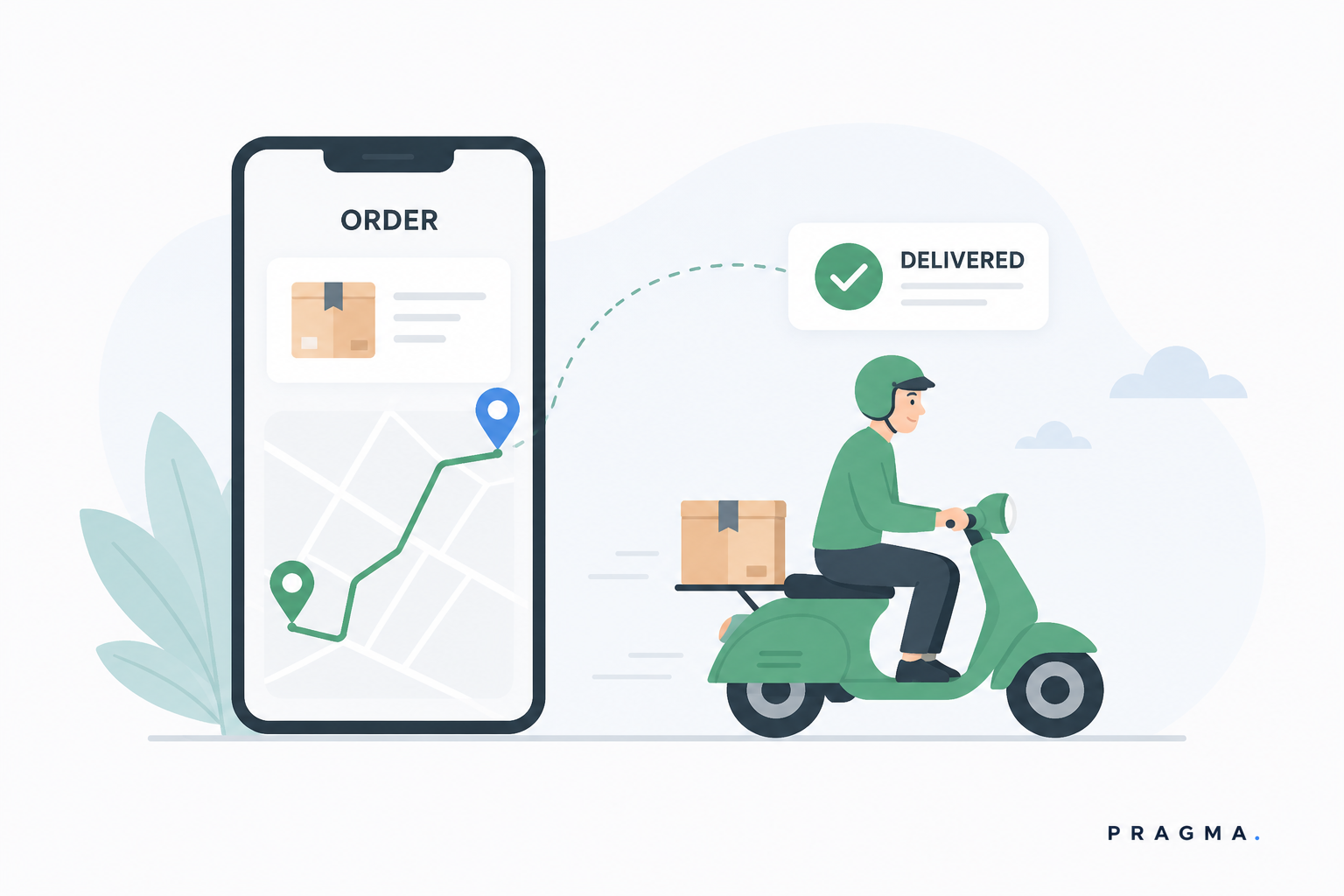
Quick Commerce is also known as Q-commerce. It is an e-commerce business model, where goods are delivered to the customers at their doorstep within just 5-30 minutes of placing the order.
As the name implies, quick commerce is everything about fulfilling the customers' demand as fast as possible. It is about making on-demand delivery a reality in the last-mile delivery.
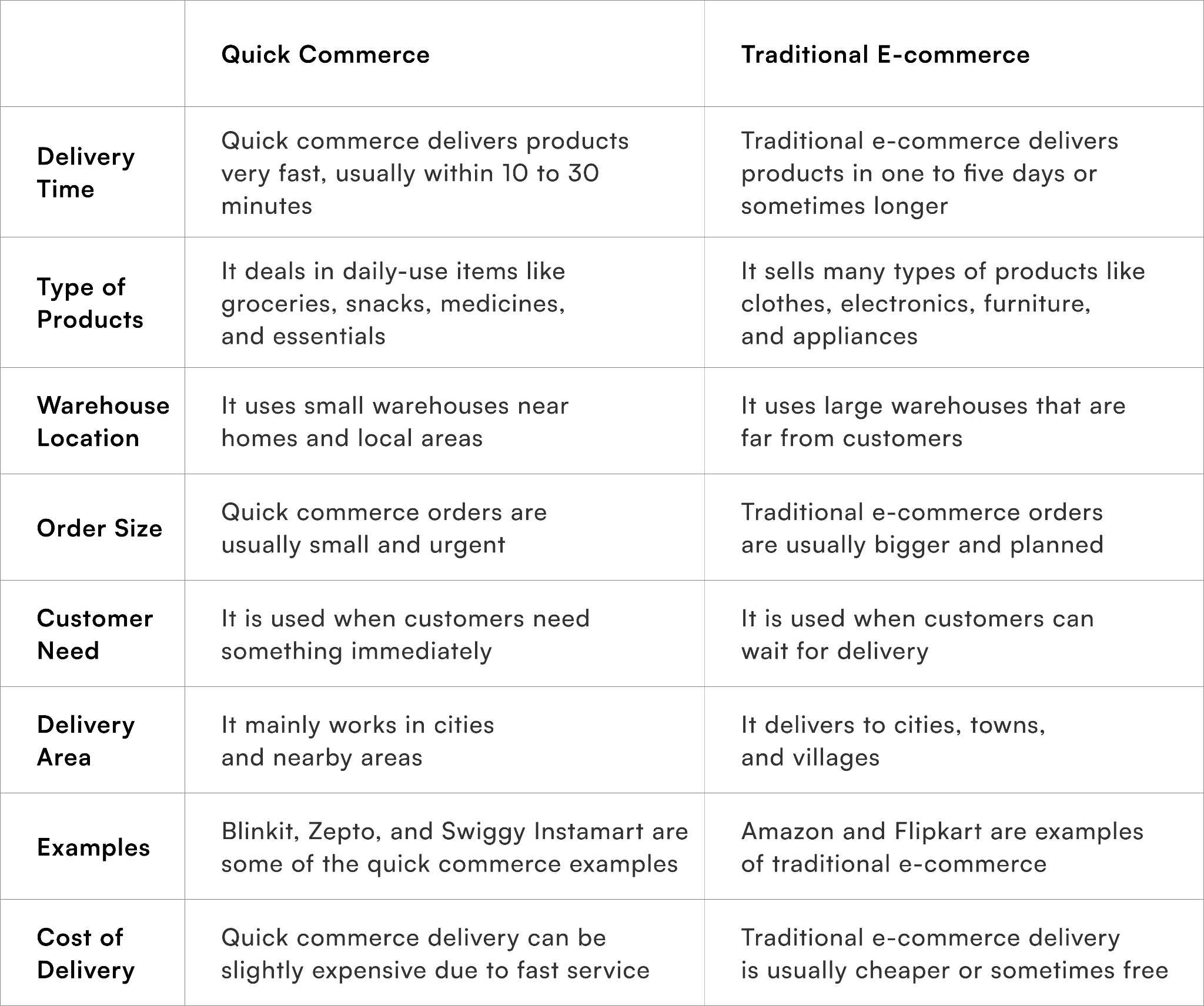
Quick commerce is different from regular e-commerce. In the normal e-commerce model, when you place an order, you have to wait at least 2-3 days to get your order delivered to your home, as the warehouses are far away from your location.
But in quick commerce, it just takes a few minutes because of dark stores settled locally in the city itself.
Here are the main features of quick commerce:
- It is focused on super-fast deliveries, within 5-30 minutes.
- The warehouses, or dark stores, are made in the city or nearby places.
- It mainly deals with essential, regular need items like groceries, medicines, etc.
- The orders are made using phone apps.
What Is Quick Commerce in India?
India is a densely populated country where every single minute, a person needs something. That is why the Indian quick commerce market is growing day by day.
Where in the year 2024 the quick commerce market was around Rs.15000 crores, it has now reached approximately Rs. 45000 crores in just a single year. This much growth of the industry directly shows how Indians are adapting to this culture of shopping, as most of the people are busy working professionals, who do not have time to go anywhere to shop for these regular essentials.
If we talk about when quick commerce came to India, we have to go back a few years. In 2013, a grocery delivery app called Grofers was launched in Gurgaon, which says it will deliver in 90 minutes and starts connecting local kirana stores.
With the existence of this company, some other competitors also jumped in. But that time, it was a slow e-commerce model. But when the COVID pandemic hit India, the quick commerce industry saw a surge. In the year 2019, the Grofers' revenue touched Rs 2,500 crore.
And, do you know who this brand Grofers is now? It's Blinkit, which most people now use in India.
Therefore, we can say that quick commerce started in 2013, but took a hike between 2023 and 2025, and is now flourishing well. Currently, 25 million Indians use quick commerce, which is expected to reach 60 million by the year 2029.
How Quick Commerce Works?
Now, when we are aware of what quick commerce is, let us move to how this fastest e-commerce model works.
Local Dark Stores and Micro-Fulfilment
One of the important element of the quick commerce industry are the dark stores. These are the stores that are used to store the products and are set up in the local nearby areas, where the business is operating.
They are called dark stores because they are established just to place inventory; no customer can visit them to make a purchase. These stores are usually:
- Located within 2-3 km of customers
- Open 24/7
- Stocked with popular items
- Run by trained staff who pack orders quickly
Most of the famous quick commerce companies like Blinkit, Zepto, Swiggy, and Instamart have around 600-1000 dark stores in different Indian cities.
Limited, High-Demand Inventory
These dark stores have such items in their inventory that are of high demand and needed regularly by customers in their day-to-day life, like:
- Groceries: Rice, dal, oil, vegetables
- Snacks: Chips, biscuits, chocolates
- Personal care: Toothpaste, soap, shampoo
- Medicines: Basic health products
- Baby products: Diapers, baby food
They hold a limited number of products but in high numbers for these daily essentials.
Order Placement Through Apps
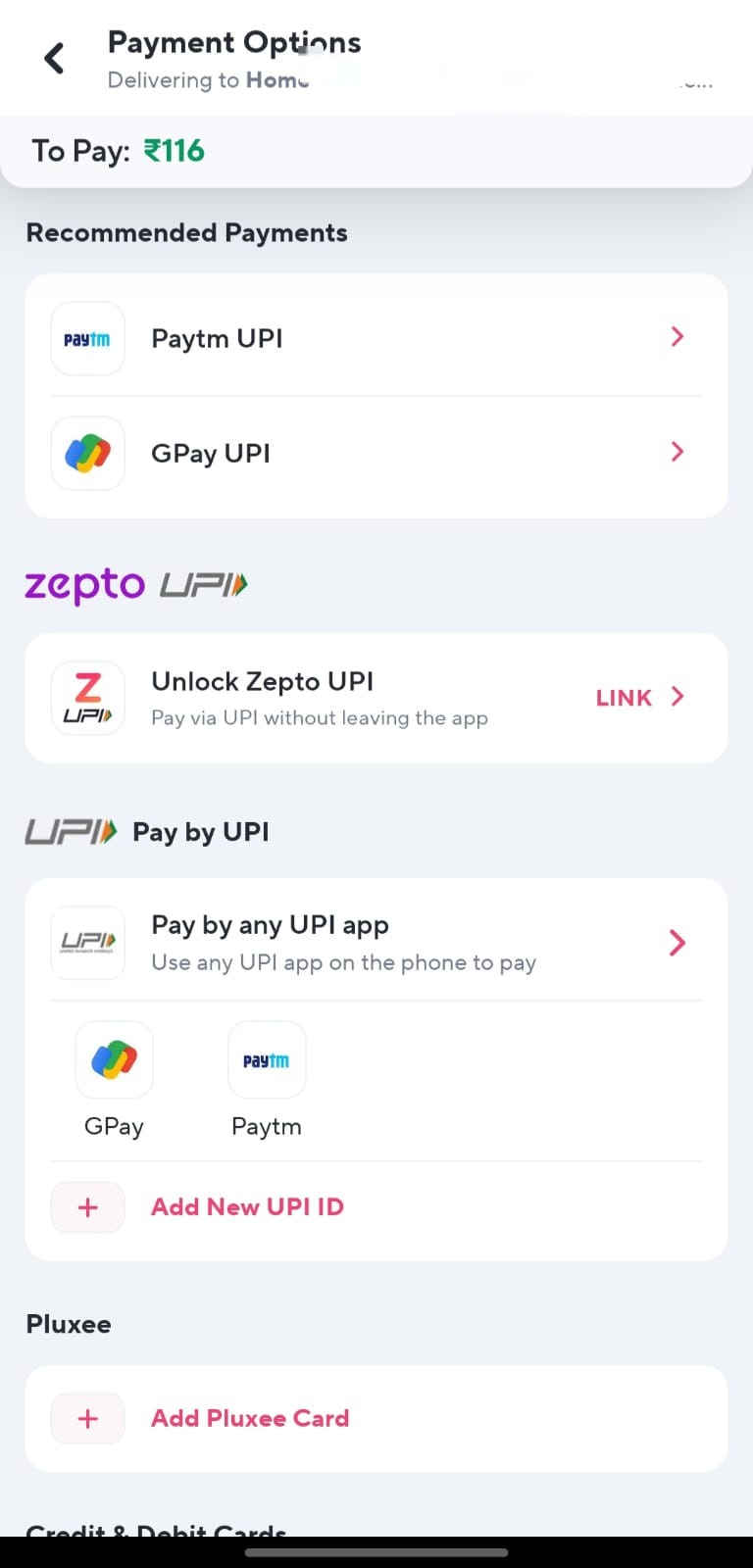
Placing orders on these quick commerce platforms is easy. They have their own apps through which customers can add items to their cart and place an order.
The process is very simple:
- Open the app
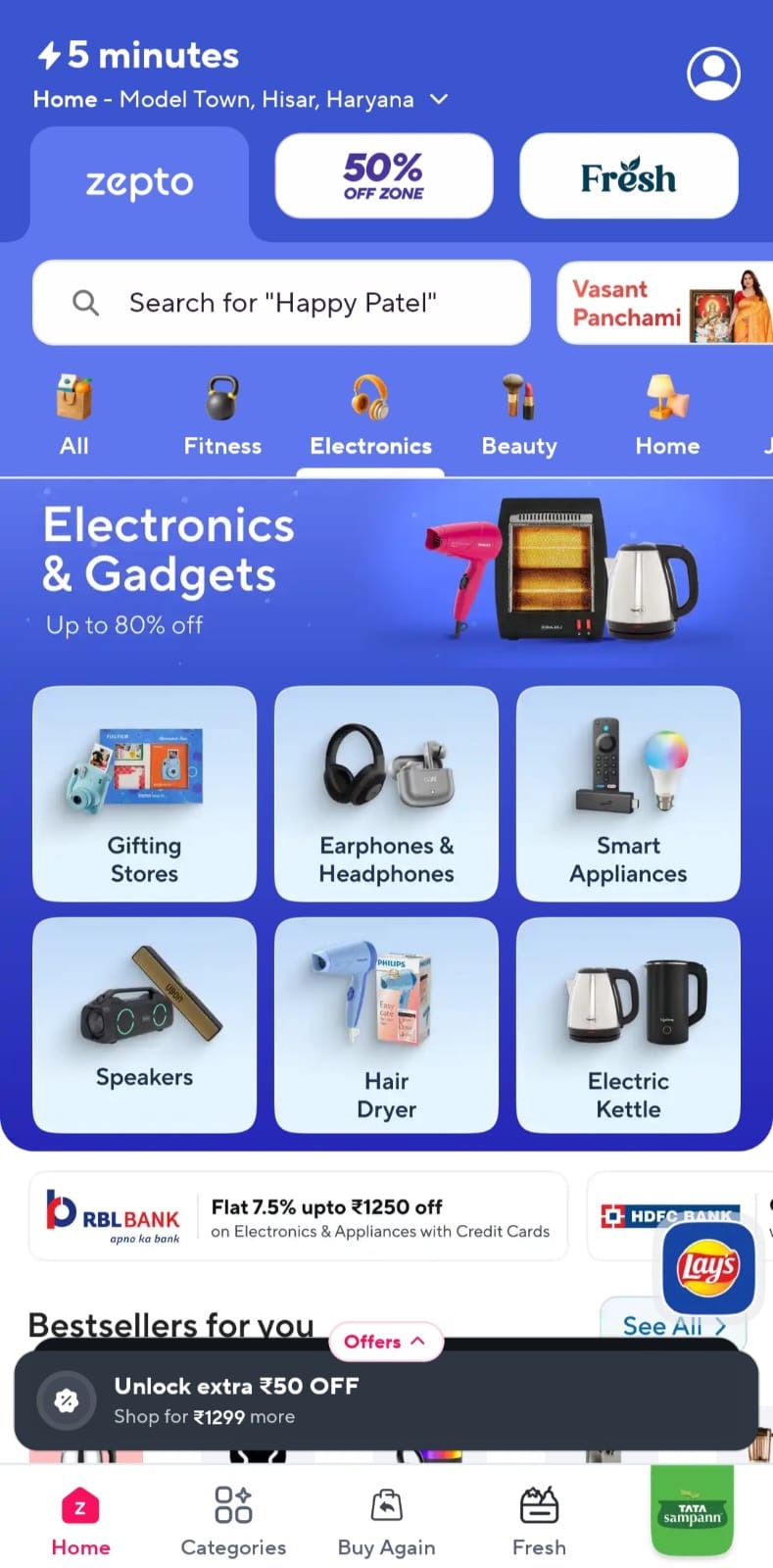
- Choose products
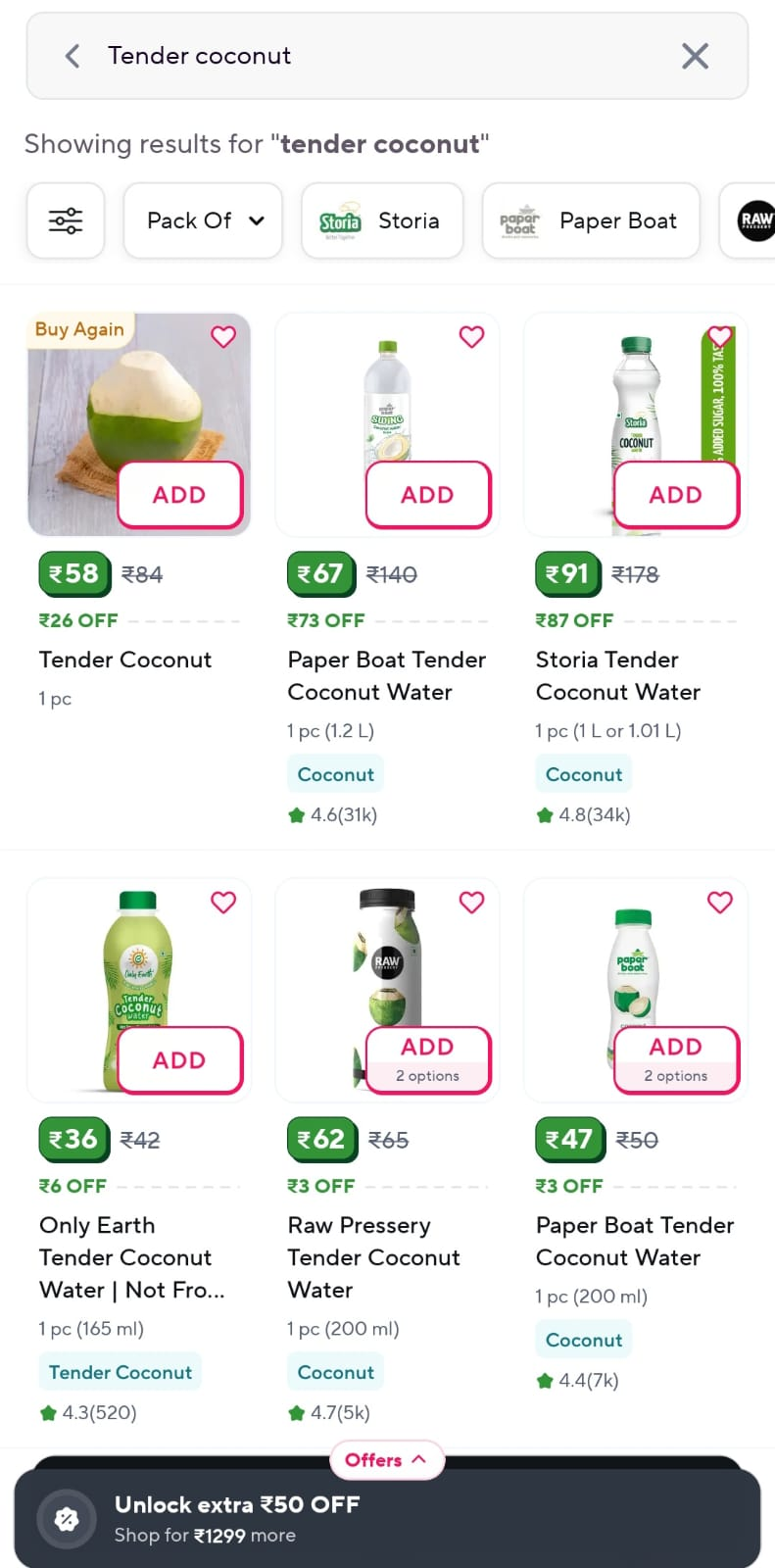
- Add to cart
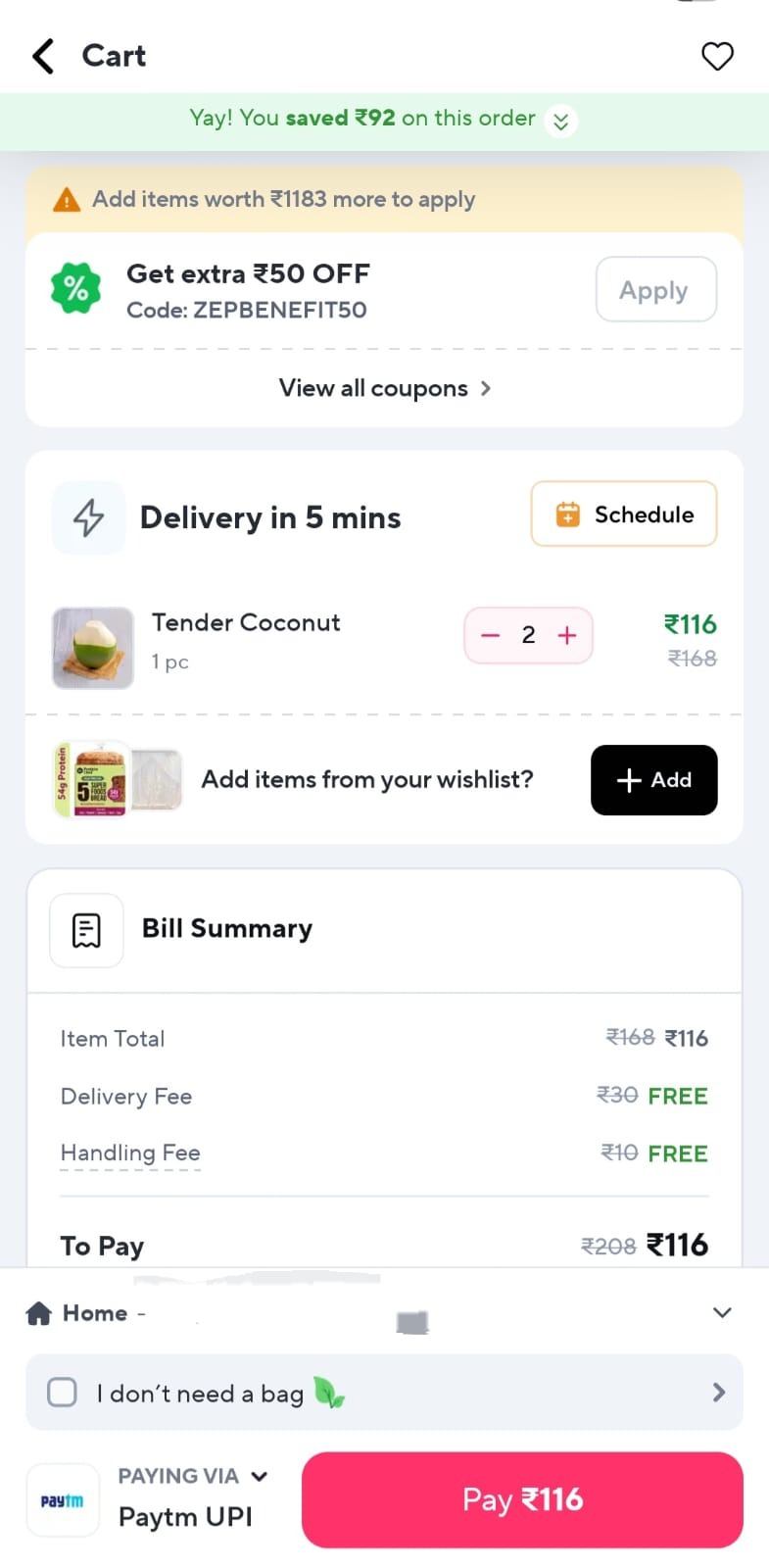
- Make payment
- Track delivery
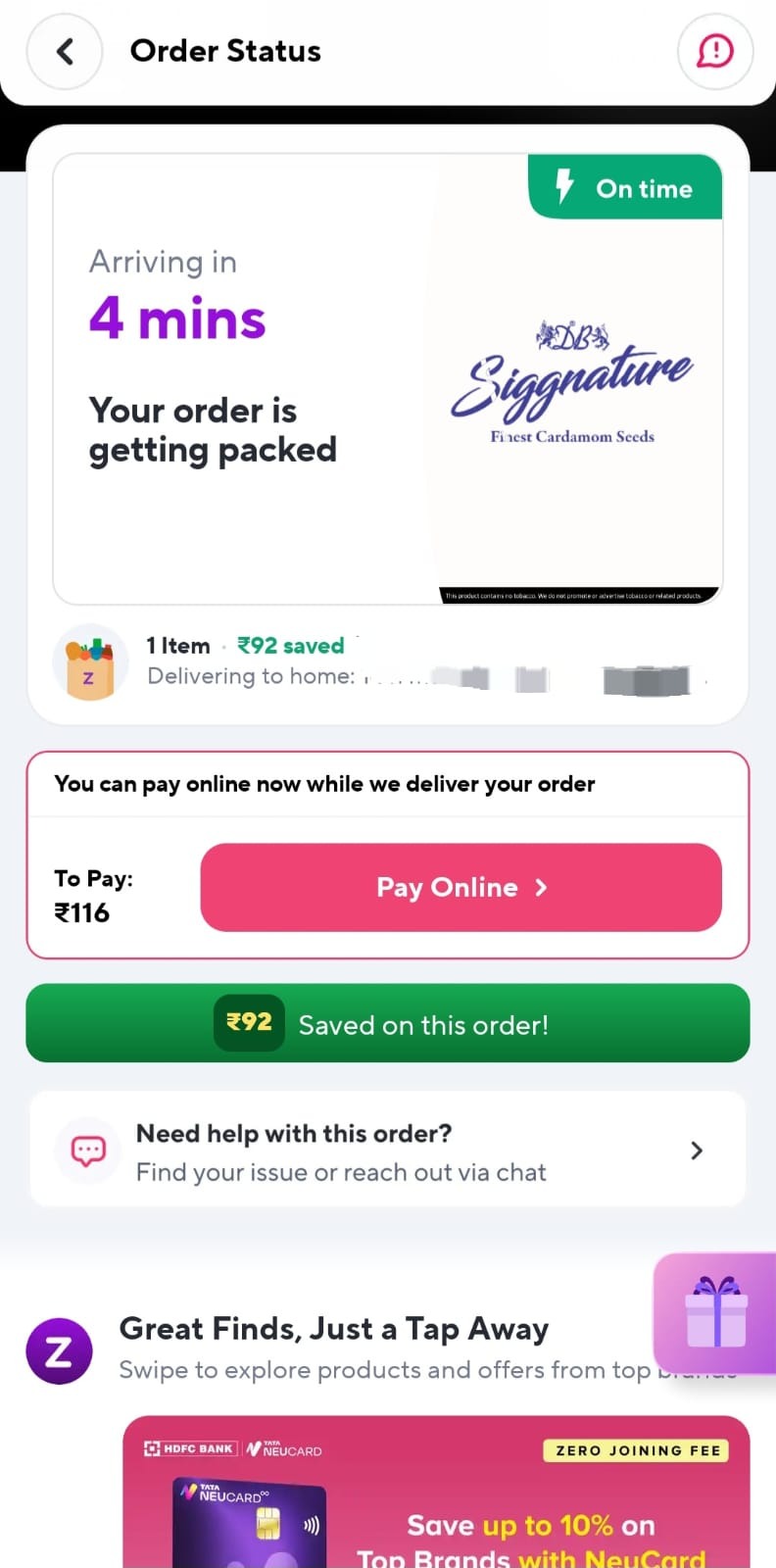
Like the other e-commerce platforms, all the payment modes are made available to the customer. They can make prepaid payments through UPIs, cards, etc, or can do cash-on-delivery.
Fast Picking and Packing
When you place an order, workers in the dark store quickly:
- Find your items (usually takes 2-3 minutes)
- Pack them carefully
- Hand them to a delivery person.
- Send you tracking information within the app itself.
And just in 10-15 minutes, you get your order at your doorstep.
Hyperlocal Delivery Network
How do these quick commerce companies deliver your orders? They have delivery partners who work either full-time or part-time. When your order gets packed, it is handed over to the delivery partner. He has a device that shows them the shortest route to your home.
With their own vehicle, either bikes or bicycles, they navigate to your address, call you once they reach, hand over the products to you, mark the confirmation on the app, and move on to the next delivery.
Quick Commerce vs Traditional E-commerce: How Both are Different From Each Other?
Why Quick Commerce Is Growing So Fast in India?
Demand for Convenience
Customers who are located in India, and particularly in cities, are busy. They want easy and fast shopping. Quick commerce saves time, which a person can utilise either at work, family, or sleep.
In a recent survey, 78 per cent of urban Indians have indicated a preference for quick delivery at the expense of lower prices for basic needs.
Urban Lifestyles
In India, living in a city is becoming faster and more hectic. People are busy spending many hours at work, travelling in traffic jams, and do not have time to shop. That is why they need these quick commerce platforms from which they can purchase these daily essentials.
Statistics show:
- Mean travel period in Mumbai: 1.5 hours a day.
- Bangalore working hours: 9-10hours a day.
- Delhi traffic time daily: 2 hours a day.
- Such hectic schedules make 15-minute grocery delivery extremely appealing.
Instant Gratification Mindset
Customers, in particular youths, desire everything instantly. This is referred to as the instant gratification mindset.
Data shows:
- 65% of Indian millennials desire immediate delivery
- One out of five will be ready to pay an additional amount of money in order to receive goods within a shorter time frame.
- Eighty per cent shop with mobile applications.
Competitive Pressure
Quick commerce is an emerging trend among companies, and this poses competition. This competition leads to:
- Better services
- Lower prices
- Faster delivery
- More product choices
That is why the quick commerce in India is growing rapidly.
What are The Benefits of Quick Commerce for E-commerce Brands?
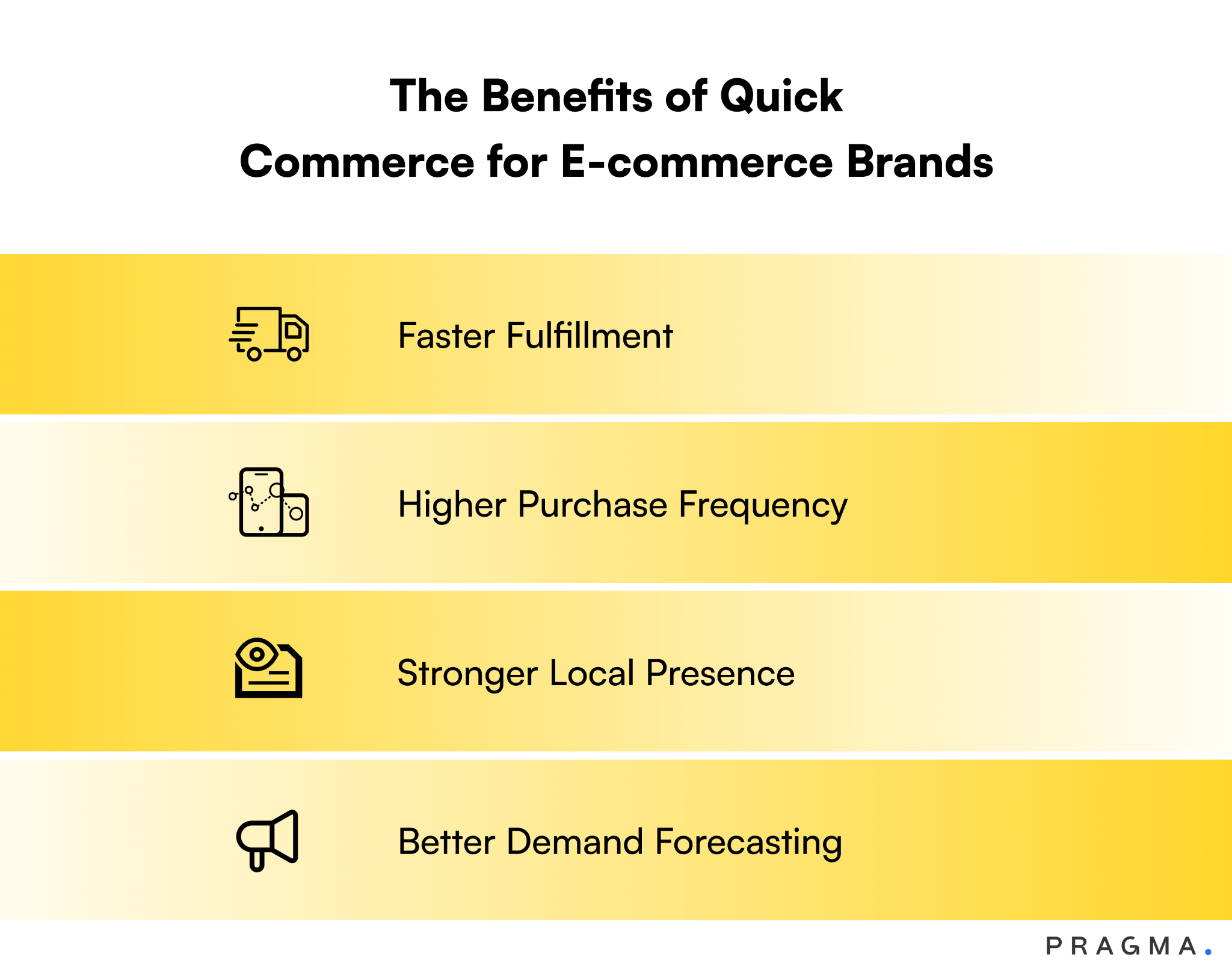
Faster Fulfillment
Quick commerce assists e-commerce brands in delivering products within a short time, ranging from 10 to 30 minutes. This quick service satisfies the immediate needs of customers. They don't have to wait for their order.
Customers are better satisfied when their orders are delivered fast, and will tend to trust the brand and make repeat orders.
Higher Purchase Frequency
Due to the instant delivery of quick commerce, people are more likely to order. They do not make advance plans for purchases but instead order them when they are required.
This boosts the volume of orders among the e-commerce brands, particularly those products that are consumed on a daily basis, such as groceries, snacks, and household items.
Stronger Local Presence
Quick commerce relies on local dark stores or small warehouses near the customer locations. This will make e-commerce brands more apparent and trusted in particular neighbourhoods and cities.
High local presence makes the customer believe that the brand is near, and they can access it anytime they require.
Better Demand Forecasting
Quick commerce platforms obtain real-time information on common orders made by customers. The information assists the e-commerce brands to know the purchasing pattern, the trending products, and the most active demand time.
Through this knowledge, the brands will be able to keep the inventory under control, minimise waste, and have the merchandise that sells always available.
Challenges of Quick Commerce in India
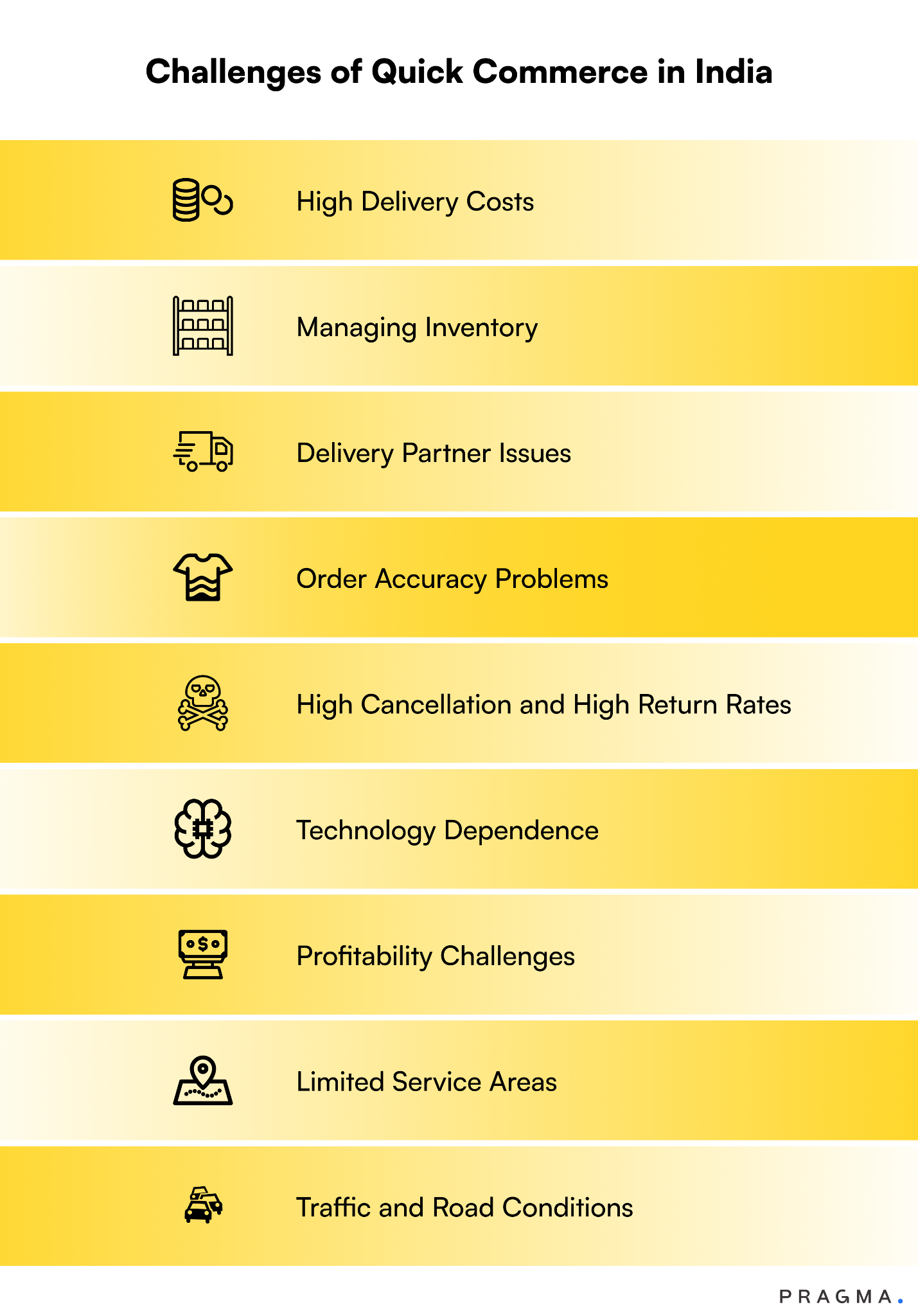
As we are aware, quick commerce in India involves the delivery of products such as groceries and day-to-day products within 10-30 minutes. It seems easy, but it has to face various challenges:
High Delivery Costs
Fast delivery requires hundreds of delivery riders, dark stores, and speedy operations. All this increases costs.
Sometimes, it may happen that the costs of delivery exceed the amount of the order placed.
Managing Inventory
To offer speed, the products should be available nearby. However, it is not easy to maintain the right stock in numerous small warehouses.
Due to this, it may happen at various times that some of the products are out of stock. And this disappoints the customers very much.
Delivery Partner Issues
It is difficult to find and keep delivery partners. Delivery partners are normally subjected to a lot of pressure as they are given a limited time to meet the deadline.
Their work is stressful due to traffic, poor road systems, weather, and hard destinations. The slightest delay can influence their ratings or incentives.
Most of the delivery partners work long hours at low wages. This contributes to job dissatisfaction and high turnover.
Order Accuracy Problems
As there is pressure to deliver the order in a short time, sometimes errors occur.
The customers can be given the wrong items, damaged goods, or orders. This makes customers irritated and unsatisfied with the services offered by the quick commerce company.
High Cancellation and High Return Rates
Returns and rejections are also a part of quick commerce, like an e-commerce business. If at any time the delivery is not made on time and gets delayed, the customer quickly rejects the order and returns it.
These returns affect the efficiency of the business as well as its profitability. In the e-commerce business, Pragma saves companies from these RTO issues with their Return Management Suite. It helps major D2C brands to reduce their RTO rates by 65%.
Technology Dependence
Quick commerce is completely run with the help of apps and the internet. If at any time, problems occur with the app or the internet connectivity of the customer, they will not be able to place the order.
Any technical issue can stop the entire operation. And this is one of the major challenges in quick commerce, because if there are issues, how will these businesses run?
Profitability Challenges
In order to compete with other competitors in the market, quick commerce companies also have to offer discounts and offers to their customers. They have to provide free deliveries too, but in reality, it costs them to deliver.
Also, a lot of operational costs are involved in running the quick commerce business. This makes it difficult for some companies to make profits.
Limited Service Areas
Quick commerce tends to succeed only in large urban areas and in selected localities.
Expanding to the small towns is difficult because of the infrastructure and the high costs.
Traffic and Road Conditions
The traffic jams, narrow roads, and common jams are common in Indian cities. Due to this, the delivery partners are subjected to delays, making it difficult to deliver orders on time.
Quick Commerce Examples in India
Here are the main quick commerce examples of companies operating in India:
1. Blinkit (formerly Grofers)
It is one of the oldest quick commerce examples of a company operating in India. It was launched in 2013.
2. Zepto
Zepto was launched in 2021.
3. Swiggy Instamart
Swiggy launched Instamart in 2020.

4. BigBasket Now (BB Now)
BigBasket launched its BB Now quick commerce service in 2021.
How E-commerce Brands Can Participate in Quick Commerce?
If an e-commerce brand wants to join the quick commerce industry, firstly, they need to understand what quick commerce is. Then follow the given steps:
Understand If Your Products Are Suitable
If you, as an e-commerce brand, wish to enter the quick commerce industry, firstly, you have to know whether you have the products that are suitable for the quick commerce industry or not. Here are the products that are suitable for quick commerce:
- Items that can be purchased frequently
- Things people need immediately
- Items that are easy to store and deliver
- Can be stored in dark stores
Partner with Quick Commerce Platforms
The next thing you have to do to enter the quick commerce is to partner with the quick commerce platforms running in the market. The most popular platforms are Zepto, Swiggy Instamart, BlinkIt, Big Basket, etc.
To choose among the various platforms, see which suits your products, or if you want to expand your business, you can be on multiple platforms.
Store Inventory In Nearby Local Warehouses Or Dark Stores
Brands have to store their products in small warehouses that are near residential neighbourhoods in order to deliver their orders within minutes.
It saves the time taken by delivery partners to travel and makes delivery orders completed faster.
Have Simple And Convenient Packaging
Small, light, and safe packaging that can be picked up easily, packed, and delivered should be used by brands.
Good packaging is also useful in preventing damage when fast handling and transportation are involved.
Manage Inventory in Real-time to Prevent Stockouts
Brands need to monitor stock levels continuously using digital tools. When brands are managing inventory in real-time, they can ensure the availability of popular products at all times.
This will help them save from situations such as stockouts and prevent them from losing sales.
Analyse Demand Data To Plan Stock And Pricing
Quick commerce produces frequent order data, which shows the buying behaviour of customers.
By using this information, brands will be able to predict demand, maximise inventory, offer competitive prices, and give some discounts on the products that are highly demanded.
What is The Role of Technology in Quick Commerce?
- It assists in delivering products to consumers in minutes.
- It can help in managing inventory by displaying real-time stock availability within nearby warehouses, hence the customer can only order things that are in stock.
- Orders are also processed immediately through technology and delivered to the nearest store or warehouse so that they can be picked and packed effectively.
- It also supports fast delivery by assigning the nearest delivery partner and choosing the shortest delivery route.
- It assists businesses in researching customer purchasing behaviour, strategising the inventory in a more efficient way, and preventing stock shortages.
- The customer experience is also enhanced by easy-to-use mobile applications, fast online payments, and real-time tracking of orders.
What is The Future of Quick Commerce in India?
Quick commerce will keep on expanding rapidly in India in 2026, with an increased number of people adopting these services to meet their daily needs.
The general market will grow in value and orders, making quick commerce a far more significant percentage of the online shopping market in India.
Platforms such as Blinkit, Swiggy Instamart, Zepto, and others will attempt to grow into other cities and introduce more product lines to groceries, including electronics, fashion, and pharmacy products, to secure more customers.
To Wrap It Up
To conclude here, we want to say that quick commerce is absolutely very helpful for places like India, where people are busy with their work, families, etc. It delivers the everyday essentials within a few minutes, without the need to go somewhere outside.
And for the businesses, the quick commerce increases the opportunity to increase their market share as well as sales. By being on such platforms, they can enter a local market too easily.
In the end, we can say that this is just the beginning of quick commerce. In the future, it will grow rapidly and can boost the country’s economy as well.

FAQs (Frequently Asked Questions On What is Quick Commerce? Meaning and Examples in India)
1. What is quick commerce (q-commerce)?
Quick commerce, or q-commerce, is a form of e-commerce focused on ultra-fast delivery, typically within 10–30 minutes, using hyperlocal dark stores and last-mile delivery networks.
2. How is quick commerce different from traditional e-commerce?
Traditional e-commerce delivers in one to several days, while quick commerce prioritises speed over assortment, offering limited SKUs delivered almost immediately from nearby fulfilment hubs.
3. Why is quick commerce growing rapidly in India?
Growth is driven by urban lifestyles, demand for instant convenience, high smartphone penetration, dense city populations, and strong adoption of on-demand services in metros.
4. What products are commonly sold on quick commerce platforms?
Typical categories include groceries, daily essentials, snacks, beverages, personal care items, household supplies, and limited pharmacy or OTC products.
5. What are some examples of quick commerce platforms in India?
Well-known examples include Blinkit, Zepto, Swiggy Instamart, and BB Now, all of which focus on rapid delivery within city limits.
6. How does quick commerce work operationally?
Orders are fulfilled from nearby dark stores or micro-warehouses, with inventory pre-positioned based on demand forecasts and delivered by local riders using optimised routing.
7. What are the main benefits of quick commerce for customers?
Key benefits include instant gratification, convenience for urgent needs, predictable delivery times, and reduced planning compared to scheduled e-commerce orders.
8. What challenges do quick commerce businesses face in India?
Major challenges include high operating costs, inventory wastage, thin margins, rider availability, demand forecasting accuracy, and regulatory constraints in certain cities.
9. Is quick commerce profitable in India?
Profitability remains challenging. While order volumes are high, margins are thin due to delivery costs and dark-store operations. Scale, basket size growth, and operational efficiency are critical.
10. How does quick commerce impact traditional D2C and e-commerce brands?
Quick commerce shifts customer expectations towards faster fulfilment, pushing brands to rethink inventory placement, partnerships, and last-mile delivery strategies in urban markets.
Talk to our experts for a customised solution that can maximise your sales funnel
Book a demo

.png)