

Why the Best E-commerce Brands Hear Problems Before Customers Complain
Indian D2C Customers Are Talking — Just Not Directly to Your Support Team
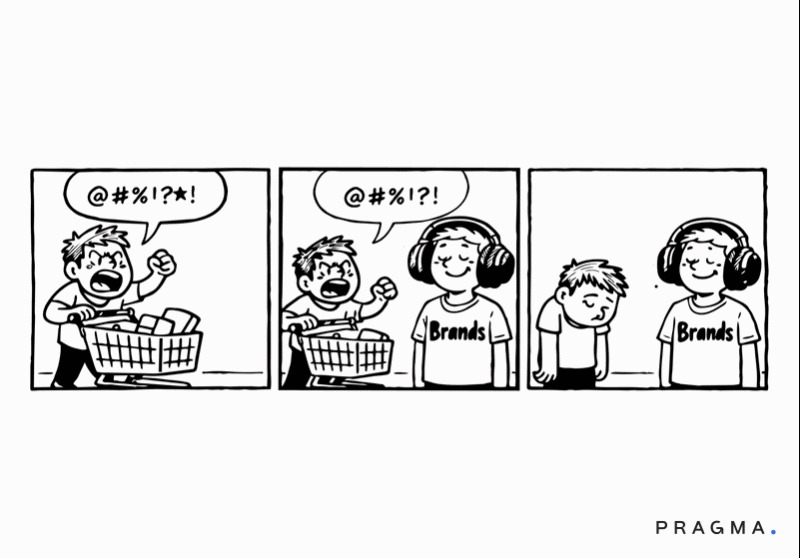
When Indian D2C brands talk about customer listening, the conversation usually starts in the wrong place.
It starts with surveys, ratings, reviews, and NPS dashboards — tools designed to ask customers how they feel, often long after something has already gone wrong. In reality, Indian eCommerce customers rarely wait around to explain themselves. They act first and move on quickly.
They abandon checkout without warning.
They stop answering delivery calls.
They refuse COD orders at the doorstep.
They initiate returns without raising tickets.
None of this is random behaviour. It is communication.
The problem is not that Indian customers don’t give feedback. The problem is that brands are listening in places where customers no longer bother to speak.
In India’s D2C ecosystem — shaped by COD dependence, inconsistent last-mile execution, variable courier quality, and WhatsApp-first communication — dissatisfaction shows up operationally before it ever becomes emotional. By the time a brand sees a bad review or a support escalation, the revenue impact has already occurred.
This blog is built around one central idea:
“…customer listening in Indian D2C is not a CX activity, it is an operational intelligence system.”
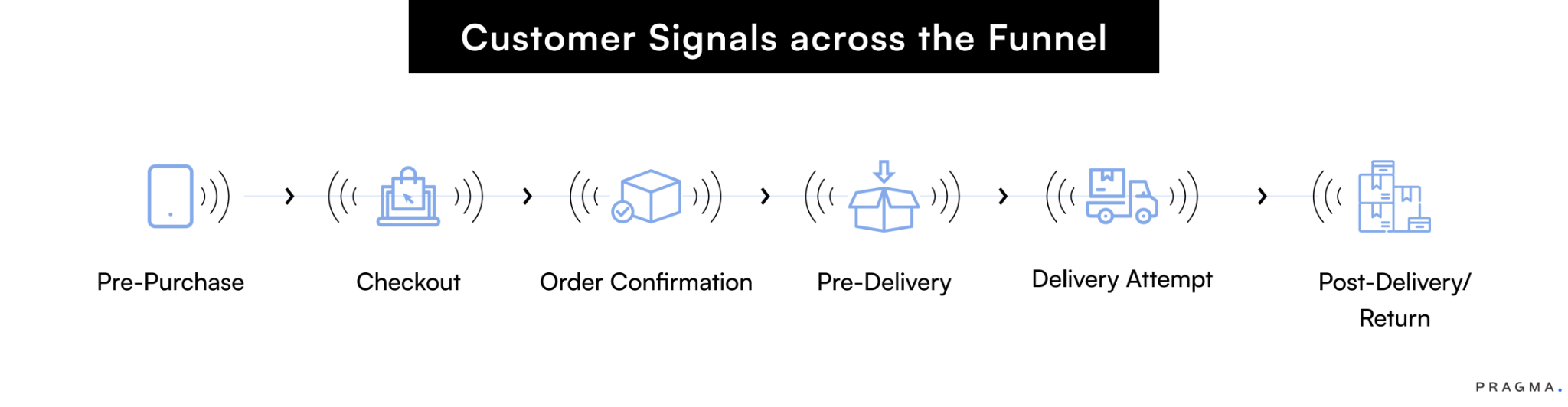
We’ll unpack why listening breaks down, where customers are actually “talking” across the journey, and how mature brands convert these signals into revenue protection rather than post-mortems.
Listening Stage 1: Customer Listening Is Broken in Indian D2C — And It’s Not a CX Problem
Most Indian D2C brands believe they are listening to customers because they have visibility into feedback. In practice, they are listening too late and in the wrong format.
Customer listening is often parked under CX or Support, treated as a brand perception exercise. That framing works poorly in India, because the biggest sources of customer dissatisfaction are rarely about tone, messaging, or empathy. They are about reliability — whether the order arrives, whether COD works, whether refunds are processed on time.
These are operational failures, not communication gaps.
Why India Breaks Conventional Customer Listening Models
Customer listening frameworks imported from Western markets struggle in India because customer behaviour follows a different logic here. Indian shoppers optimise for effort and certainty, not for expressing dissatisfaction.
A few structural realities explain this:
- COD introduces trust-based decision making rather than commitment
- Courier performance varies dramatically by pincode and lane
- Last-mile delivery quality is inconsistent even within the same city
- WhatsApp replaces email as the primary engagement channel
- Complaining feels slower than simply disengaging
Because of this, Indian customers often choose the lowest-effort exit instead of escalation. They do not argue; they withdraw.
This creates a dangerous blind spot for brands. Silence is misread as stability, when in reality it often signals unresolved friction.
Where Brands Commonly Misread the Situation
When performance dips, teams tend to look at symptoms rather than signals.
Marketing teams see falling ROAS and assume creative fatigue.
Operations teams see rising RTO and blame “bad COD behaviour.”
Support teams see tickets spike and scramble reactively.
What’s missed is that all of these are downstream effects of earlier listening failures.
Customer listening breaks when brands rely on sentiment instead of signals.
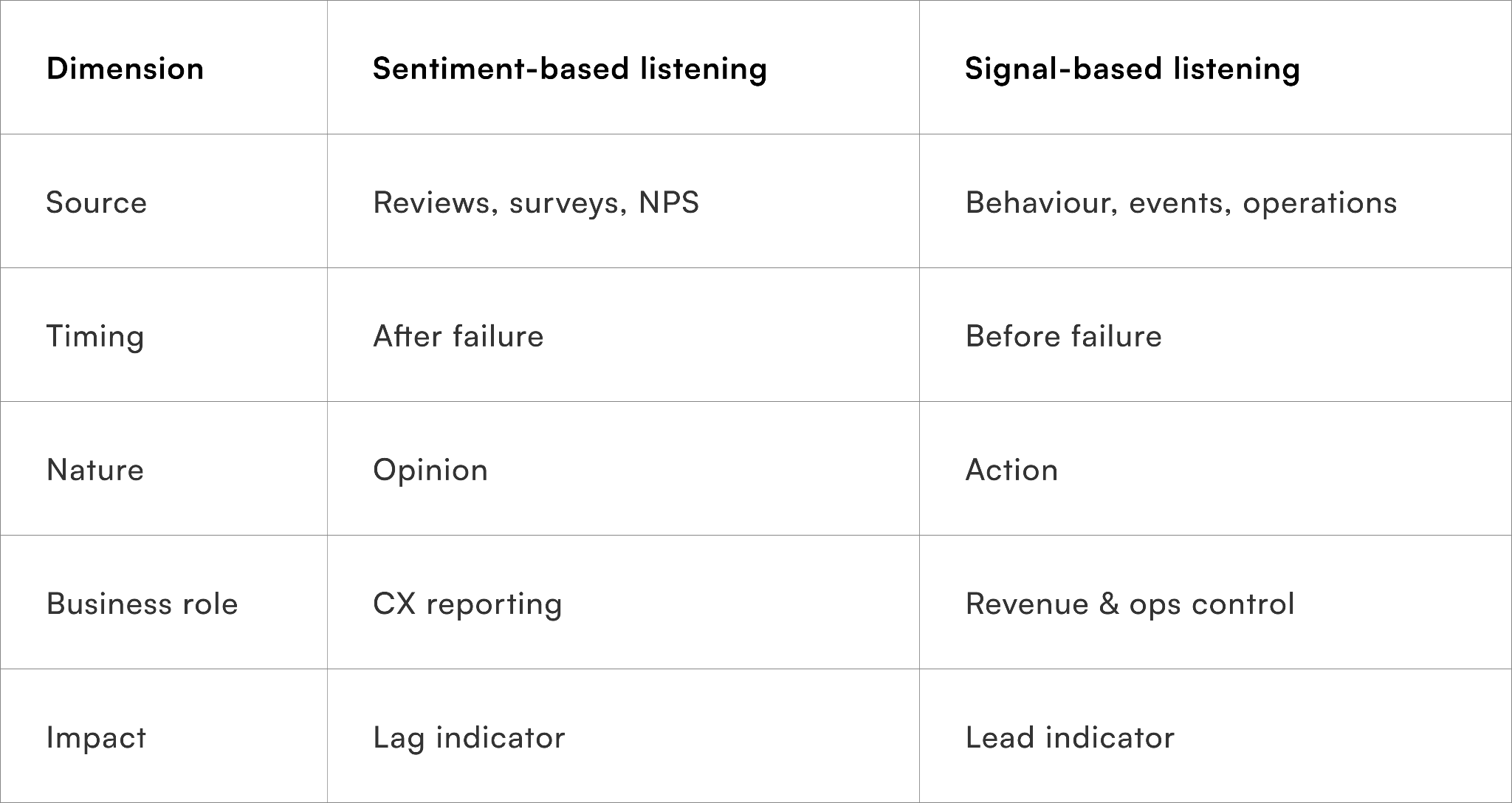
Sentiment explains how customers feel after damage.
Signals explain why damage is about to happen.
Why Indian Customers “Go Quiet” Instead of Complaining
There is also a psychological layer unique to the Indian D2C context.
For many customers, raising complaints feels uncertain. Resolution timelines are unclear, follow-ups are repetitive, and outcomes feel unpredictable. Over time, customers learn that disengagement is more efficient than escalation.
So instead of saying “I’m unhappy,” customers communicate through behaviour:
- They abandon checkout when payment trust breaks
- They stop answering calls when delivery feels unreliable
- They refuse COD when confidence drops mid-journey
Each of these is a clear message — just not a verbal one.
Brands that depend on tickets and reviews as their listening layer are effectively waiting for customers who have already decided to leave.
The Signals Customers Send Every Day
Even without explicit feedback, customers generate rich listening data continuously.
Some of the most common signals in Indian D2C include checkout abandonment patterns, sudden payment mode switching, repeated address edits, silent increases in NDR frequency, weekend-driven SLA breaches, and RTO clustering around specific pincodes or SKUs.
Individually, these may look like noise. Together, they form a highly accurate narrative of customer trust eroding in real time.
The crucial distinction is between lead indicators and lag indicators.
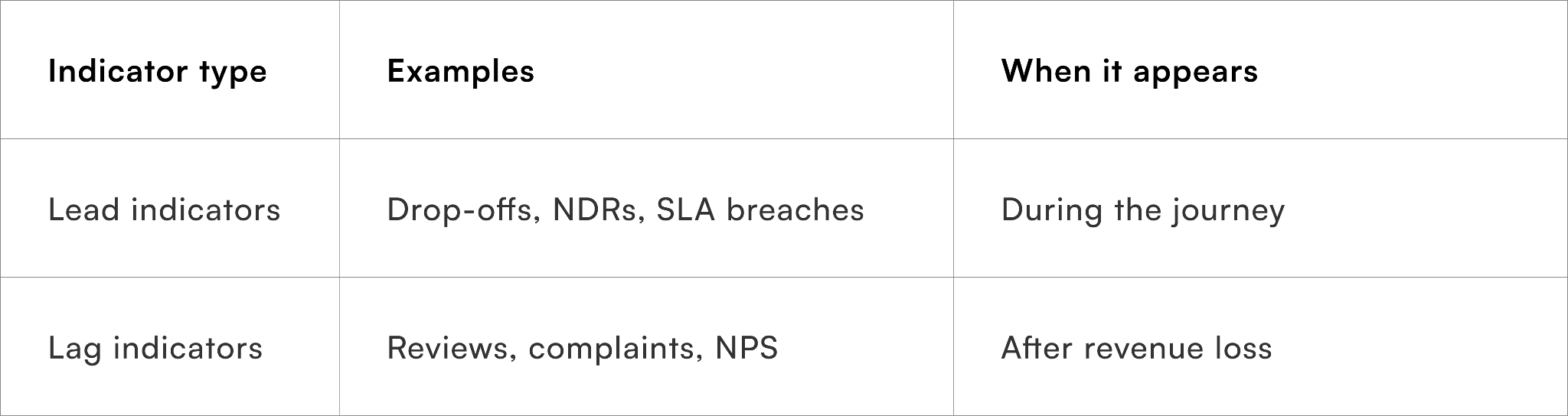
Indian D2C brands that focus only on lag indicators are permanently reactive. Those that build systems around lead indicators intervene earlier, spend less on recovery, and preserve contribution margins.

The Shift That Changes Everything
Customer listening must move from asking questions to observing behaviour.
It requires brands to stop waiting for explanations and start interpreting what customers are already demonstrating through their actions. Once this shift happens, listening stops being a CX cost centre and becomes a revenue protection mechanism.
That foundation is critical, because the earliest and most valuable customer signals appear even before an order is placed.
That’s where we go next.
Listening Stage 2: Pre-Purchase & Checkout Signals — Where Customers First Lose Trust
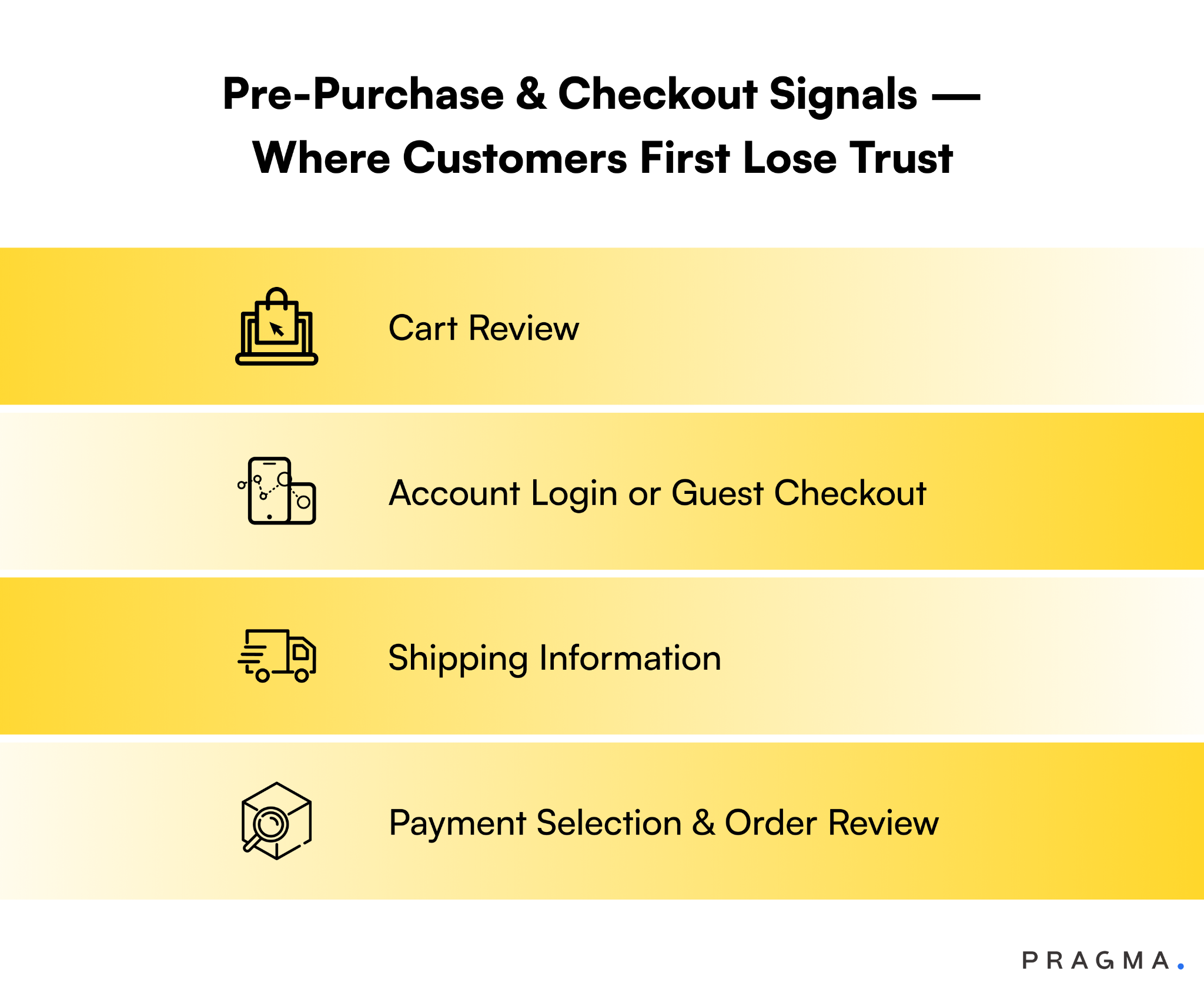
Long before a customer refuses delivery or initiates a return, they usually hesitate at a much quieter point in the journey.
The checkout.
In Indian D2C, checkout is not just a payment step. It is a trust negotiation. Customers arrive interested, but not fully convinced. What happens in the next 30–60 seconds determines whether that interest converts into revenue or evaporates silently.
Most brands treat checkout performance as a conversion metric. High-performing brands treat it as a listening surface.
Why Pre-Purchase Signals Matter More Than Brands Admit
The pre-purchase phase is where customers are most honest.
At this stage:
- There is no sunk cost
- No social pressure
- No delivery dependency
- No refund anxiety
If something feels off, customers simply leave.
They do not complain.
They do not explain.
They just exit.
This makes pre-purchase behaviour the cleanest form of customer feedback you will ever get.
How Indian Customers Express Doubt Before Buying
Indian shoppers rarely abandon checkout randomly. Their behaviour usually changes in predictable ways when trust starts slipping.
Common pre-purchase signals include:
- Switching payment modes repeatedly (UPI → COD → exit)
- Hesitating or correcting address details multiple times
- Dropping off immediately after COD eligibility changes
- Abandoning at the payment confirmation step
- Reloading checkout due to latency or failed intents
Each of these actions reflects a specific concern — not indecision.
What brands often label as “drop-off” is, in reality, customer communication.
The India-Specific Trust Equation at Checkout
Checkout trust in India is shaped by factors that don’t exist — or don’t dominate — in Western markets.
A few structural realities define this phase:
- COD is a trust fallback, not a preference
- Pincode determines delivery confidence, not brand promise
- Latency feels riskier on mobile-heavy, variable networks
- Address friction signals future delivery issues in the customer’s mind
When any of these break, customers don’t escalate. They retreat.
This is why checkout listening must go deeper than aggregate conversion rates.
What Brands Commonly Get Wrong at This Stage
When checkout performance dips, most teams default to familiar explanations.
Marketing assumes traffic quality has dropped.
Product teams tweak UI elements.
Growth teams run A/B tests on button colours.
Meanwhile, the real issues remain unaddressed.
Common misreads include:
- Treating COD disablement as a fraud lever only
- Viewing address validation purely as a data hygiene step
- Ignoring payment intent failures as “gateway issues”
- Analysing checkout drop-offs without pincode context
These mistakes happen because brands look at checkout in isolation, instead of as the first listening checkpoint in the fulfilment journey.
What the Data Typically Shows (India D2C Patterns)
Across Indian D2C brands, certain patterns repeat with remarkable consistency.
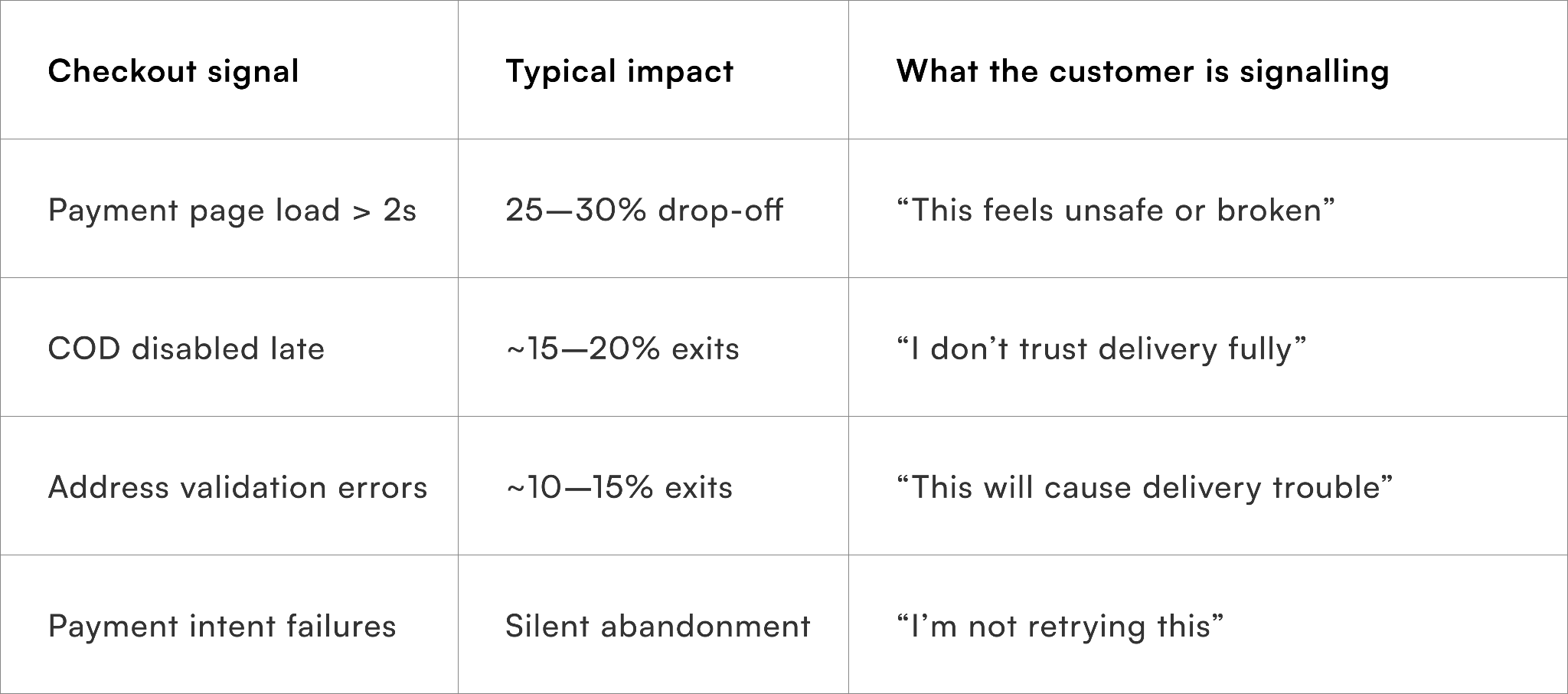
These are not edge cases. They are everyday listening moments that most brands fail to decode.
A customer abandoning checkout due to address friction is not rejecting the product. They are predicting a future delivery problem — and opting out early.
Where Mature Brands Listen Differently
Brands that take pre-purchase listening seriously do not ask, “Why didn’t they convert?” after the fact.
They ask:
- What changed in customer behaviour just before exit?
- Which payment mode lost confidence, and where?
- Which pincodes show hesitation patterns repeatedly?
This requires checkout systems that capture intent signals, not just outcomes.
At this stage, platforms like 1Checkout become relevant — not as conversion tools, but as listening infrastructure. By observing payment intent flows, COD eligibility interactions, address behaviour, and latency sensitivity together, brands gain visibility into why customers hesitate, not just that they left.
That visibility allows brands to:
- Prevent bad orders instead of recovering failed ones
- Reduce future RTO risk at the source
- Protect ROAS by stopping spend leakage early
Pre-purchase listening is not about squeezing more conversions out of distrustful customers. It’s about understanding where trust breaks first, so downstream failures never occur.
Why This Stage Sets Up Everything That Follows
When brands ignore pre-purchase signals, they push fragile orders into the system. Those orders don’t disappear — they resurface later as NDRs, refusals, and returns.
Listening early doesn’t just improve checkout metrics.
It determines the quality of orders entering fulfilment.
That’s why the next listening layer — post-order, pre-delivery — is so critical. It’s where fragile trust either stabilises or collapses completely.
Listening Stage 3: Post-Order Silence — Listening Between Order Confirmation and Delivery
The moment an order is placed, most Indian D2C brands mentally tick a box.
Order confirmed.
Revenue booked.
Next problem.
Customers, however, enter the most anxious phase of the journey right here — after they’ve committed, but before anything tangible has happened. This is the stage where trust is either stabilised or quietly starts to erode.
Crucially, customers don’t complain much in this window. They wait. And while they wait, they signal.
Why This Phase Is the Most Ignored Listening Layer
Post-order, pre-delivery is operationally inconvenient to monitor.
There are no flashy conversion metrics.
No refunds yet.
No doorstep drama.
So brands tend to assume “no news is good news”.
In Indian D2C, that assumption is dangerous.
This phase is where:
- Delivery expectations are formed
- Patience thresholds are tested
- Confidence in the brand is recalibrated
If uncertainty creeps in here, customers rarely articulate it. They store it — and act on it later.
What Customers Are Actually Reacting To in This Window
Customers are not tracking your internal statuses. They’re reacting to movement — or the lack of it.
A few things matter disproportionately at this stage:
- How quickly the order leaves the warehouse
- Whether tracking looks alive or stagnant
- Whether promised timelines feel believable
- Whether communication is proactive or reactive
When these signals don’t align, customers begin to disengage mentally — even though the order technically still exists.
The Signals Customers Send (Without Saying Anything)
Post-order listening relies almost entirely on behavioural and operational signals.
Common ones include:
- Orders stuck in “manifested” or “picked” states
- Long gaps between status updates
- Sudden spikes in NDR creation shortly after dispatch
- First-mile delays during weekends or sale periods
- Repeated reschedules without explanation
Individually, these look like routine ops noise. Collectively, they form a clear warning pattern.
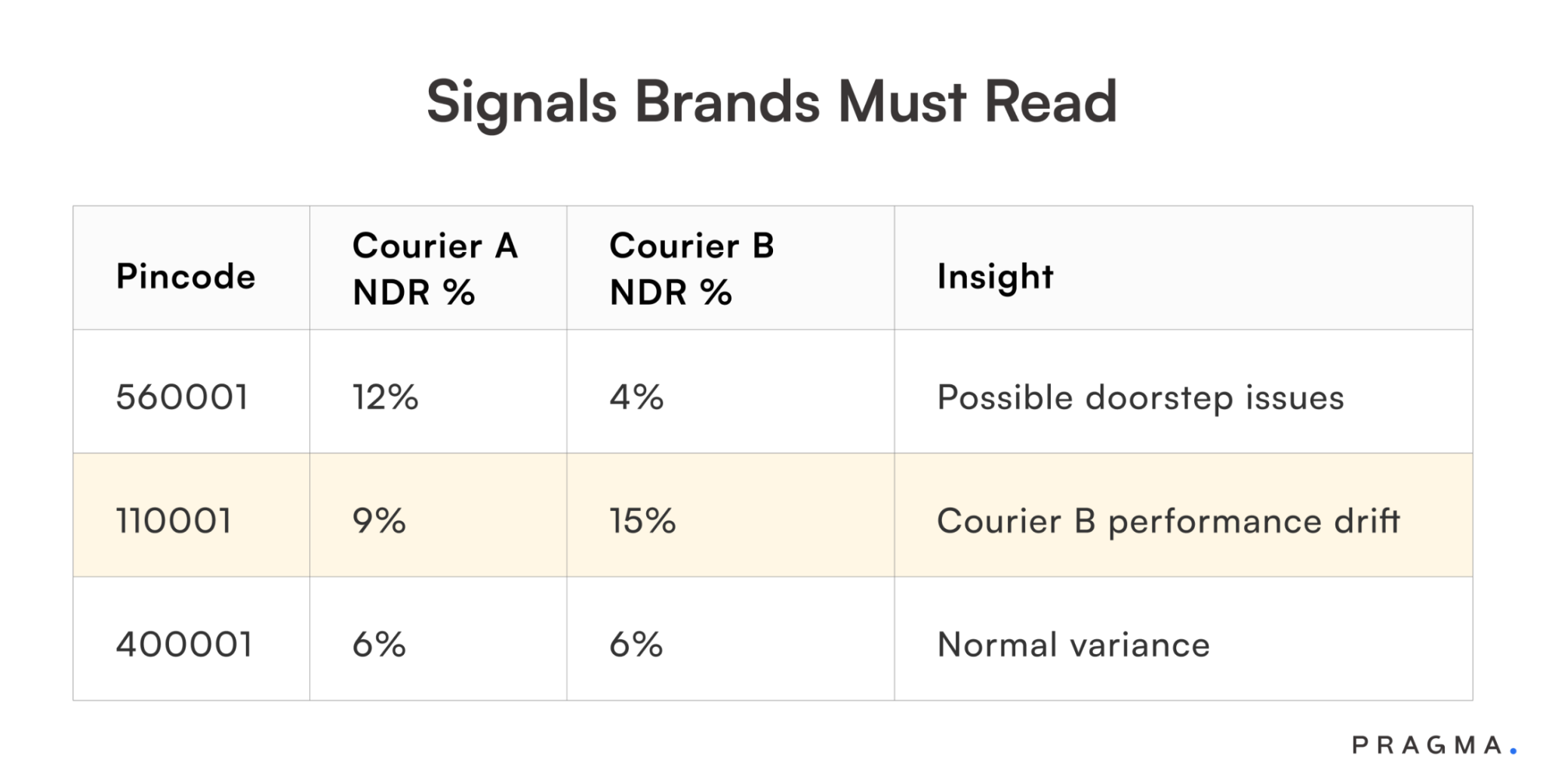
Where Brands Typically Get This Wrong
Most brands only review this phase after a failure.
They look at it when:
- RTO has already occurred
- Support tickets have piled up
- Courier blame games begin
The underlying mistake is treating this phase as a courier responsibility rather than a customer trust phase.
Common missteps include:
- Accepting courier SLAs on paper but not monitoring breaches live
- Tracking shipments only at an aggregate level
- Missing pincode-specific or lane-specific deterioration
- Assuming “NDR happens later”, so ignoring early indicators
By the time brands react, the customer has already recalibrated expectations downward.
The Role of NDRs Before They Become a Problem
Non-Delivery Reports don’t suddenly appear at the doorstep. They are usually preceded by patterns.
In Indian D2C, early NDR creation is often linked to:
- Delayed first delivery attempts
- Poor agent-to-customer contact rates
- Overloaded courier routes
- Inaccurate promised delivery timelines
Listening here means watching NDR formation, not just NDR outcomes.
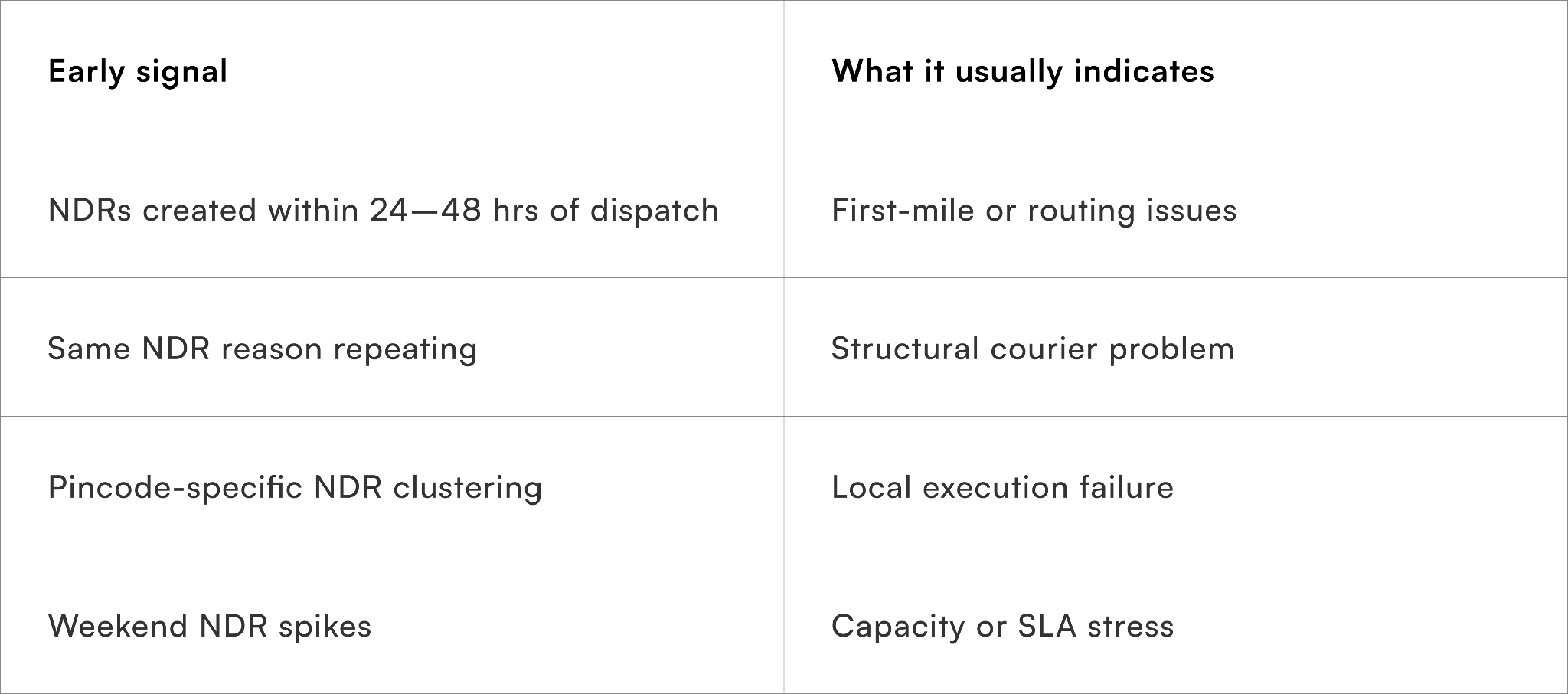
These signals surface before customers refuse or disengage completely.
Why Real-Time Monitoring Changes the Equation
Brands that listen well in this phase do not wait for daily or weekly reports.
They monitor:
- Shipment ageing by status
- SLA breaches as they occur
- NDR creation velocity
- Courier performance drift over time
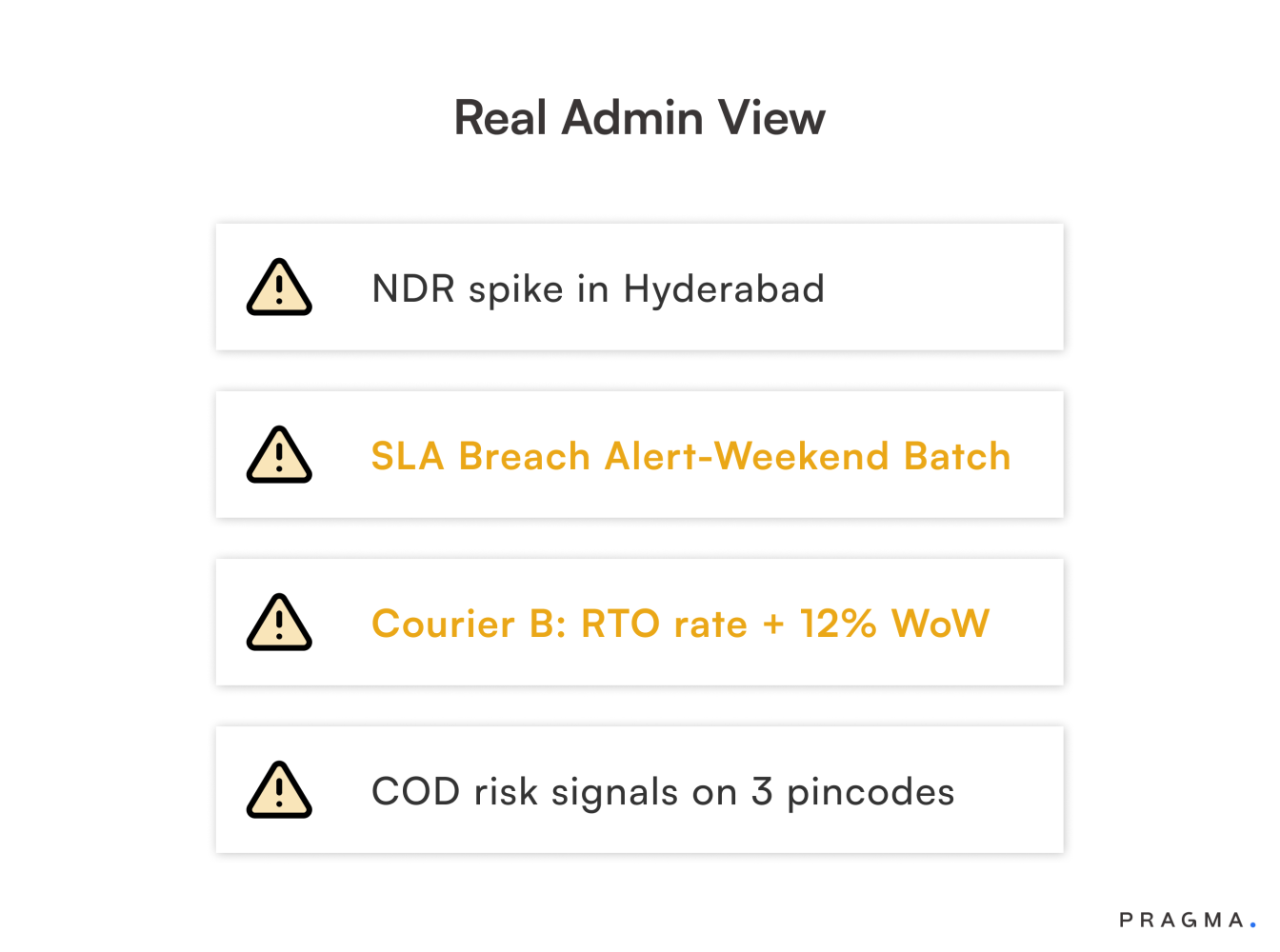
This is where systems like JMS and ShipAxis become relevant — not as tracking tools, but as listening layers. A single dashboard that surfaces shipment health, SLA risk, and NDR patterns in real time allows teams to intervene while the customer is still waiting, not after they’ve given up.
The outcome is not just fewer operational surprises. It is fewer emotional ones.
What Proactive Listening Enables (Before Delivery Happens)
When brands listen actively in this window, they can:
- Trigger proactive customer communication before anxiety peaks
- Escalate courier issues before they cascade
- Re-route or prioritise fragile shipments
- Set realistic expectations instead of apologising later
Most importantly, they prevent fragile orders from becoming guaranteed failures.
Why This Phase Sets Up Delivery Outcomes
Post-order listening determines the state of mind with which a customer approaches delivery.
A customer who feels informed and confident behaves very differently from one who feels ignored and uncertain — even if the physical delivery attempt is identical.
Ignore this phase, and delivery becomes confrontational.
Listen properly, and delivery becomes procedural.
That distinction matters enormously in India.
Listening Stage 4: Delivery, RTO & Refusal — The Loudest Customer Feedback Brands Ignore
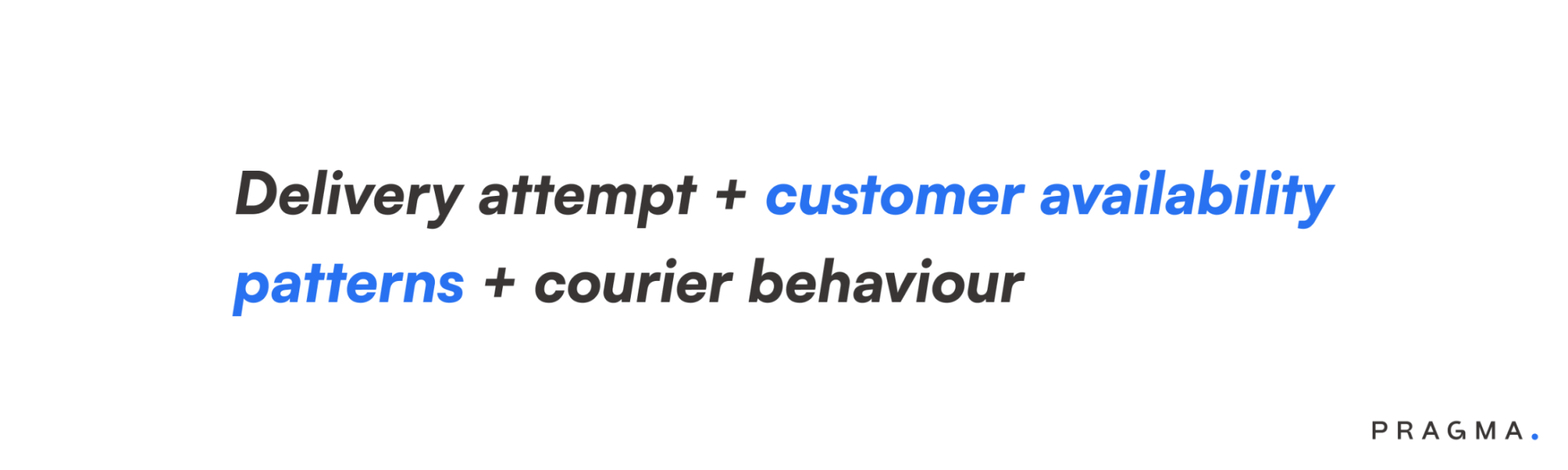
If checkout hesitation is the quietest form of customer feedback, then delivery refusal is the loudest.
In Indian D2C, a refused order is not a mystery. It is a customer making a final, informed decision — often after a series of small trust breaks that went unaddressed earlier in the journey. Yet many brands still treat RTO as an unfortunate but unavoidable cost of doing business in a COD-heavy market.
That assumption is expensive.
Delivery is the only moment in the journey where the customer, the courier, and the brand intersect in the real world. When things go wrong here, customers don’t bother explaining themselves. They simply say no.
Why Refusal Is Not “Customer Behaviour”
Brands often label refusals as irrational or opportunistic.
“COD customers are unreliable.”
“Indian customers change their minds.”
“Nothing can be done at the doorstep.”
These explanations are comforting — and mostly wrong.
In reality, refusals usually reflect accumulated doubt. By the time a delivery agent arrives, the customer has already evaluated the experience so far and decided whether the order feels worth accepting.
Refusal is not a spontaneous act. It is the end result of listening failures earlier in the journey.
What Customers Are Responding To at the Doorstep
At delivery, customers are not judging your marketing or your product description. They are responding to a very narrow set of factors:
- Whether delivery timing felt predictable
- Whether the agent contacted them properly
- Whether the parcel arrived when expected
- Whether trust survived the waiting period
If any of these feel misaligned, refusal becomes the simplest exit.
This is why two identical orders can have completely different outcomes depending on how the delivery experience unfolds.
Common RTO Triggers in Indian D2C (And What They Actually Mean)
RTO reasons often look vague in courier dashboards. Interpreting them correctly is where listening matters.
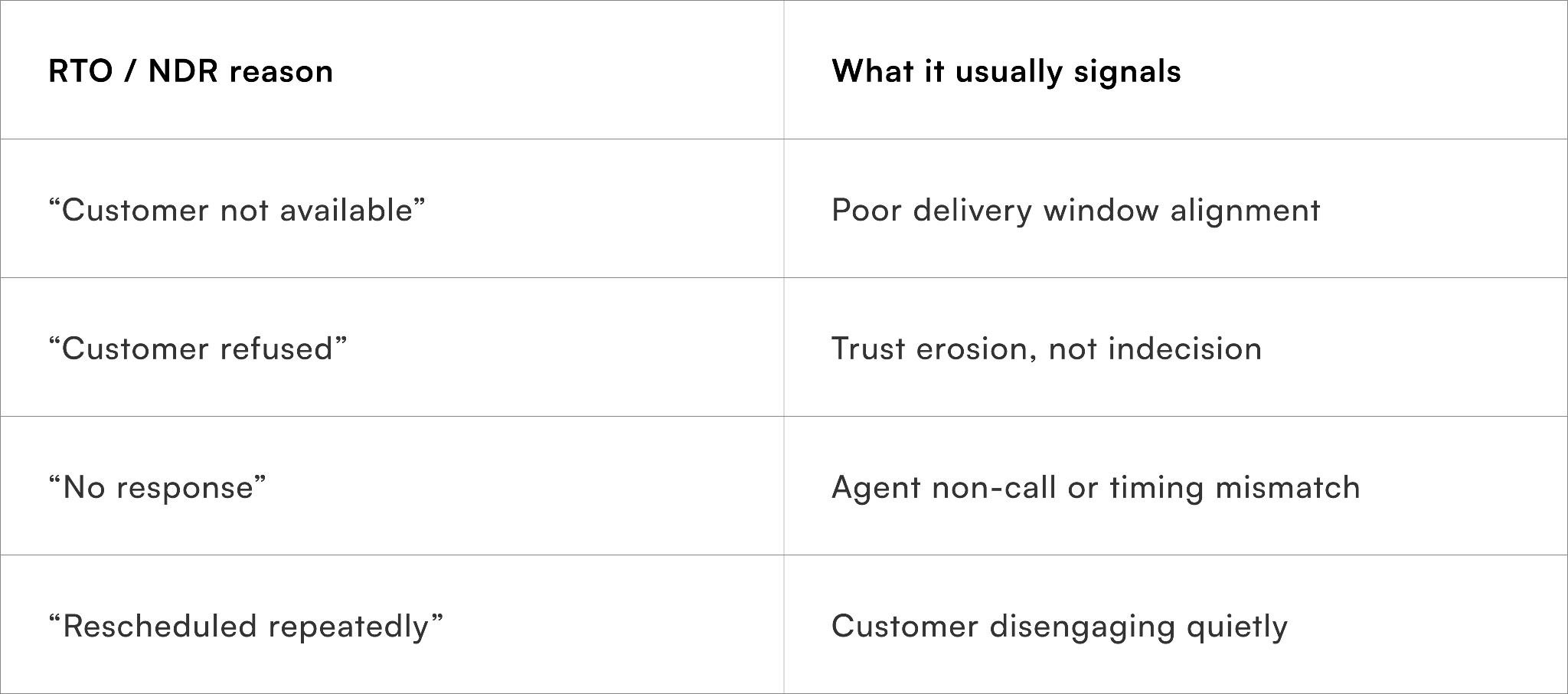
Taken at face value, these appear customer-driven. Look closer, and they are almost always execution-driven.
Where Brands Systematically Misread RTO
Most brands only analyse RTO after inventory has already travelled both ways.
They review:
- Aggregate RTO percentage
- Monthly courier scorecards
- Post-sale reports
What they miss is pattern density.
RTO is rarely evenly distributed. It clusters:
- By pincode
- By time of day
- By courier partner
- By sale periods
- By SKU category
When brands fail to listen at this granularity, they end up solving the wrong problem — often with blanket COD restrictions that hurt genuine demand.
The Role of Proactive Communication at Delivery
One of the biggest determinants of doorstep success in India is expectation alignment.
Customers who know:
- When the order will arrive
- Who will deliver it
- How to reschedule if needed
behave very differently from those left guessing.
This is where Omnichannel CRM and WhatsApp Business communication become operational listening tools, not marketing channels. Delivery nudges, agent call confirmations, and reschedule prompts are not about persuasion. They are about reducing uncertainty at the final mile.
Listening here means observing when customers respond — and when they don’t — and adjusting accordingly.
Preventable vs Non-Preventable RTOs
Not all RTOs are equal. Treating them as such is a costly mistake.
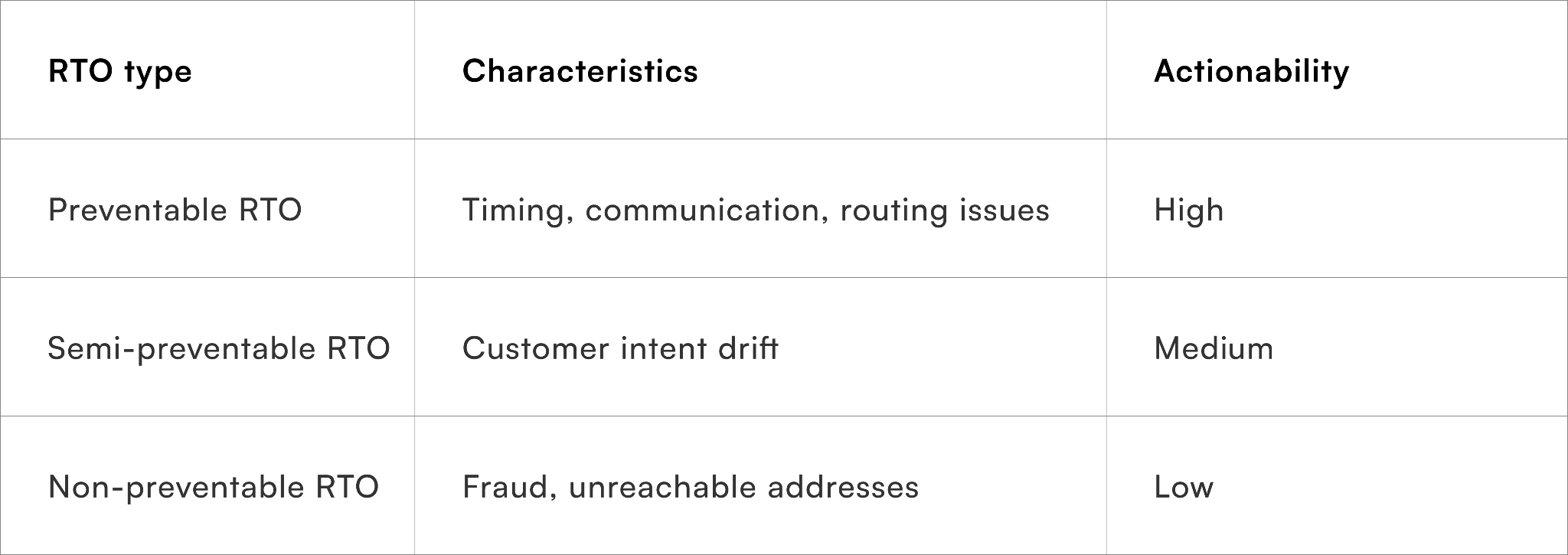
Brands that do not separate these categories end up either over-correcting or under-reacting.
Listening at the delivery stage is about identifying which refusals were predictable and avoidable, and feeding that insight back into earlier stages of the journey.
Why Delivery Listening Protects More Than Logistics Costs
Reducing RTO is not just about saving reverse logistics spend.
Every refused order also:
- Blocks inventory unnecessarily
- Delays cash flow
- Skews courier performance data
- Corrupts future demand forecasting
Most importantly, it permanently alters customer perception. A refused order often becomes a final interaction, not a failed one.
Brands that listen properly at delivery don’t aim for zero RTO. They aim for controlled, explainable RTO — where losses are understood, contained, and reduced systematically.
What This Stage Teaches About the Customer Journey
Delivery is where all earlier listening either proves effective or collapses.
If customers reach the doorstep confident, delivery is mechanical.
If they arrive doubtful, delivery becomes adversarial.
Understanding this distinction is critical, because the next stage — post-delivery — is where customers decide whether the relationship continues at all.
Listening Stage 5: Post-Delivery Listening — Returns, Refunds & the Point of No Return
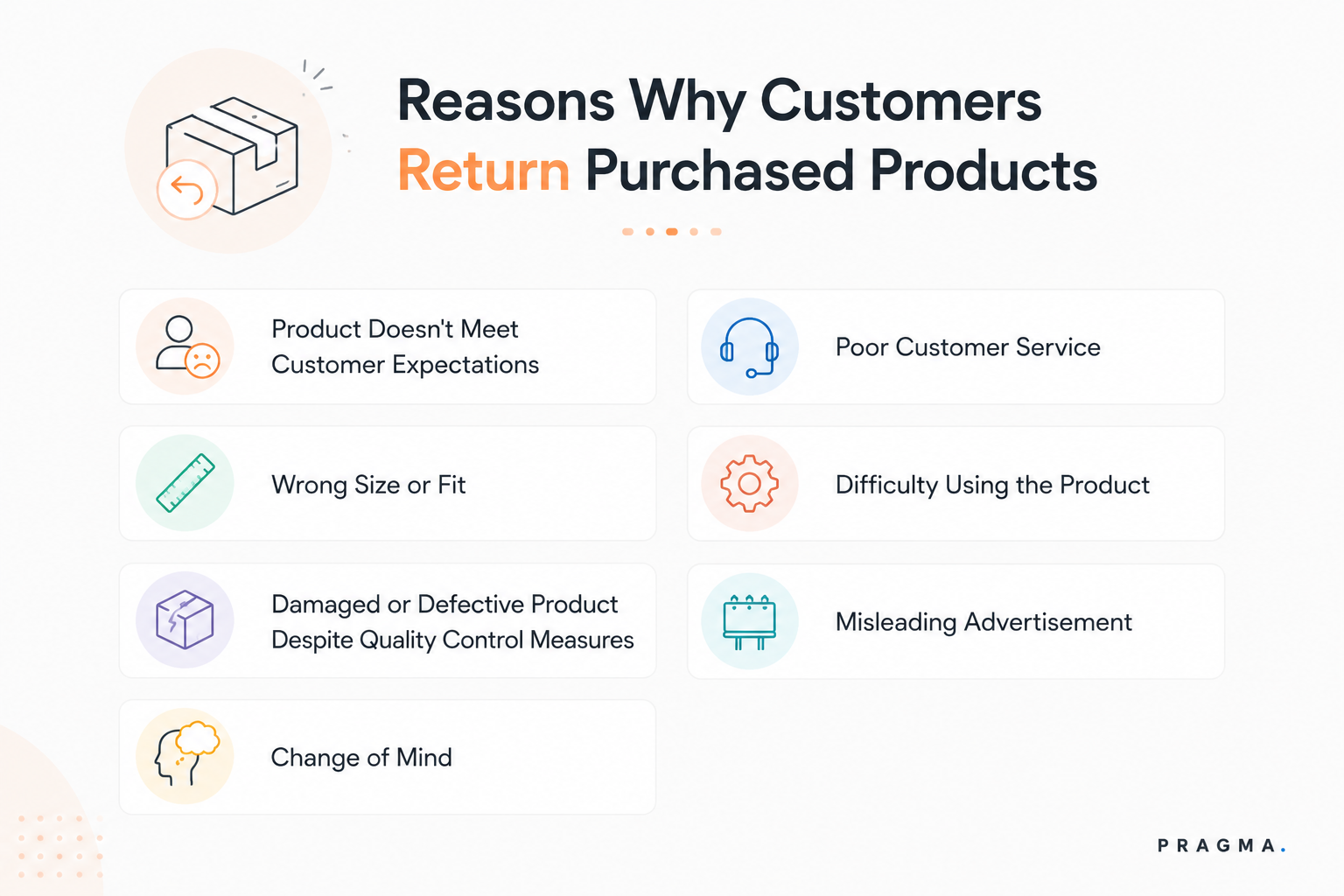
For most Indian D2C brands, delivery feels like the finish line.
The order is marked “Delivered”, revenue looks safe, and attention shifts to the next shipment batch. From the customer’s perspective, however, delivery is not the end of the journey — it’s the moment when judgement begins.
Post-delivery is where customers decide whether the brand deserves a second chance.
Why Post-Delivery Is the Most Emotionally Loaded Phase
Before delivery, customers operate on expectation.
After delivery, they operate on experience.
At this stage:
- The product is finally in hand
- Promises meet reality
- Tolerance for friction drops sharply
If something feels off — fit, quality, timing, packaging, or communication — customers act quickly. Unlike earlier stages, they do engage now, but not always constructively.
Returns, refund queries, and repeated follow-ups are all forms of customer communication. Brands that ignore these signals mistake operational noise for inevitable cost.
What Customers Are Really Saying When They Initiate Returns
Return reasons are often treated as static categories, but they carry deeper meaning when viewed in context.
A “size issue” is not always a sizing problem.
A “quality issue” is not always manufacturing failure.
A “changed my mind” reason is often a trust aftershock.
In Indian D2C, returns frequently surface because:
- Delivery delays distorted expectations
- Product imagery oversold the experience
- Packaging or handling reduced perceived value
- The delivery experience eroded confidence
Returns, in this sense, are delayed feedback — customers explaining what went wrong after giving the brand a chance.
The Hidden Damage of Slow or Unclear Refunds
Refund handling is one of the most underestimated listening layers in Indian eCommerce.
From the customer’s point of view, a refund is not a finance process. It is a test of fairness.
Delays create disproportionate frustration because:
- Money is already spent
- Trust is already weakened
- Communication is often vague
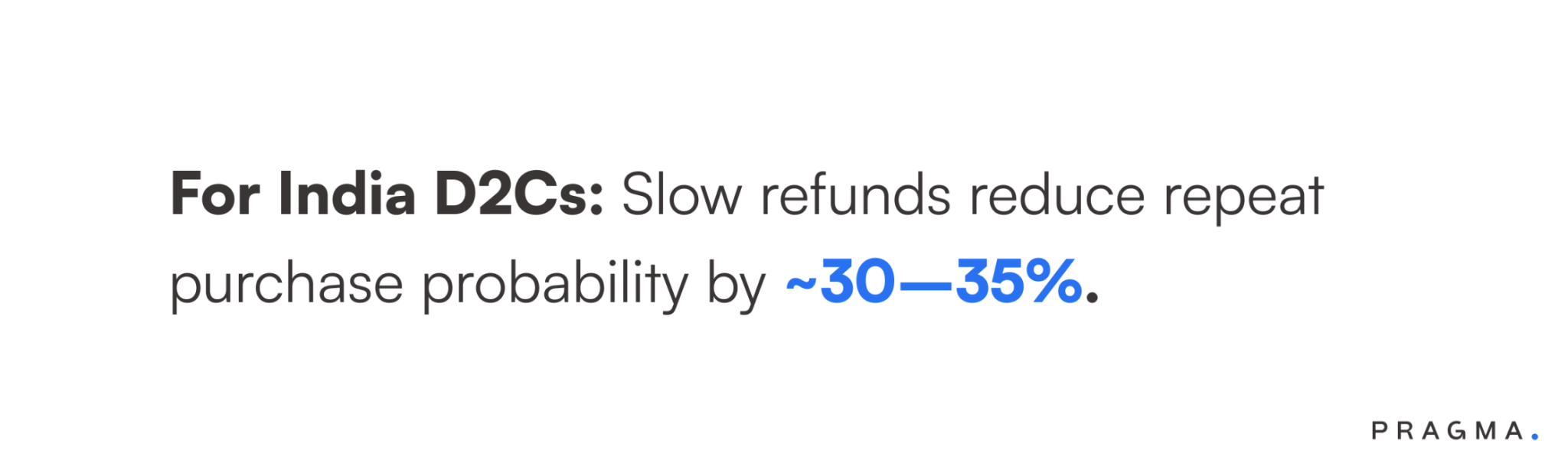
Industry benchmarks consistently show that prolonged refund timelines reduce the probability of repeat purchase dramatically — often by 30–35% in Indian D2C cohorts.
Customers rarely articulate this in surveys. They simply don’t come back.
Where Brands Commonly Break the Experience
Post-delivery listening breaks when brands treat returns and refunds as back-office workflows instead of customer-facing moments.
Typical failure patterns include:
- Manual return approvals creating inconsistency
- Pickup SLAs slipping without visibility
- Warehouse QC delays compounding refund timelines
- Support teams acting as intermediaries for system gaps
When customers chase refunds, they’re not being impatient. They’re responding to uncertainty.
Why Warehouse Operations Are Part of Customer Listening
Most brands don’t associate warehouses with customer experience. Customers do — even if indirectly.
Post-delivery signals often originate in:
- Delayed return pickups
- Prolonged QC cycles
- Missing or damaged items
- Inconsistent status updates
Each delay sends a message: this brand is disorganised.
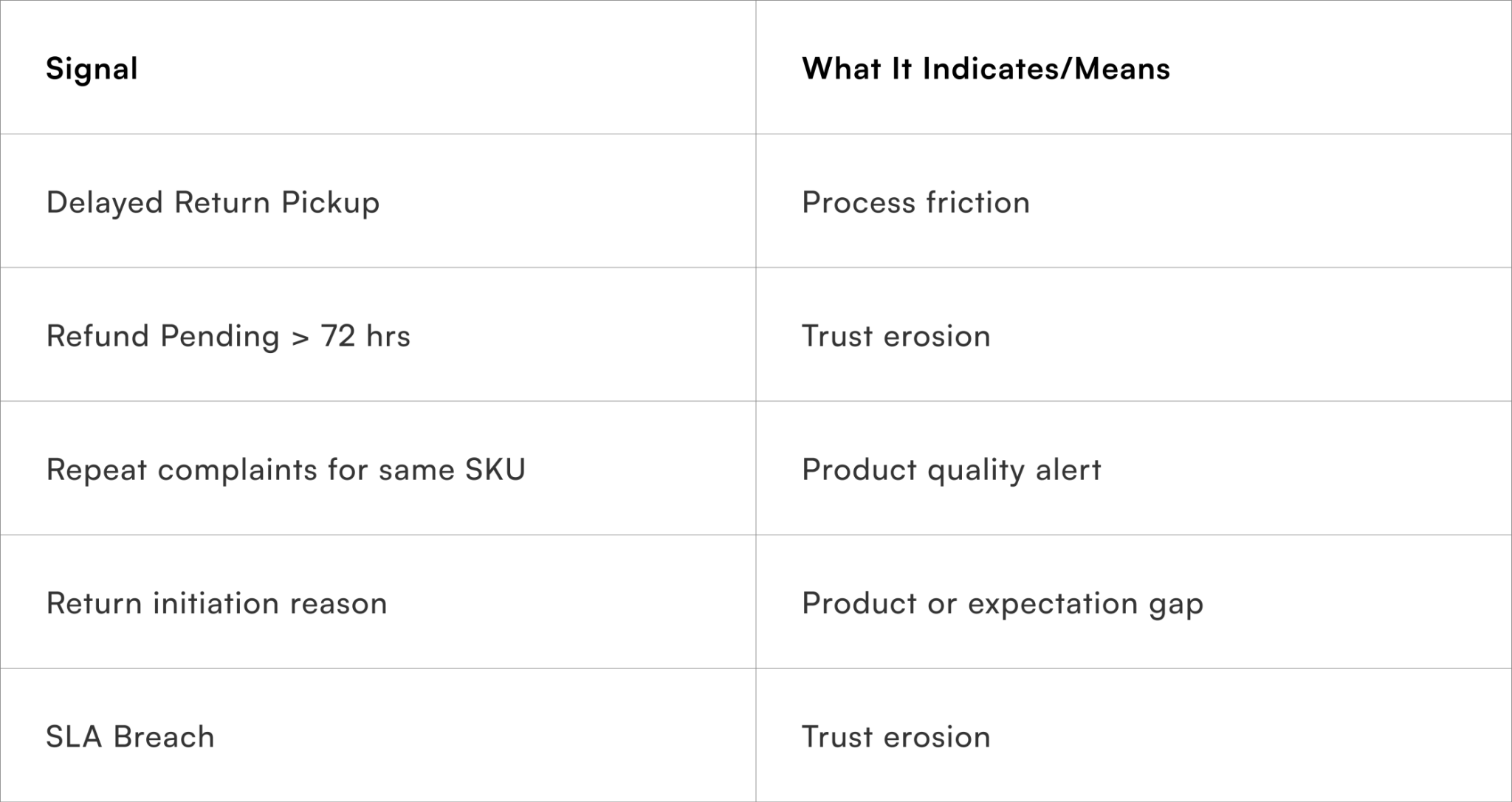
Listening at this stage means monitoring:
- Return ageing
- Pickup SLA breaches
- QC turnaround times
- Refund processing delays
This is where systems like Pragma RMS matter — not as return automation tools, but as listening infrastructure that converts post-delivery friction into structured insight.
Separating Genuine Issues from Abuse (Without Guesswork)
Indian D2C brands walk a fine line post-delivery.
On one side:
- Abuse, serial returners, wardrobing
On the other:
- Genuine dissatisfaction
- Expectation mismatch
- Execution failures
Without structured listening, brands react emotionally — either becoming too lenient or overly restrictive.
When return reasons, SKU patterns, delivery history, and customer behaviour are analysed together, brands can:
- Identify systemic product issues
- Spot misuse without punishing genuine buyers
- Adjust policies with confidence rather than fear
Listening reduces reactionary decision-making.
Post-Delivery Signals That Matter:
Why Post-Delivery Listening Decides Lifetime Value
The first order tests logistics.
The second order tests trust.
Customers who feel heard post-delivery behave differently:
- They forgive minor issues
- They repurchase faster
- They complain less publicly
Customers who feel ignored don’t escalate. They disappear.
This is why post-delivery listening is not about cost containment. It is about relationship salvage.
Brands that treat returns and refunds as operational exhaust lose customers quietly. Brands that listen here convert recovery into loyalty.
Why This Stage Feeds the Final Layer of Listening
Post-delivery signals don’t just explain what happened in the past. They shape how brands should behave in the future — from checkout messaging to delivery promises to courier selection.
But making those connections manually is almost impossible at scale.
That’s where the final layer of customer listening comes in: continuous synthesis across the entire journey.
Listening Stage 6: Continuous Customer Listening at Scale — Why Humans Fail and Systems Win
By the time an Indian D2C brand reaches meaningful scale, customer listening stops being a people problem and becomes a systems problem.
At low order volumes, teams can compensate with effort. Founders jump into WhatsApp groups. Ops heads scan courier dashboards manually. Support teams “feel” when something is going wrong. This works — briefly.
Then volume kicks in.
Multiple warehouses.
Multiple courier partners.
Thousands of orders per day.
Hundreds of edge cases, every hour.
At this point, human intuition collapses under noise.
Why Manual Listening Breaks at Scale
The biggest challenge with customer listening is not access to data — it is fragmentation.
In a typical Indian D2C setup:
- Checkout behaviour lives in one system
- Shipment movement in another
- NDRs in courier dashboards
- Returns in spreadsheets
- Refunds in finance tools
- Conversations in WhatsApp
Each system tells a partial story. None explain why something changed.
As a result, teams spend their time answering the wrong questions:
- “What happened?” instead of “Why did it happen?”
- “Who messed up?” instead of “Where did the system fail?”
- “How bad is it?” instead of “How early could we have known?”
This is where human-led listening consistently fails.
The Real Problem: Signals Without Context
Individually, customer signals are easy to observe.
You can see:
- A spike in checkout drop-offs
- A rise in NDRs
- An increase in returns
- A dip in ROAS
The hard part is connecting them.
Was ROAS impacted because traffic quality dropped — or because fragile orders increased?
Did returns spike due to product quality — or because delivery timelines slipped?
Did COD refusal increase because of customer intent — or because trust broke earlier?
Without synthesis, brands guess. And guesses get expensive.
What Continuous Listening Actually Requires
Continuous customer listening is not about monitoring everything. It’s about correlating the right things, in the right order, at the right time.
At scale, this requires three capabilities:
- Unified visibility
Signals from checkout, logistics, returns, and support must live in one operational truth layer. - Temporal awareness
Systems must understand sequence — what happened before something failed, not just after. - Pattern recognition
The ability to distinguish one-off noise from systemic drift.
Humans are below average at all three when volume rises 🤷♀️
Where AI Becomes Necessary (Not Optional)
This is where tools like Pragma Genie (AI Copilot) become critical — not as automation layers, but as interpretation engines.
The role of AI in customer listening is not to replace teams. It is to answer questions humans struggle with at scale:
- Why did RTO increase in only certain pincodes this week?
- Why did ROAS drop even though conversion looks stable?
- Which courier is quietly breaching SLAs before it becomes visible?
- Which SKU is driving downstream friction disproportionate to its sales share?
These are synthesis problems, not reporting problems.
Genie’s value lies in connecting signals across systems and explaining causality — something no single dashboard can do on its own.
From Reactive Firefighting to Predictable Operations
Brands without continuous listening operate reactively.
They:
- Fight fires during sales
- Scramble after courier escalations
- Overcorrect policies after abuse
- Chase refunds manually
Brands with system-led listening behave differently.
They:
- Spot fragile orders early
- Intervene before trust collapses
- Adjust operations surgically
- Preserve margin without blanket restrictions
The difference is not effort. It’s architecture.
Why “Single Dashboard” Is Not a Buzzword Here
Many platforms promise a single dashboard. Few deliver a single truth.
In customer listening, a single dashboard only matters if it:
- Shows cause, not just status
- Highlights deviation, not just volume
- Connects today’s issues to yesterday’s signals
Real-time monitoring, SLA breach alerts, and cross-functional visibility are not operational luxuries. They are the minimum requirement for listening at scale in Indian D2C.
What Continuous Listening Ultimately Protects
Customer listening, when done continuously, protects more than CX.
It protects:
- Contribution margin
- Inventory velocity
- Cash flow cycles
- Team bandwidth
- Founder sanity
Most importantly, it protects future demand — the orders customers never place again after one bad experience.
The End State: Listening as Infrastructure
At maturity, customer listening stops being an activity and becomes infrastructure.
It is embedded into:
- Checkout decisions
- Fulfilment routing
- Courier allocation
- Return rules
- Refund workflows
No single team owns it.
No single metric defines it.
It simply exists — quietly reducing chaos.
And that is the difference between brands that are constantly surprised by customer behaviour, and those that see problems forming days or weeks before revenue feels the impact.
Conclusion: Customers Have Always Been Talking. Brands Just Started Listening Too Late.
Indian D2C customers are not mysterious, fickle, or irrational.
They are highly predictable — once you stop waiting for them to complain and start observing how they behave.
Across the journey, customers communicate continuously:
- before purchase, through hesitation
- after purchase, through silence
- at delivery, through acceptance or refusal
- after delivery, through returns, refunds, or absence
None of these signals are new.
What’s new is the cost of ignoring them at scale.
The brands that struggle most are not the ones with weak marketing or average products. They are the ones operating blind — reacting to outcomes instead of listening to signals. By the time dashboards turn red, the damage has already travelled through ROAS, RTO, inventory, and trust.
Customer listening, in the Indian D2C context, is not about empathy theatre or CX theatre. It is about building operational awareness across checkout, logistics, delivery, and post-delivery systems — and connecting those dots early enough to intervene.
When listening becomes infrastructure rather than activity, a few things change quietly:
- fewer surprises during sales
- fewer “sudden” RTO spikes
- fewer refund escalations
- fewer customers who disappear without explanation
The brands that win are not louder.
They are earlier.
They hear friction before it turns into fallout, and they fix systems before customers feel the need to walk away.
In Indian D2C, that is what real customer listening looks like.
Pragma’s Customer Listening Stack (End-to-End)
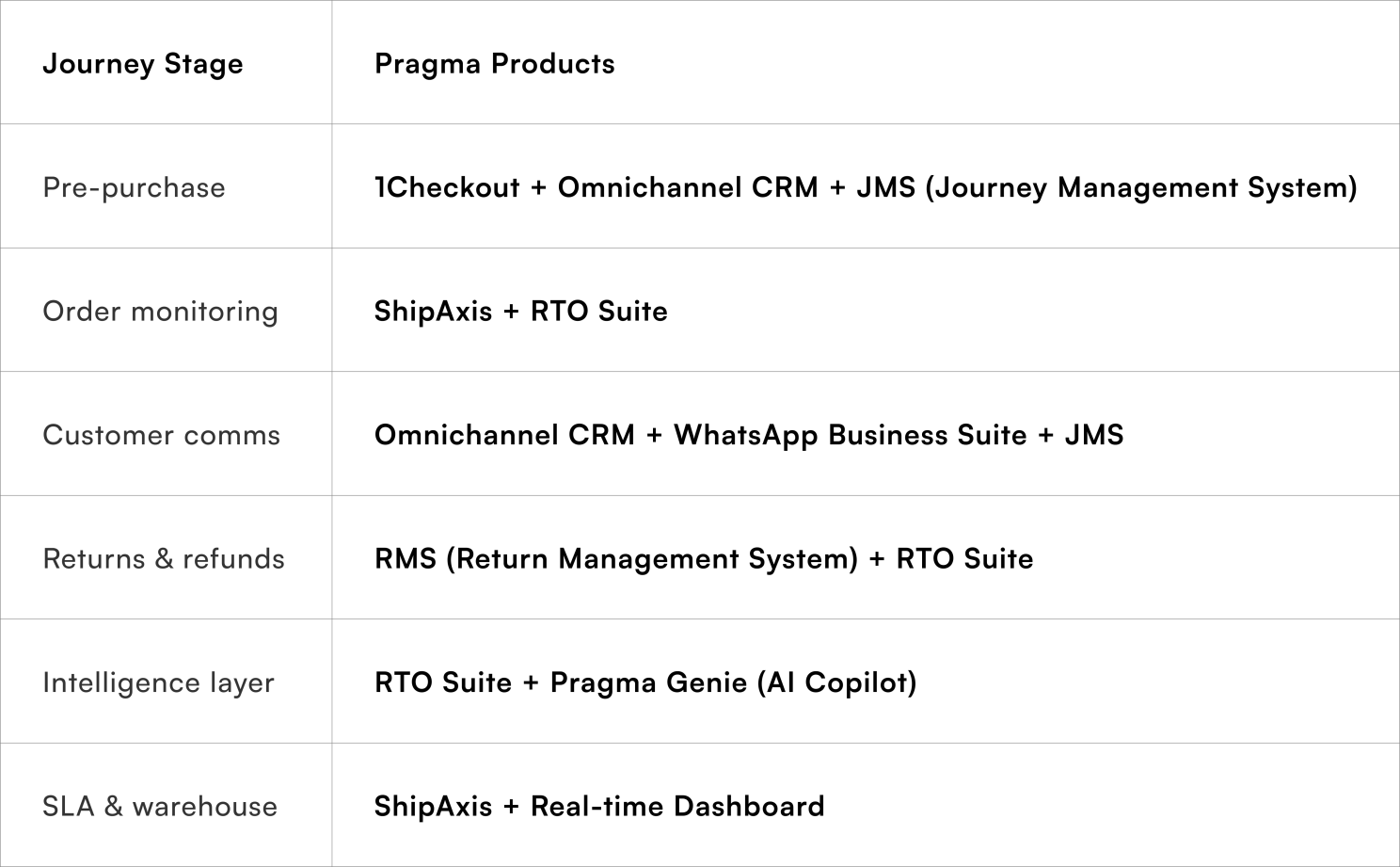
One journey.
One listening system.
One D2C Operating System - Pragma.
The Real Problem Isn’t Customer Silence
It’s Brand’s (selective) Deafness.
Indian D2C customers are loud.
They complain.
They abandon.
They refuse.
They return.
They ghost.
They’re not subtle.
If your brand still feels “surprised” by RTOs, refunds, or churn — you’re not lacking customers.
You’re lacking listening infrastructure.
TL;DR
- Customers speak through behaviour, not surveys.
- Listen before checkout fails (payment switches, COD drops, address friction).
- Listen before delivery fails (NDRs, courier SLAs, shipment delays).
- Listen after delivery (returns, refund speed, repeat issues).
- Connect all signals in one system — or revenue keeps leaking quietly.

FAQs (Frequently Asked Questions On Silent Customer Feedback in Indian D2C: Turning Operational Signals Into Revenue Control)
1. What is silent customer feedback in e-commerce?
Silent customer feedback refers to behavioural and operational signals customers generate without explicitly leaving reviews or complaints—such as cancellations, RTOs, delivery failures, refunds, and repeat purchase drop-offs.
2. Why is silent feedback important for Indian D2C brands?
Many Indian customers do not leave reviews or contact support when unhappy. Instead, they stop buying, refuse COD orders, or cancel deliveries. Silent feedback is often the earliest indicator of churn or trust erosion.
3. What are common examples of silent customer feedback?
Common signals include high cart abandonment, COD refusal at delivery, repeated NDRs, delayed payments, increased returns, low repeat purchase rate, and reduced engagement on WhatsApp or email.
4. How is silent feedback different from explicit customer feedback?
Explicit feedback includes reviews, ratings, surveys, and support tickets. Silent feedback is inferred from actions and outcomes, making it harder to spot but often more reliable than stated opinions.
5. Which operational metrics indicate negative silent feedback?
Key indicators include rising RTO percentage, increasing refund turnaround time, declining first-attempt delivery success, higher cancellation rates, and drop in prepaid conversion.
6. How can brands convert silent feedback into revenue control?
By identifying patterns early and fixing root causes—such as improving address validation, optimising courier routing, tightening COD controls, speeding up refunds, and correcting inventory mismatches.
7. Why do operations teams play a key role in customer feedback?
In D2C, customer experience is shaped as much by logistics and fulfilment as by marketing. Operational failures often create silent dissatisfaction long before a customer ever contacts support.
8. How can silent feedback help reduce churn?
Detecting signals like delayed repeat purchases or repeated delivery failures allows brands to intervene early with better fulfilment, targeted communication, or prepaid incentives—before customers disengage completely.
9. How should Indian D2C brands track silent customer feedback?
Brands typically monitor operational dashboards covering RTO, NDRs, refunds, delivery SLAs, repeat purchase rate, and payment success—segmented by pincode, courier, SKU, and payment method.
10. Is silent feedback more actionable than reviews?
Often, yes. Reviews explain why customers are unhappy, but silent feedback shows where revenue is leaking right now. Acting on these signals helps brands prevent losses rather than react to complaints.
Talk to our experts for a customised solution that can maximise your sales funnel
Book a demo


.png)