

The current issue of RTO (Return to Origin) orders is one of the largest obstacles to D2C brands in India today.
E-commerce industry statistics show that RTO rates in India are around 20-25% on most e-businesses, and in some industries, such as fashion, the return rates are reaching 25-40%.
This implies that out of 100 orders that you deliver, you could lose up to 25 orders that would not have been delivered. And this can really affect your profits as well as your business operations.
In the case of D2C brands that have thin margins, knowing how to minimise RTO orders and avoid them is not only significant but is also critical if brands want to survive in the long term.
In this comprehensive guide, we'll break down everything about "RTO Order in Ecommerce: Meaning, Causes, and How to Reduce It".
What is an RTO Order?
If we talk about the RTO order's meaning, it is quite simple.
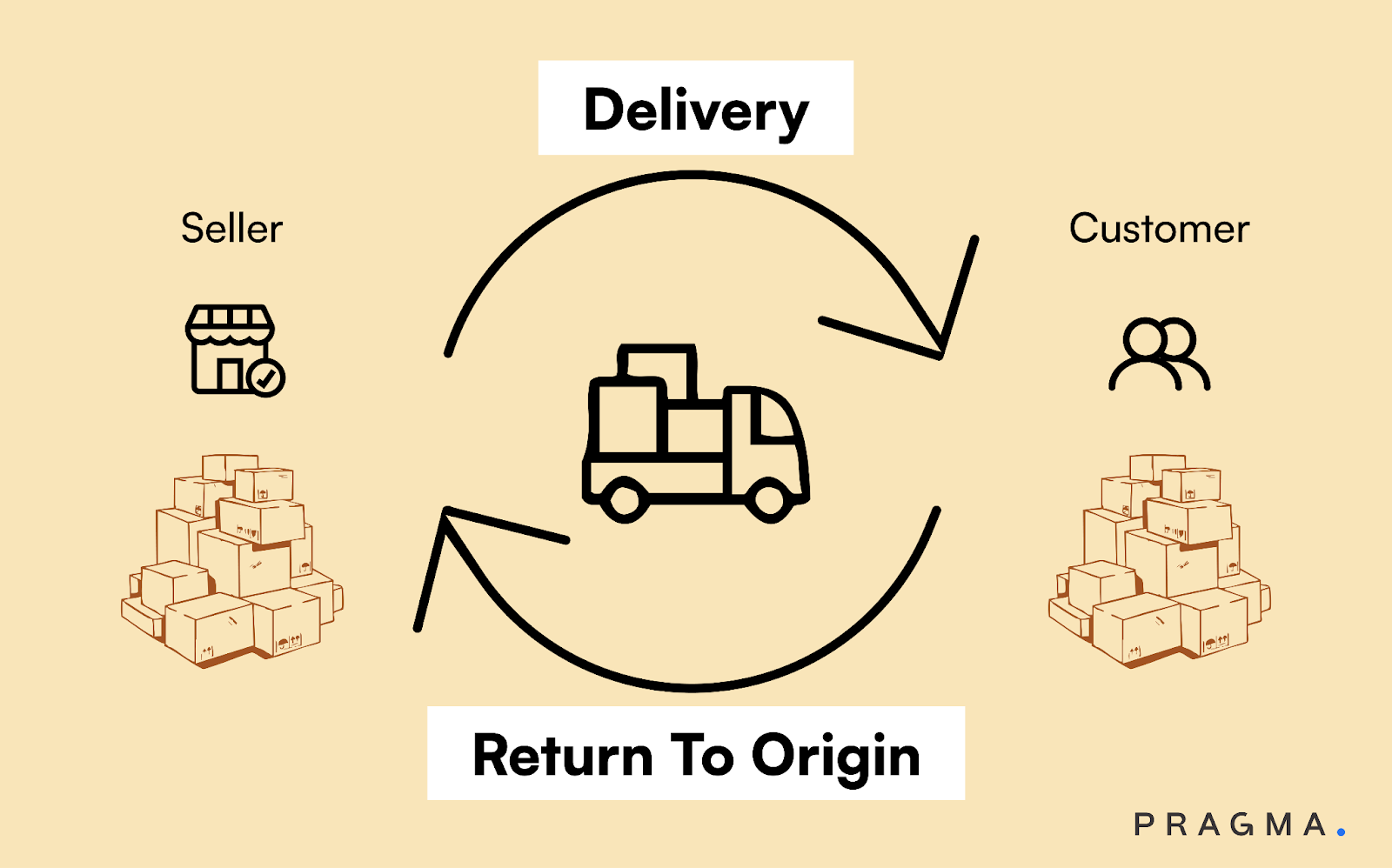
An RTO order (Return to Origin) is a situation in which a package is not received by the customer and is returned to your warehouse or fulfilment centre.
An RTO order is different from a simple customer return, because here, the package was not even delivered to the customer once; due to some reasons, it was returned directly to the business.
That is what makes RTO orders different from regular returns:
- The customer does not receive the product.
- You still get to spend on shipping (two ways forward and reverse).
- One doesn't make any sales, and expenses are incurred.
- In the back-and-forth process, the product could be damaged.
RTO orders, especially Cash on Delivery (COD) orders, constitute about 60-65% of transactions made by Indian D2C e-commerce brands and are around $30 billion/₹2.5 lakh crore of India's e-commerce market.
And what is the harsh reality here?
More than 25% of the COD orders fail as compared to the prepaid orders, making them a major source of RTOs.
How an RTO Order Happens in E-commerce?
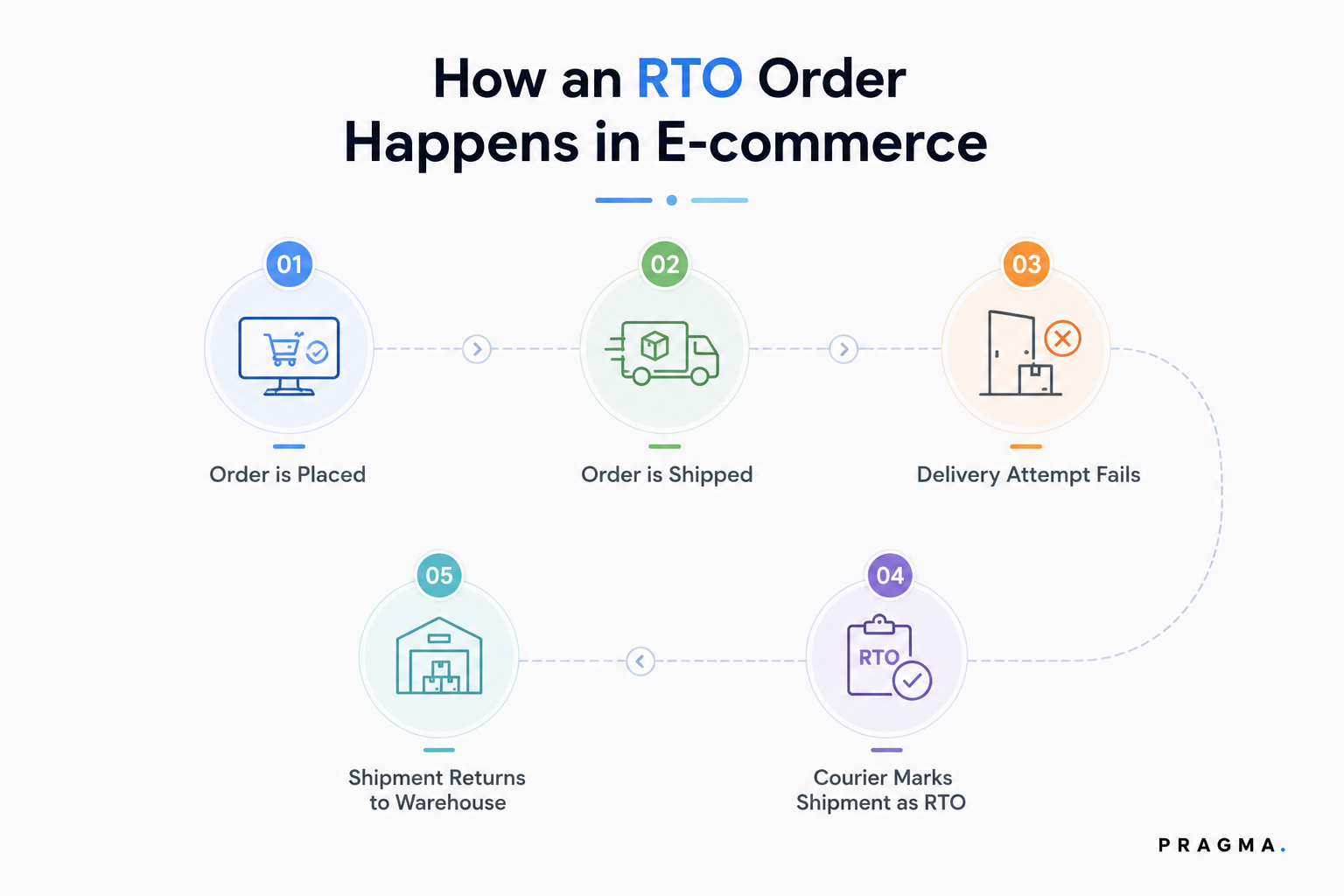
Knowing the RTO process is going to allow you to know where things may go wrong. The common process of an RTO order follows:
Order is Placed
Everything starts normally. A customer purchases on your site or application, chooses the items, adds them to the cart, enters the shipping information, and selects the mode of payment.
You are optimistic at this stage and think that it is going to add another sale to the books. However, this is the first step where a lot of D2C brands make mistakes; they don't verify the information provided during this crucial step.
But Pragma RTO Suite did not make any mistakes! At this point, it does a complete screening of the customer's information, such as address, pincode, phone number, etc., and auto-corrects if needed.
It also checks things like the order made by temporary addresses or orders made by bots, so that at the first step of the journey, a great percentage of the RTOs can be declined.
Order is Shipped
The next thing, you take your time fulfilling the order, pack it with your stock and deliver it to your courier partner.
The package is sent to the customer after generating the tracking information, and you may even send a message to your customer about this, like Your order is on the way.
Delivery Attempt Fails
The delivery man arrives at the customer's address but can't complete the delivery due to various reasons:
- Customer isn't available
- The address is incorrect or incomplete
- Customer refuses to accept the package
- Payment issues with COD orders
In the case of COD orders, this is particularly prevalent as the customers are not financially obligated to go through with it.
Courier Marks Shipment as RTO
The delivery partner makes 2-3 attempts to deliver your order; after that, they drop the shipment as RTO. This is how an RTO order happens.
You have already paid the forward logistics costs and several delivery attempts at this stage.
Shipment Returns to Warehouse
At last, the package is shipped back to your warehouse, where you must inspect the package, see what kind of damage has occurred, repackage it, and even refund the customer.
This whole cycle may require 5-15 days on the basis of the distance and the efficiency of the logistics.
In this period, you are having your inventory tied up, you are having an impact on your cash flow, and you are incurring storage expenses.
What are the Common Causes of RTO Orders in E-commerce?
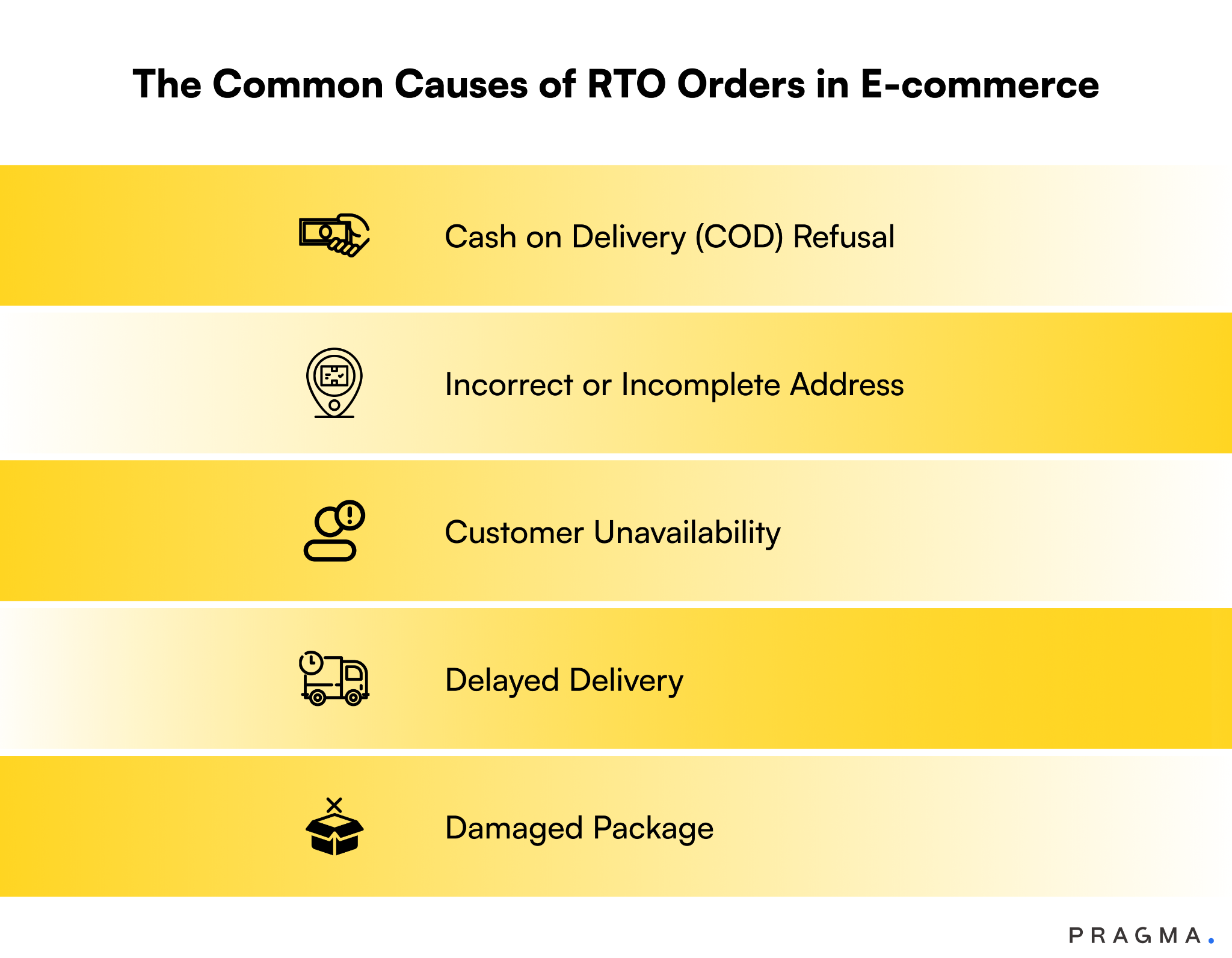
Alt text- Causes of RTO Orders in E-commerce
It is important to know the causes of RTO orders as each of them needs a unique approach to prevention. Have a look at the following:
Cash on Delivery (COD) Refusal
COD is likely to be your greatest opportunity and your greatest headache if you are a D2C brand in India.
In COD orders, the customers are not obligated to purchase when they do not pay their money up front. They may order something in excitement, as they scroll Instagram at midnight, but by the time the package is delivered, three days later, the thrill has died down.
Perhaps they were better offered elsewhere, perhaps they noticed that they do not actually need the product, or they have no cash available.
Pragma, looking into the stats of 1,500+ D2C brands, found that the RTO of COD orders reaches 62%, in contrast to only 38% when it comes to prepaid orders.
It is even more difficult during the time of festivals or sales as customers order several orders of differing brands and then pick and choose which one to accept, depending on the time of delivery, quality of packaging, or even their mood at that particular time.
To counter this, Pragma RTO Suite offers a smart C2P strategy( COD to prepaid), whereby nudging your customers at different relevant times with custom offers, discounts and other perks through WhatsApp, messages or Email, it has helped many D2C e-commerce brands to get a 25 to 35% increase in paid orders.
Incorrect or Incomplete Address
We have seen that customers are almost in a hurry during checkout, particularly on mobile devices, and enter partial or wrong addresses.
Sometimes, they forget to include the apartment number or misspell their street name. And some people even enter fake addresses or old addresses.
Due to these mistakes, when the delivery partner arrives at the address, he does not find the particular apartment, tries several times, and then quits and returns the package.
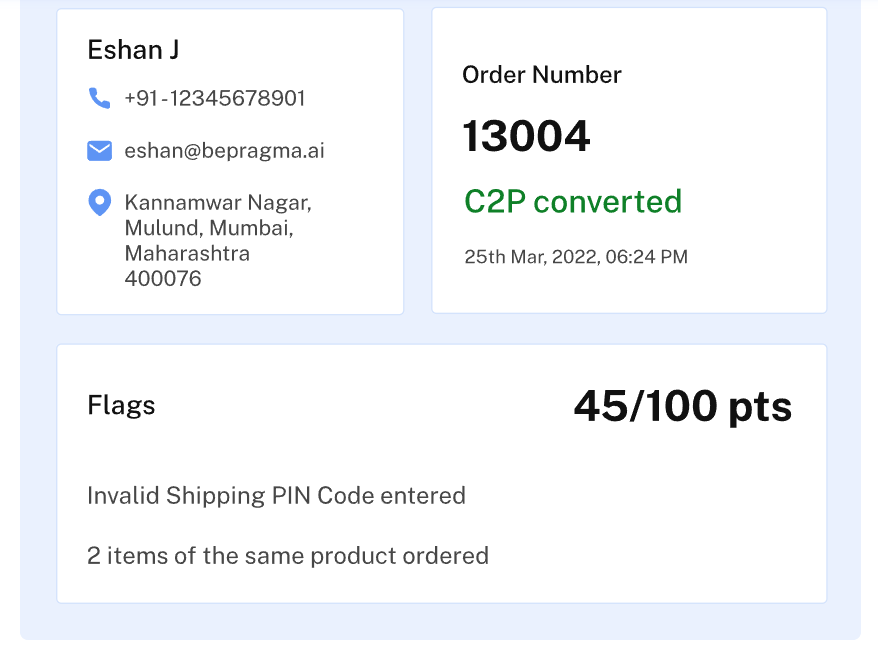
Pragma RTO Suite, through its advanced address verification system, screens the address at the time of checkout. The system picks up addresses that are not complete, verifies the PIN, and even identifies wrong entries and avoids 40-50% of address-related RTOs even before they occur.
Customer Unavailability
Customer unavailability, even with correct addresses, leads to RTO orders. This happens particularly when the customers give their office addresses, yet are not available during the delivery period, or because they travel unpredictably upon placing an order.
This issue has become aggravated by remote working and shifting lifestyles. The availability of customers is not as predictable, yet the courier partners work according to the usual delivery schedules.
To solve this issue, Pragma RTO Suite sends pre-configured notifications to your customers on WhatsApp, SMS & Email at the right time based on customer convenience data. This helps to stop 10 to 15% of orders from being cancelled.
Delayed Delivery
When deliveries take longer than promised:
- Customers lose interest and refuse packages
- They might have bought the same item elsewhere
- Urgency for the product decreases
- Trust in your brand diminishes
Due to this, you have lost the sale and have incurred RTO costs.
Damaged Package
When a package comes with a badly packaged package, dents, or any other noticeable damage, customers automatically think that there was damage to the product they are delivering and reject the package.
This is mostly a challenge with D2C brands since packaging is usually a part of a brand experience. The fact that your well-planned packaging came in damaged not only results in RTO but also destroys your reputation.
What is the Impact of RTO Orders on E-commerce Businesses? Why are They a Big Challenge?
RTO orders make a ripple effect that damages your business in a variety of ways:
Higher Logistics Costs
You have to pay the following costs on RTO orders:
- Forward shipping expenses
- Return shipping expenses
- Several delivery attempt fees
- Fees for processing and handling.
The industry statistics indicate that RTO may cost the brands up to 1.5 times more than forward logistics.
Blocked Inventory
When your products are stuck in the RTO cycle, you may have to face the following difficulties:
- It takes 5-15 days to move the inventory for sale.
- Your working capital gets tied up
- Returned goods occupy storage space.
- The fresh inventory planning is interrupted.
This may result in a possible loss of up to 10% of the monthly revenue of certain brands.
Lower Profit Margins
The RTO orders have several financial consequences for e-commerce brands:
- Lost sale revenue.
- Wasted marketing cost of acquiring customers.
- Extra processing cost of returns.
- Possible product destruction will lower the resale value.
Poor Customer Experience
RTO orders don't just hurt your finances; they damage your brand reputation and customer relationships.
- Customers lose their confidence in your delivery services.
- Failing to deliver on promises hurts brand image.
- The lifetime value of customers declines.
- Word of mouth and negative reviews.
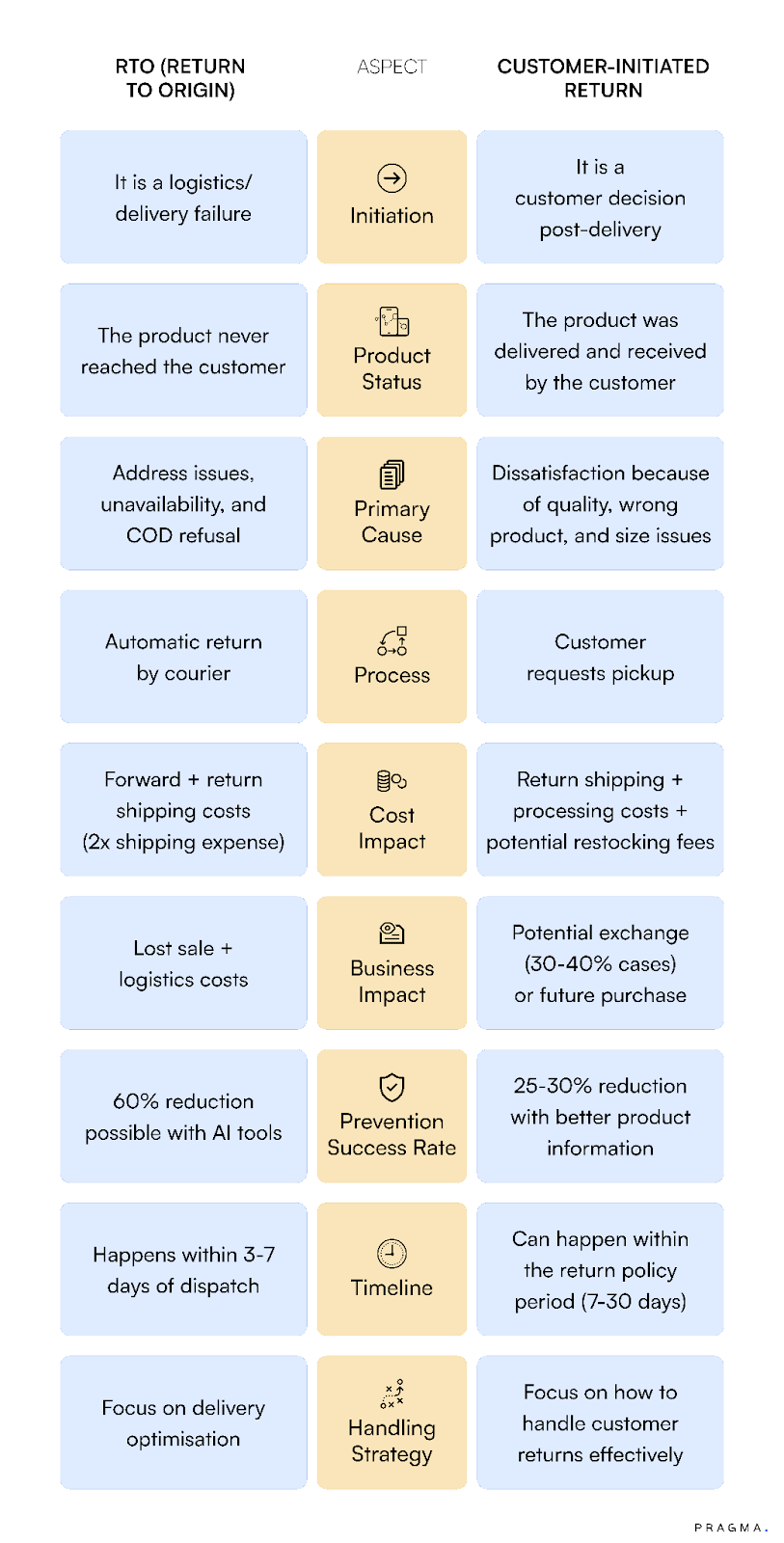
RTO Order vs Customer Return
The distinction between the RTO orders and customer returns is very important in order to design the appropriate prevention measures. Most D2C founders mix these two when they need entirely different strategies.
RTO orders happen before the customer receives the product.
The customer never gets an opportunity to touch your product, never gets to look at your packaging and never gets to make a judgment about quality.
These are nothing but pure logistics failures that cost you money and give you no chance to add any value or develop relationships.
Customer returns, on the other hand, occur after the customer has received and assessed the product.
Although it is still expensive, customer returns at least are completed deliveries in which customers have tried your brand.
They could send back products because of size reasons, quality, or because they have changed their minds, but they have at least engaged with your brand.
RTO Order Charges in E-commerce Logistics
Let us break down the actual costs of RTO orders to help you know how they can actually impact your brand.
Prices for forward shipping cost between Rs. 40-200, depending on the weight of the package and the distance it is to be delivered.
Return shipping fees tend to be equivalent to forward charges, which means you're shipping two times.
Several delivery attempts cost Rs. 15-30 for every extra attempt, and the majority of courier partners make 2-3 attempts before declaring an order RTO.
There is a processing fee of Rs. 10-25 per returned package to account for the costs of handling returns.
Storage fees are charged when packages remain in courier centres for a long time. All shipping costs may include 5-10 per cent fuel charges during the high seasons.
So, just for a Rs. 1,000 order, RTO charges can range from Rs. 120-400, representing 12-40% of your order value.
But, you can save your e-commerce brands with such RTO charges with the help of Pragma RTO Suite, which has helped over 1000+ brands in reducing their RTO rates by 60%.
How E-commerce Brands Can Reduce RTO Orders?
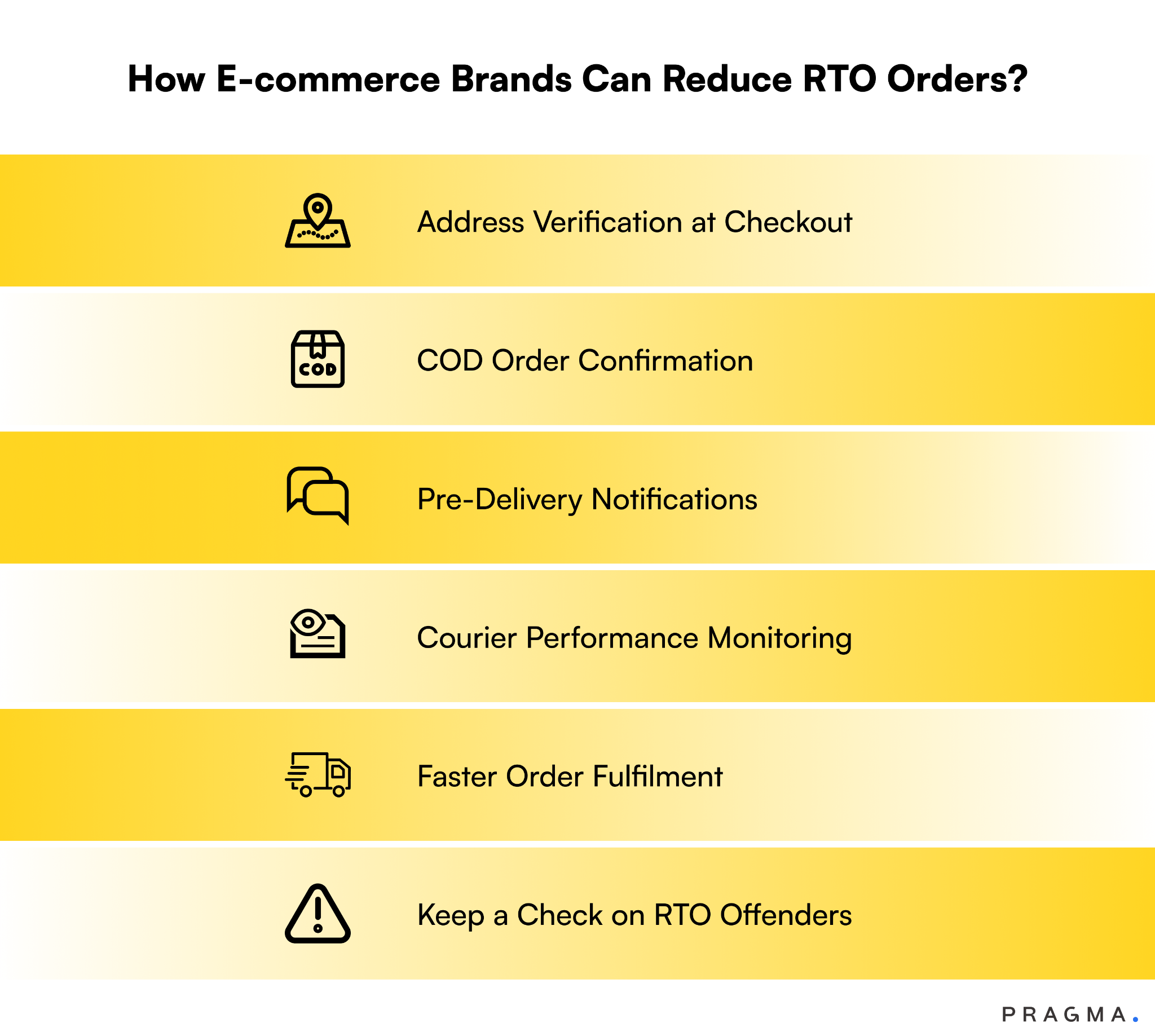
So let us come to the most crucial part: what to do to solve this problem. The following are the proven strategies that help many D2C brands to overcome this situation:
Address Verification at Checkout
The issue is that the majority of D2C e-commerce brands trust their customers with the address provided and don't do any kind of verification. That is why such brands face major RTO orders arising from address issues.
To help such brands. Pragma RTO Suite checks the quality of addresses in real-time when customers type in what they are typing, and it checks pin codes, completeness and even identifies nonsensical addresses.
This is done in the following way: a customer enters an address at the checkout, and the system scores the quality of the address on a scale of 1-100 instantly. Any score lower than 80 is flagged to be reviewed, or the request is blocked.
The system has auto-suggestions of correct formats and can even know when customers are attempting to post fake addresses.
Brands that are using Pragma RTO Suite have seen a reduction of 40-50% on address-related RTOs in the first month of implementation.
COD Order Confirmation
As the RTO rates of COD orders are much higher, the introduction of an effective confirmation process is needed.
E-commerce brands to save them from this situation should verify with the customers about the COD orders prior to shipping the parcel.
Pragma RTO Suite will send automatic confirmation messages through WhatsApp, SMS, or Email. Such messages will entail the product images, the total amount and the delivery date, anticipated, giving customers an opportunity to either approve or disapprove their orders.
Also, It makes use of intelligent COD to Prepaid conversion strategies, by providing the customers with the benefits of switching to prepaid, faster delivery, and offers such as 5-10% or loyalty points.
Have a look at a real-life example!
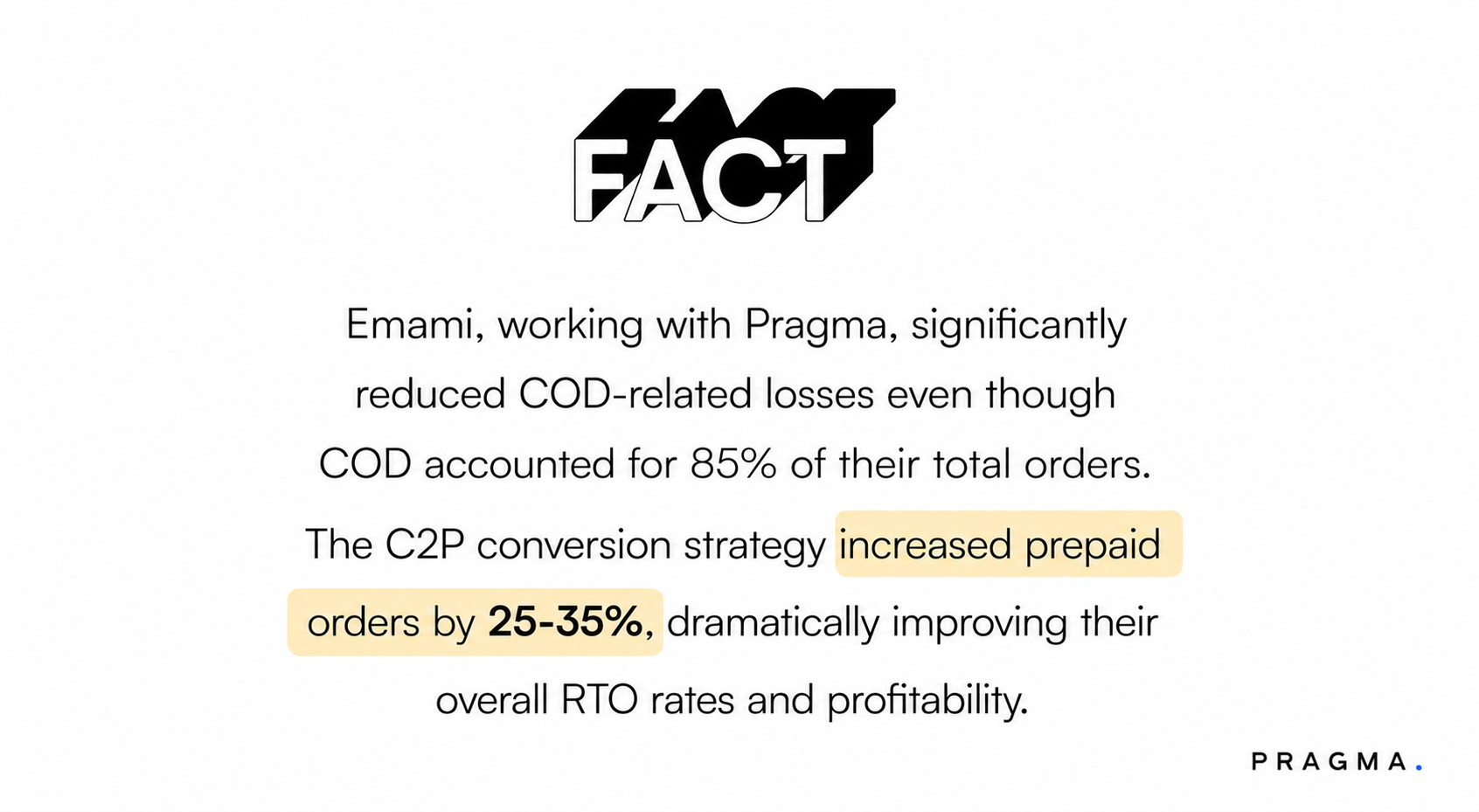
Emami, working with Pragma, significantly reduced COD-related losses even though COD accounted for 85% of their total orders. The C2P conversion strategy increased prepaid orders by 25-35%, dramatically improving their overall RTO rates and profitability.
Pre-Delivery Notifications
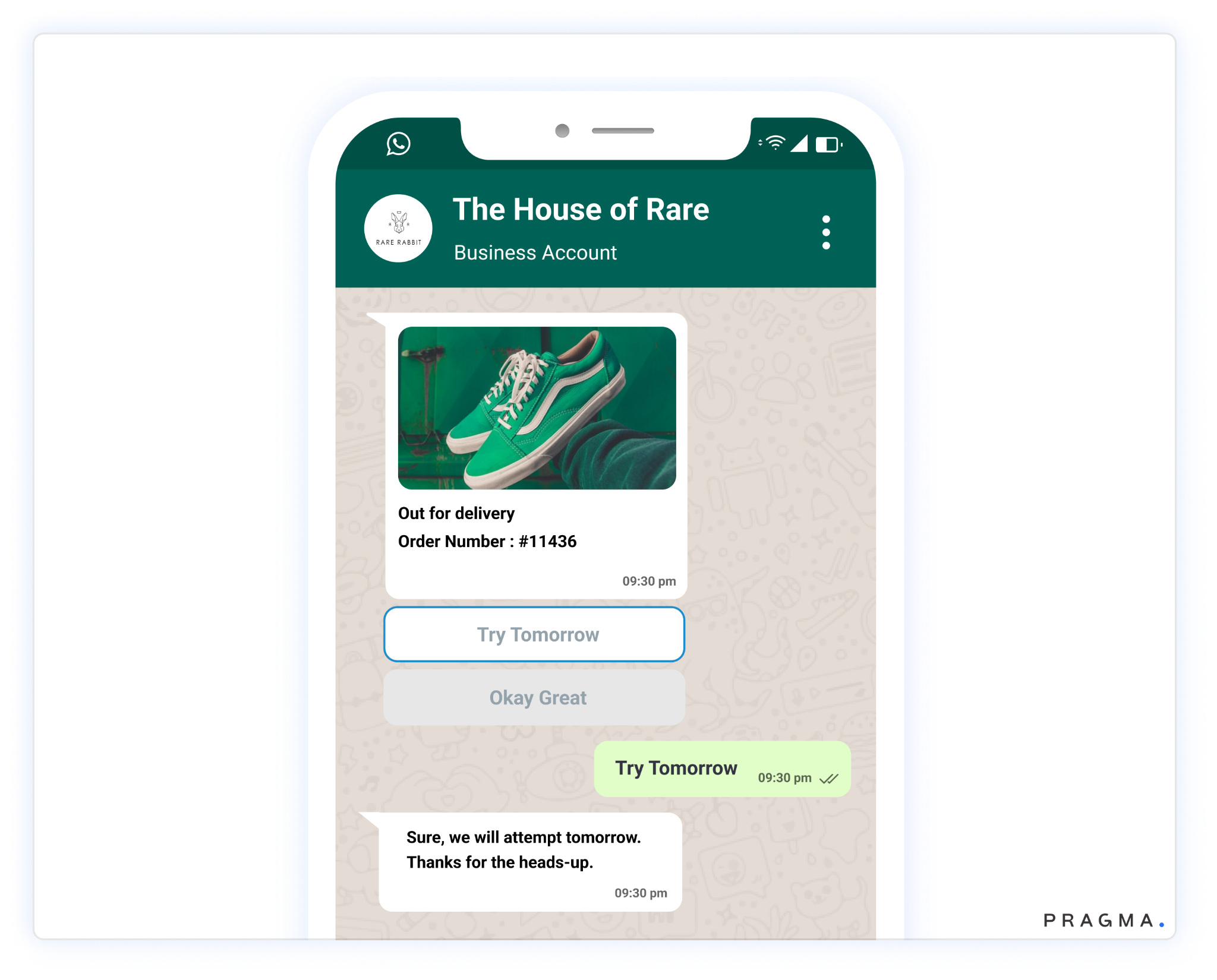
The communication with the customers during the delivery time frame will play a major part in reducing the RTO rates, as they will be available and ready to accept their orders.
The important thing is that you should deliver the appropriate information at the appropriate time and through the appropriate channels.
Some ways to do pre-delivery communication are by sending dispatch confirmations, which are sent right after the delivery and allowing the customers to track their packages in real-time by navigating the logistical network and by contacting the delivery partners to arrange delivery directly in case it is necessary.
This whole process is automatically done by Pragma, and the automated notification system sends personalised messages to the customers using WhatsApp, SMS, and email, depending on their preferences.
The system also enables customers to rebook deliveries in case they are not available to receive the goods, which could lead to unsuccessful delivery.
Courier Performance Monitoring
Courier partners may not be equally effective in different cities, and efficiency in picking your courier companies can have a great influence on RTO rates.
The problem is that the majority of D2C brands lack the data and tools to make the right decisions regarding the performance of the courier.
Pragma gives you specific location-based courier performance analytics, which helps you to determine poor performers in pin code and report to better-performing partners.
Faster Order Fulfilment
Speed kills RTO orders. The quicker the availability of the products in the market, the less time the customers have to rethink and get better offers elsewhere or get out of the market.
Also, when you provide rapid delivery, it shows that you are professional, and it makes customers trust your brand.
Every e-commerce brand must try to deliver the orders in the shortest time possible, that is, 24 hours after receiving the order.
To achieve this, you can also use local warehouses or fulfilment centres to save time on delivery, particularly to major cities.
Keep a Check on RTO Offenders
To avoid RTO orders, e-commerce brands should keep a check on the known RTO offenders.
This means that they should keep a check on the orders based on the data collected, and also on the other e-commerce sites.
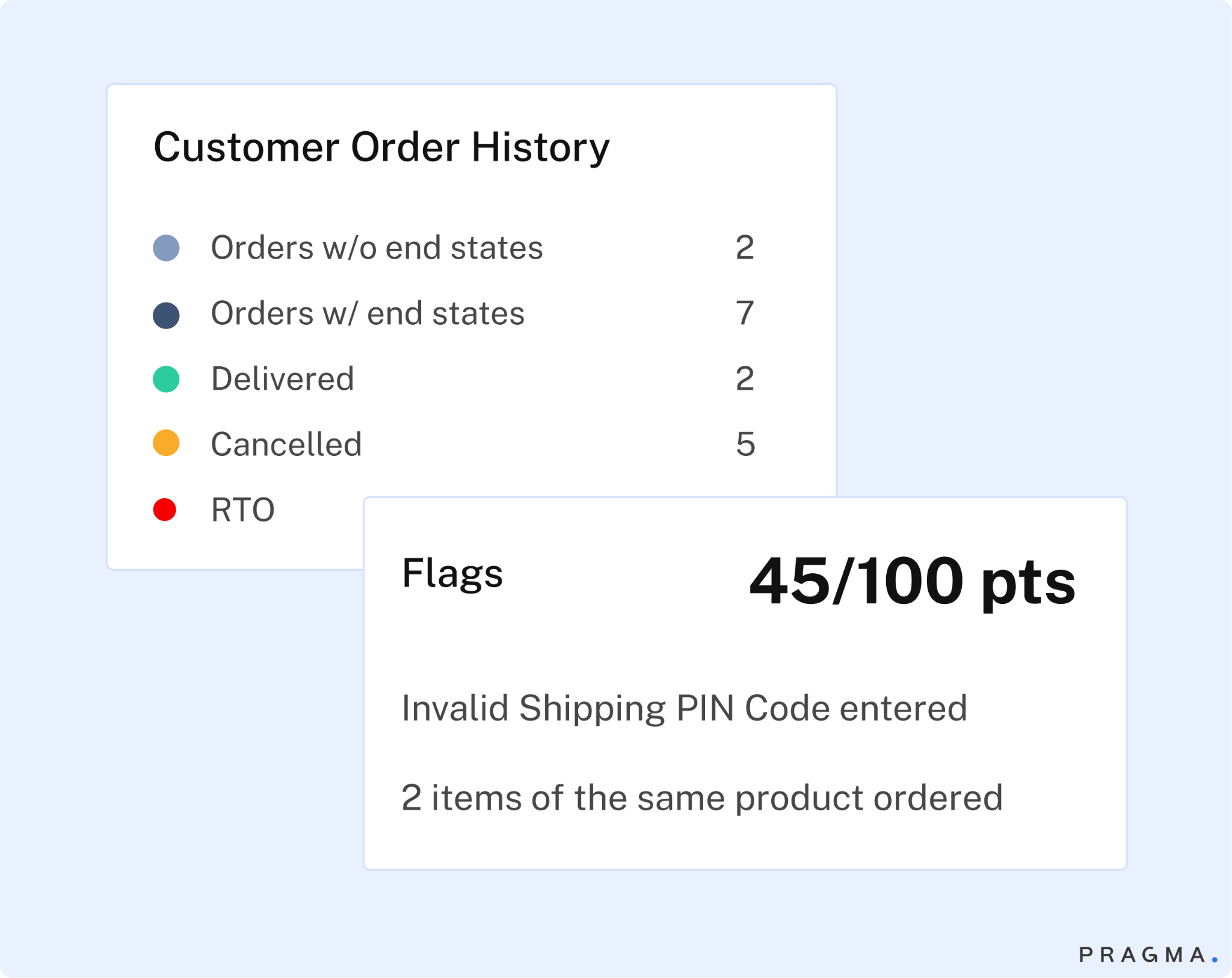
To keep this check, Pragma RTO Suite, cross-reference all placed orders with other e-commerce sites to check the users for past RTO history, order cancellations and other fraudulent behaviour.
And on the basis of this check, it provides a risk assessment score for each order.
Which RTO Metrics E-commerce Brands Should Track?
You should follow these important measures to know and improve your RTO performance:
RTO Rate
Every brand should always look for the RTO rate in its e-commerce business.
This is how you can calculate it:
(RTO Orders/ Total Orders) 100.
RTO Rate based on the method of payment
You should always check the RTO rate on the basis of different payment methods. Check the percentage of RTO orders in both modes of payment, like COD and prepaid.
RTO Rate by Location
Find your RTO orders on the basis of different locations. It will help you identify problematic areas where you might need different strategies or courier partners.
RTO Rate by Product Category
You should keep a check on which products are higher in returns.
Average RTO Cost
You should check the average cost per RTO order. This will track your financial exposure and help justify investments in prevention strategies.
What is the Role of Technology in Preventing RTO Orders?
The present-day RTO prevention is based on AI-Powered Risk Assessment. Pragma system examines 300+ parameters in 200ms when the order is placed, including the customer behaviour and order history, among other factors, to determine the quality and mode of payment.
The system involves behaviour analysis, which could not be achieved manually. It checks the click patterns to determine impulsive buyers, measures the rates of traffic (orders made by a specific source have higher RTO rates), time-on-site (a quick purchase is likely to result in RTO), and device and browser data to spot potentially fraudulent orders.
Real-time decision-making capabilities enable the system to flag orders, automatically block COD in high-risk customers, and dynamically select a shipping partner based on the location performance, and recommend the best delivery slots based on the customer availability trends.
And the results are quite impressive. Brands that are using Pragma's RTO Suite see a
- 60% reduction in overall RTO losses
- 35% reduction in Non-Delivery Reports (NDRs)
- 15% increase in fulfilment rates
- 25-35% increase in prepaid orders
- and 45-60% reduction in info-related RTOs.
Final Thoughts
So, to conclude here, we want to say that the RTO order's meaning is not just that you will get only losses; RTOs are such a thing that can be managed with proper strategies.
With the right RTO prevention tools, you can get a significant decrease in your RTO rates, and it is not difficult to achieve.
To help all the e-commerce D2C brands in this journey to decrease their RTO rates, manage costs and increase profitability, Pragma is here to support them.

FAQs (Frequently Asked Questions On RTO Order in E-commerce: Meaning, Causes, and How to Reduce It)
1. What is an RTO order in e-commerce?
An RTO (Return to Origin) order is a shipment that is not delivered to the customer and is returned back to the seller’s warehouse or origin location.
2. Why do RTO orders happen in e-commerce?
RTO orders typically occur due to incorrect addresses, customer unavailability, refusal to accept Cash on Delivery (COD) orders, delivery delays, or courier-related issues.
3. How does COD contribute to RTO orders?
COD orders often have higher refusal rates because customers may place low-intent or impulsive orders and decline them at the time of delivery.
4. What are the most common causes of RTO in India?
Common causes include incomplete or incorrect addresses, unreachable customers, delayed despatch, high-risk pincodes, courier inefficiencies, and lack of order confirmation.
5. How do RTO orders affect e-commerce profitability?
RTO orders double logistics costs, block inventory, delay cash flow, increase warehouse workload, and reduce contribution margins.
6. What is a good RTO rate for Indian e-commerce brands?
Typical benchmarks are:
- Prepaid RTO: below 5%
- COD RTO: below 18%
Higher rates indicate issues in checkout, delivery, or customer intent.
7. How can e-commerce brands reduce RTO orders?
Brands can reduce RTO by implementing address validation, COD confirmation flows, prepaid incentives, faster despatch, and better courier selection.
8. How does checkout optimisation help reduce RTO?
Checkout optimisation improves address accuracy, filters high-risk COD orders, and encourages prepaid payments, reducing the likelihood of failed deliveries.
9. What role does NDR management play in reducing RTO?
NDR (Non-Delivery Report) management allows customers to confirm delivery, update address details, or reschedule delivery, preventing orders from being returned.
10. Can technology help predict and prevent RTO orders?
Yes. Advanced systems use pincode-level data, order history, COD behaviour, and address quality scoring to identify high-risk orders and apply preventive actions.
Talk to our experts for a customised solution that can maximise your sales funnel
Book a demo.jpg)

.png)