

As we have seen, the customer behaviour towards online shopping has changed a lot. Nowadays, customers do the following: they see the product on Instagram, search for product reviews at Amazon, check for the product price at the website of the company and make a purchase from any other platform.
That is why every business needs to handle all the platforms properly to track all the orders. But it is not easy to do. Therefore, every omnichannel e-commerce business that has its existence on different platforms needs to have such a management that can help them handle all their orders from a single management system. And this process is called Omnichannel Order Management.
In this blog, we will learn about "Omnichannel Order Management: Guide for E-commerce India."
What is Omnichannel Order Management?
Omnichannel order management is a comprehensive approach to customer order management in all the sales channels, including online stores, mobile applications, physical stores, marketplaces such as Amazon and Flipkart, and social media.
It also makes sure that the customers receive a similar shopping experience no matter where they make their purchase.
Recent research indicates that customers go through various channels and make purchase decisions in 73 per cent of cases, and thus, the omnichannel strategies are very critical when doing business in India.
With the help of an omnichannel order management system, the system can automatically do the following things whether a customer from any of the platforms :
- Manages inventory in all outlets.
- Forwarding the order to the optimal place of fulfilment.
- Gives real-time tracking information.
- Deals with returns and exchanges with ease.
Difference Between Multichannel and Omnichannel
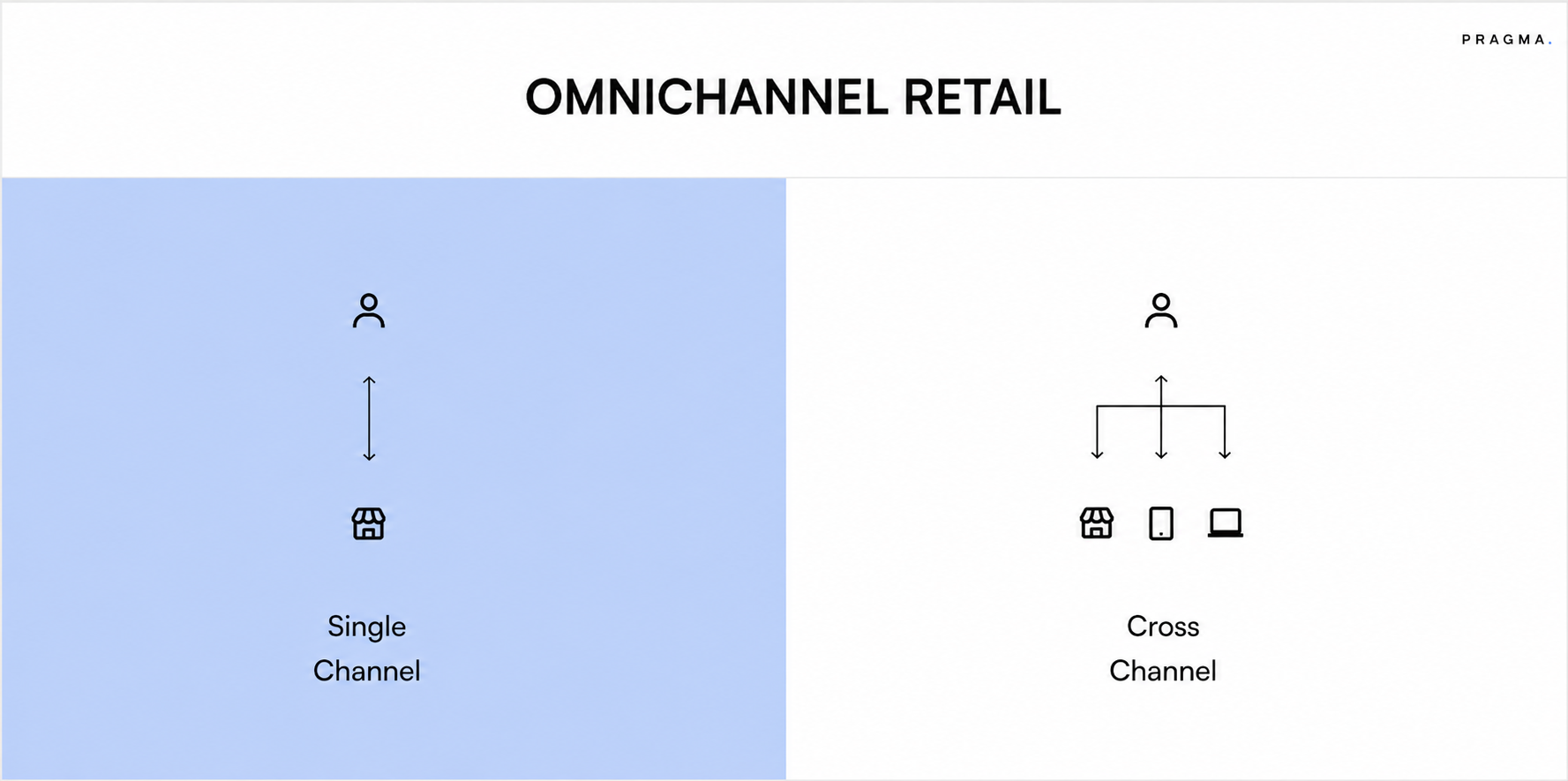
If we talk about multichannel and omnichannel, they might sound the same, but they are quite different.
The multichannel system is such a system, where the business works at multiple channels, but all the channels are managed separately. It means that every channel has its own inventory and tracking system.
A multichannel system has the following characteristics:
- Businesses sell on the web, applications, and stores - but they are not integrated.
- There is a different inventory system in each channel.
- If the customer makes a purchase online, they cannot return the product to the store or outlet.
- There can be various prices in various channels.
- The customer care has no clue as to what was purchased from other channels.
- Stock is updated manually on each platform.
Whereas if we talk about the omnichannel system, it is a system that manages every channel from a single platform. It has the following characteristics:
- The channels are linked in a manner that they are like a single system.
- All the platforms have shared inventory across channels, and each platform is updated in real-time.
- Customers can purchase everywhere, return anywhere.
- There are the same prices and offers at all sales channels.
- The full history of the customers is accessible to the staff.
- There are instant and automatic updates on all platforms.
How Does Omnichannel Order Management Work?
Let us see step by step how omnichannel order management works:
Centralised Order Processing
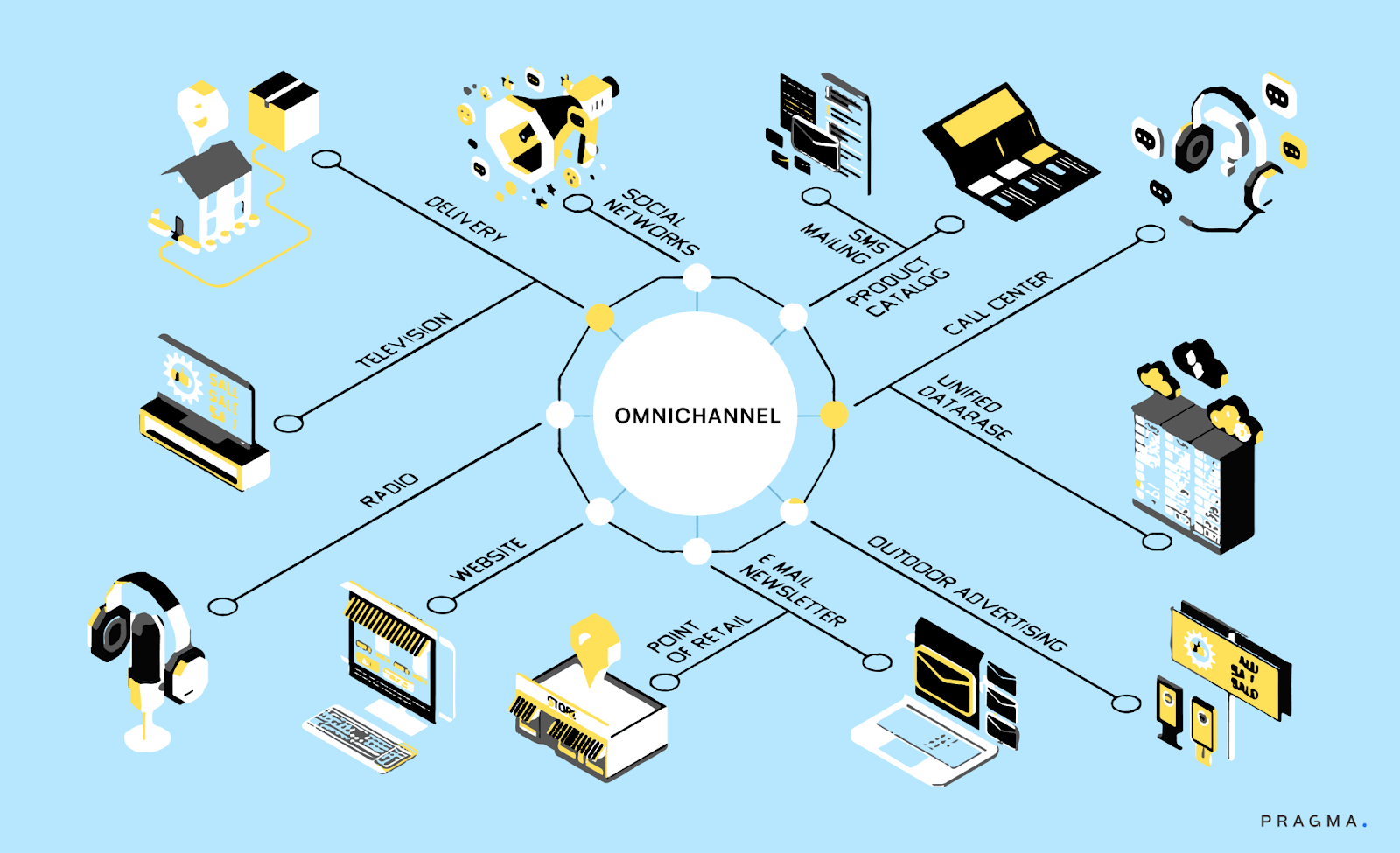
The very first principle on which omnichannel order management works is the central processing of orders. It means that whether the customer does the following:
- Buys from a website
- Orders using a mobile application.
- Buyouts in store.
- Orders via a marketplace
All these orders are recorded and managed in a single place. And why is omnichannel order management beneficial? It is because:
- It does not require that there be a different team or a different system for each channel in the business.
- All the orders are processed faster.
- It helps to reduce errors such as missed/duplicated orders.
- It helps in simple monitoring of all orders on a real-time basis.
And this is what the Pragma Omnichannel CRM does. It helps businesses connect all their relevant channels in a single place. It enables access to WhatsApp, Facebook Messenger, Instagram, Email and VoIP.
Integrated Inventory
Integrated inventory means that the system has real-time visibility of the stock at the following places:
- Warehouses
- Retail stores
- Distribution centers
- Third-party partners
Everywhere, the stock is updated immediately whenever something is being sold in a single channel. And having such an omnichannel order management system is important because:
- It helps not to place an order for such an item that is out of stock.
- It avoids excess selling and stock outsourcing.
- It helps to use inventory more efficiently, as if anytime a product is not available in the warehouse but is available in the store, the business can complete the customer's order.
Intelligent Order Routing
After placing an order, the system automatically makes a decision on the point where the order needs to be filled.
The choice is made based on such factors as:
- Closest fulfilment point.
- Availability of the product
- Fastest delivery option
- Lowest shipping cost
Unified Fulfillment
The omnichannel order management works on a unified fulfilment approach. It means that it enables the business to satisfy orders in various ways, which are flexible and utilise all locations of inventory.
The common fulfilment options include:
- Ship from the warehouse
- Ship from store
- Buy online and collect the product from the store
- Shop online and pick up in store
Seamless Customer Experience
The omnichannel order management provides the customer a seamless way of shopping: The customers will be able to begin their shopping on one channel and complete it on another without any issues.
Have a look at one of the examples:
- The customer discovers your ad on Facebook.
- They go to your website to read reviews.
- They compare prices on your mobile application.
- They shop from your physical store.
- They reach the customer support through WhatsApp.
- They are returned to the product via your site.
And with the help of omnichannel order management, throughout this journey, the customer gets consistent service and the same information everywhere.
Customer Data Integration
The omnichannel order management works on customer data integration, which means that all the customer information contained in all channels is consolidated in one system.
This includes:
- Purchase history
- Browsing behavior
- Preferences
- Past interactions
And having all the data of customers helps the businesses to provide them more personalised experience by giving them offers and recommendations.
Post-Sale Support
Now, only fulfilling the order is not just enough; it is important for businesses to give their customers post-sales support too. This includes:
- Order tracking
- Easy returns and exchanges
- Customer support across channels
Omnichannel Order Management Examples
Many of the Indian e-commerce brands have adopted this omnichannel order management strategy. Let us have a look at some of the companies that are doing this:
Nykaa

Nykaa has effectively applied the omnichannel strategies by incorporating its online environment into the physical shops. Customers can:
- Search products online and verify the availability of the products in the local stores.
- Place orders online and retrieve them in-store.
- Online shopping is back in physical stores.
- Get beauty consultancy online and off.
And with the help of this omnichannel order management, Nykaa has increased its revenues, as its customers spend 1.5-1.7 times more than single-channel customers.
Myntra

Myntra allows customers to:
- Test virtual fitting rooms on the Internet.
- In-store trial reserve items.
- Access fashion tips in various sources.
- Reimbursement of goods in any way desired.
And what does Myntra get?
Myntra has managed to minimise the rate of returns and maximise customer satisfaction by making use of its omnichannel strategy.
What are The Key Benefits of Omnichannel Order Management to E-commerce Brands?
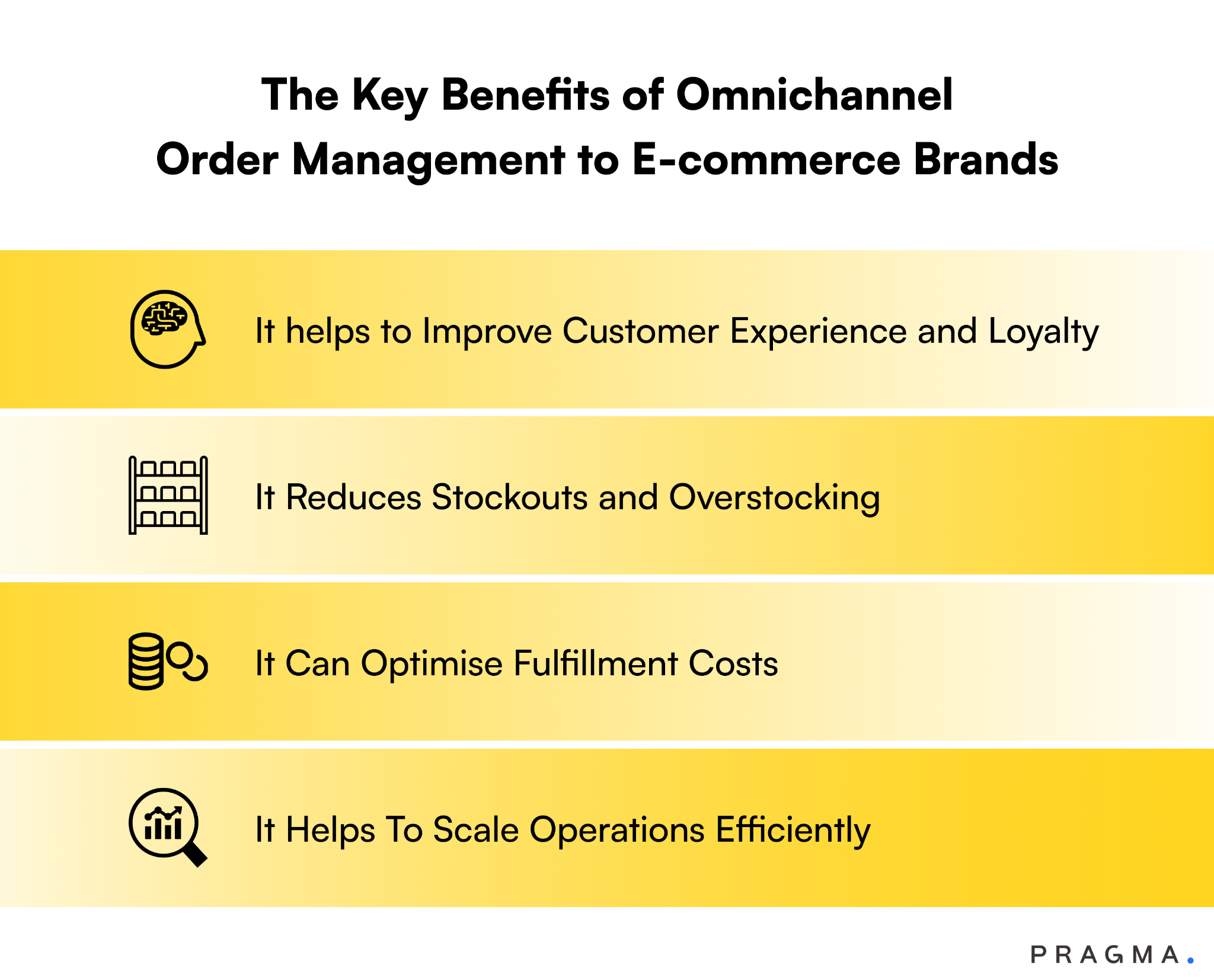
It helps to Improve Customer Experience and Loyalty.
When the right product is delivered to customers at the right time or when customers have multiple options for delivery and returns, they are likely to have a smooth and stress-free shopping experience.
Omnichannel order management ensures the uniformity of prices, proper product availability and convenient tracking of orders made via all channels.
This creates loyalty and confidence, and customers will be more willing to come back and remain part of the brand.
It Reduces Stockouts and Overstocking
Real-time monitoring of inventory in warehouses and stores helps businesses to always be aware of the stock.
This helps prevent stockouts, where products sell out unexpectedly, and overstocking, where too much inventory sits unsold.
Inventory balance will minimise losses and will also give the customer the opportunity to get what they need at the right place at the required time.
It Can Optimise Fulfillment Costs
The system automatically selects the most suitable location in which to achieve each of the orders, depending on aspects such as distance, availability and speed of delivery.
This avoids unnecessary shipping, decreases logistics costs and avoids rushed or expensive deliveries. This means that the businesses are able to save money and, at the same time, deliver orders fast.
It Helps To Scale Operations Efficiently
Omnichannel order management also facilitates the management of large volumes of orders when there is an addition of channels in which orders are executed without causing havoc.
Automated processes and a centralised control system enable businesses to handle more orders, inventory and customers smoothly, allowing them to grow with less cost.
What are the Essential Features of an Omnichannel OMS?
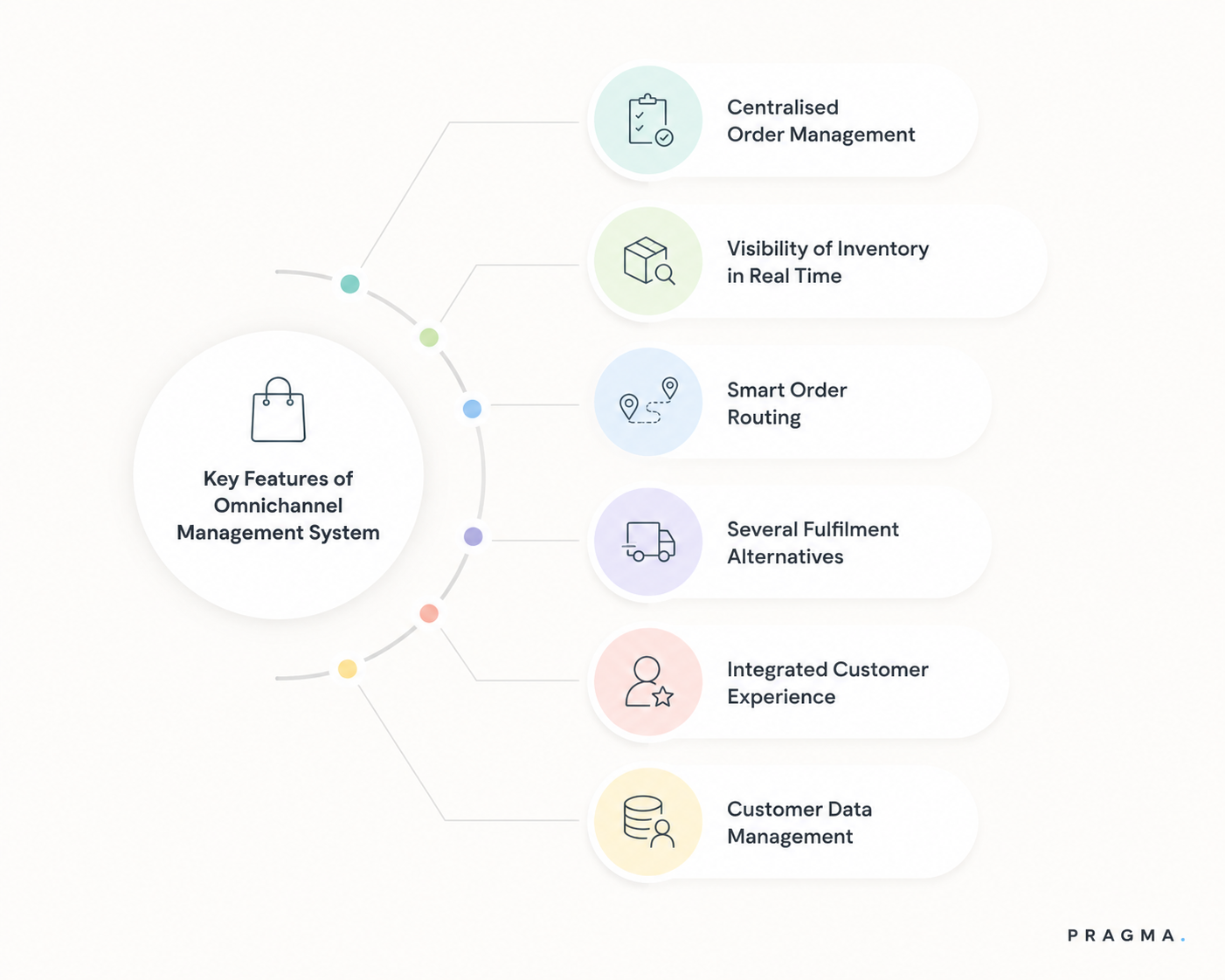
A good omnichannel order management system should have the following key features:
Centralised Order Management
A good omnichannel OMS should be able to manage all orders of various sales modes, such as websites, mobile applications, marketplaces, and physical stores, and keep them together within a single system.
This helps to simplify the process of tracking orders, processing and handling orders without confusion and errors.
And Pragma Omnichannel CRM provides the same feature by keeping all the sales channels at a single place. And by this, it also helps to flag risky orders or orders made by bots.
Visibility of Inventory in Real Time
The system should display the correct inventory of all warehouses, outlets, and fulfilment centres in real time.
This will avoid over-selling, stock shortages will be minimised, and the customers will only see available products.
Smart Order Routing
An efficient omnichannel order management system should be able to determine the most appropriate place to complete an order in terms of product availability, location, delivery time and cost of shipping.
This will assist businesses in providing faster delivery of orders at low fulfilment costs.
Several Fulfilment Alternatives
The system should provide convenient delivery options, including shipping out of warehouses or stores, purchasing and retrieving in stores and convenient online returns.
This provides a customer with greater convenience and better satisfaction.
Integrated Customer Experience
A good CRM must provide consumers with consistent product descriptions, prices, and tracking of their orders.
With that, customers can switch between channels without losing information, which makes shopping easier.
With Pragma Omnichannel CRM, you can also get personalised chatbots across WhatsApp, Messenger and Instagram that help businesses with all possible scenarios like Order status, Payment issues, Returns, etc.
Customer Data Management
The customer data is stored at one location, such as the history of orders and preferences provided by the customer in an omnichannel OMS.
This assists the businesses in knowing their customers better and providing them with personalised services, recommendations and communication.
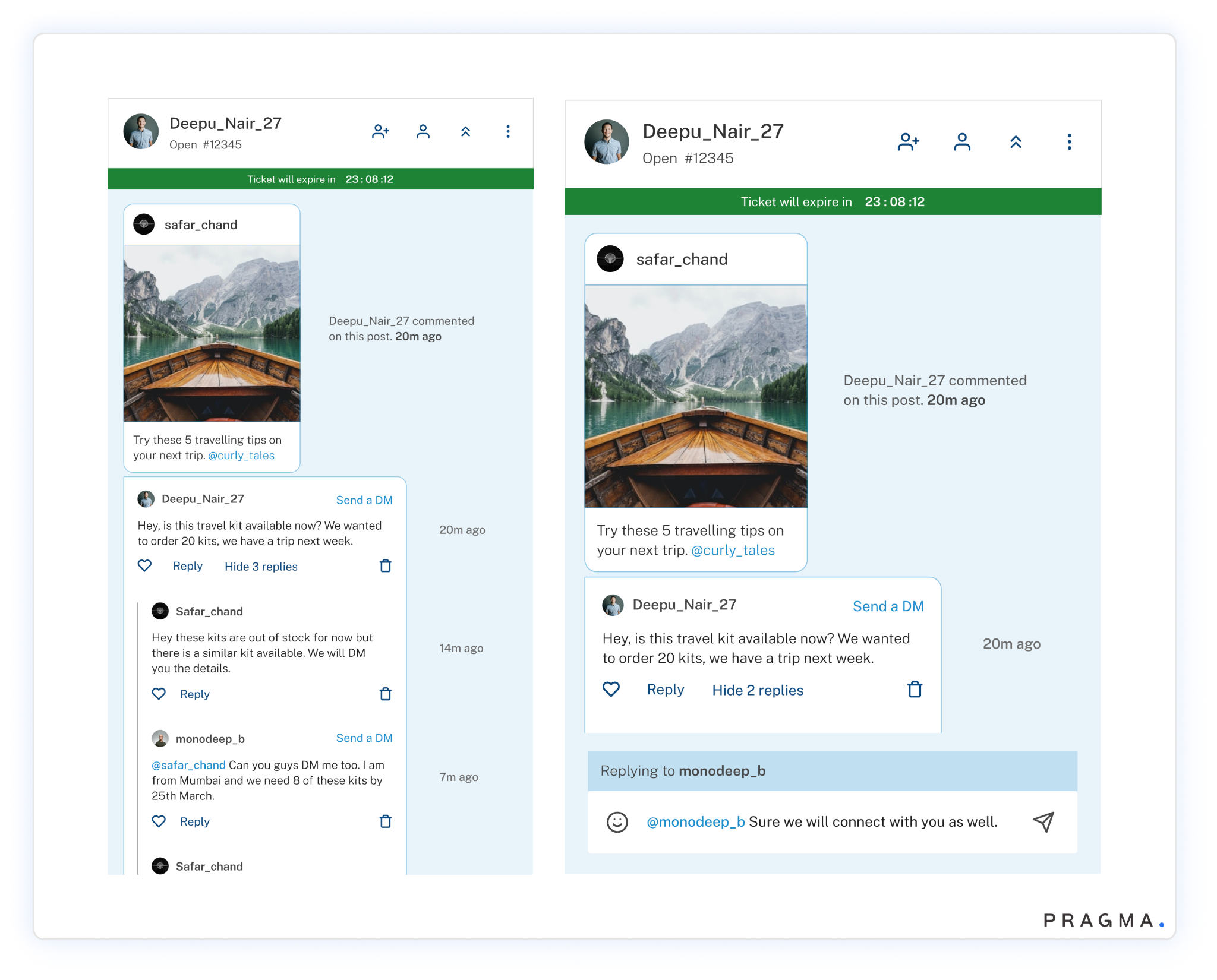
Pragma CRM provides a dedicated panel to showcase order details & status (past and present), along with abandoned cart details.
Refund and Returns Management
The system should be able to simplify returns and exchanges since customers can make returns via any channel.
It should also ensure the quick processing of refunds and the efficient stocking of the returned products in the businesses.
What are the Challenges in Implementing Omnichannel Order Management?
Omnichannel order management may be challenging to implement due to the need to integrate a number of systems and teams. Among the challenges are integrating various systems that would involve online shops, marketplaces, warehouses, and physical shops into a single system that may require a long time and effort.
Maintaining inventory in real time is also challenging, and even minimal mistakes will lead to the appearance of products as available when they are not.
The cost of setting up the business by the companies might be very high, and the companies might have to spend time training the staff to use the new system correctly.
Another issue can be the inability to have the same customer experience in all channels, in case the data is not updated properly.
Although these challenges are there, they can be controlled through appropriate planning and the use of appropriate technology. To tackle all such things, Pragma Connect helps!
How to Choose the Right Omnichannel OMS?
Before selecting an omnichannel management system, you should keep the following factors in mind:
Assess Your Current Needs
It is the most important thing that you should always take care of, what are your needs to get that system. You should see the following:
- Your current sales channels
- Order volumes and complexity
- Integration requirements
- Budget constraints
Integration Capabilities
Another crucial thing that you should always look for is the integration capabilities of the omnichannel system. Look for a system that can be easily integrated into the platforms you are dealing with.
User-Friendliness
Always choose the omnichannel order management system that is easy to use. If it is difficult to use, then you have to train your staff, and it would cost you extra expenses in terms of time and costs.
Scalability
This is also one important thing that you should consider. As every business wants to grow, the system should be designed so that it is able to support your business to handle more.
Future of Omnichannel Order Management in India
The future of omnichannel order management in India is good, as more companies are switching to selling online, and customers also want a quick and hassle-free shopping experience.
As online shopping, mobile applications, and marketplaces continue to grow, businesses will require systems that can assist them in the management of orders, stock, and deliveries through numerous channels in a single location.
Indian brands will probably adopt more intelligent technology, such as artificial intelligence and automation, to accelerate order processing, enhance the accuracy of stock, and provide a faster delivery time in the coming years.
All in all, omnichannel management will contribute significantly to the development of Indian e-commerce.
To Wrap It Up
So, to conclude here, we want to say that omnichannel management is not a luxury need of the business; it is a necessity.
If you want to handle your orders properly, giving your customers a seamless experience, handling multiple sales channels from a single platform, it is a must-have.
And in this journey, Pragma is here with one of its best omnichannel systems to support major Indian D2C brands.

FAQs (Frequently Asked Questions On Omnichannel Order Management: Guide for E-commerce India)
1. What is omnichannel order management in e-commerce?
Omnichannel order management is a system that centralises and synchronises orders from multiple sales channels—such as websites, marketplaces, social commerce, and offline stores—into a single unified dashboard.
2. Why is omnichannel order management important for Indian e-commerce brands?
Indian brands often sell across Shopify, Amazon, Flipkart, WhatsApp, and offline stores. Without a unified system, inventory mismatches, overselling, delayed fulfilment, and reconciliation errors increase significantly.
3. How does omnichannel order management work?
It integrates all sales channels into one platform, automatically updates inventory in real time, routes orders to the appropriate warehouse or courier, and ensures consistent order tracking and fulfilment.
4. What are the main benefits of omnichannel order management?
Key benefits include real-time inventory visibility, reduced overselling, faster fulfilment, centralised order tracking, fewer manual errors, improved customer experience, and better operational control.
5. How is omnichannel order management different from multi-channel selling?
Multi-channel selling simply means selling on multiple platforms. Omnichannel order management connects and synchronises those channels to ensure inventory, pricing, and fulfilment are aligned.
6. Can omnichannel order management reduce Return to Origin (RTO)?
Yes. With better inventory accuracy, improved courier allocation, and automated NDR handling, brands can reduce delivery failures and RTO rates.
7. What features should an omnichannel order management system include?
Essential features include real-time inventory sync, multi-warehouse routing, courier integrations, returns management support, automated invoicing, GST compliance, and performance analytics.
8. How does omnichannel order management improve customer experience?
It ensures consistent stock availability, faster despatch, accurate tracking updates, and smoother returns handling, leading to higher customer satisfaction and repeat purchases.
9. Is omnichannel order management necessary for small D2C brands?
Yes. Even growing brands benefit from centralised visibility, especially when selling across two or more platforms, reducing operational complexity and manual reconciliation.
10. When should an Indian e-commerce brand invest in omnichannel order management?
Brands should invest when they experience frequent stock mismatches, delayed fulfilment, rising cancellations, manual Excel dependency, or when expanding to multiple marketplacesLearn how omnichannel order management helps ecommerce brands unify inventory, automate fulfilment, reduce errors, and improve customer experience.
Talk to our experts for a customised solution that can maximise your sales funnel
Book a demo

.png)