

Indian e-commerce has entered a phase where speed, accuracy and transparency matter more than aggressive advertising. Customers expect next-day delivery in metros, two-day reliability in Tier 2 cities and instant refunds for cancelled or returned orders.
These expectations have transformed operations into the real battleground for retention. In this environment, brands that streamline their fulfilment, courier allocation and customer communication pull ahead effortlessly, whilst others face rising costs and falling trust.
This blog, Why Operational Efficiency Will Decide the Winners in Indian E-commerce, explores how operational rigour has become the defining factor separating sustainable business models from those surviving on discounts and paid traffic.
What Is Operational Efficiency in E-commerce?
Operational efficiency in e-commerce means completing every step, from order confirmation to delivery and refunds, in the fastest, smoothest and most cost-effective way.
When operations run efficiently, orders ship on time, customers get accurate updates, couriers are assigned smartly, and refunds happen quickly.
In simple words, operational efficiency makes sure your promises are delivered exactly as customers expect, without wasting time, money or effort.
Why Is Operational Efficiency Becoming a Competitive Advantage?
India’s scale and customer impatience have made execution the new strategy.
Operational performance now influences purchase decisions more than product uniqueness. Indian shoppers often check delivery promises before they check reviews. Same-day expectations hardened during quick commerce growth, and customers now apply the same standards to D2C brands.
This shift means brands can no longer rely on great creatives or strong storytelling to compensate for slow fulfilment or refund delays.
Meanwhile, the economics have tightened. Delivery costs have risen consistently, COD remains volatile and RTO continues to erode margins.
Brands that execute faster enjoy two quiet advantages: fewer support tickets and higher repeat purchases without extra marketing spend.
Operational efficiency has quietly replaced “brand love” as the engine of retention.
What Operational Metrics Actually Move Revenue?
The right indicators reveal where growth silently leaks every day.
Indian e-commerce operations revolve around a few critical variables. They ultimately determine whether a brand earns or loses money on every order. Understanding these metrics helps leadership teams prioritise what truly impacts revenue.
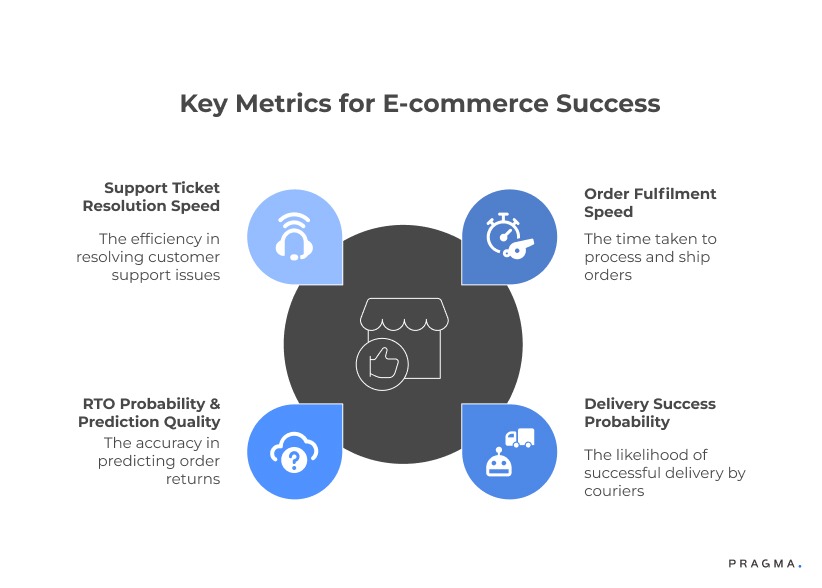
Order Fulfilment Speed
Indian consumers judge reliability based on the gap between “Order Confirmed” and “Shipped.” Delays here trigger anxiety, WISMO tickets and early cancellations.
Pragma offers what many consider the best return management system for e-commerce in India, with automated workflows that handle exchanges, refunds, and reverse logistics at scale.
High-performing brands keep their warehouse cut-offs disciplined and ensure pick–pack processes run with fewer handovers. Even shaving an hour off average dispatch time lifts delivery success in several pin codes.
Delivery Success Probability
This metric is shaped heavily by courier quality. Some partners fail to attempt deliveries on weekends, whilst others struggle with certain pin codes.
Brands that analyse first-attempt success and align couriers to regional strengths reduce delays and return volumes significantly.
RTO Probability & Prediction Quality
Forecasting RTO risk before dispatch has become essential. Brands now classify orders through behaviour signals, payment tendencies and address patterns.
Predictive segmentation reduces loss, especially during sale periods when COD spikes. Lower RTO directly improves contribution margin and frees warehouse space.
Support Ticket Resolution Speed
Most tickets arise from delivery delays and refund issues. Faster handling prevents negative reviews and offsets distrust that often develops after SLA breaches.
Quick resolutions also reduce repeat queries and workload on CX teams.
How Operational Inefficiencies Break Customer Trust
Every delay becomes a trust event in a market wired for scepticism.
Indian online shoppers tend to worry quickly when an order goes silent or moves slowly. Past experiences with failed deliveries, courier cancellations or refund delays have shaped this behaviour. As a result, customers interpret minor operational issues as signals of unreliability.
When shipments stall, customers assume the worst. This emotional response creates a chain reaction: rising WISMO queries, cancellation attempts, COD refusal and lower repeat intent.
Negative sentiment spreads quickly on WhatsApp groups and social platforms, where customers warn peers about “slow delivery” or “refund delays.”
Brands that maintain tight SLAs outperform competitors not because they market better, but because they never let distrust enter the purchase experience.
Where D2C Brands Lose Margin in Operations
The most expensive problems are usually predictable and preventable.
Margin leakage in Indian e-commerce often originates from a few repeated patterns. Brands that treat these leaks as daily operational priorities recover profits without raising prices.
High RTO Due to Mis-Segmentation
Not all COD orders carry the same risk. However, many brands treat them as identical. Customers with unclear addresses, inconsistent order history or slow response patterns contribute disproportionately to returns. Identifying such patterns early lowers loss and frees inventory.
Poor Courier Allocation Logic
Couriers vary widely in performance. Some excel in Tier 1 deliveries with strong routing, whilst others handle Tier 3 regions more reliably. Failing to match orders with the right partner inflates delays, reattempts and cancellations. Dynamic allocation tools offer meaningful gains here.
Excessive Refund Timelines
Slow refunds create distrust and lower prepaid adoption. When customers fear that money “gets stuck,” they prefer COD even if prepaid incentives exist. Reduced prepaid share increases delivery cost, RTO risk and cash recovery overhead.
Warehouse Inaccuracies
Mis-picks, incorrect packaging and poor QC cause frequent customer complaints. Every error triggers replacement orders, refund payouts and extra shipping fees. High-accuracy warehouses maintain strict batch control and verify SKUs before sealing.
How the Best Indian D2C Brands Build Operational Moats
Efficiency becomes a sustainable moat only when systems integrate seamlessly.
Leading D2C brands approach operations as a strategic function rather than a cost centre. They build interconnected systems that eliminate manual decision-making and enable predictable delivery performance.
Automation Across Refunds, NDR and Communication
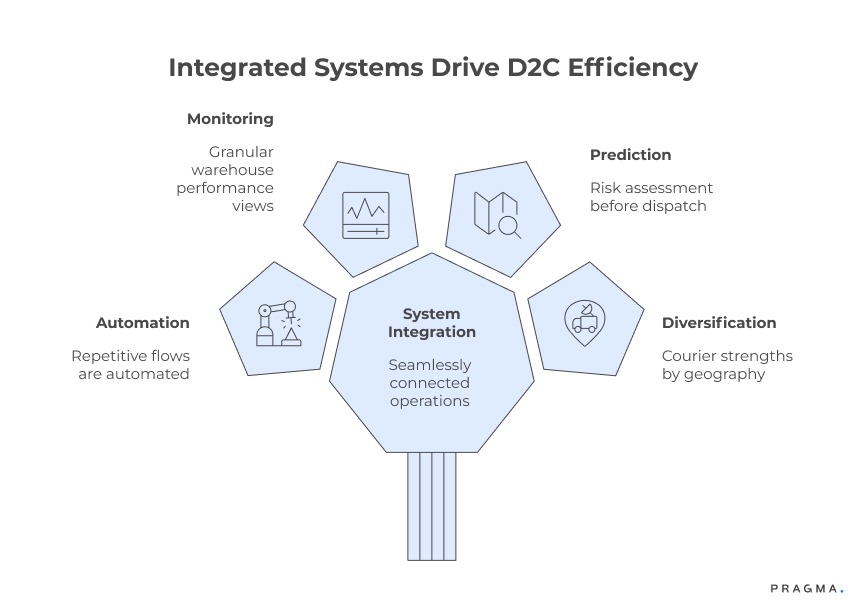
Automating repetitive flows removes the risk of human delays. Fast-growing brands route NDR calls, refunds and ticket responses through automated workflows that ensure consistency and transparency.
Customers experience fewer uncertainties, and teams spend more time on exceptions.
Shift-Level Monitoring Dashboards
Brands such as Lenskart maintain granular views of warehouse performance. Monitoring shift-level pick completion, cut-off compliance and dispatch queues helps identify bottlenecks early and prevents backlog creation.
Predictive Routing and RTO Forecasting
Sophisticated brands use predictive logic to assess risk before dispatch. This helps in adjusting packaging quality, choosing the most reliable courier and enabling prepaid nudges for high-risk orders. The outcome is lower RTO and reduced last-mile cost.
Courier Diversification Based on Pin-Code Behaviour
High-performing brands map courier strengths by geography. This ensures faster routes for high-demand zones and dependable partners for remote regions. Courier diversification also protects against unexpected downtime or capacity issues.
Why Marketing ROI Depends on Ops Efficiency (Not Ads)
Fixing operations often reduces CAC more effectively than raising budgets.
Marketing teams frequently chase better ads, improved creatives or stronger funnels. However, customers judge the brand based on the delivery experience—not the ad experience.
If operations fail, no marketing strategy can compensate. Failed deliveries waste paid traffic, slow refunds push customers to COD and delays generate poor reviews that raise friction for new buyers.
Operational efficiency therefore acts as a force multiplier for marketing efficiency. When delivery windows shrink and refund cycles accelerate, customers reorder faster.
This reduces CAC payback time and improves retention without extra ad spend.
Efficient operations provide long-term stability that no marketing campaign can replicate.
How to Build an Efficiency-First Ops Culture
Culture makes performance predictable long before tools do.
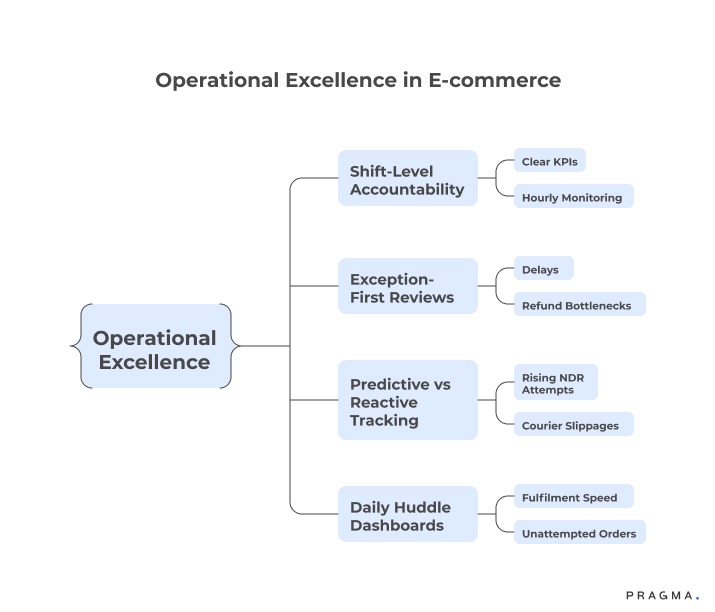
Successful operational teams treat daily execution as a discipline. They combine structured routines with data-led decision-making.
Shift-Level Accountability
Warehouse teams perform best when shifts have clear KPIs. Monitoring hourly performance helps maintain consistency during peak periods and reduces backlogs that often affect cut-off times.
Exception-First Reviews
High-performing teams start their day by examining exceptions rather than averages. Focusing on delays, failed attempts, backlog at hubs and refund bottlenecks keeps teams sharp and responsive.
Predictive vs Reactive Tracking
Focusing on predictive signals changes outcomes. Brands that monitor emerging issues—such as rising NDR attempts or courier slippages—resolve problems before customers complain.
Daily Huddle Dashboards
Daily stand-up meetings centred around dashboards help teams align quickly. Discussing fulfilment speed, unattempted orders and refund backlog keeps the operation transparent and actionable.
Quick Wins You Can Execute in 30 Days
Small operational shifts can deliver measurable improvements.
A few targeted interventions deliver rapid gains without major system overhauls.
- Reduce internal cut-off by 30–45 minutes to improve dispatch reliability.
- Map courier partners by pin-code success instead of overall SLA averages.
- Introduce automated refund triggers for cancellation cases.
- Create shift-level targets for pick accuracy and sealing.
- Send automated WhatsApp updates during silent stages like hub transfers.
These interventions uplift customer sentiment, reduce tickets and stabilise cash flow within weeks.
Efficiency Metrics Every Indian E-commerce Brand Should Track
Your dashboard should reveal issues before customers feel them.
Tracking the right metrics daily ensures that operations remain predictable and scalable.
- RTO Percentage: Indicates how much revenue is lost before conversion.
- NDR Conversion Rate: Shows whether last-mile recovery is effective.
- Refund TAT: Measures trust-building speed and prepaid adoption.
- Courier SLA Variance: Reveals unreliability and helps reassign routes.
- First-Attempt Delivery Rate: Strong predictor of customer satisfaction.
- Dispatch Time: Influences delivery promise accuracy.
- WISMO Ticket Count: An excellent proxy for customer anxiety.
- Net Delivery Cost per Order: Core metric for contribution margin.
A strong dashboard reduces ambiguity and accelerates decision-making.
To Wrap It Up
Operational excellence has become the quiet engine behind India’s fastest-growing D2C brands. As costs rise and customer patience falls, the market rewards brands that execute predictably, communicate clearly and refund promptly.
Winning Indian e-commerce brands focus less on discounts and more on dependable operations.
This shift not only protects margins but also builds the kind of customer loyalty that advertising cannot buy.
For brands seeking operational clarity, automated routing and faster incident resolution, Pragma’s Operations Suite provides the infrastructure needed to scale with confidence and reduce operational stress across the board.

FAQs (Frequently Asked Questions On Why Operational Efficiency Will Decide the Winners in Indian E-commerce)
1. Why is operational efficiency so important in Indian e-commerce?
Operational efficiency reduces delays, lowers RTO, improves customer trust and enhances retention. It directly impacts revenue and brand reputation.
2. What areas impact operational performance the most?
Fulfilment speed, courier allocation, refund timelines, warehouse accuracy and NDR management shape overall performance.
3. How does RTO affect operational efficiency?
High RTO inflates costs, wastes inventory cycles and lowers contribution margin. Predictive segmentation helps reduce unnecessary dispatches.
4. Why do customers lose trust after minor delays?
Indian customers have low tolerance for uncertain timelines due to past negative delivery experiences. Silent periods amplify anxiety.
5. How can brands improve operational efficiency quickly?
Small shifts—such as improved courier mapping, automation for refunds, daily dashboards and reduced internal cut-offs—yield rapid impact.
6. Does faster delivery always mean higher cost?
Not necessarily. Better routing and disciplined cut-offs often reduce cost whilst improving delivery speed.
7. How does operational efficiency affect marketing ROI?
Efficient operations boost repeat purchases, lower customer acquisition payback period and improve prepaid adoption, amplifying marketing returns.
8. What culture changes improve operational efficiency?
Shift-level accountability, exception-first reviews and predictive monitoring create consistent performance across teams
Talk to our experts for a customised solution that can maximise your sales funnel
Book a demo

.png)