

Running an ecommerce business seems fascinating, but there are a lot of things that have to be managed efficiently. One such thing in the business is the supply chain.
Supply chain is an important part of the business that refers to the complete journey of the product, which means from when the raw material is entered till the product is delivered to the customer.
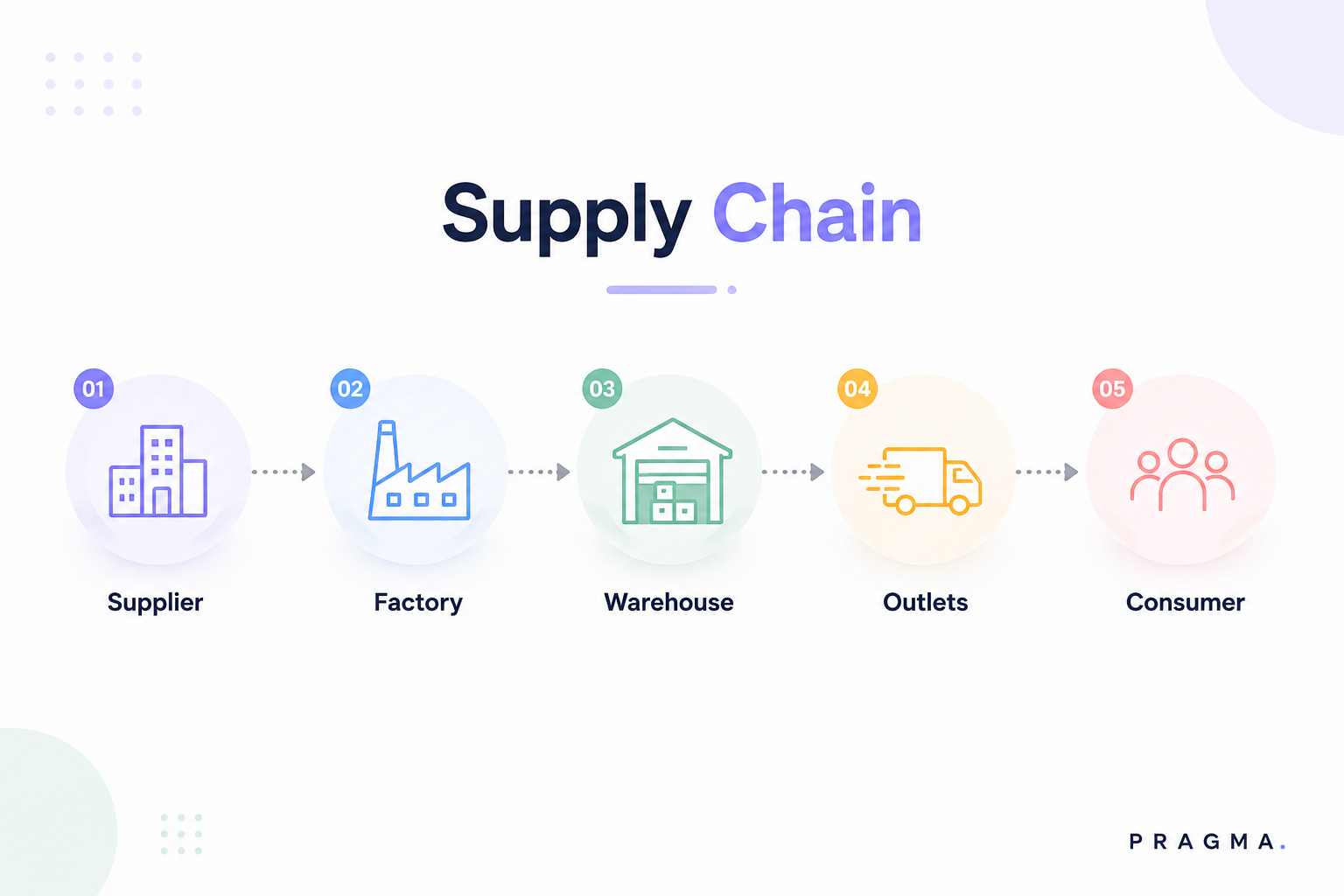
And managing the supply chain is not an easy task. So, will it mean that every business always has to juggle with it?
No, you don't have to juggle with the supply chain management in your business. There are many supply chain tools/software available which can help businesses to manage everything in their supply chain.
Today, we will delve into the "Supply Chain Tools/Software: A Practical Guide for Ecommerce Brands in India" and will talk about the best tools in the market for the Indian D2C brands, how they work, and how they can be beneficial for your business to adopt such tools.
What are Supply Chain Tools/Software?
The supply chain tools/software is an online platform that assists companies in controlling the movement of products between the suppliers and the customers. These tools help businesses to deal with procurement and sourcing, transportation management, inventory management, and order fulfilment.
Let us understand with the help of an example!
Assume yourself as a clothing business owner. So, if you are running a clothing business, what does your supply chain include?
It will receive fabric or raw material from suppliers, making clothes, warehouse stocking, taking customer orders, shipping to customers and returns.
With the help of supply chain tools/software, you can link all of these activities and can get real-time visibility about your product demands, inventory levels, order numbers, management, suppliers' availability, and can control your entire operation.
According to Grand View Research, the global supply chain management software market will have a value of USD 48.59 billion/₹4.4 trillion in 2030 with a CAGR of 9.9%. With such growth, it is advisable to use supply chain tools/software to manage your business more efficiently.
Why Ecommerce Brands in India Need Supply Chain Tools?
As we all know that the Indian ecommerce market is growing day by day at a rapid speed. And with such high growth, several challenges also come in. Businesses have to tackle those challenges with proper efficiency and management.
Therefore, it is necessary to have tools that can help in handling daily operations accurately and promptly. Let us look at why the Indian ecommerce market needs more of such supply chain tools/software.
India covers 3.28 million square kilometres with a variety of geographical factors. Within the country, there are 28 states and 8 union territories, where each state has a different language, culture and logistics infrastructure.
The Economic Times reveals that the cost of logistics in India is 7.97% of GDP, whereas in developed economies such as the US and Germany, the cost of logistics is lower. This increased cost is mainly related to poor supply chain management, and that is why optimisation tools become essentials.
A survey by PwC has shown that 73% of Indian consumers want speedy deliveries, whereas 68% of consumers demand real-time tracking information.
Also, at the time of festival seasons such as Diwali, Dussehra, and local festivals, the demand spikes very high, that need to be planned properly and requires supply chain tools/software that could help businesses to do things correctly.
The Indian ecommerce market still has approximately 60% of customers who need COD as a payment method. This causes specific problems, such as higher returns (15-20% of COD & 5-10% of prepaid), higher logistics, and cash flow problems, of which special tools are needed to manage.
What are the Key Categories of Supply Chain Tools/Software?
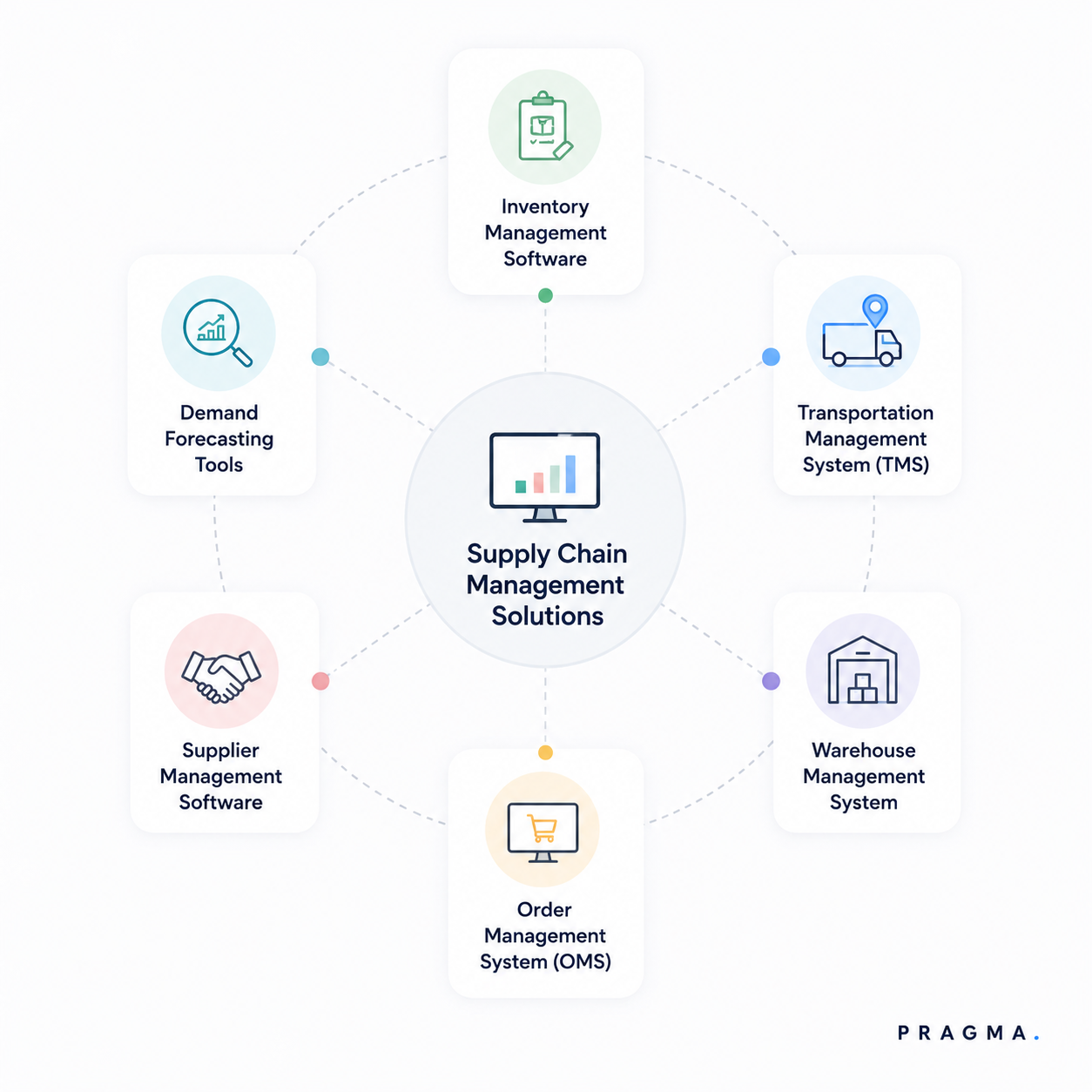
The supply chain software consists of the following tools that businesses can use according to their needs:
Inventory Management Software
Inventory management software assists businesses in tracking the quantity of stock. It allows you to know as soon as the products become low and prevent out-of-stock issues.
It is optimal when brands have numerous sales or storage locations for products or items.
Some of the key features these software providers provide are real-time updates of stocks, automatic reorder alerts, and demand forecasting, which are standard.
Transportation Management System (TMS)
The TMS is a computerised system designed to enhance the efficiency of goods transportation.
TMS helps businesses to manage and enhance their product deliveries. It identifies optimal shipping routes, coordinates delivery provider operations and tracks shipments.
It works perfectly when there are brands that deliver large quantities in India.
Warehouse Management System
These systems assist in the day-to-day activities in the warehouse, such as product storage, picking, and packing. It helps to enhance speed and accuracy within the warehouse.
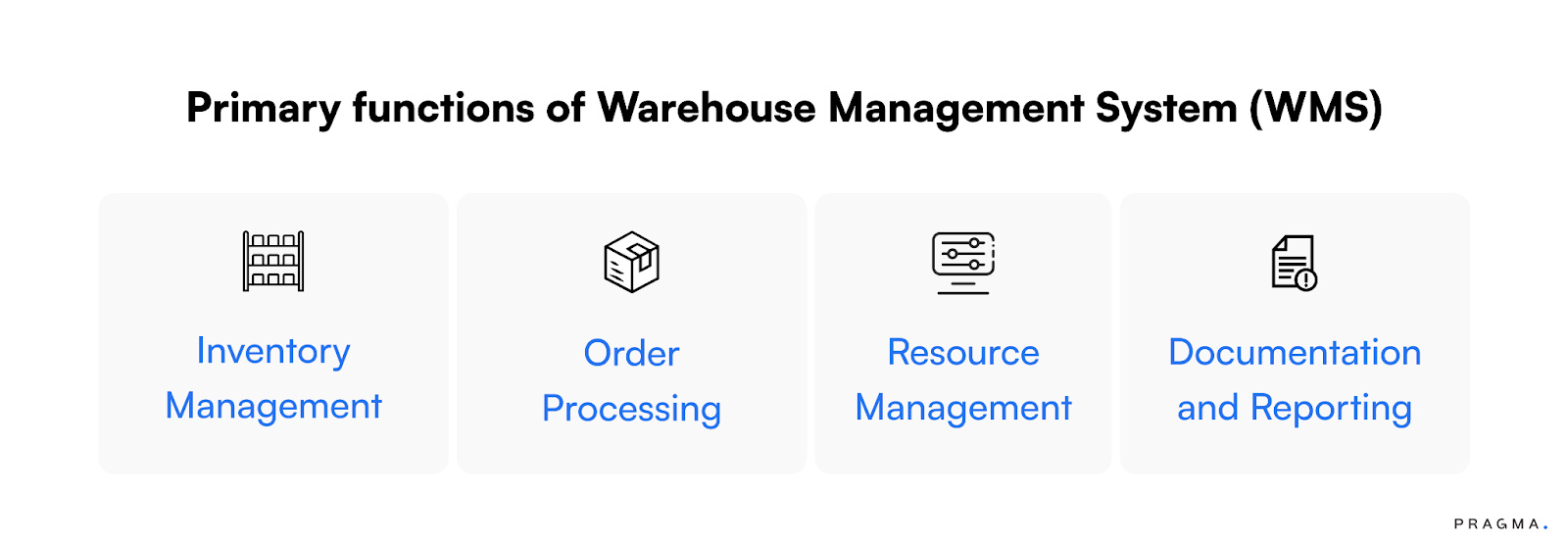
It is effective for the brands that have their own warehouses or those that are using third-party logistics (3PL).
Order Management System (OMS)
The OMS helps to manage orders from different platforms under a single location. It helps in processing, shipping and monitoring orders.
It can be helpful to brands that sell on websites, such as Amazon, Flipkart, or any other platform.
Supplier Management Software
This software helps in creating relationships with suppliers. It monitors the performance of the suppliers and deals with the purchasing activities.
Brands that deal with various vendors are better served by it.
The most significant characteristics are vendor evaluation, contract management, and performance monitoring.
Demand Forecasting Tools
These tools help businesses to estimate future sales using past data and market trends. They assist brands in making inventory plans.
They suit brands that deal with products that are not available all year round or where demand fluctuates.
The main aspects are AI predictions on sales, forecasting, and scenario planning.
How Supply Chain Tools Work Together in Ecommerce?
If we talk about how these supply chain tools work in the ecommerce industry, we can say that no single tool can provide every benefit to the business. Each tool has its specific characteristics, and they have to work together to give the best results.
First comes the supplier management software, which assists brands in collaborating with suppliers, making orders, and achieving timely delivery of products. Now, when the business gets the products from the supplier, inventory management software monitors stock levels at warehouses and other sales channels to prevent overstocking and stockouts.
The next is the role of the order management system (OMS) that gathers all information about the orders made by the customers at different platforms and forwards them to the appropriate location.
After that, to start fulfilling the order, the warehouse management system (WMS) takes care of picking, packing, and storing products in a warehouse.
The transportation management system (TMS) then chooses the ideal courier after the packing, plans delivery routes, and provides real-time tracking of shipments. In the meantime, demand forecasting tools process the information about the sales and trends and arrange future demand and generate reordering in time.
So, this is how all the supply chain tools work together for the ecommerce business.
What are the Benefits of Using Supply Chain Tools/Software?
Using supply chain management tools can help you get the following benefits:
- It helps in better inventory control.
Supply chain tools help businesses to know the exact quantity of stock they have. With the help of such tools, it becomes easy to know when to order what to restock. Thus, this software helps businesses to avoid running out of products or holding excessive inventory that is not utilised.
- It helps to process orders faster.
These devices automatically relocate the orders from the customer to the warehouse system. This saves on manual work, expedites order processing and orders are processed immediately.
- It helps in fulfilling on-time deliveries.
Shipping and delivery tools help in the planning of the most suitable routes and the selection of quality courier services. This helps businesses to give timely delivery of products to their customers.
- It helps to lower operating costs.
Supply chain software will cut the unnecessary costs by enhancing planning and minimising waste. Businesses end up saving on storage, shipping, and manual labour.
- It can help to improve demand planning.
Demand forecasting tools analyse the previous sales and present trends, and forecast the future demand. This helps businesses in preparing stock ahead of time and prevents shortages on hand.
- It saves businesses from making errors.
These tools make use of automation that can help businesses to minimise errors that may occur when using manual labor like incorrect purchases or stock quantities.
- It helps in making better supplier management.
Through these tools, it is easy to control the supplier information, orders and performance. There are fewer delays and increased coordination due to clear communication with the suppliers.
- It helps in getting better customer satisfaction.
When the orders are made correctly and are timely delivered, the customers build faith in the brand. They trust the brand and make repeat purchases, becoming a loyal customer.
- It saves time and effort.
The routine activities, such as tracking, updating and reporting, are done with the use of these automated tools. So, with the help of these tools, the simple tasks can be done, and the operational teams can focus on more important tasks related to the development and growth of the business.
What Challenges Do Ecommerce Brands Face When They Don't Have Supply Chain Software?
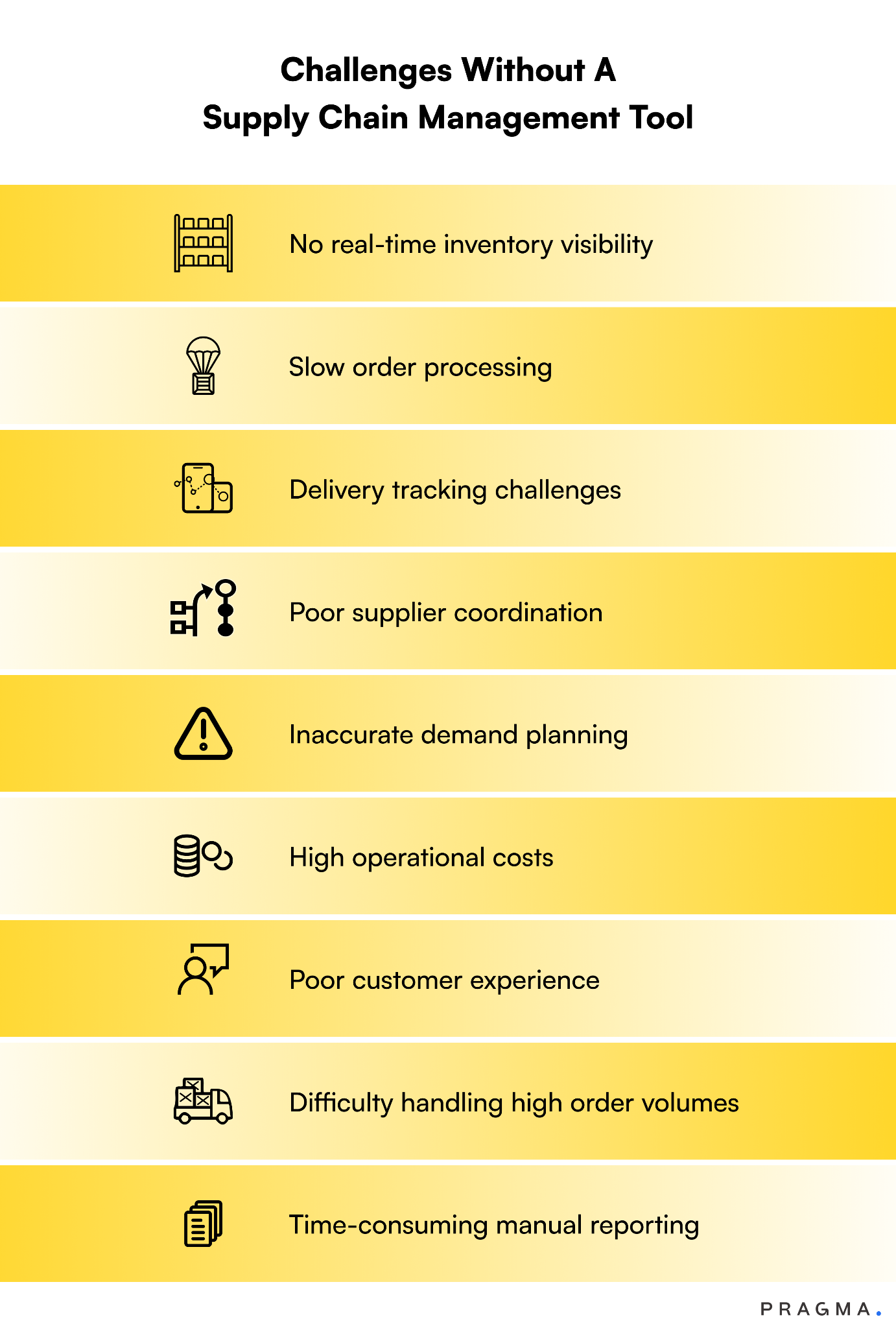
Challenges Without A Supply Chain Management Tool
- No real-time inventory visibility
- Slow order processing
- Delivery tracking challenges
- Poor supplier coordination
- Inaccurate demand planning
- High operational costs
- Poor customer experience
- Difficulty handling high order volumes
- Time-consuming manual reporting
When a business does not have supply chain software, it may have to face the following challenges during its work operations:
- Without the help of automated tools, it will be difficult for the business to manage its inventory in real-time, and it can lead to situations where the company has surplus inventory or a shortage of stock.
- When things are done manually, the order processing will take more time, which can lead to delivery delays and mistakes in processing orders.
- It would be difficult to track deliveries and schedule the delivery timetables without a central system in place.
- Businesses have to deal with multiple suppliers, and without the help of softwares it can be confusing. It may happen that they did not get the material or products at the right time, which could cause a delay in fulfilling the customers' orders.
- In the absence of good data, the demand planning can be more like an assumption, not an accurate one.
- There would be a possibility that the business incurs high operation cost caused by inefficient utilisation of storage, transport, and manpower.
- Without the proper tools, the customers could also experience problems such as delayed delivery, getting the wrong orders, etc.
- Managing large volumes of orders without the appropriate tools could be hectic and challenging.
- The teams will waste more time on monitoring and reporting tasks that could be easily done through automated tools.
How to Choose the Right Supply Chain Tool/Software?
If you want to get the best supply chain management tool for your business, the following steps should be taken into account:
1. Assess Your Current Needs
The first thing that has to be necessarily seen while selecting any type of tool is to know about the needs of your business.
You should always see what kind of products you deal in, how much volume of orders you handle per day, where you ship, locally, nationally or internationally, and on how many platforms you make your sales, etc.
All these points should be taken into account while selecting a supply chain tool/ software.
2. Identify Key Pain Points
Another thing that you should know about selecting a specific tool is why you are in need of that tool. It means you should know the specific reason for taking any tool.
For example, you may see that you get out of stock during the summer season, but you are not aware of it at the right time. Or manual handling of orders is taking too much time, which costs you expenses as well as a poor delivery experience.
So, there could be several such reasons from which you can know what type of tool you should take for your business.
3. Consider Integration Capabilities
Always, when you select any tool, you should check whether it can be integrated with your existing systems or not. Your supply chain tools should integrate with:
- Ecommerce platforms such as Shopify, WooCommerce, and Magento
- Marketplaces such as Amazon, Flipkart, and Myntra
- Payment gateways, including Razorpay, PayU, Paytm
- Accounting software like Tally, QuickBooks
- Communication platforms such as WhatsApp, SMS, and email
4. Evaluate Scalability
Purchasing such software is not a task that can be done again and again. So, while selecting a specific supply chain tool/software, you should keep in mind your future plans too.
You can look for software that provides flexible pricing according to usage, or you can choose one that can easily be expanded as per your requirements.
5. Budget Considerations
It is an obvious point that if you want to purchase a supply chain tool/software, you will definitely have to look at your budget. Choose the one that fits in your budget and provides you with the essential features required for your business.
Popular Supply Chain Tools Used by Ecommerce Brands
Pragma
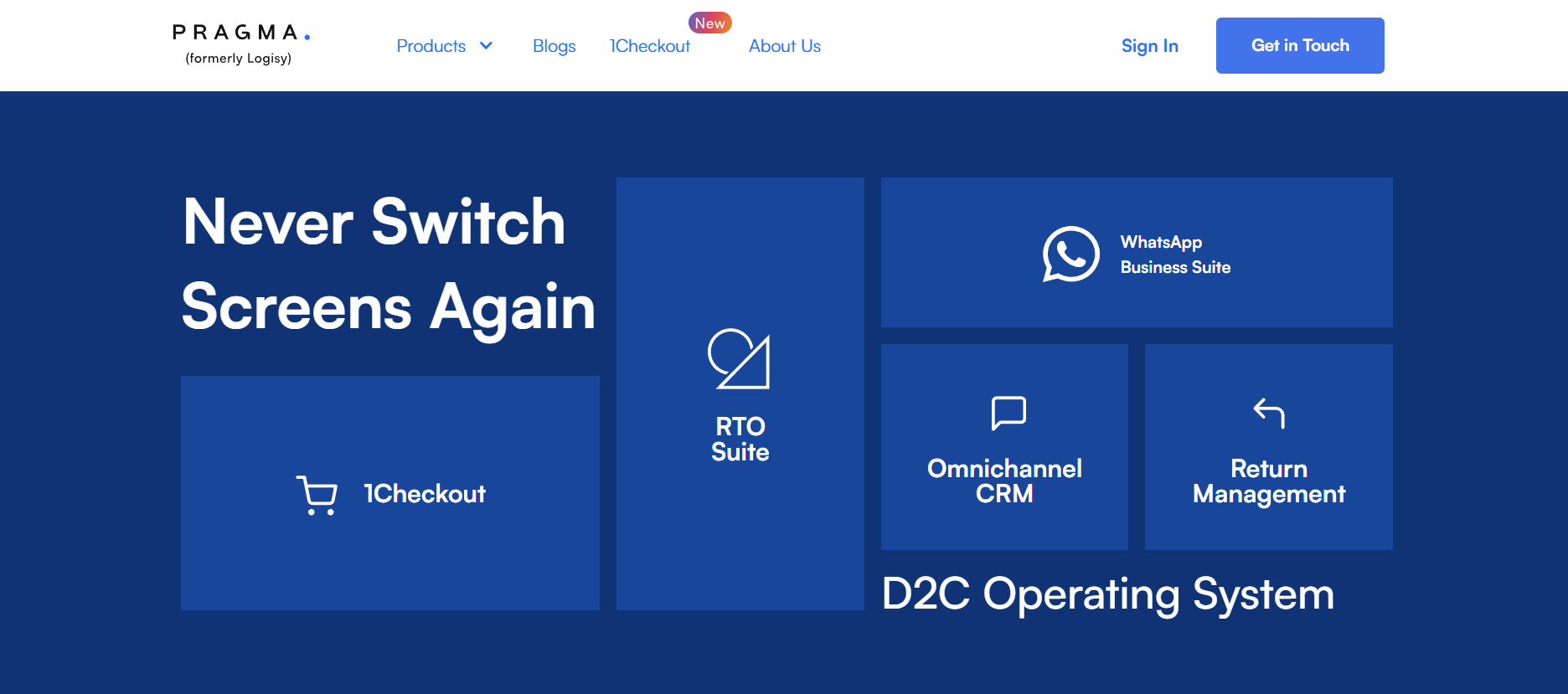
Pragma is the best D2C operating system that provides end-to-end solutions to 1000+ ecommerce brands.
Key Features
- Works as a supporting supply chain management tool for ecommerce brands
- Connects customer orders with fulfilment and logistics operations
- Adjusts stock levels and the replenishment schedules to meet the varying demand conditions at peak seasons or promotions.
- Checking the inventory status, constantly observing the levels, flow and position of stocks throughout warehouses.
- Helps reduce RTO by verifying and flagging high-risk orders
- Automates returns and exchanges to improve reverse logistics.
- Manages NDR cases to increase delivery success rates
SAP SCM
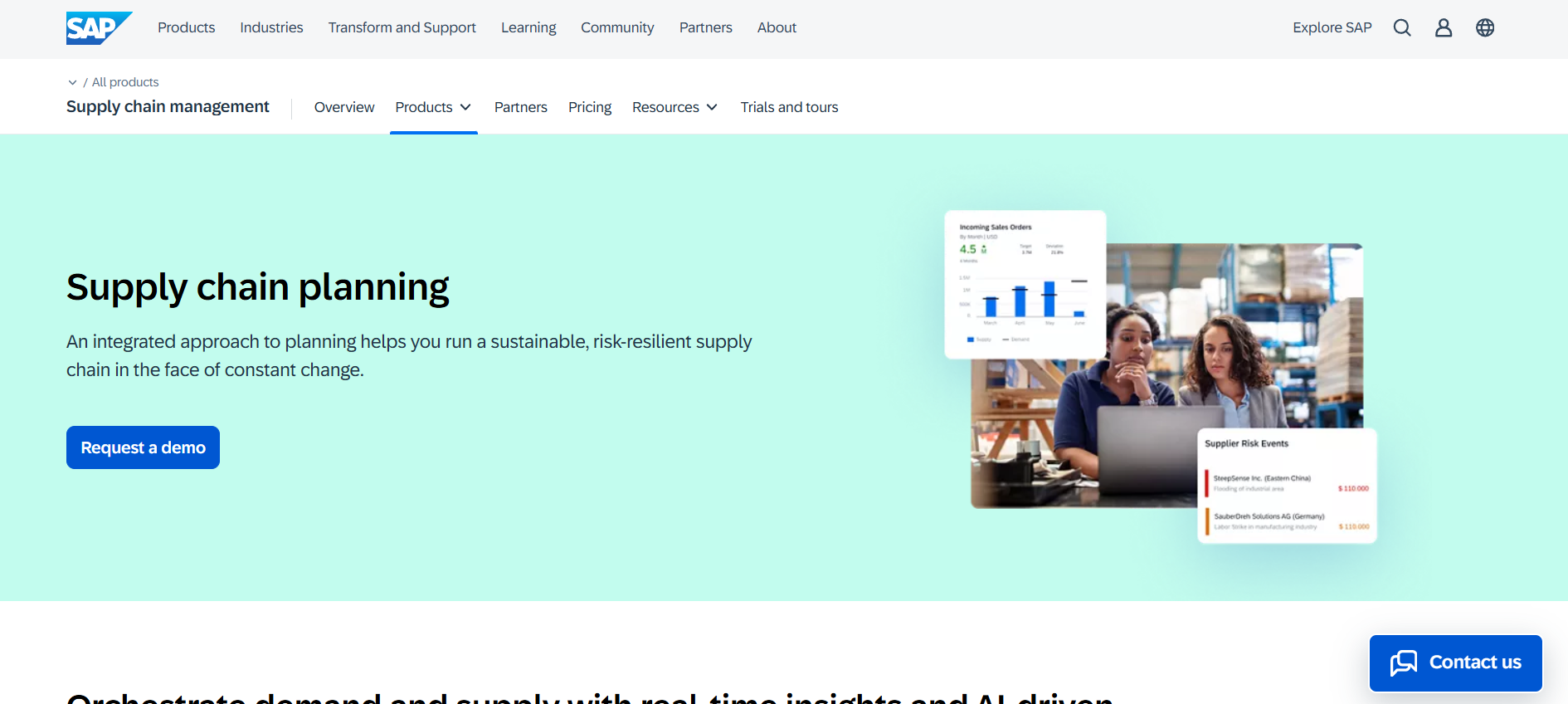
The supply chain tools of SAP provide large ecommerce brands with good control in terms of planning, warehousing, and logistics.
They provide a high level of automation and real-time tracking of all the supply chain processes.
NetSuite (Oracle NetSuite SCM)
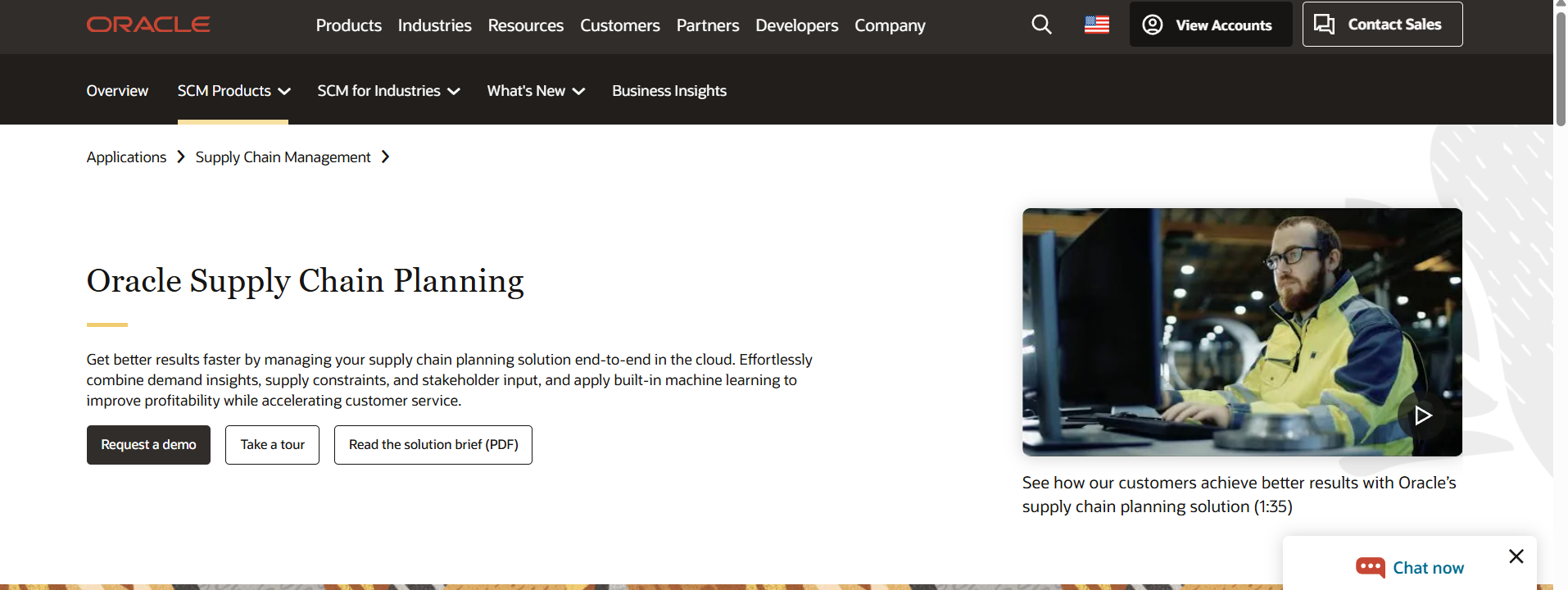
NetSuite is an entire cloud supply chain that assists ecommerce brands in planning inventory, demand forecasting, and order management.
It applies real-time data to assist businesses in optimising stock and preventing shortages.
Logiwa WMS
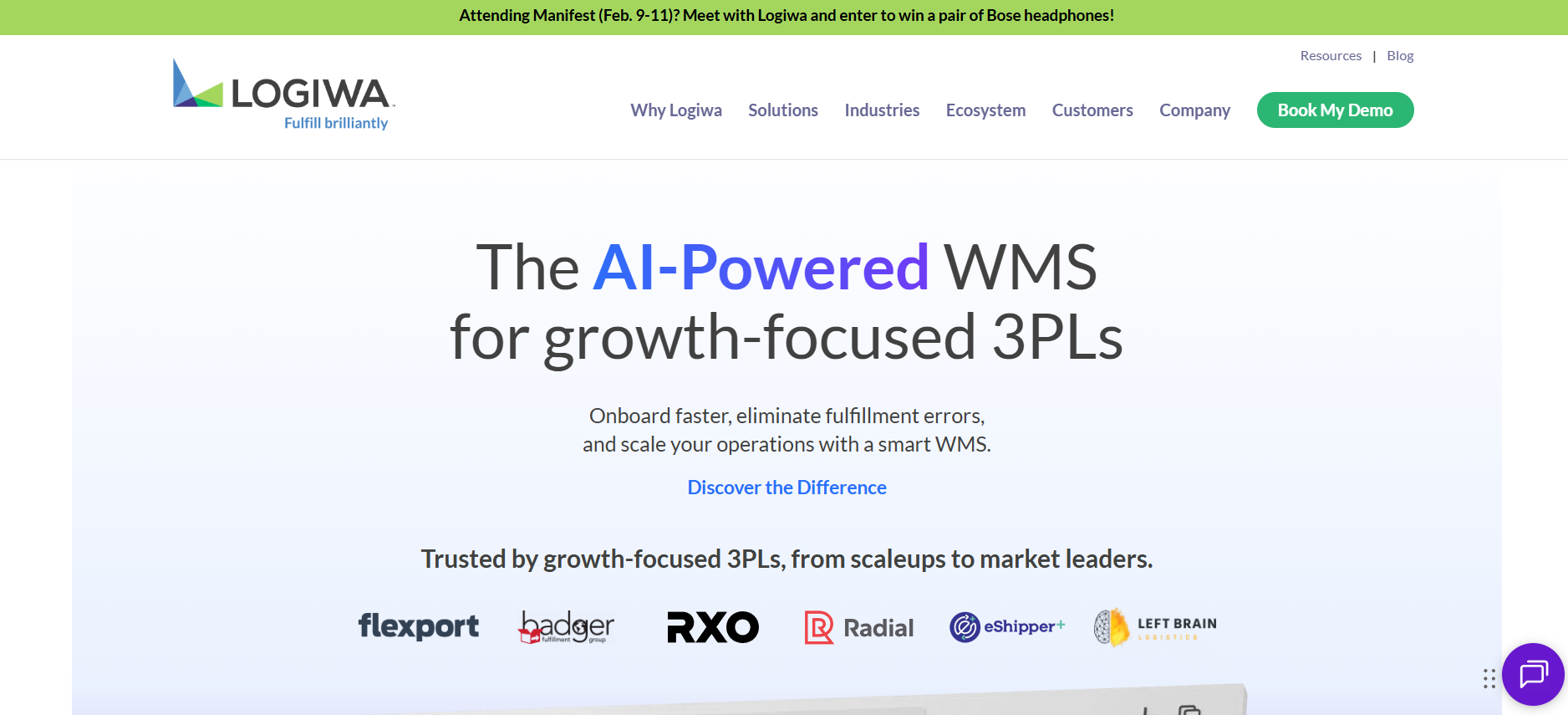
Logiwa is the warehouse and order-fulfilment application that enables ecommerce brands to manage inventory and shipping across several warehouses.
It helps to automate the process of stock tracking, packing, and routing orders to accelerate delivery and minimise errors.
Manhattan Active Supply Chain
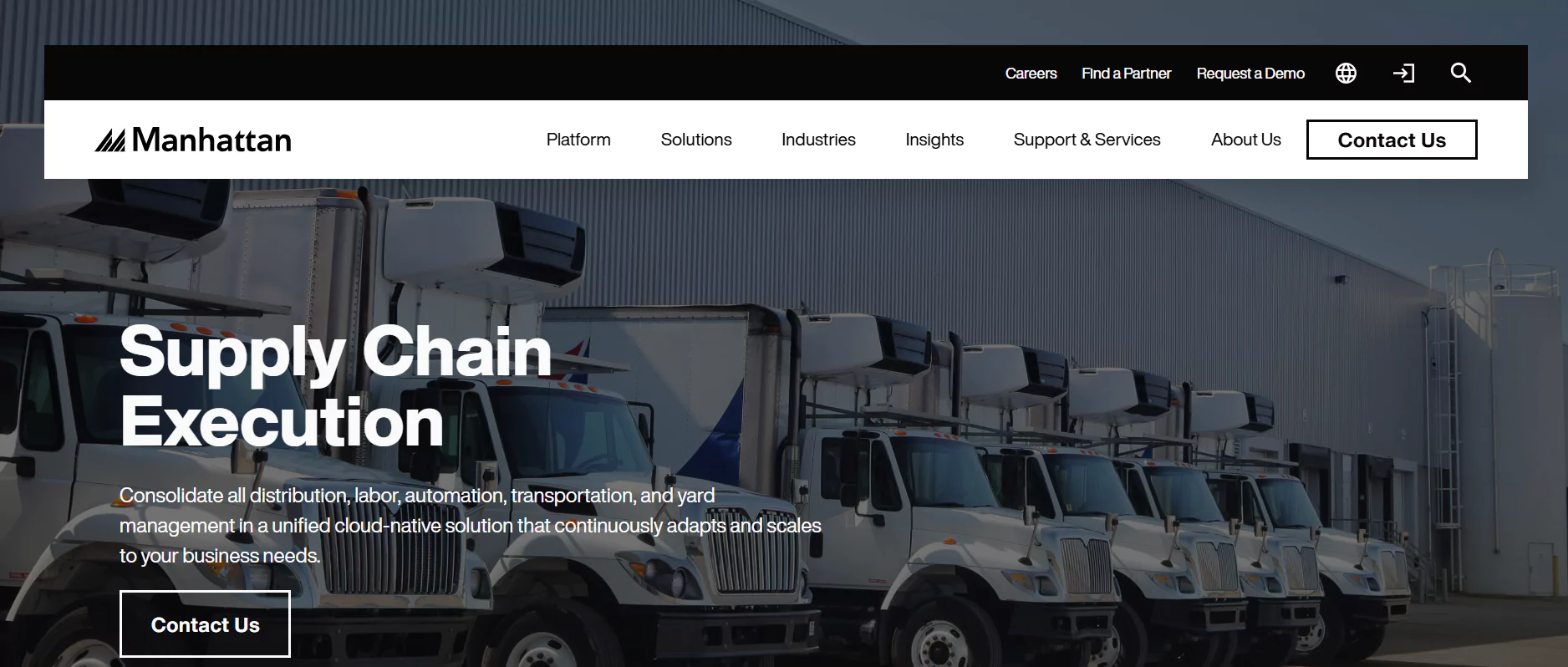
Manhattan Active is a robust cloud-native supply chain suite which integrates warehouse, transportation, order, and labour management.
It gives real time-visibility and integrates all supply chain operations towards increased efficiency and quick delivery.
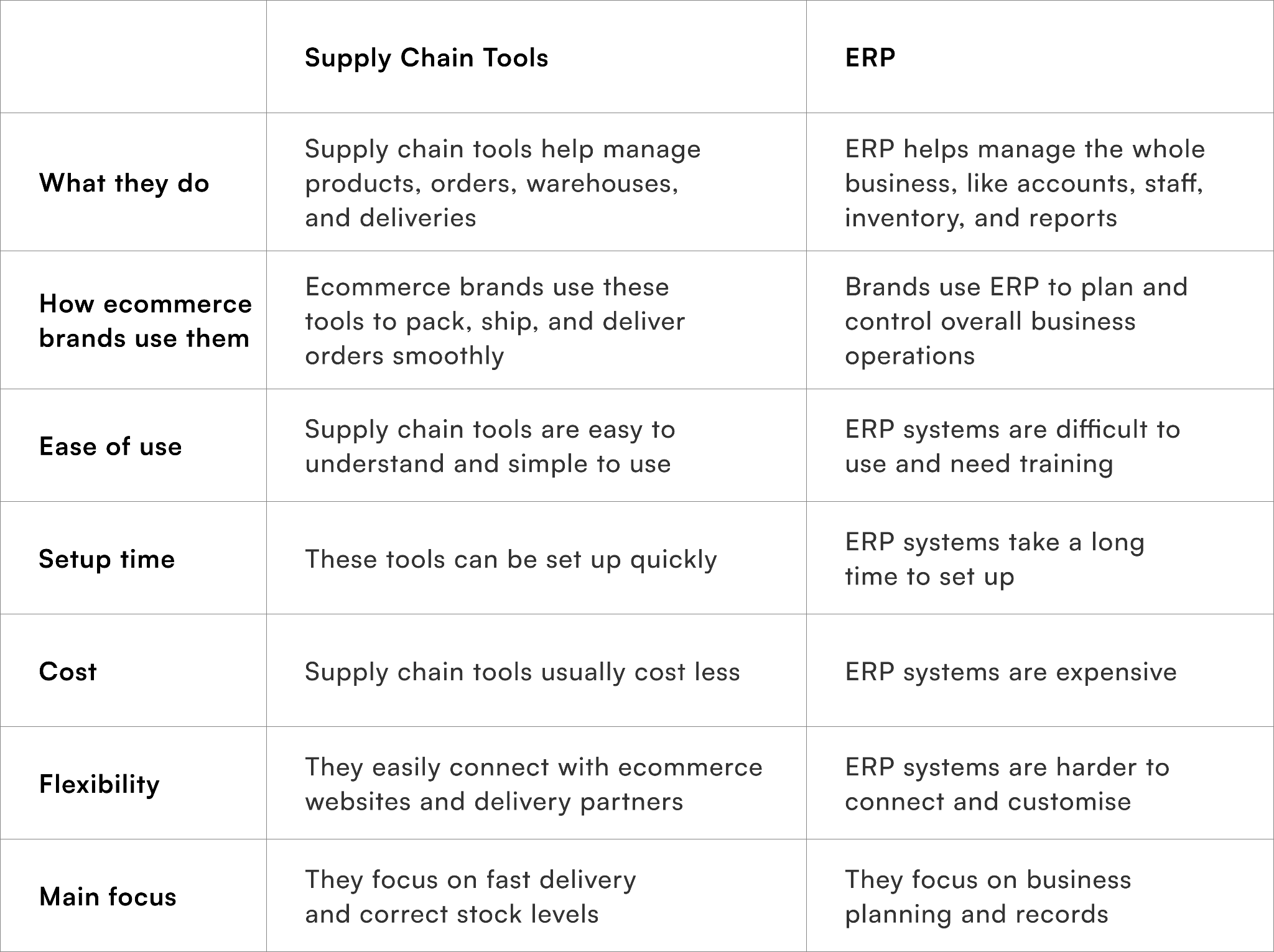
Supply Chain Tools vs ERP: What is the Difference Between the Two?
Future of Supply Chain Software for Ecommerce in India
Supply chain ecommerce software in India will be more intelligent and computerised in future. There will be more AI-driven tools that will forecast demand, minimise returns and keep stock under control.
The speed of deliveries, such as same-day and next-day delivery, will increase.
The software will be connected with the local couriers, warehouses, and markets, which will assist the brands to deliver faster, more cost-effectively, and in a productive manner.
To Wrap It Up
To conclude here, we want to say that supply chain is one of the core essentials that has to be managed very well. And in order to do that, the supply chain management tools are a must-have for businesses.
To predict the right demand, to get proper supplies, to meet customer demand, to manage inventories, and to get all the things done right, you should choose the best supply chain tool like Pragma, which will help you manage throughout your sales journey.

FAQs (Frequently Asked Questions On Supply Chain Tools/Software: A Practical Guide for Ecommerce Brands in India)
1. What are supply chain tools in e-commerce?
Supply chain tools are software systems that help e-commerce brands manage sourcing, inventory, warehousing, order fulfilment, logistics, returns, and demand forecasting in a coordinated and automated way.
2. Why do Indian e-commerce brands need supply chain software?
Indian brands face challenges such as COD-heavy orders, multi-warehouse operations, Tier-2 and Tier-3 delivery complexity, and high return rates. Supply chain software improves visibility, reduces errors, and controls operational costs.
3. What types of supply chain software are used in e-commerce?
Common tools include Warehouse Management Systems (WMS), Order Management Systems (OMS), inventory management software, logistics management platforms, returns management systems, and demand forecasting tools.
4. How does supply chain software improve inventory accuracy?
It updates stock levels in real time across sales channels and warehouses, reducing overselling, stockouts, and reconciliation errors caused by manual spreadsheets.
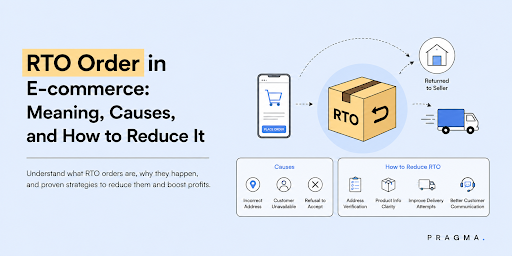
5. Can supply chain software reduce Return to Origin (RTO)?
Yes. Tools that integrate checkout validation, courier allocation logic, NDR automation, and returns workflows help reduce failed deliveries and RTO rates.
6. What features should Indian e-commerce brands look for in supply chain software?
Brands should look for real-time inventory sync, multi-warehouse support, courier integrations, returns automation, GST invoicing compatibility, analytics dashboards, and seamless integration with Shopify or marketplaces.
7. Is supply chain software necessary for small D2C brands?
Yes. Even growing brands with a single warehouse benefit from improved stock accuracy, faster despatch, reduced manual work, and better operational control.
8. How does supply chain software help during festive or peak sales?
It supports demand forecasting, automated stock alerts, faster order routing, and real-time visibility, reducing overselling and fulfilment delays during high-traffic periods.
9. What is the difference between supply chain software and logistics software?
Supply chain software covers the entire product lifecycle from sourcing to returns, while logistics software focuses mainly on shipping, delivery tracking, and courier management.
10. When should an e-commerce brand invest in supply chain tools?
Brands should invest when order volumes increase, stock mismatches become frequent, fulfilment delays rise, or operational teams spend excessive time on manual reconciliation
Talk to our experts for a customised solution that can maximise your sales funnel
Book a demo.webp)
.png)
.png)