

RTO is a very common term used in the logistics industry. Every e-commerce business owner is aware of this term and is also afraid of seeing it more.
If you are new to the e-commerce industry and are curious about RTO's full form in logistics, let us tell you, RTO is a short, abbreviated form of Return-to-Origin. It is one of those industry terms that sounds complicated but is actually quite simple once you understand it.
And you will be shocked to know that the RTO rate in the e-commerce industry is about 15-25%, with some sectors reaching at 40%.
So, let's get straight to the topic. In this blog, we will delve into "RTO in Logistics: Meaning, Full Form & How to Reduce It?"
What Is RTO in Logistics?
As we have discussed earlier about the RTO full form in logistics, it refers to Return-to-Origin. Let us now move to the answer for What is RTO in logistics.
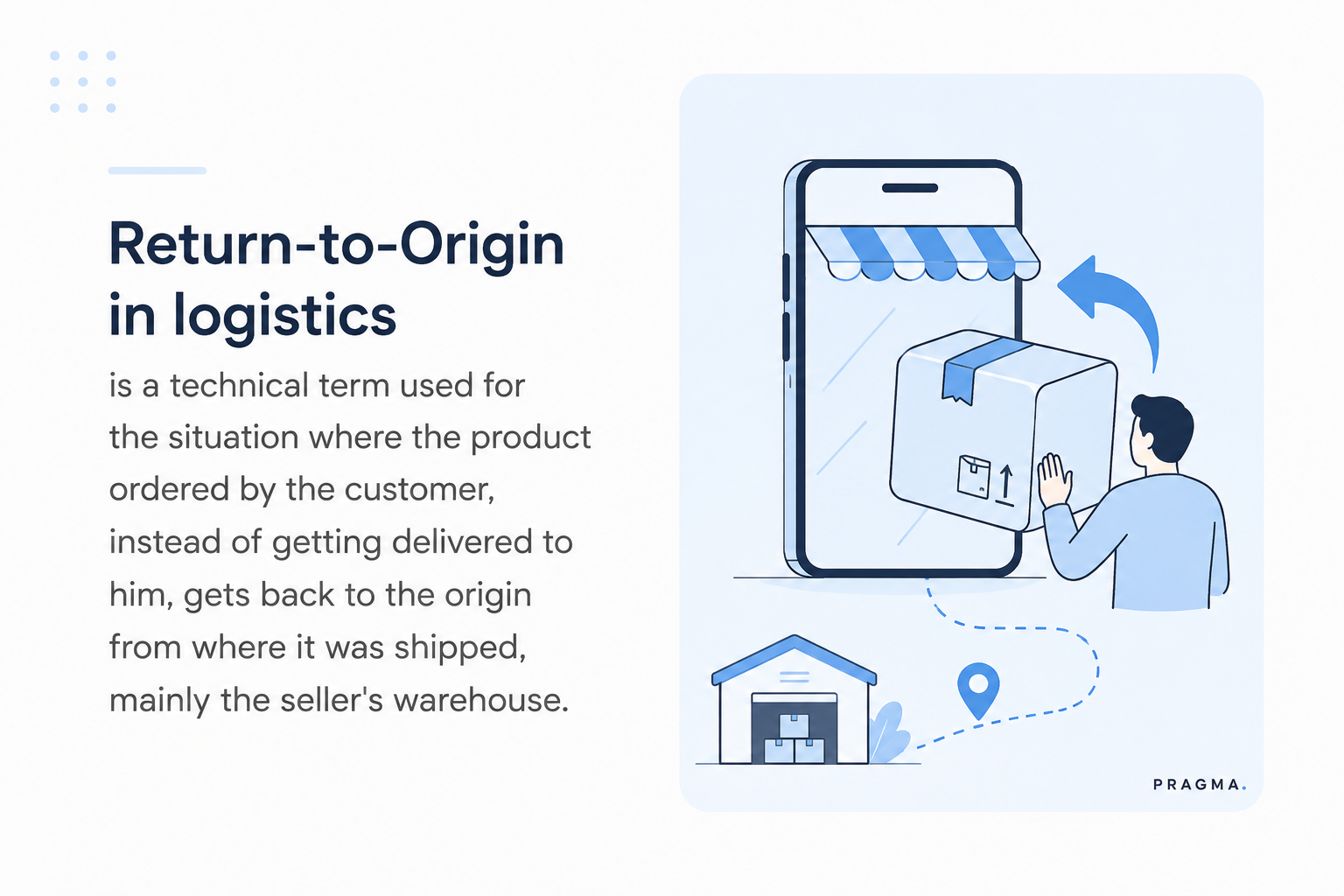
Return-to-Origin in logistics is a technical term used for the situation where the product ordered by the customer, instead of getting delivered to him, gets back to the origin from where it was shipped, mainly the seller's warehouse.
RTO in logistics can occur due to many reasons, such as the customer's unavailability, incomplete or wrong address given by customers, refusal at the time of taking orders, change of mind of customers, etc. We will discuss this in detail later.
As the order, instead of getting delivered to the customer, comes back to the seller, it means that it directly impacts the sales, revenues and costs of the business, because the order not only just causes them a loss in revenues, it also costs businesses expenses in terms of shipping that is used to deliver that product to the customer's address plus the costs that will incur on taking the product back to warehouse.
It means an RTO in logistics is a great problem for e-commerce businesses. The problem is much bigger than you might think. Research shows that brands often spend 1.5 times the original shipping cost just handling returns.
RTO Full Form in Logistics and Inventory
RTO is not only a package returning in the logistics and inventory world. It amounts to a cycle of failure that would befall the whole business operation.
In the context of logistics, we mean the whole process through which a shipment has travelled through the warehouse to the customer location, has failed to be delivered, and has gone back to the warehouse.
Many different parties are involved in this process - warehouse staff, the courier company, the delivery man, and, lastly, the customer. Every failure in this unsuccessful course is costly in money and time.
The report on the India Ecommerce Index provided by Unicommerce in 2023 has revealed that the ratio of return orders has risen to 10.4 in FY 23, compared to 9.8 in FY 22, and thus, the situation is not improving.
How the RTO Process Works in Logistics?
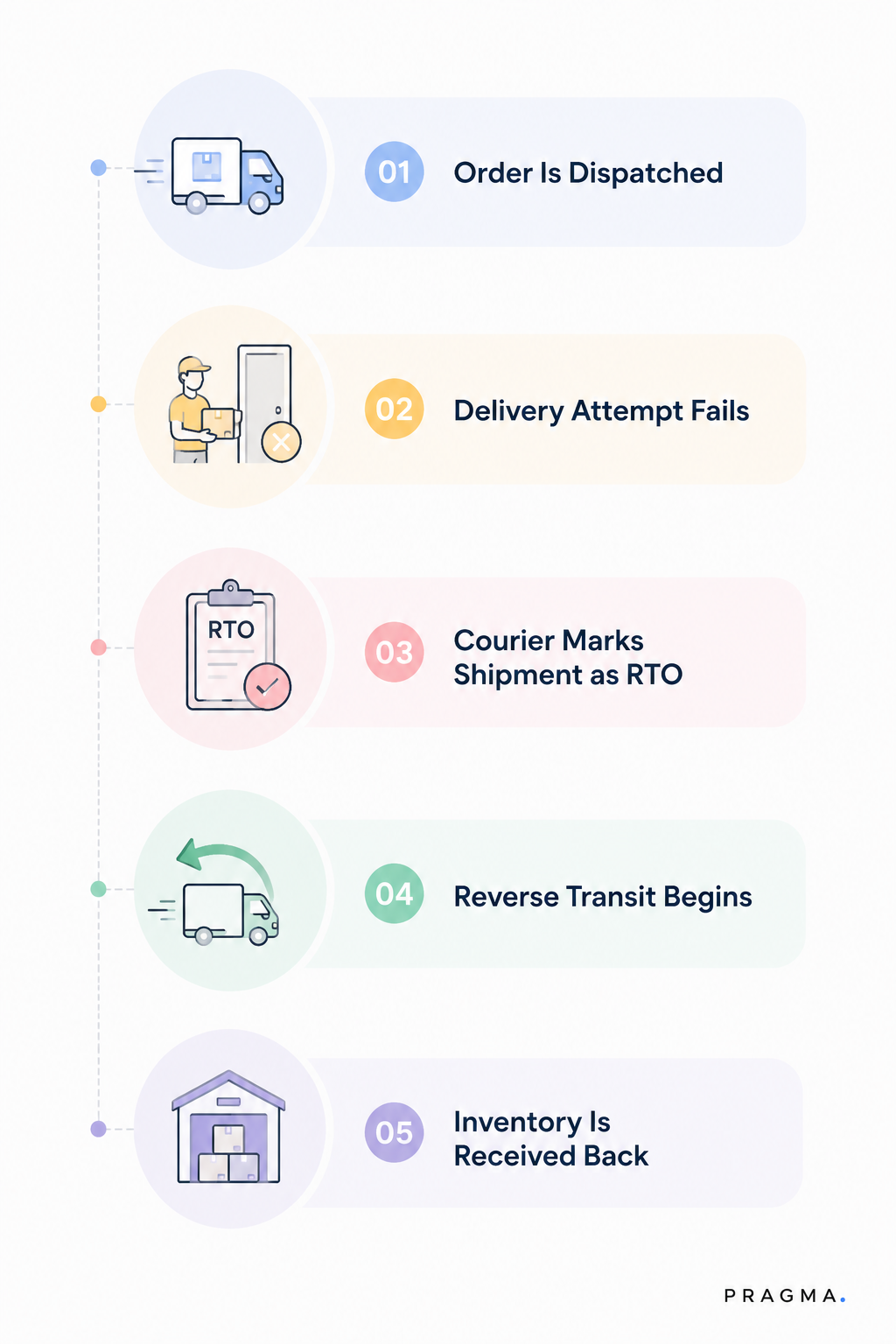
Now, when you are aware of the meaning of RTO in logistics, let us explain to you how the RTO process actually happens in the logistics industry:
1. Order Is Dispatched
The RTO in logistics is a process that is initiated because a customer places an order with the business through the app or the website of the company.
After getting the order, the business starts processing it, packing and shipping it to the customer's address. At this point, the business has already incurred some costs, say on packaging, labour and shipping costs to ship the product with the help of delivery partners, which is called the forward logistics cost.
2. Delivery Attempt Fails
As the package has been shipped to the customer. The courier company delivers it to the city of the customer, the local delivery hub and finally, a delivery person delivers it to the customer's address.
However, this is where it may go wrong. The delivery man gets to the address and discovers that:
- The number of the house is incorrect or non-existent.
- Nobody is home, and the phone number is unreachable.
- The customer examines the package and rejects it.
- The speech is halfway, and the deliveryman is not able to locate the specific location.
The majority of courier partners will make an attempt 2-3 times and then give up. Every trial will cost them money, and they will finally charge businesses for these additional trials as well.
3. Courier Marks Shipment as RTO
On several unsuccessful deliveries, the courier service partner records the consignment in their system as RTO. When a package has been declared RTO, then it will come back to the business, even if it is not the fault of the business.
The courier company will give you a notification (which is most likely a notification via email or their tracking system) informing you that delivery was unsuccessful and the package has been returned. At this stage, the business becomes aware that it has made a loss on this order.
4. Reverse Transit Begins
It is time to start the return process to ship the product back to the business's warehouse. The package is loaded on a truck or an aeroplane (depending on the distance) and begins to travel back to the city. This backward journey usually takes as much time as the forward journey, and at times even more.
At this point, the product is in transit. The business can neither sell it to any other customer, nor can it use it for anything productive; it's just dead inventory moving around the country, costing the business only money.
5. Inventory Is Received Back
After this, the business will finally receive the package after days or even weeks in the warehouse. But their troubles are far from over. Now they need to:
- Make sure that the package is not damaged during the delivery back.
- Unpack it and have a look at what is inside.
- Determine whether the product can be resold or has to be disposed of.
- Modify the inventory system.
- Return a refund in case of online payment by the customer.
- Respond to customer queries and complaints.
What are the Common Causes of RTO in E-commerce Logistics?
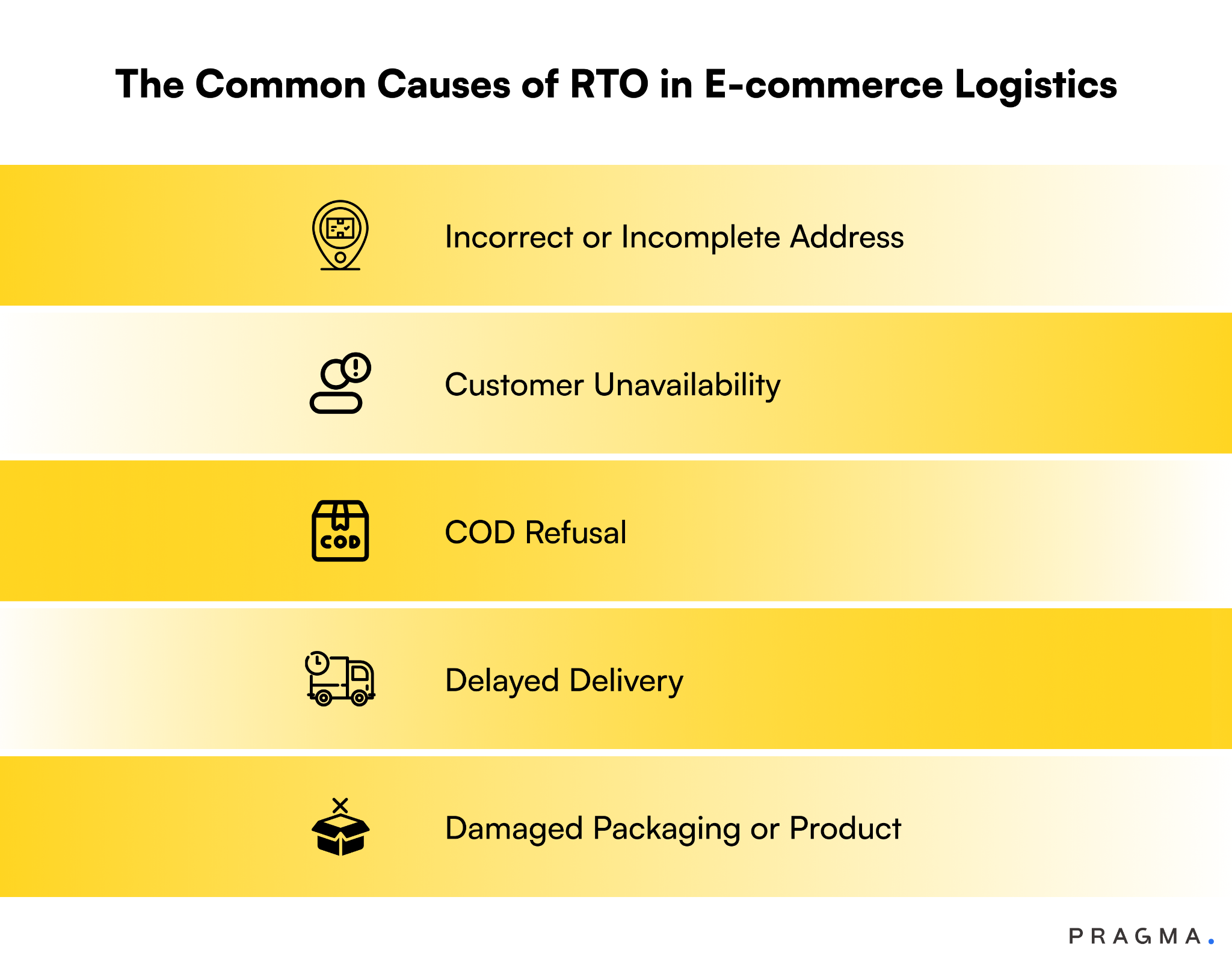
As we have discussed earlier, RTO in logistics can be through various reasons. Let us have a look at the major causes behind RTO:
Incorrect or Incomplete Address
This is the number one reason for RTO in logistics in India. Most of the customers, at the time of placing the order, in haste, enter the wrong or incomplete address. A lot of the time, we have detected that there are wrong pin codes, incomplete addresses, missing house numbers, incomplete landmarks or silly spelling mistakes that make the delivery partners confused about where to deliver the order.
That is why, to solve this problem, we have come up with a solution, Pragma RTO Suite, that can address this exact problem by using AI to scan 300+ parameters and can identify incorrect addresses, reducing info-related RTOs by 45-60%. The system checks for things like minimum character length, validates pin codes in real-time, and flags addresses that look suspicious or incomplete.
Customer Unavailability
Another reason behind the RTO in logistics in India is that at the time of delivery of the order, the customer is not available, or the delivery partner does not get in contact with them.
This problem mostly occurred with the working professionals or the people who place COD orders. To solve this problem of COD orders, Pragma has come up with an automatic order verification system that helps to verify the COD orders prior to being processed and also makes use of pre-configured notifications to customers on WhatsApp, SMS & Email to get them update their availability easily without any manual calling.
COD Refusal
Most of the orders are still COD in India, and nearly 65% of people use this feature. And this is also one of the major reasons behind RTO in logistics, as when a customer places an order without paying anything, he is free to cancel it anytime, or he just changes his mind, or gets a better deal somewhere else.
Pragma RTO Suite helps tackle this by implementing COD verification systems. Brands using Pragma have increased prepaid orders from 25% to 35% and achieved a 60% reduction in RTOs by encouraging customers to pay online instead of choosing COD.
Delayed Delivery
Fast deliveries are preferred by customers. Customers would no longer be interested and will reject the order when a business gives them a promise that they will receive the product within 2-3 days, and the product takes another week before arriving at their doorsteps.
This especially applies to time-sensitive purchases. For example:
- One orders a dress for the wedding, and it takes time before it arrives.
- A student orders books to take exams, and they are received after the exam time.
- Somebody orders a present for the birthday, but it is delivered a week late.
According to the statistics, 13% of the customers never visit the same retailer again when their order is not delivered on time. This is to say that failure to deliver on time not only results in RTO but also lost customers forever.
Damaged Packaging or Product
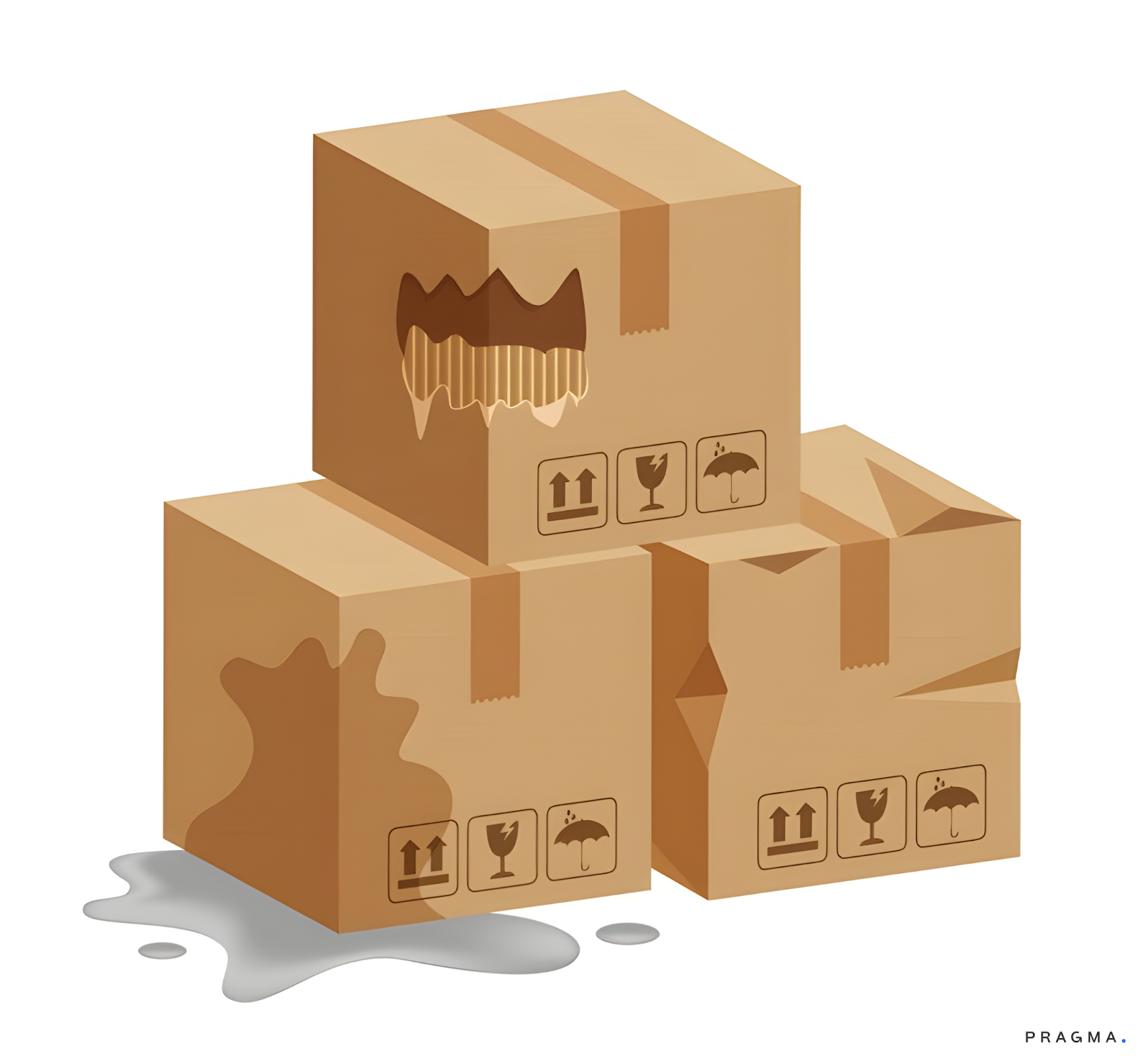
No one is ready to take a spoiled package. Customers will not instantly buy a product that is torn, dented, or physically damaged, as they will reject the package.
This can happen due to:
- The warehouse personnel have done a bad job with packaging.
- Rough handling by the courier company
- Prolonged transit durations lead to wear and tear.
- Weather conditions to which the package is subjected.
This issue is more prevalent in the fashion industry than in other sectors, as online purchases have a return rate of 24.4% compared to the global average of 16.5%. Clothing products are very sensitive to the quality of packaging since customers usually have the ability to determine the quality of the product by merely viewing the packaging.
Why is RTO a Serious Problem for E-commerce Brands in India?
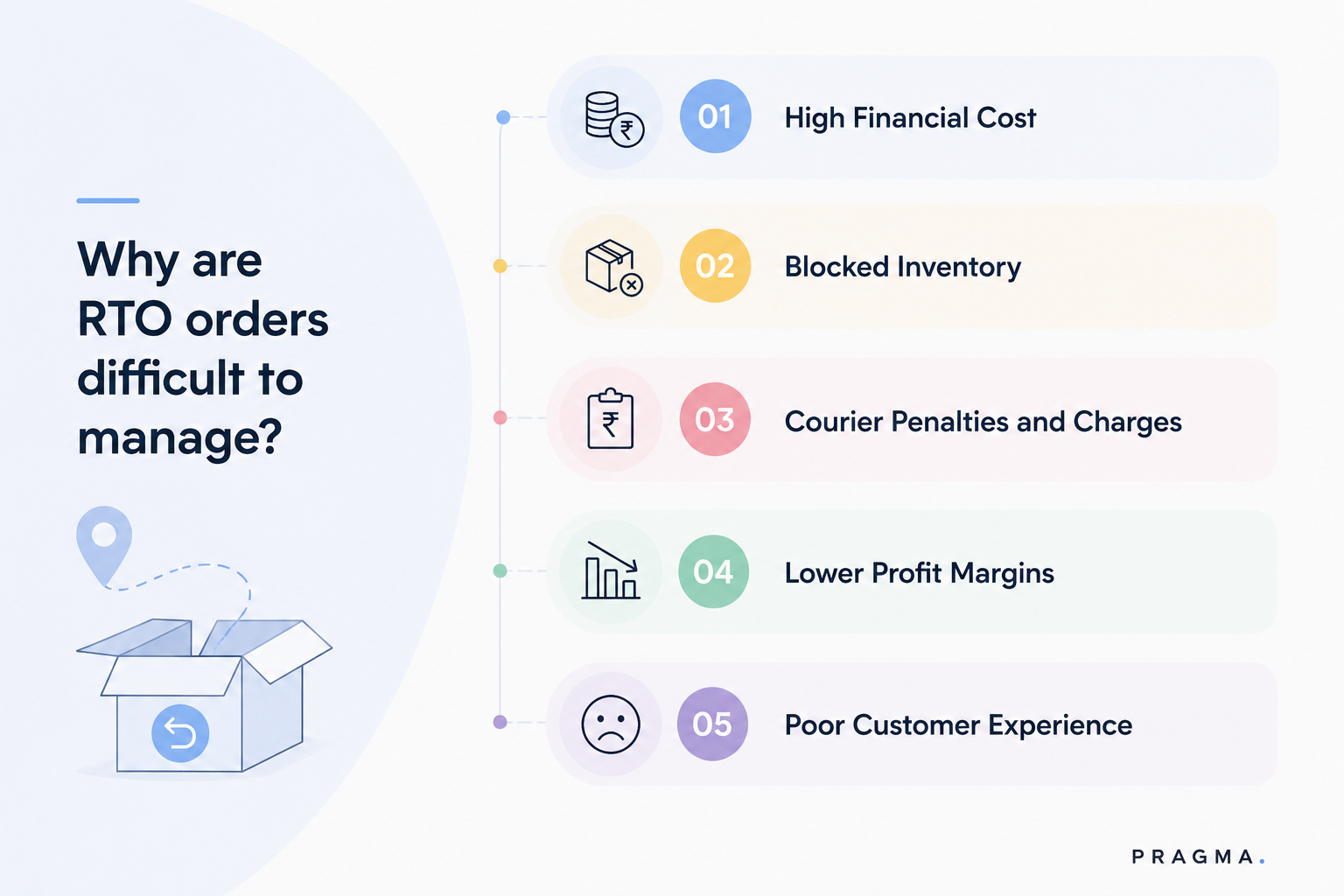
RTO in logistics is a major challenge to e-commerce brands in India, particularly due to Cash on Delivery (COD), inappropriate addresses and unavailability of customers. Below is why RTO causes serious problems for online businesses:
High Financial Cost
RTO is very expensive since the seller will forward ship and also provide returns shipping, called reverse logistics, yet no sale is made.
Other costs that contribute to the loss include packaging, warehousing and customer support.
The overall cost of RTO is, in most cases, more than the profit made from an order that has been completed successfully.
Blocked Inventory
When an order is placed under RTO, it takes days or maybe weeks before the product is shipped.
At this time, the inventory is not resalable, thus holding up working capital.
This is particularly harmful to fast-moving, seasonal or fashion items, where delays can lower their resale value.
Courier Penalties and Charges
Having large RTO rates can result in additional fees by courier partners, such as handling fees, return fees and penalties.
Other logistics providers might as well raise shipping fees or reduce service quality to sellers whose delivery performance is poor, raising the cost of operations in the long-term.
Lower Profit Margins
The recurring RTOs cause the profit margins to decrease directly since the logistic costs are increased, and the money spent on marketing is wasted.
There is no point in spending money on customer acquisition, promotions and discounts when there is no delivery of orders.
In the long run, successful products lose their profitability because of the high levels of RTO.
Poor Customer Experience
Unsuccessful deliveries and terminated orders lead to a poor experience for customers. This makes the brand less trusted and has a high possibility of unfavourable reviews and loss of repeat business.
In a competitive e-commerce marketplace such as India, inadequate delivery experiences may severely hurt the brand image and consumer loyalty.
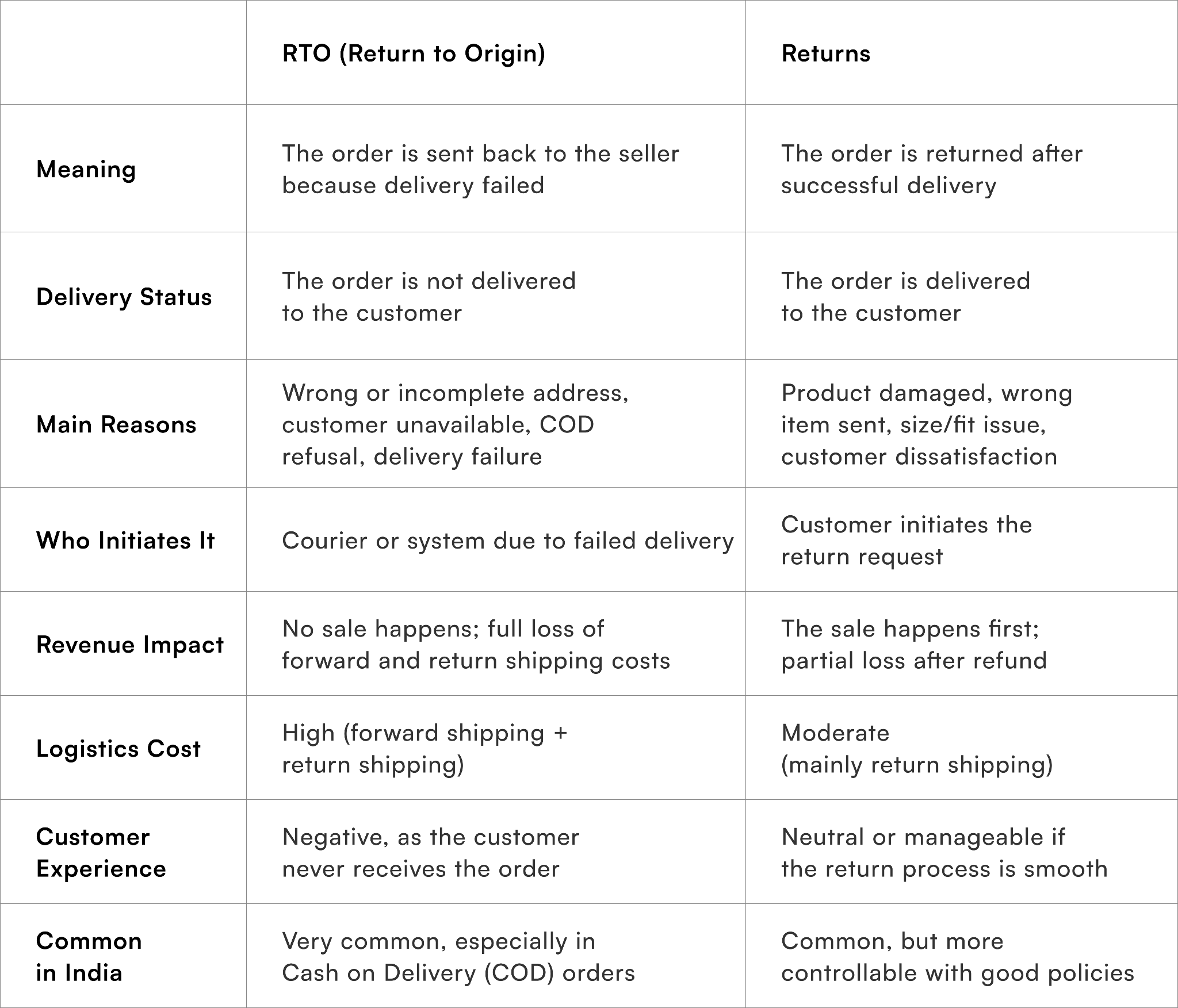
RTO vs Returns: What's the Difference?
RTO Charges in Logistics
If a business wants to calculate its RTO charges, it can make use of the following formula:
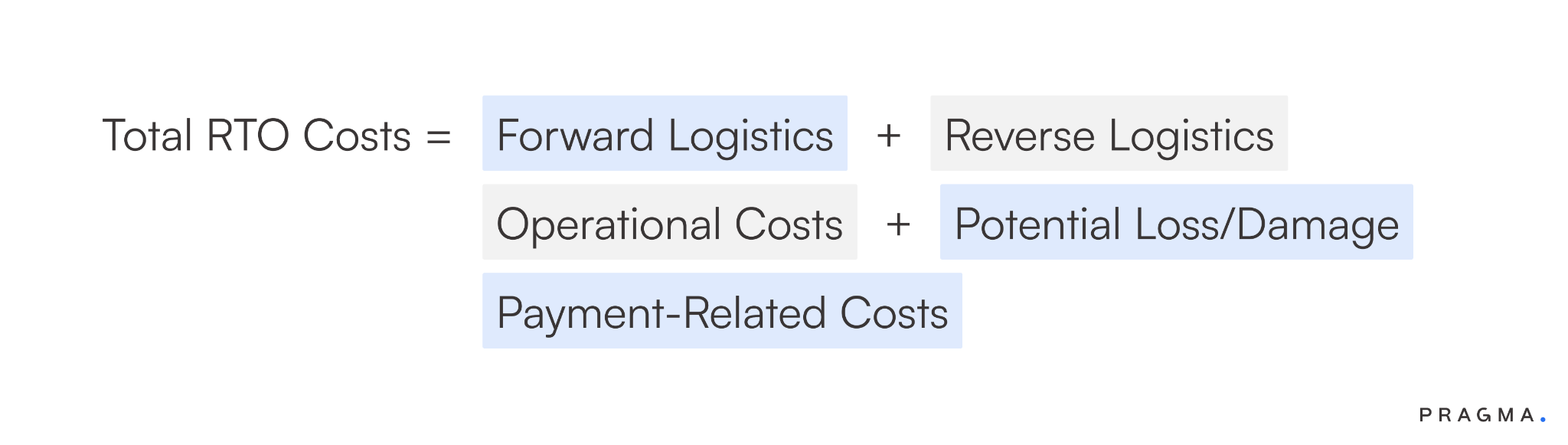
Let us look at these components of RTO charges in detail:
Forward Shipping Cost
This is the charge that the courier is paid to deliver the order at the warehouse to the customer. Although the delivery is not made, this is not returned. It is the initial and inevitable expense in any RTO.
Return Shipping Cost
After failing the delivery, the courier delivers the parcel back to the seller. The brand will have to negotiate an extra fee for reverse movement, which can be equal to or even less than forward shipping fees.
Processing and Operating Charges
The courier partners and warehouses impose sorting, scanning, loading, unloading, and re-processing fees on the returned shipment. These operational expenses escalate as the volume of RTO rises.
COD (Cash on Delivery) Charges
When it comes to COD orders, courier companies still charge a COD handling fee even when the customer declines to receive the order. The seller pays COD charges even when he or she has not received any payment from the customer.
Warehousing and Storing Cost
Products that have been returned are kept in warehouses awaiting inspection and re-stocking. This will lead to additional storage expenses, particularly for the slow-moving products or heavier products.
Loss/Damage Inventory Cost
A lot of RTO shipments are returned in damaged, opened or unusable states, particularly in fragile or fashion lines. When this happens, it is the brand that receives the entire cost of the product or is forced to give it at a discount.
How to Reduce RTO in Logistics? (India-Focused Strategies)
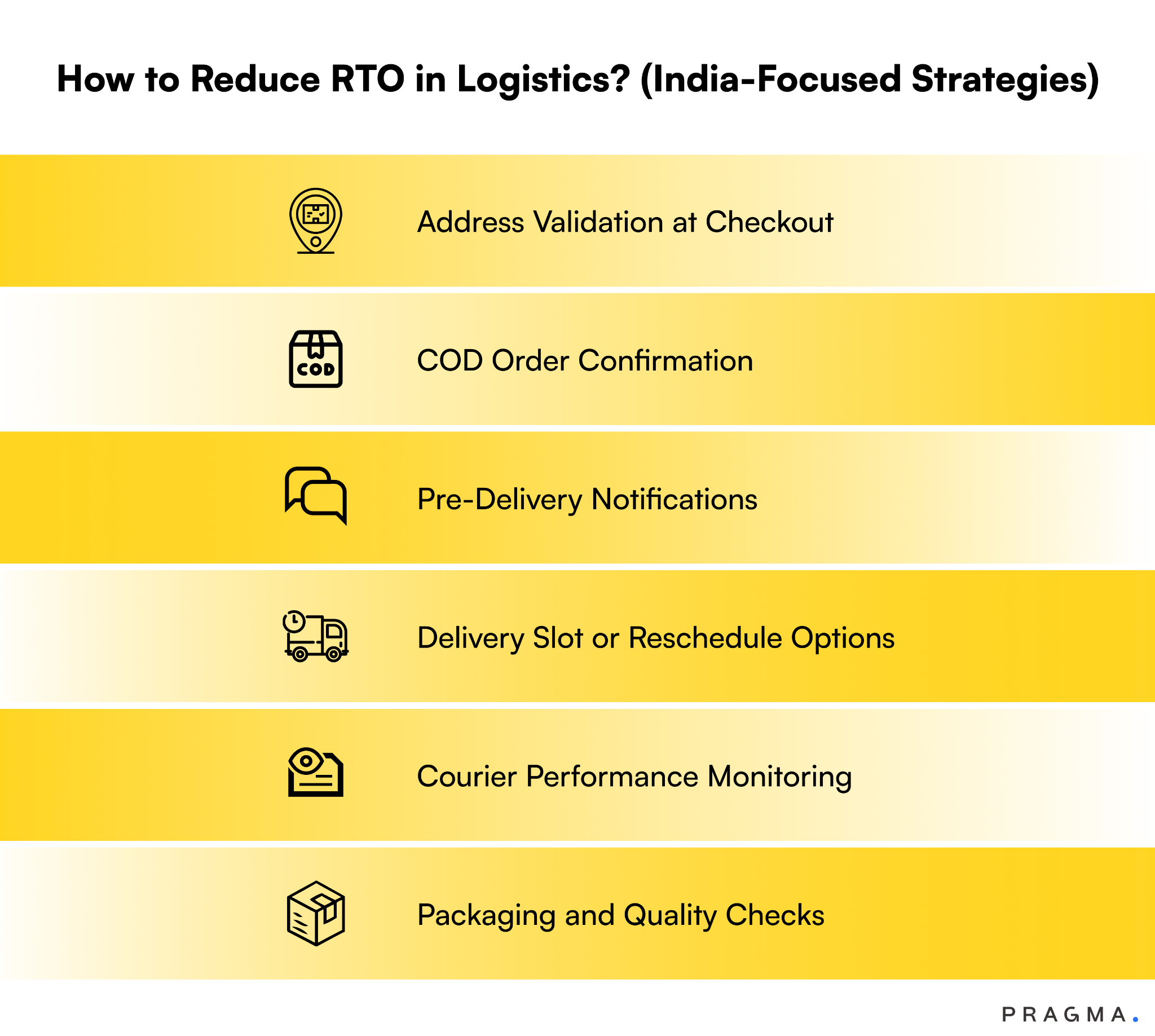
A business should focus on the following strategies if it wants to reduce its RTO in logistics:
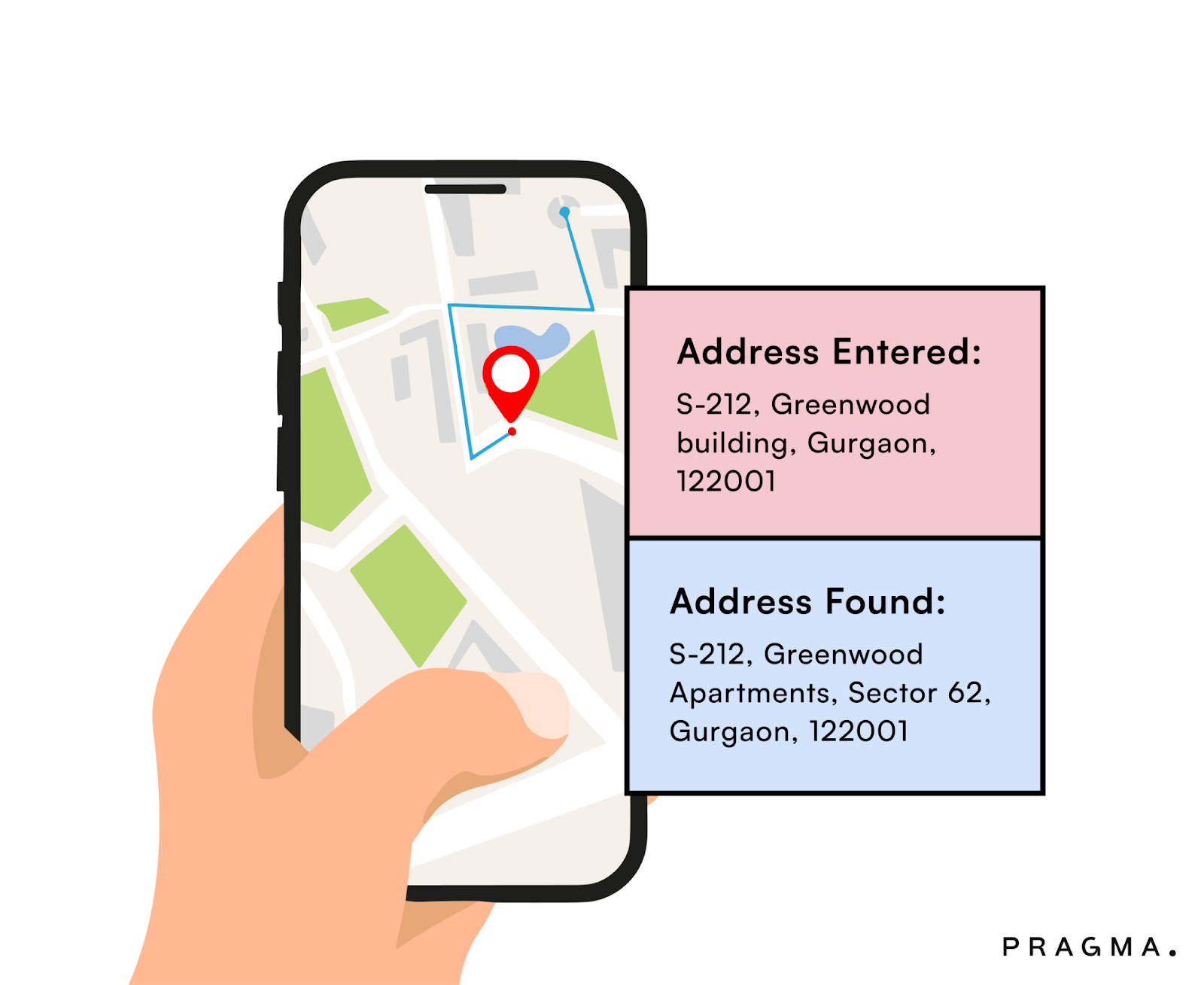
Address Validation at Checkout
Approximately 40-50% of all the RTOs in India are related to addressing issues. But with the proper strategy and systems, these can be easily avoided. Here is what every business should do:
Real-time Pin Code Verification
The businesses should have such tools that examine whether the pin code is present and matches the city/state keyed by the customer.
A large number of customers enter incorrect pin codes by mistake, and early detection of the same can avoid RTOs.
Mandatory Landmark Field
They can make a compulsion for customers to enter a landmark. This will assist those in charge of delivering goods in locating the exact place, even when the address is not clear.
Check Character Length
Check that addresses are of a minimum length. Addresses that are too brief, such as those that include names such as Delhi or Mumbai, will be incomplete and will lead to delivery failures.
Mobile Number Check
Check whether or not the mobile number is active and accessible. Most of the RTOs occur due to the inability of the delivery person to reach the customer.
Pragma RTO Suite has been doing it well through the application of AI to scan 300 or more parameters in 200ms upon order placement.
The system has the ability to detect dangerous addresses and put a check on them before the order is made. Address-related RTOs have reduced by 45-60% among brands using this system.
One of the top beauty brands decreased its RTO rate by 40%-45% to 20% simply by adding Pragma RTO Suite to address verification and payment.
COD Order Confirmation
To avoid RTO in logistics occurring from the COD orders, businesses can use the following strategies:
Automated Verification Calls
They should have a system that will automatically make a call to customers within 30 minutes of an order being made on a COD.
The presence of a simple recorded message requesting them to verify their order will help in removing a significant number of impulse purchases that would otherwise be turned into RTOs.
SMS Confirmation
Send an SMS requesting customers to respond with the word yes in order to confirm their order for COD.
This is an easy measure to take, which causes customers to be more considerate of their buying and prevents careless purchases.
COD Fees
Businesses can set a fee on COD orders. This will help to discourage impulse purchasing, and the other subsidises your RTO.
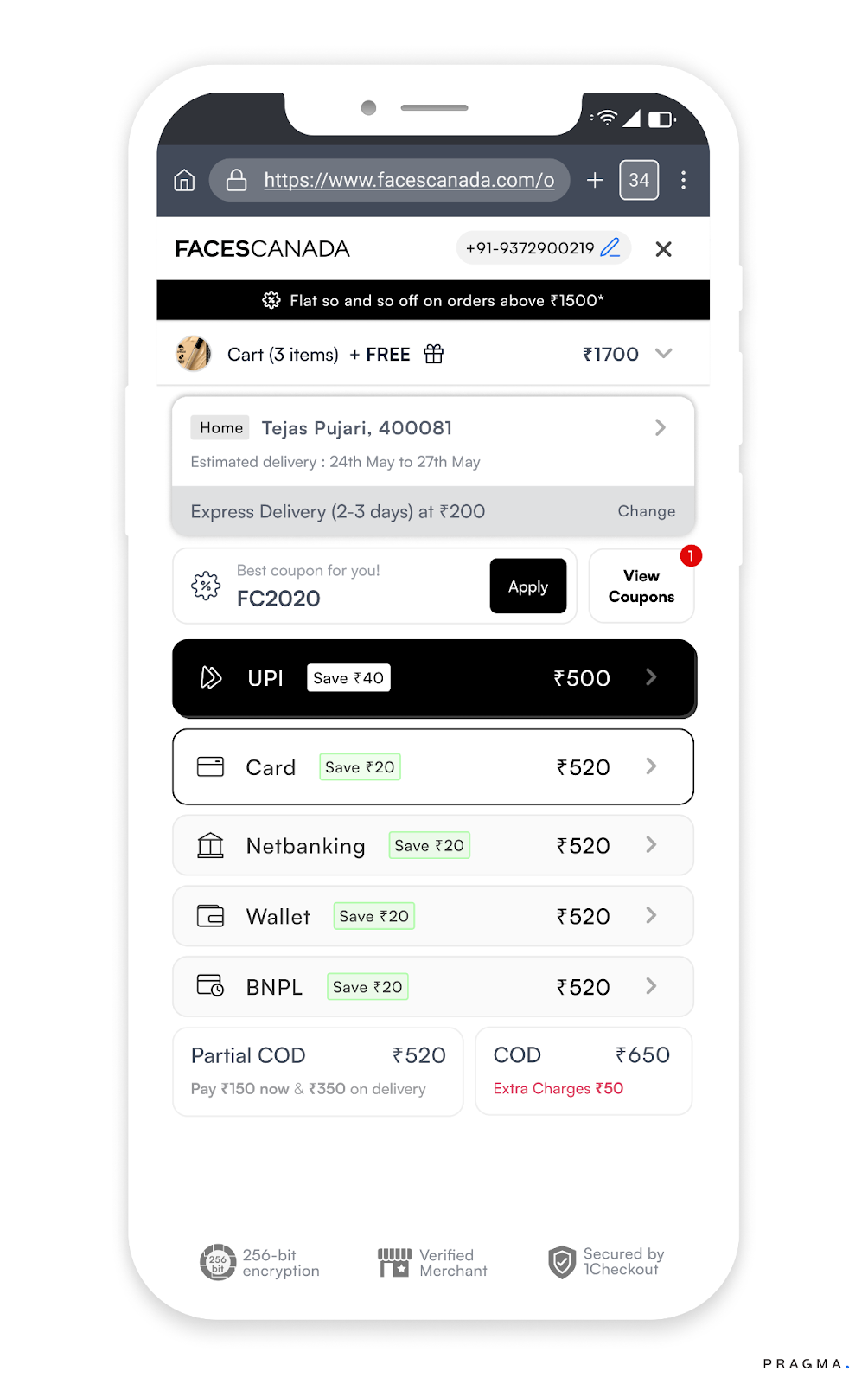
Prepaid Incentives
Prepaid orders can be given discounts or fast shipping. A large number of customers will prefer prepaid when there is an obvious advantage.
Order Value Limits
Establish minimum order values for COD. For example, COD should be permitted only on orders greater than Rs. 500. This will help to minimise impulse buying of low value.
And do you know? Pragma RTO Suite has a smart C2P(conversion to prepaid) strategy that helps businesses convert their COD orders into prepaid ones. It has assisted brands such as Emami (COD occupied 85% of purchases) in saving a lot of money on their losses associated with COD by making smart verification decisions.
Pre-Delivery Notifications
The lack of communication with the customer is one of the reasons for RTO in logistics, and to solve this problem, it is advisable to provide pre-delivery notifications to the customers.
When a customer is informed that his order will come today, he will make himself available to receive that order or make arrangements. So, businesses can inform their customers through:
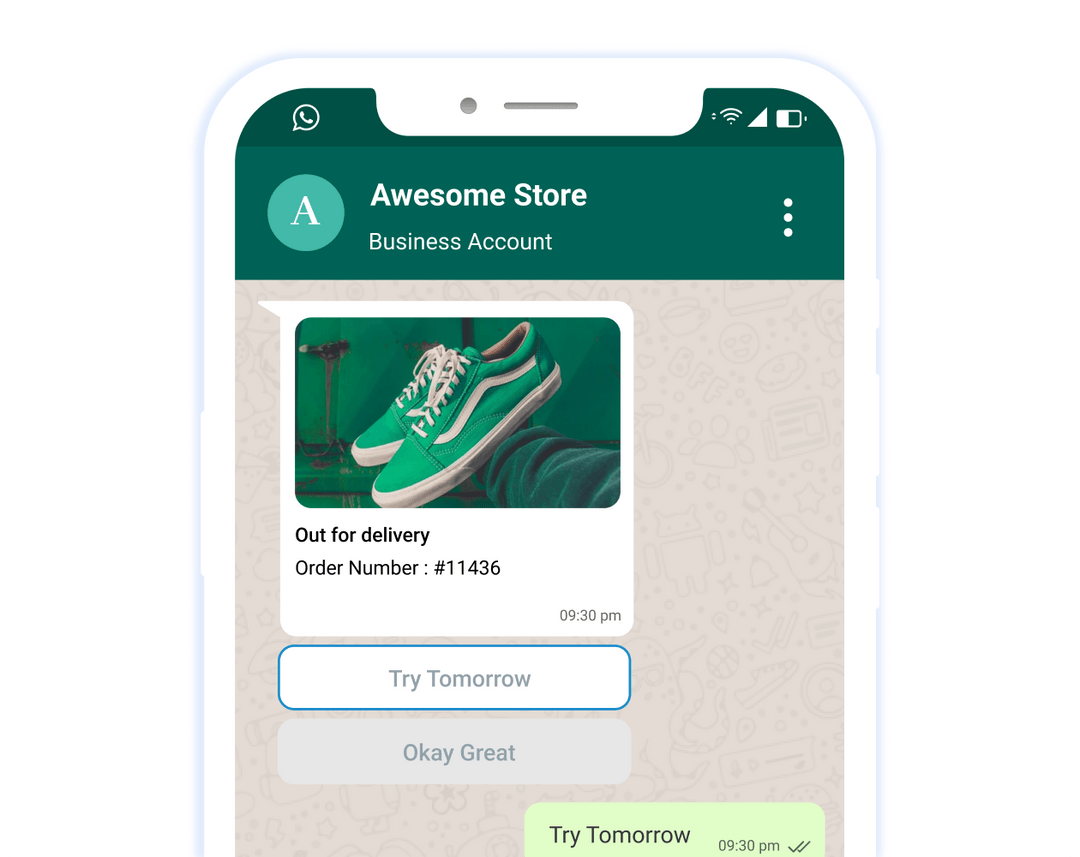
- Sending WhatsApp messages with delivery updates. Include tracking information, expected delivery time, and the delivery person's contact number.
- Sending SMS notifications at key stages - when the order is shipped, when it reaches the customer's city, and on the day of delivery.
- For high-value orders, they can even contact through call and ask about their availability to the customer.
With Pragma's communication system, brands can send automated updates through multiple channels, ensuring customers are always informed about their orders.
Delivery Slot or Reschedule Options
It sometimes happens that the customer is busy somewhere else, and it is not possible for him to take the orders; for that, he should be given an option to reschedule the time of delivery according to his preference.
So, brands should provide the option to reschedule deliveries, provide weekend deliveries and delivery on alternate addresses.
In this, the Pragma WhatsApp Business Suite helps businesses to allow their customers to reschedule deliveries through WhatsApp itself.
Courier Performance Monitoring
Not all courier companies perform equally well in all areas. Monitoring their performance and making smart choices can reduce RTO rates significantly. Here is how businesses can do monitoring:
- They can track couriers on the basis of RTO rates, see which courier partners have the highest and lowest RTO rates for different areas.
- Some courier partners perform best in some areas and others in different areas. So a business should select its courier partner accordingly.
- They can track how many delivery attempts each courier makes before marking an order as RTO.
- Also, businesses can look for customer reviews about the specific delivery partners.
Also, to help businesses with selecting the best courier partners, Pragma analyses courier performance across different parameters and automatically routes orders to the best-performing courier for each specific area.
Packaging and Quality Checks
In order to minimise the RTO occurring from the bad packaging, businesses must ensure that every order that they ship is properly packed or not.
They should invest in good packaging materials, proper and sturdy boxes should be used, branded tapes and seals should be used, so that a customer can know that the package has not been tampered with.
They should ensure that all labels are clear and professional-looking. Poor labelling can make customers suspicious about product quality.
What is the Role of Technology in Reducing RTO?
As we all know, this is a modern world, where technology is changing the game in every industry. Similarly, in the logistics industry, it is helping brands in reducing their RTO orders. See how different technological advancements are helping:
AI-Powered Risk Assessment
Artificial Intelligence has the capability of observing trends and forecasting the orders that are likely to be turned into RTOs even before they get out of your warehouse.
Pragma RTO Suite applies high-level AI algorithms to:
- Scan 300+ parameters in 200ms of order entry.
- Determine fraudulent addresses and suspicious phone numbers.
- Flag impulse buyers who may decline delivery.
- Track suspicious orders by competitors or bots.
- Forecast the RTO likelihood of every order.
And what results does it provide? It helps in the following:
- 60% reduction in overall RTOs
- Less NDRs (Non-Delivery Reports) by 35%.
- Grew by 25% to 35% prepaid orders.
- 45-60% decrease in address-related RTOs.
Data Analytics and Insights
Data analysis can help businesses identify patterns and make informed decisions about reducing RTOs. Here is what it can do:
- Track RTO patterns by location, product, and time
- Identify high-risk pin codes and customers
- Monitor courier performance metrics
- Generate insights for business decisions
Which RTO Metrics E-commerce Brands Should Track?
To manage RTO effectively, e-commerce brands should monitor these key metrics:
RTO Percentage
It refers to the rate of RTO that a business has during a particular time. Here is how it is calculated:
(Total RTO Orders / Total Orders Shipped) × 100
Businesses should try to keep their rates under 10%, ideally.
COD RTO Rate
Another important metric is to see what percentage of RTOs are coming with cash-on-delivery orders. Here is how it can be calculated:
(COD RTO Orders / Total COD Orders) × 100
The industry average is 5-20% for COD vs 5% for prepaid.
Courier-Wise RTO
Businesses should always track which courier partners have:
- Highest RTO rates
- Best delivery success rates
- Fastest delivery times
- Most customer complaints
City or Pin Code RTO
To combat RTOs, brands should see locations with:
- Consistently high RTO rates
- Address-related delivery issues
- Customer behaviour patterns
- Infrastructure challenges
To Wrap It Up
So, to conclude here, we want to say that RTO is a major problem in the logistics industry. But it is not something that can't be managed. Although the rate of RTO in logistics in some sectors, like fashion, is reaching 40%, with the help of proper strategies and systems, it can be reduced to a great extent.
And to support e-commerce brands in this journey, Pragma RTO Suite is here, which has already helped 1000+ brands in reducing their RTO rates by 60% and increasing prepaid orders to 25%-35%.

FAQs (Frequently Asked Questions On RTO in Logistics: Meaning, Full Form & How to Reduce It)
1. What is the full form of RTO in logistics?
RTO stands for Return to Origin. It refers to a shipment that is not delivered to the customer and is sent back to the seller’s warehouse or origin location.
2. What does RTO mean in e-commerce logistics?
In e-commerce logistics, RTO occurs when an order fails delivery due to reasons such as customer refusal, incorrect address, or unavailability, and is returned to the seller.
3. Why does RTO happen frequently in India?
RTO is common in India due to Cash on Delivery (COD) refusals, incomplete addresses, customer unavailability, high-risk pincodes, delayed despatch, and inconsistent last-mile performance.
4. How does RTO affect e-commerce profitability?
RTO increases logistics costs, doubles shipping expenses, delays cash flow, blocks inventory, increases warehouse workload, and reduces contribution margins.
5. What is considered a good RTO rate in India?
While benchmarks vary by category, generally:
- Prepaid RTO: below 5%
- COD RTO: below 18%
Higher rates typically indicate operational or intent-related issues.
6. Are COD orders responsible for most RTO cases?
Yes. In India, a large percentage of RTO cases come from COD orders due to refusals at delivery, impulse buying, or lack of order confirmation.
7. How can address validation reduce RTO?
Accurate pincode validation, auto-fill address suggestions, landmark prompts, and mobile number verification reduce delivery failures caused by incorrect or incomplete addresses.
8. How does NDR management help reduce RTO?
NDR (Non-Delivery Report) automation allows customers to confirm availability, reschedule delivery, or update address details promptly, preventing parcels from being automatically returned.
9. Can prepaid incentives reduce RTO?
Yes. Encouraging prepaid payments through small discounts or wallet benefits reduces low-intent COD orders and improves delivery success rates.
10. What strategies can e-commerce brands use to reduce RTO effectively?
Effective strategies include checkout validation, COD risk scoring, delivery confirmation messages via WhatsApp or SMS, faster despatch, courier performance monitoring, and automated NDR workflows.
Talk to our experts for a customised solution that can maximise your sales funnel
Book a demo
.png)
.png)