

Accurate address capture is a cornerstone of successful D2C operations in India. Yet, many brands struggle with errors arising from transliteration, regional language variations, and inconsistent formatting at the point of entry. Missed deliveries, delayed shipments, and increased RTOs are often the downstream consequences of poor address hygiene.
Progressive address capture to solve transliteration and format errors at entry focuses on a structured, step-by-step approach to capturing customer addresses correctly from the start. By combining progressive form design, dynamic validation, and AI-assisted transliteration tools, brands can significantly reduce errors before they enter the operational pipeline.
This ensures that deliveries reach customers on time, COD confirmations are successful, and RTO rates are minimised. Proper implementation not only protects operational efficiency but also enhances customer trust by reducing frustration caused by failed or delayed shipments.
Why address errors are so common in India
Regional scripts, transliteration, and inconsistent formatting
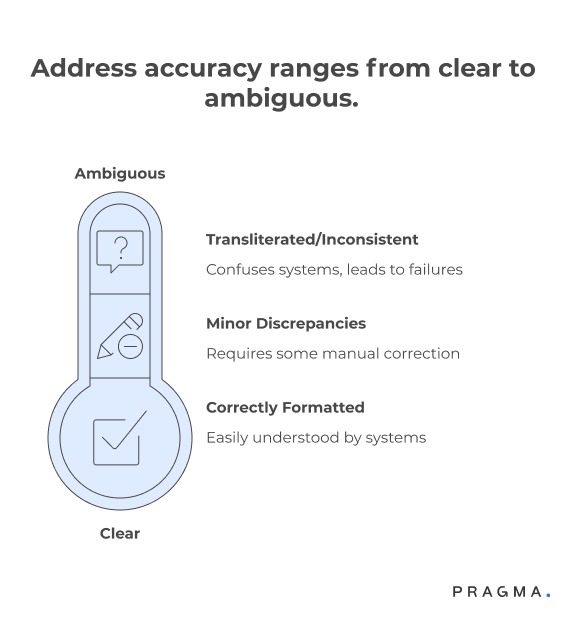
India’s linguistic diversity makes accurate address capture challenging. Customers may enter addresses in Hindi, Tamil, Telugu, or other regional scripts, or use Romanised transliterations that vary widely. Additionally, inconsistent formatting—like missing pincodes, abbreviations, or swapped fields—can confuse both automated systems and delivery personnel.
Transliteration challenges
Transliterated addresses often lose contextual cues, leading to ambiguous or incorrect locations. For instance, “Chennai” may be entered as “Channai” or “Chennaiy,” which may not match postal or courier databases.
Formatting inconsistencies
Errors like reversed house numbers, omitted localities, or inconsistent street names are common. Without validation, these minor discrepancies can result in failed deliveries and higher operational costs.
What Is Progressive Address Capture?
Progressive address capture is a smart way of collecting a customer's address one step at a time instead of asking for everything in a single box. Customers enter details like their house number, street, locality, city, state, and pincode in separate fields. This makes it easier to enter the correct information.
The system also checks each detail as it is entered. If there is a missing pin code, an incorrect city, or a spelling mistake, it tells the customer immediately so they can fix it before placing the order. This helps businesses collect accurate addresses from the beginning and reduces delivery problems later.
Progressive form design to reduce errors
Step-by-step capture improves accuracy and completion
Progressive forms break the address entry process into smaller, manageable steps instead of a single long field. By prompting users for structured inputs—like house number, street, locality, city, state, and pincode—brands can ensure each component is captured correctly.
Field-level validation
Immediate validation of entries ensures formats are correct (e.g., numeric for pincode, valid city/state combos).
Contextual suggestions
Autocomplete suggestions based on partial entries reduce errors and guide users toward standardised locations, improving downstream operational reliability.
How Progressive Address Capture Improves Customer Experience?
A simple and well-designed address form makes checkout easier for customers. Instead of filling out one long address field, customers complete the form step by step. This makes the process feel easier and reduces the chances of making mistakes.
Progressive address capture also checks the address in real time and suggests corrections when needed. Customers can fix errors before placing their order, so they do not have to answer follow-up calls or messages later. As a result, orders are delivered faster, delivery failures are reduced, and customers enjoy a smoother shopping experience.
AI-assisted transliteration and Localisation
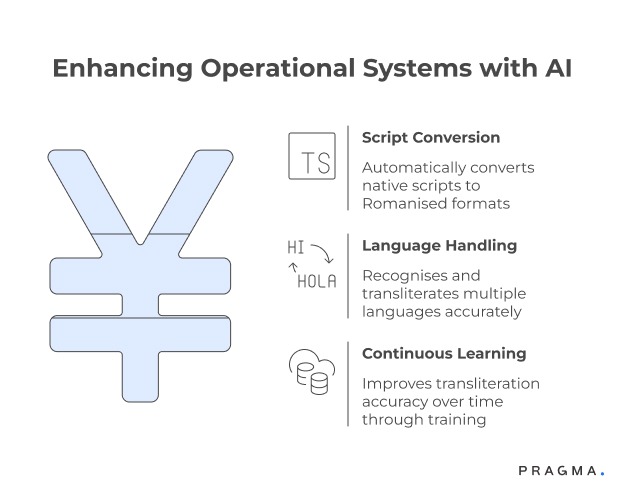
Converting regional scripts accurately for operational systems
AI-powered transliteration tools can automatically convert addresses entered in native scripts into standardised Romanised formats. This ensures compatibility with courier systems while retaining semantic accuracy.
Handling multiple languages
Systems should recognise the script automatically and transliterate accurately without losing key information like locality or landmark names.
Continuous learning
AI models can be trained using past delivery successes and failures to improve transliteration accuracy over time, especially for uncommon names or regional nuances.
Real-time pincode and locality validation
Instant verification prevents downstream errors
Integrating pincode and locality databases into the address capture process allows for immediate validation. When a user enters a pincode, the system can cross-check city, state, and locality fields in real-time, flagging inconsistencies instantly.
Reducing human error
Users receive instant prompts to correct mistakes, reducing reliance on post-order contact and CX interventions.
Operational impact
Fewer incorrect addresses directly translate into lower RTOs, faster deliveries, and improved customer satisfaction.
Handling edge cases and special instructions
Capturing nuances without complicating the form
Some addresses include landmarks, apartment names, or complex building layouts. Progressive forms can provide optional fields for these details while keeping core address fields standardised.
Landmark suggestions
Using geolocation and past delivery data, the system can suggest commonly used landmarks, improving both courier navigation and delivery success.
Optional notes vs mandatory fields
Keeping these fields optional prevents users from skipping mandatory address details while still capturing helpful context for delivery personnel.
Monitoring and feedback loops
Using operational data to continuously improve address capture
Operational teams can monitor failed deliveries, courier feedback, and address corrections to refine form logic, AI transliteration, and validation rules. A continuous feedback loop ensures that the system evolves with changing user behaviour, new localities, and regional nuances.
Data-driven improvements
Analysing RTO patterns and mapping them to specific entry errors helps prioritise which fields, scripts, or regions need additional validation or guidance.
Integration with CRM and logistics systems
Automatically syncing corrected addresses back into the CRM ensures that future campaigns, reminders, and deliveries operate on clean, standardised data.
Auto-completion and predictive typing
Speed and accuracy combined for better data entry
Auto-completion helps users select from verified addresses as they type, reducing errors caused by manual input. Predictive typing, powered by historical data and postal databases, guides users toward standardised formats and correct spellings.
Benefits for COD and deliveries
By suggesting correct localities and house numbers, auto-complete reduces delivery failures and COD reversals, ensuring operational efficiency.
Improving first-time accuracy
This feature significantly lowers the need for CX intervention to correct addresses post-order, saving time and resources.
Mobile-first optimisation for regional scripts
Ensuring usability on smartphones across India
Most D2C customers place orders via mobile devices. Forms must be optimised for small screens, support multiple scripts, and automatically detect input language.
Keyboard adaptations
Offering script-specific keyboards or toggles improves input accuracy and reduces transliteration mistakes.
Field segmentation for touch accuracy
Breaking down addresses into separate fields (street, locality, city, pincode) prevents misentry caused by cramped mobile keyboards.
Error prompts and inline guidance
Immediate feedback prevents mistakes at source
Inline prompts alert users to inconsistencies such as invalid pincodes or mismatched cities and states. By correcting errors instantly, brands prevent them from propagating downstream.
Real-time corrections
Dynamic prompts can suggest corrections based on common mistakes or historical data, ensuring higher first-time accuracy.
UX considerations
Feedback should be non-intrusive, clear, and actionable, helping users correct errors without frustration or form abandonment.
Integrating geolocation for verification
Leveraging GPS to validate and enrich addresses
Using geolocation services, the system can suggest standardised addresses based on GPS coordinates or nearby landmarks. This reduces ambiguity in transliterated or partially entered addresses.
Enhancing courier efficiency
Pre-verified addresses allow delivery personnel to navigate efficiently, reducing failed attempts and RTO rates.
Continuous learning from delivery feedback
Geolocation data combined with delivery outcomes can refine suggestions, improving accuracy for future customers in the same region.
Quick Wins
Immediate steps to reduce address errors and improve deliveries
Even without a full-scale system, operational teams can make impactful changes within 30 days:
Week 1: Audit current address data
- Analyse past failed deliveries and RTOs linked to address errors.
- Identify common transliteration issues and formatting mistakes.
- Segment customers by error frequency and region to prioritise improvements.
Week 2: Implement progressive address forms
- Break the form into structured fields: house number, street, locality, city, state, and pincode.
- Add inline validation for pincodes and city/state matching.
- Include optional fields for landmarks or apartment details.
Week 3: Introduce auto-complete and AI transliteration
- Deploy predictive typing to guide standardised inputs.
- Enable AI transliteration for regional scripts to Romanised formats.
- Test suggestions with real customers to refine accuracy.
Week 4: Monitor, iterate, and integrate
- Track delivery success rates, blocked addresses, and RTOs.
- Update form logic and AI models based on insights.
- Integrate validated addresses into CRM and operational systems for long-term consistency.
Key Metrics to Track
Focus on measurable outcomes for operational efficiency
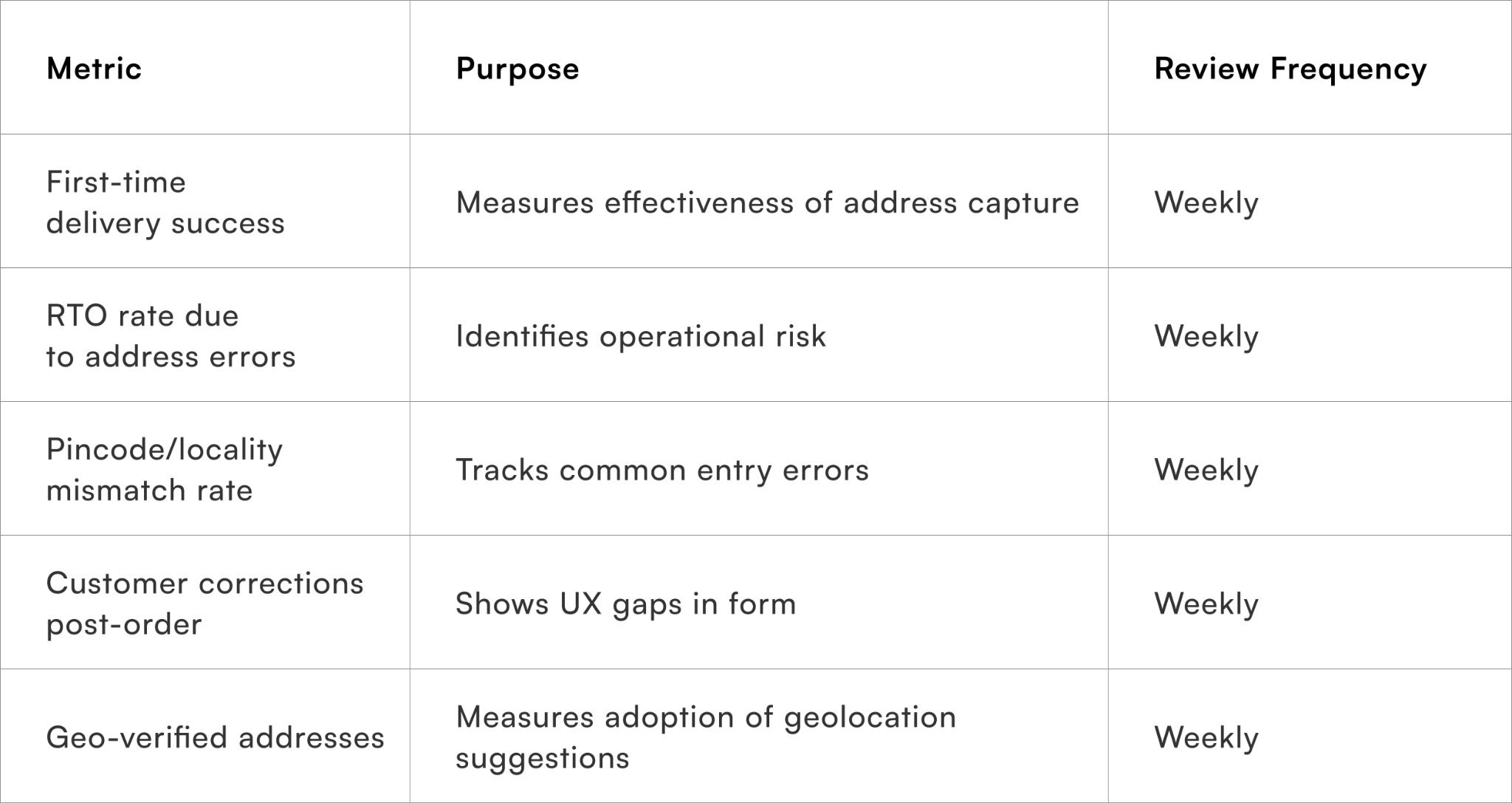
Tracking these metrics ensures continuous improvement and data-driven adjustments to forms and AI transliteration.
Maintaining Operational Efficiency
Balance accuracy with a smooth customer experience
While implementing progressive address capture, it’s important to maintain a frictionless user experience. Too many mandatory fields or intrusive validations can cause form abandonment.
By prioritising structured data capture, inline prompts, and AI-assisted suggestions, brands can achieve high accuracy without frustrating customers. Integration with logistics teams ensures that validated addresses translate into successful deliveries consistently.
To Wrap It Up
Progressive address capture directly impacts operational efficiency, delivery success, and customer satisfaction. By combining structured forms, AI transliteration, auto-completion, geolocation, and real-time validation, D2C brands can drastically reduce transliteration and format errors.
This week, implement structured address fields with pincode validation and inline error prompts for all new orders.
Over the long term, refine AI transliteration models, monitor delivery outcomes, and integrate learnings into CRM and logistics workflows for sustained accuracy and reduced RTOs.
For D2C brands seeking to minimise address errors and optimise deliveries, Pragma’s address validation platform provides progressive capture, AI transliteration, and geolocation verification to ensure high delivery success and operational efficiency.

FAQs (Frequently Asked Questions On Progressive address capture to solve transliteration and format errors at entry)
1. Why are address errors so common in India?
Multiple scripts, transliteration inconsistencies, and varied formatting make accurate address capture challenging.
2. What is progressive address capture?
It breaks the address form into structured steps with validation at each field to reduce errors.
3. How does AI transliteration help?
It converts regional scripts into standardised Romanised formats compatible with courier systems, reducing ambiguity.
4. Can geolocation improve accuracy?
Yes. Using GPS and landmark suggestions helps verify addresses and guides delivery personnel effectively.
5. Are inline prompts disruptive to UX?
When designed well, prompts are non-intrusive and provide actionable corrections without frustrating the customer.
6. How do I measure the success of address capture improvements?
Key metrics include first-time delivery success, RTOs due to address errors, and pincode/locality mismatch rates.
7. Can progressive forms work on mobile?
Absolutely. Mobile-first design with script detection, keyboard adaptation, and segmented fields ensures usability across devices.
Talk to our experts for a customised solution that can maximise your sales funnel
Book a demo.png)


.png)