

Customer interactions today are fragmented across multiple channels: voice calls, chatbots, WhatsApp, email, and in-app messaging. Each channel captures part of the story, but few brands effectively merge these touchpoints into a single operational view. The result? Delayed resolutions, repetitive questioning, and frustrated customers — even when the data exists somewhere in the system.
Merging voice transcripts, chat logs and messaging for better issue resolution explores why an integrated approach is essential for modern D2C operations. By consolidating signals across channels, teams can reduce handling time, improve first-contact resolution, and extract actionable insights for process improvement. It is not just about technology; it is about connecting data to operational action.
Brands that get this right turn fragmented interactions into coherent workflows, prevent costly escalations, and improve overall customer trust — all while reducing the hidden operational cost of chasing incomplete information.
Why multi-channel fragmentation slows issue resolution
Understanding the hidden cost of disconnected interactions
Every customer touchpoint contains valuable context, but when voice, chat, and messaging logs live in silos, teams must piece together the story manually. This delay increases average handling time and often results in repeated questions that frustrate the customer. More importantly, it masks recurring operational issues that could be fixed upstream.
Common fragmentation scenarios
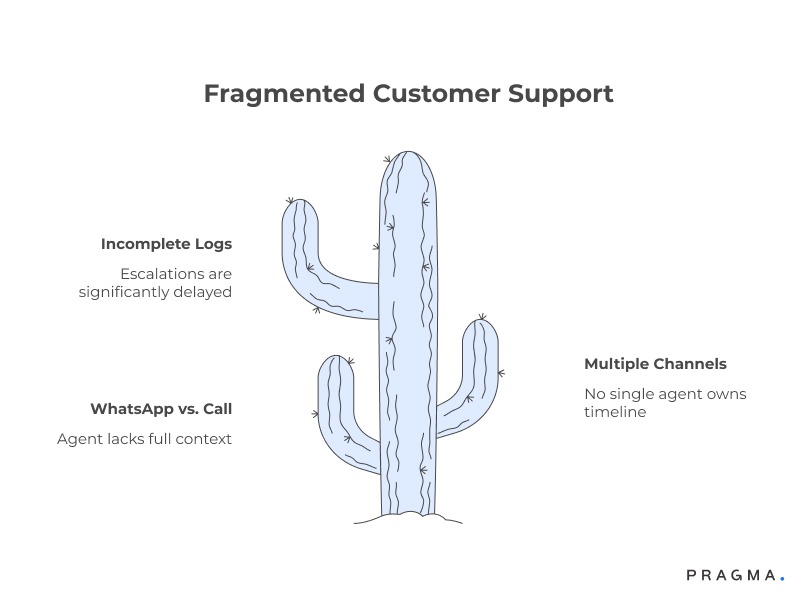
- A customer reports a damaged item over WhatsApp, but the CX agent only sees the chat and not the earlier call where the same issue was mentioned.
- Technical troubleshooting spans email, app chat, and calls, leaving multiple threads unresolved because no single agent owns the full timeline.
- Escalations to specialists are delayed because logs are incomplete or not searchable.
Operational impact
- Increased resolution time per issue
- Higher repeat contact rates
- Poor customer experience and lower NPS
- Difficulty in identifying root causes for recurring problems
What signals in voice and chat data are most useful?
Not all data is equally valuable for issue resolution
Volume alone doesn’t equate to insight. Teams need to prioritise the signals that indicate urgency, context, and actionable next steps.
Key signal categories
- Intent markers: words or phrases indicating dissatisfaction, escalation, or urgency
- Resolution outcomes: whether the agent solved the problem, partially solved it, or deferred it
- Behavioral cues: sentiment trends in text or speech, repeat mentions of the same issue
- Timing indicators: lag between issue reporting and first response, average hold times
Why categorisation matters
Segmenting signals allows teams to automate routing, prioritisation, and alerting. Without categorisation, data is noise — an overwhelming volume that adds little value.
How integrated data improves CX and operational efficiency
Connecting channels creates a unified problem-solving workflow
By merging voice transcripts, chat logs, and messaging, teams can reconstruct the customer journey in full. This enables faster, more accurate resolutions and helps prevent redundant touchpoints.
Benefits of unified interaction logs
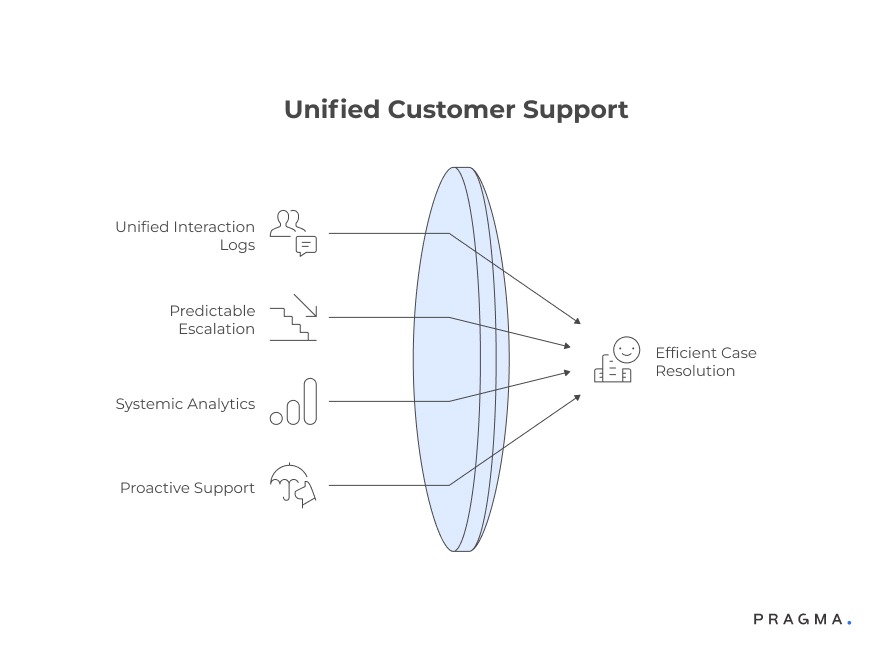
- Agents see the full history regardless of channel
- Escalation paths are more predictable and auditable
- Analytics reveal systemic issues for product or process improvement
- CX teams can provide proactive support before repeated complaints
Operational workflow example
- Voice call captures issue details
- Chat logs document follow-up instructions
- WhatsApp confirms customer consent for resolution
- Agent sees all three streams in one dashboard and closes the case efficiently
This approach reduces average resolution time while increasing first-contact resolution rates.
Why text-based logs and transcripts should be standardised
Uniform formatting enables faster AI-assisted insights
Raw logs are inconsistent: spelling errors, abbreviations, and free-form notes make automated analysis unreliable. Standardisation converts messy text into structured fields that can feed dashboards, alerts, and predictive models.
Standardisation strategies
- Use predefined tags for issue type, urgency, and channel
- Implement text normalization for chat and call transcripts
- Timestamp all interactions consistently
- Maintain a uniform naming convention for SKUs, customers, and locations
Outcome
Once standardised, data becomes actionable. Teams can spot patterns, automate routing, and trigger alerts based on historical precedence, rather than relying on individual memory.
How AI-assisted summarisation can streamline multi-channel insights
From raw logs to actionable intelligence
Manual review of voice and chat logs is time-consuming and error-prone. AI-assisted summarisation tools convert large volumes of unstructured data into concise, actionable summaries that agents and managers can act on quickly.
Key AI functions for operational efficiency
- Intent extraction: Identifies whether the customer seeks refund, exchange, technical support, or information
- Sentiment analysis: Flags frustrated or escalated customers for priority handling
- Conversation threading: Links multiple touchpoints for the same issue across channels
- Suggested actions: Generates automated recommendations for agents based on historical resolutions
Benefits
- Reduced average handling time (AHT)
- Fewer repeated contacts
- Early detection of systemic product or process issues
Channel-specific optimisation: tailoring workflows for voice, chat, and messaging
Different channels require distinct operational logic
Each interaction channel has its own cadence, limitations, and customer expectations. Understanding these differences is key to merging data effectively.
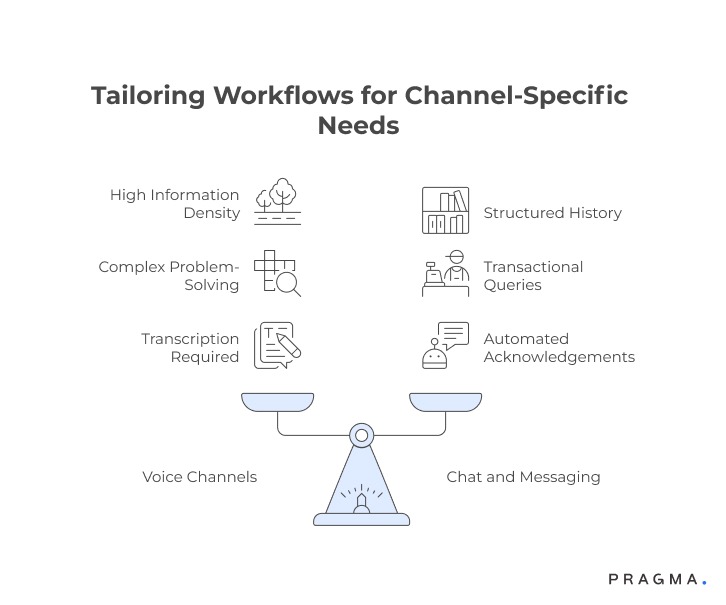
Voice channels
- High information density, but unstructured
- Best for complex problem-solving and sensitive issues
- Requires transcription and intent tagging for integration
Chat and messaging
- Structured, persistent history
- Ideal for transactional or follow-up queries
- Enables automated acknowledgements and real-time routing
Operational tip
Ensure that all channels feed into the same agent dashboard, but maintain channel-specific rules for prioritisation and escalation. For example, unresolved calls from the last 24 hours should be escalated differently from chat delays.
Designing dashboards for unified customer interactions
Turning integrated data into actionable operational insight
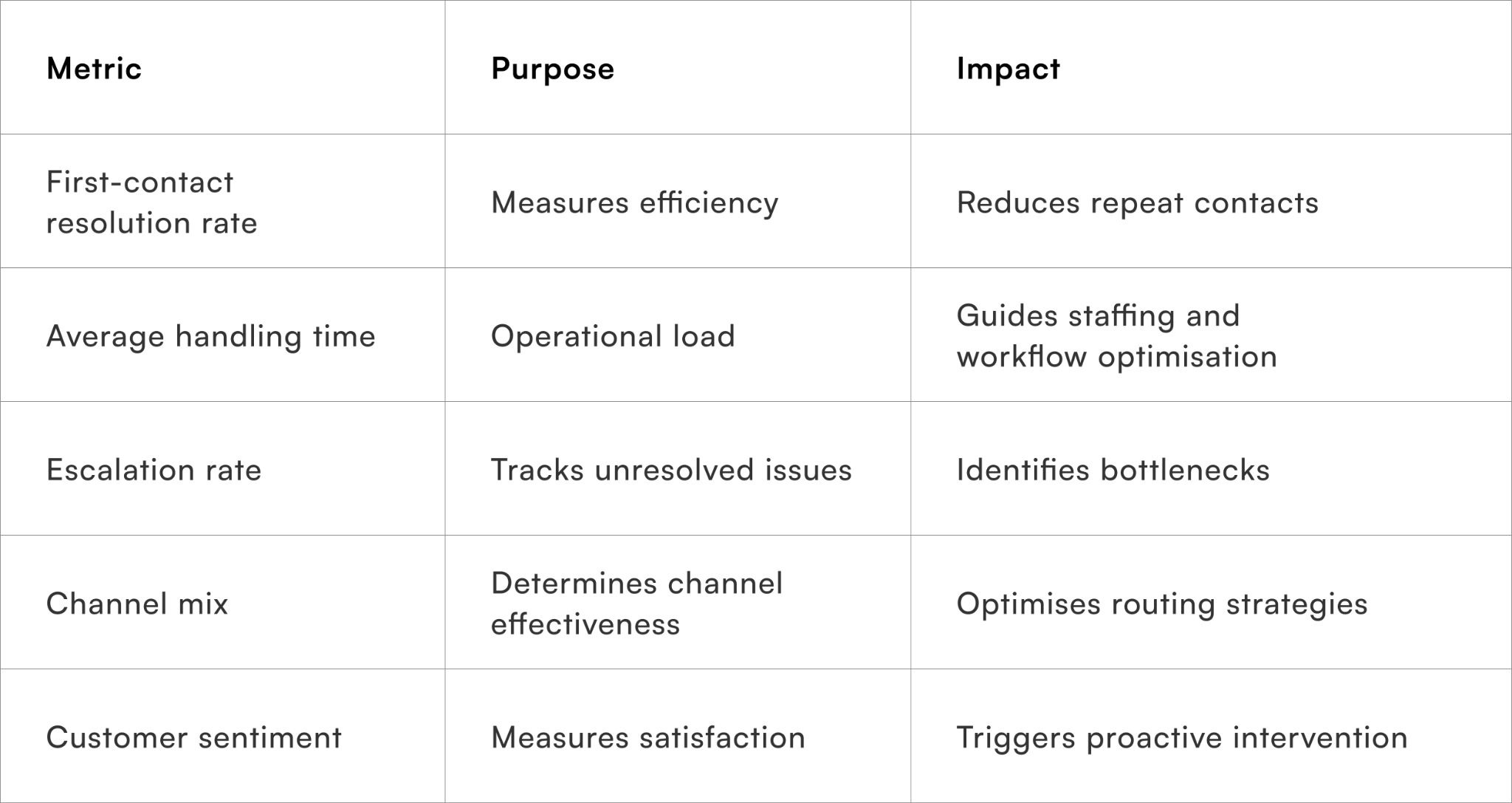
Dashboards are only useful if they highlight the right metrics and trends. Multi-channel dashboards must combine volume, resolution status, sentiment, and escalation risk into a coherent view.
Metrics to track
Automating operational triggers based on integrated signals
Move from reactive to proactive operations
Once multi-channel data is merged and standardised, operational triggers can be automated. Examples include:
- High-frustration sentiment triggers priority routing
- Repeated issues across channels auto-generate incident tickets
- Missed follow-ups initiate reminder sequences via chat or email
Benefits of automated triggers
- Fewer manual interventions
- Faster escalation of critical cases
- Consistent application of SOPs across agents and channels
How to ensure compliance and privacy across channels
Handling sensitive customer data responsibly
Merging multiple channels increases the scope of data collected. Legal compliance (e.g., data privacy laws in India) and internal policies must be embedded in workflow design.
Practical steps
- Anonymise and encrypt sensitive data in transcripts
- Implement access controls for agents and managers
- Ensure opt-in consent for messaging and call recording
Operational outcome
Compliance ensures customer trust while enabling deeper insights without legal or reputational risk.
Quick Wins
Operational steps to consolidate multi-channel customer interactions
Week 1: Map and centralise all interaction channels
Identify every voice, chat, messaging, and email touchpoint. Create a unified dashboard or repository where these interactions are logged in a standardised format.
Expected outcome: Immediate visibility into fragmented conversations and elimination of information silos.
Week 2: Implement basic transcription and tagging
Ensure all voice calls are transcribed and chat logs are tagged for issue type, urgency, and sentiment. This allows CX teams to prioritise effectively without manual review.
Expected outcome: Reduced average handling time (AHT) and improved first-contact resolution rates.
Week 3: Introduce AI-assisted summarisation
Start using AI to summarise transcripts and highlight key action points, escalations, or recurring complaints. Begin with high-value or complex orders to demonstrate ROI.
Expected outcome: Faster agent response and identification of systemic issues.
Week 4: Automate operational triggers
Set up rules to escalate high-frustration interactions, repeated unresolved issues, or missed follow-ups. Connect triggers to the agent dashboard or task management systems.
Expected outcome: Proactive resolution of high-risk cases and fewer repeat customer contacts.
To Wrap It Up
Integrating voice transcripts, chat logs, and messaging data is no longer optional for D2C brands looking to optimise CX. Fragmented channels slow resolution, increase operational effort, and hide systemic issues.
This week, start by mapping all touchpoints and centralising them in one dashboard for visibility.
Long-term, building AI-assisted summarisation, automated triggers, and standardised operational workflows transforms fragmented data into actionable insights, reduces repeat contacts, and improves customer trust.
For D2C brands seeking seamless multi-channel orchestration, Pragma’s customer interaction platform provides transcript consolidation, AI summarisation, and operational triggers that help brands reduce average handling time by up to 30% while boosting first-contact resolution.

FAQs (Frequently Asked Questions On Merging voice transcripts, chat logs and messaging for better issue resolution)
1. Why is merging channels important for issue resolution?
It prevents repeated questions, reduces handling time, and ensures a complete picture of the customer’s problem.
2. Can AI summarisation replace human review entirely?
No. AI assists in highlighting key points and trends, but final decisions and escalations still require human judgment.
3. How should voice and chat logs be standardised?
Use predefined tags for issue type, sentiment, urgency, timestamps, and SKU or order references.
4. What metrics indicate improved resolution after integration?
First-contact resolution, average handling time, escalation rate, channel-specific resolution, and customer sentiment scores.
5. Is customer consent required for merging chat and voice data?
Yes. Ensure compliance with data privacy laws and obtain explicit consent where needed.
6. How often should operational triggers be reviewed?
Monthly is a good starting point, adjusting rules based on volume patterns and recurring failure points.
Talk to our experts for a customised solution that can maximise your sales funnel
Book a demo


.png)