

Speed has become the default promise of modern customer support. Faster replies, shorter queues, instant resolutions. Yet as automation increases, so does a quieter risk: customers feeling processed rather than understood. This tension sits at the heart of Building Trust with AI Copilot: Balancing Speed with Human Sensitivity.
For D2C brands, trust is not built by speed alone. It is built when customers feel heard, when context is remembered, and when responses reflect nuance rather than rigid logic. This is where trust in AI copilot systems is fundamentally different from trust in automation. Copilots do not replace agents. They shape how agents show up in moments that matter.
As AI becomes more present in customer interactions, brands must answer a critical question. How do you move faster without sounding mechanical, and how do you scale efficiency without losing empathy. The answer lies in designing copilots that amplify human judgment rather than override it. When done well, speed and sensitivity stop competing and start reinforcing each other.
Why does speed-driven automation often erode customer trust?
Efficiency without empathy creates emotional distance
Many support teams adopt automation to reduce queues and handling time. While this improves surface-level efficiency, it can unintentionally weaken customer relationships. Fast responses that ignore context or emotion often feel dismissive rather than helpful.
When systems prioritise closure speed over understanding, customers sense it immediately. This is one of the core challenges in AI Copilot vs. Fully Automated Chatbots. Chatbots optimise for deflection and resolution counts, while trust depends on recognition and nuance.
In ecommerce support, where issues are often personal or time-sensitive, speed alone rarely reassures customers. Trust forms when responses acknowledge intent, history, and tone, not just keywords.
How do customers interpret automated responses emotionally?
Perceived intent matters more than response time
Why do scripted replies feel impersonal?
Templates struggle with context and tone
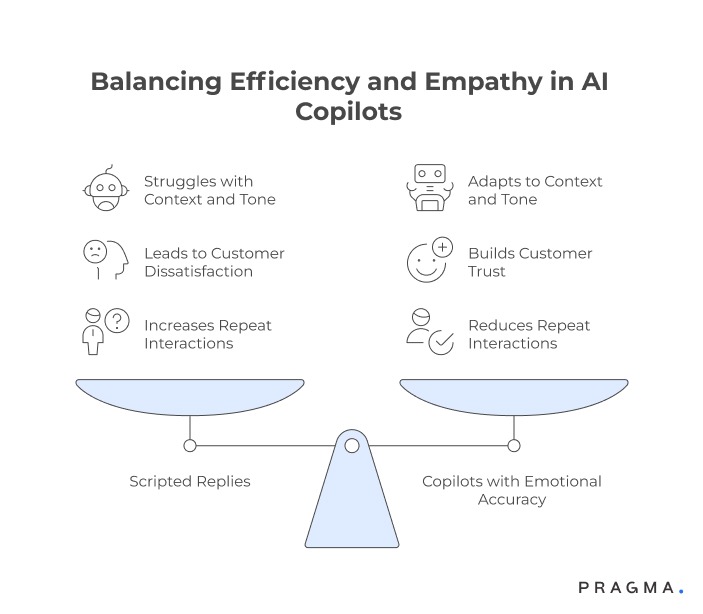
Scripts and rigid flows work for predictable questions. They struggle when customers express frustration, urgency, or uncertainty. Even when answers are correct, the lack of adaptation makes responses feel cold.
This emotional gap is where trust starts to break. Customers may receive information quickly, yet still leave the interaction dissatisfied because their underlying concern was not addressed.
How does this affect repeat interactions?
Low trust increases follow-ups and escalations
When customers do not feel understood, they re-contact support. They escalate through different channels or ask for human intervention explicitly. This increases volume and undermines the very efficiency automation was meant to deliver.
Brands trying to build trust in AI copilots must recognise that emotional accuracy is as important as factual accuracy.
Why do copilots inspire more trust than fully autonomous systems?
Assistance preserves accountability and empathy
Unlike autonomous chatbots, copilots do not act independently. They support agents with context, recommendations, and safeguards, while leaving final decisions to humans. This distinction is critical for trust in AI copilot adoption.
Customers trust interactions when there is a clear sense of accountability. Knowing that a human is present, informed, and empowered reduces anxiety, especially in high-stakes scenarios like refunds or delivery failures.
Copilots reinforce this trust by enabling agents to respond faster without sounding automated. When embedded into CRM workflows, as seen in AI copilot in CRM, intelligence supports empathy rather than replacing it.
How does context preservation strengthen trust over time?
Remembered history signals respect and reliability
Trust deepens when customers feel recognised across interactions. Forgetting past issues, promises, or preferences forces customers to repeat themselves and signals disorganisation. This is a common failure point in automated systems.
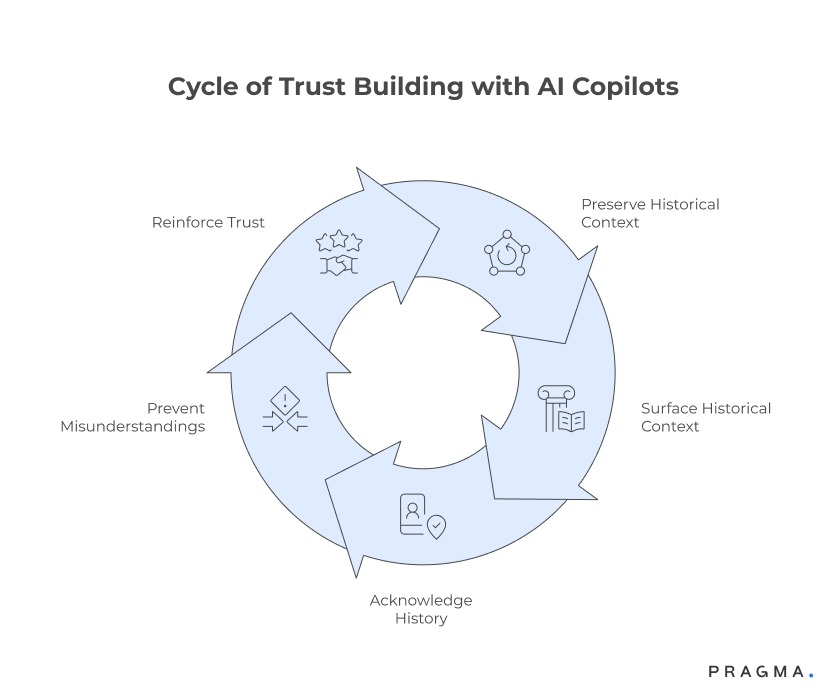
AI copilots preserve and surface historical context at the moment of response. Agents can see previous complaints, resolutions, and sensitivities instantly. This allows them to acknowledge history naturally, which reassures customers that the brand is paying attention.
In ecommerce flows such as returns and exchanges, where expectations are already high, contextual awareness prevents misunderstandings. When copilots support complex workflows like return merchandise authorisation processes, trust is reinforced through clarity and consistency.
How can copilots balance speed with human sensitivity?
Acceleration without removing human judgment
Speed and sensitivity are often treated as trade-offs. In practice, they complement each other when copilots are designed correctly. By removing search and recall work, copilots give agents more time to think, phrase, and respond with care.
Rather than rushing agents, copilots reduce cognitive load. Agents are less likely to miss details or default to curt replies when relevant information is readily available.
This balance becomes especially important during high-volume periods. Teams that regain operational bandwidth through copilots, similar to approaches outlined in recovering weekly support hours with AI assistance, can afford to slow down emotionally while still moving faster operationally.
When does speed actively harm trust?
Moments where empathy outweighs immediacy
Not every interaction benefits from instant closure. Complaints involving delays, damaged orders, or failed promises require acknowledgment before resolution. Responding too quickly without empathy can feel transactional.
Copilots help agents recognise these moments by flagging sentiment and issue severity. Instead of pushing for closure, agents are guided to respond with reassurance first.
This selective pacing is a key differentiator in How to build trust in AI copilots. Speed becomes a tool, not a default, and trust is built through deliberate, human-centred responses.
How should teams design copilots for trust, not just efficiency?
Structural choices determine whether AI feels supportive or intrusive
Designing for trust requires intentional decisions about where AI assists and where humans remain in control. Copilots must be embedded into workflows in a way that enhances judgment rather than shortcuts it.
What responsibilities should remain with agents?
Human oversight anchors accountability
Agents should retain control over actions that carry emotional or financial weight. This includes approvals, tone adjustments, and exception handling.
Key responsibilities that should stay human-led include:
- Final confirmation of refunds, cancellations, and goodwill gestures
- Tone calibration when customers express frustration or distress
- Interpreting ambiguous situations that do not fit predefined rules
This structure reassures customers that decisions are thoughtful, not automatic.
What tasks should copilots accelerate?
Removing friction without removing empathy
Copilots are most effective when they handle recall and synthesis work. By doing this, they free agents to focus on communication quality.
High-impact copilot-supported tasks include:
- Surfacing relevant order and interaction history instantly
- Summarising long conversation threads across channels
- Suggesting response drafts aligned with policy and context
When copilots operate within CRM workflows, such as AI copilot in CRM, assistance feels natural rather than imposed.
How can trust be measured in AI-assisted support?
Operational signals reveal customer confidence
Trust is often treated as intangible, but it shows up in measurable behaviours. Teams need to look beyond speed metrics to understand how customers perceive AI-assisted interactions.
Which metrics reflect growing trust?
Signals beyond response time
Relevant trust indicators include:
- Reduction in repeat contacts for the same issue
- Decrease in “request for human agent” escalations
- Improved customer satisfaction on emotionally charged tickets
- Higher adherence to first-offered resolutions
These trends indicate that customers feel understood and confident in the outcomes.
How does agent confidence influence customer trust?
Internal clarity shapes external experience
Agents who trust the copilot’s guidance communicate more calmly and clearly. Hesitation and uncertainty often translate into mixed messages for customers.
When teams recover capacity through AI assistance, as described in recovering weekly support hours with AI copilots, agents have more mental space to respond with care. This internal confidence directly shapes customer perception.
When should brands slow down AI-driven responses?
Deliberate pacing protects long-term trust
Not every situation benefits from instant replies. Brands must identify moments where emotional reassurance matters more than speed.
Scenarios that warrant slower, more deliberate responses include:
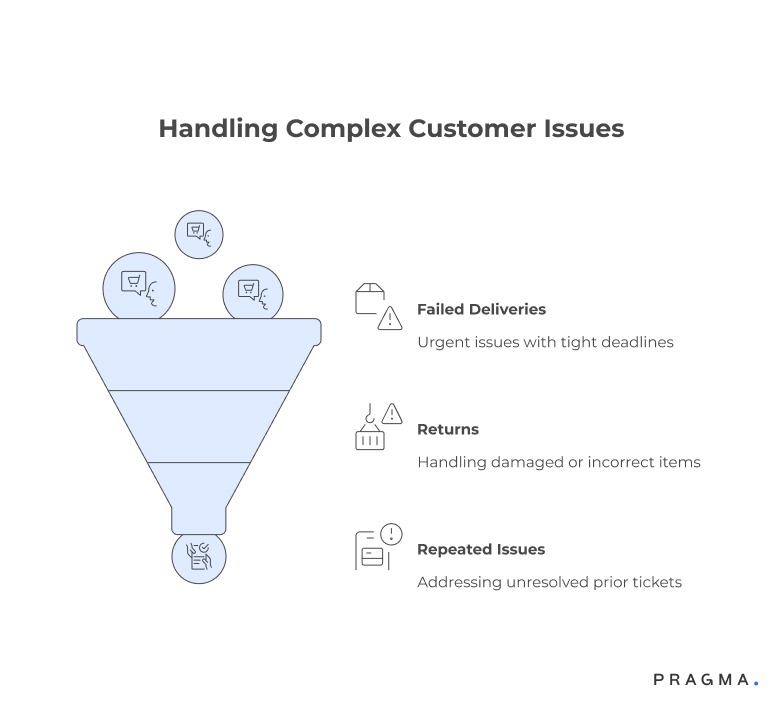
- Failed deliveries with tight customer deadlines
- Returns involving damaged or incorrect items
- Repeated issues with prior unresolved tickets
By allowing agents to pause, review, and personalise responses, copilots support trust-building rather than undermining it.
How can teams build trust with AI copilots in the first 30 days?
Practical steps that prioritise empathy alongside speed
Week 1: Identify trust-sensitive interaction types
Audit recent tickets to identify issues where customers are emotionally invested. These usually include delayed deliveries, refunds, and repeated failures. Tag these as trust-sensitive flows.
Expected result: Clear visibility into where speed must be balanced with care.
Week 2: Define agent override moments explicitly
Document scenarios where agents must slow down, rephrase, or override copilot suggestions. Make this guidance visible inside workflows.
Expected result: Agents feel confident exercising judgment without second-guessing automation.
Week 3: Enable contextual assistance inside live conversations
Ensure copilots surface past interactions, sentiment cues, and policy context during active conversations. Teams using AI copilot in CRM often see faster, calmer responses during this phase.
Expected result: Reduced friction without sacrificing tone quality.
Week 4: Review trust signals, not just speed metrics
Run QA reviews focused on empathy, clarity, and acknowledgment of history rather than resolution time alone.
Expected result: More consistent, trust-aligned responses across agents.
What metrics indicate trust is improving with AI copilots?
Operational indicators that reflect customer confidence
To assess trust in AI copilot deployments, teams must look beyond efficiency metrics and track behavioural signals.
Key metrics to monitor include:
- Repeat contact rate for the same issue
- Escalations requesting a different agent or channel
- CSAT on refund, delay, and complaint tickets
- Resolution acceptance without follow-up clarification
- QA scores for tone and contextual accuracy
When these metrics stabilise or improve together, it signals that speed and sensitivity are aligned rather than competing.
To Wrap It Up
Trust is not built by choosing between speed and empathy. It is built by designing systems that allow both to coexist. AI copilots succeed when they help agents respond faster without sounding automated or detached.
This week, identify trust-sensitive workflows and define where agents must always retain final judgment.
Over the long term, brands that treat AI as a support layer rather than a decision-maker build more resilient customer relationships and more confident teams.
For D2C brands seeking to scale support without losing human sensitivity, Pragma’s AI copilot platform provides real-time context, agent-led controls, and workflow intelligence that help teams move faster while preserving trust at every interaction.

FAQs (Frequently Asked Questions On Building Trust with AI Copilot: Balancing Speed with Human Sensitivity)
1. What does trust in AI copilot mean in customer operations?
Trust in AI copilot refers to the confidence that AI-driven recommendations are accurate, relevant, and safe to use.It also includes transparency in how decisions are made and the ability for humans to validate outcomes.
2. How to build trust in AI copilots across teams?
How to build trust in AI copilots involves using high-quality data, clear explainability, and consistent performance.Regular feedback loops and human oversight further strengthen confidence in AI outputs.
3. Why is balancing speed with human sensitivity important in AI copilots?
AI copilots can deliver fast responses, but human sensitivity ensures empathy and context are preserved.Balancing both helps maintain customer satisfaction while improving operational efficiency.
4. How does trust in AI copilot impact customer experience?
When agents trust AI suggestions, they can respond faster and more confidently to customers.This leads to more accurate resolutions and a smoother overall experience.
5. AI Copilot vs. fully automated chatbots: which builds more trust?
In AI Copilot vs. fully automated chatbots, copilots build more trust by keeping humans in control of decisions.Chatbots may lack empathy and flexibility, which can reduce customer confidence in complex situations.
6. What role does transparency play in building trust in AI copilots?
Transparency ensures users understand how recommendations are generated and what data is used.This clarity helps reduce uncertainty and increases acceptance among teams.
7. How can businesses ensure ethical use of AI copilots?
By implementing governance frameworks, data privacy controls, and clear usage guidelines.Ethical practices are essential for maintaining long-term trust in AI copilot systems.
8. Can AI copilots handle sensitive customer interactions effectively?
AI copilots can assist with insights and suggestions, but human agents should lead sensitive conversations.This ensures empathy, judgement, and accountability are maintained.
9. How does continuous learning improve trust in AI copilots?
AI systems improve over time by learning from new data and feedback.This leads to more accurate recommendations and increased reliability.
10. What are common challenges in building trust in AI copilot systems?
Challenges include data bias, lack of explainability, and inconsistent performance.Addressing these issues is critical to building and maintaining trust.
11. How can organisations measure trust in AI copilots?
Metrics such as adoption rates, accuracy, and agent feedback help assess trust levels.Continuous monitoring ensures the system remains reliable and effective.
Talk to our experts for a customised solution that can maximise your sales funnel
Book a demo.png)
.png)

.png)