

First-contact resolution has always been a quiet indicator of how well a support operation actually works. When customers get their issue resolved in the first interaction, trust improves, follow-ups drop, and agents gain confidence. When they do not, even polite conversations turn into long threads, escalations, and repeat tickets that strain the entire system.
This is the operational lens behind How AI Copilot Improves First-Contact Resolution Rates for D2C Brands. For many teams, low first-contact resolution is not caused by poor intent or lack of effort. It is caused by missing context at the moment decisions are made. Agents often need to search across tools, clarify details, or revisit past interactions before committing to a resolution.
In fast-moving D2C environments, especially in Indian e-commerce where queries often span delivery, returns, and policy exceptions in a single conversation, this delay is costly. Improving first-contact resolution is less about asking agents to be faster and more about equipping them to decide correctly the first time. Understanding how assistive intelligence changes that dynamic starts with examining where resolution typically breaks down.
Why does first-contact resolution break down in D2C customer support?
Resolution fails when agents lack decision-ready context
First-contact resolution in customer support is rarely lost because agents do not know what to do. It is lost because they do not have enough information at the moment they need to decide. In D2C environments, a single customer query often spans order status, delivery timelines, return eligibility, and past promises made by the brand.
When this context is fragmented across systems, agents are forced to pause the conversation. They ask follow-up questions, place customers on hold, or escalate tickets unnecessarily. Each of these actions pushes the resolution beyond the first interaction, even when the solution itself is straightforward.
This is why improving the first contact resolution rate in ecommerce cannot be solved through scripts alone. It requires addressing how context is accessed and applied during live conversations.
How does fragmented CRM data reduce resolution accuracy?
Incomplete visibility leads to cautious, delayed decisions
Most CRMs store customer data, but they do not always surface it in a way that supports fast decision-making. Order history, previous tickets, and operational exceptions often exist, but remain buried behind clicks and tabs.
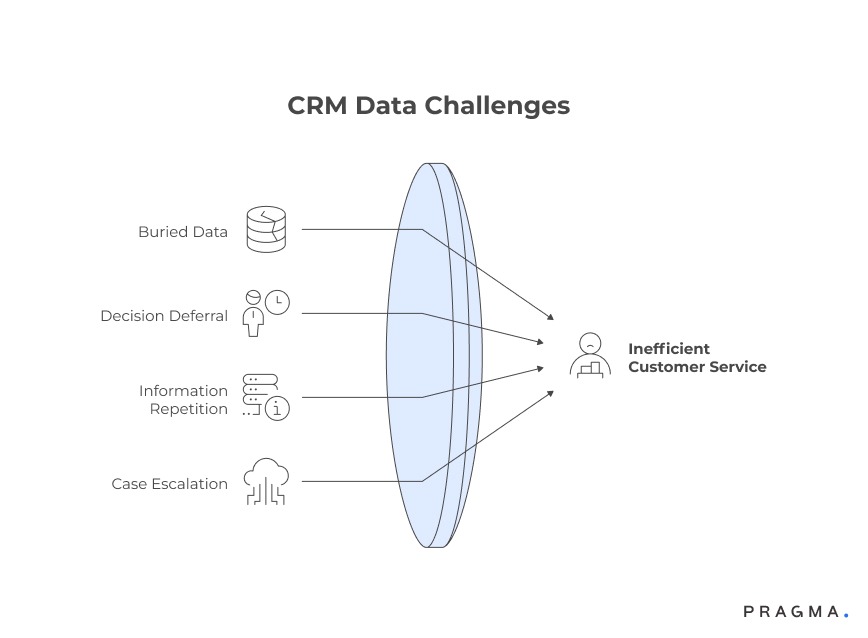
As a result, agents tend to:
- Defer decisions until details are verified
- Ask customers to repeat information
- Escalate cases that could have been resolved immediately
This behaviour protects against errors, but it lowers first contact resolution in customer support across the board. Even experienced agents struggle to resolve issues confidently when they cannot see the full picture.
Embedding assistive intelligence directly into the CRM, as seen when teams adopt approaches similar to AI copilots working inside CRM workflows, changes how information is consumed during a live ticket.
Why do repeat and multi-issue tickets hurt first-contact resolution?
Context reset forces conversations to restart from scratch
Repeat customers and multi-issue queries are common in D2C support. A delayed delivery might be followed by a return request, or a refund query might reference a previous exception. Without immediate access to past interactions, agents must reconstruct the journey before resolving the current issue.
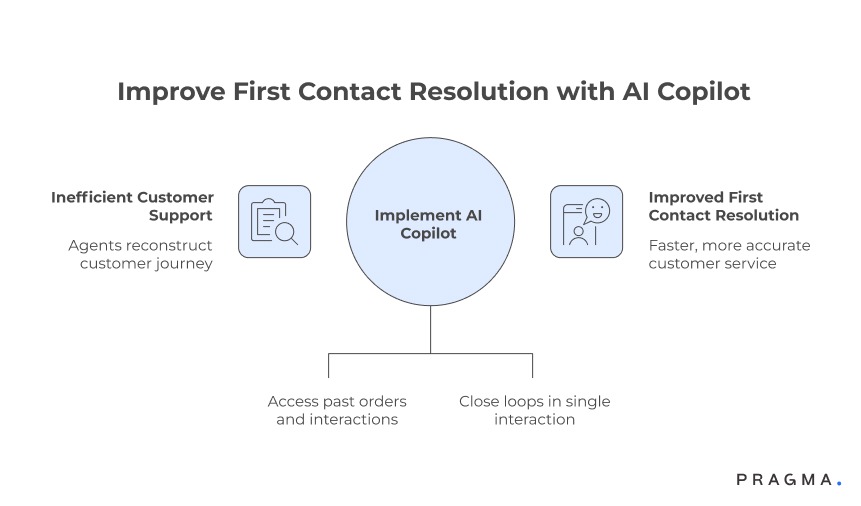
This reconstruction is time-consuming and error-prone. It also explains why teams struggle with how to improve first contact resolution despite investing in training and quality assurance.
When agents can instantly view prior orders, complaints, and resolutions, they are far more likely to close the loop in a single interaction. This is where capabilities like retrieving past order and interaction context through an AI copilot become operationally meaningful rather than just convenient.
When does low first-contact resolution become an operational risk?
Follow-ups and escalations quietly inflate support load
Low first-contact resolution does not always show up as an immediate problem. Its impact accumulates through repeat tickets, longer queues, and rising escalation rates. Over time, support teams spend more effort managing conversations than resolving issues.
In high-volume D2C setups, this creates a vicious cycle. Agents handle more follow-ups, queues grow longer, and resolution quality declines further. Leaders often respond by adding headcount, without addressing the root cause.
Recognising this pattern is usually the moment teams begin evaluating whether an AI copilot improves first contact resolution by supporting agents during decisions, rather than automating responses in isolation.
How does agent-assisted intelligence change the resolution dynamic?
Support shifts from information gathering to decision execution
Agent-assisted systems focus on making the right information visible at the right time. Instead of asking agents to search or remember, copilots surface relevant context proactively.
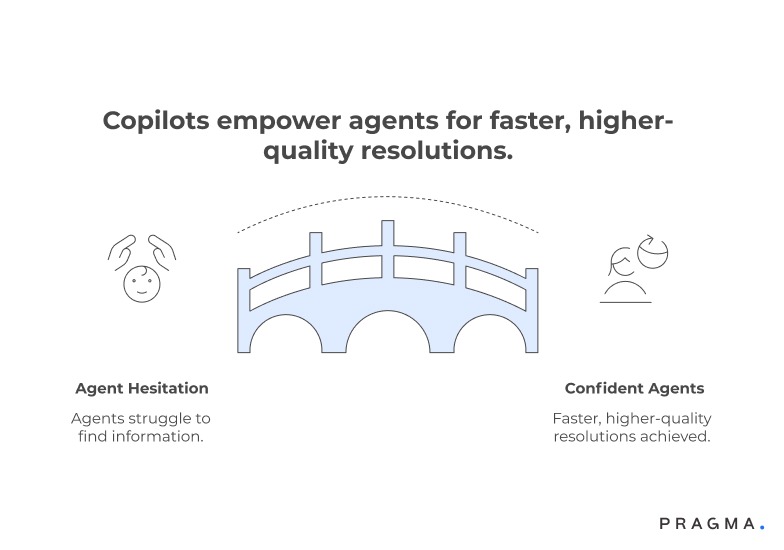
By supporting agents inside their workflow, as seen when AI copilots actively help agents during live tickets, teams reduce hesitation and improve confidence. Agents can commit to outcomes faster because they understand the full customer situation.
This shift sets the foundation for higher resolution quality in a single interaction. It also reframes first-contact resolution as a workflow design challenge, not a performance management issue.
How does an AI copilot improve first-contact resolution during live conversations?
Decision-ready context replaces follow-up driven conversations
An AI copilot improves first contact resolution by changing what happens in the first few minutes of a conversation. Instead of agents spending that time gathering information, copilots surface the most relevant context immediately. Order status, previous complaints, and unresolved issues are visible as soon as the ticket opens.
This shift allows agents to move directly into problem-solving mode. They ask fewer clarifying questions and avoid placing customers on hold. In practice, this is how an AI copilot improves first contact resolution without forcing rigid scripts or shortcuts.
When intelligence is embedded directly into the CRM interface, as shown in [AI copilot integrations within CRM environments], agents are equipped to resolve issues confidently in one interaction.
Why does keeping agents in control matter for resolution quality?
Human judgment prevents premature or incorrect closures
First-contact resolution is not about closing tickets quickly. It is about closing them correctly. Autonomous systems often fail here by making assumptions or committing to actions without full nuance.
By contrast, copilots assist rather than act. They recommend responses, flag policy constraints, and highlight risks, but the agent decides. This balance ensures that edge cases, customer tone, and commercial considerations are taken into account.
Teams focused on first contact resolution in customer support consistently see better outcomes when agents remain accountable but better informed. The copilot accelerates decisions, but does not replace judgment.
How does historical context influence first-interaction outcomes?
Past interactions shape what can be resolved immediately
Many first-contact failures stem from missing historical context. Customers reference prior promises, previous refunds, or unresolved delivery issues. If agents cannot see this history quickly, they hesitate or escalate.
Copilots solve this by consolidating past orders, tickets, and resolutions into a single view. When agents understand the customer journey at a glance, they are far more likely to resolve the issue on the spot.
This is especially impactful in ecommerce, where the first contact resolution rate in ecommerce is heavily influenced by repeat interactions. Accessing historical order context through AI copilots that retrieve past orders and interactions turns what would be a follow-up into a one-touch resolution.
When does a copilot outperform scripts and macros?
High-variance scenarios where static guidance breaks
Scripts and macros work well for predictable questions. They struggle when issues involve multiple systems, exceptions, or customer-specific conditions. In these moments, agents must interpret rather than recite.
Copilots adapt to these scenarios by synthesising context dynamically. They adjust recommendations based on the customer, the order, and past outcomes. This flexibility is key to how to improve first contact resolution without increasing risk.
For agents handling complex tickets, this feels less like automation and more like experienced guidance.
Why do teams see faster resolution consistency across agents?
Shared intelligence reduces performance gaps
One of the hidden benefits of copilots is consistency. New agents gain access to the same contextual intelligence as experienced ones. Best practices are embedded into recommendations rather than learned slowly through trial and error.
When copilots actively assist agents during live interactions, as seen in AI copilots that help agents decide and respond in real time, resolution quality becomes less dependent on individual memory and more on shared context.
Over time, this narrows performance gaps and lifts the overall first-contact resolution baseline across the team.
How can D2C teams improve first-contact resolution within 30 days using AI copilots?
Practical workflow changes that reduce follow-ups before scaling automation
Week 1: Identify tickets that most often require follow-ups
Audit recent tickets that were reopened or escalated after the first interaction. Focus on delivery delays, return eligibility, and refund timelines. Document what information agents lacked during the initial conversation.
Expected result: Clear visibility into why first-contact resolution breaks down.
Week 2: Surface complete customer and order context inside the CRM
Ensure agents can see order history, shipment status, and previous conversations in one view. When copilots are embedded directly within the CRM, as seen in AI copilot integrations inside CRM workflows, agents stop deferring decisions due to missing context.
Expected result: Fewer clarifying questions and shorter discovery phases.
Week 3: Enable copilot-led recommendations for complex decisions
Configure copilots to suggest next best actions, policy checks, and response drafts for high-variance tickets. Agents retain control, but no longer start from a blank slate.
Expected result: Higher confidence in resolving issues during the first interaction.
Week 4: Align agents on assisted decision-making standards
Train agents on when to trust copilot suggestions and when to override them. Review first-contact resolution outcomes weekly and refine recommendations based on feedback.
Expected result: Consistent resolution quality across agents, not just top performers.
Which metrics indicate whether first-contact resolution is improving?
Signals that reflect true resolution quality, not surface efficiency
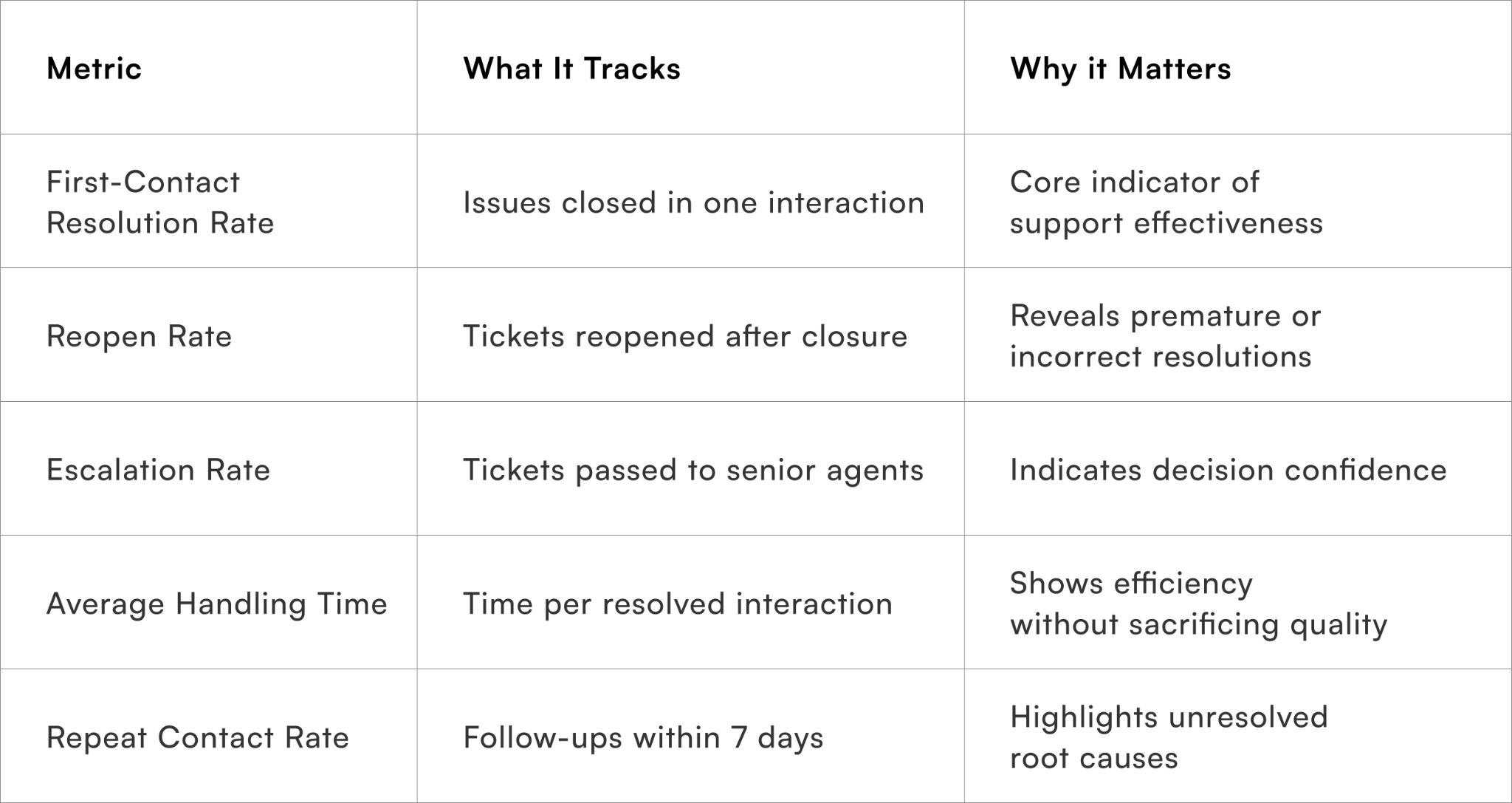
Together, these metrics show whether an AI copilot improves first contact resolution in practice, not just in theory.
How does sustained first-contact resolution improvement change support performance?
Resolution quality compounds when context remains visible
When copilots consistently surface decision-ready context, improvements in the first contact resolution rate in ecommerce tend to compound over time. Agents build muscle memory around resolving issues correctly on the first attempt, and new hires ramp faster because knowledge is embedded into the workflow.
This effect is strongest when copilots actively assist agents during live tickets, as seen in AI copilots that help agents interpret context and decide in real time. Over time, support teams spend less effort managing follow-ups and more time resolving net-new issues.
To Wrap It Up
First-contact resolution improves when agents are equipped to decide correctly the first time, not when they are pressured to close faster. Making context visible at the moment of action removes hesitation and reduces follow-ups.
This week, identify one high-volume ticket category and ensure all relevant order and interaction context is visible to agents during the first response.
Over the long term, teams that continuously refine copilot recommendations and context sources see compounding gains in resolution quality and consistency across agents.
For D2C brands seeking to improve first-contact resolution at scale, Pragma’s AI Copilot platform provides CRM-native context surfacing, historical recall, and agent-first decision support that help brands resolve more issues in a single interaction.

FAQs (Frequently Asked Questions On How AI Copilot Improves First-Contact Resolution Rates for D2C Brands)
1. What does AI copilot improves first contact resolution mean?
AI copilot improves first contact resolution by helping agents resolve customer issues in the first interaction. It provides real-time insights and suggestions, reducing the need for follow-ups.
2. What is first contact resolution in customer support?
First contact resolution in customer support refers to solving a customer query during the initial interaction. It is a key metric for measuring efficiency and customer satisfaction.
3. How does AI copilot for first contact resolution work?
AI copilot for first contact resolution uses customer data, history, and context to suggest accurate responses. This enables agents to resolve issues quickly and confidently.
4. Why is first contact resolution rate in ecommerce important?
First contact resolution rate in ecommerce directly impacts customer experience and operational costs. Higher resolution rates lead to faster service and improved brand trust.
5. How to improve first contact resolution using AI copilots?
How to improve first contact resolution involves leveraging AI for real-time guidance and automation. This reduces errors and ensures consistent, high-quality responses.
6. Can AI copilots reduce repeat customer interactions?
Yes, by resolving issues correctly the first time, AI copilots minimise repeat queries. This improves efficiency and reduces support workload.
7. How does AI copilot improve agent productivity in D2C brands?
It provides instant access to relevant information and suggested actions. This helps agents handle more queries while maintaining quality.
8. What data is required for improving first contact resolution?
Data such as customer profiles, past interactions, order history, and issue patterns is essential. These inputs help AI generate accurate and contextual recommendations.
9. Can AI copilots handle complex queries effectively?
They assist with insights and recommendations, but human agents handle final decisions. This combination ensures both speed and accuracy.
10. What are the benefits of improving first contact resolution rate?
Benefits include higher customer satisfaction, reduced operational costs, and faster service. It also strengthens customer loyalty and retention.
11. Are there limitations to using AI copilot for first contact resolution?
AI may not fully understand highly nuanced or emotional situations. Human oversight is necessary to ensure appropriate responses.
Talk to our experts for a customised solution that can maximise your sales funnel
Book a demo
.png)