

In today’s fast-moving D2C landscape, the way brands communicate with customers can make or break delivery experiences. Whether it’s a delivery confirmation, a status update, or a return notification, the format and content of messages directly impact customer satisfaction, operational efficiency, and return rates. Yet many logistics teams struggle to decide whether to send rich media messages with images, tracking maps, and buttons, or stick to short text alerts that are lightweight and universally accessible.
This blog, Rich media vs short text: guidelines for delivery, confirmation and return messages, explores the trade-offs between these approaches. It examines how message format affects delivery visibility, customer engagement, and operational handoffs.
By focusing on practical guidelines for each type of communication, D2C teams can optimise both customer experience and operational efficiency, ensuring that messages are effective without overwhelming recipients or overloading logistics systems during peak volumes.
Why message format matters for delivery, confirmation, and returns
Different formats influence visibility, response, and operational outcomes
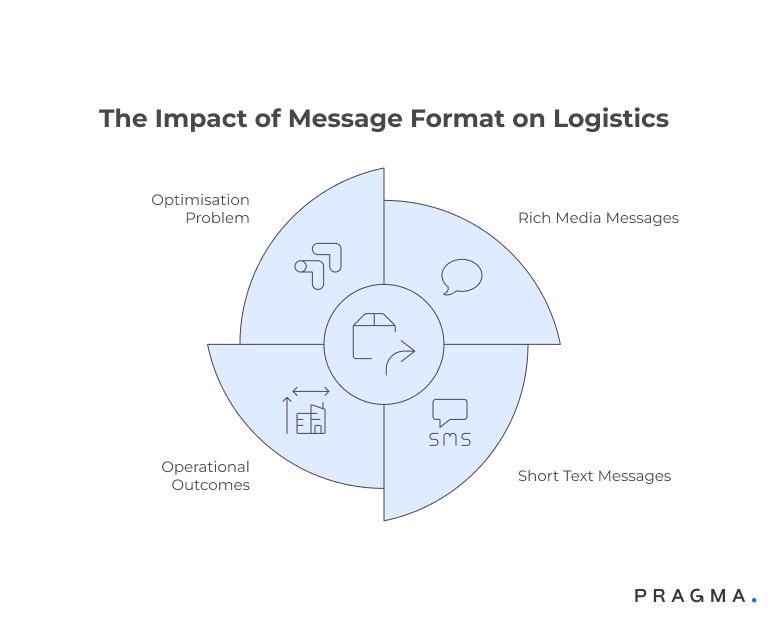
Not all messages are created equal. In logistics, the format of delivery communications directly affects how customers respond, how quickly they confirm availability, and ultimately whether packages reach them successfully.
Rich media messages — containing images, maps, and interactive buttons — can increase engagement but may also introduce delays if customers have low-bandwidth connections or feature phones. Short text messages are fast and universally readable, but may lack the clarity or call-to-action needed for more complex updates.
The impact on operations is immediate: delayed confirmations or unclear return instructions can increase RTO rates, create unnecessary support tickets, and reduce overall delivery reliability.
Choosing the right format, therefore, is not a marketing decision — it is an operational optimisation problem that requires careful guidelines.
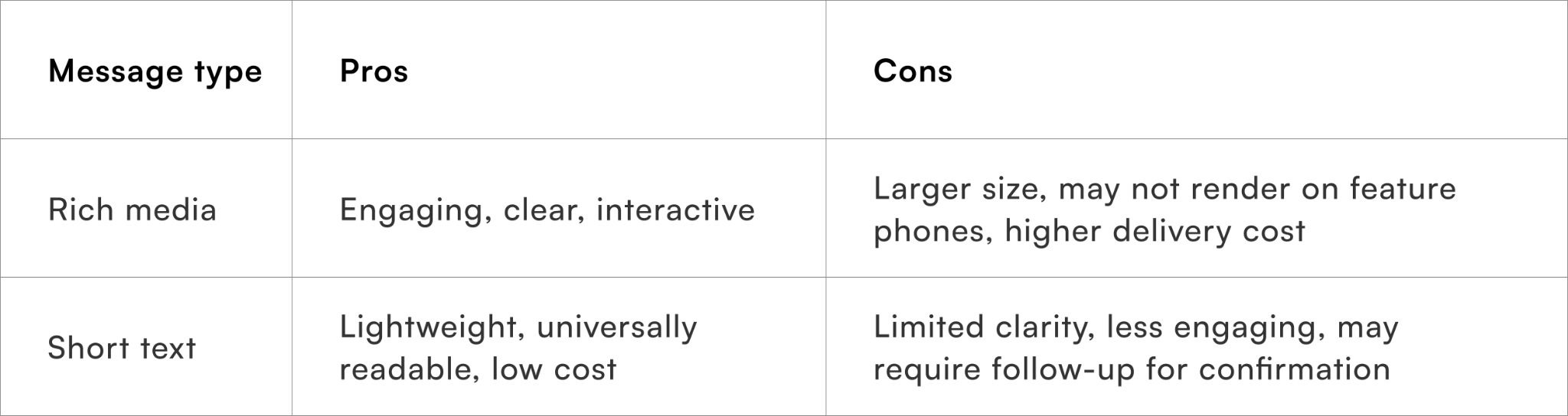
The key principle: match the message format to customer context and operational goals, not simply the latest design trend.
How customer segments affect message strategy
Tailoring message format based on user profiles improves outcomes
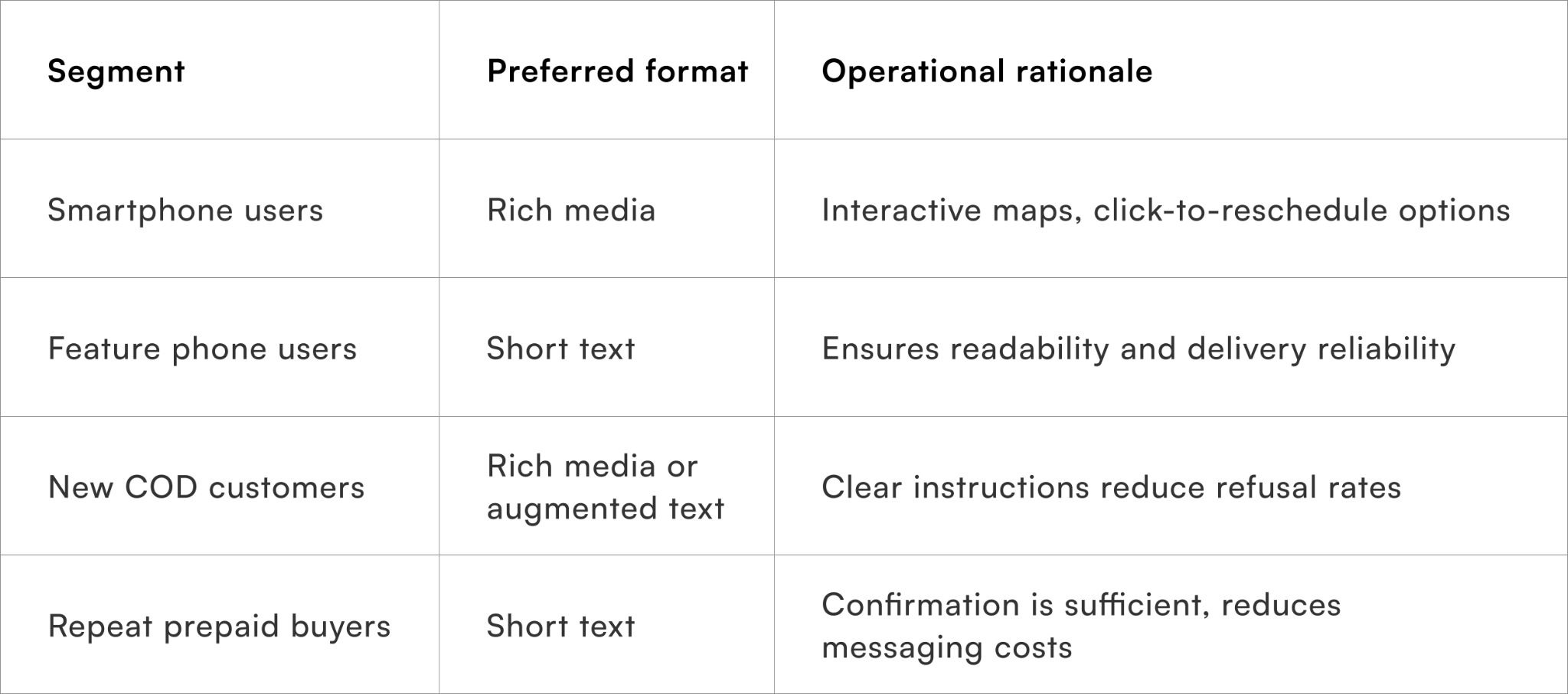
Different customer segments respond differently to message types. For example, urban, smartphone-enabled customers may prefer rich media with a map and click-to-reschedule functionality, while rural or low-bandwidth users benefit more from concise, text-based instructions.
Similarly, first-time COD customers might need additional guidance, while repeat prepaid buyers often require only a confirmation of dispatch or delivery.
Segmentation allows teams to prioritise message types where they are most effective without adding unnecessary operational complexity or costs.
Overloading all customers with rich media messages is not only expensive but can also cause failures when content fails to render, creating confusion and potential RTOs.
What content belongs in delivery, confirmation, and return messages
Only include information that drives operational action
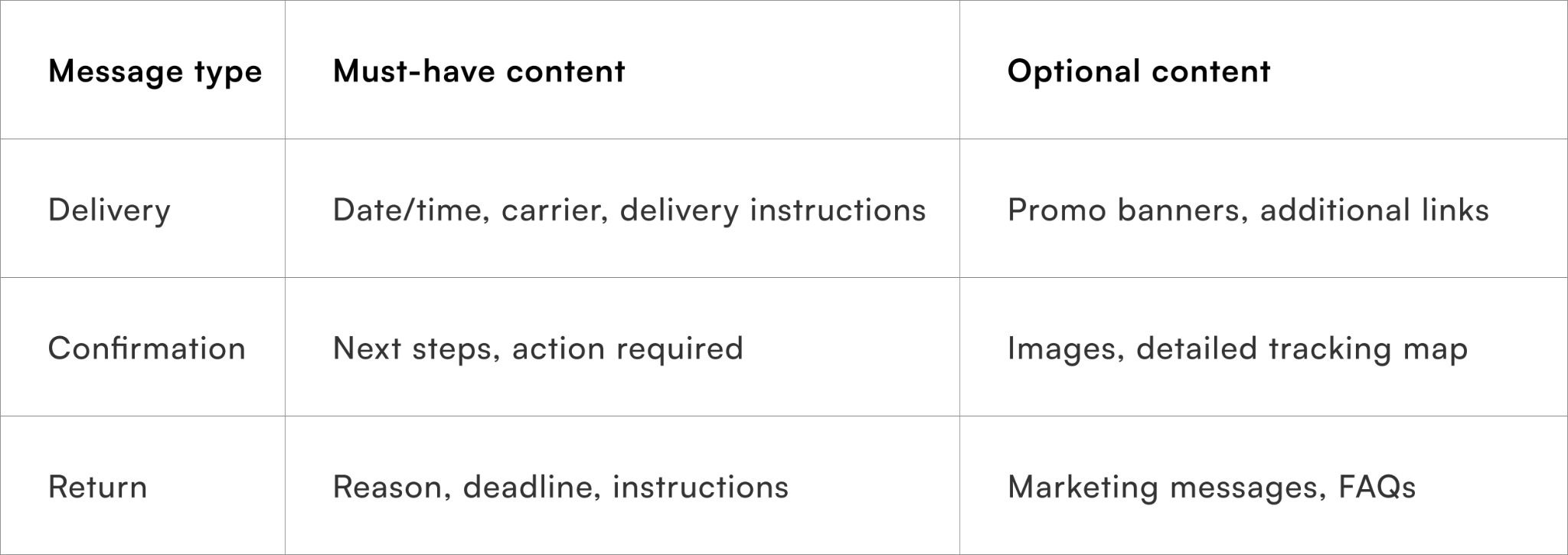
Regardless of format, messages should focus on actionable and high-impact information. For delivery alerts, include expected delivery window, carrier name, and confirmation instructions. Confirmation messages should clearly communicate next steps and required actions. Return notifications must specify the reason, deadline, and simple steps to initiate the process.
Including unnecessary details — promotional content, optional links, or multiple images — can distract the customer and reduce the likelihood of timely action. Operational efficiency improves when each message serves a single, clear purpose aligned with reducing errors, missed deliveries, or RTO.
How timing affects message effectiveness
Sending messages at the right moment reduces missed deliveries and RTO
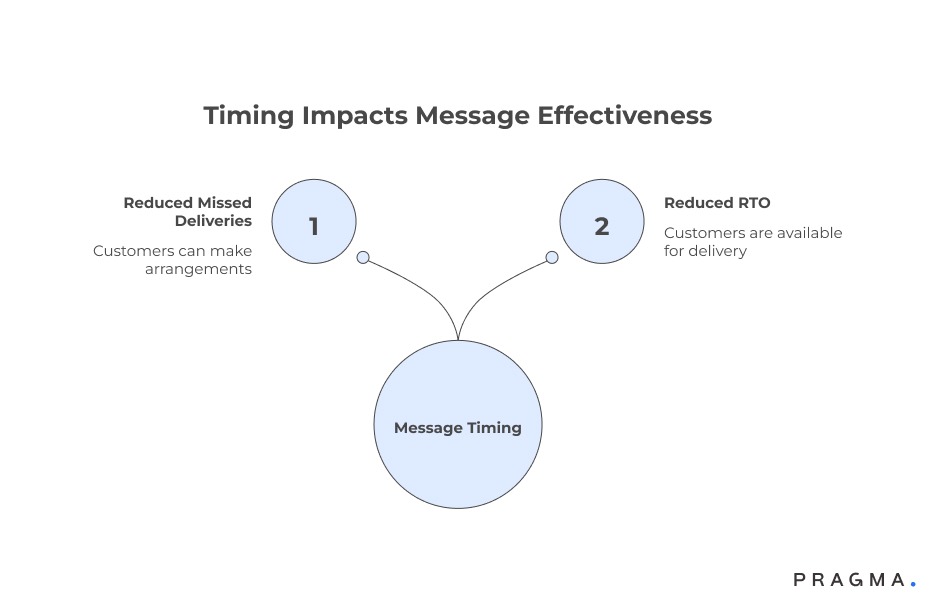
Optimal dispatch and delivery notifications
Timing is crucial. Delivery messages sent too early may be ignored; messages sent too late can prevent the customer from making arrangements. Rich media messages, due to size and potential load times, should ideally be sent during periods of stable connectivity. Short text messages, being lightweight, can be sent closer to the delivery window without risk of delays.
Confirmation and return communications
For confirmations, the goal is quick, actionable response. Interactive elements in rich media can accelerate action but must not overwhelm or confuse the recipient. Return instructions should be concise; even rich media formats should emphasise the required steps first, with supplementary visuals or links secondary.
How to integrate rich media and short text into operational workflows
Alignment with logistics systems ensures consistency and reduces errors
System-level event mapping
Each message type should correspond to a specific operational event: dispatch, delivery attempt, confirmation, or return initiation. Rich media messages can include embedded links that automatically update CRM status or trigger support workflows. Short text should be integrated with SMS gateways to automatically update logs without manual intervention.
Carrier and platform considerations
Not all carriers support rich media delivery consistently. Mapping message formats by carrier and region ensures no loss of information. Where rich media cannot be reliably delivered, fall back to text-only messages while retaining essential operational cues.
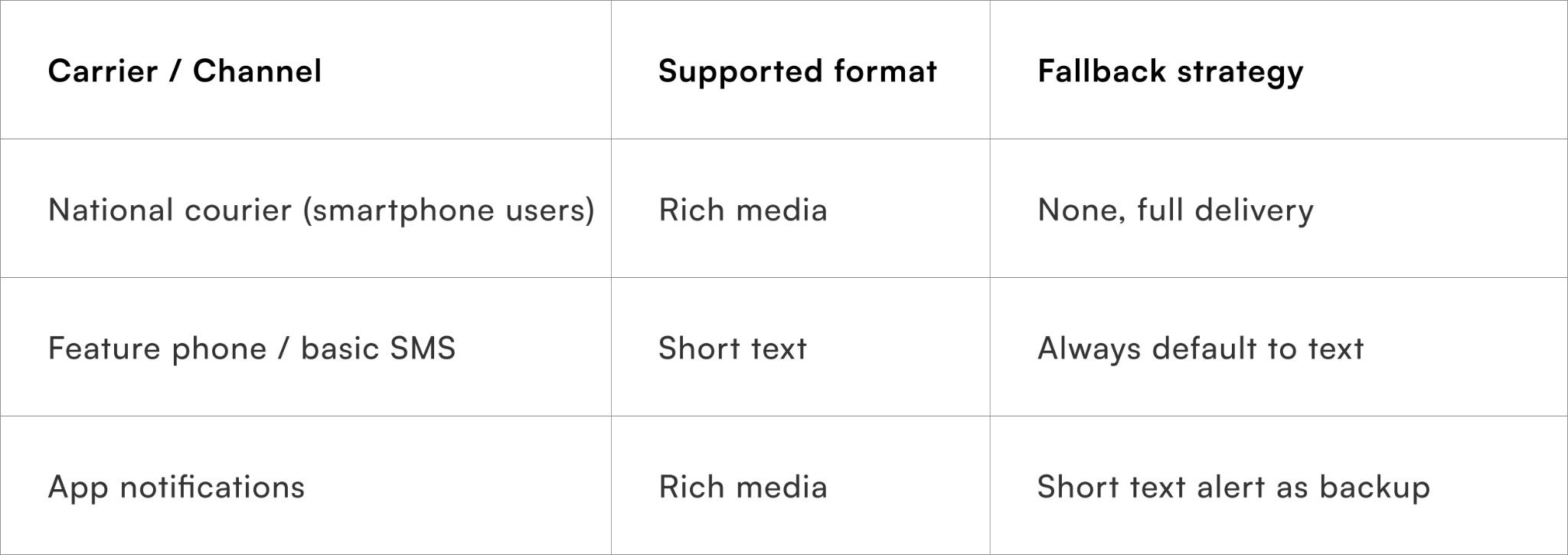
Operational guardrails for message design
Prevent overloading customers while maintaining operational clarity
Content guardrails
Messages should be concise, actionable, and avoid extraneous content. Promotional material, complex images, or long instructions can reduce comprehension and delay responses.
Volume and frequency limits
Avoid sending multiple messages for the same event unnecessarily. Over-messaging increases opt-outs, support tickets, and missed responses.
- Example: Limit delivery updates to one primary alert + one reminder.
Cross-functional alignment
Operations, customer support, and marketing teams must agree on formats, content, and timing to ensure consistency across all channels. Clear ownership prevents conflicting messages that could confuse customers or trigger redundant workflows.
Quick Wins on Implementing Rich Media and Short Text Messaging
Practical actions to optimise delivery, confirmation, and return messages
Week 1: Audit current messaging flows
- Map all delivery, confirmation, and return messages currently sent.
- Identify which messages use rich media and which use short text.
Expected result: Clear understanding of message formats, duplication, and unnecessary complexity.
Week 2: Define format guidelines per segment
- Assign rich media vs short text based on device type, customer segment, and connectivity.
- Standardise essential content for each message type to ensure clarity and operational actionability.
Expected result: Reduced RTO and improved confirmation rates with minimal operational friction.
Week 3: Align system triggers
- Map each message to CRM events and operational workflows.
- Ensure fallback strategies exist where rich media cannot be delivered.
Expected result: Messaging triggers reliably drive the intended operational outcomes.
Week 4: Train teams and monitor performance
- Communicate guidelines to ops, support, and marketing teams.
- Monitor KPIs like delivery success, confirmation rates, and message engagement.
Expected result: Teams understand ownership, and metrics reflect actual improvements.
Key metrics to monitor
Focus on outcomes, not just message volume
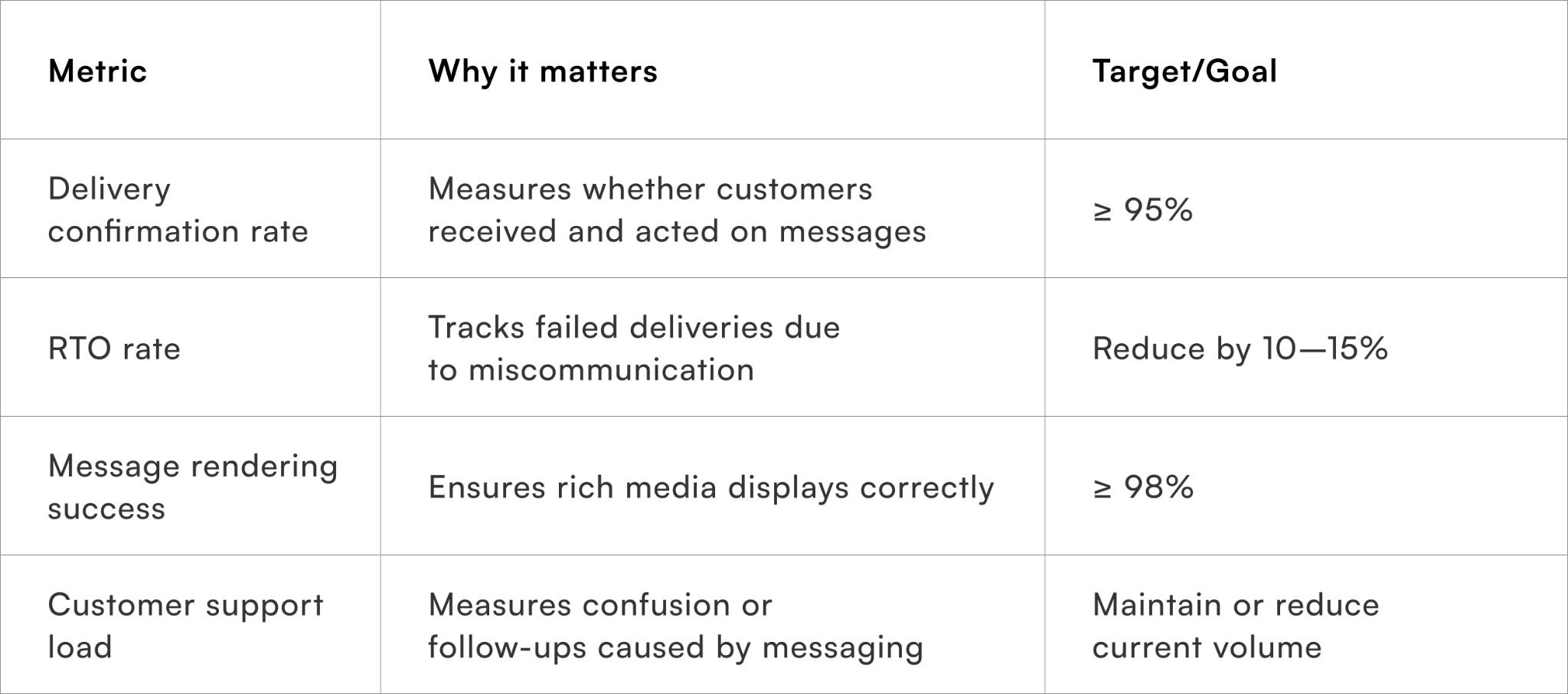
Monitoring these metrics ensures message format choices translate into operational improvements, not just higher engagement stats.
To Wrap It Up
Rich media and short text messages are tools for operational efficiency, not just engagement. By assigning the right format to the right customer and event, teams can improve delivery confirmations, reduce RTO, and streamline return processes.
This week, audit your current messaging flows and assign formats based on customer segment and device capability.
Long-term, continuously refine guidelines, monitor delivery KPIs, and implement fallback strategies to ensure consistent performance across all channels.
For D2C brands seeking clearer and more effective customer communications, Pragma's messaging orchestration platform] provides intelligent message routing, format optimisation, and operational guardrails that help brands reduce delivery errors and improve customer satisfaction at scale.

FAQs (Frequently Asked Questions On Rich media vs short text: guidelines for delivery, confirmation and return messages)
1. When should rich media be preferred over short text?
Use rich media for smartphone-enabled customers, complex instructions, or interactive actions like rescheduling or tracking maps.
2. Are short text messages sufficient for returns?
Yes, for simple return instructions and confirmations. Rich media can be supplementary but is not required.
3. How do we prevent message overload?
Limit messages per event to a primary alert and, if necessary, one reminder. Avoid promotional content in operational messages.
4. Can fallback strategies ensure operational reliability?
Yes. Rich media should always have a short text fallback to guarantee delivery across all devices and carriers.
5. How often should messaging guidelines be reviewed?
Review quarterly or after introducing new delivery channels or customer segments to ensure operational relevance.
Talk to our experts for a customised solution that can maximise your sales funnel
Book a demo
.png)