

If you are running a D2C e-commerce business, you must be aware that 7 out of 10 shopping carts are abandoned before making the final purchase.
This is not an issue for your business only. Many D2C businesses face the same issue, which is called cart abandonment. The Indian e-commerce market is more prone to this because of shoppers' casual behaviour, or just adding items to carts if they like.
But this is not the only reason; this can be because of the brand's mistakes. In this blog, we will delve into" Cart Abandonment Rate: Formula, Meaning & Benchmarks (2026)", the top reasons for cart abandonment, and how brands can reduce them.
What Is the Cart Abandonment Rate?
Cart abandonment rate is the percentage of purchasers who add items to their cart but do not complete the purchase.
A cart abandonment can be a sign that something is wrong from the point of view of the customer, who is just browsing the items. But to know the exact reason, it is essential that the business understands the customer's journey and must be aware of where they fell short.
Why Cart Abandonment Matters for E-commerce Businesses?
E-commerce stores lose approximately $18 billion in sales revenue annually due to cart abandonment globally. Understanding the cart abandonment rate is crucial for every D2C e-commerce brand, as it is a key metric that tells about the customer behaviour and the company's downside. Here is why it's so important:
Loss of Revenues
A cart abandonment directly says that you missed a sale, and when you miss that, you lose the revenue.
Loss of Marketing Expenditure Spent
When a brand wants to acquire a customer, it spends a lot on marketing advertisements, etc. And when they lost a customer through an abandoned cart, all those investments that they made were wasted.
Loss of Getting High Revenues in the Future
When a business loses its customers because of the discrepancies from their side, it may be a chance that they lost a potential customer who could be loyal to them. This means that they missed an opportunity to get higher revenues in the future.
Unnecessary Inventory Holding Costs
When a customer adds items to their cart, the brand, based on that data, fills up their inventory, and when the customer does not make their final purchase, the brand ends up holding unnecessary inventory, leading to extra costs.
Reducing Abandonment Can Lead to Growth
Although cart abandonment is a negative concept, when the brand sees it as a growth opportunity, it can make a lot of sales. According to a study, 63% of abandoned carts are recoverable with the right strategies. If they adopt such strategies, which work on reducing cart abandonment, it is much easier than finding a new customer.
How to Calculate Cart Abandonment Rate? (Formula + Example)
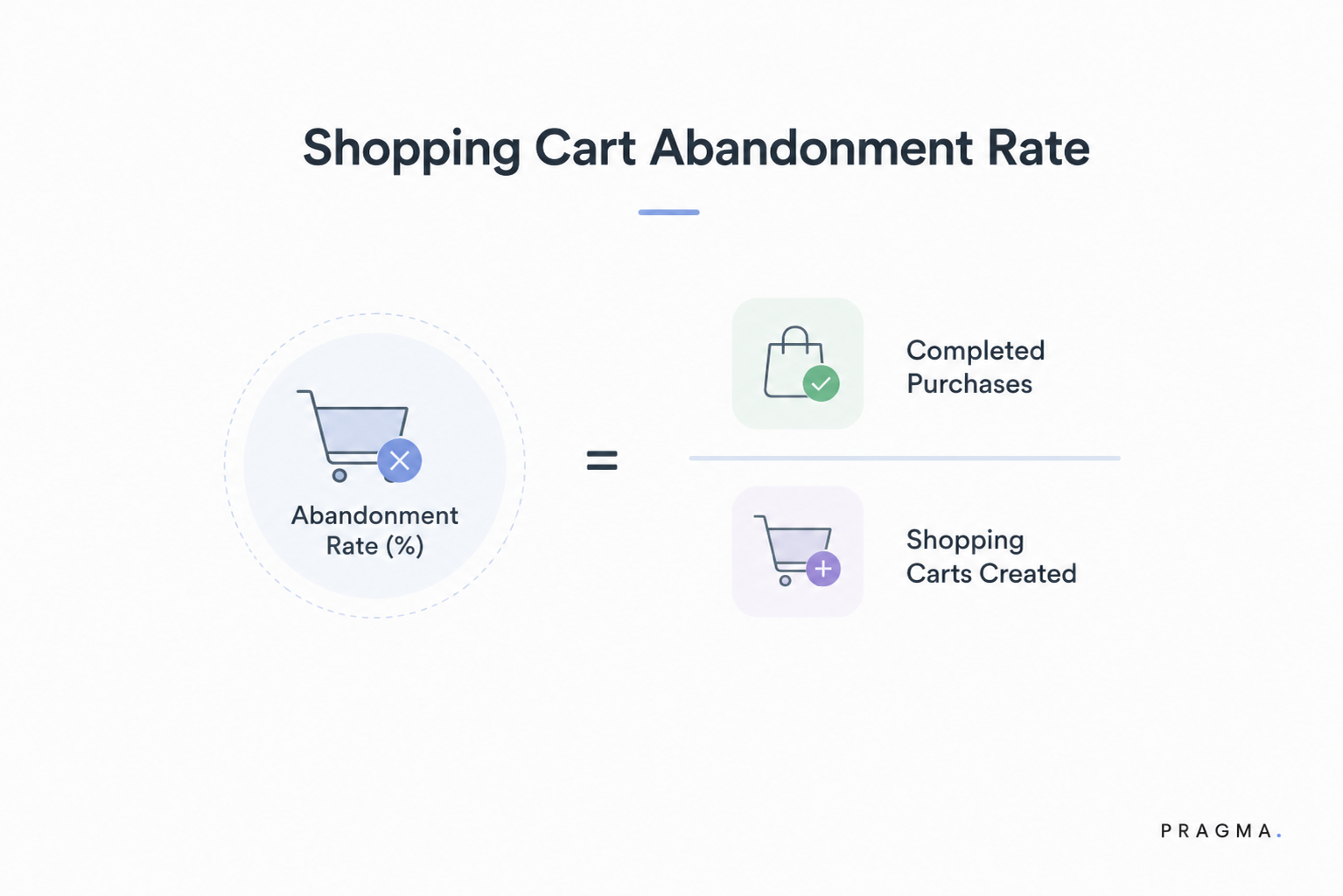
Calculating the cart abandonment rate is easy. Let's have a look at its formula:
Cart Abandonment Formula
Cart Abandonment Rate = (1 - (Completed Purchases ÷ Shopping Carts Created)) × 100
Example Calculation
Let's say you have a shoe business. You saw that, today, 100 customers visited your website and added them to their cart. But only 30 people have made the complete checkout and payment.
So, using the above formula, here is how you can calculate your cart abandonment rate:
(1−30/100)×100
=(1−0.30)×100
=0.70×100=70%
So, the cart abandonment rate is 70%.
What Is a Good Cart Abandonment Rate? (India + Global Benchmarks)
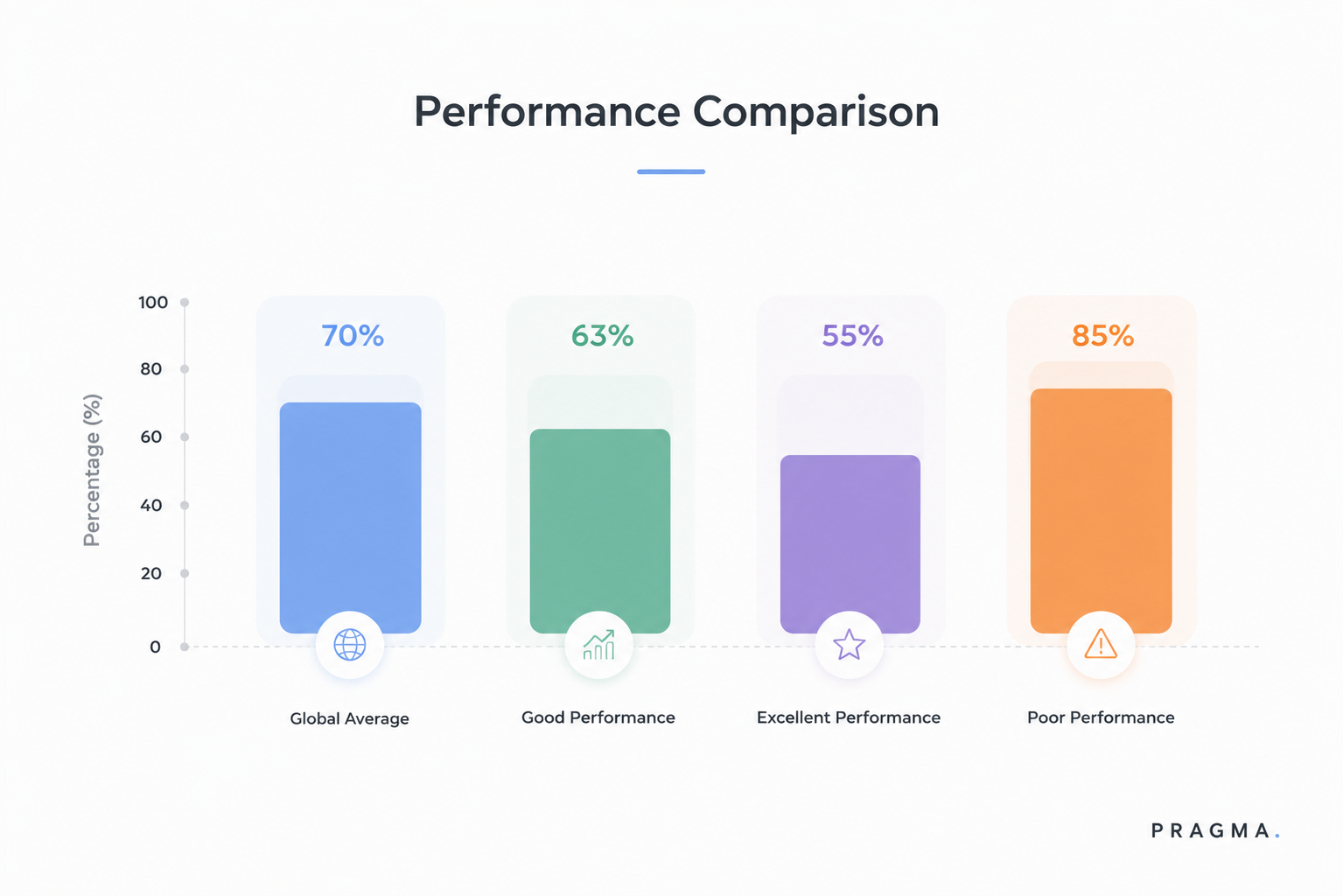
When we talk about a reasonable cart abandonment rate, we have seen that the global cart abandonment rate is around 69-70%. And some percentages distinguish between the good and bad performance, have a look at:
- Global Average: 70.22% (based on 50 studies)
- Good Performance: 60-65%
- Excellent Performance: Below 60%
- Poor Performance: Above 80%
This can be the scenario globally, but the Indian E-commerce sites typically see abandonment rates between 65-75%, slightly higher due to factors like:
- Cash on Delivery preferences
- Payment gateway issues
- Price sensitivity
Also, it depends on the niche that you are working in. Have a look at the following cart abandonment rates;
Industry-Wise Cart Abandonment Rates
Different industries see different abandonment patterns:
- Fashion: High due to size/fit concerns (68-72%)
- Electronics: Lower due to research-heavy purchases (65-70%)
- Beauty: High due to shade/skin type matching (70-75%)
- Jewelry: Highest due to high-value purchases (75-80%)
- Food & Grocery: Lower due to necessity (60-65%)
But, are you thinking, why are they different?
So, it depends upon the various factors, such as the type of product, like luxury items, daily items, etc. Purchase intent of customers, checkout procedures, payment options, etc.
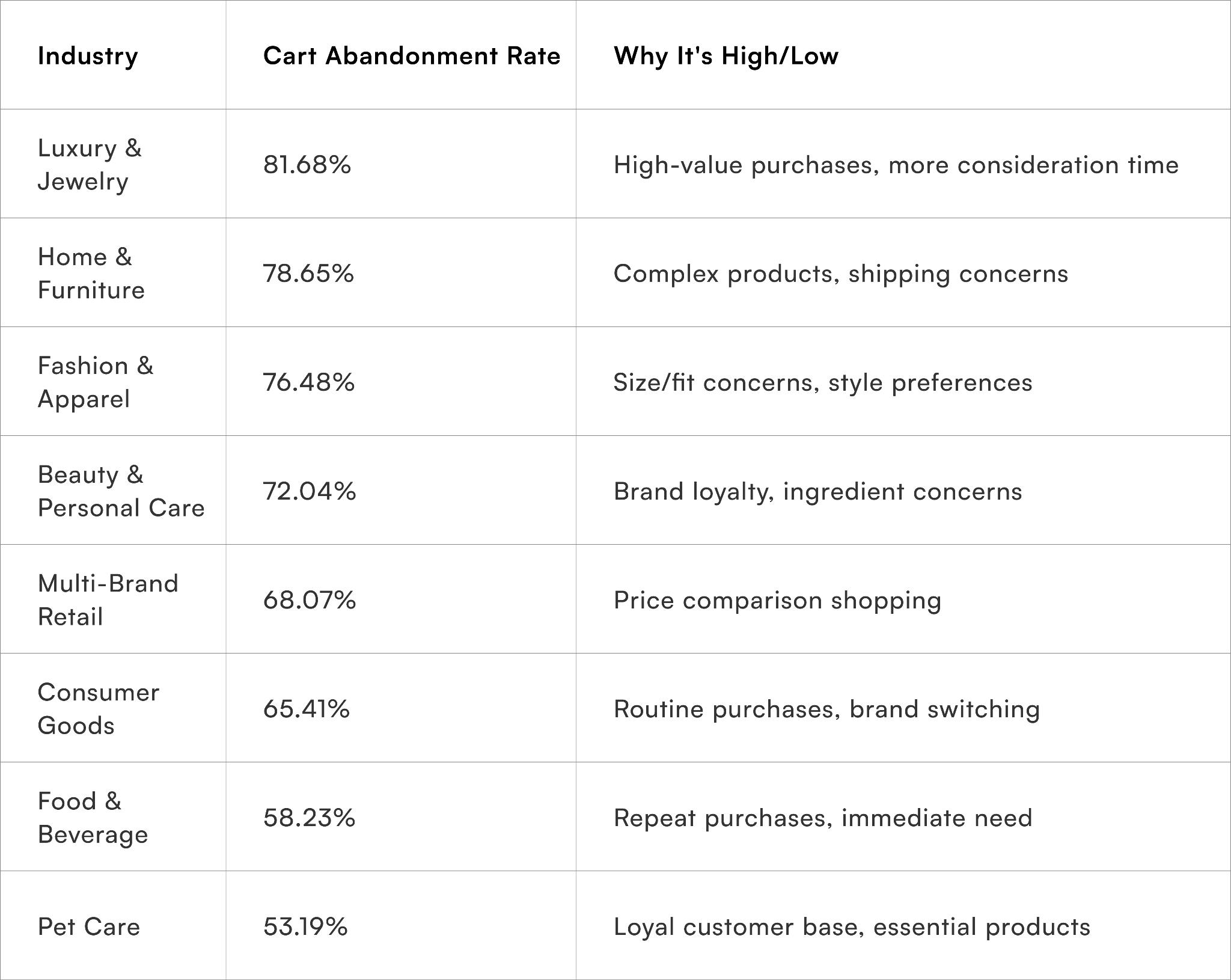
Summing up the data, we can say that a reasonable cart abandonment rate can be below 65%. If you are falling under this, that means you are doing great. Between 65-75% is average, and above 75% needs immediate attention.
What are the Top Reasons for High Cart Abandonment?
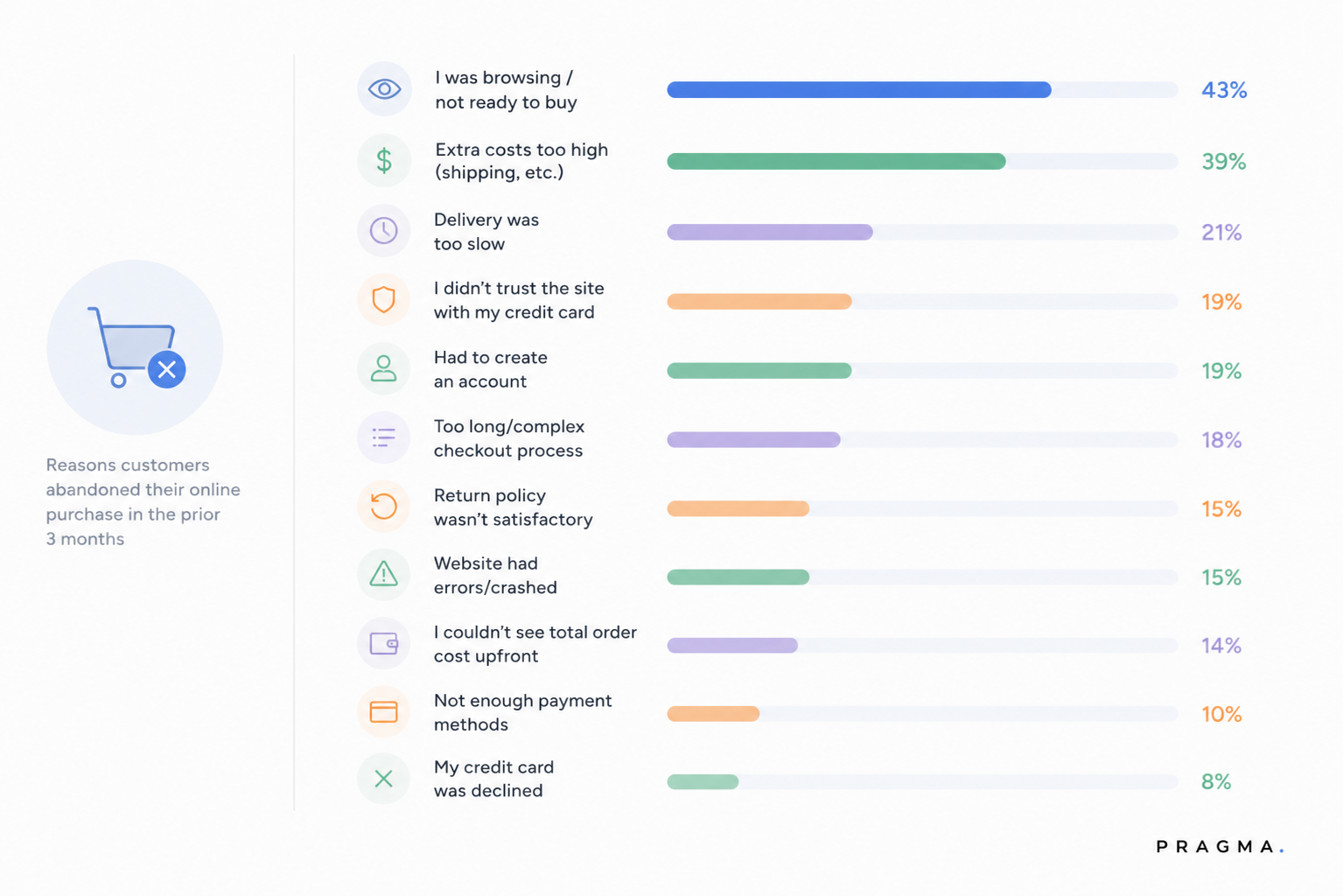
Here are the top reasons that lead to cart abandonment:
1. Forced Account Creation
26% of customers abandon their carts when forced to create an account before purchasing. Every customer wants hassle-free and speedy transactions; they don't have to wait more or fill in unnecessary details.
And Pragma has come up with the Guest Checkout Option, where a customer can complete purchases without mandatory account creation.
2. High Extra Costs (Shipping, Taxes, COD Fees)
This is the #1 reason for cart abandonment globally. Research states that 48% of shoppers abandon their carts when they encounter unexpected costs at checkout.
Especially in the Indian market, where people are emotionally sentimental. Unexpected costs at the time of checkout frustrate them. Some of the costs that some brands hide include:
- Shipping charges (₹50-200 per order)
- GST calculations (18% on most products)
- COD fees (₹20-50 per order)
- Processing or convenience fees
- Packaging charges
This is because customers abandon their carts. That's why Pragma has come up with a solution. With Pragma, brands can display transparent pricing early in the checkout process.
Our system can show estimated total costs, including taxes and shipping, on product pages, and offers COD-to-prepaid conversion incentives to reduce additional fees.
3. Slow or Complicated Checkout
18% of the customers abandon due to the too-long/complicated checkout process. Brands should provide their customers with easy and fast checkout experiences.
Pragma's 1Checkout creates a streamlined, single-page checkout experience that can be easily completed in under 10 seconds.
4. Limited Payment Options
13% of customers abandon when their preferred payment method isn't available. Additional data shows:
- 10% of customers say: There weren't enough payment methods.
- 9% say: Credit card was declined.
Pragma's 1Checkout integrates payment methods and automatically optimises the payment flow based on customer preferences and success rates.
5. Payment Failures in India
Payment gateway failures are more common in India. It can be due to network issues and bank restrictions. Failed payments often lead to permanent abandonment.
Pragma provides robust payment verification and automatic retry mechanisms.
6. Lack of Trust or Poor UI/UX
Customers need to feel secure when sharing payment information. Also, websites with poor design or missing trust signals create doubt.
7. Unclear Delivery Timelines
Customers want to know when they'll receive their order. If a customer did not get a clear time when their order will be delivered, they decide not to make the purchase.
Cart Abandonment Rate vs Checkout Abandonment Rate
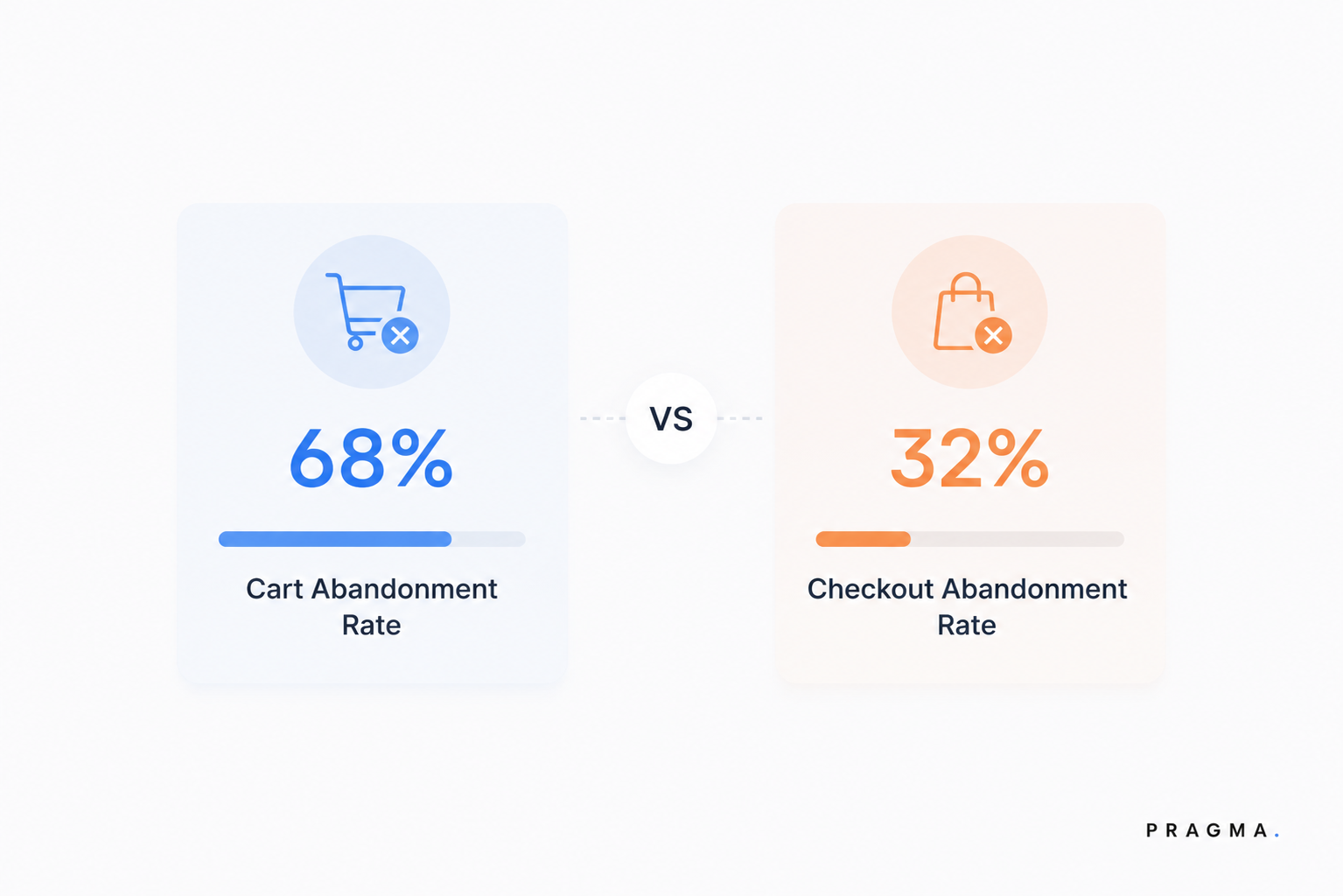
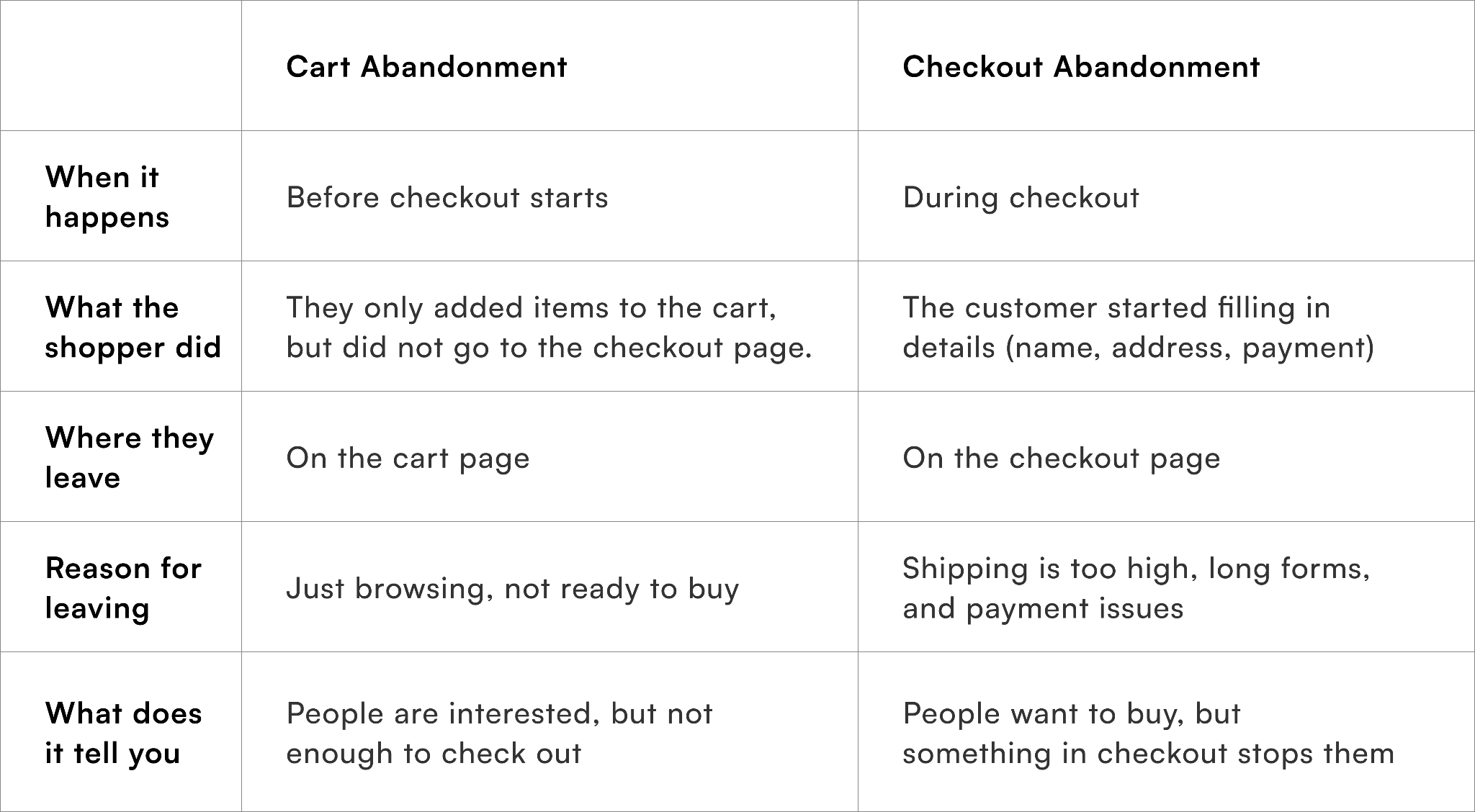
These two terms sound similar, but they have different meanings. As we know, cart abandonment is calculated when the customer puts items in the cart, but never goes to the checkout process.
Cart Abandonment Rate Formula
Cart Abandonment Rate=(1−Carts Created Completed Purchases)×100
Whereas, the checkout abandonment rate is calculated when the customers add items to their carts, and start the checkout, but do not complete it.
Checkout Abandonment Rate Formula
Checkout Abandonment Rate=(1−Checkout Sessions Started Completed Purchases)×100
How to Reduce Cart Abandonment Rate? (Practical Strategies)
By following the given strategies, you can improve your cart abandonment rate by reducing abandonments in reality:
1. Show Full Costs Upfront
The first formula is not to hide anything from customers. Always show every cost upfront to them, so that they know that they have to pay for it. Showing it suddenly at the last step frustrates them.
2. Offer Guest Checkout
When a new user visits your site, always try to convert them into sales. Provide them with a guest checkout option, which facilitates easy purchasing. With Pragma, you can offer guest checkout easily.
3. Simplify Your Checkout Flow
You should always keep the checkout under 2 to 3 steps; more than these steps irritates the customer.
4. Auto-Apply Coupons
Always automatically apply the best available discount. Don't make customers hunt for coupon codes.
5. Provide Multiple Payment Options
Offer all popular Indian payment methods:
- UPI (PhonePe, Google Pay, Paytm)
- Credit/Debit cards
- Net banking
- Digital wallets
- Cash on Delivery
- Buy Now Pay Later options
6. Add Trust Badges & Clear Returns Policy
It should always be on your mind you convey the right and clear return policy to your customers. They should be clearly visible to them. And try to include the following trust elements:
- SSL security certificates
- Payment security badges (Visa, Mastercard verified)
- Customer reviews and ratings
- Money-back guarantee
- Clear return and exchange policy
- Social Reviews by customers
7. Add WhatsApp Abandoned Cart Recovery
WhatsApp is the most used platform in India. With 98% of an open rate of messages, WhatsApp can be a good medium for abandoned cart recoveries.
With Pragma's WhatsApp Business Suite, you can send reminders to customers with automated drip campaigns. With tailored notifications and offers, nudging consumers to complete their orders, you can increase conversions by 15%.
5 Best Automated Tools to Reduce Cart Abandonment
1. Klaviyo
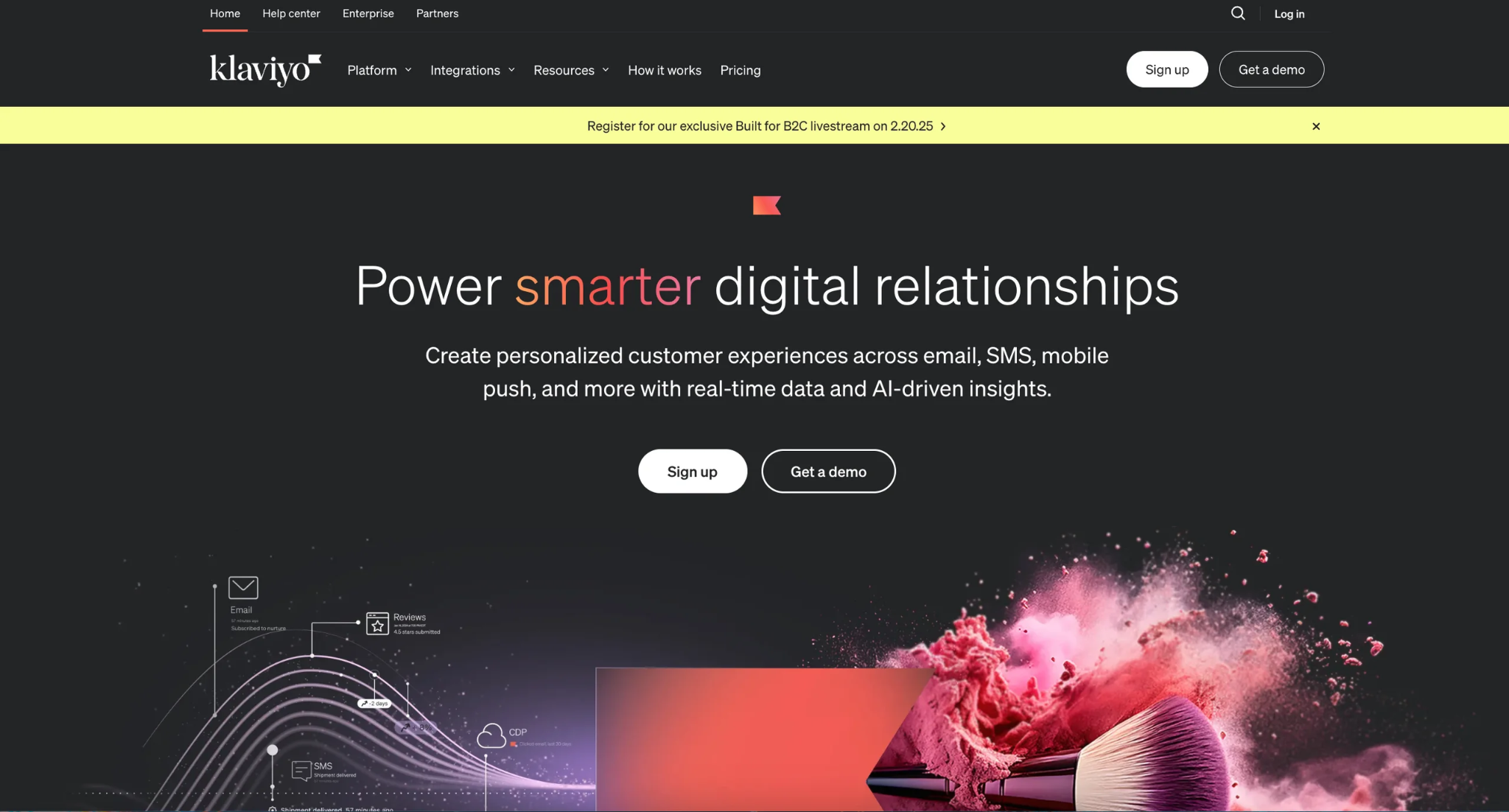
Klaviyo is one of the most popular tools for abandoned-cart emails. It is best for Email & SMS cart-recovery automation.
Key Features:
- Automated email and SMS flows
- Deep customer segmentation
- Behaviour-based triggers
- High customisation options
2. Omnisend

Omnisend helps you reach customers on multiple channels, not just email. It is best for Multichannel recovery (Email, SMS & Push Notifications).
Key Features:
- Pre-built abandoned-cart workflows
- Email + SMS + Push notifications
- Easy drag-and-drop builder
- Strong analytics and A/B testing
3. Pragma
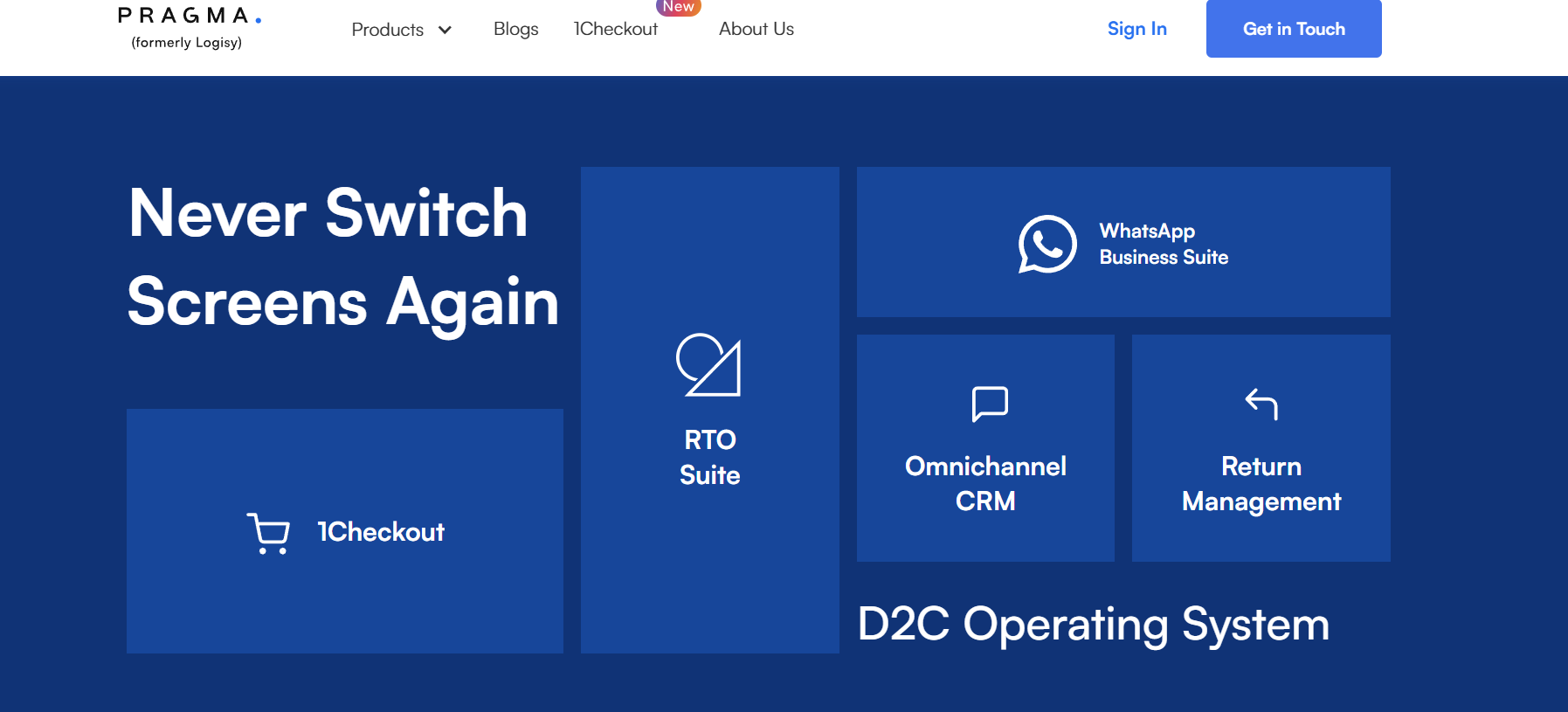
Pragma is best for WhatsApp-based cart recovery & checkout optimisation and a perfect D2C operating system. It makes it easy to bring back customers who leave items in their cart. It automatically sends reminders through WhatsApp.
Key Features:
- Automated WhatsApp messages for orders, reminders, and customer support
- Abandoned cart recovery through WhatsApp alerts
- Order confirmation & delivery updates sent automatically
4. OptinMonster
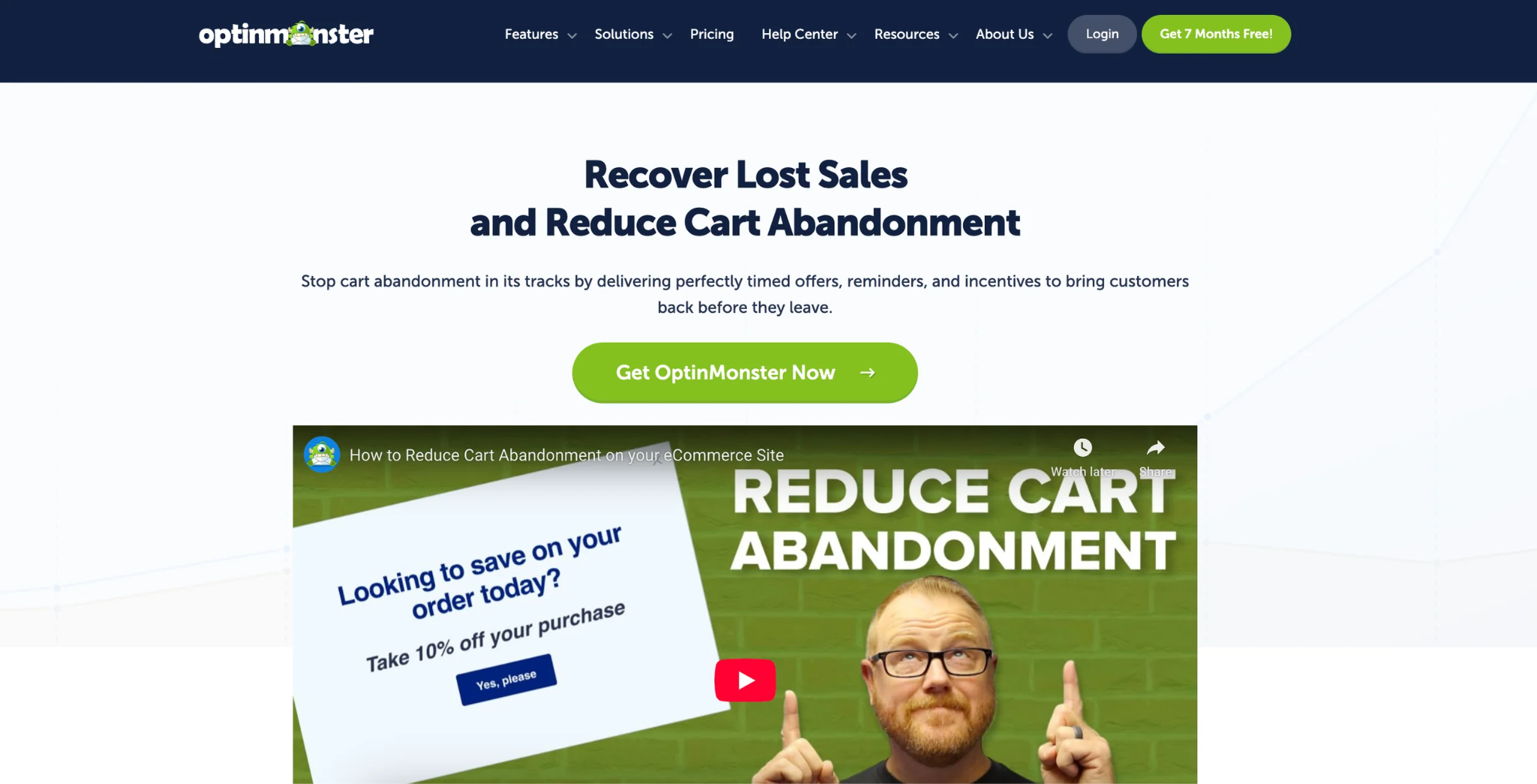
OptinMonster helps you save customers before they leave. When the system detects that a visitor is about to exit the site, it shows a pop-up with a discount or free shipping offer.
Key Features:
- Exit-intent popups
- On-site messages & banners
- Countdown timers & offers
- Works with any e-commerce platform
5. CartStack
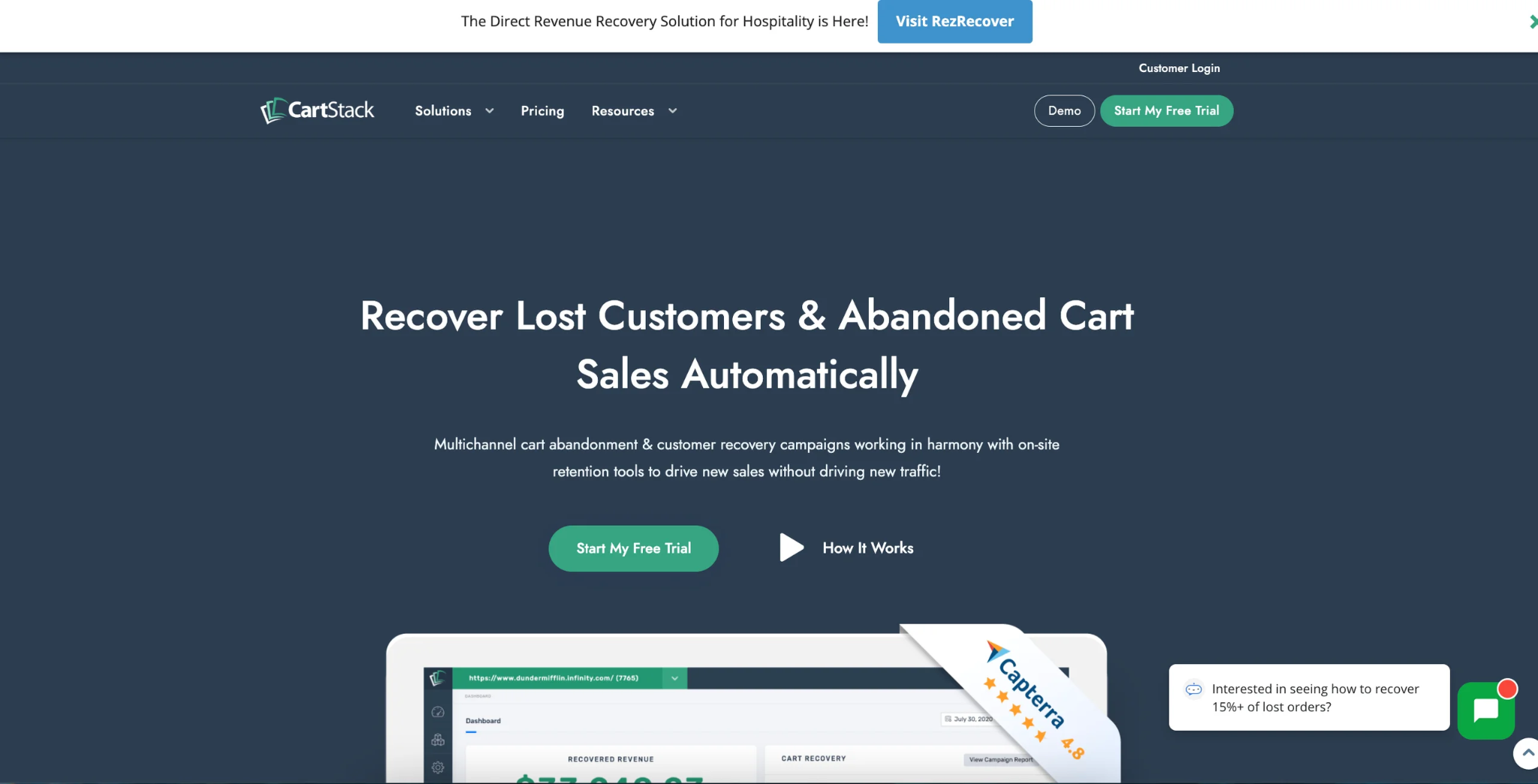
CartStack focuses specifically on abandoned-cart recovery. It automatically emails, messages, or notifies customers who leave items behind. It is best for dedicated cart-recovery automation.
Key Features:
- Automated recovery emails
- Real-time cart tracking
- Personalised recovery campaigns
Why Cart Abandonment Rate Is Critical for E-commerce Growth?
Cart abandonment is something that is directly related to sales. It means if you are having a high abandonment rate, you are directly losing sales and revenues ultimately. That means, if your brand has a low abandonment rate, it can get more sales, which leads to an increase in revenues.
Also, the low cart abandonment rate means having more customers, which means that the expenditure you spent on those hefty marketing expenditures gives you a good return.
This is not only about cart abandonment. I give you insights about the following things:
- Which products are most abandoned
- At what stage do customers drop off
- Which traffic sources convert better
- What pricing strategies work
- Which payment methods are preferred
And when you get valuable insights, you can provide a better customer experience, leading to more customer satisfaction and brand reputation.
To Wrap It Up
To conclude here, we want to say that yes, cat abandonment is one of the challenging things for the D2C e-commerce brands, but dealing with it with the right strategies can help businesses to turn it into an opportunity.
Also, with the right tools, you can decrease your cart abandonment rate easily. And Pragma is here to support all D2C e-commerce brands in handling this challenging situation.
Pragma offers a comprehensive solution specifically designed for the Indian e-commerce market. With Pragma's 1 Checkout, you can streamline the checkout process that reduces abandonment by up to 40%.
With the WhatsApp business suite, you can get 15-25% recovery rates with automated drip campaigns. Not only this, you can get 100+ payment methods optimized with Pragma and much more.

FAQs (Frequently Asked Questions on Cart Abandonment Rate: Formula, Meaning & Benchmarks (2026))
1. What is cart abandonment rate in e-commerce?
Cart abandonment rate is the percentage of shoppers who add items to their cart but leave the website without completing the purchase. It is a key indicator of friction or hesitation in the checkout journey.
2. What is the formula for calculating cart abandonment rate?
The standard formula is:
Cart Abandonment Rate (%) = [(Carts Created − Orders Completed) ÷ Carts Created] × 100
For example, if 1,000 carts are created and 300 purchases are completed, the cart abandonment rate is 70%.
3. What is a good or acceptable cart abandonment rate?
There is no single “perfect” number, but globally:
- 60–70% is considered average
- Below 60% is strong performance
- Above 75% usually indicates checkout or trust issues
4. What is the average cart abandonment rate benchmark in 2026?
Recent industry benchmarks consistently place the global average around 68–71%. Rates vary by device, category and region. Fashion and mobile traffic typically see higher abandonment than electronics or desktop traffic.
5. How does cart abandonment rate differ by device?
Abandonment rates are highest on mobile due to smaller screens, slower loading times, and payment friction:
- Mobile: ~75–80%
- Tablet: ~65–70%
- Desktop: ~60–65%
6. How does cart abandonment rate differ in India compared to global benchmarks?
In India, cart abandonment rates are often higher than global averages, driven by:
- COD dependence and hesitation at checkout
- Payment gateway failures
- Address entry complexity
- Price sensitivity and last-minute comparisons
7. What are the main causes of a high cart abandonment rate?
Top reasons include:
- Unexpected shipping or tax charges
- Complicated or lengthy checkout forms
- Lack of trust signals
- Limited or failed payment options
- Slow website or mobile experience
- Mandatory account creation
8. How is cart abandonment rate different from checkout abandonment rate?
- Cart abandonment measures drop-off before checkout starts.
- Checkout abandonment measures drop-off after checkout has begun (address, payment, review steps).
Checkout abandonment is often more actionable because users have shown stronger purchase intent.
9. How can e-commerce brands reduce cart abandonment rate?
Common, proven methods include:
- Showing all costs upfront
- Simplifying checkout and reducing form fields
- Offering guest checkout
- Improving mobile speed and UX
- Adding trust signals and clear returns policy
- Using cart recovery via WhatsApp, email or SMS
10. How often should cart abandonment rate be tracked?
Best practice is to track it:
- Daily (to spot sudden issues or payment failures)
- Weekly (to evaluate campaigns or UX changes)
- Monthly (for benchmarking and optimisation planning)
Segment tracking by device, traffic source, payment type and geography for real insight.
11. Is a high cart abandonment rate always bad?
Not always. Some users use carts for wish-listing, price comparison, or saving items. However, consistently high abandonment combined with low conversion usually signals checkout friction or trust gaps.
Talk to our experts for a customised solution that can maximise your sales funnel
Book a demo

.png)
.png)